Fish species unique to Hawaii’s deep reef slopes
Stepping onto the shores of Hawaii, it's easy to get caught up in the excitement of chasing marlin offshore or casting for papio in the surf. But beneath those shimmering turquoise waters lies a whole other world, an incredible ecosystem found on the deep reef slopes that most visitors—and even some seasoned locals—barely glimpse. This guide will take you on a journey into that mysterious deep, introducing you to the fascinating and often unique fish species that call Hawaii's hidden underwater mountains home.
The Deep Blue Mystery: Exploring Hawaii's Unique Deep Reef Slopes
Hawaii's geological formation, with its dramatic volcanic peaks plunging into the ocean depths, creates a unique underwater landscape. These aren't just gentle shelves; we're talking about steep, rugged slopes, underwater canyons, and seamounts that drop off rapidly into the abyssal plains. It's this extreme topography, combined with Hawaii's isolation in the middle of the Pacific, that has fostered the evolution of truly special marine life, much of it found nowhere else on Earth.
What Makes Hawaii's Deep Reefs So Special?
Unlike continental shelves that gradually slope away from land, Hawaii's deep reefs are characterized by their sharp descent. This creates distinct zones of light, temperature, and pressure, leading to highly specialized habitats. Think of it like a series of hidden neighborhoods, each with its own community of residents perfectly adapted to their surroundings. The water here is pristine, nutrient-rich, and often subject to strong currents that bring a constant buffet of food, supporting a vibrant food web. It's a challenging environment, but one that has allowed for incredible biodiversity to flourish.
One of the biggest differences is the sheer depth at which some of these vibrant ecosystems exist. We're not just talking about a few hundred feet; many of these slopes extend thousands of feet down. The transition from the sunlit shallow reefs to the dimly lit mesophotic (twilight) zone, and then into the aphotic (midnight) zone, changes everything. The organisms living in these depths have incredible adaptations—from bioluminescence to specialized eyes, or even reduced need for light altogether. This harsh environment acts as a natural barrier, creating isolated populations that evolve distinctly.
Defining "Unique" to Hawaii's Deepwater
When we talk about "unique" species in Hawaii, we're often referring to endemic species. These are fish that are found exclusively in the Hawaiian Archipelago and nowhere else in the world. It’s a point of immense pride, but also a huge responsibility for conservation. For deep reef slopes, this uniqueness is often amplified because the depths and isolation provide even more opportunities for species to evolve independently. They are truly Hawaiian natives, tied to these islands by their very existence.
It's not just about endemic status, though. Sometimes, a species might be found elsewhere, but its particular behavior, size, or population density in Hawaii's deep waters makes it particularly notable here. For example, some bottomfish found globally might reach impressive sizes or form massive schools in Hawaii due to ideal conditions. So, while the focus is heavily on endemics, we also acknowledge species that are exceptionally significant to the local deep reef fishery and ecology. Understanding these nuances helps us appreciate the richness that lies beneath our waves.
Stars of the Abyss: Iconic Deepwater Fish Species
When most anglers think of bottomfish in Hawaii, a few star species immediately come to mind. These are the ones that commercial fishermen and serious recreational anglers brave the open ocean to target, often with specialized gear. They are prized for their fighting ability and, perhaps even more so, for their incredible table fare.
Opakapaka Pink Snapper
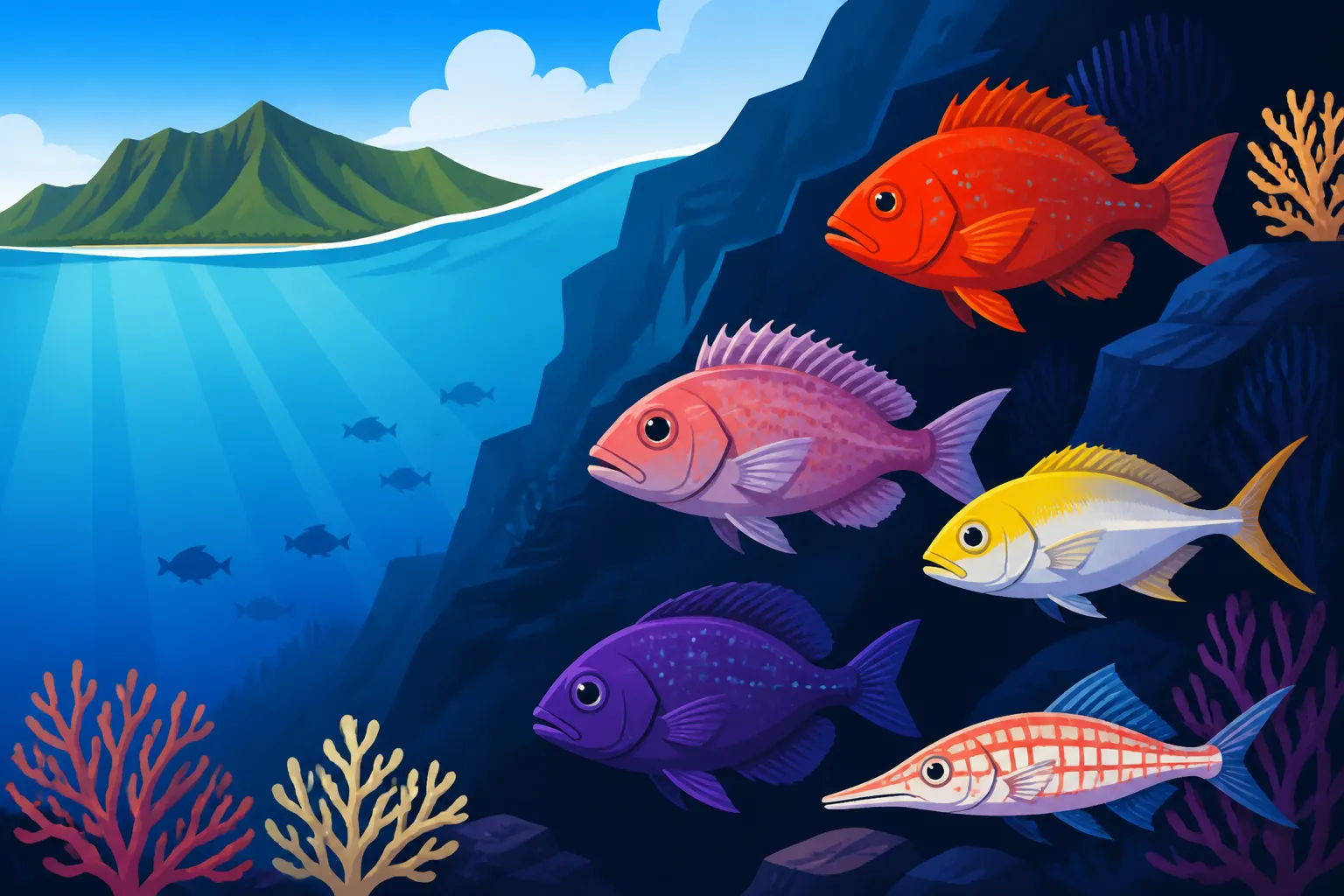
The opakapaka, also known as the pink snapper, is arguably one of the most sought-after deepwater fish in Hawaii. These beautiful, iridescent pink fish are found schooling over rocky bottoms and ledges, typically in depths ranging from 180 to 600 feet, though they can go deeper. They're a classic example of a deep reef species that forms a vital part of the local fishery. Landing a nice opakapaka is a true badge of honor for any bottom fisherman.
These fish are known for their delicate, flaky white meat, making them a favorite on dinner tables and in fine dining establishments across the islands. Anglers often target them using multi-hook rigs with fresh bait, like squid or cut fish, dropped directly to the bottom. It requires patience and a good understanding of current and depth. While not strictly endemic to Hawaii, the opakapaka population here is robust and supports a significant portion of the deep-sea bottomfishing industry. Keeping an eye on Hawaii Bag and Size Limits by Species is crucial when targeting these beauties.
Onaga Ruby Snapper
The onaga, or ruby snapper, is another jewel of Hawaii's deep reefs, famous for its striking red color and delicious taste. These stunning fish are typically found in even deeper waters than opakapaka, often ranging from 600 to 1,200 feet, sometimes more. They prefer rocky ledges and pinnacles where they can ambush prey. Catching an onaga is a true deep-drop challenge, requiring heavy-duty electric reels and specialized rigs to handle the immense depths and pressure.
The onaga's flesh is highly prized for its rich flavor and firm texture, often considered among the finest eating fish in Hawaii. Due to their deep habitat and the specialized equipment needed, they are usually targeted by experienced bottomfishers or on dedicated bottomfishing charters. You can learn more about these fascinating creatures by checking out Onaga Ruby Snapper Habits. For those looking to get into this specialized fishing, finding the right gear, from heavy-duty braided lines to robust electric reels, often starts with a good search for reviews and options on sites like Amazon.
Ehu Squirrelfish Snapper
The ehu, commonly known as squirrelfish snapper, is another vibrant resident of the deep reef slopes, recognized by its reddish-orange hue and large eyes. While they don't grow to the massive sizes of some other bottomfish, ehu are highly valued for their flavorful meat and are often found in respectable schools. They tend to inhabit depths from 150 to 800 feet, favoring rocky structures and areas with strong currents.
Ehu are a popular target for recreational and commercial bottomfishers alike, providing consistent action when a school is located. They respond well to baited hooks, much like their deeper counterparts, and are a staple catch for those exploring Hawaii's bottomfishing grounds. Their firm, white flesh is versatile and delicious, making them a welcome addition to any cooler. Learning about Bottomfish Species of Hawaii can help you distinguish between the different types you might encounter.
Hidden Gems: Lesser-Known Deep Reef Dwellers
Beyond the "big three" bottomfish, Hawaii's deep reef slopes are teeming with a variety of other fascinating species, some endemic and others less commonly targeted but equally important to the ecosystem. These are the fish that truly highlight the unique biodiversity of our islands.
Hapu'upu'u Hawaiian Grouper
The hapu'upu'u, or Hawaiian grouper, is a majestic fish that can reach impressive sizes, making it a prized catch for those who venture into deeper waters. These large, mottled brown groupers are found around rocky pinnacles and ledges, usually between 200 and 600 feet deep. What makes the hapu'upu'u unique is its endemic status; this particular species of grouper is found only in Hawaii.
Hapu'upu'u are powerful fighters, providing a serious challenge on the line. Their firm, white meat is excellent for grilling or baking, making them a highly sought-after food fish. However, due to their slow growth rate and relatively long lifespan, they are vulnerable to overfishing. Strict management measures are in place to ensure their populations remain healthy. Anglers should always consult current regulations before targeting this incredible endemic species.
Uku Gray Snapper
While not strictly a deep-reef exclusive, the uku, or gray snapper, is frequently caught on the deeper edges of the reef slopes, often in depths from 60 to 400 feet. Uku are known for their sleek, silver bodies and sharp teeth, and they are notoriously strong fighters, often making blistering runs when hooked. Their presence signifies healthy reef environments, and they are a highly respected game fish in Hawaiian waters.
Uku are considered superb eating, with firm, white flesh that holds up well to various cooking methods. They can be found schooling around structure, and anglers often target them by drift fishing with bait or by jigging. If you're planning a trip and hoping to hook into one of these powerful fish, consider joining one of the Best Bottomfishing Charters in Hawaii. For those interested in Jigging for Bottomfish in Hawaii, securing high-quality jigs and specialized lines, perhaps from reputable online retailers like Amazon, can make all the difference.
Other Unique Deepwater Inhabitants
The deep reefs are also home to a myriad of smaller, sometimes more obscure, but equally important species. These include various species of cardinalfish, squirrelfish, and even some endemic deepwater wrasses and butterflyfish that have adapted to the lower light conditions. While not typically target species for anglers, their presence is crucial for the health and diversity of the ecosystem.
For instance, certain species of small deepwater shrimp and crabs are vital food sources for the larger bottomfish. There are also fascinating invertebrates like deepwater corals and sponges that form the very structure of these habitats, providing shelter and nurseries for juvenile fish. The deeper you go, the more unique the adaptations become, truly showcasing the incredible evolutionary power of isolated deep-sea environments. Understanding How deep bottomfish species live provides great insight into these fascinating hidden worlds.
Fishing Responsibly: Preserving Hawaii's Deep Reef Ecosystems
The allure of Hawaii's deep reef slopes and the unique fish species they hold is undeniable. However, with such a precious and often fragile ecosystem, responsible fishing practices are not just recommended, they are absolutely essential. The deepwater environment, with its slower growth rates and longer-lived species, is particularly vulnerable to overfishing and habitat damage.
Sustainable Practices for Deepwater Anglers
When fishing Hawaii's deep reefs, it's vital to employ practices that minimize impact. Using appropriate tackle, being aware of current regulations, and understanding the fragility of the environment are key. For example, some bottomfish species are slow-growing and long-lived, meaning their populations take a long time to recover if overfished. Anglers should always be mindful of bag and size limits, and consider releasing fish beyond what's needed for a meal, especially larger breeding individuals.
Venturing into these depths often means using heavy weights and specialized gear. Minimizing lost tackle helps protect the reef from potential debris. If you're new to deep dropping, consider going with an experienced guide or charter that practices sustainable methods. They often have the expertise to target specific species efficiently and release others safely. You can also educate yourself on local regulations by reviewing resources like the Hawaii DLNR Fishing Regulations PDF.
Conservation Efforts and Regulations
Hawaii's Division of Aquatic Resources (DAR) actively manages the state's precious marine resources, including its deep reef bottomfish. Regulations are put in place based on scientific research and community input to ensure the sustainability of these fisheries for future generations. These regulations include specific bag limits, size restrictions, and sometimes even seasonal closures for certain species.
Fisheries managers closely monitor populations of key bottomfish like opakapaka, onaga, and ehu. The goal is to allow for sustainable harvest while ensuring the long-term health of the ecosystem. Anglers play a critical role in these efforts by adhering to all rules and reporting any suspicious activities. Supporting local conservation groups and staying informed about changes in regulations helps protect these unique Hawaiian treasures. Knowing the Hawaii Fishing License Guide for 2026 is your first step in being a responsible angler here.
The Role of Technology in Deep Reef Fishing
Modern technology has revolutionized deep reef fishing, making it more accessible and efficient. However, this also carries a greater responsibility. Advanced sonar and GPS systems allow anglers to pinpoint specific deepwater structures and schools of fish with incredible accuracy. Electric reels make retrieving gear from extreme depths less physically demanding, allowing for more fishing time.
While these tools are powerful, they must be used judiciously. The ease of access should not lead to overharvesting. Instead, they should be used to fish smarter, target desired species more precisely, and reduce bycatch. Investing in quality, reliable equipment, from specialized rods to advanced fish finders, often found on platforms like Amazon, is important, but pairing it with ethical fishing practices is paramount. The better we understand the deep, the better we can protect it.
Disclaimer
This article is for general informational purposes only and does not constitute professional advice. Laws, prices and regulations vary by location and change over time. Consult a qualified professional for guidance on your specific situation.