Spearfish in Hawaiian Waters
For many anglers casting lines in Hawaii, there's a certain mystique around billfish. You hear tales of giant marlin and fast-running ahi, but sometimes, a sleeker, equally thrilling challenge presents itself: the elusive spearfish. It can be confusing to identify them or even know if they're common here, which is why this guide is designed to shed light on spearfish in Hawaiian waters, covering everything from identification to the best fishing techniques.
What Exactly is a Spearfish?
Spearfish are one of the lesser-known members of the billfish family, often overshadowed by their larger cousins, the marlin, and swordfish. But don't let their relatively smaller size fool you; these are formidable predators of the open ocean, known for their incredible speed and acrobatic fights. In Hawaiian waters, when we talk about spearfish, we're almost exclusively referring to the Shortbill Spearfish. They might not draw the same headlines as a grander blue marlin, but hooking into one of these swift beauties is an unforgettable experience.
Distinguishing Features: Shortbill vs. Longbill
While there are two main types of spearfish – the longbill and the shortbill – it's the Shortbill Spearfish (Tetrapturus angustirostris) that primarily inhabits the Pacific, including the rich waters surrounding our islands. The longbill is more Atlantic-centric, so if you're fishing in Hawaii and hear "spearfish," you can pretty much guarantee it's a shortbill.
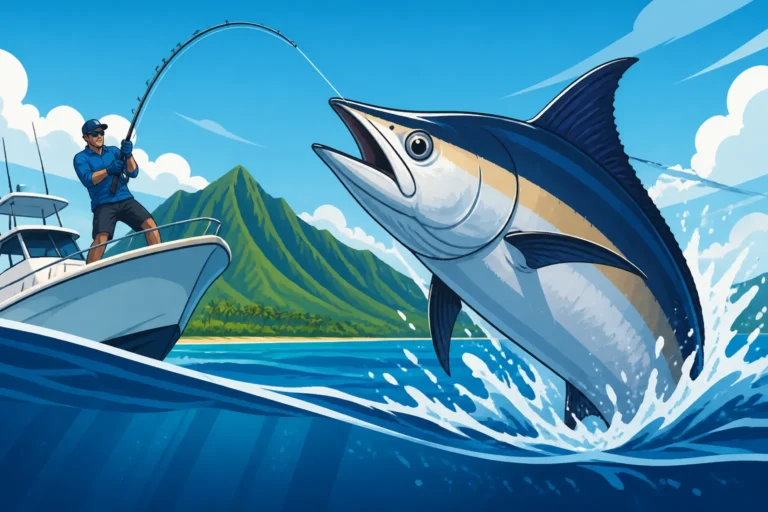
The most obvious distinguishing feature, as their name suggests, is their "bill" or "spear." For the Shortbill Spearfish, this bill is notably shorter and thicker than that of a marlin, and it tapers to a point. It's round in cross-section, unlike the flattened, sword-like bill of a swordfish. Their dorsal fin is also quite distinctive, being very tall and sail-like at the front, then tapering sharply backward and continuing as a low ridge almost to the tail. This gives them a very streamlined, almost torpedo-like appearance in the water.
Size, Shape, and Coloration
Shortbill Spearfish are generally smaller than marlin, typically ranging from 30 to 70 pounds, though specimens pushing 100 pounds are certainly caught. Their bodies are slender and compressed laterally, built for incredible speed. Picture a sleek, muscular athlete of the sea.
Their coloration is striking, though it can vary slightly depending on their environment and mood. Usually, they have a dark blue or blackish-blue back that fades into a silvery-white belly. This countershading helps them blend into the water column, making them difficult for both prey and predators to spot. Sometimes, you'll see faint vertical bars along their sides, especially when they are excited or stressed. The first dorsal fin is often dark blue or black, contrasting beautifully with their body. When these fish are lit up during a fight, their colors can truly shimmer, making them a prize for any angler.
Spearfish vs. Marlin: Key Differences for Identification
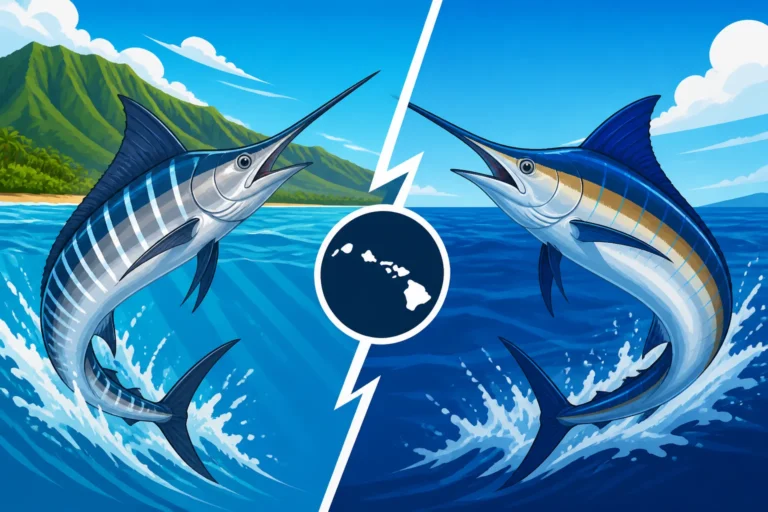
It's easy to confuse a spearfish with a juvenile marlin, especially if you're new to billfishing. However, there are several key differences that will help you tell them apart. First, as mentioned, the bill is the most obvious. A marlin's bill is longer and more robust compared to the spearfish's shorter, thinner bill. Second, look at the dorsal fin. A marlin's dorsal fin generally doesn't extend as far back along the body as a spearfish's. The spearfish has that characteristic tall, sail-like front that continues much further down its back.
Another good indicator is the overall body shape. Marlin tend to be bulkier and more powerful-looking, while spearfish are more slender and streamlined. When you see them side-by-side, or even just in a photograph, the difference in their build becomes quite apparent. Finally, while both are powerful fighters, spearfish are often described as having a more erratic, acrobatic fighting style due to their lighter build and incredible speed. Keep these distinctions in mind, and you'll be able to confidently identify that exciting catch. You can also explore Blue Marlin vs Striped Marlin Identification to deepen your understanding of the marlin family, which will help further distinguish them from spearfish.
| Feature | Shortbill Spearfish | Marlin (e.g., Blue Marlin) |
|---|---|---|
| Bill Shape/Length | Shorter, round in cross-section, tapers to point | Longer, thicker, more robust, conical |
| Dorsal Fin | Very tall anteriorly, continues low along back | Less tall anteriorly, doesn't extend as far back |
| Body Shape | Slender, streamlined, laterally compressed | Bulky, powerful, rounder |
| Typical Weight | 30-70 lbs (up to 100+ lbs) | 200-1000+ lbs (can be much larger) |
| Pectoral Fins | Often fold back against body | Typically rigid, don't fold as easily |
| Tail (Caudal Fin) | Deeply forked, rigid | Deeply forked, rigid |
| Fighting Style | Fast, erratic, acrobatic, lighter jumps | Powerful runs, deep dives, violent head shakes |
Where Spearfish Roam in Hawaiian Waters
Spearfish are truly creatures of the open ocean, preferring the vast expanses of deep blue water. While they are present year-round in Hawaiian waters, there are certain times and places where your chances of encountering one are significantly higher. Understanding their preferred habitats and seasonal patterns is key to successful targeting.
Preferred Habitats: Open Ocean, Thermoclines, FADs
Shortbill Spearfish are epipelagic fish, meaning they live in the upper layers of the open ocean, typically above the thermocline. The thermocline is that invisible boundary where warm surface waters meet colder, deeper waters, and it's a hotspot for baitfish, which in turn attracts predators like spearfish. They're often found around offshore seamounts, drop-offs, and current lines where baitfish congregate.
You'll also frequently find them in association with Fish Aggregating Devices (FADs). These buoys, strategically placed by the Hawaii Division of Aquatic Resources (DAR), serve as magnets for baitfish and, consequently, for the pelagic predators that feed on them. While FADs are well-known for attracting mahimahi and ahi, spearfish definitely use them as hunting grounds. They might not stick tight to the FAD like some other species, but they'll patrol the surrounding waters, looking for an easy meal. Many Best Fishing Charters in Hawaii will hit these FADs, increasing your chances of an encounter.
Seasonal Presence: When They Are Most Active
While spearfish are technically present throughout the year in Hawaii, their activity levels and abundance can fluctuate. Generally, the warmer months tend to see an increase in pelagic activity, including spearfish. From spring through fall, as the ocean temperatures rise and baitfish populations boom, spearfish become more active in their feeding. However, don't rule out the winter months entirely; if bait is abundant and conditions are right, spearfish can still be found.
Many anglers report a peak season for spearfish from late spring to early fall, particularly when the conditions are calm and the bait schools are thick. It often aligns with the broader billfish season, which is why you might hook a spearfish while trolling for marlin or tuna. Keeping an eye on ocean temperature charts and local fishing reports can give you a better idea of current activity. To get a broader understanding of the local calendar, check out Hawaii Fishing Seasons by Month.
Geographic Hotspots: Specific Areas Like Kona
When it comes to billfishing in Hawaii, the Kona Coast of the Big Island stands out, and that holds true for spearfish as well. The deep, calm waters just offshore from Kona, with their proximity to the 1,000-fathom curve and numerous seamounts, create an ideal environment for pelagic species. Many Best Marlin Fishing Charters off the Kona Coast also regularly encounter spearfish, sometimes even several in a single day.
Beyond Kona, other islands also offer good spearfish opportunities. The waters off Maui, particularly on the leeward side, and offshore from Oahu, can also hold good numbers of spearfish, especially around FADs and other natural structure that aggregates bait. It's really about finding that sweet spot where deep, clear water meets abundant bait, and Hawaii offers plenty of those.
Spearfish Behavior and Diet
Understanding the behavior and diet of spearfish is crucial for anyone hoping to target them effectively. These fish are opportunists and voracious eaters, built for speed and quick strikes in the vastness of the open ocean. They're not the kind of fish to hang around a single reef; they're constantly on the move, chasing their next meal.
Hunting Strategies: How They Ambush Prey
Spearfish are solitary hunters for the most part, preferring to stalk their prey alone rather than in large schools. They employ a classic ambush predator strategy, using their incredible speed and agility to dart through schools of baitfish, stunning or injuring individual fish with their bill before circling back to consume them. Their streamlined bodies allow for explosive bursts of speed, making them incredibly effective at catching fast-moving prey.
You might not see them "balling up" bait like some tuna do, but they'll certainly patrol the edges of bait schools, looking for stragglers or weaker individuals. Their keen eyesight, even in the dim light of deeper water, coupled with their lateral line system that detects vibrations, makes them highly efficient predators. They're quick to capitalize on any opportunity, which is why a well-presented lure or bait, even for a brief moment, can trigger a strike.
Primary Food Sources: What They Eat in Hawaiian Waters
In Hawaiian waters, the diet of a Shortbill Spearfish is quite varied, consisting mainly of smaller pelagic fish and cephalopods. Some of their favorite meals include mackerel scad (opelu), flying fish, squid, and even small tuna or mahimahi. They're not particularly picky, but they do key in on whatever baitfish are most abundant in the area.
This varied diet is why a diverse spread of lures and baits can be effective when targeting them. If you're using natural bait, matching the hatch – meaning using bait that mimics what they're naturally feeding on – can be highly effective. Squid, small skipjack tuna, or even ballyhoo rigged to swim naturally are excellent choices. Often, a spearfish will hit a lure or bait intended for a larger marlin or ahi, showcasing their aggressive feeding nature.
Solitary Hunters vs. Schooling: Typical Patterns
As mentioned, spearfish are generally considered solitary hunters. While you might occasionally find two or three spearfish in the same general area, especially if there's a significant bait ball, they don't typically form large, cohesive schools like tuna. They prefer to operate independently, covering vast stretches of ocean in search of food.
This solitary nature means that while you might catch multiple spearfish in a day, it's often a result of traversing productive waters where several individual fish are scattered, rather than running into a tightly packed school. This contrasts with species like ahi (yellowfin tuna) or mahimahi, which are frequently caught in multiples from a single school. Their independent roaming habit is part of what makes catching a spearfish feel like a special achievement – you've outsmarted a highly effective, lone predator.
Fishing for Spearfish in Hawaii
Catching a spearfish in Hawaii is a thrilling experience, and while they're often caught as a bonus when targeting other pelagics, you can certainly employ strategies that increase your chances of hooking one of these acrobatic billfish. The key is understanding their habits and presenting appealing offerings in the right places.
Trolling Techniques: Lure Selection, Speed, Spread
Trolling is by far the most effective method for catching spearfish in Hawaii. They respond well to a varied lure spread, mimicking a school of baitfish or squid. When selecting lures, think smaller than what you might use for a grander marlin, but don't go too small. Chugger-style lures, jet heads, and bullet-shaped lures in the 6-inch to 10-inch range are often productive. Colors can vary, but combinations of blue/silver, green/yellow, black/purple, and pink/white are perennial favorites for Hawaii's pelagic species. You can find a fantastic selection of these lure styles on Amazon to stock your tackle box.
When it comes to speed, a moderate trolling speed of 6 to 9 knots is generally effective, as this allows lures to swim enticingly and gives spearfish time to react. Your spread should cover different depths and distances behind the boat. A typical spread might include lures on the outriggers, flat lines, and a shotgun lure far back in the spread. Don't be afraid to mix in a natural bait amongst your artificials; sometimes that little bit of scent and texture is all it takes. For more detailed insights on effective offshore trolling, refer to Trolling Techniques for Hawaii Pelagics.
Bait Presentation: Natural Baits vs. Artificials
While artificial lures are highly effective, incorporating natural baits into your spread can significantly boost your success rate. Spearfish, like most billfish, have a strong preference for live or dead baitfish.
- Live Bait: If you can get your hands on live opelu (mackerel scad), skipjack tuna, or even small mahimahi, slow-trolling them can be irresistible to a spearfish. Rigging them properly so they swim naturally is key.
- Dead Bait: Ballyhoo is a classic billfish bait globally, and it works wonders for spearfish in Hawaii. Rigged with a chugger or simple skirt, a skipping or swimming ballyhoo is a very lifelike presentation. Small kahawai (ladyfish) or even strips of bonito can also be effective. You can find great ballyhoo rigging kits on Amazon to ensure your bait is presented perfectly.
- Combination Rigs: Many anglers swear by a "chugger-and-bait" rig, where a small artificial chugger head is placed in front of a natural bait. This combines the attraction of the lure's splash and commotion with the scent and natural appeal of the bait. How to rig ballyhoo for marlin trolling also provides excellent guidance that applies to spearfish.
Recommended Gear: Rods, Reels, Lines, and Leader
For spearfish, you don't necessarily need the heavy tackle you'd use for a grander marlin, but it's important to be prepared for a strong fight. A good all-around setup would be a 30-pound to 50-pound class conventional rod and reel combo.
- Rods: Look for a medium-heavy action trolling rod, typically 6 to 7 feet long, with a sensitive tip but plenty of backbone.
- Reels: A reliable lever-drag conventional reel spooled with 30 to 50-pound monofilament or braided line is ideal. Brands like Penn, Shimano, or Daiwa offer excellent options that are widely available, including on Amazon. Ensure your reel has a smooth drag system, as spearfish make blistering runs.
- Line: Monofilament is traditional for billfishing due to its stretch, which helps absorb shock. However, many anglers are now using braided line with a long monofilament topshot for its strength and thinner diameter.
- Leader: Fluorocarbon leader in the 80 to 150-pound test range is standard. Spearfish have a rough bill and can be abrasive, so a strong, abrasion-resistant leader is essential. The leader length can vary, but 10 to 20 feet is common when trolling.
Always remember to check your knots and inspect your line regularly for any signs of wear, especially after a tough fight. Having reliable gear is paramount to successfully landing a fast-moving spearfish.
Conservation and Regulations
As with any cherished fishery, responsible practices and adherence to regulations are crucial for ensuring the long-term health of spearfish populations in Hawaii. We want future generations of anglers to experience the thrill of encountering these magnificent fish just as we do today.
Catch and Release Practices: Best Methods for Survival
Spearfish, while delicious, are also highly valued as sportfish. Many anglers choose to practice catch and release, especially for smaller individuals or if they've already kept enough fish for the day. If you plan to release a spearfish, doing so safely and effectively greatly improves its chances of survival.
- Minimize Fight Time: Use appropriate tackle to bring the fish to the boat as quickly as possible without overstressing it.
- Keep Fish in Water: Whenever possible, try to release the fish while it's still in the water, ideally without bringing it onboard. This reduces physical trauma and stress.
- Handle with Care: If you must bring the fish onto the boat for a quick photo, do so gently. Support its body horizontally, avoiding vertical lifts by the bill or tail, which can cause internal damage.
- Remove Hooks Promptly: Use a dehooker to remove the hook quickly. If the hook is deeply swallowed, cut the leader as close to the hook as possible rather than attempting to rip it out.
- Revive if Necessary: If the fish appears sluggish, hold it gently by the bill and move it forward in the water to force water over its gills until it regains strength and swims away on its own.
Educating yourself on proper handling techniques is key to being a responsible angler.
Bag and Size Limits
Hawaii has specific regulations in place for various pelagic species, including billfish, to manage sustainable fishing practices. These regulations can change, so it is absolutely essential to consult the most current Hawaii Division of Aquatic Resources (DAR) rules and regulations before heading out.
Typically, there are bag limits (how many fish you can keep per day) and sometimes minimum size limits for billfish. For spearfish, the goal is often to encourage responsible harvest while allowing enough fish to reproduce. It's not uncommon to see regulations aimed at preventing the over-harvesting of smaller, juvenile fish. Always make sure you understand the current Hawaii Pelagic Species Bag Limits for spearfish and other species you might encounter. Having a copy of the regulations on your boat or accessible on your phone is always a good idea.
Sustainable Fishing Practices: Ensuring Future Populations
Beyond simply following the rules, embracing a broader philosophy of sustainable fishing is vital. This includes several key aspects:
- Targeting Fish Responsibly: Being mindful of the species you're targeting and their populations. If a species appears stressed or overfished, consider releasing them or targeting other species.
- Reducing Bycatch: Using fishing methods and gear that minimize the accidental capture of non-target species.
- Protecting Habitat: Being aware of and respecting Marine Life Conservation Districts and other protected areas where fishing might be restricted or prohibited. Understanding Hawaii Marine Life Conservation Districts, Explained is crucial for all anglers.
- Reporting Violations: If you witness illegal fishing activity, report it to the proper authorities. This protects the resource for everyone.
By being informed, respectful, and proactive, we can all contribute to the health and abundance of Hawaii's marine environment, ensuring that future generations can continue to experience the joy of fishing for magnificent creatures like the spearfish.
Disclaimer
This article is for general informational purposes only and does not constitute professional advice. Laws, prices and regulations vary by location and change over time. Consult a qualified professional for guidance on your specific situation.