Aku (Skipjack Tuna) in Hawaii
One of the most thrilling experiences in Hawaii fishing is encountering a fast-moving school of aku, or skipjack tuna. These powerful, schooling fish can appear out of nowhere, turning a calm morning on the water into a chaotic, adrenaline-fueled frenzy. Many anglers struggle to identify aku from other tuna species or to consistently locate and hook these nomadic ocean speedsters, leading to missed opportunities. This guide will dive deep into everything you need to know about aku in Hawaii, from their biology and behavior to the best techniques and gear for a successful day on the water, helping you turn those fleeting glimpses into memorable catches.
Understanding Aku: The Speedy Ocean Wanderers
Aku, known elsewhere as skipjack tuna, are truly fascinating creatures of the open ocean. They're built for speed and efficiency, constantly on the move, chasing baitfish across vast expanses of Hawaiian waters. Understanding their nature is the first step to successfully targeting them.
What is Aku and Why Are They So Important?
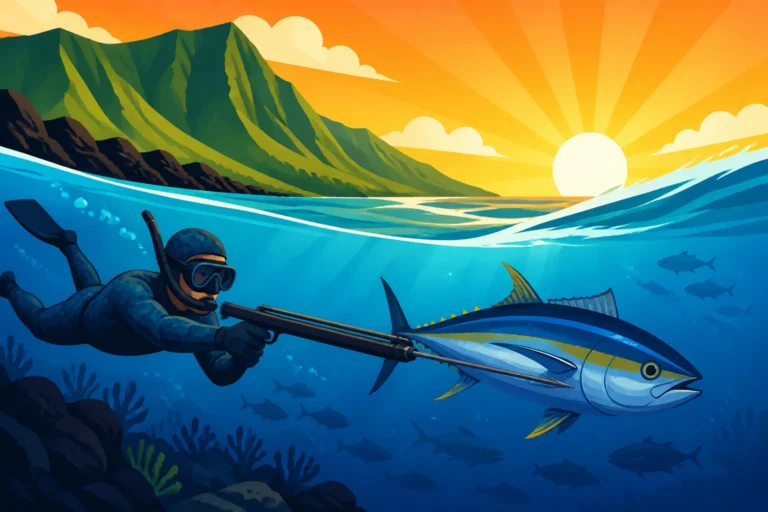
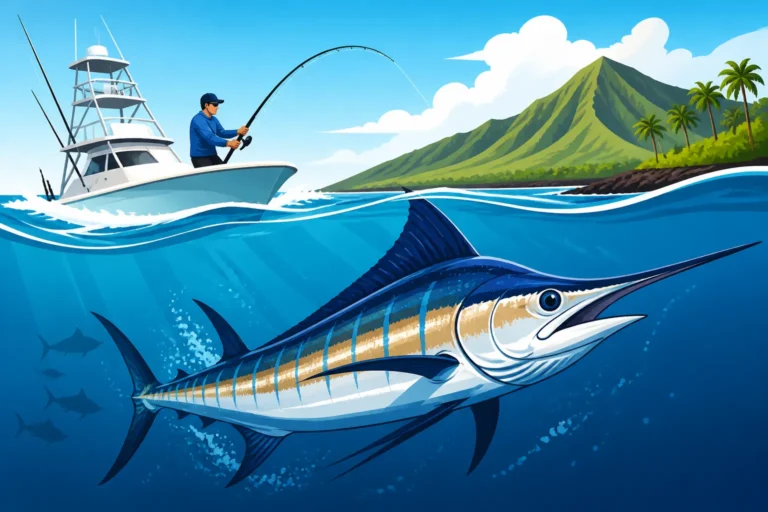
Aku (scientific name Katsuwonus pelamis) are a medium-sized tuna species, often overshadowed in angler conversations by their larger cousins, the ahi (yellowfin tuna) or marlin. However, in Hawaii, aku hold immense importance, both ecologically and culturally. They are a vital link in the marine food chain, serving as a primary food source for larger predators like marlin, sharks, and even larger tuna species. Without robust aku populations, the entire pelagic ecosystem would suffer.
Culturally, aku have been a cornerstone of Hawaiian sustenance for centuries. They are a staple in local diets, prized for their dark, rich meat, often prepared as sashimi, poke, or grilled. Traditional Hawaiian fishing practices, passed down through generations, often centered around locating and harvesting aku schools. It’s more than just a fish; it’s a connection to the 'aina (land) and kai (sea), reflecting the deep relationship between the people of Hawaii and their ocean environment. For many local families, a successful aku catch means a freezer full of protein and a gathering to share the bounty.
Key Characteristics and Identification
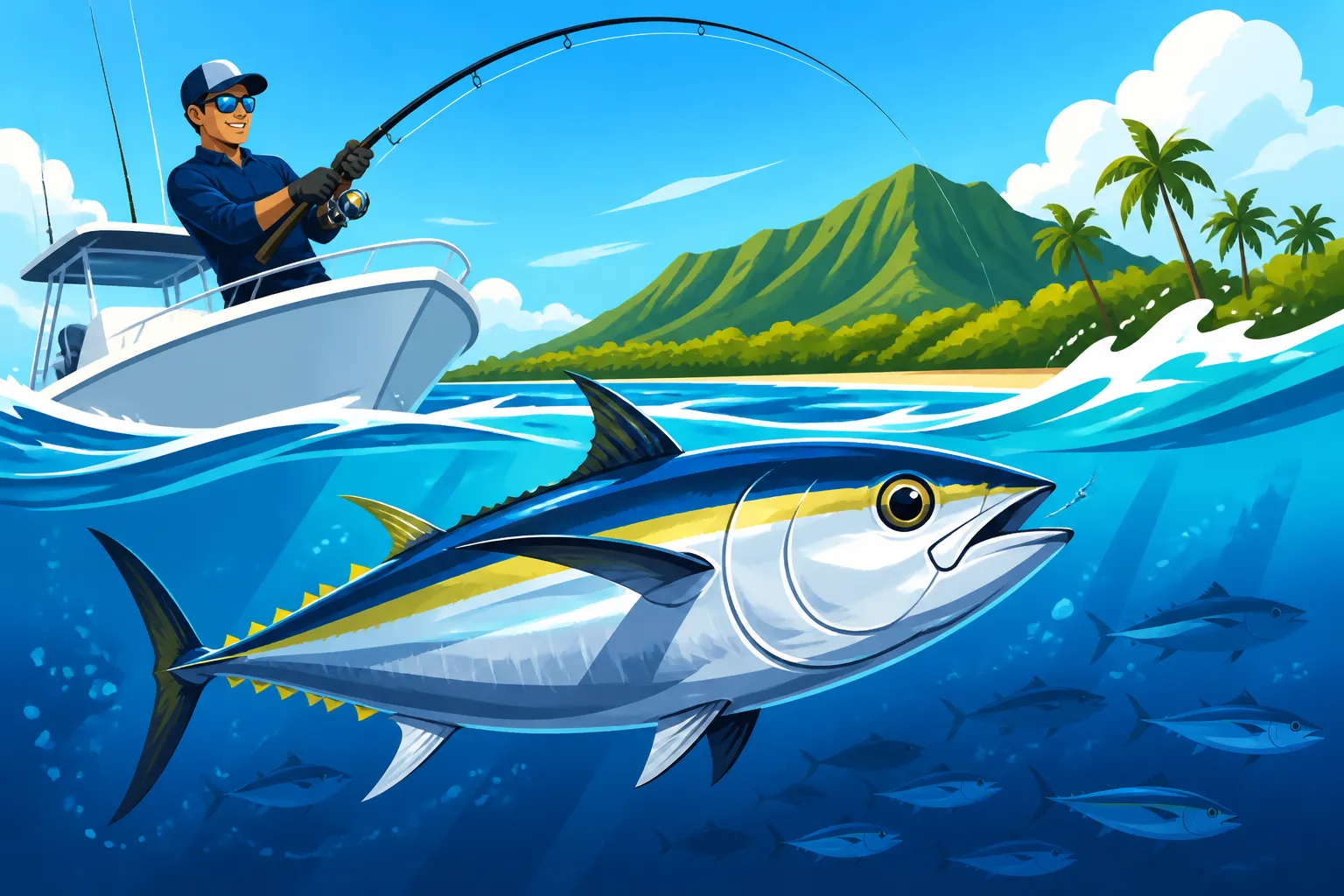
Distinguishing aku from other tuna species, especially when they're zipping by, can be tricky for the untrained eye. Aku are typically smaller than adult yellowfin or bigeye tuna, usually ranging from 5 to 25 pounds, though larger specimens over 30 pounds are caught. Their body is torpedo-shaped, perfectly adapted for speed, and they have a distinct pattern of four to seven dark longitudinal stripes on their belly, which are usually absent on other tuna species. Their dorsal fins are set far apart, and they possess small, conical teeth.
Coloration can vary from dark blue-purple on the back to silver on the sides and belly, with those tell-tale stripes being the most reliable identifier. While a shibi (juvenile yellowfin) might share a similar size, it won't have those prominent belly stripes. Knowing these specific identification markers can help you quickly confirm you've got an aku on the line, especially when you're in the midst of a hot bite and fish are flying over the rail. A quick search on Amazon for "Hawaii fish identification guide" might net you a handy laminated card for your tackle box, perfect for on-the-spot comparisons. You can also refer to a Pelagic Species Identification Guide for Hawaii for more details.
Aku Habits and Behavior
Aku are true pelagic roamers, meaning they live in the open ocean rather than near the coast or seabed. They are highly migratory, constantly moving in large schools, sometimes numbering in the thousands. These schools often associate with oceanic fronts, current lines, and subsurface structure like seamounts or FADs (Fish Aggregating Devices). Their behavior is largely driven by their voracious appetite; they are opportunistic predators that feed on smaller fish, squid, and crustaceans.
One of the most exciting aspects of aku behavior is their tendency to engage in "boiling" activity. When a large school of aku is actively feeding on baitfish, they'll create a visible disturbance on the water's surface, appearing as if the ocean is boiling. This feeding frenzy often attracts seabirds, which dive into the churning water to snatch up disoriented baitfish, creating tell-tale signs for observant anglers. This symbiotic relationship between birds and aku is a critical indicator that you're in the right place. These schools are always on the move, so once you find them, it's often a fast-paced game to keep up and stay on the fish.
Where and When to Find Aku in Hawaii
Locating aku isn't always about being in a specific spot on a map; it's about understanding the dynamic ocean environment and knowing what signs to look for. These fish are masters of the open water, but their movements are often predictable once you know their patterns.
Prime Aku Fishing Grounds Around the Islands
While aku can be found throughout Hawaii's offshore waters, certain areas consistently produce better results. Offshore FADs, or Fish Aggregating Devices, are prime locations. These buoys, strategically placed by the state, act as magnets for baitfish, which in turn attract aku and other pelagic predators. Current lines, where different ocean currents meet, creating temperature breaks and concentrating plankton and baitfish, are also hotspots. Seamounts and other underwater topographical features can create upwellings that bring nutrients to the surface, attracting bait and predators alike.
Around the Big Island, the Kona Coast is legendary for its deep, calm waters close to shore, making it an ideal hunting ground for various pelagics, including aku. Off Oahu, areas like the "P-Buoy" or "VV-Buoy" are well-known FADs that often hold schools of aku. Maui and Kauai also have their share of productive FADs and offshore banks. When planning your trip, consider checking local fishing reports or talking to seasoned captains who know the specific FADs or current lines that have been holding fish recently. For broader insights, you might find value in exploring Best Deep Sea Fishing Spots in Hawaii.
Seasonal Patterns and Water Conditions
Aku are present in Hawaiian waters year-round, but their abundance and specific locations can vary with the seasons. Generally, the warmer months from late spring through fall often see larger and more consistent schools. This aligns with the increase in baitfish activity during these times. However, good aku fishing can still be had in the winter, especially during periods of stable weather and water temperatures.
Water conditions play a crucial role. Clear, blue ocean water is generally preferred. Aku tend to avoid murky or discolored water. Pay attention to water temperature breaks – a change of even a few degrees can indicate a current line where aku might be feeding. Lunar phases can also influence their behavior, with many anglers reporting better bites during new and full moon periods, likely due to increased tidal movement and baitfish activity. Keeping an eye on ocean conditions, temperature charts, and even local weather patterns will greatly improve your chances. Understanding the Hawaii Fishing Seasons by Month can help you plan your trips.
Reading the Ocean: Signs of Aku Activity
This is where the art of aku fishing truly comes into play. Aku rarely just sit there waiting; you have to find them. The most reliable indicator of aku activity is the presence of seabirds. Terns, boobies, and noddies diving and circling over a particular area are almost always a sign that baitfish are being pushed to the surface by actively feeding tuna. Look for "working birds" – birds that are actively diving and feeding, not just resting on the water.
Other signs include visible "boiling" or "splashing" on the surface, which is the direct result of aku blitzing through bait schools. Sometimes, you might even see the distinctive dark shapes of the aku themselves just below the surface, especially on calm days. Pay attention to floating debris, logs, or kelp paddies, as these can also aggregate baitfish and, consequently, aku. A keen eye and patience are your best allies in reading the ocean and finding these elusive schools.
Techniques for Catching Aku in Hawaiian Waters
Catching aku is a dynamic experience that often involves a combination of tried-and-true techniques. Their speed and schooling nature mean you need to be ready to react quickly.
Trolling for Aku
Trolling is arguably the most common and effective method for locating and catching aku in Hawaii. It allows you to cover vast amounts of water and present lures to actively feeding or migrating schools. The key is to run a spread of lures at the right speed, typically between 6 to 9 knots, though sometimes faster. Lures for aku are usually smaller than those used for marlin or larger ahi, often in the 4-inch to 7-inch range. Popular choices include feather jigs, small Konahead-style lures, and cedar plugs. Colors like pink, green, blue, and black are often very effective.
Your trolling spread should ideally include a variety of lures at different distances behind the boat to cover the water column and imitate a school of baitfish. Some lures can be run closer, while others are set way back. Pay attention to which lure gets hit; that can give you clues about what the aku are keying in on that day. When you get a bite, try to keep the boat moving slightly, as this can often lead to multiple hookups as the school follows the hooked fish. For more detailed insights into this technique, check out Trolling Techniques for Hawaii Pelagics.
Live Baiting and Chumming for Aku
Once you've located a school of aku, or if you're trying to draw them in, live baiting and chumming can be incredibly effective. Small baitfish like opelu (mackerel scad) or akule (bigeye scad) are excellent choices. You can catch these baits beforehand using sabiki rigs or small cast nets. Once you're near an aku school, or if you're trying to attract one to your boat, start a chum line. This involves throwing small pieces of bait into the water, creating a scent trail that can draw the aku closer.
As the aku appear, cast your live bait directly into the chum line. The natural swimming action of a live baitfish is often irresistible. If you don't have live bait, chunking (throwing out cut pieces of fish) with a small, unweighted chunk on your hook can also work wonders. The excitement of a chummed-up aku school boiling around the boat is something every angler should experience. Just remember to have your drag set appropriately, as these fish hit hard! A good cooler, like one you might find on Amazon, is essential for keeping your bait fresh and your catch cold.
Shoreline and Nearshore Opportunities
While aku are predominantly an offshore species, there are rare, exciting occasions when large schools push close to shore, especially around rocky points, harbors, or bays where baitfish congregate. When this happens, shore anglers can have an absolute blast. Light tackle spinning gear with small metal jigs or Kastmasters can be incredibly effective. The key is to cast long distances and retrieve quickly, mimicking a fleeing baitfish.
This "run-and-gun" style of fishing requires mobility and quick observation. Look for those tell-tale bird activity signs or surface boils right off the coast. While not an everyday occurrence, when the aku come inshore, it provides a unique opportunity for anglers without a boat to experience the thrill of catching these powerful tuna. Always be mindful of local regulations and other ocean users when fishing from shore.
Essential Gear and Tackle for Aku Fishing
Having the right gear makes all the difference when targeting aku. These fish are strong for their size, and they fight hard, so your tackle needs to be up to the task.
Rods, Reels, and Lines
For trolling, a medium-heavy conventional rod, typically 6 to 7 feet long, paired with a reliable conventional reel spooled with 30 to 50 lb monofilament or braided line, is standard. The rod should have enough backbone to handle the strong pull of a fighting aku, while the reel needs a smooth, powerful drag system. Brands like Penn and Shimano are popular choices among Hawaiian anglers for their durability and performance.
If you're casting jigs into a school of aku that has come within range, a medium-heavy spinning rod (7-8 feet) with a high-speed spinning reel is ideal. Spool it with 20-40 lb braided line, which offers superior casting distance and sensitivity, then add a 30-50 lb fluorocarbon leader. A good quality braid, easily sourced from Amazon, can make a huge difference in your casting distance and hook-setting power. Remember, aku are fast, so you need gear that can keep up with their explosive runs.
| Gear Type | Recommended Specs | Why it's Important |
|---|---|---|
| Trolling Rod | 6-7 ft, medium-heavy conventional | Power to handle strong runs, absorbs shock, durable for offshore trolling. |
| Trolling Reel | Conventional, 30-50 lb capacity | Smooth, powerful drag for fighting strong fish; high line capacity for long runs. |
| Spinning Rod | 7-8 ft, medium-heavy fast action | Long casts for reaching schooling fish, sensitive tip for detecting subtle bites. |
| Spinning Reel | High-speed, 20-40 lb capacity | Quick retrieve for working jigs, strong drag for hard-fighting tuna. |
| Main Line | 30-50 lb mono (trolling), 20-40 lb braid (spinning) | Durability and shock absorption for trolling; sensitivity and casting for spinning. |
| Leader Material | 30-50 lb fluorocarbon | Low visibility in clear water, abrasion resistance against sharp teeth and rough skin. |
Lures, Jigs, and Baits
As mentioned, feather jigs are a classic aku killer. They come in various colors, but combinations of pink and white, green and yellow, or blue and silver are consistently effective. Small metal jigs, like dart jigs or diamond jigs, are excellent for casting into active schools or for vertical jigging. Consider carrying a variety of sizes and weights to match different baitfish profiles and water depths.
Cedar plugs are another traditional and highly effective aku lure, often mimicking small baitfish. For live baiting, ensure you have sabiki rigs to catch your own baitfish if you don't purchase them beforehand. Always have a good selection on hand; what works one day might not work the next. It pays to experiment with colors and sizes until you find what the aku are keying in on.
Accessory Gear for Success
Beyond the basic rod and reel, a few key accessories can significantly improve your aku fishing experience. A sturdy gaff is essential for bringing larger aku safely into the boat. Keep it within easy reach. A large cooler packed with ice is non-negotiable for preserving your catch. Aku meat, like all tuna, degrades quickly if not properly handled and iced. You’ll want to bleed your fish immediately upon landing for the best quality meat.
Sun protection is also paramount in Hawaii's strong tropical sun. Wide-brimmed hats, polarized sunglasses, long-sleeved UPF-rated shirts, and plenty of sunscreen are a must. A good pair of pliers or de-hookers will help you safely remove hooks, especially if you plan on releasing any fish. Don't forget a first-aid kit for minor cuts or scrapes that can happen on a boat. All these items are readily available and can be purchased from retailers like Amazon to ensure you're fully prepared.
Handling Your Aku Catch: From Hook to Table
Catching aku is just the first part of the adventure. Proper handling after the catch is crucial to ensure the highest quality meat for your dinner table.
Proper Handling for Quality Meat
Aku, like other tuna, are highly prized for their meat, but it's delicate and can spoil quickly if not handled correctly. The moment an aku is brought aboard, the very first step should be to bleed it immediately. This involves making a cut to sever the main artery, usually near the gills or tail, and allowing the fish to bleed out in a bucket of seawater or over the side of the boat. Bleeding helps to remove lactic acid and blood from the flesh, resulting in cleaner, better-tasting meat.
After bleeding, the fish should be immediately placed on ice, preferably in an ice slurry (a mix of ice and saltwater) to rapidly cool its core temperature. This slows down bacterial growth and maintains the firmness and flavor of the flesh. Avoid leaving aku on the deck in the sun, even for a short time. Once back on shore, clean the fish promptly, remove the guts, and store it on fresh ice or in a refrigerator. This meticulous care from hook to cooler ensures you'll enjoy the best possible quality aku for your meals. Knowing Hawaii Pelagic Species Bag Limits is also important for responsible harvesting.
Aku as Table Fare and Cultural Significance
Aku is a beloved fish in Hawaii for its versatility and flavor. Its rich, dark red meat is excellent for a variety of preparations. Perhaps most famously, it's a star ingredient in traditional Hawaiian poke, where cubed aku is seasoned with soy sauce, sesame oil, limu (seaweed), and other ingredients. It's also delicious as sashimi, served raw with a dash of wasabi and soy sauce.
For cooked preparations, aku can be grilled, pan-fried, or baked. The robust flavor stands up well to marinades and bold seasonings. Many local families have their own cherished recipes, passed down through generations, showcasing this culturally significant fish. Sharing a fresh aku catch with family and friends is a cherished Hawaiian tradition, embodying the spirit of aloha and generosity. If you're wondering about other popular local catches, you might want to learn about Ahi (Yellowfin Tuna) Fishing in Hawaii or Mahi-mahi Fishing in Hawaii.
Conservation and Sustainable Practices
As enthusiastic anglers, it's our responsibility to ensure the sustainability of aku populations for future generations. Fortunately, aku are generally considered a healthy and abundant species globally, and in Hawaii, they are not currently listed as overfished. However, responsible fishing practices are still crucial. Always adhere to current bag and size limits set by the Hawaii Department of Land and Natural Resources (DLNR). These regulations are in place to protect fish stocks and ensure healthy ecosystems. You can find detailed regulations in the Hawaii Fishing License Guide for 2026.
Practice catch and release for any fish you don't intend to keep, ensuring they are handled with care to maximize their survival chances. Minimize waste by utilizing as much of your catch as possible. Support local fisheries and conservation efforts that promote healthy ocean environments. By fishing responsibly and respecting the ocean, we can continue to enjoy the thrill of aku fishing and the bounty it provides for many years to come.
Disclaimer
This article is for general informational purposes only and does not constitute professional advice. Laws, prices and regulations vary by location and change over time. Consult a qualified professional for guidance on your specific situation.