Best Inshore vs Offshore Charters in Hawaii
Deciding between an inshore and an offshore fishing charter in Hawaii can feel like you're trying to choose between two completely different adventures, and honestly, you kind of are! Many visitors and even kama'aina (locals) struggle with this choice, wondering if they should cast lines close to the stunning coastline or venture out into the deep blue for a shot at a monster. This comprehensive guide is designed to break down the ins and outs of both inshore and offshore charters, helping you understand the unique experiences, target species, techniques, and considerations for each, so you can pick the perfect Hawaiian fishing trip for your dreams.
Understanding Inshore Fishing Charters in Hawaii
Inshore fishing in Hawaii offers a truly distinct experience compared to its offshore counterpart. It’s often characterized by calmer waters, shorter travel times, and a chance to truly soak in the breathtaking coastal views of islands like Oahu, Maui, or the Big Island. But don't let the "calmer" aspect fool you; inshore fishing can be incredibly exciting and rewarding, especially if you're looking for a more hands-on, active angling experience.
What Defines Inshore Fishing?
When we talk about "inshore" fishing in Hawaii, we're generally referring to fishing activities that take place relatively close to the shoreline. This could mean a few hundred yards off the beach, within protected bays, along reef flats, or around the numerous rocky points and channels that define our islands. The depths typically range from just a few feet on the reef flats to perhaps 100-200 feet in some of the deeper channels or nearshore ledges. The beauty of inshore fishing is its accessibility and the sheer variety of habitats you can explore without venturing too far from land.
These waters are often protected from the roughest ocean swells, making for a much smoother ride, which is a huge bonus for anyone prone to seasickness or those bringing along keiki (children) or less experienced anglers. You might be drifting near a coral head, casting into a surf break, or even wading out onto a shallow flat. The proximity to land also means you're constantly treated to panoramic views of the volcanic peaks, lush valleys, and pristine beaches that make Hawaii so iconic, adding an extra layer of enjoyment to your fishing adventure.
The equipment used for inshore fishing also tends to be lighter than what you'd find on a deep-sea charter. This allows for a more sporting fight with the fish and can be particularly appealing to anglers who enjoy the tactile experience of feeling every head shake and run. It's a more intimate connection with the fish and the environment, often requiring finesse and local knowledge to navigate the complex reef systems and find the honey holes.
Species You'll Target Inshore
Hawaii's inshore waters are teeming with a vibrant array of fish species that are not only fun to catch but also beautiful to see. You won't be battling monster marlin here, but you'll have plenty of action with powerful, reef-dwelling, and predatory fish. One of the most sought-after species is the Papio, which is the juvenile form of the formidable Ulua (Giant Trevally). These powerful fighters, even at smaller sizes, will test your tackle and your stamina. Many anglers dream of catching a Papio as a precursor to one day landing a massive Ulua.
Beyond the trevally family, you'll encounter a host of other exciting fish. The Moi (Pacific Threadfin) is another highly prized inshore catch, known for its delicious white meat and challenging fight. These fish often school up in sandy-bottomed areas near reefs. Then there's the Bonefish, locally called Oio, which offers an incredible shallow-water sight-fishing experience. These "ghosts of the flats" are incredibly fast and elusive, providing a thrilling challenge for fly anglers and light-tackle enthusiasts alike. Targeting them requires stealth and precision, often involving wading in clear, calm waters.
Reef fish like the colorful Uhu (Parrotfish), Kumu (Goatfish), and various snapper and grouper species also make frequent appearances, providing consistent action and adding to the visual spectacle of fishing in Hawaii's clear waters. While some of these might not be trophy-sized, they offer consistent bites and are often excellent eating. You might also stumble upon invasive species like Taape (Blue-line snapper) and Roi (Peacock Grouper), which are encouraged to be harvested due to their impact on native ecosystems, offering an opportunity to fish with a purpose.
Typical Inshore Techniques and Gear
Inshore fishing in Hawaii employs a variety of techniques, largely depending on the target species and the specific fishing grounds. Light to medium spinning tackle is the workhorse for most inshore charters. This setup allows for versatile casting and provides a good balance of power for battling fish while still being sporting. You'll often be casting artificial lures, such as poppers, stickbaits, and soft plastics, especially when targeting Papio and other predatory reef fish. The excitement of a topwater strike from a Papio is something every angler should experience!
Bait fishing is also incredibly popular and effective inshore. Live bait, like opelu (mackerel scad) or akule (bigeye scad), are highly sought after, but fresh dead bait like squid, small fish, or crustaceans can also yield excellent results. For species like Moi and certain reef fish, a simple weighted bottom rig with bait can be highly effective. Some charters might even incorporate throw nets to catch fresh bait right before your eyes, adding to the authentic Hawaiian fishing experience.
Fly fishing for Bonefish on the shallow flats of Oahu or Molokai is another specialized inshore technique. This requires a dedicated guide and specific equipment, typically 8-10 weight fly rods, accurate casting, and a keen eye to spot the camouflaged fish. Wading techniques are often employed here, where anglers quietly stalk the flats on foot. Whether you're whipping lures from a small skiff, dropping bait near a reef, or wading with a fly rod, the common thread in inshore fishing is often the close interaction with the vibrant marine environment and the diverse, hard-fighting species it holds. You might be surprised at the power some of these "smaller" fish possess!
Pros and Cons of Inshore Charters
Choosing an inshore charter definitely comes with its own set of advantages and a few considerations you'll want to keep in mind. On the positive side, inshore trips are often more accessible and a fantastic option for families, beginners, or anyone looking for a calmer day on the water. The generally smoother conditions mean a significantly reduced risk of seasickness, allowing everyone in your party to enjoy the experience without feeling green around the gills. Plus, the proximity to shore means you're constantly treated to stunning views of Hawaii's coastline, making for some incredible photo opportunities and a memorable backdrop to your angling adventure.
Inshore fishing typically involves more active engagement, like casting lures or working baits, which many anglers find more engaging than simply waiting for a trolling rod to go off. There's a greater variety of species you might encounter inshore, and the action can be more consistent, leading to more hook-ups throughout the day. This can be particularly exciting for kids or those new to fishing. Furthermore, inshore charters often have a slightly lower price point than their offshore counterparts, making them a more budget-friendly option for many. For a detailed breakdown of costs, you might want to read Hawaii Fishing Charter Cost Guide.
However, there are some downsides to consider. While the action can be consistent, the fish you catch inshore are generally smaller in size compared to the pelagic monsters targeted offshore. If your dream is to battle a record-breaking marlin or a massive tuna, inshore won't deliver that kind of trophy potential. Also, while waters are generally calmer, specific areas or unexpected swells can still lead to bumpy rides. The techniques used can be more physically demanding, requiring constant casting and retrieving, which might not appeal to every angler. Lastly, while you might catch plenty of fish, strict Hawaii Bag and Size Limits by Species still apply to many popular inshore species, so be sure to familiarize yourself with them.
Exploring Offshore Fishing Charters in Hawaii
If the idea of battling a massive, ocean-dwelling predator and truly testing your angling might appeals to you, then an offshore fishing charter in Hawaii is likely what you're dreaming of. These trips are synonymous with "deep sea fishing" and take you far beyond the sight of land, into the vast, deep blue waters where the biggest and fastest fish in the ocean roam. It's an adrenaline-fueled adventure that promises thrilling encounters and the chance of a lifetime catch.
What Defines Offshore Fishing?
Offshore fishing, as the name suggests, involves venturing many miles away from the Hawaiian coastline, often into depths that plunge thousands of feet. This is where the mighty pelagic species cruise, following ocean currents, baitfish schools, and natural underwater structures that act as highways and feeding grounds. You'll often be heading towards "FADs" (Fish Aggregating Devices) – buoys anchored in deep water that attract baitfish, and consequently, the bigger predators. The travel time to these prime fishing grounds can be significant, sometimes an hour or more, before lines even hit the water.
These open ocean conditions mean you'll be on bigger, more robust boats, often sportfishing yachts designed to handle the swells and provide comfort on long trips. The deeper you go, the more dramatic the ocean floor can be, with submerged ledges, seamounts, and canyons creating unique ecosystems. The water itself is often a stunning, deep indigo blue, a stark contrast to the shallower, greener inshore waters. While the views of the coastline may disappear behind you, you'll be treated to the vast expanse of the Pacific, often accompanied by seabirds, dolphins, and sometimes even whales.
The whole experience of offshore fishing is grander, more powerful. It’s about covering vast distances, often trolling multiple lines simultaneously, and patiently waiting for that explosive strike that signals a true battle has begun. It's less about casting repeatedly and more about the hunt for a true leviathan, a game of endurance and skill once a fish is hooked. The boats are typically equipped with advanced electronics like sonar and radar to locate bait and structure, and heavy-duty gear built to withstand the immense power of these apex predators.
Pelagic Species You'll Pursue Offshore
Offshore fishing in Hawaii is all about targeting the magnificent pelagic species that migrate through our nutrient-rich waters. These are the fish of legends, the ones that adorn magazine covers and angler's wildest dreams. The undisputed king of these waters, especially off the Kona Coast of the Big Island, is the Marlin. We're talking Blue Marlin, Striped Marlin, and Spearfish. The thrill of hooking into a Blue Marlin, watching it greyhound across the surface, and then digging in for an hour-long fight is an experience that changes anglers forever. To learn more, check out Marlin Fishing off the Kona Coast.
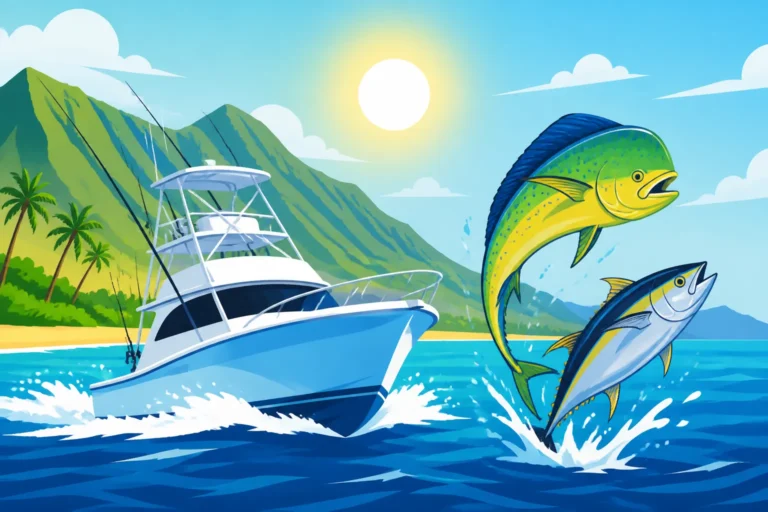
Then there's the powerful and delicious Ahi, also known as Yellowfin Tuna. These torpedo-shaped speedsters fight with incredible strength, often diving deep and pulling drag relentlessly. Catching a nice-sized Ahi can provide enough delicious sashimi and steaks to feed a small army, and they are highly prized by commercial and recreational anglers alike. Our waters are also home to Ono (Wahoo), known for their blistering runs and razor-sharp teeth, and the acrobatic, vibrant Mahimahi (Dorado or Dolphin Fish), which are not only spectacular fighters but also one of the most beautiful fish in the ocean.
You might also encounter Aku (Skipjack Tuna), often found in large schools, providing fast and furious action, especially for light tackle. While not as large as Ahi, they are incredibly fun to catch and also make excellent table fare. Occasionally, you might even hook into a Shortbill Spearfish, a smaller but equally feisty billfish. Each of these species offers a unique fight and a memorable challenge, making offshore fishing in Hawaii an unparalleled big-game experience.
Common Offshore Techniques and Gear
Offshore fishing in Hawaii primarily utilizes techniques designed to cover vast expanses of water and entice large, fast-moving pelagic predators. Trolling is king here. Typically, multiple heavy-duty rods are deployed from the boat, with lures or baits being pulled behind at various speeds and depths. These lures often mimic baitfish like skipjack tuna or mahi-mahi and can range from brightly colored skirts to larger, more realistic plastic baits. The goal is to cover ground and present the offering to as many potential game fish as possible. The boat's outriggers and downriggers play a crucial role in spreading out the lines and controlling the depth of the lures.
Another effective offshore technique is live baiting, especially for marlin or larger tuna. This involves catching or acquiring live baitfish, such as skipjack tuna or opelu, and then slow-trolling or drifting them behind the boat. The erratic movements of a live bait can be irresistible to a hungry predator. Sometimes, specific methods like "chumming" are used for Ahi, where small pieces of bait are thrown into the water to attract schools of tuna to the boat. This can lead to incredible topwater action as the tuna feed in a frenzy.
When targeting bottomfish in deeper waters (though this can sometimes blur the line with "deep drop" inshore fishing, it's often done far offshore), heavy electric reels are frequently used. These allow anglers to drop heavy baits and jigs down hundreds or even thousands of feet to target species like Opakapaka (Pink Snapper) and Onaga (Ruby Snapper). The gear is robust, consisting of heavy conventional rods and reels spooled with strong, high-test line, often braided. Fighting chairs are common on offshore boats, providing leverage and support when battling a large fish for an extended period, allowing anglers to truly focus on the fight without getting exhausted too quickly.
Pros and Cons of Offshore Charters
Venturing offshore for a fishing charter comes with its own exciting set of pros and cons that you'll want to weigh carefully. The most significant advantage, without a doubt, is the potential for catching a true trophy fish. Offshore is where you'll find the majestic Marlin, giant Ahi, and powerful Ono – species that represent the pinnacle of big-game angling. The thrill of that line screaming off the reel as a powerful fish strikes is an adrenaline rush that few other experiences can match. It's a true hunt, a battle of wits and strength, often against fish that outweigh you.
Another pro is the opportunity to see incredible marine wildlife, often far from the bustling crowds of the shoreline. You might spot pods of dolphins riding the bow wake, majestic whales breaching in the distance, or rare seabirds soaring overhead. For experienced anglers looking for a challenge, offshore fishing offers just that, demanding skill, patience, and endurance. The boats themselves are often state-of-the-art sportfishing vessels, offering amenities and comfort for long days at sea. Plus, if you're looking for abundant table fare, a successful Ahi or Mahimahi trip can provide a freezer full of delicious fish.
However, offshore charters also have their drawbacks. The most common concern is seasickness. Being far out in the open ocean means encountering larger swells and choppier conditions, which can be very uncomfortable for those prone to motion sickness. Longer travel times to the fishing grounds mean less actual fishing time in some cases, and there can be periods of waiting between strikes. The cost of offshore charters is generally higher than inshore trips, reflecting the larger boats, specialized gear, and increased fuel consumption. You can get more details on Hawaii Fishing Charter Cost Guide. There's also less "hands-on" casting compared to inshore, as trolling is the predominant method, which might feel less engaging for some. Finally, while the potential for a trophy is there, offshore fishing can sometimes mean longer periods without a bite – it's often boom or bust, especially for the biggest fish.
Key Differences: Inshore vs. Offshore at a Glance
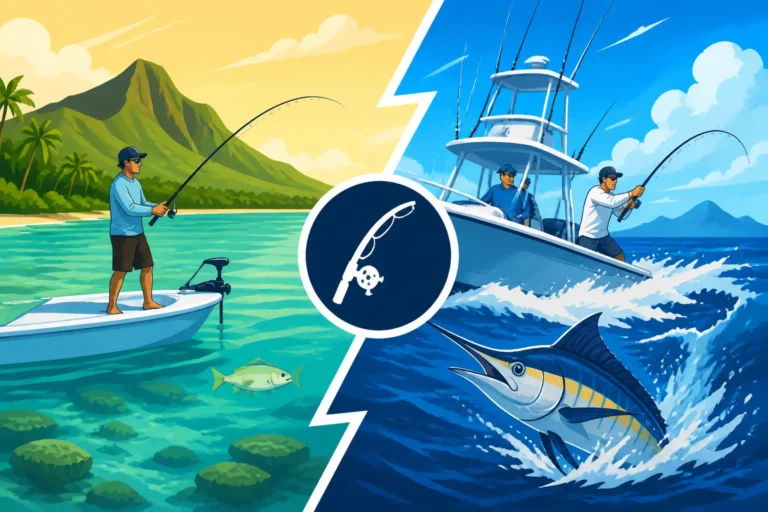
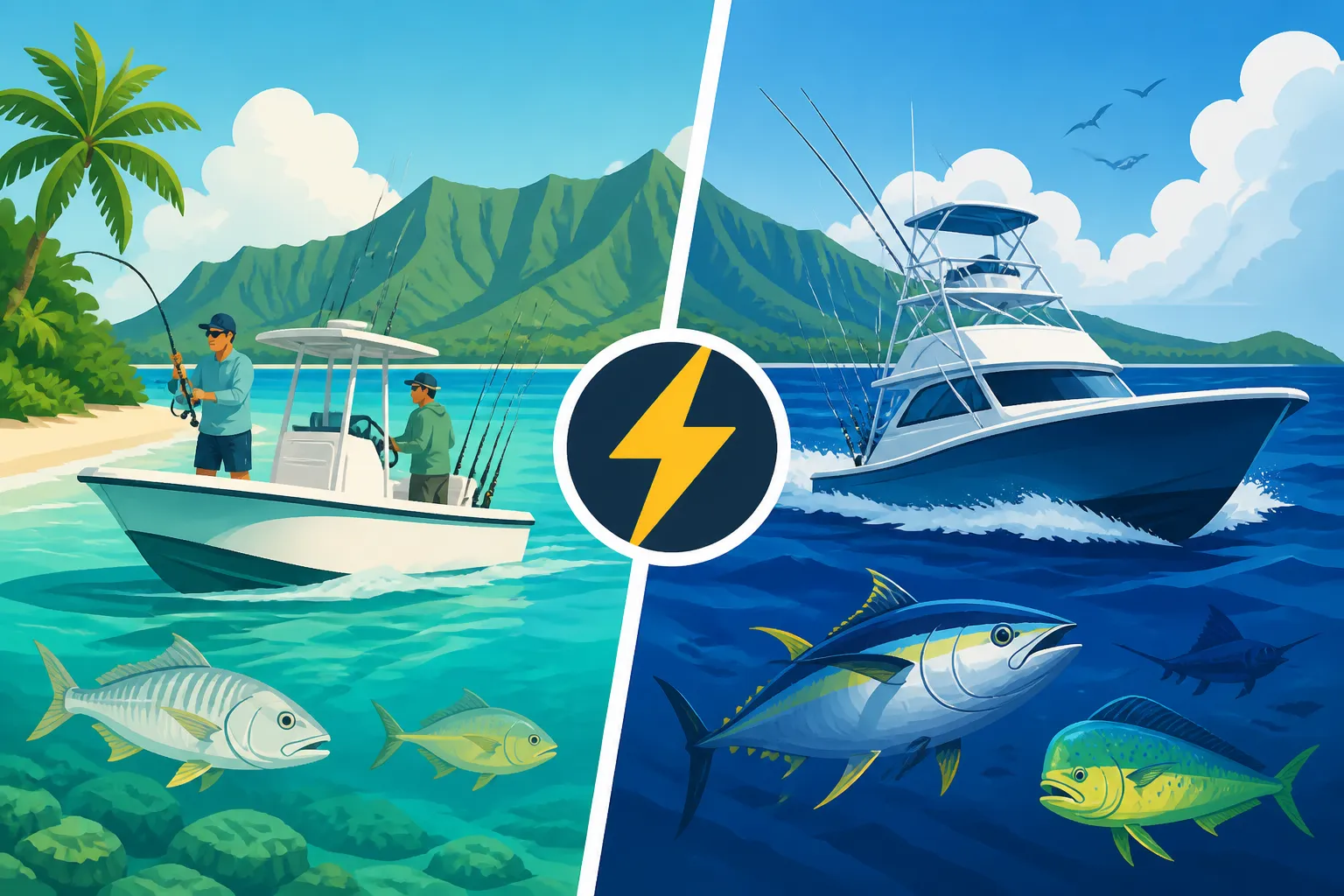
To help you visualize the stark contrasts between these two exciting Hawaiian fishing adventures, let's put some of the key differences side-by-side. This table will give you a quick reference point to consider when making your decision, covering everything from the environment you'll be in to the kind of fish you'll be targeting.
| Feature | Inshore Fishing Charter | Offshore Fishing Charter |
|---|---|---|
| Location | Close to shore, bays, reefs, channels, shallower waters | Far from shore, deep open ocean, FADs, seamounts |
| Water Depth | Typically 10 to 200 feet | Often hundreds to thousands of feet |
| Water State | Generally calmer, protected by land | Can be rougher, exposed to open ocean swells |
| Target Species | Papio, Ulua (juvenile), Moi, Bonefish, Uhu, reef fish | Marlin (Blue, Striped), Ahi, Ono, Mahimahi, Spearfish |
| Primary Techniques | Casting (lures, bait), whipping, wading, light tackle | Trolling (lures, live bait), deep dropping, heavy tackle |
| Boat Size | Smaller skiffs, center consoles, bay boats | Larger sportfishing yachts, cabin cruisers |
| Gear | Light to medium spinning tackle, baitcasters | Heavy conventional tackle, fighting chairs, electric reels |
| Travel Time | Shorter (minutes to half an hour to fishing grounds) | Longer (often 1+ hours to fishing grounds) |
| Experience | More active, hands-on, consistent action, scenic views | Patient hunt, explosive strikes, potential for trophy fish |
| Seasickness Risk | Lower due to calmer waters | Higher due to open ocean conditions |
| Cost | Generally lower | Generally higher |
| Trophy Potential | Good for strong fighters, but generally smaller fish | High for world-class, large pelagic species |
This table serves as a quick snapshot, but remember that there's always a spectrum within each category. Some "inshore" charters might push a bit further out, and some "offshore" boats might start closer if there's an early bite. However, these general distinctions hold true for most operations in Hawaii.
Who Should Choose Which Charter? Tailoring Your Trip
The decision between an inshore and an offshore charter really boils down to your personal preferences, your group's dynamics, and what kind of fishing experience you're truly seeking. There's no "better" option, only the best option for you and your crew. Thinking through these factors before you book can save you disappointment and ensure you have the most memorable time possible on the water.
When an Inshore Charter is Your Best Bet
If you're planning a family outing with young children or are new to fishing, an inshore charter is almost always the way to go. The calmer waters significantly reduce the likelihood of seasickness, which can quickly ruin a trip for little ones or first-timers. Imagine the joy of a child reeling in their first Papio from a small skiff, with the beautiful Hawaiian coastline as a backdrop – it's truly magical. Inshore trips are often shorter, which is perfect for maintaining attention spans and preventing fatigue. Many charters offer Best Guided Kids Fishing Trips in Hawaii specifically tailored to these needs.
An inshore trip is also ideal if you're looking for a more relaxed, hands-on angling experience that focuses on casting, jigging, or even wading. If you enjoy sight fishing, like stalking Bonefish on the flats, this is where you'll find that opportunity. The consistent action with a variety of species often means more hook-ups throughout the day, keeping the excitement levels high, even if the fish aren't record-breakers. You'll also get to truly appreciate the stunning scenery and marine life closer to the reefs. If you want to refine your techniques or learn new ones like whipping for Papio, an Best Shore Fishing Guides in Hawaii can provide valuable insights and local expertise.
Consider an inshore charter if you have a specific interest in local reef fish or simply want to catch dinner. Many of the inshore species are excellent eating, and the "catch-and-keep" policies are often more generous than for highly migratory pelagic species. It's also a great option if you're working with a tighter budget, as these charters generally come at a lower price point.
Why an Offshore Charter Might Be Perfect for You
For the seasoned angler or the adventurous thrill-seeker, an offshore charter is where the big dreams come alive. If your ultimate goal is to hook into a massive Marlin, battle a powerful Ahi, or chase down a Mahimahi on the troll, you absolutely need to head offshore. These trips are about the hunt for true giants, the kind of fish that push your tackle and your stamina to their limits. There's an undeniable allure to deep-sea fishing, the idea of being out in the vast ocean, far from land, in pursuit of legendary creatures. Looking for that ultimate marlin challenge? Check out Best Marlin Charters off the Kona Coast.
Offshore charters are also perfect if you enjoy the strategic aspect of big-game fishing – the art of trolling, understanding ocean currents, and patiently waiting for that explosive strike. The anticipation can be as exciting as the fight itself. Many anglers find the experience of being on a large, well-equipped sportfishing yacht, manned by an experienced captain and crew, to be a highlight in itself. These boats are built for comfort and efficiency in open waters, ensuring you're well-prepared for the journey.
If you're not prone to seasickness and are ready for a potentially long, intense battle, then offshore fishing will deliver the kind of heart-pounding action you're looking for. The sense of accomplishment that comes with landing a large pelagic fish is truly unparalleled. It’s an investment in an experience that could yield a once-in-a-lifetime catch and provide stories that you'll be telling for years to come.
Considering Your Group and Experience Level
Before booking, take a moment to honestly assess your group. Are there any young children who might get bored or restless on a long offshore trip? Are there individuals prone to seasickness, even with medication? Answering these questions can steer you toward the right experience. For example, if you're traveling with multiple generations, a Best Family-Friendly Fishing Charters in Hawaii might be an inshore option that caters to diverse age groups and experience levels.
For absolute beginners, a shorter inshore trip can be a fantastic introduction to fishing. It provides more opportunities for catching fish and learning the ropes in a less intimidating environment. The crew on these charters is often excellent at teaching basic techniques and ensuring everyone gets a chance to participate. However, if your group consists of experienced anglers who have done plenty of inshore fishing elsewhere and are eager for a new challenge, offshore fishing will likely be more satisfying.
If you're an experienced angler traveling with beginners, you might even consider a mixed approach – perhaps a shorter inshore trip one day, followed by a full-day offshore adventure for just the seasoned anglers. This allows everyone to have their ideal experience. Platforms like FishingBooker can help you filter charters by various criteria, including family-friendliness or specific target species, making it easier to find a match for your group's unique needs. Remember, the goal is for everyone to have a fantastic and safe time on the water.
What to Expect and How to Prepare for Your Charter
Once you've decided between an inshore or offshore adventure, knowing what to expect and how to prepare can make all the difference in having a smooth, enjoyable, and successful fishing trip in Hawaii. From what's provided to what you should bring, a little foresight goes a long way.
Gear, Bait, and Licenses
One of the great things about booking a reputable fishing charter in Hawaii is that they typically provide all the necessary fishing gear. This means rods, reels, tackle, and often the bait, whether it's live, fresh dead, or artificial lures. You don't need to worry about packing your own heavy-duty trolling rods for an offshore trip or specialized whipping gear for inshore. The crew will have gear appropriate for the target species and conditions. However, if you have a favorite lucky rod or a specific lure you swear by, you can always ask the captain if it's appropriate to bring along.
Regarding bait, offshore charters often catch their own live bait like skipjack or opelu, or they'll have a supply of frozen bait ready. Inshore charters might use live shrimp, squid, or various cut baits, which they usually supply. It's all part of the charter service.
Now, about licenses: this is a common point of confusion for visitors. For saltwater fishing in Hawaii, recreational anglers historically have not needed a license if they are fishing from shore or on their own recreational vessel. However, rules can change. When fishing on a licensed charter boat, generally the charter holds the necessary permits, and individual passengers are covered under that. This is something to confirm when you book, but typically, you won't need to purchase a separate license. You can find more specific information in guides like Hawaii Fishing License Guide for 2026 and Do You Need a Fishing License in Hawaii. Always double-check current regulations before your trip.
The Boat and Crew Experience
The type of boat you'll be on will vary significantly depending on whether you choose an inshore or offshore charter. Inshore trips might use smaller, faster center console boats, bay boats, or even custom skiffs designed for navigating shallow reefs. These boats are nimble and allow for close access to the shoreline and specific fishing spots. Offshore charters, on the other hand, will typically operate larger, more substantial sportfishing yachts. These vessels are built for stability in open ocean swells, often featuring a cabin, head (restroom), and sometimes even air conditioning for comfort during long runs to the fishing grounds.
Regardless of the boat size, a professional charter will always have a skilled and knowledgeable crew. On an offshore boat, you'll usually have a captain and at least one deckhand. The captain is responsible for navigation, safety, and putting you on the fish, utilizing their years of experience and local knowledge. The deckhand is your primary assistant, setting lines, baiting hooks, helping you fight fish, gaffing the catch, and ensuring everything runs smoothly. On inshore trips, especially with smaller boats, the captain often doubles as the guide and assistant.
The crew's expertise is invaluable. They understand the Hawaii Fishing Seasons by Month, local conditions, and what techniques are working best. They are also there to ensure your safety and provide instruction if needed. A good crew will be friendly, attentive, and dedicated to making your trip a success. Knowing what to expect in terms of service and how to interact with the crew, including Tipping Etiquette for Hawaii Fishing Charters, can enhance your overall experience.
What to Bring and Wear
Even though the charter provides the fishing essentials, there are several things you should definitely bring along to ensure your comfort and safety. First and foremost, sun protection is paramount in Hawaii. The tropical sun is intense, even on cloudy days. Pack high-SPF, reef-safe sunscreen, a wide-brimmed hat, sunglasses (polarized ones are a bonus for spotting fish), and long-sleeved, lightweight clothing with UPF protection. Many anglers opt for light-colored, breathable fishing shirts.
Hydration is also key. Bring plenty of water and other non-alcoholic beverages. Snacks are a good idea for any length trip, and for longer full-day charters, a packed lunch is essential. While some boats might offer drinks or light snacks, it's always best to come prepared with your favorites.
Footwear should be comfortable and provide good grip on a wet deck. Non-marking shoes or deck boots are ideal. Avoid flip-flops that might slip off or cause you to lose your footing. If you're prone to seasickness, take preventative medication before you even board the boat, usually an hour or two prior. There's nothing worse than getting sick halfway to the fishing grounds. A small, waterproof bag for personal items like your phone, camera, and wallet is also a good idea. For a comprehensive list, consult What to Bring on a Hawaii Fishing Charter. Remember, the more prepared you are, the more you can relax and focus on the fishing!
Booking Your Hawaii Fishing Charter
Choosing the right charter can sometimes feel overwhelming, given the number of operators available across the islands. However, with a little research and by knowing what questions to ask, you can confidently book an experience that perfectly matches your expectations. This is where a bit of upfront effort pays off in spades for a memorable trip.
Finding Reputable Operators
The first step in booking a charter is finding operators with a solid reputation. Start by asking for recommendations. If you know locals or fellow anglers who have fished in Hawaii, their personal experiences can be invaluable. Word-of-mouth is still a powerful tool here. Beyond that, the internet is your friend. Websites like FishingBooker are excellent resources, as they aggregate listings from numerous charters and, critically, provide customer reviews and ratings. This allows you to see unbiased feedback from previous clients, giving you a sense of the captain's demeanor, the condition of the boat, and the overall success rate.
When browsing, pay attention to consistent positive feedback regarding safety, professionalism, and the crew's willingness to help anglers of all skill levels. Look for operators who specialize in the type of fishing you're interested in – some charters are purely dedicated to marlin trolling, while others might focus more on bottomfishing or inshore light tackle. Many operators will also have their own websites or active social media pages where you can see photos of recent catches and learn more about their specific services. Don't be shy about checking out multiple options before making a decision.
Always verify that the charter company is properly licensed and insured. While this is usually a given for reputable businesses, it provides peace of mind. A charter captain in Hawaii should possess the necessary Coast Guard credentials to operate a for-hire vessel. It's all part of ensuring a safe and legitimate fishing adventure for you and your group.
Asking the Right Questions Before You Book
Once you've narrowed down a few potential charters, it's crucial to reach out and ask some specific questions before committing. This is your chance to clarify any uncertainties and ensure the charter aligns with your expectations. Don't be afraid to ask about their primary target species and what kind of success they've been having recently. For instance, if you're set on catching Ahi, ask if they've been consistently finding tuna schools. A good charter operator will be transparent about current fishing conditions and realistic about what you can expect.
Inquire about their catch policy. Is it strictly catch-and-release for certain species, or can you keep your catch? If you can keep fish, will the crew clean and fillet it for you? This is a common service, but it’s good to confirm. Ask about the duration of the trip – is it a full-day, half-day, or even a shorter Best Half-Day Charters in Hawaii outing? Understand what's included in the price: tackle, bait, drinks, snacks? What about a fishing license, though as mentioned, you typically won't need one on a charter?
Always ask about their cancellation policy, especially regarding weather. Hawaiian weather can be unpredictable, and reputable charters will have clear policies for rescheduling or refunds if conditions make fishing unsafe. Also, if you have specific physical needs or mobility limitations, communicate this upfront to ensure the boat and crew can accommodate you. These types of questions are fundamental to How to Choose a Hawaii Fishing Charter and will help you find the perfect match.
Understanding Pricing and Inclusions
Charter pricing in Hawaii can vary widely based on the duration of the trip, the type of fishing (inshore vs. offshore), the size and amenities of the boat, and whether you're booking a private or shared charter. Generally, offshore full-day private charters will be the most expensive, while shared inshore trips might be more budget-friendly. It's essential to get a clear understanding of the total cost and what exactly is included.
Most charters will quote a base price for the trip. Always ask if that price is for the entire boat (private charter) or per person (shared charter). For private charters, the cost remains the same whether you bring two people or six, making it more cost-effective for larger groups. Shared charters allow individuals or small groups to join other anglers, splitting the cost, but offering less flexibility in terms of target species or departure times.
Beyond the base price, consider any potential additional costs. While tackle and bait are almost always included, some charters might have options for upgrading to specialized gear or providing specific types of bait for an extra fee. It’s customary to tip the captain and crew if you had a good experience, so factor that into your budget. For detailed information on what to expect financially, Hawaii Fishing Charter Cost Guide can provide more insights. Transparency is key here, so don't hesitate to ask for a full breakdown of costs before you make your reservation. Using a platform like FishingBooker can often provide a clear overview of pricing, availability, and what's included with each specific listing.
Disclaimer
This article is for general informational purposes only and does not constitute professional advice. Laws, prices and regulations vary by location and change over time. Consult a qualified professional for guidance on your specific situation.