Best charters targeting marlin at the 100-fathom line
For many anglers, the dream of hooking into a colossal marlin in the deep blue waters of Hawaii isn't just a fantasy; it's a driving passion. But the ocean is vast, and finding those elusive billfish, particularly grander marlin, often means venturing to specific, highly productive zones like the 100-fathom line. This guide will walk you through what makes this depth so special for marlin, and how to identify the best charter operations equipped to help you realize that dream.
Understanding the 100-Fathom Line and Why Marlin Love It
When you hear seasoned captains talk about "the 100-fathom line," they're not just throwing out a random number. This isn't just any arbitrary depth; it represents a significant underwater contour that acts as a natural magnet for marine life, making it a prime hunting ground for apex predators like marlin. Understanding its characteristics is key to appreciating why certain charters specialize in fishing this unique area.
What is the 100-Fathom Line?
Imagine the ocean floor as a constantly changing landscape, much like the land above water, but submerged. The 100-fathom line, which translates to roughly 600 feet or about 183 meters, isn't a literal line drawn on the ocean surface. Instead, it's a bathymetric contour, a specific depth where the seafloor begins to drop off more steeply from the shallower coastal shelves into the much deeper abyssal plains. In Hawaii, these deep drop-offs often run parallel to the coast, sometimes quite close to shore, especially off islands like the Big Island with its dramatic volcanic topography.
This underwater topography creates unique oceanographic conditions. As currents move across these sharp changes in depth, they often create upwellings, bringing nutrient-rich cold water from the deep towards the surface. These upwellings can also form current breaks and eddies, concentrating baitfish and smaller pelagic species. Think of it as a highway and a grocery store all rolled into one for the marine food chain. It’s where the action happens, and experienced captains know how to read these subtle signs on their sonar and current charts to pinpoint the most productive areas along this invisible boundary.
Marlin Behavior at this Depth
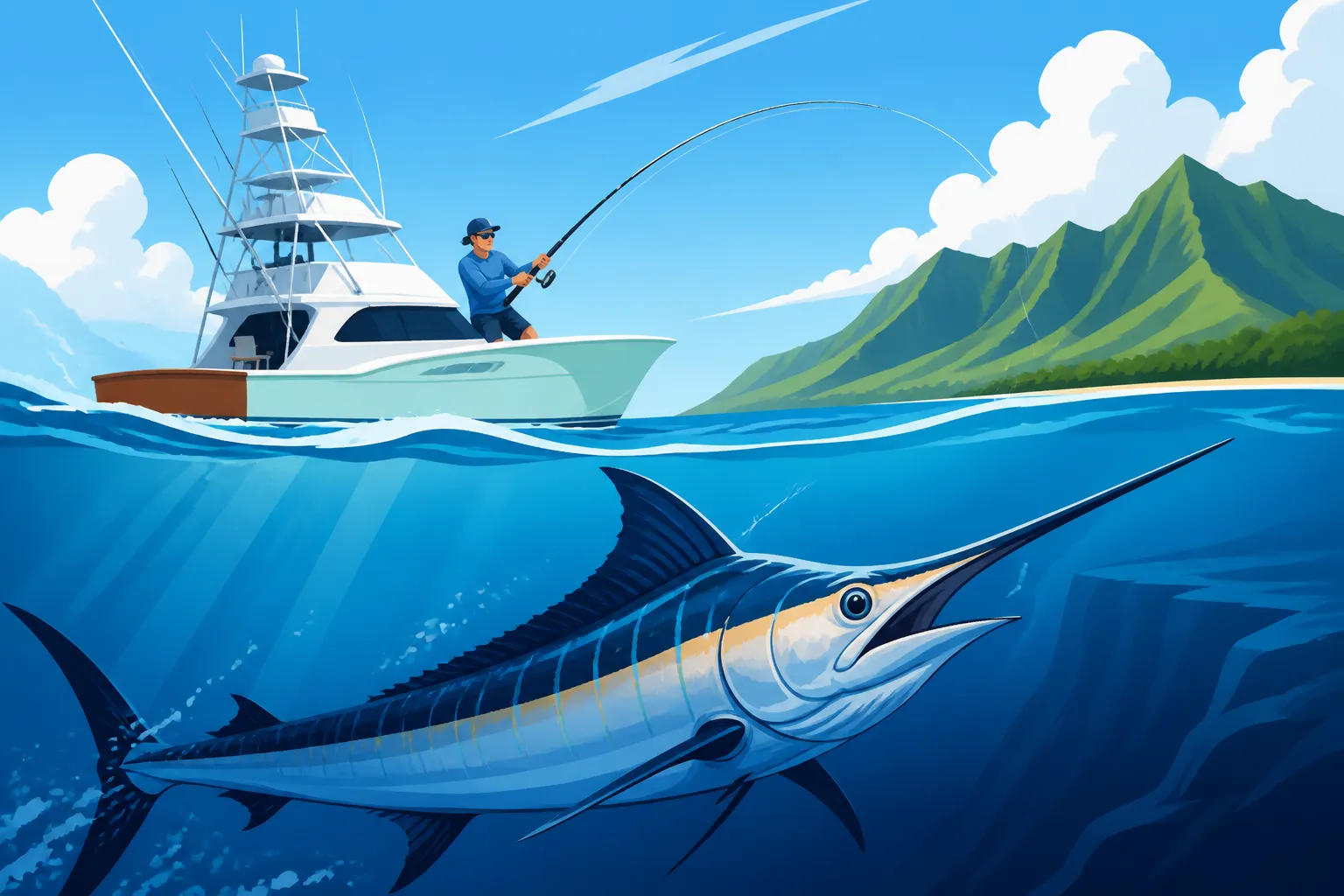
Marlin are highly migratory and opportunistic predators, constantly searching for their next meal. The 100-fathom line provides a perfect ambush point and a consistent food source. The rich upwellings and current breaks mentioned above attract vast schools of baitfish, such as mackerel scad (ʻōpelu), skipjack tuna (aku), and various squid species. These smaller fish aggregate along this contour, creating a veritable buffet for larger predators.
Blue marlin, in particular, are known to cruise these depth contours, using them as migratory pathways and feeding lanes. They'll often lurk just below the surface in the vicinity of these drop-offs, waiting to ambush unsuspecting prey. They can quickly ascend from deeper water to strike a lure or bait, making the waters around the 100-fathom line incredibly dynamic. It’s not uncommon to see them crashing through schools of bait or launching themselves out of the water in pursuit of a meal. Understanding this behavior allows skilled captains to position their boats and deploy their spreads in a way that maximizes their chances of encountering these majestic fish. If you're looking to understand more about these incredible fish, reading up on Marlin Growth Rate to Grander Size can give you a fascinating insight into their life cycle.
Key Qualities of a Top Marlin Charter for the 100-Fathom Line
Finding a charter that consistently targets marlin at the 100-fathom line requires looking beyond just a boat with rods. It demands a vessel, crew, and captain with specialized knowledge, equipment, and a proven track record in these specific offshore conditions. This isn't your average inshore reef fishing trip; it's big game hunting in Hawaii's expansive waters.
Experience and Local Knowledge
The single most critical factor in a successful marlin charter, especially when targeting specific contours like the 100-fathom line, is the captain's and crew's experience. They need to have an intimate understanding of the local oceanography, including how currents, tides, and seasonal changes affect baitfish movements and, consequently, marlin activity in that precise zone. A captain who has spent decades fishing the Kona Coast, for example, will know exactly how the contour lines run, where the eddies form after a swell, and which areas consistently hold bait. They’ve learned to "read" the ocean – observing bird activity, current rips, and even the subtle changes in water color – to predict where marlin might be feeding.
Beyond just knowing the spots, an experienced crew understands the nuances of fighting a large marlin. They can coach you through the retrieve, manage the boat during a chaotic fight, and safely handle a powerful fish at the boat for release or gaffing. This expertise is invaluable when you're battling a fish that can weigh hundreds, if not over a thousand, pounds. For a deeper dive into the skill required, you might find How to Catch Marlin off the Kona Coast enlightening.
Vessel and Gear Requirements
Fishing the 100-fathom line for marlin demands a robust vessel and specialized gear. You'll want a sportfishing boat that's designed for offshore conditions – typically 30 feet or longer, with a stable hull, powerful engines, and a comfortable cockpit. These boats are built to handle the swells and currents of the open ocean.
When it comes to tackle, it needs to be heavy-duty. This means stout rods capable of handling immense pressure, paired with large conventional reels spooled with heavy monofilament or braided line. Lures are often custom-made, skirted creations designed to imitate large baitfish like skipjack tuna or mahi-mahi. Some charters might also specialize in using live bait, which requires a robust livewell system to keep the bait fresh and lively. High-quality outriggers are essential for spreading multiple lines over a wide area, mimicking a school of baitfish. The charter should also be equipped with advanced electronics, including high-resolution sonar to locate bait schools and depth contours, and reliable GPS to navigate precisely to productive areas. Understanding the specific gear is crucial, and you can learn more about Best Lures for Marlin Trolling off Kona for deeper insight.
Reputable Charters and How to Find Them
Finding a reputable charter that excels at targeting marlin at the 100-fathom line can feel like a daunting task, especially if you're visiting Hawaii for the first time. The best approach is to research thoroughly, looking for operations with a strong reputation for targeting large pelagics specifically in the deeper offshore zones. Online platforms are an excellent starting point for this research.
Many anglers turn to reputable booking sites like FishingBooker to compare different charters. These platforms allow you to filter by location, boat size, target species, and even read reviews from previous customers. Look for charters that explicitly mention "Kona marlin fishing," "deep sea trolling," or "targeting granders" in their descriptions. Pay close attention to reviews that mention the captain's knowledge of specific areas, their dedication to finding fish, and the quality of their gear. Don't be shy about calling the charter directly to ask specific questions about their experience fishing the 100-fathom line and their typical success rates for marlin. A good captain will be transparent about what you can expect. This level of detail is critical when planning a trip focused on Marlin Fishing off the Kona Coast.
| Charter Attribute | Description | Why it Matters for 100-Fathom Marlin |
|---|---|---|
| Captain's Experience | Decades of local knowledge, deep understanding of oceanography. | Locates subtle current breaks & bait schools. |
| Crew's Proficiency | Skilled in rigging, boat handling, and fish fighting. | Essential for managing powerful fish and tackle. |
| Vessel Size & Type | 30+ ft sportfisher, stable, fast, designed for offshore. | Handles open ocean, covers ground efficiently. |
| High-Quality Tackle | Heavy-duty rods, large conventional reels, strong lines. | Withstands immense pressure from large marlin. |
| Advanced Electronics | High-resolution sonar, reliable GPS, chartplotters. | Pinpoints depth contours, bait, and structure. |
| Specialized Lures/Bait | Custom skirted lures, live bait systems for target species. | Mimics natural prey, maximizes strike potential. |
| Safety Equipment | All required USCG safety gear, first aid, EPIRB. | Ensures crew and angler safety offshore. |
| Reputation/Reviews | Consistent positive feedback for targeting big game offshore. | Indicates consistent success and customer satisfaction. |
Strategies and Techniques for Fishing the 100-Fathom Line
Fishing the 100-fathom line for marlin isn't just about dropping a line in the water; it's a strategic game of cat and mouse, employing specific techniques tailored to entice these powerful predators. The best charters have a well-honed playbook for these conditions, blending traditional methods with modern insights.
Trolling Patterns and Speeds
Trolling is the most common and effective technique for covering ground and presenting lures to marlin along the 100-fathom line. Captains will often run a spread of multiple lines, each with a different lure, at varying distances behind the boat. This creates a visual school of "baitfish" and covers a wider area. The patterns often involve zig-zagging along the contour, sometimes making S-turns to allow lures on the inside to drop back and rise, mimicking an injured baitfish. The speed is critical, typically ranging from 7 to 10 knots, but can be adjusted based on sea conditions, current, and the activity of baitfish.
A skilled captain uses his sonar not just to mark fish, but to observe bait concentrations and the contour itself. They might slow down or speed up, or even make tighter turns when they detect activity or a promising structural feature along the 100-fathom curve. Different lure placements in the "spread" are also crucial, with some lures running closer to the boat in cleaner water, and others further back in the prop wash, designed to attract a marlin's attention. For more specific details on this, look into Best Lures for Marlin Trolling off Kona.
Bait Selection and Presentation
While many charters rely on artificial skirted lures, some of the most effective marlin fishing at the 100-fathom line incorporates natural baits, either whole dead baits or live baits. For dead baits, species like skipjack tuna (aku), mackerel scad (ʻōpelu), or ballyhoo are commonly rigged to swim naturally when trolled. These are often combined with a skirted lure to add color and splash. The rigging is an art form itself, ensuring the bait swims perfectly without spinning, which can deter a wary marlin.
Live baiting, when possible, can be incredibly productive. Charters might catch or buy live bait such as skipjack tuna or small mahi-mahi and slow troll them, or even drift them along the 100-fathom line. The distress signals from a live bait are often irresistible to a lurking marlin. Presentation is key; whether live or dead, the bait must look natural and appealing. The best crews are masters of bait preparation and presentation, understanding that even the smallest detail can make a difference between a strike and a missed opportunity. This meticulousness is part of what makes How to Catch Ahi in Hawaii also relevant, as bait preparation is vital for tuna as well.
Reading the Ocean for Success
Truly successful marlin fishing at the 100-fathom line involves more than just knowing where the line is on a chart. It's about "reading the ocean." Experienced captains are constantly observing their surroundings for signs of life. Bird activity, particularly large flocks diving, often indicates schools of baitfish, which in turn attract predators. Current lines, where two different currents meet, can also concentrate bait and create visible "rips" on the surface, making them prime hunting grounds.
Water temperature breaks, identified with onboard thermometers, are another critical factor. Marlin prefer certain temperature ranges, and where warm and cool water masses meet, baitfish often congregate, and marlin will follow. Even subtle changes in water color can signal a change in conditions. The most effective charters don't just put lines in the water; they actively hunt for fish, constantly adjusting their strategy based on these environmental clues. This keen observation is a cornerstone of deep-sea fishing, applicable across various techniques like those for Bottomfishing in Hawaii.
What to Expect on Your 100-Fathom Line Marlin Trip
Embarking on a marlin charter to the 100-fathom line is an exciting adventure, but knowing what to expect can help you prepare and fully enjoy the experience. These aren't short, inshore trips; they are serious offshore expeditions designed to find and fight large game fish.
Typical Trip Duration and Schedule
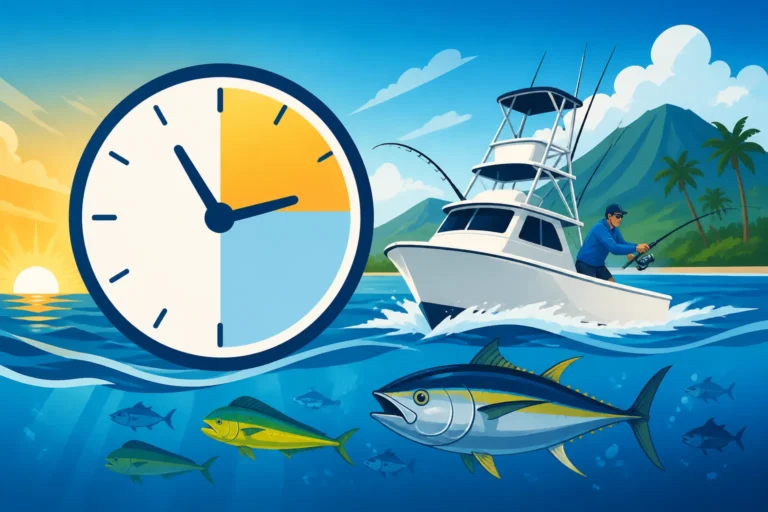
Marlin fishing trips, especially those targeting specific offshore contours like the 100-fathom line, are typically full-day endeavors. While some charters offer half-day options, a full day (usually 8-10 hours) provides ample time to travel to the offshore grounds, deploy the spread, and spend sufficient time actively fishing. Most full-day trips depart early in the morning, often before or at sunrise, to take advantage of the prime fishing hours and ensure enough daylight for the journey out and back. This early start also means you're often on the water when baitfish are most active and marlin are actively feeding.
Depending on the specific location and current conditions, it can take an hour or more to reach the 100-fathom line, which is why half-day trips are often less productive for this type of specialized fishing. The day will involve constant trolling, with the crew diligently watching the lines and the captain maneuvering the boat. Be prepared for a long day on the water, filled with anticipation, stunning ocean views, and hopefully, the thrill of a lifetime as a marlin strikes! For a general overview, checking What to Expect on a Hawaii Fishing Charter can be helpful.
Catch and Release vs. Keeping Your Catch
The policy regarding catch and release versus keeping your catch can vary significantly between charters and is often a topic of discussion with big game species like marlin. Many top marlin charters, especially those targeting granders or promoting sustainable fishing practices, operate on a "catch and release" policy for marlin. The sheer size and power of these fish mean they are a valuable resource, and responsible angling emphasizes their conservation. Often, a quick photo alongside the boat is the only 'keeping' of the fish.
However, if you're keen on the possibility of keeping a marlin for mounting or meat, it's crucial to discuss this with your chosen charter before booking. Some charters may allow you to keep a smaller marlin (often below a certain weight) if it's legal and within their policy, but this is less common for the true giants targeted at the 100-fathom line. Be prepared for the reality that the biggest marlin are almost always released, for their preservation and the health of the fishery. Always respect the captain's decision and local regulations, such as those found in Hawaii Bag and Size Limits by Species.
Preparing for Your Offshore Adventure
Going offshore to the 100-fathom line requires a bit of preparation to ensure your comfort and safety. First and foremost, be prepared for motion. The open ocean swells can be significant, even on a large boat. If you're prone to seasickness, take preventative medication well in advance – often the night before and again in the morning of the trip. You can get excellent advice on Seasickness tips for a Hawaii fishing charter.
Dress in layers, as mornings can be cool offshore, but the sun can become intense later in the day. Sun protection is paramount: bring a wide-brimmed hat, polarized sunglasses, and plenty of high-SPF sunscreen. Long-sleeved shirts and pants, preferably quick-drying, are also recommended. Pack snacks, plenty of water, and any personal medications. While many charters provide some refreshments, having your own ensures you have what you like. Remember, a long day on the water can be physically demanding, so ensure you're well-hydrated and nourished. For a comprehensive checklist, refer to What to Bring on a Hawaii Fishing Charter.
Disclaimer
This article is for general informational purposes only and does not constitute professional advice. Laws, prices and regulations vary by location and change over time. Consult a qualified professional for guidance on your specific situation.