Best tide to book a shore fishing guide trip
One of the trickiest parts of planning a shore fishing adventure in Hawaii, especially if you're not a seasoned local, is figuring out the best time to cast your line. It's not just about showing up with a rod; the ocean's rhythm, particularly the tides, plays a massive role in whether you'll be telling tales of epic catches or just a relaxing day by the water. This guide will help you decode the complexities of Hawaiian tides so you can book a shore fishing guide trip at the most opportune moments, turning your hopes for a memorable catch into a real possibility.
Understanding Tides and Their Influence on Hawaii Shore Fishing
The ocean's ebb and flow might seem like a simple backdrop to your fishing trip, but in Hawaii, tides are a powerful force dictating where fish feed and how accessible certain spots become. Ignoring them is like trying to navigate the pali highway blindfolded – you might get somewhere, but it won't be easy or efficient.
The Basics of Tides in Hawaii
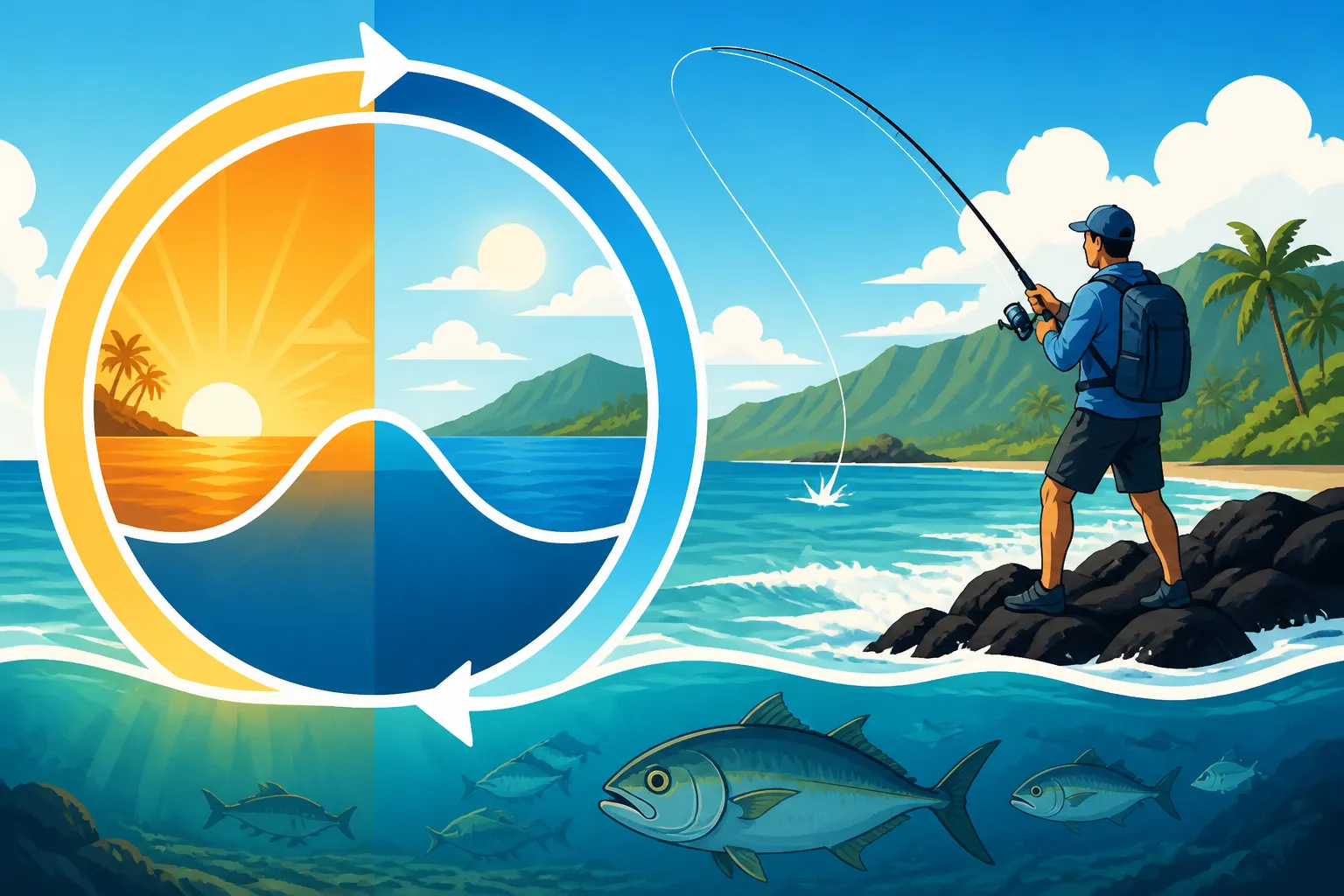
Tides are primarily caused by the gravitational pull of the moon and sun on Earth's oceans. In Hawaii, while the tidal range might not be as dramatic as in some other parts of the world, that doesn't mean their influence is negligible. Even a foot or two difference can completely change a fishing spot, opening up new channels or covering productive reef flats. You'll hear talk of "high tide," "low tide," "incoming tide," and "outgoing tide." The incoming tide is when the water level is rising, pushing water towards the shore, while the outgoing tide is when the water level is falling, pulling water back out. High tide is the peak of the incoming, and low tide is the lowest point of the outgoing.
For many local anglers, understanding these subtle shifts is second nature. They've spent years observing how a certain reef flat gets covered just enough on an incoming tide to allow papio to hunt, or how an outgoing tide creates a perfect rip current off a point, concentrating baitfish for larger ulua. The topography of Hawaii's coastline, with its jagged lava rock, expansive reef flats, and sandy beaches, means that even minor tidal changes can have a profound impact on fish behavior and access to prime fishing grounds. This local knowledge is one of the biggest reasons to consider a shore fishing guide.
How Tidal Movement Affects Fish Behavior
Think of tidal movement as the ocean's natural conveyor belt, constantly shifting food sources and creating dynamic environments. When the water starts moving, it stirs up the bottom, dislodging crabs, shrimp, and other small invertebrates that fish love to munch on. This influx of food naturally draws in smaller baitfish, and where the baitfish go, the predatory game fish follow.
For example, an incoming tide might push schools of baitfish into shallower bays or over reef flats, making them vulnerable to species like papio (juvenile trevally) or kumu (goatfish). The current also creates structure—current lines, eddies, and seams where fast-moving water meets slower water. These are natural ambush points for predators. Conversely, an outgoing tide can flush bait out of lagoons and into deeper channels, where larger species like ulua (giant trevally) might be waiting. A seasoned guide, the kind you might find listed on a platform like FishingBooker, can literally "read" the water and predict these feeding patterns based on the tide, helping you target the right species at the right time. It's truly an art form that comes with years of observation and experience on these specific shores.
Prime Tidal Windows for Shore Fishing in Hawaii
While there's no single "best" tide that applies to every fish and every spot in Hawaii, certain tidal phases generally offer better opportunities for shore anglers. Knowing these general preferences can help you align your trip with the highest chances of success.
The Incoming Tide: A Favorite for Many
The incoming tide, particularly the middle to late stages when the water is actively rising, is often considered prime time for many shore fishing enthusiasts in Hawaii. As the ocean pushes landward, it often brings in cooler, oxygenated water, and more importantly, fresh bait. This movement invigorates the fish, signaling a feeding opportunity. Imagine a plate being refilled with delicious food; that's what an incoming tide often represents to fish.
Species like papio and smaller ulua tend to become more active on the rising tide. They'll venture into shallower areas, over submerged reefs, and near shorelines to hunt. If you're wading flats for bonefish (oio), a rising tide that covers the flat just enough for them to move in and feed can be incredibly productive. Guides often strategically position anglers on points or along reef edges where the incoming current creates a "food lane." This is especially true in areas with extensive reef systems, where the rising water covers previously exposed rock, allowing fish to access new feeding grounds. Discussing Shore Fishing Techniques for Hawaii with a guide might reveal that a specific incoming tide strategy for a particular location is their go-to plan.
The Outgoing Tide: Strategic Opportunities
Don't dismiss the outgoing tide; it offers its own set of strategic opportunities, especially as the tide approaches its lowest point. As the water recedes, it can pull baitfish, crabs, and other food sources out of protected bays, channels, and shallow areas, concentrating them in bottlenecks or along drop-offs. This forced exodus of food creates another excellent feeding scenario for predatory fish.
For example, if you're fishing near a natural channel that drains a large flat or bay, the outgoing tide can create a strong current that flushes out bait. Larger ulua and sharks might patrol these exits, waiting for an easy meal. Rocky points or ledges that extend into deeper water also become prime ambush spots during an outgoing tide, as fish stack up to intercept anything being pulled offshore. Sometimes, you might find that the Best Time of Day to Catch Ulua aligns perfectly with a strong outgoing tide during specific moon phases. While the incoming tide brings the food in, the outgoing tide often concentrates it, leading to exciting bursts of action.
High Tide and Low Tide: When to Still Cast
The slack periods—the peak of high tide and the dead of low tide—are often considered slower by many anglers because the water movement slows down significantly. However, these periods aren't entirely devoid of opportunity; they just require a different approach or target species.
At peak high tide, the water might be calm and high enough to allow access to normally unfishable shorelines or deep pockets within structures that are usually too shallow. This can be ideal for targeting certain reef fish that prefer calmer conditions or for casting into deeper, protected holes. For example, if you're looking for moi from shore, they often prefer calmer, clearer waters, which can sometimes coincide with the highest tides when wave action is minimized. Conversely, very low tides can reveal structure and allow you to "read" a fishing spot more effectively for future trips, identifying hidden channels or reef patches that will hold fish when the water rises. While generally less productive for active feeding frenzies, these slack tides can sometimes be ideal for exploring, setting up for the next tidal push, or targeting less active species.
Here's a quick overview of general tidal preferences for some common Hawaii shore fish:
| Species | Best General Tide Preference | Why |
|---|---|---|
| Papio (GT) | Mid to High Incoming, Early Outgoing | Hunts bait pushed onto flats and along shorelines; ambushes at exits. |
| Ulua (GT) | Strong Incoming, Strong Outgoing (especially around points) | Ambushes bait concentrated by currents, particularly larger individuals. |
| Oio (Bonefish) | Mid to High Incoming (over flats) | Moves onto shallow flats to feed as water rises. |
| Moi | High Tide, Incoming (calmer waters) | Prefers calmer, clearer conditions found closer to high tide or gentle incoming. |
| Kumu | Incoming, High Tide | Forages over newly covered reef flats and sandy patches. |
| Weke | Incoming, Outgoing | Often found rooting in sandy areas stirred by moving water. |
Factors Beyond Tides for Booking a Shore Fishing Guide
While tides are a critical piece of the puzzle, they're just one element in the complex dance of ocean conditions. An experienced shore fishing guide brings together all these factors to give you the best chance of success. Relying solely on a tide chart without considering other variables can lead to disappointment.
Swell, Wind, and Water Clarity
Imagine looking at a tide chart that shows a perfect incoming tide, but when you get to the beach, there's a massive winter swell churning up the water, winds are howling, and visibility is zero. That "perfect" tide suddenly becomes completely unfishable or at least incredibly challenging. Swell size and direction, wind speed and direction, and water clarity are enormous factors in Hawaii's diverse coastal environment. A big north swell might make the north shore unfishable, but the south shore could be calm and clear, even if the tides are similar.
A good shore fishing guide doesn't just check the tide chart; they analyze detailed marine forecasts, understanding how ocean conditions will impact specific fishing spots. They know which spots are protected from certain swells or winds, and which areas will have good water clarity even after a heavy rain. Their real-time assessment of these dynamic variables is invaluable. For instance, sometimes a little bit of chop on the water from a moderate wind can actually be good, breaking up the surface and making it harder for fish to spot you. Other times, glassy conditions are what's needed for sight fishing. This kind of nuanced understanding of Hawaii Fishing Seasons by Month and daily conditions is what you're paying for with a guide.
Target Species and Location Specifics
As we touched on earlier, different fish have different preferences. What's ideal for a papio might be terrible for an ulua, and vice-versa. Moreover, the location itself plays a huge role. A strong incoming tide might be fantastic for fishing the mouth of a certain bay on Oahu, but completely unproductive on a different type of shoreline on Kauai.
For example, if your goal is to land a trophy ulua, a guide might recommend a spot with deep water access near a current-swept point during a specific tidal push, perhaps even at night. If you're hoping to catch some papio for dinner, they might take you to a reef flat during an incoming tide where you can cast lighter tackle. The specific geology of a reef, the presence of sand channels, the proximity to deeper water, and the overall structure of a given fishing spot all interact with the tides in unique ways. This local, micro-level knowledge is something you simply cannot get from a generic tide chart or online search. They know the subtle nuances of Best Shore Fishing Spots in Hawaii down to the square yard.
The Role of an Experienced Shore Fishing Guide
This brings us to the ultimate point: the paramount value of an experienced shore fishing guide. While understanding tides is empowering for you, a local guide has a lifetime of experience interpreting them in conjunction with all the other variables unique to Hawaii's waters. They know the specific currents, the seasonal movements of baitfish, the preferred habitats of target species, and the safe access points for various tides and swell conditions.
A guide can tell you, "Yes, the tide is incoming, but with this northwest swell, we need to be on the east side of the island at this particular point because the conditions will be calmer there, and the fish will be more active." They save you countless hours of trial and error, getting skunked, or even getting into unsafe situations. They often have secret spots that are only productive on very specific tidal and weather combinations. When you book a trip, especially through a service like FishingBooker that allows you to read reviews and communicate with captains, leverage their expertise. It's truly the difference between a frustrating outing and a truly rewarding Hawaiian fishing experience. They don't just guide you to fish; they guide you to the right fish, in the right place, at the right time.
How to Effectively Communicate Your Preferences and Book Your Trip
Now that you understand the intricacies of tides and other factors, how do you translate that into booking a successful shore fishing guide trip? It all comes down to research, communication, and a little flexibility.
Researching Tide Charts and Your Goals
Before you even reach out to a guide, spend a little time looking at tide charts for the specific dates you plan to be in Hawaii and the general area you'll be fishing (e.g., Oahu, Maui, Big Island). You can find these online easily. Don't just look at high/low times; pay attention to the tidal range (the difference between high and low), as a larger range often means stronger currents.
More importantly, define your fishing goals. Are you dead set on catching a big ulua? Are you hoping to try Wading Techniques for Hawaii Shore Fishing for bonefish? Or do you just want to catch something for dinner? Having a clear idea of what you want will help you communicate effectively with potential guides, allowing them to suggest the best tidal windows and locations for your specific aspirations. For instance, if you're targeting big papio, a guide might confirm that an early morning incoming tide on a specific reef flat is the ideal scenario.
Discussing Tidal Strategies with Your Guide
Once you've done your preliminary research and identified potential guides (perhaps by browsing options and availability on a platform like FishingBooker), have an open and honest conversation with them. Don't be afraid to ask about their preferred tidal strategies for your target species. You might say, "I'm hoping to catch some papio and ulua. I've noticed the tides are X on these dates. What are your thoughts on that, and which tide do you generally find most productive for those species in this area?"
A good guide will appreciate your proactive approach and will be happy to share their insights. They might even suggest shifting your trip time by an hour or a day to hit a truly optimal tidal window, or they might explain why, for your specific goals, other factors (like swell or time of day) are more important than the tide on a given day. They are the local experts, and their advice is paramount. They know the micro-climates and subtle current shifts that are invisible to the casual observer.
Flexibility and Booking Tools
Sometimes, the "perfect" tide might not align with your schedule, or the guide might already be booked during that exact window. This is where flexibility comes in handy. Remember that an experienced guide can often make a less-than-ideal tide work by adapting their strategy or choosing a different, tide-resistant location. Don't let a slightly off-tide prediction deter you if you've found a highly recommended guide.
Using online booking platforms can also simplify this process. For example, when you're looking for Best Guided Shore Fishing Trips on Oahu, a service like FishingBooker allows you to view multiple guides' availability, send messages, and discuss your preferences before committing. You can often see their general fishing philosophies or specialties, helping you find a match even if your specific dates don't align with what you initially thought was the absolute best tide. Ultimately, the best tide to book a shore fishing guide trip in Hawaii is often the one that an experienced local guide tells you is best, given all the dynamic factors of the moment, and that works with your schedule.
Disclaimer
This article is for general informational purposes only and does not constitute professional advice. Laws, prices and regulations vary by location and change over time. Consult a qualified professional for guidance on your specific situation.