Best guided trips combining hiking and fishing
It's a common dream for anyone visiting Hawai'i: to experience the islands' breathtaking natural beauty not just from a car window or a crowded beach, but to really immerse themselves in it. Many anglers come here solely for the world-class fishing, but what if you could combine the thrill of landing a prized catch with the serene solitude of hiking to a remote, untouched spot? Finding a guided trip that truly integrates these two passions, rather than just offering them as separate activities, can feel like searching for a hidden waterfall. This guide is here to help you navigate that desire, showing you how to find and plan the best guided trips that harmoniously blend hiking and fishing in Hawai'i.
The Allure of Combining Hiking and Fishing in Hawaii
Hawai'i offers an unparalleled tapestry of landscapes, from verdant rainforests and volcanic slopes to rugged coastlines and pristine, secluded beaches. For many, a trip here isn't just about escaping the daily grind; it's about reconnecting with nature, challenging themselves, and experiencing something truly unique. When you add fishing into that equation, it elevates the entire adventure to a whole new level.
Why Anglers Seek More Than Just the Catch
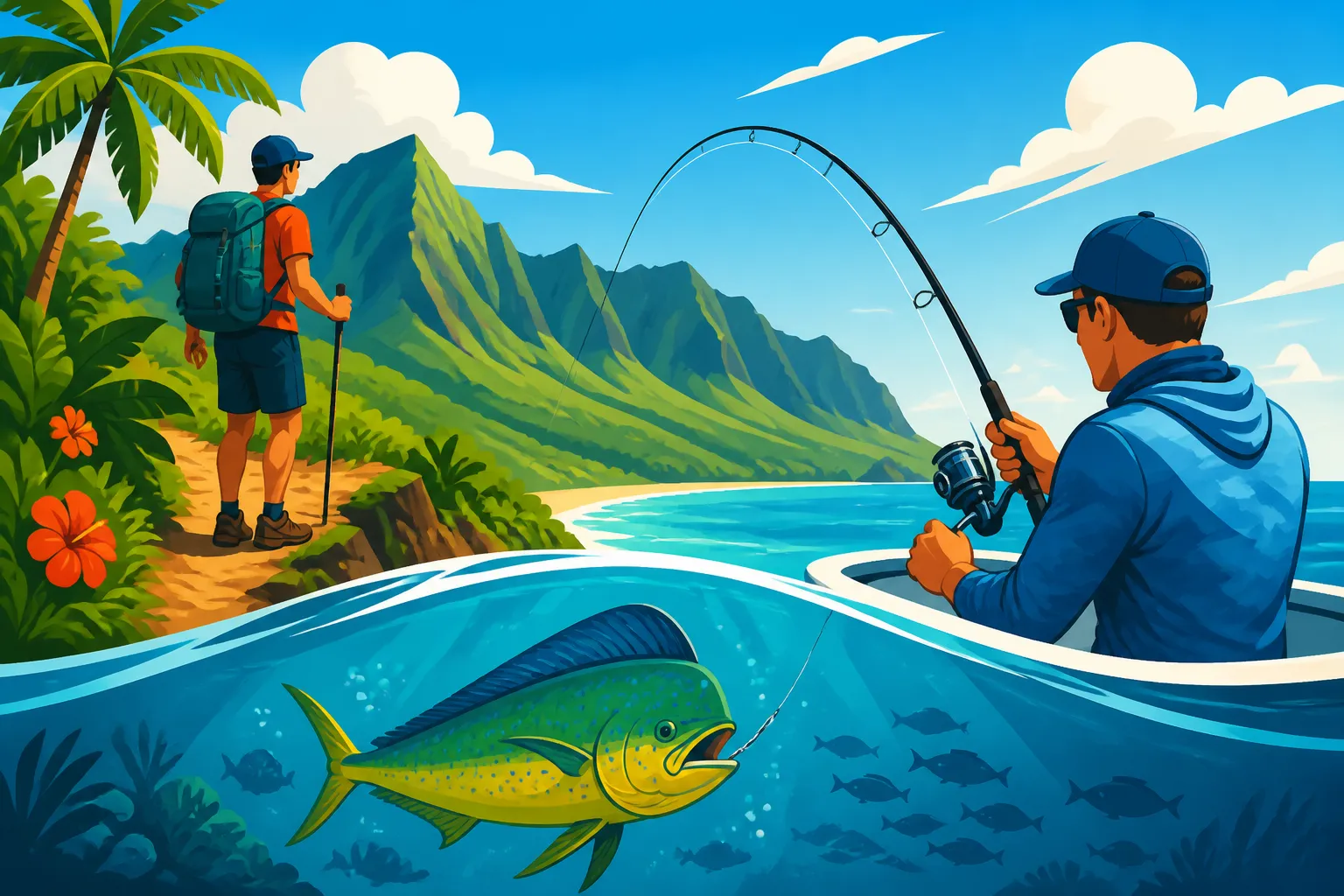
Beyond the sheer joy of feeling a powerful ulua or a feisty papio tugging at your line, there's a profound satisfaction that comes from earning that experience. Imagine hiking through dense tropical foliage, crossing a gurgling stream, and finally emerging onto a deserted stretch of black sand beach where the waves crash rhythmically against the shore. You cast your line, not from a bustling pier or a crowded boat, but from a spot you've reached through your own effort and a guide's expertise. This isn't just fishing; it's an expedition.
The allure often lies in the journey itself – the rustling of palm fronds, the scent of plumeria, the panoramic views that unfold with every step. It’s about more than just the fish; it’s about the story, the connection to the 'aina (land), and the quiet moments of reflection as you wait for a bite in a place few others will ever see. You’re not just an angler; you’re an explorer, weaving your way through Hawai'i’s wild heart to reach a fishing haven. This deeper engagement with the environment enriches the entire fishing experience, turning a simple outing into an unforgettable adventure.
The Challenges of Self-Planning a Combo Trip
While the idea of combining hiking and fishing sounds idyllic, trying to orchestrate such a trip on your own can quickly turn into a logistical headache. Hawai'i's terrain can be deceptively challenging, and its best fishing spots often require local knowledge to access safely and legally.
First off, there's the gear. You need appropriate hiking footwear and clothing, water, snacks, first-aid, and then you also need your fishing tackle. How do you comfortably carry a surf rod and a cooler full of bait while scrambling over lava rocks or navigating muddy trails? It's not always practical to haul heavy fishing equipment deep into the backcountry or along rugged shorelines. Then there's the question of transportation. Some of the most pristine hiking trails and secluded fishing spots are off the beaten path, requiring four-wheel drive access or familiarity with unmarked routes. Without local guidance, you could easily get lost, trespass on private property, or miss out on truly productive areas because you simply don't know where to look.
Furthermore, Hawai'i has specific regulations regarding fishing licenses, bag limits, and even access to certain areas, like Marine Life Conservation Districts or private lands. Understanding these rules can be complex, and inadvertently breaking them can lead to fines or worse. Attempting to piece together safe hiking routes with productive, legal fishing grounds on your own can eat up valuable vacation time and often lead to frustration rather than the peaceful, rewarding experience you envisioned. A guide removes this burden, ensuring you’re not only compliant but also making the most of every precious moment on the islands. For those interested in the specifics, understanding Hawaii Fishing Regulations Explained can be quite complex, and a guide often has that knowledge at their fingertips.
Types of Guided Hiking and Fishing Experiences
The beauty of a guided hiking and fishing trip in Hawai'i is its versatility. Depending on your interests, fitness level, and target species, there's likely a unique adventure waiting for you. It's not just one type of trip; it's a spectrum of possibilities, each offering a distinct way to experience the islands' natural bounty.
Shoreline Adventures: Hiking to Remote Fishing Spots
This is perhaps the most iconic combination: lacing up your hiking boots to reach a pristine stretch of Hawaiian coastline that's inaccessible to casual visitors. Imagine driving along a scenic coastal road, then parking and beginning a trek through a kiawe forest or over ancient lava flows. Your guide, equipped with local knowledge, leads you along rugged paths, perhaps sharing stories of the land and sea, until you emerge at a secluded cormorant-laden cove or a rocky point known only to a few.
What truly sets these trips apart is the reward at the end of the trail. Here, in the quiet solitude of a hidden beach or a dramatic cliffside, you can cast your line into waters that see far less pressure than the easily accessible spots. You might target species like the hard-fighting How to Catch Ulua from Shore (Giant Trevally) or their smaller, equally exciting cousins, the How to Catch Papio on Hawaii's Shoreline (juvenile Trevally). Depending on the location and conditions, you could also encounter moi (Pacific Threadfin) or various reef fish. Your guide will often carry lighter, collapsible tackle suitable for the hike, or provide specialized gear once you reach your destination. These trips often focus on Shore Fishing Techniques for Hawaii, allowing you to truly engage with the environment. The focus is on the journey as much as the destination, making the catch feel even more earned.
Freshwater Treks: Rivers, Streams, and Reservoirs
While Hawai'i is renowned for its ocean fishing, many overlook the unique opportunities found in its freshwater systems. If your vision of a perfect day includes hiking through lush, cooler uplands, perhaps even on one of the outer islands, to reach a tranquil riverbend or a serene reservoir, then a freshwater hiking and fishing trip is for you. These adventures typically involve venturing into the interior of islands like Kaua'i or O'ahu, where a different kind of angling experience awaits.
On Kaua'i, for instance, a hike into the Kokee Public Fishing Area Guide can lead you to cool mountain streams teeming with rainbow trout, a truly surprising find in the tropics. Imagine casting a fly or a light spinner in the shadow of towering 'ohi'a trees, the air crisp and fragrant. On O'ahu, a guided hike might take you to the shores of the Wahiawa Reservoir Fishing Guide, where you can target introduced species like peacock bass, largemouth bass, or even tilapia. These freshwater spots offer a stark contrast to the marine environment, providing a peaceful escape and a chance to experience a different side of Hawaiian angling. It’s a chance to see parts of the islands often missed by coastal visitors, all while enjoying the thrill of a freshwater fight. Remember that for these trips, you'll need to know about the Hawaii Freshwater Fishing License and Rules.
"Hike-In, Kayak/SUP Out" or "Boat-In, Hike-Around" Hybrid Trips
Some of the most innovative guided trips creatively blend land and sea transportation to offer unparalleled access and unique perspectives. These "hybrid" adventures are designed for those who want to maximize their exploration and fishing time without being limited by a single mode of travel.
Imagine embarking on a moderate hike along a coastal path, enjoying breathtaking cliffside views and discovering hidden coves. Instead of hiking back, your guide meets you at a secluded beach with kayaks or stand-up paddleboards (SUPs). From there, you paddle along the coastline, fishing the nearshore reefs or targeting schooling baitfish, before returning to a different pick-up point. This allows you to cover more ground and water, experiencing diverse ecosystems within a single trip. Conversely, a "boat-in, hike-around" trip might start with a short boat ride to an otherwise inaccessible part of the coastline. From there, you might hike inland to explore a waterfall or an ancient Hawaiian site, perhaps casting a line in a brackish stream or a protected estuary, before returning to the boat for some offshore trolling or bottomfishing. These trips are fantastic for accessing spots that are difficult to reach solely by land or by sea, expanding your fishing horizons and providing a truly comprehensive Hawaiian adventure. They offer an incredible combination of physical activity, stunning scenery, and diverse fishing opportunities.
What to Look for in a Guided Hiking and Fishing Trip
When you're dreaming of that perfect Hawaiian adventure that combines both hiking and fishing, it's easy to get swept up in the romance of it all. But just like any good fishing expedition, preparation and choosing the right crew make all the difference. Not all guides are created equal, especially when you're looking for someone who can seamlessly blend two distinct activities.
Expertise in Both Domains: The Dual-Threat Guide
This is arguably the most critical factor. You don't want a hiking guide who knows nothing about fishing, nor a fishing guide who's never set foot on a trail deeper than the paved parking lot. You need a "dual-threat" guide – someone who is equally passionate and proficient in both hiking and angling in Hawai'i.
This means finding a guide who can not only lead you safely through diverse terrain, identify local flora and fauna, and understand weather patterns for hiking, but also possesses in-depth knowledge of local fish species, their habitats, feeding behaviors, and the most effective fishing techniques for different conditions. They should be intimately familiar with the specific fishing spots accessible by foot, know the tides and currents, and understand Hawaii Bag and Size Limits by Species for various catches. An excellent guide will also be well-versed in all local regulations, including where Do You Need a Fishing License in Hawaii for freshwater or if an ocean fishing exemption applies for residents, ensuring your trip is both rewarding and compliant. This dual expertise ensures a smooth transition between activities, optimizing both the hiking experience and your chances of a successful catch. It’s the difference between two separate activities shoved together and a truly integrated, mindful adventure. Platforms like FishingBooker can sometimes help identify guides who market themselves with these specific multi-sport offerings, as their profiles often highlight specialties beyond just boat charters.
Customization and Flexibility
No two adventurers are exactly alike, and the best guided trips understand this. What's a "moderate" hike for one person might be an easy stroll or an insurmountable challenge for another. Similarly, some anglers prefer the thrill of light tackle for papio, while others dream of battling a larger ulua.
Look for guides or services that emphasize customization and flexibility. Can they tailor the hiking distance and difficulty to your group's fitness level? Are they open to targeting specific fish species if the conditions allow, or are they locked into a rigid itinerary? A truly great guide will take the time to discuss your goals, preferences, and physical capabilities beforehand. They should be able to adjust the pace of the hike, suggest alternative routes, or even change fishing techniques on the fly based on what the day brings. For example, if you're hiking into a remote shoreline, they might have options for targeting smaller, abundant reef fish with spinning gear, or deploying a heavier sliding bait rig for larger game if that's your ambition. This adaptability ensures that the trip is not only enjoyable but also perfectly aligned with your personal adventure style, making for a much more satisfying experience than a generic tour.
Essential Gear and Safety Considerations
Safety should always be paramount, especially when combining physical activity like hiking with the unpredictability of fishing in varying conditions. A reputable guide will prioritize your safety and come prepared, but it's crucial to understand what responsibilities fall on them and what you need to bring.
What the Guide Should Provide:
- Fishing Tackle: High-quality, appropriate rods, reels, lines, lures, and bait for the targeted species and terrain. It should be portable enough for the hike.
- Safety Equipment: A comprehensive first-aid kit, emergency communication devices (satellite phone or marine radio for coastal areas), plenty of water, and potentially even an emergency shelter.
- Navigation Tools: GPS, maps, and intimate knowledge of the trails and fishing spots.
- Local Expertise: Guidance on potential hazards (slippery rocks, strong currents, dangerous marine life, unpredictable weather) for both hiking and fishing.
What the Angler Needs to Bring:
- Appropriate Footwear: Sturdy, closed-toe hiking shoes with good grip are non-negotiable, especially for wet or rocky terrain.
- Clothing: Moisture-wicking layers, sun protection (long-sleeved shirts, hats), and a light rain jacket.
- Sun Protection: Sunscreen, sunglasses.
- Personal Water and Snacks: While guides often carry extra, it's wise to bring your own.
- Backpack: Comfortable daypack to carry your personal items.
Always ask about the safety protocols and what equipment is provided before booking. A good guide will be transparent and instill confidence that your well-being is their top priority, allowing you to relax and fully enjoy the adventure.
Planning Your Hawaiian Hiking and Fishing Expedition
You’ve decided you want this amazing blend of adventure – now, how do you make it happen? Planning is key, but with the right approach, you can turn that dream trip into a tangible reality. It's about diligent research, thoughtful preparation, and a respectful attitude towards the incredible place you're visiting.
Researching and Booking Your Ideal Guide
This is where your vision truly starts to take shape. Begin your search by looking for guides who specifically advertise "hiking and fishing" or "adventure fishing" rather than just "fishing charters" or "hiking tours." These specialized guides understand the unique blend you're seeking. Online platforms are a great starting point, and you might even find that FishingBooker lists some guides who offer these types of unique, combined experiences. Read reviews carefully, looking for mentions of both the quality of the fishing and the hiking aspect of the trip. Pay attention to comments about the guide's knowledge of local trails, their safety precautions, and their ability to cater to different skill levels.
Once you've identified a few potential guides, don't hesitate to reach out with specific questions. Ask about their experience leading combined trips, what specific trails they use, the types of fish you can expect to target, and their contingency plans for changing weather. Inquire about the group size they typically accommodate – a smaller group usually means a more personalized experience, especially for a hike-in fishing trip. It’s also wise to clarify what exactly is included in the price, such as tackle, bait, snacks, and transportation to the trailhead. Booking in advance is highly recommended, especially during peak seasons, as specialized guides often have limited availability.
Preparing for Your Adventure
Even with a fantastic guide, your preparedness plays a significant role in the success and enjoyment of your trip. Physical fitness is important; while your guide will tailor the hike to your abilities, being in reasonably good shape will allow you to fully appreciate the journey without excessive fatigue. Start incorporating some longer walks or hikes into your routine before your trip to Hawai'i.
Beyond physical prep, make sure you understand the local regulations. Your guide will handle the specifics on the day, but having a general understanding can be helpful. For example, if you plan to do any freshwater fishing on your own during your stay, you might need to understand the nuances of the Hawaii Freshwater License Age Requirements. Most guided ocean trips will cover any necessary recreational marine fishing licenses under the charter, but it's always good to confirm. Pack smart: focus on lightweight, quick-drying clothing suitable for both hiking and potential fishing splashes. Sun protection is crucial in Hawai'i's strong sun, so bring a wide-brimmed hat, polarized sunglasses, and reef-safe sunscreen. Don't forget your camera, but make sure it's protected from water and dust, as you'll encounter plenty of both!
Maximizing Your Experience and Respecting the 'Aina (Land)
Once you're on your guided trip, take a moment to truly be present. This isn't just a fishing trip, nor just a hike; it's a unique opportunity to connect with Hawai'i's incredible environment. Soak in the sights, sounds, and smells of the trail. Appreciate the unique ecological features your guide points out. When you reach your fishing spot, breathe in the fresh air and marvel at the pristine surroundings. The memories you make will be as much about the journey and the scenery as they are about the fish you catch.
Practicing "Leave No Trace" principles is absolutely essential. Whatever you pack in, you must pack out – every wrapper, every fishing line scrap, every water bottle. Do not disturb wildlife, remove natural items, or trespass on private or culturally sensitive lands. Your guide will lead by example, but it's a shared responsibility to protect Hawai'i's precious resources for future generations. Respect local customs and traditions, and always follow your guide's instructions. By approaching your adventure with respect, curiosity, and a sense of stewardship, you'll not only have an incredible time but also contribute positively to the preservation of the islands that make such combined trips possible.
| Trip Style | Typical Terrain | Target Species (Examples) | Key Gear Considerations (Angler) | Best For |
|---|---|---|---|---|
| Shoreline Trek | Rugged coastlines, lava fields, sandy beaches | Ulua, Papio, Moi, Weke | Sturdy hiking shoes, light surf tackle | Adventurous anglers seeking secluded spots |
| Freshwater Trek | Forest trails, mountain paths, reservoir banks | Rainbow Trout, Largemouth Bass, Peacock Bass | Waterproof hiking boots, fly rod/light spinning | Nature lovers, fly fishers, seeking tranquility |
| Hybrid (Boat/Kayak + Hike) | Coastal cliffs, hidden coves, offshore reefs | Mahimahi, Ono, Tuna (offshore); Papio (inshore) | Water shoes, quick-dry clothes, minimal hiking gear | Those wanting maximum exploration & diverse fishing |
Disclaimer
This article is for general informational purposes only and does not constitute professional advice. Laws, prices and regulations vary by location and change over time. Consult a qualified professional for guidance on your specific situation.