Where fishing is still allowed within Kealakekua Bay’s boundaries
Trying to figure out where you can and can't fish in a place as beautiful and ecologically significant as Kealakekua Bay can feel like navigating a maze. The regulations are intricate, designed to protect the precious marine life, but they can certainly be frustratingly unclear for even seasoned anglers. This guide will meticulously break down the boundaries and rules, helping you understand precisely where fishing is still permitted within Kealakekua Bay and what you need to know to fish responsibly and legally.
Understanding Kealakekua Bay's Special Protections
Kealakekua Bay, on the Big Island of Hawaii, isn't just another scenic spot; it's a place steeped in history and natural wonder, which is why it receives such stringent protections. This gorgeous bay is famous for its crystal-clear waters, vibrant coral reefs, and the Captain Cook monument, marking the spot where the explorer first landed in Hawaii and later met his demise. The bay's abundant marine life, including spinner dolphins, various reef fish, and sea turtles, makes it a prime location for snorkeling, diving, and wildlife viewing.
Because of its unique ecological value and cultural significance, most of Kealakekua Bay is designated as a Marine Life Conservation District (MLCD). This isn't just a casual zoning; it's the highest level of marine protection in Hawaii, aiming to preserve marine resources in a relatively undisturbed state for scientific study, education, and public enjoyment. For anglers, this designation fundamentally changes how you can interact with the marine environment here. It means strict rules are in place, often prohibiting or severely limiting fishing activities to ensure the long-term health and biodiversity of the bay's ecosystems.
The Marine Life Conservation District (MLCD) Rules
The Hawaiian Islands are home to several Marine Life Conservation Districts, and Kealakekua Bay's MLCD is one of the most prominent. When an area is designated an MLCD, it means that the primary goal is conservation, and almost all extractive activities, including fishing and collecting marine life, are either completely banned or heavily regulated. This is often where the confusion for anglers begins, as the "no fishing" rule isn't necessarily absolute across every single inch of a bay. You'll find that in many MLCDs, there are specific zones or exceptions, which is exactly the case for Kealakekua. Understanding these nuances is absolutely crucial to avoid hefty fines or inadvertently harming the delicate ecosystem. For a broader understanding of these crucial zones, you might want to read our article on Hawaii Marine Life Conservation Districts, Explained.
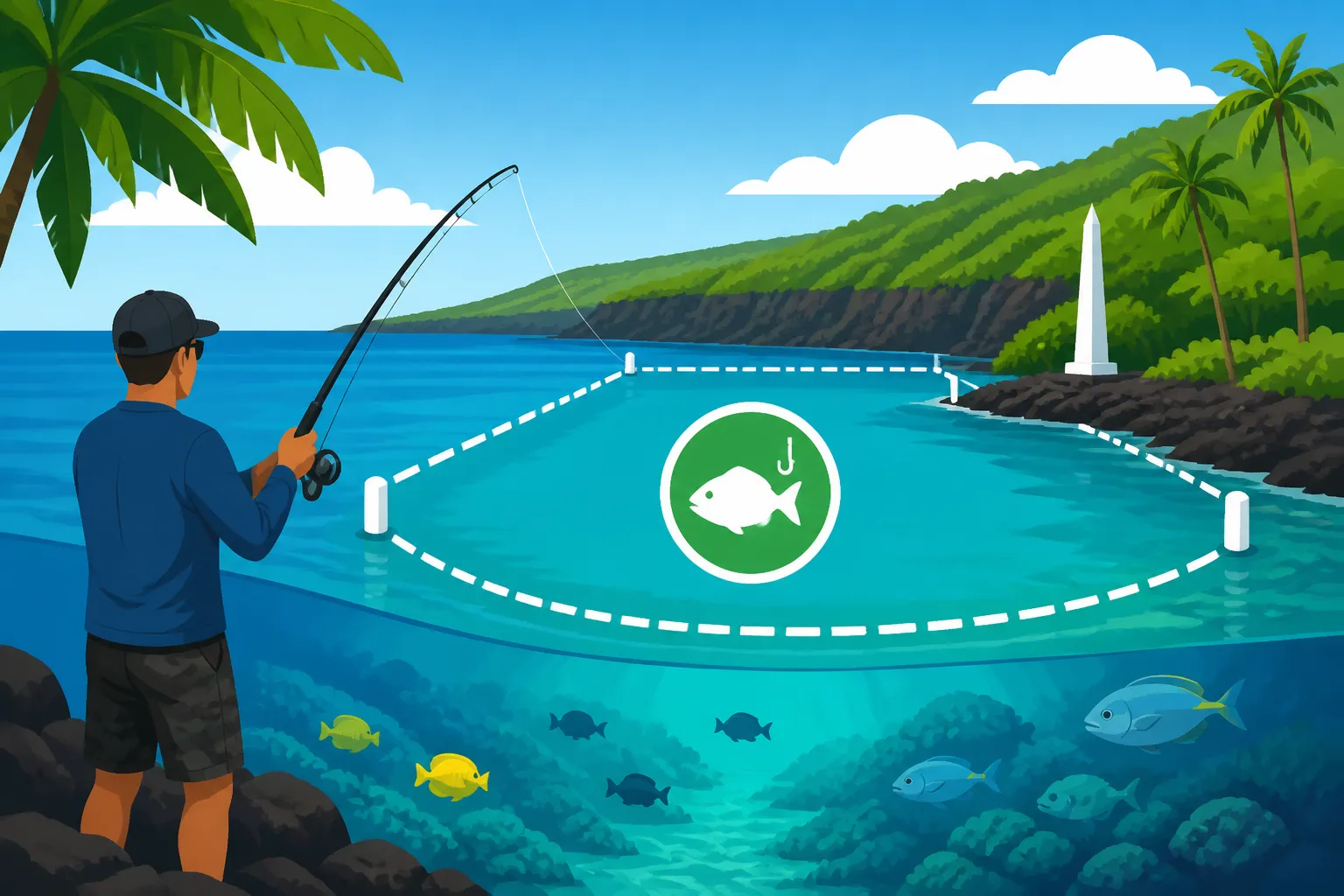
Specifically for Kealakekua Bay, the MLCD encompasses the vast majority of the inner bay, from the shoreline out to a line between Ka'awaloa (the point by the Captain Cook monument) and the north point of Nāpoʻopoʻo. Within this core MLCD area, there is a strict "no-take" policy. This means absolutely no fishing, spearfishing, collecting, or disturbing of any marine life is permitted. Even simply dropping an anchor carelessly can be considered harmful if it damages coral. The intent is to create a true sanctuary where marine populations can flourish undisturbed. It's a fantastic spot to observe fish and dolphins, but not to fish for them.
Designated Fishing Areas and Permitted Methods
While the inner bay is a no-fishing zone, the good news for anglers is that fishing is still allowed in a portion of Kealakekua Bay's outer boundaries. The Department of Land and Natural Resources (DLNR) clearly defines the MLCD's boundaries, and anything outside that specific perimeter falls under general statewide fishing regulations.
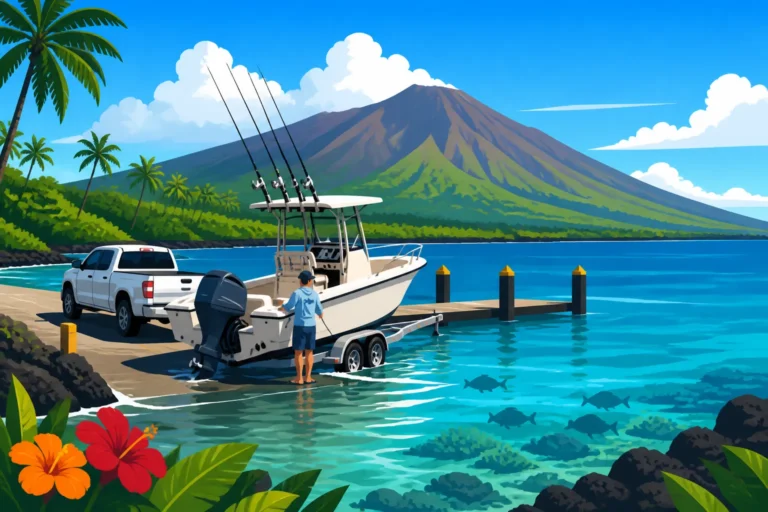
The main area where fishing is permitted is generally outside the line connecting Ka'awaloa and Nāpoʻopoʻo, extending further out into the open ocean. This means you’ll typically need a boat to access these areas effectively. Shoreline fishing is extremely limited due to the MLCD encompassing much of the accessible shore within the bay itself. For example, while the area around Nāpoʻopoʻo pier is popular for viewing, it falls within the MLCD, meaning fishing from the pier or nearby shoreline is prohibited.
When fishing in the permitted outer areas, you're generally subject to the standard recreational fishing rules of Hawaii. This primarily means hook-and-line fishing from a vessel. Spearfishing may also be permitted outside the MLCD, but it's vital to double-check local restrictions, as spearfishing has its own set of rules in Hawaii. You can find more specific details on Hawaii Spearfishing Regulations. Net fishing, throw nets, and other commercial-style gear are heavily regulated or prohibited for recreational use throughout Hawaii, and certainly would not be permitted anywhere near a conservation district boundary. Always remember that even if you're outside the MLCD, you still need a valid Hawaii Fishing License Guide for 2026 for freshwater fishing, though marine recreational fishing currently doesn't require a state license for residents (non-residents typically need one for freshwater).
For anyone planning a fishing trip, it's absolutely crucial to consult the most current official maps and regulations from the Hawaii DLNR Division of Aquatic Resources (DAR). These maps clearly delineate the MLCD boundaries, often with GPS coordinates, which are essential for boaters. What might seem like a small difference on a map could be the difference between a legal catch and a significant fine.
Species and Bag Limits for Allowed Areas
When you're fishing in the permitted outer areas of Kealakekua Bay, outside the Marine Life Conservation District, you're venturing into waters where a variety of highly sought-after pelagic and bottomfish species can be found. However, even in these areas, you must adhere to the statewide bag and size limits for each species. These regulations are designed to ensure sustainable fishing practices and protect fish populations from overfishing. It's not just about what you can catch, but how much and how big it needs to be.
It's a common misconception that once you're out of a "no-take" zone, it's a free-for-all. That couldn't be further from the truth in Hawaii. The state has invested heavily in managing its marine resources, and these rules are taken very seriously. Ignorance of the law is not an excuse, and enforcement officers do patrol these waters.
Common Fish Species in Kealakekua's Outer Waters
The waters just outside the Kealakekua Bay MLCD transition quickly into deeper, more open ocean environments typical of the Kona Coast. This makes them prime territory for a range of exciting game fish. Anglers here often target species like:
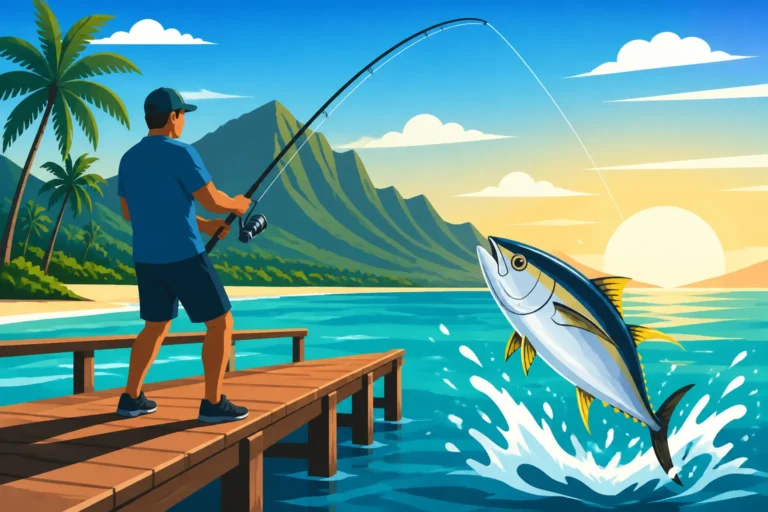
- Ahi (Yellowfin Tuna): These powerful swimmers are a favorite for their fighting spirit and delicious meat. They often school around offshore buoys or other floating debris. You might find yourself on a charter specifically looking for Ahi (Yellowfin Tuna) Fishing in Hawaii.
- Ono (Wahoo): Known for their incredible speed and sharp teeth, ono are a thrilling catch, especially when trolling. They're popular for both sport and table fare.
- Mahimahi (Dolphin Fish): With their vibrant colors and acrobatic leaps, mahimahi are a blast to catch. They often congregate under floating objects like FADs (Fish Aggregating Devices) or debris.
- Spearfish: While not as large as marlin, these billfish offer an exciting fight and are a prized catch for many anglers.
- Bottomfish (Opakapaka, Onaga, etc.): In deeper offshore areas, you might target these highly prized snappers and other deep-water species, often requiring specialized gear and techniques.
The types of fish you'll encounter will largely depend on the depth you're fishing, the time of year, and the specific techniques you're employing. For instance, trolling lures is a common method for pelagic species, while jigging or bait fishing is used for bottomfish.
General Hawaii Regulations Still Apply
Even when you're legally fishing outside the MLCD boundaries, every fish you catch is subject to the general Hawaii Bag and Size Limits by Species regulations. These limits vary significantly by species and can change, so always ensure you have the most up-to-date information.
For example, pelagic species like ahi, ono, and mahimahi often have daily bag limits per person or per vessel. Bottomfish species, which are particularly vulnerable to overfishing, also have strict limits and often closed seasons to allow populations to recover. It’s also crucial to identify your catch correctly, as different species within the same family might have different regulations. For instance, knowing the difference between various snapper species is important.
It's not just about keeping the right number of fish; it's also about keeping fish that meet minimum size requirements. Undersized fish must be released immediately and unharmed. This is why having a tape measure on board is just as important as your fishing rod. Failure to comply with these rules can result in significant penalties, including fines and the confiscation of your catch and gear. These regulations are in place to ensure that these beautiful resources are available for future generations of anglers and residents.
Here's a simplified overview of common regulations for species found outside Kealakekua Bay's MLCD (always verify current DLNR rules):
| Species Group | Common Examples | Typical Regulation Type | Important Note |
|---|---|---|---|
| Pelagic Game Fish | Ahi (Yellowfin Tuna), Ono (Wahoo), Mahimahi (Dolphin Fish), Marlin, Spearfish | Daily Bag Limits, Occasional Size Limits | Regulations can vary by fishing method or vessel type. |
| Deep-7 Bottomfish | Opakapaka (Pink Snapper), Onaga (Ruby Snapper), Ehu (Squirrelfish Snapper), Kalekale (Sandbar Snapper), Gindai (Squirrelfish Snapper), Lehi (Silverjaw Snapper), Hapu'upu'u (Sea Bass) | Seasonal Closures, Daily Bag Limits, Size Limits | Highly protected, specific seasons and strict limits. |
| Nearshore Reef Fish | Ulua (Giant Trevally), Papio (smaller Trevally), Kumu (Goatfish), Weke (Goatfish) | Daily Bag Limits, Minimum Size Limits | Often found closer to shore outside MLCDs. |
Disclaimer: This table provides general examples. Regulations are dynamic and subject to change by the Hawaii DLNR. Always consult the most current official rules before fishing.
Navigating the Rules and Planning Your Trip
Understanding the regulations for fishing in and around Kealakekua Bay can be daunting, but with a bit of homework, you can ensure your fishing trip is both successful and fully compliant with local laws. The key is knowing where to get your information and, if needed, enlisting the help of those who know the waters intimately. It’s better to be overly cautious than to accidentally violate a conservation law in a place as sensitive as Kealakekua Bay.
The frustration of complex rules is real, especially for visitors or new residents. But remember, these rules protect what makes Hawaii's fishing so special. Taking the time to understand them is an investment in the future of the sport here.
Consulting Official DLNR Resources
Your absolute first stop for accurate and up-to-date information should always be the Hawaii Department of Land and Natural Resources (DLNR) Division of Aquatic Resources (DAR). They publish comprehensive guides, maps, and specific regulations for all MLCDs, including Kealakekua Bay. You can often find these resources online, usually as downloadable PDFs or interactive maps that clearly mark boundaries. For a general overview of where to find this vital information, check out our guide on Reading the Hawaii DLNR Fishing Regulations.
It’s not enough to just glance at a map; you need to understand the specifics. Pay close attention to:
- Boundary Descriptions: MLCDs often have precise GPS coordinates or natural landmarks defining their edges. For boaters, having these coordinates programmed into your GPS or chartplotter is highly recommended.
- Permitted and Prohibited Activities: Ensure you know exactly what is allowed (e.g., swimming, snorkeling) and what is strictly forbidden (e.g., fishing, anchoring without a permit).
- Seasonal Closures or Special Rules: Some areas or species may have temporary closures or specific rules that apply only during certain times of the year. For example, some species have specific Hawaii Fishing Season Dates and Closures.
Don't hesitate to contact the DAR office on the Big Island directly if you have any lingering questions. A quick phone call can save you a lot of trouble and potential fines. Their staff are usually very helpful and knowledgeable about local nuances.
Considering a Guided Trip for Clarity
For many anglers, especially those visiting Hawaii or unfamiliar with Kealakekua's specific rules, hiring a local fishing charter or guide can be an invaluable decision. A reputable charter captain will not only know the prime fishing spots outside the MLCD but will also be intimately familiar with all current regulations, boundaries, and best practices. They operate in these waters daily and understand the subtle shifts in rules or fish behavior.
When you book a trip through a service like FishingBooker, you can often find charters that specialize in specific types of fishing (like offshore trolling for marlin or bottomfishing for snappers) and they'll ensure you're always fishing legally. These captains are also licensed professionals who rely on their knowledge and reputation, making them excellent resources. For instance, if you're looking for the thrill of landing a large pelagic fish, consider one of the Best Marlin Charters off the Kona Coast who will know exactly where to take you to stay outside the protected bay areas.
A guided trip offers several advantages:
- Local Expertise: Guides know the local conditions, the best techniques for specific species, and crucially, where the boundaries are.
- Compliance Assurance: You can relax knowing you're fishing legally and responsibly, as the captain takes care of navigating the rules.
- Gear and Knowledge: Charters provide all the necessary fishing gear, bait, and often share valuable insights into Hawaii's unique marine environment.
- Safety: Local captains are experienced in Hawaiian waters, ensuring your safety throughout the trip.
While it's an investment, a guided trip can transform a potentially confusing and rule-bound experience into a seamless and highly enjoyable fishing adventure, making sure you adhere to all the intricacies of Hawaii Fishing Regulations Explained. Whether you’re looking to troll for marlin or try bottomfishing, checking out platforms like FishingBooker can connect you with experienced captains who can guide you to productive fishing grounds beyond Kealakekua Bay's protected waters. Many local captains also provide excellent educational opportunities, teaching you about the marine ecosystem and responsible angling practices.
Ultimately, being a responsible angler in a place like Kealakekua Bay means doing your homework. With the right information and perhaps a little local help, you can still enjoy fantastic fishing experiences while contributing to the conservation of Hawaii's stunning marine resources.
Disclaimer
Please be aware that fishing regulations in Hawaii, particularly concerning Marine Life Conservation Districts and specific species, are subject to change by the Hawaii Department of Land and Natural Resources (DLNR). While this guide strives to provide accurate and up-to-date information, it is your responsibility to consult the most current official DLNR Division of Aquatic Resources (DAR) regulations before engaging in any fishing activities. This article is for informational purposes only and does not constitute legal advice.