Best summer marlin spots off Kona
There's nothing quite like the anticipation of a Hawaiian summer, especially if you're an angler dreaming of a majestic marlin. But with such vast blue waters, knowing where to focus your efforts to find those prized fish off the Kona Coast can feel like searching for a needle in a haystack. This guide is here to cut through the guesswork, pinpointing the best summer marlin spots around Kona and sharing the knowledge you need to make your deep-sea fishing adventure a roaring success.
Why Kona's Summer is a Marlin Angler's Dream
Summer in Kona isn't just about perfect beach weather; it's also prime time for chasing big marlin. The unique oceanography off the west coast of the Big Island creates an ideal environment for these pelagic predators, drawing them in close to shore.
The Ideal Conditions: Warm Currents and Abundant Bait
During the summer months, the waters off Kona consistently maintain optimal temperatures that big game fish, especially marlin, absolutely thrive in. These warmer currents aren't just comfortable for the marlin; they're also highways for huge schools of baitfish like skipjack tuna (aku) and mackerel scad (opelu), which are primary food sources for marlin. Imagine a bustling underwater highway, with baitfish migrating through and hungry marlin lurking, ready to ambush. The consistent influx of these smaller schooling fish creates a vibrant food chain, attracting larger predators to specific areas. You'll often see birds diving or frantic surface activity, which are tell-tale signs of a bait ball being pushed up from below, indicating a potential feeding frenzy.
This time of year also sees a higher concentration of other pelagic species, such as mahimahi and ono, which are often found in the same areas as marlin, adding to the overall biodiversity and giving anglers a fantastic mixed-bag opportunity. The sheer volume of life in the water means more opportunities for marlin to feed and, consequently, more chances for anglers to connect with them. Understanding these fundamental patterns is crucial for anyone hoping to land a trophy fish.
Kona's Unique Sheltered Waters and Deep Drop-Offs
What truly sets Kona apart is its unique geographic advantage. The towering volcanic slopes of Mauna Loa and Hualalai protect the Kona Coast from the prevailing trade winds. This means that even when other parts of Hawaii are experiencing rough, choppy seas, Kona often enjoys remarkably calm, flat waters – what local anglers lovingly call "Kona glass." This calm surface isn makes for a much more comfortable fishing experience, especially when you're spending hours trolling for that elusive bite.
But it's not just about comfort. Right off the coast, the seafloor plunges dramatically into incredibly deep waters, often reaching thousands of feet just a few miles from shore. This rapid transition from shallow to deep water creates a natural funnel effect, concentrating baitfish and the predators that hunt them. These underwater canyons, ledges, and seamounts provide ideal ambush points and feeding grounds for marlin. The deep, cool waters provide refuge, while the upper, warmer layers are where they actively hunt. This unique combination of calm surface conditions and immediate access to deep-water structure makes Kona an unparalleled marlin fishing destination, particularly in the summer when these conditions are at their most consistent.
Unlocking the Prime Summer Marlin Hunting Grounds
Knowing why Kona is great for marlin in summer is one thing, but knowing where to drop your lines is the real secret sauce. The Kona Coast has several legendary spots that consistently produce big fish.
Fishing the FADs: Buoys as Marlin Magnets
One of the most reliable strategies for finding marlin, especially during summer, is to target the Fish Aggregating Devices, or FADs. These buoys are strategically deployed by the Hawaii Division of Aquatic Resources (DAR) in deep offshore waters. They act as artificial reefs, attracting baitfish like akule and opelu, which in turn draw in larger predatory fish, including marlin, ahi (yellowfin tuna), and mahimahi. Think of them as floating oases in the vast blue desert, congregation points where the food chain kicks into high gear.
When you approach a FAD, it's not just about running right up to it. You want to troll a spread of lures or live bait around the buoy, maintaining a respectful distance to avoid spooking the fish or tangling with other boats. Often, the marlin won't be right next to the buoy but rather patrolling the surrounding area, waiting for an opportune moment to strike at the concentrated baitfish. The FADs provide a predictable starting point, making them invaluable for both experienced captains and those new to the Kona fishery. Many boats will check several FADs throughout the day, looking for the most active one. You can find up-to-date information on FAD locations from the Hawaii DLNR.
The Nearshore Ledges and Canyons: Where Big Fish Hide
While the FADs are excellent, many of Kona's biggest marlin are hooked much closer to shore along the extensive network of underwater ledges and canyons. These geological features create significant current breaks and upwellings that push nutrient-rich water towards the surface, attracting bait and ultimately, marlin. Areas like the "Kona side" – the stretch between Honokohau Harbor and Keauhou Harbor – are particularly famous for their steep drop-offs and productive fishing grounds. Many local captains have secret spots along these ledges, but generally, anywhere the contour lines on a chart get tight and drop-offs are pronounced can hold fish.
Look for areas where the depth plunges from a few hundred feet to thousands within a short distance. These steep ledges are essentially underwater walls, creating ideal ambush points for marlin. During the summer, with the calm waters, it's easier to work these areas precisely. Experienced anglers know that observing the depth sounder for baitfish schools along these ledges is key, as marlin are rarely far behind. Sometimes, the largest marlin are caught right here, unexpectedly, as they patrol these natural feeding corridors. The currents sweeping along these ledges also make for prime trolling lanes, allowing your lures to cover a lot of ground effectively.
Offshore Seamounts and the Legendary "Grander Lane"
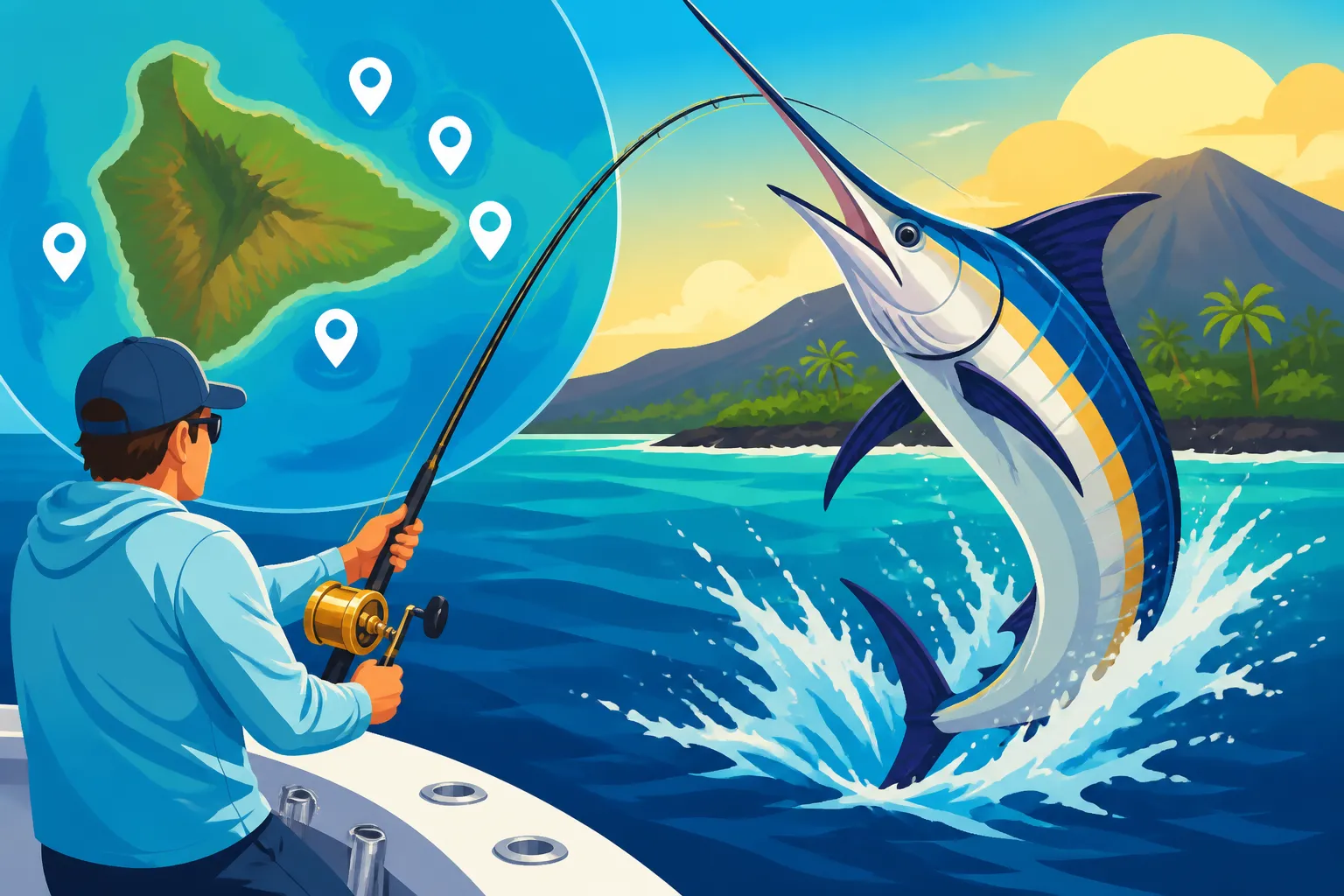
For those truly chasing a monster marlin, the focus often shifts further offshore to the seamounts and the area affectionately known as the "Grander Lane." This isn't a marked path on a chart, but rather a concept referring to the deeper, more remote waters where the biggest blue marlin are known to roam. These seamounts are submerged mountains that rise from the ocean floor, creating their own ecosystems. They act like giant FADs, concentrating baitfish and attracting apex predators over a much larger area.
Reaching these offshore seamounts requires a full-day charter and a boat capable of extended runs. However, the reward can be immense, as these are the hunting grounds for the truly colossal marlin – fish weighing over a thousand pounds, often referred to as "granders." The most famous seamounts include the "OTEC pipe" area and various unnamed deep-water humps and ledges far off the coast. Fishing these spots involves similar trolling techniques but often with larger tackle and a lot more patience. It's a commitment to the pursuit of truly legendary fish, and summer's reliable weather windows often make these longer trips more feasible. For more details on the truly massive fish caught here, check out our guide on Marlin Growth Rate to Grander Size.
Mastering Summer Marlin Techniques and Strategies
Finding the spots is half the battle; knowing how to fish them effectively for summer marlin in Kona is the other. It's a blend of art and science, honed over years on the water.
Crafting the Perfect Trolling Spread for Kona Marlin
Trolling is the quintessential technique for targeting marlin off Kona, especially during the summer. The goal is to present a spread of lures or baits that imitate fleeing or injured baitfish, enticing a strike. A typical marlin spread involves running multiple lines at different distances and depths from the boat, creating a "school" effect. This might include larger plunger lures, chuggers, or jet heads run from the outriggers, shorter flat-line lures, and a shotgun lure run far back in the spread. The choice of lure color can be crucial; popular colors often include various shades of blue, pink, green, and black, especially those with iridescent skirts that mimic the flash of baitfish.
The trolling speed is also critical, usually ranging from 7 to 10 knots, but often adjusted based on sea conditions, current, and what the fish seem to prefer on any given day. Many captains will also vary their speed and direction, making S-turns or figure-eights to make the lures "dance" and appear more lifelike. Learning about Best Lures for Marlin Trolling off Kona can significantly increase your chances. It’s a dynamic process, and a good captain will constantly be observing the water, the lures, and the sonar to make adjustments.
Reading the Ocean: Signs of Life and Strategic Moves
Successful marlin fishing isn't just about mechanically trolling; it's about being a keen observer of the ocean environment. During summer, with its usually calm conditions, it's often easier to spot signs of life. Keep an eye out for diving birds, which indicate baitfish being pushed to the surface, potentially by feeding tuna or marlin. Look for changes in water color or temperature, as these "temperature breaks" or "current lines" can concentrate baitfish and predators. Even subtle changes, like a ripple or a slick, can be clues.
A good captain will constantly be "reading" the water, looking for these subtle indicators. They might steer towards a patch of floating debris, a log, or a pallet, as these items often attract small baitfish, creating miniature ecosystems that can hold mahimahi and even marlin. The ability to interpret these signs and make strategic adjustments to the boat's course or trolling pattern can mean the difference between a slow day and an epic one. Understanding What Marlin Eat off the Kona Coast will further help you interpret these signs.
Seasonal Considerations: Weather, Currents, and Moon Phases
While summer offers generally favorable conditions, it's not entirely without its nuances. Even Kona can experience unseasonable swells or shifts in current. Monitoring weather forecasts and sea conditions is paramount, not just for safety but also for fishing success. Strong currents can scatter bait or make it difficult to maintain a good trolling spread. Experienced captains pay close attention to moon phases; while opinions vary, some believe certain moon phases, like the full moon or new moon, can influence feeding patterns, especially for nocturnal feeders or those species affected by strong tidal currents.
Understanding these factors allows a captain to adapt. For instance, if currents are strong, they might adjust trolling speeds or focus on different areas where the current is less impactful. If a big swell rolls in, they might stick closer to the more sheltered waters. These seasonal considerations, while less dramatic in Kona's summer, are still part of the equation for consistently finding and catching marlin. To ensure you're compliant with all boating regulations, it's a good idea to brush up on Hawaii Boating Laws for Anglers.
Planning Your Ultimate Kona Marlin Charter Experience
If you're heading to Kona specifically for summer marlin, a charter is almost always the way to go. Here’s how to ensure a smooth and successful trip.
Selecting a Top-Notch Charter for Summer Marlin Success
Choosing the right fishing charter is perhaps the most critical decision you'll make for your Kona marlin trip. With many boats operating out of harbors like Honokohau Harbor, it's essential to do your homework. Look for captains with a proven track record of catching marlin, especially during the summer months. Reputation, experience, and the condition of their vessel are paramount. Many charters specialize in different types of fishing, so make sure you pick one known for its big-game marlin prowess. Don't be shy about asking questions: What's their philosophy on catch and release? Do they share the catch? What kind of tackle do they use?
Websites like FishingBooker are excellent resources for comparing different charters, reading reviews from previous clients, and seeing what kind of fish they regularly catch. You can filter by boat size, amenities, and specialties, ensuring you find a fit for your group and budget. For example, some charters are known for consistently finding trophy-sized fish, while others might be more geared towards a family-friendly experience where catching any big fish is the priority. A good charter will provide all the necessary gear, bait, and local expertise. For a deeper dive into this, consult our comprehensive guide on How to Choose a Hawaii Fishing Charter.
| Charter Type | Duration (Typical) | Target Species (Summer) | Best For | Considerations |
|---|---|---|---|---|
| Half-Day (4 hrs) | Morning/Afternoon | Mahimahi, Ono, Schoolie Ahi, smaller marlin | Families, beginners, shorter time commitment | May not reach far offshore marlin grounds |
| 3/4-Day (6 hrs) | Morning | Marlin, Ahi, Mahimahi, Ono | Serious anglers, good balance of time/cost | More time for FADs and nearshore ledges |
| Full-Day (8 hrs) | All Day | Grander Marlin, Trophy Ahi, Deep Dropping | Dedicated marlin hunters, offshore trips | Can reach furthest seamounts, higher cost |
| Shared Charter | Half/Full Day | Varied | Budget-conscious, solo anglers | Less control over targeting, shared experience |
| Private Charter | Half/Full Day | Fully customizable | Groups, specific target species, flexibility | Highest cost, but full control over itinerary |
Preparing for Your Day on the Water
Once you've booked your charter – and it's highly recommended to book well in advance for summer trips, as prime dates fill up quickly – you'll want to prepare for your day. While charters typically provide all the necessary fishing gear, you should bring appropriate clothing for a day under the Hawaiian sun: light, quick-drying layers, a wide-brimmed hat, sunglasses, and reef-safe sunscreen. Staying hydrated is key, so bring plenty of water and other non-alcoholic beverages. Snacks are also a good idea.
One common pitfall for even seasoned travelers is seasickness. The Kona coast is generally calm, but even slight swells can affect some people. If you're prone to motion sickness, consider taking preventative medication the night before and again in the morning of your trip. Most importantly, communicate any concerns or special needs with your captain or crew beforehand. They are there to ensure you have a safe and enjoyable experience. Many charters departing from Honokohau Harbor or Kailua-Kona (which you can book via services like FishingBooker) will offer advice on what to bring. Don't forget to check out What to Bring on a Hawaii Fishing Charter for a full checklist.
Understanding Hawaii's Fishing Regulations for Visitors
While most recreational ocean fishing in Hawaii does not require individual anglers (especially non-residents) to possess a state fishing license, there are specific regulations that apply, particularly to certain species, bag limits, and protected areas. The boat you charter will have all the necessary commercial licenses, so you won't typically need your own for a deep-sea trip. However, it's always good practice to familiarize yourself with the general rules. For example, there are strict rules regarding protected species like sea turtles and monk seals; maintaining distance is crucial.
Additionally, certain species have size and bag limits, which your captain will be well aware of and adhere to. If you plan any freshwater fishing during your visit, a freshwater license is required. Always defer to your charter captain for current regulations while on the boat, as they are the experts on local laws and conservation efforts. For comprehensive information, our Hawaii Fishing License Guide for 2026 offers a detailed breakdown. When using a platform like FishingBooker to browse charters, you can often find information about the charter's compliance with local regulations.
Disclaimer
Please remember that fishing conditions and regulations can change. While every effort has been made to provide accurate and up-to-date information, it is always recommended to verify current rules and conditions with the Hawaii Division of Aquatic Resources (DAR) or your chosen fishing charter operator before heading out. Safety should always be your top priority on the water.