Best Techniques for Freshwater Trout at Kokee
If you've ever dreamt of casting a line for trout in Hawaii, you might feel a little lost. It's not exactly the first place that comes to mind for freshwater angling, and the conditions are vastly different from the rivers and streams you might be used to on the mainland. This comprehensive guide will walk you through the very specific and rewarding techniques for targeting freshwater rainbow trout in Kauai's unique Kokee Public Fishing Area, ensuring you're prepared for this one-of-a-kind tropical trout experience.
Understanding Kokee's Unique Trout Fishery
Fishing for trout in Hawaii is an anomaly, a surprising delight nestled within the tropical landscape of Kauai. The Kokee Public Fishing Area isn't your typical alpine stream; it's a high-elevation, rainforest-fed system that presents a distinct set of challenges and rewards. Understanding this unique environment is the first step to success.
The Kokee Public Fishing Area Landscape
Perched high in the mountains of Kauai, the Kokee Public Fishing Area (PFA) offers a stark contrast to Hawaii's famed ocean fishing. Here, instead of warm, salty waves, you'll find cool, often brisk, mountain air, dense native forest, and a network of small, clear streams. The elevation, which can reach over 3,000 feet, provides the necessary cooler temperatures for trout to survive, even thrive, in this otherwise tropical climate. These streams are characterized by their relatively low flow compared to major mainland rivers, with numerous small pools, riffles, and runs created by the volcanic rock and fallen timber. Access can sometimes be a challenge, requiring short hikes through lush, often damp, forest, adding to the feeling of a true backcountry angling adventure. The unique geology and flora mean that the aquatic insect life, while present, might differ from what trout anglers typically encounter elsewhere, influencing fly selection and fishing strategies.
The waters themselves are typically very clear, especially during periods of dry weather, making stealth an absolutely critical component of your fishing approach. When heavy rains hit, however, these streams can become discolored and swollen very quickly, impacting both fish activity and angler safety. Anglers need to be mindful of these rapid changes and adapt their strategies, or even postpone their trip, based on current conditions. The dense canopy overhead also means that many stretches are shaded, providing cool refuges for trout and often making casting a bit tighter for those employing longer rods. It's truly a distinctive environment that demands respect and a tailored approach, quite unlike any other trout fishery you might have experienced.
Rainbow Trout in a Tropical Setting
The rainbow trout found in Kokee are not native to Hawaii; they are a testament to successful stocking programs by the Hawaii Department of Land and Natural Resources (DLNR) Division of Aquatic Resources (DAR). These fish, primarily fingerlings, are released annually, allowing them to grow in the nutrient-rich, cool mountain streams. This continuous stocking ensures a healthy population for anglers, even though natural reproduction in these specific streams is limited. The trout adapt remarkably well to their Hawaiian home, displaying the same feisty fight and opportunistic feeding habits as their mainland cousins. However, their behavior is subtly influenced by the unique environment, particularly the absence of intense winter freeze-overs and the prevalence of specific local food sources.
Because they are stocked, you'll find a wide range of sizes throughout the season, from smaller pan-sized fish to larger, "holdover" trout that have survived previous seasons. These holdovers, having spent more time in the wild, tend to be warier and put up a more formidable fight. Understanding their background – that they are primarily stocked fish – can help inform your strategy, particularly regarding bait and lure choices that mimic the hatchery feed or common local invertebrates. If you're keen to learn more about these fascinating fish, dive into our detailed guide on Rainbow Trout: Hawaii's Only Freshwater Trout Fishery. The success of this fishery hinges on consistent management and, importantly, responsible angling practices that respect both the fish and their unique habitat.
Essential Gear for Kokee Trout Fishing
Preparing for a Kokee trout adventure means thinking light, versatile, and tough. The conditions here—tight casting lanes, clear water, and variable weather—demand specific gear choices that might differ from your usual trout setup.
Rods, Reels, and Lines for Mountain Streams
For spin fishing, a light to ultralight spinning rod between 5 to 6 feet in length is ideal. This shorter length is a huge advantage when you're casting in overgrown areas or through tight gaps in the rainforest canopy. A fast action rod will give you the sensitivity to detect subtle bites and the backbone to fight a spirited trout in current, while a light power rating keeps the experience sporting with these smaller fish. Pair this with a small spinning reel, size 1000 or 2000, spooled with 4-6 pound monofilament or fluorocarbon line. Monofilament offers a bit more stretch for shock absorption, which can be useful with light hooks, while fluorocarbon provides excellent abrasion resistance and low visibility, crucial in Kokee's clear waters. Many anglers find a great selection of suitable rods and reels on platforms like Amazon, offering competitive pricing and a wide variety that might not be available in local shops.
Fly anglers will want a 2 to 4 weight fly rod, ideally 7 to 8 feet long. Again, the shorter end of this spectrum is often more practical for navigating the dense vegetation. A weight-forward floating line is standard, matched to your rod weight, with a 7 to 9-foot leader tapering down to 4X, 5X, or even 6X tippet, depending on water clarity and fish shyness. The delicate presentation afforded by a lighter fly setup is often key to success when fish are spooky in the clear Kokee streams. It’s wise to carry extra spools of tippet in various sizes, as conditions can change, and you might need to adjust on the fly (pun intended!). For those just getting into fly fishing or looking for specific niche patterns, online retailers, including Amazon, provide an extensive range of fly fishing gear and accessories suitable for Kokee's unique conditions.
Bait, Lures, and Flies that Produce Results
When it comes to tempting Kokee's rainbow trout, having a diverse tackle box is a smart move. For bait fishing, classic options like canned whole kernel corn and popular trout dough baits, such as Berkley PowerBait (in colors like "rainbow" or "chartreuse"), are incredibly effective, especially for freshly stocked fish. Small pieces of nightcrawlers can also be deadly, mimicking natural insect larvae. Present these on small, sharp hooks (size 10-14) with minimal weight, allowing them to drift naturally with the current. This natural drift is critical, as unnatural movement will often deter even hungry trout.
Lure enthusiasts will find success with small inline spinners (Mepps, Panther Martin, or Rooster Tail in sizes #0 to #2) in silver, gold, or brass blades, often with a little fluorescent dressing. These mimic small baitfish or larger insects and their flash and vibration can trigger aggressive strikes. Tiny spoons, like Kastmasters or Little Cleos in 1/16 to 1/8 ounce, are also effective, especially when cast into deeper pools. For those who prefer soft plastics, micro-jigs or small artificial worms fished under a bobber or weightless can be surprisingly productive. The key with lures is to match the hatch, not in terms of insects, but in terms of size and natural movement; aggressive retrieves often work well when fish are active, while a slower, more deliberate action is better for lethargic trout.
Fly anglers should be prepared with a selection of patterns that cover various insect life cycles. For subsurface nymphing, standard patterns like Prince Nymphs, Hare's Ear Nymphs, Pheasant Tail Nymphs, and Caddis Larva patterns in sizes 14-18 are reliable. When trout are looking up, carrying a few Parachute Adams, Elk Hair Caddis, or small Stimulators in sizes 14-18 can lead to exciting dry fly action. Small woolly buggers or other streamer patterns in black, olive, or brown, sizes 10-14, can also entice larger, more aggressive trout, especially in deeper pools or during higher flows. Having a good variety is crucial, as the trout's preference can change daily. Again, many of these specialized baits, lures, and flies can be conveniently sourced from larger online retailers like Amazon if you can't find them at your local tackle shop on Kauai.
Proven Techniques for Targeting Kokee Trout
Success in Kokee's streams comes down to a blend of careful approach, precise presentation, and understanding how trout behave in this specific environment. You can’t just walk up to the bank and expect to catch fish; these waters demand a more thoughtful strategy.
Spin Fishing Strategies for Kokee Streams
Spin fishing in Kokee requires a delicate touch despite using artificial lures or bait. Given the tight quarters and often dense overhead canopy, precision casting is paramount. Instead of wide, sweeping casts, practice roll casts or short, accurate flick casts that minimize line tangles and allow you to place your offering exactly where you want it. Trout in these clear, shallow streams spook easily, so casting upstream and allowing your bait or lure to drift naturally downstream past known holding lies is often the most effective method. This approach keeps your line behind your presentation, making it less visible to the fish.
When using spinners or spoons, vary your retrieve speed until you find what the fish are responding to. Sometimes a steady, slow retrieve is best, mimicking a struggling insect or baitfish. Other times, a quick twitch-and-pause retrieve will trigger a more aggressive reaction from curious trout. For bait, use enough weight to get your offering down to the fish but not so much that it causes an unnatural drag or snags frequently. A simple split shot or two, a foot or so above your hook, is usually sufficient. Focus on covering all likely holding spots, including eddies behind rocks, undercut banks, and the seams where faster and slower water meet. If you're visiting right at the start of the season, check out our guide on How to Catch Trout Right After Kokee's Season Opens for specific tips on initial strategies. Remember, stealth and natural presentation are key differentiators between a good day and a frustrating one.
Fly Fishing Tactics on Kokee's High-Elevation Waters
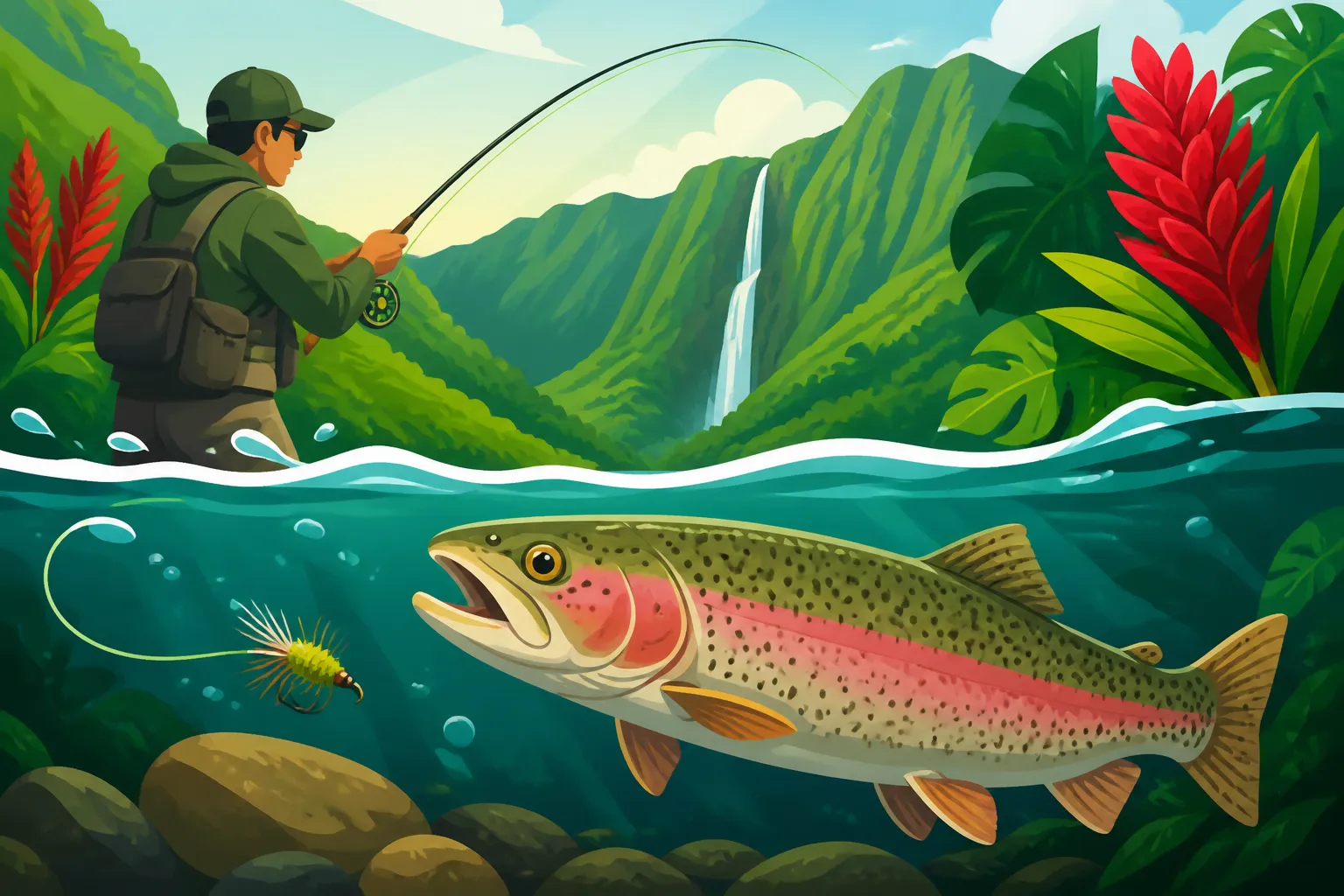
Fly fishing in Kokee’s streams is a truly rewarding experience, offering a purist’s challenge amidst stunning scenery. The predominant technique here is often upstream nymphing. This involves casting your weighted nymph pattern upstream and allowing it to drift naturally back towards you, mimicking a submerged insect. A strike indicator, whether a small bobber-style or a piece of colored yarn, can help detect subtle takes, which are often just a slight hesitation or twitch of the indicator. You'll need to learn to "mend" your line frequently—adjusting it upstream to eliminate drag and ensure your fly drifts at the same speed as the current. This natural, drag-free drift is critical for fooling wary Kokee trout.
When trout are actively feeding on the surface, which can happen during specific hatches or in the evenings, dry fly fishing becomes incredibly exciting. Present your dry fly with a delicate landing upstream of any rising fish, allowing it to float naturally over their feeding lanes. Short, accurate casts are often more effective than long ones, especially in the tight stream corridors. Beyond nymphing and dry fly, a short-line technique, often called "high-stick nymphing" or "Euro nymphing," can be exceptionally productive in the smaller, faster runs and pocket water. This involves keeping most of your fly line off the water, using the rod tip to guide your leader and fly through the current, maximizing control and feel. Regardless of the specific technique, always approach the water cautiously, staying low and out of sight, as the clear water makes fish highly aware of your presence. For those looking to refine their approach in these unique waters, our overarching guide on Best Techniques for Freshwater Trout at Kokee offers even more detailed insights.
Reading the Water and Approaching the Fish
Successfully fishing Kokee's clear mountain streams begins long before your first cast. Reading the water is an art form, especially here, where every ripple and shadow can reveal a potential trout hideout. Look for areas that offer trout a combination of food, cover, and a break from the current. Riffles, the shallower, faster-moving sections, often hold actively feeding fish that are ambushing insects dislodged by the current. Below these riffles, where the water slows and deepens, you'll find pools – prime holding lies for larger, more cautious trout. The seams between fast and slow water, undercut banks, and submerged logs or rocks also provide excellent ambush points and shelter. Any structure that breaks the current or offers shade is a potential hotspot.
Once you've identified a promising spot, your approach is paramount. Kokee's trout are notoriously spooky due to the clear water and lack of significant fishing pressure compared to mainland fisheries. Move slowly and deliberately along the stream bank, keeping a low profile. Avoid wearing bright clothing that contrasts sharply with the background. Casting a long shadow over the water or making sudden movements will send fish scattering faster than you can blink. Try to approach from downstream, casting upstream, so that any disturbed sediment or vibrations are carried away from the fish you're targeting. This also keeps you out of their primary line of sight, as trout typically face upstream to feed. Understanding how the water flows and how fish position themselves to conserve energy and find food is a crucial skill that will elevate your success in this unique fishery.
Seasonal Considerations and Best Times to Fish
Kokee's trout fishery is a seasonal affair, and understanding these cycles is crucial for planning a successful trip. The timing of your visit, and even the time of day, can significantly impact your catch rates.
The Kokee Trout Season Dynamics
Unlike many year-round ocean fisheries in Hawaii, the Kokee trout fishery operates on a strict seasonal schedule. The season typically opens in late spring or early summer, usually around the third Saturday of June, and runs through the end of September. These dates are established to coincide with periods of optimal water conditions and insect activity, as well as to manage the fishery's sustainability. The opening day, in particular, is a highly anticipated event, drawing anglers eager to capitalize on the freshly stocked fish. For specific dates and details, always consult the Hawaii DLNR's Division of Aquatic Resources (DAR) official regulations or our guide on Hawaii Kokee Trout Fishing Season Dates.
Throughout the season, the quality of fishing can fluctuate. Early season, shortly after the stocking, often yields higher catch rates as the trout are less wary and more accustomed to hatchery feed. As the season progresses, the fish become more acclimated to the wild environment, growing larger and warier. This means that mid to late-season fishing might require more refined techniques, stealthier approaches, and more natural presentations to entice a strike. Planning your trip around these dynamics can greatly improve your experience. Also, it’s worth checking out our post on Hawaii Kokee State Park Fishing Season Dates for a broader understanding of accessing and enjoying the park during your fishing adventure.
Weather and Water Conditions
Kokee's high-elevation location on Kauai means weather can change rapidly, and these changes directly influence fishing conditions. Clear, sunny days often lead to extremely clear water, making stealth and delicate presentations even more critical. In these conditions, trout might hold in deeper pools or under cover to avoid direct sunlight and predators. Overcast days, however, can be excellent for trout fishing, as the diffused light makes fish less skittish and more likely to feed actively throughout the day. The subdued light helps anglers get closer to the stream without spooking the fish, leading to more opportunities.
Rainfall is another significant factor. Light, intermittent rain can actually improve fishing by increasing water levels slightly, dislodging insects, and providing a bit of surface disturbance that makes trout feel more secure. However, heavy, prolonged rains can quickly turn Kokee's streams into raging, muddy torrents. When this happens, fishing becomes extremely difficult, if not impossible, due to poor visibility and strong currents. More importantly, it can be hazardous due to slippery banks and flash flood potential. Always check the local weather forecast before heading out, and be prepared to adapt or reschedule your trip if conditions are unsafe or unworkable. Understanding these local nuances, including how different weather conditions impact the water, will help you make the most informed decision about when and where to fish. For targeting specific areas during certain conditions, exploring our guide on Best Technique for Tailwater Trout at Kokee might offer some tactical advantages.
Regulations and Responsible Angling at Kokee
Fishing in Kokee is a privilege, and adhering to regulations and practicing responsible angling ensures this unique fishery remains vibrant for future generations. It’s not just about catching fish; it’s about respecting the resource and the environment.
Understanding Kokee's Specific Rules
The Kokee Public Fishing Area has a distinct set of regulations that anglers must follow, different from marine fishing rules in Hawaii. First and foremost, you absolutely need a valid Hawaii freshwater fishing license. This is a non-negotiable requirement for anyone fishing for trout in Kokee, and penalties for non-compliance can be stiff. Our detailed guide, Hawaii Freshwater Fishing License and Rules, will walk you through everything you need to know about obtaining one. There are specific bag limits, which dictate the maximum number of trout you can keep per day, and size limits, which specify the minimum and sometimes maximum lengths of fish that can be harvested. These limits are in place to ensure sustainable fishing pressure on the stocked population.
Gear restrictions also apply, often limiting the number of rods an angler can use and sometimes specifying legal bait and lure types. For instance, in some freshwater areas, certain live baits might be prohibited to prevent the introduction of invasive species. Always consult the most current Hawaii DAR fishing regulations booklet, available online or at license vendors, before your trip. This document is your authoritative source for all rules, including any special regulation waters or catch-and-release only zones within Kokee. Knowing the cost of your license, whether you're a resident or not, can be found in our article on the Hawaii Freshwater License Cost for Residents. Staying informed ensures a legal and enjoyable fishing experience, free from unexpected fines or complications.
Leave No Trace and Conservation Practices
Beyond the written rules, practicing "Leave No Trace" principles is fundamental to preserving the pristine beauty of Kokee. This means packing out everything you pack in, including all trash, discarded fishing line, and any food wrappers. Even biodegradable items should be packed out, as they take a long time to decompose in the cool, moist environment and can attract unwanted animals. Protecting the stream banks is also crucial; avoid trampling vegetation, especially delicate native plants, and stick to established trails or durable surfaces whenever possible. Minimizing your impact on the surrounding ecosystem helps maintain the health of the stream and its inhabitants.
Ethical fish handling is another vital aspect of conservation. If you plan to release fish, handle them as little as possible with wet hands to protect their slime coat, which is their primary defense against disease. Use barbless hooks, or pinch down the barbs on your hooks, to facilitate quicker, less damaging releases. If a fish is deeply hooked and cannot be safely unhooked, it’s often best to cut the line as close to the hook as possible rather than attempt a forceful removal, which can cause fatal injuries. Educating yourself on these practices and being a good steward of the environment ensures that the unique Kokee trout fishery remains a healthy and beautiful place for everyone to enjoy for years to come.
Kokee Trout Bait and Lure Guide
| Bait/Lure Type | Best for | Pros | Cons | Ideal Conditions |
|---|---|---|---|---|
| Canned Corn | Freshly stocked, less wary trout | Highly visible, familiar to hatchery fish, easy to use | Less natural presentation, can be easily washed off hook | Early season, slower pools, clear water |
| PowerBait | All trout, especially early season | Scent attraction, floating varieties keep off bottom, wide color range | Can be messy, unnatural appearance to wilder fish | Any time, still or slow-moving water |
| Small Inline Spinners | Aggressive, active trout; covering water | Flash and vibration attract fish, mimic baitfish/insects | Can twist line, prone to snagging in rocky areas, less subtle | Moderate current, sunny or overcast days |
| Tiny Spoons | Deeper pools, larger fish | Good casting distance, flashy, can be jigged or retrieved steadily | Can snag on bottom, less effective in very shallow water | Deeper sections, clear to slightly stained water |
| Nymph Flies | Wary trout, feeding subsurface | Mimics natural insect larvae, delicate presentation | Requires fly rod/skills, difficult to detect subtle takes | All season, clear water, consistent flow |
| Dry Flies | Actively rising trout, surface feeders | Exciting visual strikes, natural presentation | Requires specific conditions (hatches), easily affected by wind/rain | Overcast, calm surface, active insect hatches |
Disclaimer
Fishing conditions and regulations in Hawaii can change. Always consult the latest rules and advisories from the Hawaii Department of Land and Natural Resources (DLNR), Division of Aquatic Resources (DAR) before heading out. This guide provides general information and should not be considered a substitute for official regulations. Be safe, respect the environment, and practice responsible angling.