Best lure color for marlin trolling off Kona
Choosing the right lure color for marlin trolling off the Kona Coast can feel like trying to hit a moving target while blindfolded. With so many options out there, anglers often agonize over which skirt to tie on, wondering if a single shade could be the difference between a triumphant grander and a quiet ride back to the harbor. This comprehensive guide will pull back the curtain on the art and science of selecting the best lure colors, diving deep into what makes a particular hue irresistible to Kona's magnificent marlin.
Understanding Kona's Marlin Fishery and Their Preferences
The Kona Coast is legendary for its calm, deep, and incredibly clear blue waters, making it a unique challenge and a fantastic opportunity for big game anglers. What works in other parts of the world might not translate perfectly here, largely due to the specific conditions and the behavior of the resident and transient marlin populations.
The Unique Environment of the Kona Coast
Unlike many other prolific marlin fisheries, the Kona Coast of the Big Island boasts waters that drop off rapidly, sometimes to thousands of feet, just a short distance from shore. This means you don't have to run far to find deep water, which is a major highway for pelagic species like marlin. The water clarity is often exceptional, allowing for incredible visibility. This crystal-clear environment is a double-edged sword: it means marlin can see your lure from a long way off, but it also means they can spot anything unnatural or out of place.
The consistent presence of baitfish, from schooling skipjack tuna (aku) to mackerel scad (opelu) and even mahi-mahi, creates a rich feeding ground. Marlin are apex predators, and their entire existence revolves around finding and ambushing these food sources. The challenge for us anglers is to present a lure that so perfectly mimics their natural prey, or creates such an enticing visual trigger, that they can't resist. The sun here can be intense, bathing the water in bright light, which also plays a huge role in how different colors appear at varying depths and speeds.
What Marlin See and React To
Marlin, like most predatory fish, rely heavily on their vision. While we can't truly know exactly how a marlin perceives color, scientific understanding suggests they do have color vision, and are highly attuned to contrast, movement, and silhouette. In the deep, clear blue of Kona, a lure's silhouette against the surface light can be just as important as its specific color.
Marlin react to a combination of factors:
- Color and Contrast: Certain colors maintain their vibrancy or create better contrast in specific light conditions. A dark lure creates a strong silhouette against a bright sky, appearing like a baitfish fleeing upwards. Bright, reflective colors can flash and shimmer, mimicking the scales of a struggling fish.
- Action and Movement: The way a lure swims, dives, pops, or splashes is paramount. Color complements this action, enhancing the illusion of a live, injured, or fleeing baitfish.
- Size and Profile: The overall size and shape of the lure, especially how it matches the prevalent bait, is crucial.
- Pressure Waves: The commotion a lure makes in the water creates pressure waves that marlin can detect with their lateral lines, even before they see the lure. Color then serves as the final visual trigger.
Understanding these sensory inputs helps us choose not just a pretty color, but a functionally effective one that taps into a marlin's primal predatory instincts. You're not just throwing out a piece of plastic; you're casting a convincing illusion.
Top Lure Color Categories for Kona Marlin
When you're rigging up your spread for a day out on the Kona Coast, you'll want to have a good mix of colors. While there's no single "magic" color that works every time, certain categories have proven themselves time and again.
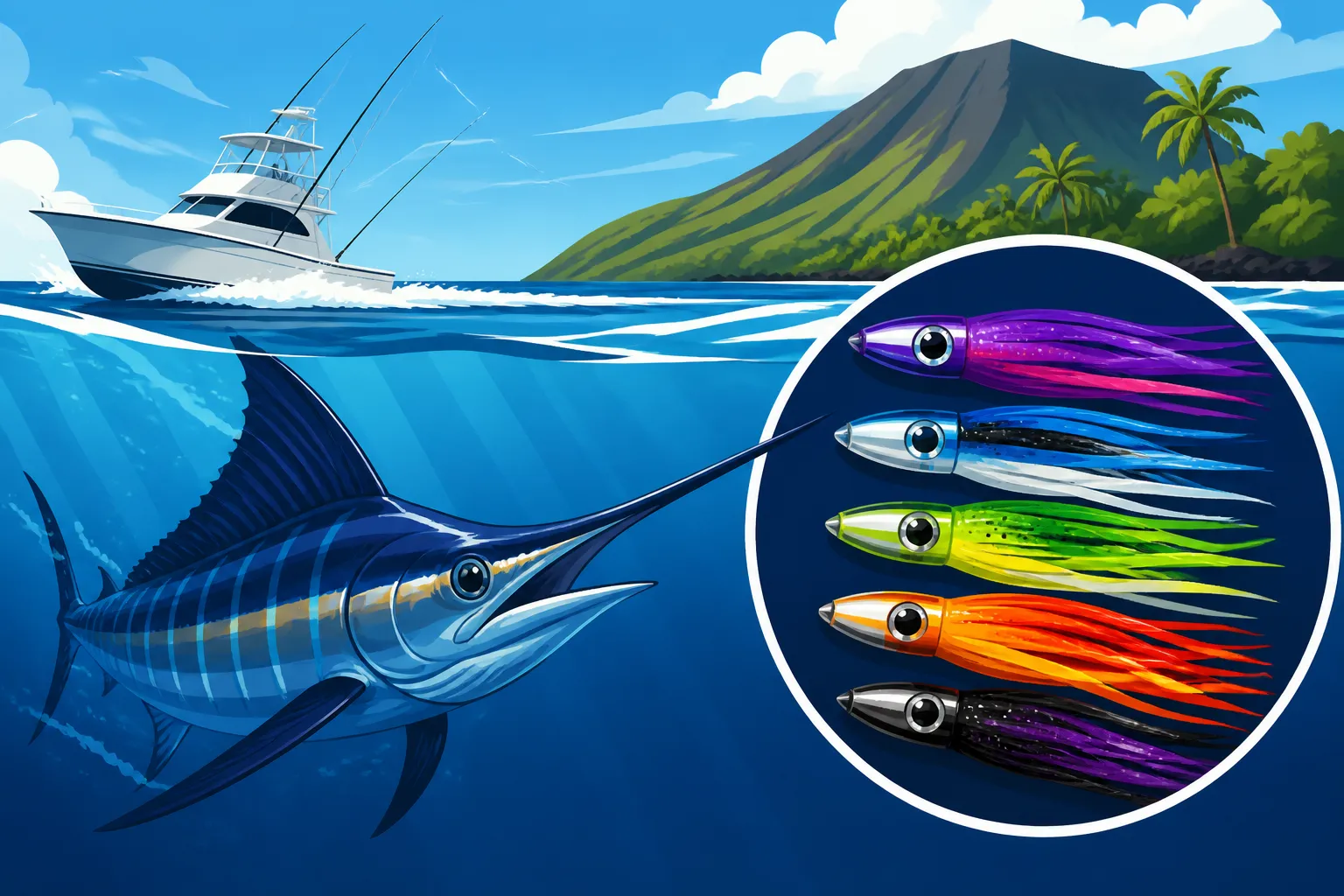
High-Contrast & Dark Colors (e.g., Black/Purple, Black/Red)
These are arguably the most iconic and consistently effective color combinations for marlin fishing, especially in clear, sunny Hawaiian waters. The reason is simple: when a marlin looks up from below, a dark lure creates a strong, distinct silhouette against the bright sky and surface glare. It looks exactly like a fleeing baitfish.
- Black/Purple: This is a classic for a reason. The purple adds a subtle flash or glow that can be particularly appealing. Brands like Marlin Magic are famous for their "Ahi Killer" or "Ruckus" lures in black/purple, which have accounted for countless granders. These lures are especially deadly on overcast days or in lower light conditions, where their strong silhouette remains visible. They also perform exceptionally well deeper in the water column where other colors might lose their vibrancy. Many seasoned captains will tell you that if you only have one lure in your spread, it should probably be a black and purple. You can find a huge variety of these lures on platforms like Amazon, offering different head shapes and skirt combinations.
- Black/Red: Another high-contrast favorite, black and red offers a similar strong silhouette with the added pop of red. Red is one of the first colors to disappear in the water column, but close to the surface, especially with light penetration, it can create a powerful, aggressive flash. This combination is often a go-to for aggressive marlin that are actively hunting. It's a color scheme that suggests injury or distress, a common trigger for predatory fish.
Bright & Fluorescent Colors (e.g., Pink, Chartreuse, Green)
While dark colors excel at silhouetting, bright and fluorescent colors shine when you want to attract attention with vibrancy and flash, particularly in the incredibly clear Kona waters.
- Pink: From hot pink to a more subtle bubblegum, pink lures are surprisingly effective. They often mimic the belly flash of a fleeing baitfish or offer a unique, vibrant appeal that stands out. Pink and white combinations are particularly popular, as are pink and blue. Many anglers swear by pink lures on bright, sunny days when the water is gin-clear. They can be incredibly visible and generate aggressive strikes. You might often see them run on the short rigger or flat line.
- Chartreuse/Green: These vibrant, almost neon colors are fantastic for visibility, especially when the water clarity might be slightly reduced or when you're looking to create a striking target. Chartreuse, often mixed with yellow or green, can mimic the bright hues of certain baitfish or simply act as a powerful attention-getter. Green is also a natural baitfish color, blending well with the deep blue of the ocean while still providing excellent visibility. Lures with green and yellow skirts often imitate a small mahi-mahi, which marlin definitely prey on. These are often great choices for the long rigger or shotgun positions, where they can draw fish in from a distance.
Natural & Baitfish Patterns (e.g., Blue/Silver, Green/Yellow, Mahi-Mahi)
Sometimes, the best strategy is to present a lure that looks as much like a marlin's natural food source as possible. This "matching the hatch" approach can be incredibly effective, especially when the marlin are being particular or are actively feeding on a specific type of baitfish.
- Blue/Silver (or Blue/White): This combination is a classic baitfish imitation. Many of the small schooling fish, like opelu or small tuna, have blue backs and silver or white bellies. A blue and silver lure perfectly mimics this, appearing like a healthy, fast-moving baitfish. This is a versatile color combination that works in almost any condition and is often one of the first choices for a general-purpose spread.
- Green/Yellow (Mahi-Mahi pattern): Mahi-mahi are a common prey item for larger marlin. A lure designed with green and yellow, often with some orange or black barring, directly imitates a small mahi. These lures can be irresistible to marlin, especially if you've seen mahi activity in the area or if it's the right season for these vibrant fish. This pattern provides both a natural look and a bright, attractive flash.
- Other Natural Patterns: Consider patterns that mimic skipjack tuna (aku) with dark blue/black backs and silver/white bellies with stripes, or even red patterns to simulate an injured or bleeding fish. The key here is observation: pay attention to what baitfish are in the water, what the birds are working, and what the charter boat captains are reporting.
Factors Influencing Lure Color Choice Beyond Just Color
While the color itself is a huge part of the equation, it's never the only factor. A great lure color can be rendered ineffective if other environmental and tactical elements aren't considered.
Water Conditions and Light Penetration
The ocean is a dynamic environment, and the way light interacts with water drastically changes how colors are perceived.
- Clear vs. Murky Water: Kona is known for its clear water, but even here, localized runoff from rain or algal blooms can reduce visibility. In exceptionally clear, bright conditions, lighter and more natural baitfish patterns (like blue/silver or green/yellow) can shine, reflecting natural light and looking very realistic. However, those vibrant pinks and chartreuses also stand out beautifully. In slightly murkier water (which is rare off Kona but can happen), high-contrast dark lures (black/purple) or very bright, fluorescent colors (chartreuse) often perform better because they create a more distinct target.
- Bright Sun vs. Overcast Skies: On a dazzling, sunny Hawaiian day, the surface glare is intense. This is where dark lures, creating that crisp silhouette against the sun, truly excel. The darker the day, the less surface light there is to silhouette against, but the water might also appear darker, making bright lures pop more distinctly. Under overcast skies, or in the early morning/late afternoon, the light is diffused. This can be a great time for both strong silhouettes and vibrant colors, as the lack of harsh glare allows both to be seen clearly without being washed out.
- Depth: This is critical. Red light is absorbed first in water, so red colors disappear quickly. Orange follows, then yellow, green, and finally blue. This means a red-and-black lure at 30 feet might just appear as a black lure. For lures running deeper in your spread, or in conditions where marlin are holding deeper, colors that retain their visibility, like blues, greens, or even purples, will be more effective. However, the contrast of dark lures remains important at any depth when viewed against brighter surface light.
Baitfish Presence and "Matching the Hatch"
Marlin are opportunists, but they're also highly tuned to their current food source. If there's a particular baitfish prevalent in the area, imitating that baitfish can give you a significant advantage. This concept is often called "matching the hatch."
- Identifying Prevalent Baitfish: Keep an eye out for birds working bait schools, especially skipjack tuna (aku) or mackerel scad (opelu). If you see them, or hear reports from other boats about what marlin are feeding on, choose lures that mimic those species in size, shape, and color. For example, if small skipjack are abundant, a darker blue/black lure with a silver belly might be ideal. If you're seeing lots of small mahi-mahi, a green/yellow pattern is a no-brainer. This requires observation and sometimes a bit of detective work on the water.
- Importance of Being Observant: Don't just stick to what worked yesterday. Conditions, currents, and baitfish movements change daily, sometimes hourly. Staying observant, watching your fish finder, and even talking to other anglers on the radio (or at the dock in Honokohau Harbor) can provide crucial clues. Sometimes, a subtle shift in lure color can be the key to unlocking a bite.
Lure Position in the Spread and Trolling Speed
The placement of a lure in your trolling spread and the speed at which you're moving it heavily influence its visibility and action, making color selection even more nuanced.
- Different Colors for Different Positions:
- Flat Lines & Short Riggers (closer to the boat): These lures are often in clearer water and higher light, so vibrant colors (pink, chartreuse) and strong silhouettes (black/purple) work well, as marlin are closer and can get a better look.
- Long Riggers & Shotgun (further back): These lures are further away, so they need to attract attention from a greater distance. High-contrast colors or bright, flashing patterns can be effective here. Sometimes, a natural baitfish pattern run far back can appear like a lone, vulnerable fish. Consider how the lure appears against the backdrop of the boat's wake versus open water.
- How Speed Affects Lure Action and Visibility: Your trolling speed (typically 7-10 knots for marlin) dictates how a lure swims. Some colors might look better at a faster pace, creating a blur of attractive flash, while others might rely on a more distinct profile at a slightly slower speed. A slower presentation might allow a marlin more time to inspect a natural-looking lure, whereas a fast-moving, high-contrast lure might trigger an instinctual chase response. Understanding the optimal trolling speed for ahi in Hawaii or the best trolling speed for marlin can also impact your lure choices.
Practical Tips for Assembling Your Kona Lure Spread
Putting together a winning lure spread is a bit like composing a symphony; each lure plays a role, and they all need to work in harmony to attract attention.
The "Go-To" Lure Color Combinations
While conditions change, certain combinations are consistently effective and should be staples in your tackle box:
- The Classic Kona Spread (Mixed Bag): This often involves a black/purple on the short rigger (like a Black Bart 1656 Angle), a blue/silver bullet-head on the long rigger (imitating skipjack), a green/yellow mahi-pattern on the flat line (perhaps a Mold Craft Wide Range), and a bright pink or chartreuse in the shotgun position way back (like a Zuker's ZM2). This spread gives you variety in color, action, and profile.
- Dark & Deep: On days with cloud cover or when marlin seem to be holding deeper, a spread heavy on black/purple, black/red, or even dark green/black can be incredibly effective. These colors create maximum silhouette against the diffused light.
- Bright & Flashy: For those stunning, clear bluebird days, a spread featuring more pink, chartreuse, blue/white, and reflective Mylar-skirted lures can really shine. These lures reflect the abundant sunlight and generate incredible flash.
The key is not to load up on just one color, but to present a diversified offering. Think about how to rig ballyhoo for marlin trolling as well, sometimes a natural bait with a colored chugger head can be the ultimate combination. For those just starting out or looking for their first marlin, booking one of the best charters for catching your first marlin will give you invaluable insights into effective spreads. Many charter boats will often fish the "100-fathom line" where the depth drops off dramatically, a prime area where knowing your lure colors truly pays off.
Experimentation and Local Knowledge
The best anglers in Kona are not afraid to experiment. What worked yesterday might not work today, and what's popular might not be what the fish are currently keyed in on.
- Importance of Trying Different Colors: Don't be afraid to swap out a lure color if you're not getting bites. Keep a log of what worked (and didn't work) on specific days, under certain conditions, and at particular depths. Sometimes a subtle change, like switching from a black/purple to a black/red, can make all the difference. Many successful fishing trips are a result of continuous adjustment and refinement of the spread.
- Talking to Local Captains and Tackle Shops: The local knowledge in Kona is immense. Charter captains, deckhands, and tackle shop owners (like the folks at Kona Coast Bait & Tackle) spend countless hours on the water. They've seen what works, what the baitfish are doing, and where the marlin are holding. Don't be shy about asking for advice! They often have the most up-to-date intel on what specific colors or lure types are hot. They can also point you to specific brands or styles, some of which you might find readily available on platforms like Amazon if you can't get them locally.
- Adjusting Based on Daily Conditions: This goes back to observation. If the sun comes out from behind the clouds, consider putting out a darker lure. If you're marking a lot of smaller baitfish on your sonar, try a lure that's a closer match in size and color. Being flexible and adaptable is a hallmark of a successful marlin angler. While Kona is blessed with consistent conditions, a slight change in current, clarity, or bait presence can shift the marlin's preferences. Understanding the unique factors for marlin fishing off the Kona Coast and knowing what marlin eat off the Kona Coast are fundamental to this adaptability.
Summary Table: Kona Marlin Lure Color Guide
Here’s a quick overview to help you decide which lure colors might be best for your next Kona marlin adventure.
| Lure Color Combination | Primary Benefit | Best Conditions | Example Species Imitated | Typical Lure Position(s) | Notes |
|---|---|---|---|---|---|
| Black/Purple | Strong silhouette, high contrast | Sunny/overcast, clear water, deeper in spread | Skipjack, general bait | Short rigger, long rigger | The ultimate "go-to" for Kona marlin. |
| Black/Red | Aggressive silhouette, distress signal | Sunny/overcast, clear water, surface | Injured baitfish | Flat line, short rigger | Excellent for aggressive strikes, particularly near the surface. |
| Blue/Silver | Natural baitfish imitation, reflection | Sunny, clear water, "matching the hatch" | Opelu, small Tuna | Any position | Versatile, a staple in any spread, great on bright days. |
| Green/Yellow (Mahi) | Natural prey imitation, vibrant | Sunny, clear water, when mahi are present | Mahi-mahi | Long rigger, shotgun | Especially effective when marlin are actively feeding on mahi. |
| Pink/White (Bright) | High visibility, unique attractant | Sunny, very clear water | N/A (attraction based) | Short rigger, flat line | Great for standing out and getting attention in pristine conditions. |
| Chartreuse | Exceptional visibility, fluorescent | Any light, slightly less clear water (rare in Kona) | N/A (attraction based) | Long rigger, shotgun | Good for drawing attention from a distance or in varied light. |
Remember, this table is a guide, not a strict rulebook. The ocean is unpredictable, and sometimes a color you least expect will get the bite. The most important thing is to have fun, stay persistent, and enjoy the incredible experience of Marlin Fishing off the Kona Coast.
Disclaimer
The information provided in this guide is for general informational purposes only and is not intended as legal advice. Fishing regulations, license requirements, and best practices can change, and it is always the angler's responsibility to consult the latest rules and regulations from the Hawaii Department of Land and Natural Resources (DLNR) before engaging in any fishing activities. Adherence to safety guidelines is paramount.