Best technique for ono trolling
Trying to dial in that perfect trolling technique for ono (wahoo) can feel like a never-ending puzzle, especially when you're out on the vast Hawaiian waters and those elusive speed demons just aren't biting. It's frustrating to spend hours pulling lures only to come back empty-handed, wondering what secret ingredient you missed. This guide is here to break down the best, most effective techniques for ono trolling, helping you understand their behavior, choose the right gear, and present your offerings in a way that those toothy predators simply can't resist.
Understanding Ono Behavior and Their Preferred Habitat
Before you even think about dropping a line in the water, understanding the nuances of ono behavior is crucial. These are not your lazy bottom dwellers; ono are apex predators built for speed and ambush, and knowing their habits will give you a significant advantage.
Ono's Hunting Habits and Prey
Ono, also known as wahoo, are truly remarkable fish. Their torpedo-shaped bodies, incredible bursts of speed (often exceeding 50 mph!), and those distinctive razor-sharp teeth make them formidable hunters. They're primarily pelagic, meaning they roam the open ocean, but they have a keen eye for structure and current breaks that congregate bait. Unlike some schooling pelagics, ono often travel solo or in small packs of two to five, using their speed to ambush prey. Their diet is diverse but generally consists of smaller fish like mackerel, small tuna, flying fish, and squid. They're opportunistic feeders, and they'll hit anything that looks like a fast-moving, vulnerable meal. This aggressive feeding behavior is exactly what we aim to exploit with trolling. You might find them lurking around the edges of a baitball, waiting for the perfect moment to dart in.
Locating Ono Hotspots
Finding ono isn't just about driving around hoping for a bite; it’s about reading the ocean and identifying key indicators. One of the most common places to find ono in Hawaii is around Fish Aggregating Devices (FADs), which are essentially anchored buoys that attract baitfish, and consequently, larger predators like ono and mahimahi. But FADs aren't the only game in town. Pay close attention to current lines, where two different currents meet, creating a visible seam on the surface. These lines often concentrate plankton, baitfish, and smaller predators, making them prime hunting grounds. Temperature breaks, visible on good sonar or satellite charts, also draw fish in. Ledges, drop-offs, and deep pinnacles that rise up from the seafloor are also excellent spots, as they create upwellings and structure that baitfish like to hide around.
For example, off the Kona Coast of the Big Island, the deep-water drop-offs and seamounts provide ideal habitats. Similarly, off Maui, areas like the Maalaea Harbor best nearby fishing grounds can lead you to productive offshore waters where ono cruise. Observing bird activity, especially diving seabirds, can often signal the presence of baitfish, and where there's bait, there are usually ono not far behind. A good captain or experienced angler knows these patterns like the back of their hand, constantly scanning for these tell-tale signs. Remember, knowing Ono Habits and Feeding Behavior is paramount to consistently locating these prized fish.
Essential Gear for Successful Ono Trolling
When it comes to ono, your gear isn't just about catching fish; it's about withstanding their incredible speed and devastating teeth. Skimping on tackle here is a surefire way to end up with a heartbreaking story of a missed monster.
Rods, Reels, and Line Selection
For ono trolling, you'll want a setup that can handle a powerful, fast-running fish. Forget the light freshwater gear; we're talking serious saltwater tackle.
Rods: Opt for heavy-duty trolling rods, typically in the 30 to 50-pound class, with a fast to medium-fast action. This combination provides the backbone needed to absorb powerful strikes and maintain pressure during the fight, while still having enough tip flexibility to absorb head shakes and keep the hook from pulling. Look for rods with roller guides, especially if you're running heavy mono or wire leaders, as they reduce friction and improve line longevity during the intense runs.
Reels: Conventional reels are the go-to for ono trolling. You'll want a quality lever drag reel known for its smooth, powerful drag system and a high gear ratio for quick line retrieval. Brands like Penn, Shimano, and Accurate offer excellent options. A high gear ratio is incredibly beneficial because ono often charge the boat after their initial run, and you need to reel quickly to pick up slack and keep tension on the line.
Line: Spool your reels with 50 to 80-pound monofilament or braided line. Many prefer monofilament for its stretch, which acts as a shock absorber during violent strikes and headshakes. However, braid offers increased sensitivity and incredible strength-to-diameter ratio, allowing for more line capacity. Regardless of your main line choice, the leader system is where it gets critical for ono. You must use wire leader due to their razor-sharp teeth. I'll get into that next, but ensure your main line has a strong, abrasion-resistant connection to your leader system.
Lures and Baits of Choice
Ono are aggressive, visual hunters, so the right lure presentation is key. Many anglers will stock up on various options from reputable online retailers like Amazon to ensure they have a wide selection.
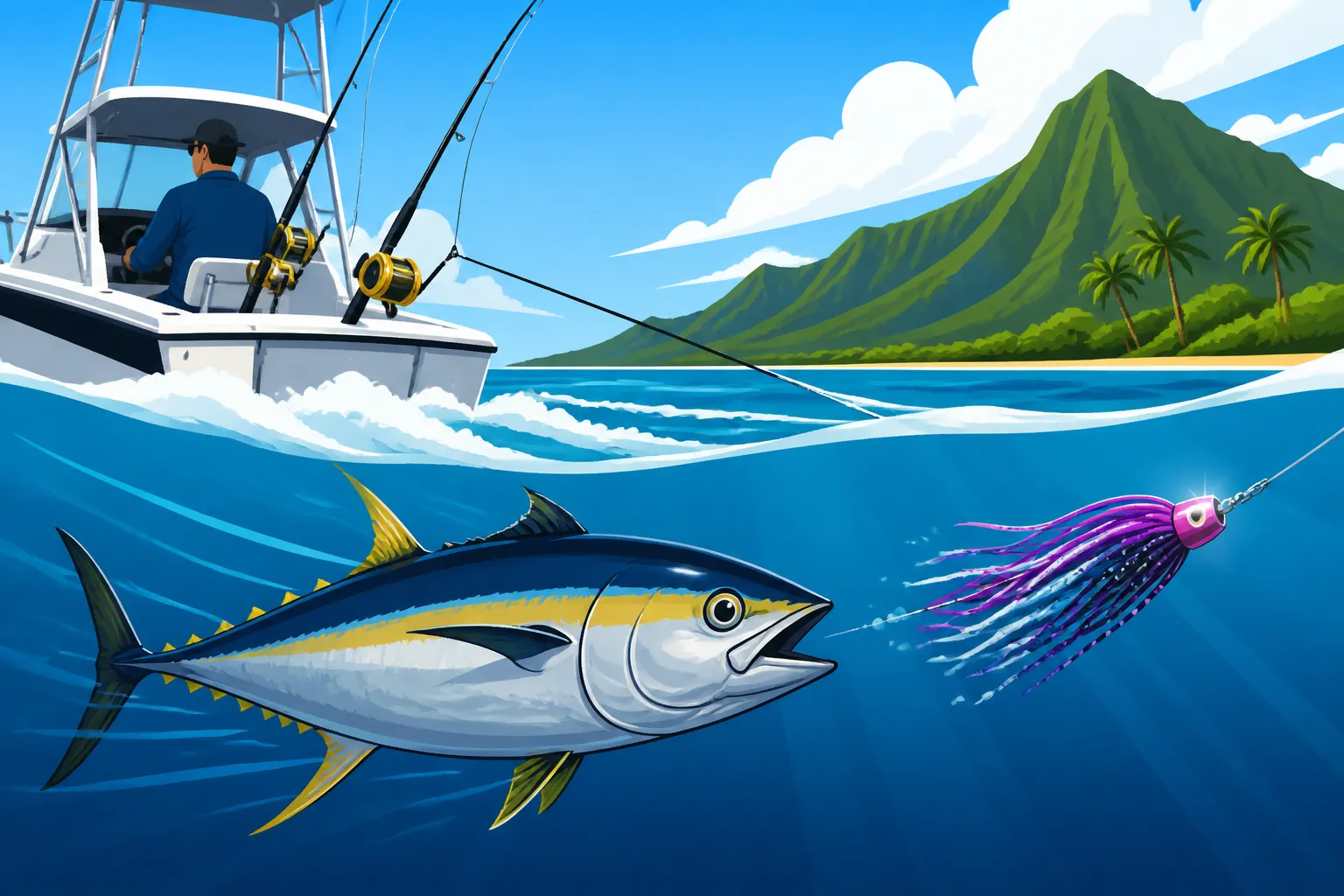
High-Speed Trolling Lures: These are perhaps the most popular and effective for ono. Bullet head lures, often heavy and weighted, are designed to track straight and remain stable at high speeds (10-20 knots). Jet heads, which have holes that allow water to jet through, creating a smoke trail and additional vibration, are also fantastic. Popular colors often include black and purple, blue and white, green and yellow, and sometimes even fluorescent pink or chartreuse patterns. These lures imitate fleeing baitfish.
Diving Plugs: These lures dive to specific depths, allowing you to target ono that might be holding a bit deeper in the water column. They are effective at slightly slower trolling speeds (5-9 knots) and can be incredibly deadly when ono are less willing to chase a surface presentation. Yo-Zuri and Rapala are well-known brands that make excellent diving plugs.
Natural Baits: Rigged natural baits, especially ballyhoo, are also highly effective. A properly rigged ballyhoo swims naturally and can be trolled at moderate speeds. Strip baits (long, thin strips of fish belly) or small, rigged skipjack tuna also work wonders. Combining a natural bait with a colorful skirt or chugger head can make it even more enticing. Sometimes, the added flash and vibration of a skirted bait can be the difference maker.
Rigging for Ono: The Wire Leader is Non-Negotiable
This point cannot be stressed enough: if you are serious about consistently landing ono, a wire leader is absolutely, unequivocally essential. Their teeth are like tiny surgical scalpels, and even heavy monofilament leaders will be snipped clean in an instant.
Why Wire? Ono are designed to kill their prey with a quick, decisive bite. They don't chew; they slice. Mono or fluorocarbon leaders, no matter how heavy, stand virtually no chance against those teeth during a fight.
Types of Wire:
- Single Strand Wire: This is a very common choice. It's stiff and less prone to kinking if handled correctly. It's often used in lighter tests for bait rigs but can be frustrating if it kinks.
- Multi-Strand Cable Wire: This is what many serious ono anglers prefer. Brands like Malin, American Fishing Wire, or Momoi make excellent multi-strand wire in various tests, typically 60 to 100-pound test for ono. It's more flexible, less prone to kinking, and generally easier to work with. It's also more resistant to nicks and abrasion. You can find large spools of this on Amazon, ensuring you have enough for multiple rigging sessions.
Rigging Techniques:
- Haywire Twist: This is the gold standard for connecting single-strand wire to swivels or hooks. It creates a very strong, streamlined connection.
- Crimps: For multi-strand wire, crimps are usually the way to go. You'll need specialized crimping pliers and the correct size crimps for your wire. Make sure to double-barrel crimps for extra security and a clean finish. Improper crimping can lead to failure, so practice until you get it right.
Leader Length: Your wire leader should be long enough to prevent the main line from coming into contact with the ono's teeth during the fight, typically 4 to 6 feet, sometimes even longer depending on the lure. A good setup might involve a long fluorocarbon wind-on leader connected to your main line, which then connects to a heavy-duty swivel, followed by the wire bite leader.
Mastering the Art of Ono Trolling Techniques
With the right gear in hand, it's time to learn how to present those lures and baits in a way that triggers a strike from a cruising ono.
Speed, Spread, and Presentation
This triad forms the core of effective ono trolling. Get these three elements right, and you're well on your way to success.
Trolling Speed: Ono are incredibly fast, and they often prefer a faster presentation than, say, marlin. While there's no single "magic" speed, a good starting point for ono is typically between 7 and 12 knots. However, for high-speed specific lures, you might crank it up to 15-20 knots. The key is to watch your lures: they should be swimming enticingly, not tumbling or skipping erratically. Experiment within this range. If the water is choppy, you might need to slow down slightly to keep lures in the water, or speed up to get them to track correctly. If you're using natural baits like rigged ballyhoo, you'll generally want to stay on the slower end of this spectrum, around 6-9 knots, to ensure they swim naturally.
Lure Spread: A well-designed lure spread covers different zones and creates a "school" effect, drawing attention. Typically, you'll run multiple lines at different distances behind the boat, creating a staggered pattern.
- Short Rigger/Flat Lines: These are closest to the boat, often with a chugger or short-faced bullet head.
- Long Rigger Lines: These run further back and are typically deployed from outriggers, which spread them out horizontally, preventing tangles. Bullet heads or jet heads work well here.
- Shotgun Line: This is your longest line, often run straight down the middle from a center rigger, if available. It's usually a single lure, set way back in the clear, undisturbed water.
The goal is to have each lure swimming in its own clean lane, creating the illusion of a scattered bait school. The wash from your boat's propellers can also play a role, making lures appear more erratic and enticing. Regularly checking Hawaii Pelagic Species Bag Limits is also a good habit to ensure you're compliant with regulations while maximizing your catch potential.
Presentation: This isn't just about where the lure is in the water, but how it looks. Your lures should be clean, free of weeds, and swimming perfectly. Ono have excellent eyesight, and a fouled lure looks unnatural and won't get hit. Periodically check your lines, especially after a turn, to ensure no debris has collected. A perfect presentation mimics a frantic, injured, or fleeing baitfish, triggering that predatory instinct.
High-Speed Trolling for Ono
High-speed trolling is a specialized and incredibly effective method specifically for targeting fast-moving pelagics like ono. It's not for the faint of heart, but when it works, it really pays off.
Instead of the typical 7-10 knots, you'll be pushing your boat to speeds between 15 and 20 knots, sometimes even faster. This technique covers a lot of water quickly, making it ideal for searching for scattered fish or when you know ono are actively hunting. The key to high-speed trolling is using lures specifically designed for it. These lures are typically heavier, denser, and have a streamlined design that keeps them from blowing out of the water at such high speeds. Bullet heads and specially designed wahoo bombs are common choices.
Rigging for high-speed trolling requires robust connections. Heavy mono shock leaders (often 200-300lb test) followed by heavy wire leaders are standard to handle the immense pressure. Due to the speed, you'll need to use fewer lines, typically 2-4, and position them closer to the boat than a conventional spread to avoid tangles and maintain stability. This method is often employed when Hawaii Fishing Seasons by Month indicate a peak season for ono. The aggressive, fast retrieve of this technique can often trigger a reaction strike from even a reluctant ono.
Conventional Trolling and Baits
While high-speed trolling is fantastic, conventional trolling remains a highly effective method, especially when targeting ono that might be less aggressive or when you want to use natural baits.
This involves trolling at a more moderate pace, typically 5-9 knots. This speed allows for the use of a wider variety of lures, including diving plugs that track to specific depths, as well as rigged natural baits.
Rigging Ballyhoo: One of the most classic and effective natural baits is rigged ballyhoo. You can rig them with a skirted chugger head or a simple pin rig. The goal is for the ballyhoo to swim straight and naturally in the water, imitating a live baitfish. Many anglers will "brine" their ballyhoo to firm them up, making them more durable for trolling. You can often find pre-rigged ballyhoo online or at local tackle shops, but learning to rig your own is a valuable skill.
Combination Spreads: A conventional spread often combines both lures and natural baits. For example, you might run a diving plug on one short rigger, a rigged ballyhoo under a skirt on the other, a jet head lure on a long rigger, and a naked rigged ballyhoo on the shotgun. This diverse spread offers different presentations, increasing your chances of finding what the ono are keying in on that particular day. Remember, variety can be your best friend.
Strategic Considerations and Troubleshooting for Ono Trolling
Trolling for ono isn't just about putting lines in the water; it's a dynamic process that requires constant observation, adaptation, and an understanding of potential pitfalls.
Reading the Ocean and Adjusting Tactics
The ocean is a living, breathing entity, and its signals can tell you a lot about where the fish might be.
Current Breaks: Look for distinct changes in water color or texture, or visible "rips" on the surface. These are current lines, and they're like highways for baitfish and, consequently, their predators. Troll along these lines, and try crossing them at an angle to present your lures to fish holding on either side.
Temperature Changes: While harder to spot visually, a good fishfinder or chartplotter with water temperature readings can highlight these subtle but significant changes. A one or two-degree temperature difference can sometimes be all it takes to concentrate bait and target species.
Water Clarity: Ono often prefer cleaner, bluer water, but don't discount greener water, especially if there's a distinct line where the two meet. Sometimes, the bait will be in the greener water, and the ono will be patrolling the edge in the clearer water.
Trolling Patterns: Don't just troll in a straight line. Incorporate S-turns, figure-eights, and changes in direction. When you make a turn, your lures on the inside of the turn will slow down and drop deeper, while those on the outside will speed up and rise. This erratic movement can often trigger a strike from a hesitant ono. Think of it as presenting a vulnerable meal that's struggling or trying to escape. Regularly checking Best Time of Year to Fish in Hawaii can also help inform your overall strategy.
Hook-Ups, Fights, and Landing Ono
The moment an ono hits is unmistakable – it's a drag-screaming, adrenaline-pumping event. They are incredibly fast and strong.
The Strike: Ono often hit lures with tremendous force, resulting in an immediate, screaming run. Don't be surprised if your reel goes from silent to full alarm in a blink. Maintain your rod in the holder initially, allowing the circle hook (if used) to set or the J-hook to fully penetrate.
The Fight: Once hooked, an ono's fight is characterized by incredibly fast, powerful runs, often followed by violent headshakes. They will make multiple runs, so be prepared. Keep steady pressure on the fish, and try to retrieve line whenever possible, especially if they charge the boat. It's crucial to apply consistent, heavy pressure without overpowering your tackle. Trolling Techniques for Hawaii Pelagics covers many of these fighting strategies.
Landing: Getting an ono boat-side can be tricky. They are still incredibly dangerous due to their teeth, even when seemingly tired. Have a gaff ready, and aim for the head or shoulder for a clean, swift landing. Avoid reaching into their mouths or gills. Once onboard, subdue the fish quickly and carefully. Many anglers will bleed the fish immediately to preserve the meat quality.
Common Mistakes to Avoid
Even experienced anglers can make mistakes. Here are some common pitfalls to avoid when targeting ono:
- No Wire Leader: We've said it before, but it bears repeating. Not using a wire leader is the number one reason for lost ono. It's a fundamental error that will cost you fish.
- Fouled Lures: Trolling lures with weeds, plastic bags, or any other debris on them is pointless. You're just dragging garbage. Check your lures frequently, especially if you're not getting bites. Ono won't hit something that looks unnatural.
- Wrong Speed: Trolling too slow can make lures look lifeless, while too fast can make them blow out of the water or swim unnaturally. Experiment to find the sweet spot for your specific lures and conditions.
- Ignoring the Ocean: Don't just blindly troll in a straight line. Pay attention to birds, current lines, water temperature, and changes in bottom structure. These are all clues.
- Monotonous Trolling: Vary your speed, make turns, and change up your lure spread if you're not getting bites. Sometimes a subtle change is all it takes. For deeper insights into regulations that might affect your catch, consider reading up on Hawaii Bag and Size Limits by Species and
Hawaii DLNR Fishing Regulations Explained. - Not Having a Plan B: If one lure or technique isn't working, be prepared to switch it up. Have a variety of lures and baits rigged and ready to go. Consider bringing a heavy-duty pair of braid scissors or specialized fishing pliers from Amazon for quick lure changes.
By understanding these fundamentals and continuously adapting your approach, you'll significantly increase your chances of hooking into these incredible Hawaiian speedsters.
| Trolling Speed Range | Lure Type Preference | Lure Placement in Spread | Notes |
|---|---|---|---|
| 5-9 knots | Rigged Ballyhoo | Short/Long Riggers | Natural presentation, excellent for less aggressive fish |
| Diving Plugs | Short Riggers/Flat Lines | Reaches deeper, great for specific depths | |
| 7-12 knots | Bullet Head Lures | Long Riggers/Shotgun | Versatile, good balance of speed and action |
| Jet Head Lures | Short/Long Riggers | Creates smoke trail, good vibration | |
| 15-20+ knots | Heavy Bullet Head Lures | Close to boat (limited lines) | Targets actively hunting, fast-moving ono |
| Wahoo Bombs / Planers | Short/Flat Lines | Designed for extreme speed and stability |
Disclaimer
The information provided in this guide is for general informational purposes only. Fishing regulations in Hawaii can change frequently. Always consult the most current Hawaii Division of Aquatic Resources (DAR) regulations before heading out on the water. Be aware of bag limits, size restrictions, and any seasonal closures for all species. Fishing can be dangerous; always prioritize safety and wear appropriate gear.