Best technique for high surf shore casting
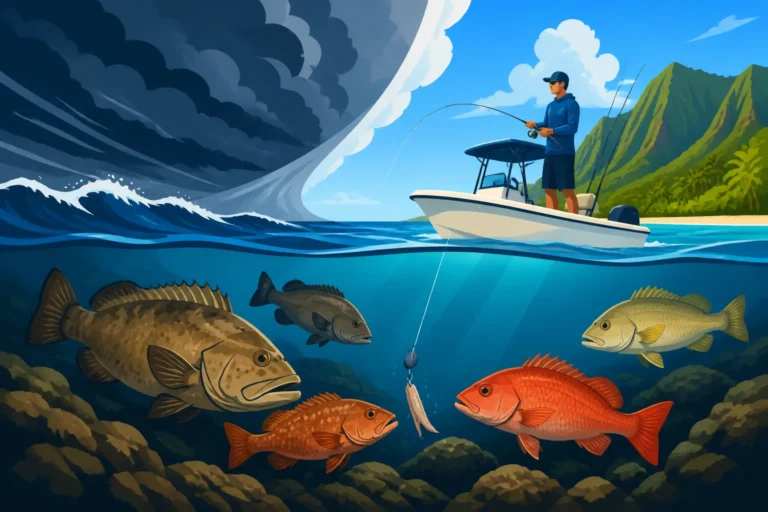
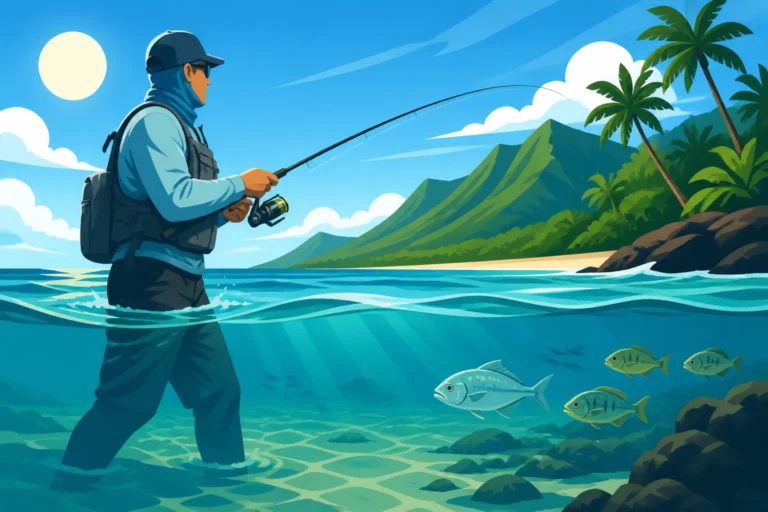
There’s nothing quite like the raw power of Hawaii’s ocean, especially when those big swells roll in. For many anglers, seeing that massive surf crash against the shoreline can be intimidating, even discouraging. You might think, "How in the world am I going to get a bait out there, let alone keep it still long enough for a bite?" It’s a completely valid frustration! High surf conditions present unique challenges, but also incredible opportunities for targeting some of Hawaii's most prized fish, like ulua and papio, that often come closer to shore in the turbulent water. This guide is all about equipping you with the knowledge, gear, and techniques to not just survive, but thrive, in the exciting world of high surf shore casting.
Understanding the High Surf Environment
Before you even think about swinging a rod, you've got to become a student of the ocean. High surf isn't just about big waves; it's a complex dance of currents, energy, and hidden features that can make or break your fishing day – and your safety. Trying to cast blindly into a chaotic wash is a recipe for tangled lines, lost tackle, and zero fish.
Reading the Waves and Currents
One of the most crucial skills for high surf shore casting is learning to read the waves and the underlying currents. This isn't something you can pick up from a textbook alone; it takes observation and experience. When those big sets come in, they create powerful forces. You'll often see distinct patterns:
- Rip Currents: These are your biggest safety concern and can also be your biggest asset for fishing. A rip current is a narrow, powerful channel of water moving rapidly away from the shore. Look for a break in the incoming wave pattern, a channel of murky water extending offshore, or floating debris moving quickly out to sea. While dangerous for swimmers, a rip current can carry your bait out to deeper water much faster than you could ever cast. However, you need to understand their speed and direction to avoid getting caught or losing your gear.
- Undertows: This is the powerful backward flow of water under the surface as waves recede. It can pull your feet out from under you, especially in knee-deep water. Always be aware of the pulling sensation and never turn your back on the ocean.
- Wave Height and Interval: The sheer size of the waves (height) dictates the energy, but the interval (time between waves) tells you about the power. Long-period swells carry immense energy and create stronger surges and deeper washing. Short-period wind chop might look messy but often doesn't have the same raw power or fishing potential as a clean, big groundswell. Trying to cast when the interval is short and the waves are crashing right on top of each other is an exercise in futility. You need to time your cast in between the sets, or as a wave recedes, to gain maximum distance and avoid your bait being immediately tossed back to shore. Imagine standing there, watching wave after wave churn the water, and you just know any lure you throw will be instantly swallowed by the foam. That's the frustration, and that's why reading the rhythm is key.
Identifying Productive Water
Even in high surf, fish aren't just randomly swimming around. They're looking for food and shelter, often using the turbulent conditions to their advantage. Your job is to find those "sweet spots" where fish are likely to be holding.
- Channels and Deep Pockets: As mentioned, rip currents often carve out deeper channels in the sand. These channels can concentrate baitfish and provide a highway for larger predators like ulua. Look for areas where waves are breaking differently or where there’s a consistent "darker" patch of water extending offshore. These might indicate deeper water. Similarly, deep pockets right behind the shore break can be ambush points for fish.
- Structure Interaction: Hawaii's shorelines are often a mix of sandy beaches and jagged lava rock formations. These rocks are absolute magnets for fish. Even in high surf, the crevices, ledges, and drop-offs around these structures provide shelter and feeding opportunities. The crashing waves dislodge marine life, creating a buffet. However, fishing around rocks in high surf means a high risk of snagging. You'll need to develop a feel for the bottom and be prepared to lose some tackle. On sandy beaches, look for subtle depressions, sandbars, or even debris washed up on shore, which can hint at offshore structure. A common frustration is losing a perfectly good rig to an unseen rock shelf. It happens to the best of us, but by understanding where fish might hold, you can choose your casting points more strategically.
Essential Gear for High Surf Shore Casting
You wouldn't bring a butter knife to a sword fight, and you certainly shouldn't bring light tackle to tackle Hawaii's high surf. This isn't finesse fishing; it's a battle against the elements, and your gear needs to be up to the task. Skimping here will only lead to snapped lines, broken rods, and endless disappointment.
Rod and Reel Setup for Power and Distance
When you’re staring down a churning ocean, you need a rod and reel combo that can punch through the wind and waves, deliver your bait a long distance, and then stand up to a powerful fish.
- Rods: We're talking about serious surf rods here. Think long, heavy-action rods, typically in the 10-foot to 14-foot range. Some dedicated ulua anglers even go longer. The extra length provides leverage for casting heavy baits and lures, and it helps keep your line elevated above the immediate shore break, reducing drag and snags. Look for rods rated for casting weights from 4 to 10 ounces (or even more) and line classes of 30-80 pounds. Materials like graphite and fiberglass composites offer a good balance of sensitivity and brute strength. Popular brands known for their robust surf rods include Daiwa, Shimano, and Penn.
- Reels: Your reel needs to be equally tough. A large, robust spinning reel (sizes 8000 to 18000+) is usually the go-to for high surf. It needs excellent line capacity to hold plenty of heavy line, a smooth and powerful drag system that won't give out under pressure, and corrosion resistance to stand up to the constant salt spray. The retrieval ratio isn't as critical as sheer power and durability. You'll want a reel that can handle wet, sandy conditions. Trying to reel in a big ulua with a flimsy reel in a heavy current is a nightmare scenario that will quickly end in a lost fish and a lot of cursing. You can often find a good selection of these heavy-duty reels on Amazon, making it easy to compare options and reviews.
Line, Leader, and Terminal Tackle Choices
This is where the direct connection to your fish and bait happens, and every component needs to be bombproof. The abrasive nature of sand, rocks, and sheer water pressure will test every knot and every material.
- Main Line: For the main line, many experienced high surf anglers opt for braided line due to its incredible strength-to-diameter ratio, minimal stretch (which enhances sensitivity and hook sets), and superior casting distance. You'll want heavy braid, often 50-80 lb test, depending on the target species and how heavy your tackle will be. Some still prefer heavy monofilament (30-50 lb test) for its stretch and shock absorption, which can be forgiving with powerful runs from a fish and helps prevent knot breakages.
- Leaders: A heavy shock leader is absolutely essential. This is a section of much heavier line (often 80-200 lb fluorocarbon or monofilament) that absorbs the shock of the cast, protects your main line from abrasion against rocks and reef, and withstands the brutal force of a fighting fish. Fluorocarbon is often preferred for its invisibility underwater and superior abrasion resistance. The leader should be long enough to absorb the casting strain and protect the line through the rough water near shore.
- Hooks and Swivels: Don't skimp on hooks! Strong, corrosion-resistant circle hooks (often 7/0 to 12/0, or even larger for ulua) are popular for their ability to hook fish in the corner of the mouth, reducing gut hooking and making release easier if desired. Heavy-duty swivels and snaps are also critical to prevent line twist and withstand strong pulls.
- Sinkers: Getting your bait to stay put in high surf is a huge challenge. Regular pyramid or egg sinkers often get rolled around by the waves. This is where specialized sinkers come in. Pyramid sinkers with flat sides, called "spider" or "grapnel" sinkers, have wires that dig into the sand to hold position. These are absolute game-changers in heavy current. Weights typically range from 4 to 8 ounces, sometimes even heavier if conditions demand it.
Here’s a quick comparison of common sinkers for shore casting:
| Sinker Type | Description | Pros | Cons | Best Use Case |
|---|---|---|---|---|
| Pyramid Sinker | Traditional pyramid shape, designed to dig into sand. | Good holding power in moderate current, inexpensive. | Can roll in heavy surf, especially on sloped bottoms. | Moderate surf, sandy bottoms, less extreme conditions. |
| Spider/Grapnel Sinker | Pyramid or flat-sided sinker with retractable wires that dig into the bottom. | Excellent holding power in heavy surf and strong currents, minimizes drift. | More expensive, wires can snag on rocky bottoms if not retracted properly, heavier to cast. | High surf, strong currents, targeting fish that require stationary bait. |
| Coin Sinker | Flat, coin-shaped sinker. | Sinks quickly, good for minimal current, won't roll. | Poor holding power in strong current, easily moved by waves. | Calm conditions, short casts, targeting fish in shallow water. |
| Bank Sinker | Teardrop shape, often used for bottom fishing from boats. | Sinks fast, good for vertical drops. | Rolls easily in current, poor holding power in surf. | Very calm surf, deep holes, or when constant movement isn't a problem. |
| Breakaway Sinker | A weight designed to break off or release from the main line if snagged. | Helps save main line and fish if snagged on bottom. | Can be complex to rig, adds another failure point if not set up correctly. | Very rocky or snag-prone bottom in heavy current. |
Bait and Lure Selection for Turbulent Conditions
The power of the waves will tear apart flimsy baits and make light lures impossible to control. Your bait and lures need to be robust and effective in a washing machine environment.
- Bait: For natural bait, think tough and durable. Whole or cut sections of squid, octopus (tako), or sturdy cut fish like mackerel, opelu, or even skipjack tuna (aku) are excellent choices. These baits can withstand the violent casting motion and the constant pounding of the waves without disintegrating. They also have a strong scent trail that can attract fish in murky water. Avoid delicate baits that will simply wash off the hook. You’re trying to tempt powerful predators that are used to feeding on bigger prey in chaotic conditions.
- Lures: If you prefer artificials, heavy casting lures are key. Metal jigs (often 3-6 ounces or more) can be cast a mile and sink quickly through the wash to reach fish. Large, noisy poppers or stickbaits, designed for offshore trolling, can sometimes be effective for surface-feeding predators like papio or small ulua, but they require precise timing and aggressive retrieves to work in heavy surf. Think about lures that can mimic a struggling baitfish disoriented by the waves. Often, the best lures for whipping for papio might be a little too light for the truly heavy surf conditions, but it's worth experimenting on the calmer edges.
Mastering the High Surf Casting Technique
This is where the rubber meets the road. All the best gear in the world won't matter if you can't get your bait where it needs to be and keep it there effectively. High surf casting is a physical and mental game, demanding power, precision, and patience.
The Hawaiian-Style Overhead Cast (Whiplash Cast)
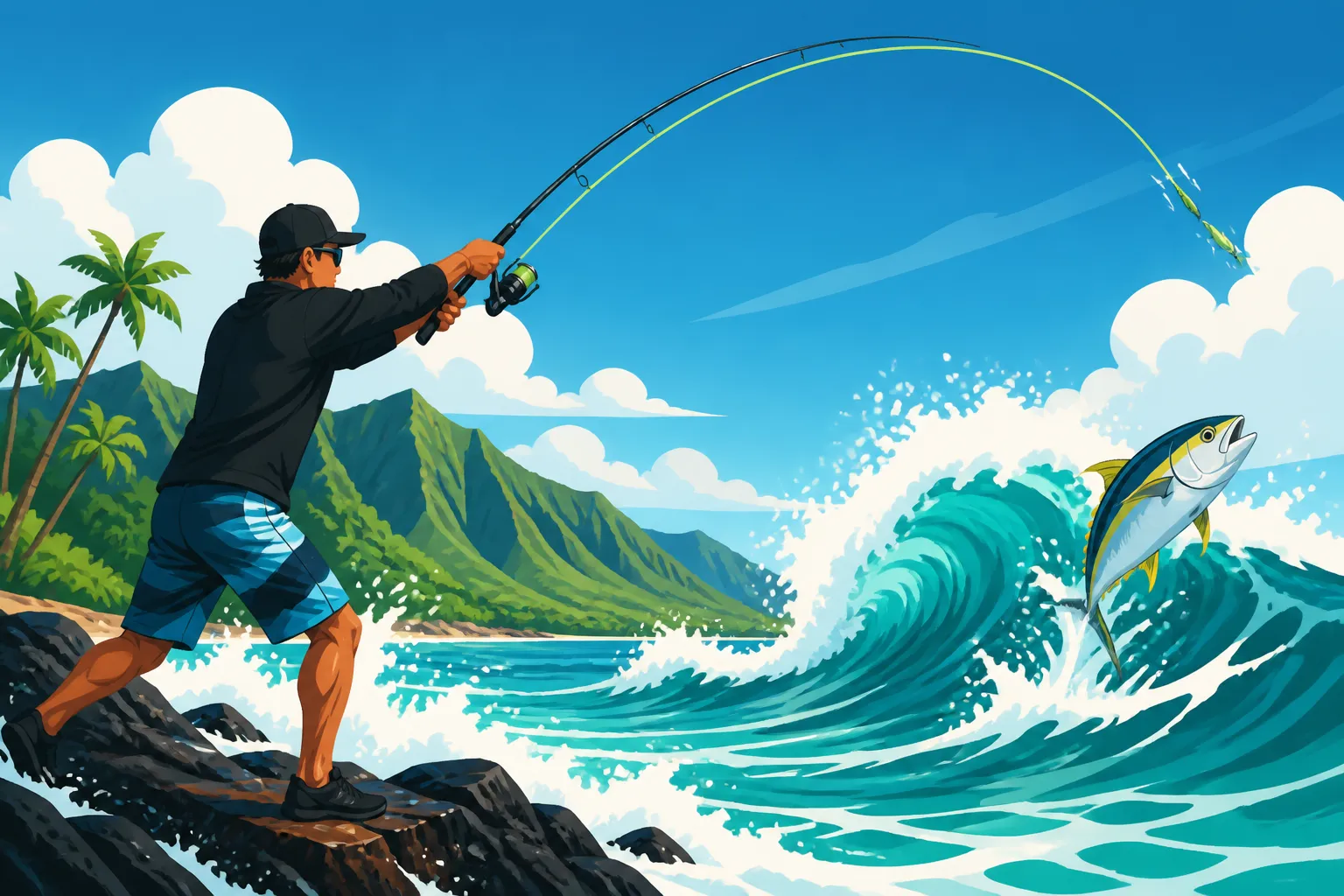
Forget those gentle sidearm casts; high surf demands a powerful, athletic casting motion. The "Hawaiian-style" or "whiplash" cast is designed for maximum distance and punching through wind.
- Stance and Grip: Stand with your feet shoulder-width apart, facing the direction you want to cast. Hold the rod with both hands, the butt section firmly against your hip or tucked into your armpit for leverage. Your dominant hand should be higher up the rod handle, providing control, while your non-dominant hand is on the butt for power.
- The Swing: Bring the rod tip back over your shoulder, allowing the heavy weight of the sinker and bait to load the rod. Then, in one powerful, fluid motion, drive the rod forward, transferring your body weight from your back foot to your front foot. The key is to generate a whipping motion, snapping the rod tip forward with immense force.
- Release Point: The release point is critical for distance and accuracy. You want to release the line when the rod tip is pointing slightly past vertical, roughly around the 1 o'clock position. Too early, and your bait will go high and short; too late, and it will plummet into the water right in front of you.
- Timing with Wave Action: This is a game-changer. Don't cast as a wave is crashing in. Instead, wait for a large wave to break and recede. As the water rushes back offshore, it creates a momentary lull and a slight "suction" that can add valuable yards to your cast. Launch your bait just as the water pulls back. This technique takes practice, but it's incredibly effective. You'll feel the rod load differently, and your bait will fly.
Utilizing Wave Action for Optimal Presentation
Once your bait is in the water, the battle isn't over. The waves will constantly try to move your gear. Your goal is to use their energy to your advantage, or at least minimize their negative impact.
- Settling the Bait: After casting, immediately point your rod tip towards the water and crank down any slack. This helps the sinker dig in quickly before the next wave hits. If you're using a spider sinker, retrieve a few feet after it hits the bottom to engage the wires.
- Maintaining Position: Keep a tight line, but don't fight the ocean. Allow the natural surge and pull of the waves to move your line slightly. Your rod tip should be high, keeping as much line as possible out of the direct path of the breaking waves, reducing current drag. If you feel your sinker moving too much, you might need a heavier sinker or to adjust your position. The frustration of your bait constantly washing back to shore is real, but a heavier sinker and strategic casting can mitigate this.
- Retrieving Through Turbulence: When retrieving, do so steadily. If you’re fishing with lures, the turbulent water can add a natural, erratic action. If you're retrieving bait to re-cast, do it quickly to avoid snags in the white water near shore.
Safety First in Dangerous Conditions
This isn't just about catching fish; it's about coming home safely. High surf can be incredibly dangerous, and even experienced anglers can be caught off guard.
- Never Turn Your Back on the Ocean: This is the golden rule of Hawaii shore fishing. Rogue waves, often called "sneaker waves," can come out of nowhere, much larger than the rest of the set. They can sweep you off your feet and into dangerous water.
- Awareness of Undertows and Rogue Waves: Always be conscious of the water around you. If you feel a strong pull under your feet, move further up the beach. If the surf suddenly seems to recede unusually far out, it might be a sign of a much larger wave coming in right behind it. Keep a lookout.
- Fish with a Buddy: Especially in high surf conditions, having another person with you is invaluable. They can help spot incoming waves, assist if you get into trouble, or even help land a big fish. Let someone know where you are going and when you expect to return. Always check the local surf forecast and tide charts before heading out. Don't be afraid to reschedule if conditions look too dangerous. Remember, there's always another day to fish, but only one you. This is one situation where knowing the "Hawaii Boating Laws for Anglers" might not directly apply, but the underlying safety principles certainly do.
Post-Cast Strategy and Fish Fighting in High Surf
You’ve made a monstrous cast, your bait is out there, and now the waiting game begins. But it’s not just about relaxing; it’s about being prepared for that sudden, powerful strike and the subsequent battle in the churning water.
Setting Up for the Bite
Once your bait is settled, how you set up your rod makes all the difference for detecting a bite and being ready to react.
- Rod Holder Use: For heavy surf casting, a sturdy rod holder is almost mandatory. Sand spikes, made of PVC or metal, are excellent for sandy beaches, allowing you to plant your rod securely while you wait. On rocky shorelines, specialized lava rock tripods or even natural rock formations can cradle your rod. These holders keep your rod tip high, clear of the immediate wash, and allow you to quickly grab it when a fish hits. Imagine trying to hold a 12-foot rod perfectly still for hours in heavy wind and waves – it's exhausting and impractical.
- Keeping Line Tight but Allowing for Wave Surge: While your rod is in the holder, you want a relatively tight line. Too much slack, and you won’t feel the bite. Too tight, and the waves will constantly tug on your rod, making it hard to distinguish a fish from wave action. There's a delicate balance. A good strategy is to point the rod tip slightly towards the incoming waves, minimizing the belly in your line created by the current. The rod tip should have a slight bend from the tension, allowing it to flex with the waves.
- Identifying Bites Amidst Wave Action: This is one of the trickiest parts of high surf fishing. The constant movement of the water will make your rod tip twitch and bend. You need to learn to differentiate this natural movement from a fish strike. A fish bite often manifests as a more aggressive, sustained pull, a series of sharp jerks, or a sudden, dramatic drop of the rod tip. Sometimes, the line will simply start screaming off the reel as a powerful ulua takes off. If you're unsure, it's often better to assume it's a fish and slowly take up slack, feeling for resistance. Don't hesitate to refer to guides like "How to Catch Ulua from Shore" for more specific bite detection tips for these powerful fish.
Fighting Fish in Turbulent Waters
Hooking a fish in high surf is exhilarating, but landing it is an even greater challenge. The waves that helped you get your bait out can now become your biggest adversary in bringing your catch to shore.
- Maintaining Pressure Without Pulling the Hook: Once a fish hits, your first instinct might be to crank hard, but remember that many of Hawaii's prized game fish, like ulua and papio, are incredibly strong and will fight dirty. Set the hook firmly, but then maintain steady, strong pressure. Let the fish run if it wants to, utilizing your smooth drag. Trying to muscle a big fish directly against a strong current and breaking waves can lead to pulled hooks, broken lines, or even snapped rods.
- Using Waves to Your Advantage: As you fight the fish and bring it closer to shore, try to time your retrieval with the incoming waves. As a wave approaches, you can often gain line by reeling as it pushes the fish towards you. Then, as the wave recedes, brace yourself and let the fish pull line if necessary, minimizing resistance against the undertow. The goal is to "surf" the fish in on an incoming wave. This is particularly important for species like ulua and papio, which use their broad, powerful bodies to fight the current. Check out "Papio Growth Stages Into Trophy Ulua" to appreciate the power these fish can possess at different sizes.
- The Challenge of Bringing a Big Ulua or Papio Through the Break: This is the moment of truth. As the fish gets into the turbulent white water just before the beach, it will often make its strongest, most desperate runs. The waves will be slamming into it, disorienting it, but also giving it extra leverage. Keep your rod tip high, maintain constant pressure, and try to guide it onto the sand on the back of a receding wave. Be ready to sprint backward up the beach to get it past the high water mark as soon as you can. Many a great fish has been lost at the very edge of the water.
When to Pack It Up
Knowing when to call it a day is just as important as knowing how to fish. Conditions can change rapidly in Hawaii, and what started as an exciting day can quickly become dangerous or simply unproductive.
- Recognizing Unsafe Conditions: If the surf suddenly increases dramatically, if you start seeing extremely large rogue waves, or if rip currents become too powerful to safely fish, it's time to pack up. No fish is worth risking your life. This goes hand-in-hand with understanding local regulations, like those covered in the "Hawaii Fishing Regulations Explained" article, which often emphasize safety.
- When It Becomes Unproductive: Sometimes, the conditions are just too chaotic. Your bait won't hold, your line is constantly getting snagged, or the water is so churned up that fish simply aren't feeding. If you've been casting for hours with no success, and your tackle box is looking a lot lighter from all the lost gear, it might be a sign to try another spot or another day. Patience is key in fishing, but persistence in impossible conditions is just stubbornness. Consider checking the "Best Time of Day to Catch Ulua" to align your efforts with more productive windows.
- Prioritizing Safety over a Potential Catch: Always remember, the ocean is powerful and demands respect. If you feel uncomfortable, exhausted, or simply unsafe, pack it in. There will always be another opportunity to fish for "Ulua Giant Trevally Fishing in Hawaii" or "How to Catch Papio on Hawaii's Shoreline" another day. Maybe even try some "Shore Fishing Techniques for Hawaii" in calmer conditions if the high surf proves too much for the day. And don't forget to always be mindful of "Hawaii Bag and Size Limits by Species" for whatever you might catch.
It's a challenging, rewarding, and often humbling experience. But with the right mindset, the proper gear, and a deep respect for the ocean, you can find incredible success and create unforgettable memories battling powerful fish in Hawaii's majestic high surf. Good luck, and stay safe out there!
Disclaimer
Fishing regulations, conditions, and safety advice can change. Always check the latest Hawaii Division of Aquatic Resources (DAR) regulations before fishing. Exercise extreme caution in high surf conditions; your safety should always be your top priority.