Best drop shot rig for reef fishing
One of the biggest frustrations when you’re fishing Hawaii’s beautiful, vibrant reefs is the constant battle against snags. You find that perfect spot, cast your line, and thwack! – your hook or weight is stuck in the coral or lava rock again, leading to lost tackle, re-tying headaches, and sometimes, even giving up on a promising location. But what if there was a way to navigate those challenging, fish-rich structures with far fewer hangups? This guide will dive deep into the best drop shot rig for reef fishing, showing you how to set up your gear to minimize snags and maximize your chances of hooking into some incredible Hawaiian reef dwellers.
Understanding the Drop Shot Advantage for Hawaii's Reefs
Hawaii's nearshore waters are a marvel, teeming with life thanks to the intricate reef systems and volcanic rock formations that define our coastlines. While these structures create ideal habitats for a myriad of fish species, they also present a significant challenge for anglers. Traditional bottom fishing rigs often mean your weight and hook are dragging directly along the seafloor, making them prime candidates for getting irrevocably stuck. This is where the ingenuity of the drop shot rig truly shines.
Why Traditional Rigs Fail on Reefs
Imagine you're fishing a vibrant coral head off the coast of Maui, or a jagged lava shelf near the Big Island. With a conventional paternoster or Carolina rig, your sinker is the first thing to hit the bottom, often wedging itself into crevices or wrapping around coral branches. Your hook, usually just above the weight, follows right into the danger zone. Not only do you lose valuable fishing time constantly re-rigging, but the environmental impact of leaving lead weights and monofilament line tangled in delicate coral is a real concern for many local anglers. It's a disheartening cycle: you get a bite, you set the hook, and instead of reeling in a fish, you're fighting the reef itself. This frustration can quickly turn a peaceful day of fishing into a chore.
The issue isn't just about the structure itself, but how fish relate to it. Many of our prized reef species, from papio to kumu, lurk just above or within these structures, not necessarily buried on the absolute bottom. A traditional rig, while effective in sandy or muddy bottoms, often presents the bait in a less natural and more snag-prone position when confronted with Hawaii's unique aquatic topography.
The Mechanics of a Drop Shot Rig
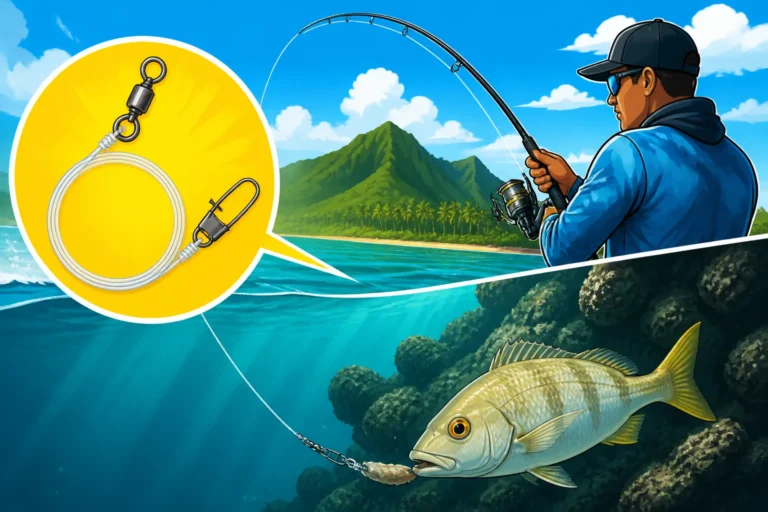
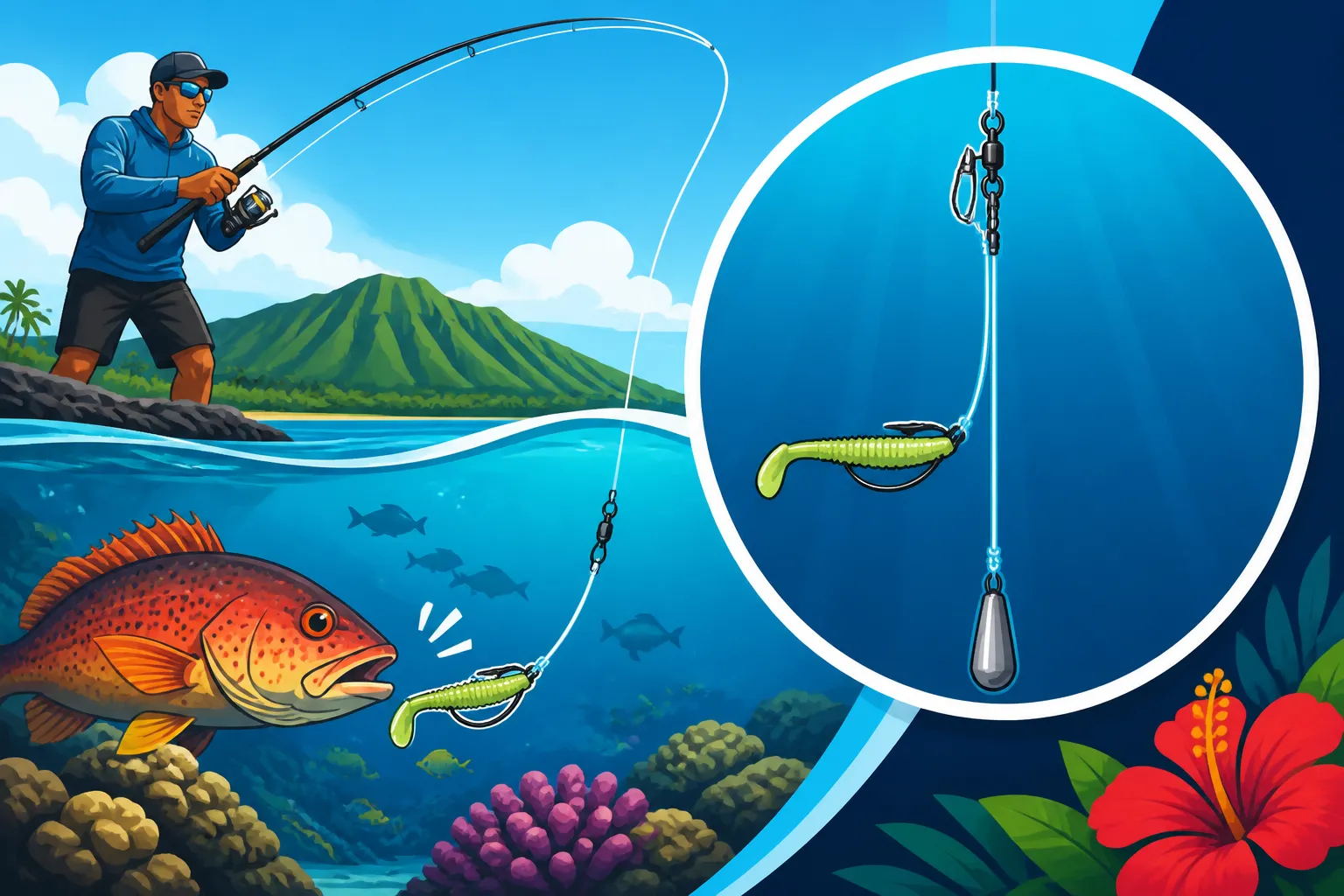
The drop shot rig flips the script on conventional thinking. Instead of the weight leading the way and the hook trailing, a drop shot rig places the weight at the very bottom of your line, while the hook (or hooks) are tied directly to the main line several inches or even a few feet above the weight. This simple inversion is revolutionary for reef fishing. When you cast out, the weight descends to the bottom, acting as an anchor. The hook, with your bait, then suspends freely in the water column, often just above the potentially snaggy substrate.
This ingenious setup offers several key benefits. First and foremost, it drastically reduces snags. The weight, being at the very bottom, is designed to be easily retrievable or, in the worst case, to break off independently without sacrificing your hook and bait. Second, it presents your bait in a much more natural way. Picture a small shrimp or a struggling baitfish suspended tantalizingly above the coral – exactly where predatory reef fish expect to find their next meal. You can impart subtle movements to your rod, making the bait dance alluringly without ever dragging your hook through the reef. It's a finesse technique that’s surprisingly robust and incredibly effective for targeting those wary reef inhabitants.
Building Your Hawaii Reef Drop Shot Rig
Crafting the perfect drop shot rig for Hawaii's diverse reef environments involves selecting the right components to maximize both sensitivity and brute strength. Our reefs are home to both delicate nibblers and powerful fighters, so your gear needs to be versatile.
Rod and Reel Selection for Reef Drop Shot
For drop shot reef fishing, you're looking for a balance of sensitivity to detect subtle bites and enough backbone to pull fish away from structure. A medium-light to medium-heavy spinning rod, typically in the 7 to 8-foot range, is ideal. The extra length helps with casting distance from shore or a kayak, and provides better leverage when fighting a fish around obstacles. Look for a rod with a fast or extra-fast action tip; this means the top third of the rod bends easily, offering excellent sensitivity for those light taps, while the lower two-thirds remain stiff, giving you the power to set the hook and steer a strong fish. Many anglers find graphite rods excellent for this purpose due to their inherent sensitivity.
Pair your rod with a reliable spinning reel in the 2500 to 4000 series. A smooth drag system is crucial here, as Hawaiian reef fish can make powerful, short runs. You'll want a reel that can hold a good amount of line, around 150-200 yards, to give you some cushion if a bigger fish decides to bolt. Brands known for their durability and smooth performance are always a good choice, ensuring your reel stands up to the corrosive saltwater environment. A strong reel ensures you can turn a papio away from a coral head before it wraps your line.
Line Choices for Durability and Feel
The line you choose is paramount for a successful reef drop shot. You need something that offers exceptional sensitivity, minimal stretch, and superior abrasion resistance.
For your main line, braided line is almost universally preferred. A 15 to 30-pound test braided line offers incredible strength-to-diameter ratio, allowing for lighter tackle than mono, and its near-zero stretch translates every bump and bite directly to your fingertips. This sensitivity is critical when your bait might only be a few inches above a coral bommie. While braid itself isn't known for abrasion resistance, it's perfect for connecting to your leader. You can find excellent braided lines on platforms like Amazon that offer various colors and test strengths to match your preference.
Attached to your braid, you'll want a fluorocarbon leader. Fluorocarbon is less visible underwater than mono and, critically, offers superior abrasion resistance against the sharp coral and lava rock. A 20 to 40-pound test fluorocarbon leader, typically 3 to 6 feet long, is a good starting point. The length allows for multiple re-ties if you experience minor nicks without having to re-tie your main line connection. For connecting your braid to your fluorocarbon leader, the FG knot is widely regarded as one of the strongest and most streamlined knots, slipping easily through rod guides. For tying your hook to the leader, an improved clinch knot or a Palomar knot are reliable choices. When selecting your leader, remember that the resilience against Hawaii's sharp reef structures is key to preventing break-offs.
Hooks and Weights: The Core Components
The choice of hooks and weights defines the effectiveness of your drop shot rig.
For hooks, offset shank hooks, often called "drop shot hooks" or "rebarb hooks," are excellent because they are designed to keep the bait horizontal and appealing. Wide gap hooks or octopus hooks in sizes ranging from a size 1 up to a 2/0 are versatile for catching various reef species, from smaller papio to larger kumu or moi. The specific size will depend on the size of your bait and your target species. Ensure your hooks are sharp and strong enough to handle potential fighters.
When it comes to weights, the shape is just as important as the mass. Cylindrical or tear-drop shaped weights are ideal because they tend to slip through crevices and over rocks more easily than round or bell-shaped sinkers, which are prone to wedging. Pencil weights are also a fantastic option for extremely snaggy areas. For general reef fishing, weights between 1/4 ounce and 1 ounce will cover most situations, allowing you to adjust for current and depth. In areas with stronger currents or deeper water, you'll need a heavier weight to maintain bottom contact. Many drop shot weights come with a swiveling line clip, allowing you to quickly attach and detach them, and, crucially, allowing the weight to slide off if it gets truly stuck, saving the rest of your rig. You can easily find a wide variety of these specialized hooks and weights on Amazon, making it convenient to stock up.
Here's a quick reference for weight shapes:
| Weight Shape | Best Use Case | Snag Resistance | Advantages | Disadvantages |
|---|---|---|---|---|
| Cylindrical | General reef fishing, moderate current | Good | Slides easily over rocks, minimizes hang-ups | Can roll in strong currents |
| Tear Drop | Moderate current, rocky bottoms | Very Good | Aerodynamic for casting, good snag resistance | Can still get wedged in tight crevices |
| Pencil | Extremely snaggy areas, heavy cover | Excellent | Ultra-slim profile, rarely gets stuck | Lighter weights can be harder to cast, less stable in heavy current |
| Round/Bell | Sandy bottoms, open water (not recommended for reefs) | Poor | Common, inexpensive | Very high snag potential on reefs |
Mastering Drop Shot Techniques for Hawaiian Reef Species
Once your rig is built, the next step is to master the techniques that truly unlock the drop shot's potential on Hawaii's reefs. It's not just about getting your bait to the bottom; it's about how you present it, how you feel for bites, and how you react to the environment.
Presenting Your Bait on the Reef
The beauty of the drop shot is its versatility in presentation. Most often, you'll be using a subtle vertical jigging or "dead stick" approach. Cast your rig out and let the weight settle to the bottom. Once it’s down, keep your line taut but not tight, feeling for the weight's contact with the reef. Instead of reeling in, give your rod tip gentle lifts and drops, just a few inches at a time. This makes your bait dance enticingly above the reef without moving your weight too far or dragging your hook. Imagine a shrimp fluttering or a small fish struggling slightly – that’s the motion you’re trying to replicate. The goal is to keep your bait suspended in the strike zone, whether that’s a foot above the coral or just a few inches.
Your bait choices are wide open. Fresh shrimp, small pieces of squid, or even small live baits like juvenile akule or opelu work wonders for hungry reef fish. For artificials, soft plastic grubs, worms, or even small paddle-tail baits rigged on your drop shot hook can be incredibly effective, especially for species like papio. Experiment with colors that mimic local baitfish or shrimp. When fishing for species such as moi, presentation is key, and the drop shot allows for that subtle, natural movement they prefer. You might find success targeting specific spots like those discussed in Best Reef Fishing Spots in Hawaii, carefully working your drop shot rig around the structure.
When a fish bites, it often feels like a light tap, a sudden weight, or your line simply going slack. The sensitivity of your braided main line will really pay off here. Set the hook with a firm, upward sweep of your rod.
Reading the Reef and Avoiding Snags
Even with the best drop shot rig, Hawaii's reefs can still be challenging. Understanding the currents, the bottom contour, and how your boat or body position affects your drift is crucial. If you're fishing from a boat or kayak, a good sonar or fishfinder can be invaluable for identifying prime reef structures, drop-offs, and even individual fish. Knowing where the structure is helps you position your bait accurately. For shore anglers, learning to "read the water" is an art form. Look for changes in current, darker patches indicating deeper water or coral, and channels where fish might be moving.
If you do feel a snag, resist the urge to yank hard immediately. Give your rod tip a gentle twitch, or try slackening the line for a moment, then giving a sharp snap. Often, the cylindrical or tear-drop weight will pop free. If it's truly stuck, the quick-release clip on your weight might allow it to detach, saving your hook and bait. This is a much better outcome than losing your entire setup. Always be mindful of protected areas like Hawaii Marine Life Conservation Districts, Explained where fishing might be restricted or certain gear types are prohibited. Knowing the local regulations, like those explained in the comprehensive Hawaii Fishing Regulations Explained, is crucial.
Optimizing Your Drop Shot for Hawaiian Conditions
Hawaii’s fishing conditions can vary wildly, from calm, clear shallow flats to deeper, current-swept ledges. Fine-tuning your drop shot rig and technique for these specific scenarios will dramatically improve your success rate.
Adjusting for Current and Depth
The amount of weight you use is directly correlated to the current and depth you’re fishing. In calmer, shallower reef flats, say 10-20 feet deep, a lighter 1/4 to 1/2 ounce weight might be all you need. This allows for a slower fall and a more natural presentation. As you move into deeper water, or if the current picks up (which it often does around points and channels), you’ll need to increase your weight to maintain proper bottom contact. Moving up to a 3/4 or 1-ounce weight ensures your rig reaches the desired depth quickly and stays there, even against a decent pull. The goal is to feel the weight gently ticking the bottom without dragging excessively, which would increase your risk of snags. If your line is bowing too much, or you can’t feel the bottom consistently, it’s time to go heavier. Conversely, if your rig is thudding heavily and settling too fast, you might be over-weighted and could lighten up for a more subtle approach.
Consider also the length of your leader above the weight. In areas with low-lying coral, a shorter leader of 6-12 inches might be perfect. If you're fishing over taller coral heads or kelp, extending that leader to 2-3 feet will keep your bait suspended higher, out of the immediate snag zone, but still within reach of fish lurking below. This adaptability is one of the drop shot's greatest strengths.
Bait & Lure Considerations
While natural baits are always a strong contender for reef species, the drop shot rig truly shines with them. Live shrimp, especially those sourced locally, are irresistible to many Hawaiian fish. Cut pieces of squid, small fish chunks, or even an opelu head can be fantastic. The way the drop shot rig presents these baits – naturally fluttering and suspended – is key. Just be sure to match your hook size to your bait to ensure a good hook set.
For artificial lure enthusiasts, soft plastics are excellent. Small grub tails, creature baits, or straight worms in natural colors (clear with silver flake, motor oil, green pumpkin) or brighter attractant colors (chartreuse, pink) can mimic local crustaceans and baitfish effectively. Rig them "nose-hooked" (just through the tip of the plastic) or wacky-style for maximum action. A quick search on Amazon will reveal a vast array of soft plastics suitable for drop shot fishing, allowing you to experiment. Remember to keep an eye on local regulations for size and bag limits for species like the Hawaii uhu daily bag limit or the Hawaii kumu minimum size limit to ensure you're fishing responsibly.
By integrating the drop shot rig into your Hawaiian fishing arsenal, you'll open up new possibilities for targeting a wide array of reef fish. It reduces the headaches of snagged tackle, helps preserve our precious marine environment, and most importantly, puts more fish in your hands. So next time you're heading out to the reefs, consider giving the drop shot a try – you might just discover your new favorite technique!
Disclaimer
This article is for general informational purposes only and does not constitute professional advice. Laws, prices and regulations vary by location and change over time. Consult a qualified professional for guidance on your specific situation.