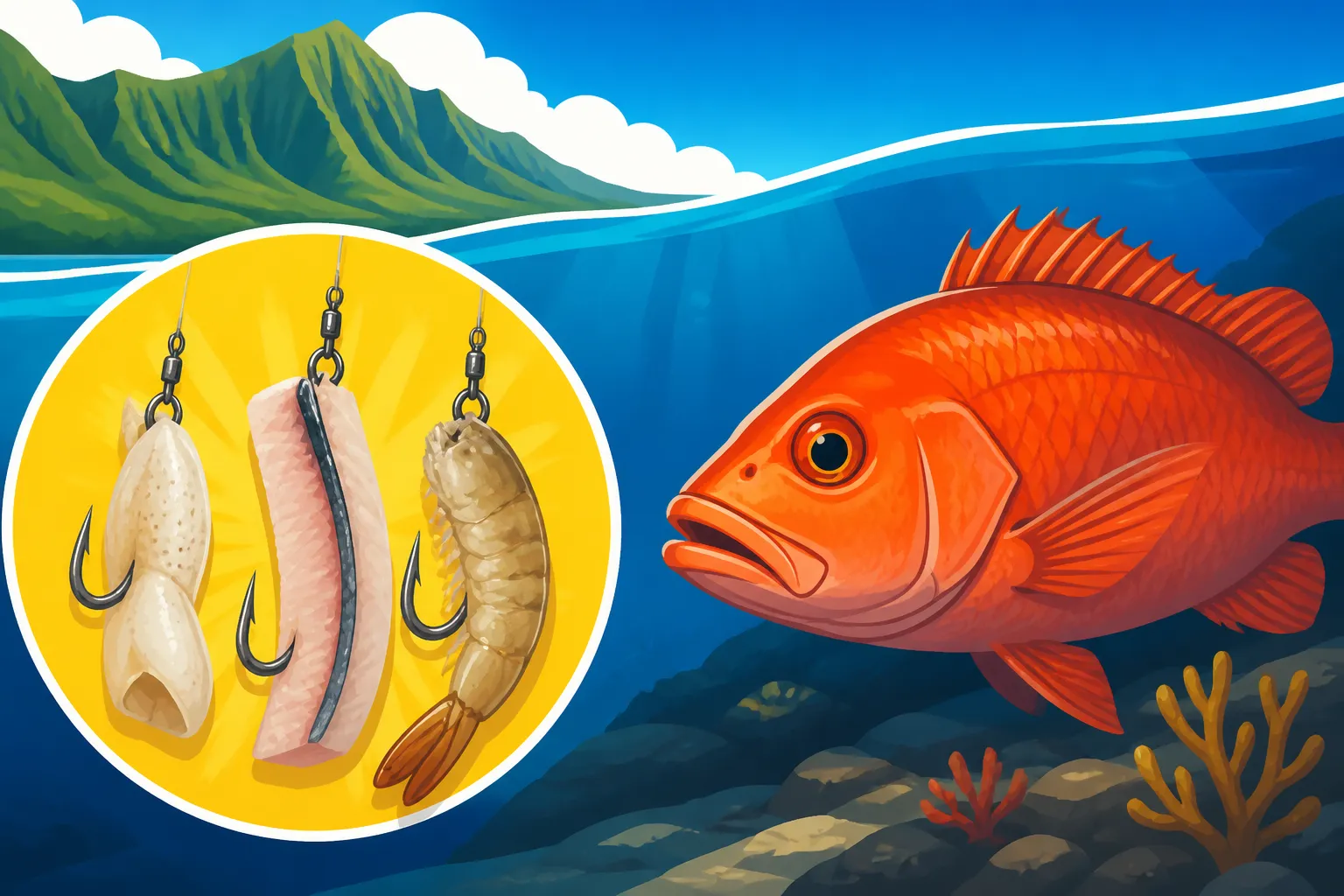
Best bait for opakapaka bottomfishing
Anyone who's spent time chasing the elusive opakapaka knows the deep frustration of dropping a perfectly rigged line hundreds of feet down, only for your bait to come back stripped clean, or worse, untouched. These prized pink snapper are legendary for their delicious taste, but equally famous for being incredibly picky, making the right bait choice the absolute cornerstone of a successful bottomfishing trip in Hawaii. This comprehensive guide will dive deep into the best bait options for opakapaka, helping you understand their preferences and how to present your offering for maximum success.
Understanding Opakapaka and Their Foraging Habits
Before we even talk about specific baits, it's crucial to understand the opakapaka themselves. These aren't your typical reef fish; they're deep-dwelling predators, and their environment dictates their diet and behavior. Without this foundational knowledge, you're essentially just guessing in the dark depths.
The Opakapaka Diet: What They Naturally Prey On
Opakapaka, also known as pink snapper, are primarily carnivorous, opportunistic feeders. Their diet consists largely of whatever unsuspecting morsels drift or swim into their deep-water domain. We're talking about things that live or fall to the bottom. This includes a variety of deep-water crustaceans like shrimp and crabs, which are often overlooked by anglers but represent a significant portion of their natural intake. Think about the small, delicate creatures that scuttle across the deep ocean floor or cling to underwater structures.
Beyond crustaceans, opakapaka also readily consume small, bottom-dwelling fish. This can include juvenile squirrelfish, small goatfish (like weke or kumu), and various types of gobies that inhabit the lower reaches of the water column. They're not chasing down fast-moving pelagics; rather, they're ambushing slower, more vulnerable prey. Perhaps one of their most favored natural foods is cephalopods – primarily squid and, to a lesser extent, small octopus. The rich scent and soft texture of these creatures make them irresistible. It's not like trying to catch a papio near shore with a flashy lure; opakapaka are down deep, often in low light, relying heavily on scent and subtle movement.
Where Opakapaka Live and How That Affects Bait Choice
Opakapaka are typically found in considerable depths, ranging from around 180 feet all the way down to over 600 feet, sometimes even deeper. They prefer areas with complex underwater topography, often congregating around rocky ledges, pinnacles, seamounts, and the edges of deep-water drop-offs. These structures provide both shelter from currents and ambush points for their prey. The environment is dark, often cold, and subject to significant currents.
This deep-water habitat poses unique challenges for bait selection and presentation. First, your bait needs to be robust enough to withstand the immense water pressure and the sometimes-violent descent through hundreds of feet of water without tearing off the hook. A delicate bait might be gone before it even reaches the strike zone. Second, it needs to be dense enough to sink quickly and efficiently, minimizing drift due to currents. Strong currents can sweep lighter baits far from your target structure. Finally, in the low-light conditions of the deep, a bait's scent becomes paramount. Visual appeal is secondary, though luminescence can certainly help. This is why understanding their deep-water world is key to selecting the most effective offering. You're not just fishing; you're delivering a perfectly packaged meal to a particular diner in a challenging restaurant.
Top Baits for Opakapaka Bottomfishing
When it comes to putting a prized opakapaka in the cooler, the right bait can make all the difference. While many things might get a bite, a few stand out as consistently reliable for these deep-water dwellers. These are the tried-and-true favorites that experienced bottom fishermen swear by.
Squid: The Go-To Universal Bottomfish Bait
If there's one bait that every serious Hawaii bottomfisherman has in their arsenal, it's squid. It's often considered the gold standard for opakapaka and many other deep-water species for several excellent reasons. Its availability is a huge plus; you can find frozen squid at nearly any bait shop across the islands, local Asian markets, or even stock up in bulk online through retailers like Amazon, ensuring you always have some on hand.
The toughness of squid is another major advantage. Unlike softer baits that can get shredded on the way down or by smaller "picker" fish, squid holds up exceptionally well. This means your bait stays on the hook longer, increasing its chances of reaching the target depth and attracting an opakapaka. Furthermore, squid releases a fantastic scent trail in the water, which is critical in the dark depths where opakapaka reside. This natural aroma acts as a powerful attractant, drawing fish from a distance.
When rigging squid, don't just put a whole piece on. For opakapaka, you want to cut it into strips or chunks that are appropriate for your hook size, typically about 1-2 inches wide and 3-4 inches long, depending on the overall size of the squid. You can also cut triangular or spear-shaped strips. For best results, thread the squid onto your circle hook multiple times, ensuring the hook point is exposed but the bait is securely fastened. Leaving a "flag" or tail of squid can add subtle movement in the current, mimicking a fleeing or injured prey item. Imagine you're on a charter boat off the Kona Coast, and the deckhand is meticulously slicing squid. They know this consistent effort pays off, often leading to a steady stream of bites from opakapaka when other baits might fail to entice.
Live Bait: The Irresistible Offering
While squid is fantastic, nothing quite matches the drawing power of a struggling live bait. For many anglers, the effort of acquiring and keeping live bait alive is well worth the reward of more aggressive strikes from opakapaka.
The best live baits for opakapaka are typically smaller, hardy baitfish that can survive the deep descent. Prime examples include small akule (bigeye scad), opelu (mackerel scad), or halalu (juvenile scad). Sometimes, even small juvenile goatfish can work wonders if you can catch them. The undeniable advantage of live bait is its natural movement and vibration. A frisky baitfish sends out irresistible signals to nearby predators, often triggering an instinctual strike that artificials or even cut bait can't replicate.
The main drawback, as many anglers know, is the difficulty in sourcing and keeping live bait healthy. This often requires a dedicated bait well with proper aeration and circulation on your boat. Rigging live bait for deep dropping also requires specific techniques to ensure it stays alive and swims naturally. A common method is nose-hooking with a small circle hook, or for larger baits, bridle rigging to allow maximum freedom of movement. I know, it's a hassle to keep live bait healthy on deck, nursing them like precious cargo, but when that sinker hits the zone and you feel that distinctive twitch of a healthy baitfish, followed by a solid thump, you realize it's usually worth every bit of effort. The excitement of dropping a live bait and anticipating that solid pull from a deep-water giant is truly unmatched.
Cut Baits: Leveraging Scent and Size
Aside from squid, various other cut baits offer excellent prospects for opakapaka, primarily by leveraging strong scent profiles and customizable sizes. These are often easier to acquire than live bait and can be incredibly effective when fresh.
Popular choices for cut bait include strips or chunks of aku (skipjack tuna) belly, mahimahi belly, or mackerel. The belly sections of these fish are particularly good because they are oily, releasing a potent scent trail that broadcasts your offering to hungry opakapaka. They also tend to be tougher than other parts of the fish, making them more resilient on the hook. When preparing these, aim for "sushi-grade" strips – clean, precise cuts that maintain the integrity of the flesh. Leaving a strip of skin on the bait can significantly increase its toughness, preventing it from being easily stripped by smaller fish or falling off during the long drop.
The versatility of cut bait means you can tailor the size and shape to match the specific conditions or the size of opakapaka you're targeting. A larger chunk might deter smaller pickers and specifically target trophy-sized fish, while smaller strips can appeal to a wider range of sizes. You can often source these fresh from local fish markets, or for convenience, many anglers keep frozen mackerel or other oily fish, sometimes even sourced from Amazon, in their deep freezer specifically for bait purposes. Just remember, freshness is key; old, freezer-burnt bait won't have the same allure.
Artificial Baits and Combinations
While natural bait reigns supreme for opakapaka, there's a place for artificial baits, especially when used in combination with natural offerings. These aren't typically standalone solutions but rather enhancers designed to add visual appeal or augment scent.
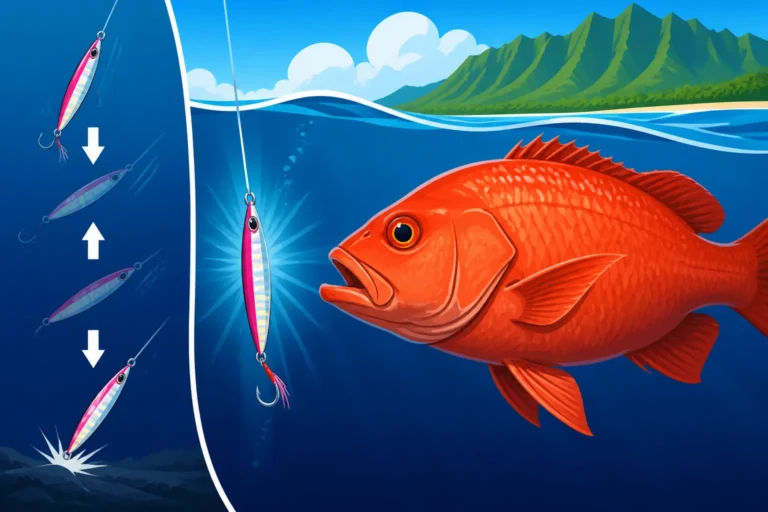
Glow-in-the-dark plastics, such as small squid skirts or grub tails, can be incredibly effective when added to your natural bait. In the perpetual twilight of the deep ocean, any source of light can attract curiosity. Threading a small luminescent skirt above your natural squid or cut bait can provide that extra flash of appeal, making your presentation more visible to an opakapaka moving through the dark. These can be particularly useful on darker days or in deeper waters where ambient light is almost non-existent.
Scent enhancers, often available in sprays or dips, can also be applied to artificials or even natural baits to boost their attractiveness. These usually mimic the smell of fish, crustaceans, or squid, creating a more potent scent plume. However, it's important to set realistic expectations; artificials rarely perform as well as fresh, natural bait on their own. They are best utilized as a complementary element. I've seen seasoned anglers meticulously rig a chunk of fresh aku, then add a small, glowing pink squid skirt just above it. That little bit of extra visual stimulus, combined with the powerful scent of the natural bait, can sometimes be the edge that coaxes a wary opakapaka into biting when it might otherwise hesitate. You can find a vast array of these artificial enhancements and scent boosters readily available on Amazon.
Bait Preparation and Presentation for Deep-Water Success
Having the best bait in the world won't do you much good if it's not prepared correctly or presented effectively. Fishing for opakapaka in deep water demands meticulous attention to detail, from keeping your bait fresh to how you rig it and deploy it hundreds of feet below the surface.
Keeping Your Bait Fresh and Durable
The battle for opakapaka begins long before your line even hits the water. Bait freshness is paramount for deep-water fishing. A piece of bait that's been sitting out in the sun or allowed to warm up will quickly lose its scent, become soft, and fall off the hook prematurely. This is especially frustrating when you're targeting fish at such depths. Always keep your bait on ice, submerged in saltwater if possible, from the moment you acquire it until it's on your hook. A dedicated cooler filled with ice water is non-negotiable for any serious bottomfishing trip.
For certain baits, especially squid and tougher cut fish like aku belly, salting can significantly increase their durability. A light layer of rock salt applied to the bait and allowed to sit for a while will draw out excess moisture, firming up the flesh. This makes it much harder for small "picker" fish to strip it off and ensures it holds up better during the long descent. If you plan to buy bait in bulk or prepare it ahead of time, vacuum sealing is a game-changer. It preserves freshness and prevents freezer burn, allowing you to store bait for extended periods without degradation. Stocking up on vacuum sealer bags, which you can easily find on Amazon, can be a great investment for serious anglers. There's nothing worse than making that long journey out to the bottomfish grounds, only for your perfect bait to turn to mush before it even hits the bottom.
Rigging Techniques for Opakapaka
The way you rig your bait for opakapaka is just as important as the bait itself. Given the depths involved, precision and strength are key.
One of the most crucial elements is the choice of hook. Bottomfishing in Hawaii often necessitates the use of circle hooks. These hooks are designed to hook fish in the corner of the mouth, significantly reducing gut-hooking, which is vital for catch-and-release, especially with deep-water species that can suffer from barotrauma. When using circle hooks, remember not to yank the rod; let the fish take the bait, and the hook will set itself as the line comes tight.
For your leader material, heavy fluorocarbon or monofilament is essential. Opakapaka have sharp teeth, and the rocky structures they inhabit can quickly abrade lighter lines. A 100-200 lb test leader, typically 3-6 feet long, provides the necessary abrasion resistance. As for weight placement, you need heavy lead weights – often 16-32 ounces or more – to get your bait down quickly and efficiently. This minimizes drift and ensures your bait reaches the target depth with minimal delay. A paternoster or "chicken" rig, featuring two or three hooks spaced along the leader with a heavy sinker at the bottom, is a popular and effective choice. This allows you to present multiple baits at different depths or even try different types of bait simultaneously. For instance, you might rig a piece of squid on the bottom hook and a fresh cut of aku on the top, doubling your chances.
Deploying and Detecting Bites in Deep Water
Getting your bait to the bottom and keeping it in the strike zone requires skill and concentration. When deploying, let your line out smoothly and quickly, keeping a thumb on the spool to prevent tangles or overruns. As your sinker approaches the bottom, slow its descent, feeling for that subtle tap or change in pressure that indicates it has landed. You want your bait as close to the structure as possible without getting snagged. This might mean "bouncing" the sinker gently along the bottom, lifting it slightly if you feel it dragging too much.
Detecting bites in hundreds of feet of water is an art form. You won't always get a violent strike. Often, an opakapaka bite feels like a slight increase in pressure, a subtle "mushy" feeling, or a gentle tug that's easily missed if you're not paying attention. This is where a sensitive rod and braided line become invaluable. Braided line, with its minimal stretch, transmits even the slightest nibble from the deep directly to your hands. Some anglers prefer a "slack line" approach, allowing the bait to sit on the bottom and detecting bites as the fish moves off with it, while others prefer a "tight line" to feel every bump and nibble. Patience is crucial; opakapaka don't always smash a bait like an ahi or marlin. They can be incredibly delicate, mouthing the bait before committing. For more general advice on deep-sea bottom fishing, you might want to read our guide on Jigging for Bottomfish in Hawaii.
Complementary Strategies for Opakapaka Fishing
While bait is undoubtedly a crucial component, it's part of a larger strategy. Successful opakapaka fishing integrates several other factors, from locating the right spots to understanding environmental conditions and adhering to regulations.
Locating Opakapaka Structure
Knowing where opakapaka live is fundamental to finding them. These fish are highly structure-oriented, meaning they'll be congregated around specific underwater features rather than just scattered across a flat bottom. Modern fish finders and sonar technology are invaluable tools for pinpointing these deep-water havens. You're looking for ledges, drop-offs, pinnacles, seamounts, and areas with significant changes in depth. A good chart plotter with detailed bathymetry can also help identify potential spots before you even leave the harbor.
Beyond static structure, understanding dynamic elements like currents and thermoclines can further refine your strategy. Opakapaka often position themselves in relation to currents to conserve energy while waiting for prey to drift by. Thermoclines, layers of water with different temperatures, can also create boundaries where certain fish species prefer to reside. Learning to interpret your electronics to not just find structure but also understand how fish are relating to it is a skill that comes with practice and patience. For those who prefer to leave the navigation to the experts, consider booking one of the Best Bottomfishing Charters in Hawaii, as they'll already have these prime locations mapped out.
Timing and Environmental Factors
Even with the perfect bait and a prime location, timing can play a significant role in your opakapaka success. These deep dwellers can be influenced by various environmental factors that dictate their feeding patterns.
Many experienced anglers find that opakapaka are most active during dawn, dusk, or even at night. In the deep, where light is already scarce, these periods of even lower light might make them feel more comfortable venturing out to feed. Moon phases can also have an impact, with darker nights sometimes correlating with increased bottomfish activity, though this can be debated among fishermen. Perhaps the most critical environmental factor is current conditions. Lighter currents are your best friend when deep-dropping. Strong currents make it incredibly difficult to get your bait down efficiently, keep it in the strike zone, and feel subtle bites. Ideally, you want a manageable current that allows your bait to drift naturally but not excessively. To plan your trip around optimal conditions, consulting guides like Hawaii Fishing Seasons by Month or Best Time of Year to Fish in Hawaii can provide a broader understanding of general fishing patterns throughout the year.
Regulations and Responsible Fishing
As with all fishing in Hawaii, understanding and adhering to regulations is not just about legality; it's about ensuring the sustainability of these precious resources for future generations. Opakapaka, being a highly sought-after species, has specific bag and size limits designed to protect their populations. Always consult the latest rules from the Hawaii Department of Land and Natural Resources (DLNR) before heading out. Our guide on Hawaii Bag and Size Limits by Species provides a good starting point, as does the broader Hawaii Fishing Regulations Explained.
Responsible fishing also extends to how you handle your catch, especially when fishing at great depths. Deep-water fish like opakapaka can suffer from barotrauma when brought to the surface quickly, causing their swim bladder to expand. If you're releasing fish that aren't of legal size or that you don't intend to keep, proper release practices are critical. This may involve using a venting tool to deflate the swim bladder or a descending device to return the fish to depth quickly, allowing it to recompress. Practicing responsible angling ensures that the opakapaka fishery remains healthy and abundant for everyone to enjoy.
| Bait Type | Availability (General) | Durability on Hook | Scent Profile | Effectiveness for Opakapaka | Notes |
|---|---|---|---|---|---|
| Squid | High (Bait shops, Asian markets, online like Amazon) | Very High | Strong | Excellent | Universal, versatile for cutting, great for scent and visual appeal in deep. |
| Live Bait (Akule, Opelu) | Low (Requires catching/keeping alive) | Moderate-High | Natural | Unmatched | Irresistible movement, but demanding to manage and rig correctly for deep drops. |
| Cut Aku/Mackerel | Moderate (Fish markets, frozen from Amazon) | Moderate | Strong | Very Good | Oily flesh for scent, skin helps durability, customizable size. Needs to be very fresh. |
| Shrimp/Prawns | High (Grocery stores, bait shops) | Low-Moderate | Moderate | Good | Good for smaller opakapaka, can be stripped easily, best when very fresh. |
| Artificials (Glow Skirts) | High (Tackle shops, online like Amazon) | Very High | Low (w/o enhancer) | Fair (as enhancer) | Best used as an addition to natural bait for visual attractant in dark depths. |
Disclaimer
This article is for general informational purposes only and does not constitute professional advice. Laws, prices and regulations vary by location and change over time. Consult a qualified professional for guidance on your specific situation.