Best rod setup for surfcasting ulua
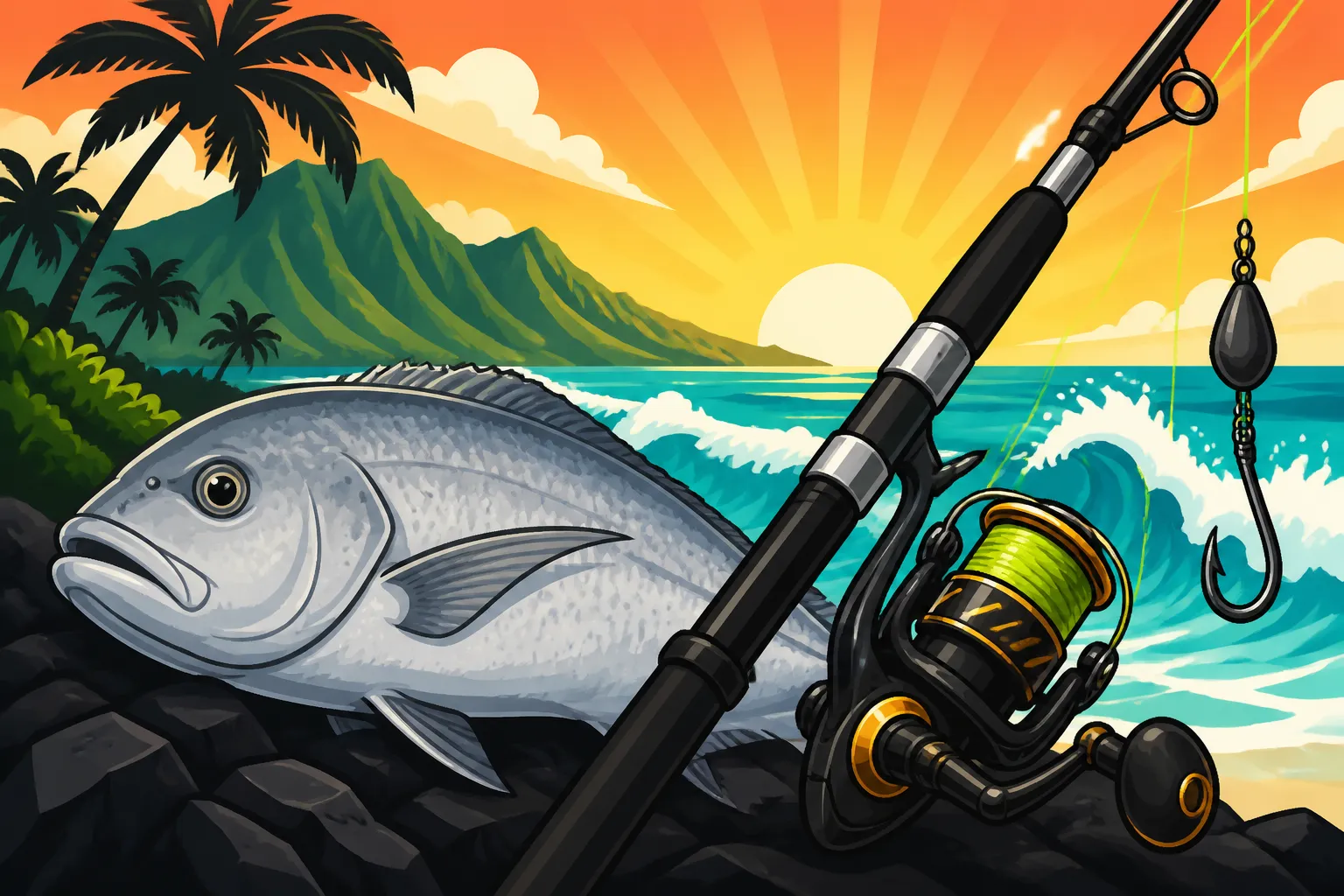
Trying to tackle the mighty ulua from the shore here in Hawaii is a dream for many anglers, but it's also a serious challenge that can quickly expose weaknesses in your gear. If you've ever felt that heart-stopping run only to have your rod buckle or your line snap, you know the frustration. This comprehensive guide will walk you through building the ultimate rod setup specifically designed to handle the brute power of ulua and the rugged conditions of our island shorelines.
Understanding the Ulua Surfcasting Challenge
Before we even talk about specific gear, it’s crucial to understand why targeting ulua from shore demands such a specialized setup. These aren't your average fish, and our shorelines aren't your average fishing spots. It’s a game of power, endurance, and precise equipment matching.
The Power and Size of Ulua
Ulua, or Giant Trevally, are apex predators of our nearshore waters, and their reputation for being incredibly powerful fighters is well-earned. When a big ulua hits your bait, it's not a gentle tug; it's a locomotive taking off. They are built for speed and raw strength, with broad, muscular bodies and a relentless fighting spirit. Anglers here often dream of landing a "trophy ulua," which can mean fish well over 50 pounds, sometimes even pushing past the 100-pound mark. Imagine hooking into something that big from the rocks or sand, and you'll quickly realize that standard freshwater or light tackle saltwater gear simply won't survive the initial blistering run.
These fish are notorious for their dirty fighting tactics. They'll try to head straight for the nearest reef, lava rock, or underwater structure to cut your line. Their broad tails allow them to leverage the current and waves against you, making every pump and reel a monumental effort. You need a setup that can absorb incredible shock, deliver maximum pulling power, and withstand prolonged, brutal battles. Anything less, and you're likely to end up with a broken heart and a broken rod. The sheer force they exert means your entire setup, from rod blank to reel drag, must be in perfect harmony and built for extreme stress.
The Demands of Hawaii's Shorelines
Hawaii’s shorelines are beautiful, but they are unforgiving when it comes to fishing. Unlike sandy beaches on the mainland, much of our prime ulua territory consists of rugged lava rock points, sharp coral reefs, and areas with powerful shore breaks and currents. These conditions dictate specific requirements for your gear. You often need to make extremely long casts to reach deeper channels or reef edges where ulua patrol. The wind can be a constant factor, pushing your line and making accurate casting difficult without a long, stiff rod.
The environment also means your gear needs to be exceptionally durable and corrosion-resistant. Salt spray, sand, and constant exposure to the elements will quickly degrade inferior equipment. Furthermore, the act of fighting a large fish over sharp rocks or through crashing waves puts immense stress on every component, from your rod guides to your reel's internal gears. You’re not just fighting a fish; you’re fighting the ocean itself. This is why a purpose-built setup is not a luxury but a necessity for successful and enjoyable ulua surfcasting. For more insights into these formidable fish, check out Ulua (Giant Trevally) Fishing in Hawaii.
The Heart of the Setup: Choosing Your Surf Rod
Your surf rod is the primary tool for casting and fighting, and for ulua, it needs to be a beast. This isn't the time for finesse or light action; it's about power, leverage, and durability.
Rod Length for Ulua Surfcasting
When you're chasing ulua from the shore, length is your friend. Generally, you'll want a rod in the 10 to 14-foot range, though some experienced anglers even go longer for specific applications. The primary benefit of a longer rod is increased casting distance. A longer rod allows for a greater arc and more velocity on your cast, propelling heavy baits and sinkers out past the immediate shore break and into deeper water where larger ulua tend to roam. This is especially crucial when you're fishing from elevated rock ledges or trying to reach a distant channel.
Beyond casting, length also provides crucial advantages during the fight. A longer rod helps you keep your line elevated above breaking waves and abrasive reef structures, significantly reducing the chance of your line being cut or dragged. It also provides superior leverage, acting like a longer lever arm against the powerful pulls of a running ulua. This leverage helps you turn the fish's head away from structure and guide it back towards the shore. While a very long rod might be slightly heavier and more cumbersome to cast repeatedly, the benefits for ulua more than outweigh these minor drawbacks. Many popular models can be found on Amazon, offering a good selection of lengths to choose from.
Rod Power and Action for Ulua
For ulua, your rod's power rating needs to be at the upper end of the spectrum, typically "heavy" (H) or "extra-heavy" (XH). This rating refers to the rod's lifting strength or its ability to handle heavy lures and fight strong fish without breaking. A powerful rod is essential for casting heavy baits like whole opelu or chunks of skipjack, often paired with 6-8 ounces of lead, sometimes more in strong currents. More importantly, it provides the backbone necessary to withstand the initial blistering run of a large ulua and to exert the kind of pressure needed to turn its head.
The rod's action describes where it bends when pressure is applied. For ulua surfcasting, a "fast" or "moderate-fast" action is generally preferred. A fast action means the rod bends mostly in the top third, providing excellent sensitivity for detecting subtle bites and immense power in the lower sections for fighting. A moderate-fast action bends a little further down, offering a bit more forgiveness and better casting dynamics for extremely heavy baits, while still retaining plenty of fighting power. This combination allows you to cast heavy weights efficiently, feel those distinct ulua strikes, and then apply maximum pressure during the fight without the rod becoming overly soft or "noodly."
Rod Material and Construction
The construction materials of your ulua surf rod are vital for both performance and longevity. Modern surf rods are typically made from graphite, fiberglass, or a composite blend of both. Graphite rods are known for their lightness and sensitivity, and they offer incredible power-to-weight ratios. This makes them great for casting all day and feeling every bump, but they can be more brittle and prone to snapping if mishandled or put under extreme stress at certain angles.
Fiberglass rods, on the other hand, are renowned for their incredible durability and toughness. They are often heavier and less sensitive than graphite but can withstand immense abuse without breaking. Many ulua anglers appreciate the "give" of a fiberglass rod, which can act as a shock absorber against a fish's powerful head shakes. Composite rods aim to offer the best of both worlds, combining graphite's sensitivity and lighter weight with fiberglass's strength and resilience. Regardless of the blank material, look for high-quality, corrosion-resistant guides (like Fuji K-guides) that can stand up to heavy braided line and constant exposure to saltwater. A robust reel seat that securely holds your heavy spinning or conventional reel is also non-negotiable.
Pairing Your Rod with the Right Reel
A powerful rod is only half the equation; it needs to be matched with a reel that can handle the same level of abuse and deliver consistent, brute force.
Spinning vs. Conventional Reels
The choice between a spinning reel and a conventional (baitcasting) reel for ulua surfcasting often comes down to personal preference and casting style. Spinning reels are generally easier to learn for long-distance casting, especially for beginners. Their open-face design minimizes backlashes, making them more user-friendly in windy conditions or when making quick casts. For ulua, you'll need a large, robust spinning reel, often in the 8000 to 14000 series size, known for powerful drags and high line capacities. These reels excel at quickly retrieving line and can handle the shock of a big fish's initial run.
Conventional reels, favored by many experienced ulua anglers, offer superior cranking power and a more direct connection to the fish. They are often more robust internally and can handle heavier lines and larger amounts of drag pressure more consistently over prolonged fights. While they have a steeper learning curve to master casting without backlashing (especially with heavy weights), their raw power is undeniable. Many conventional reels also feature a level-wind mechanism to ensure even line lay, which is helpful when reeling in hundreds of yards of line. Both types have their merits, and many high-quality options suitable for ulua can be found on Amazon.
Reel Size and Drag System
Regardless of whether you choose spinning or conventional, size matters, and so does the drag system. For ulua surfcasting, you'll need a reel that can hold a significant amount of heavy line – typically at least 300-400 yards of 50-80 pound braided line. This capacity is crucial for those long casts and to give an ulua room to run without spooling you. Think of reels designed for heavy saltwater jigging or light offshore trolling.
The drag system is arguably the most critical component of your reel. It needs to be incredibly smooth, powerful, and consistent. When a big ulua takes off, it can peel line at an astonishing speed, putting immense pressure on the drag. A sticky or inconsistent drag will lead to snapped lines, pulled hooks, or simply losing control of the fish. Look for reels with carbon fiber drag washers and multiple stacked drag plates, which dissipate heat more efficiently and provide a wider range of smooth, adjustable pressure. A reel capable of providing at least 25-30 pounds of sustained drag pressure is a good starting point for serious ulua fishing, with many opting for even higher ratings.
Corrosion Resistance and Durability
The saltwater environment is brutal on fishing gear. Therefore, any reel you choose for ulua surfcasting must have excellent corrosion resistance and robust construction. Look for reels with sealed bodies and drag systems to prevent saltwater intrusion, which can quickly seize bearings and corrode internal components. High-quality materials like anodized aluminum or forged aluminum frames and side plates are preferred over graphite composites for strength and durability.
Pay attention to the number and quality of bearings (stainless steel is a must), as these contribute to the reel's smoothness and longevity. Aftermarket upgrades like ceramic bearings can further enhance performance and resistance to corrosion. Regularly rinsing your reel with fresh water after each outing and applying appropriate lubricants are also essential maintenance steps to ensure your reel remains in top fighting condition season after season. A durable reel is an investment, but a necessary one when you're targeting fish like ulua from Hawaii's rugged shores.
Line, Leader, and Terminal Tackle for Ulua
The strongest rod and reel are useless without a line and terminal tackle that can withstand the demands of ulua and their environment. This is where many battles are won or lost.
Main Line Selection: Braided vs. Monofilament
When it comes to your main line for ulua surfcasting, the debate between braided line and monofilament often comes up. Braided line (superline) is overwhelmingly popular for ulua due to its incredible strength-to-diameter ratio, zero stretch, and exceptional casting distance. You can load a much higher breaking strength braid onto your reel compared to monofilament of the same diameter, which means more pulling power and line capacity. The lack of stretch provides unparalleled sensitivity, allowing you to feel even subtle takes from long distances and to react instantly. However, braid's downside is its lack of abrasion resistance; it can fray easily against sharp rocks and coral. For this reason, a strong leader is always essential. Many anglers will load their reels with 50-80 pound test braided line, sometimes going up to 100 pounds for massive trophy hunting. You can find robust braided lines from brands like PowerPro or Daiwa J-Braid on Amazon.
Monofilament line, while less popular as a main line for ulua, still has its proponents. Its inherent stretch acts as a shock absorber, which can be beneficial during sudden, powerful runs and can help prevent hooks from tearing out. It also offers much better abrasion resistance than braid, which is a significant advantage around Hawaii's rocky shorelines. However, its larger diameter for a given breaking strength means less line capacity on your reel and reduced casting distance compared to braid. If using monofilament as a main line, opt for 30-50 pound test, ensuring it's a high-quality, abrasion-resistant variety. Some anglers use a monofilament top shot over a braided backing to get the best of both worlds.
Leader Material and Length
The leader is arguably the most critical component of your ulua setup, as it's the first point of contact with the fish and the part of your line most exposed to abrasion. For ulua, you need a heavy monofilament or fluorocarbon leader. Fluorocarbon is often preferred due to its superior abrasion resistance and invisibility underwater, though high-quality monofilament is also very effective and often more affordable. The breaking strength of your leader should be significantly higher than your main line, typically ranging from 80-pound to 200-pound test, depending on the size of the ulua you're targeting and the gnarliness of the terrain. For advice on specific leader thickness, check out How thick a leader you need for ulua fishing.
The length of your leader is also important. Many anglers use a leader that is long enough to wrap around the spool a few times and extend down to the bait, providing maximum protection against chafing on the rocks during the fight. A common practice is to use a leader that's about one to two times the length of your rod. Connecting this heavy leader to your main braided line requires a strong, reliable knot like the FG knot, PR knot, or a carefully tied uni-to-uni knot. Practice these knots until they are second nature, as a failure here means a lost fish.
Hooks, Swivels, and Weights
Your terminal tackle needs to be as robust as the rest of your setup. For hooks, you'll want large, strong, and exceptionally sharp hooks that can penetrate the tough mouths of ulua. Circle hooks are often favored by conservation-minded anglers and are also excellent for solid hookups, typically in sizes ranging from 7/0 to 12/0, depending on your bait size. J-hooks of similar size are also effective but require a more direct hookset. Always choose hooks made from high-carbon steel or other heavy-duty alloys designed for big game saltwater fishing. Best whole bait for ulua sliding rigs will give you ideas on what to present on those hooks.
Heavy-duty swivels are essential for connecting your leader to your main line (if you're using a swivel for this purpose, though many prefer direct knots) and for attaching your sinker to your leader rig. Ball-bearing swivels are generally preferred as they rotate freely under pressure, preventing line twist, and should be rated for at least 200-300 pounds. As for weights, you'll need heavy sinkers to hold your bait on the bottom in strong currents. Pyramid, Sputnik, or "spider" sinkers are popular choices, ranging from 4 ounces up to 10 ounces or more, depending on conditions. The key is to keep your bait anchored where the ulua are feeding, so experiment with different weights to find what holds best in your specific fishing spot.
Here's a quick comparison of essential components for your ulua surfcasting setup:
| Component | Recommendation for Ulua Surfcasting | Key Considerations |
|---|---|---|
| Rod Length | 10-14 feet (or longer for specific conditions) | Max casting distance, line clearance over waves, leverage |
| Rod Power | Heavy (H) to Extra-Heavy (XH) | Handle heavy baits, absorb shock, exert fighting pressure |
| Rod Action | Fast to Moderate-Fast | Casting efficiency, sensitivity, backbone for fighting |
| Rod Material | Graphite/Composite (lighter, sensitive) or Fiberglass (tougher) | Durability against abuse, corrosion-resistant guides |
| Reel Type | Large Spinning (8000-14000 series) or Robust Conventional | Ease of casting (spinning), cranking power (conventional) |
| Reel Drag | 25-30+ lbs, smooth and consistent | Sustain strong runs, prevent line snaps |
| Reel Durability | Sealed body, corrosion-resistant materials (anodized aluminum) | Withstand saltwater, sand, and heavy use |
| Main Line | 50-100 lb Braided Line (or 30-50 lb Monofilament if preferred) | Strength, low stretch (braid), abrasion resistance (mono), capacity |
| Leader | 80-200 lb Monofilament or Fluorocarbon | Abrasion resistance against rocks/teeth, invisibility (fluoro) |
| Hooks | 7/0-12/0 strong circle or J-hooks | Penetration, hold power, strength for big fish |
| Swivels | 200-300 lb Ball-bearing | Prevent line twist, heavy-duty connection |
| Weights | 4-10+ oz Pyramid, Sputnik, or "spider" sinkers | Hold bottom in strong currents, casting stability |
Building the best rod setup for surfcasting ulua is an investment in time and gear, but it's one that will pay off when you finally hook into that fish of a lifetime. It's about combining power, durability, and careful consideration for the unique challenges of Hawaii's waters. For other related techniques, consider reading Best sliding bait rig for giant trevally and Best line for surfcasting from a rocky shore. Happy fishing, and may your line stay tight!
Disclaimer
This article is for general informational purposes only and does not constitute professional advice. Laws, prices and regulations vary by location and change over time. Consult a qualified professional for guidance on your specific situation.