Best technique for fan casting a new reef flat
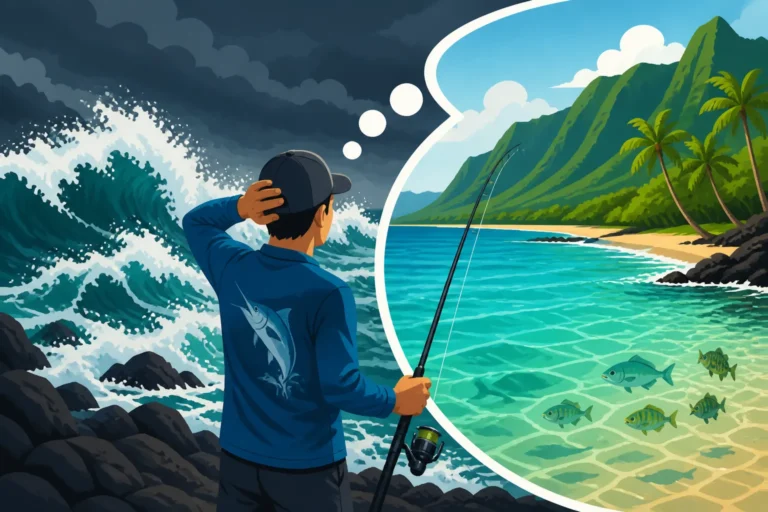
Stepping onto a new reef flat in Hawaii for the first time can feel a bit overwhelming, right? You're surrounded by this incredible, vibrant ecosystem, but where do you even begin casting to find those elusive fish? This guide is going to walk you through the most effective fan casting techniques for dissecting an unfamiliar reef flat, helping you systematically explore and increase your chances of hooking up with some amazing Hawaiian catches.
The Unique Challenge of Hawaii's Reef Flats
Hawaii's reef flats are truly special places. They're teeming with life, from the smallest invertebrates to the predatory fish that patrol their edges. However, their beauty often hides their complexity. Navigating a new flat isn't just about throwing a line out; it's about understanding the subtle cues of the environment and approaching it with a smart, systematic plan. Without a proper strategy, you can spend hours casting haphazardly, spooking fish, and leaving empty-handed.
Why Reef Flats are Fishing Goldmines and Minefields
On one hand, reef flats are absolute goldmines. They act as nurseries for juvenile fish, feeding grounds for larger predators, and a constant buffet line with the tides bringing in fresh nutrients and bait. You can find everything from papio (trevally) and moi cruising the edges to uhu (parrotfish) grazing on the coral, and even bonefish (oio) tailing in the skinny water. It's a diverse fishery, perfect for light tackle and a keen eye.
On the flip side, they can be minefields for the unprepared angler. The shallow, clear water means fish are easily spooked. The jagged coral and volcanic rock can quickly shred your line and lures. Plus, if you don't know where to look, you could be casting over barren stretches while the fish are holding just a few yards away in a prime ambush spot. It's a delicate balance of stealth, observation, and methodical casting that separates a successful day from a frustrating one. The constant ebb and flow of the ocean, the changing light, and the presence of other marine life all add layers of complexity, making each session a unique puzzle to solve.
The Initial Reconnaissance: What to Look For Before You Cast
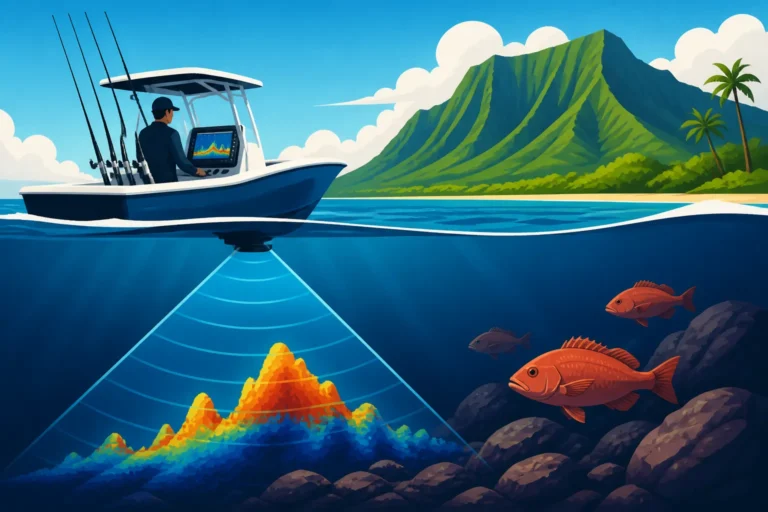
Before you even make your first cast, take a moment. Pause. Observe. Think of yourself as a detective. What clues can you gather from the shoreline? Are there any visible channels, darker patches of coral, or sudden drop-offs that might indicate deeper water or structure? Look for areas where the waves break differently or where the water seems to swirl – these often point to underwater features that attract fish.
Pay close attention to baitfish. Are there schools of small fish flickering on the surface? Are seabirds diving? Birds are nature's best fish-finders, so follow their lead! If you spot a flurry of activity, that’s where the predators are likely to be. Also, consider the tide. Is it rising or falling? Fish will often move with the tide, pushing into shallower areas on a rising tide to feed, and retreating to deeper channels as it falls. Wading Techniques for Hawaii Shore Fishing often emphasize this initial observation, and it's invaluable. Remember, this isn't just about looking at the water, but through it. If you have polarized sunglasses (which I highly recommend finding on Amazon if you don't already have a pair), they'll be your best friend for spotting subtle movements and underwater structure.
Mastering the Fan Casting Technique for Reef Flats
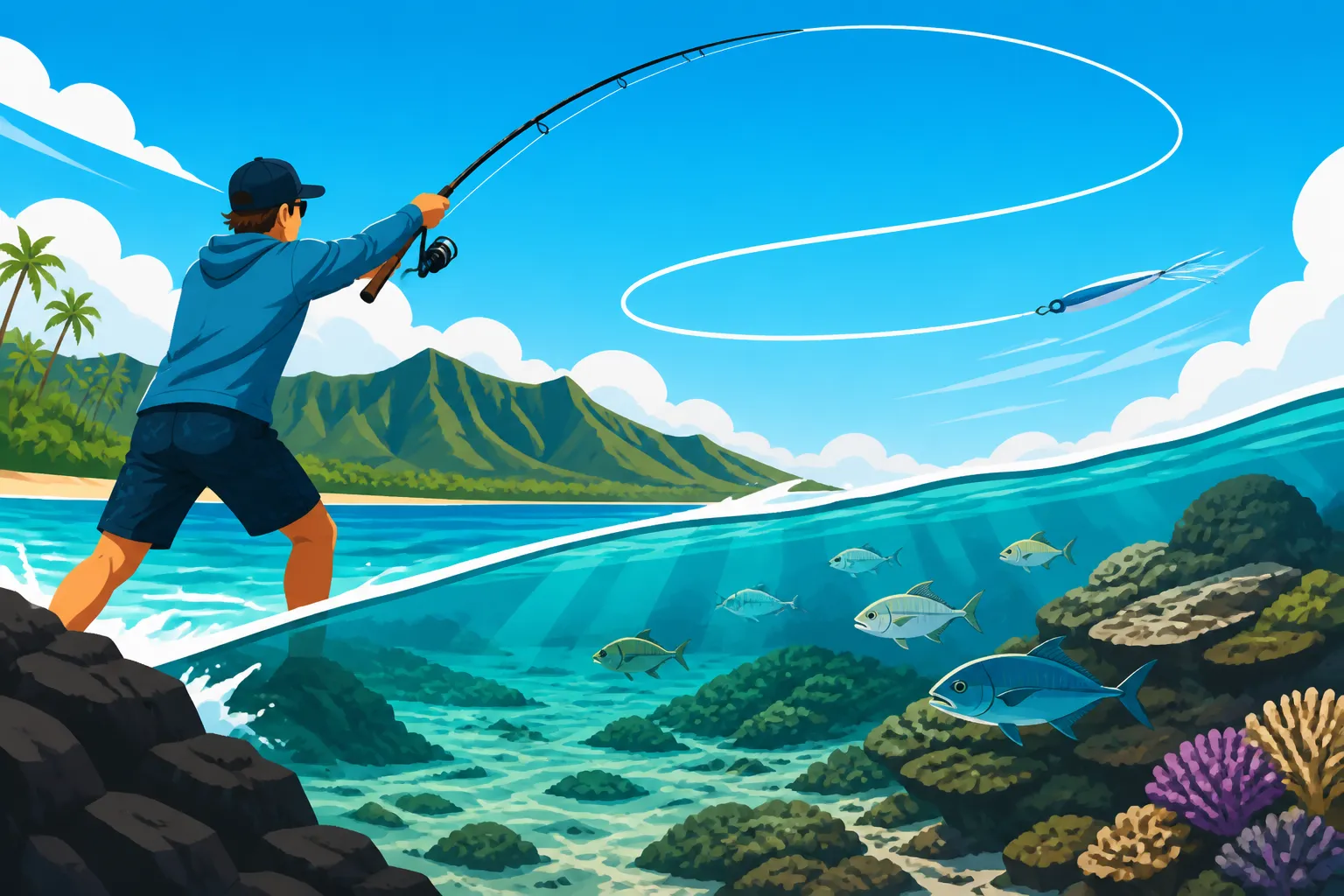
Fan casting is a systematic approach to covering a wide area of water efficiently. Instead of just casting straight out, you spread your casts out like the spokes of a fan, ensuring you hit every potential hiding spot and feeding lane within your reach. This technique is especially critical on a new reef flat because you don't know where the fish are holding, so you need to present your lure or bait across as much varied terrain as possible.
The Grid Method: Systematically Covering Water
The "grid method" is an extension of fan casting that helps ensure thorough coverage. Imagine the section of the reef flat in front of you as a clock face. Your first cast should be at "12 o'clock," directly in front of you. Then, shift your body or your casting angle slightly to the right for your next cast, aiming for "1 o'clock." Continue this pattern, making casts at "2 o'clock," "3 o'clock," and so on, until you've covered a full 90 to 180-degree arc.
Each cast should land at a slightly different distance as well. For example, your "12 o'clock" cast might be a long one, reaching the farthest point you can comfortably cast. Your "1 o'clock" cast could be a medium-range cast, and your "2 o'clock" cast a shorter one, covering water closer to you. Then, for the next pass (e.g., from "3 o'clock" to "6 o'clock"), you reverse the distance pattern or adjust it based on what you're seeing. This ensures that you're not just covering a wide horizontal arc, but also varying the depth and distance of your presentation. It takes discipline, but it ensures you're leaving no stone unturned, literally.
Varying Your Retrieve and Presentation
Just as important as where you cast is how you retrieve your lure or present your bait. Different species react to different presentations, and on a new flat, you're essentially experimenting to see what's working. Start with a varied retrieve: some fast jerks, some pauses, some slow steady retrieves. Mimic a wounded baitfish, or an unsuspecting one, depending on what you think might be present.
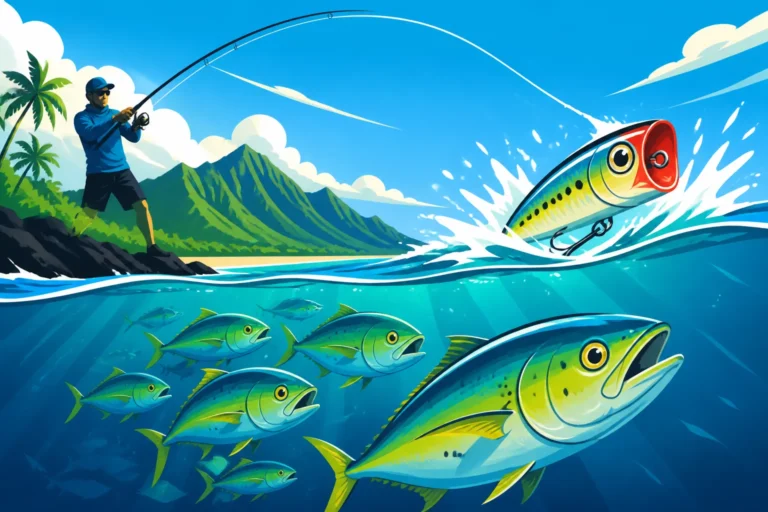
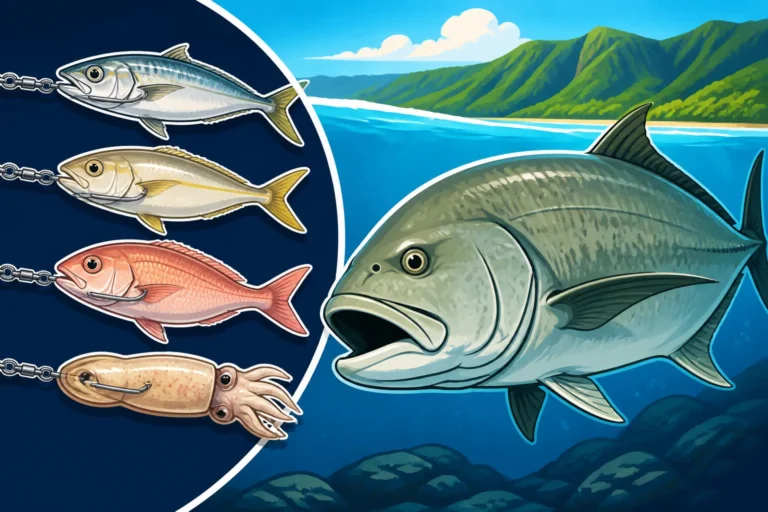
For example, when targeting papio or other trevally species, an aggressive, erratic retrieve often triggers a strike. Think quick twitches and sudden stops with a topwater lure or a soft plastic. For moi, a slower, more deliberate retrieve with a small spoon or piece of bait might be more effective as they tend to cruise the sandier bottom. How to Catch Papio on Hawaii's Shoreline goes into more detail on specific retrieves for those feisty fighters. Don't be afraid to change your retrieve speed, the depth you're working, or even the type of lure after a few casts if nothing is hitting. Sometimes, a subtle change in cadence is all it takes to entice a fish that was just watching your lure before.
Essential Gear for Successful Reef Flat Fan Casting
Having the right gear is non-negotiable for reef flat fishing. The environment is harsh on tackle, and the fish, while not always huge, can be incredibly powerful. You need equipment that can stand up to saltwater, sharp coral, and strong runs. Don't skimp here; reliable gear makes all the difference between landing a fish and losing it (and your expensive lure).
Rods, Reels, and Lines: The Right Tools for the Job
For general reef flat fan casting, I recommend a medium-light to medium action spinning rod, around 7 to 9 feet in length. This length gives you excellent casting distance for covering those wide arcs and enough leverage to fight fish and steer them away from structure. Pair it with a 3000 to 4000 size saltwater-rated spinning reel that has a smooth drag system. The drag is your best friend when a papio makes a blistering run towards the nearest coral head.
For line, braided line in the 15-30 lb test range is a fantastic choice. It offers superior casting distance, sensitivity, and strength-to-diameter ratio. However, braid needs a good leader. Fluorocarbon leader is essential for its abrasion resistance against coral and its near invisibility underwater. I typically use 20-40 lb fluorocarbon leader, adjusting based on the target species and how gnarly the reef is. For instance, if you're trying to land an ulua, you'll want something much heavier. Best Leader Material for Reef Structure can give you more specific recommendations. You can find a great selection of these specialized lines and leaders on Amazon, making it easy to stock up before your trip.
Lure Selection: Matching the Hatch (and the Reef)
Lure selection on a reef flat is critical and often depends on what you're targeting and the specific conditions. You'll want a variety to experiment with.
Topwater Lures: Poppers and walk-the-dog style baits are fantastic for aggressive predators like papio, especially in low light conditions or when baitfish are schooling on the surface. They create commotion and draw strikes from a distance.
Spoons and Metal Jigs: These are versatile and can be cast a mile. They imitate fleeing baitfish and can be retrieved at various depths. Silver or gold colors are always a good starting point. They're also quite durable against incidental contact with the reef.
Soft Plastics: Grubs, paddle tails, and jerk shads rigged on weedless hooks or jig heads can be incredibly effective, especially when fished slowly near the bottom or around structure. The weedless option is key to avoiding snags.
Small Cranks/Plugs: Shallow-diving jerkbaits or lipless crankbaits can imitate various baitfish and can be worked effectively over shallower patches without snagging too often.
Here's a quick comparison of popular lure types for reef flats:
| Lure Type | Best For | Retrieve Style | Pros | Cons |
|---|---|---|---|---|
| Popper/Walk-the-dog | Papio, Akule, Aggressive Predators | Erratic, jerky surface retrieves | Excites fish, visible, covers water | Less effective in choppy water, no depth |
| Metal Jig/Spoon | Papio, Aku, Mahimahi (offshore) | Fast retrieve, jigging, yo-yo | Excellent casting distance, durable | Can snag easily on bottom, less natural |
| Soft Plastic (Jighead) | Papio, Moi, Uhu (weedless) | Slow drag, hop, steady retrieve | Versatile, natural look/feel, subtle | Less durable, can be torn by coral/fish |
| Shallow Crankbait | Papio, Smaller Trevally | Steady retrieve, occasional twitch | Good baitfish imitation, dives shallow | Limited depth, can snag on sharp reef |
Remember to have a variety of colors too – natural baitfish patterns, bright chartreuse or pink for murky water, and darker colors for clear conditions. Check out Best Lures for Uhu on the Reef for more specialized lure advice.
Reading the Water and Adapting Your Strategy
Fishing isn't just about casting; it's about connecting with the environment and understanding its rhythm. On a reef flat, the water itself tells a story. Learning to interpret those subtle signs will elevate your fan casting from a mere technique to a true art form.
Understanding Tides and Currents on the Flats
Tides and currents are perhaps the most influential factors on a reef flat. A rising tide often pushes baitfish and predators onto the flat, making it a prime feeding window. A falling tide can draw fish into deeper channels or off the flat entirely, concentrating them in specific areas. Understanding the local tide charts is paramount, and planning your outing around the peak tidal movements (often the hours just before and after high or low tide) can dramatically increase your success.
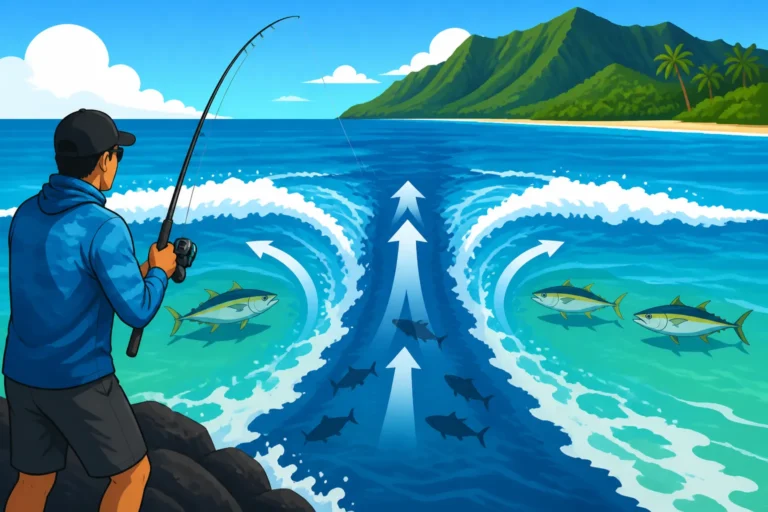
Currents also create natural feeding lanes and ambush points. Look for areas where the current pushes around points of land, over a submerged rock pile, or through a narrow channel. These are natural funnels for baitfish, and consequently, for the predatory fish that feed on them. Your fan casting should aim to present your lure into or across these current lines, allowing the current to carry your lure naturally or to mimic a struggling baitfish caught in the flow. Sometimes, simply adjusting your retrieve to work against a slight current can give your lure a more lifelike action.
Spotting Structure and Baitfish Activity
Beyond the general tidal flow, individual pieces of structure and the behavior of baitfish are incredibly important clues. Look for any visible change in the reef bottom:
- Darker Patches: Often indicate coral heads, lava rock formations, or deeper pockets of water where fish can hide. Cast around and over these.
- Lighter Patches: Typically sand channels or open areas. Fish will often cruise these edges or ambush from nearby structure.
- Channels and Guts: Deeper depressions in the flat that act as highways for fish moving on and off the flat with the tide. These are always worth targeting systematically with your fan casts.
Keep a hawk's eye out for baitfish activity. Small ripples, splashes, or even tiny silver flashes indicate the presence of food for bigger fish. If you see a sudden explosion on the surface, that's almost certainly a predatory fish striking, and you should immediately cast in that direction. Don't be afraid to put your lure right into the thick of a bait school – that's often where the larger fish are lurking. Learning to read these subtle signs comes with practice, but applying a systematic fan casting approach while keeping an eye out for these visual cues is the best way to develop your skills and fill your cooler (or get some great catch-and-release photos!). How to read reef structure for uhu offers some specific insights into interpreting the reef environment for a particular species, but the principles apply broadly across the flats.
Disclaimer
This article is for general informational purposes only and does not constitute professional advice. Laws, prices and regulations vary by location and change over time. Consult a qualified professional for guidance on your specific situation.