Best Bottomfishing Charters in Kona
When you dream of fishing in Hawaii, often your mind goes straight to the high-flying marlin or the fast-paced ahi of the deep blue pelagic waters. But for many seasoned anglers and curious newcomers alike, the real magic, and often the most delicious rewards, lie deep beneath the surface: bottomfishing in Kona. The challenge, though, is figuring out which of the many excellent charters is truly the best fit for your dream trip. This comprehensive guide will help you navigate the vibrant Kona bottomfishing scene, understand what to look for in a charter, and prepare you for an unforgettable deep-sea adventure.
The Allure of Kona Bottomfishing: Why Anglers Flock Here
Kona, on the Big Island of Hawaii, isn't just famous for its coffee and spectacular sunsets; it's a world-renowned fishing destination with a unique appeal for bottomfishing enthusiasts. Unlike many places where you need to travel miles offshore to find deep structure, Kona offers incredible depths just a stone's throw from the harbor. This geographical advantage, combined with an abundance of diverse marine life, makes it a prime location for those seeking the thrill of deep-water species without the extensive travel time.
Kona's Unique Underwater Topography
What makes Kona so special for bottomfishing is its dramatic underwater landscape. The Big Island is essentially a massive volcano rising from the ocean floor, creating incredibly steep drop-offs and ledges very close to shore. You can be in hundreds, even thousands, of feet of water just a few miles out from Honokohau Harbor. This rapid transition from shallow reef to abyssal depths means that many desirable bottomfish species, which typically prefer deeper, cooler waters and intricate structure, are highly accessible. These underwater cliffs, canyons, and seamounts provide ideal habitats, offering shelter and abundant food sources for a variety of fish.
It's not just the depth; it's the complexity of the bottom. Lava flows have created countless caves, crevices, and ledges where fish can hide and ambush prey. These structures are invisible from the surface, of course, making a skilled captain with good sonar and local knowledge absolutely invaluable. Without someone who understands these submarine contours, you might as well be dropping a line into a bathtub.
A Bounty of Deep-Dwelling Species
Kona's deep waters are home to an impressive array of delectable bottomfish. We're talking about species that aren't just a blast to catch, but also absolutely sublime on the dinner plate. The main targets for bottomfishing charters include several species of snapper and grouper, often referred to collectively as "bottomfish" or "deep-7" (though this term often refers to specific commercial species, recreational anglers pursue many of the same).
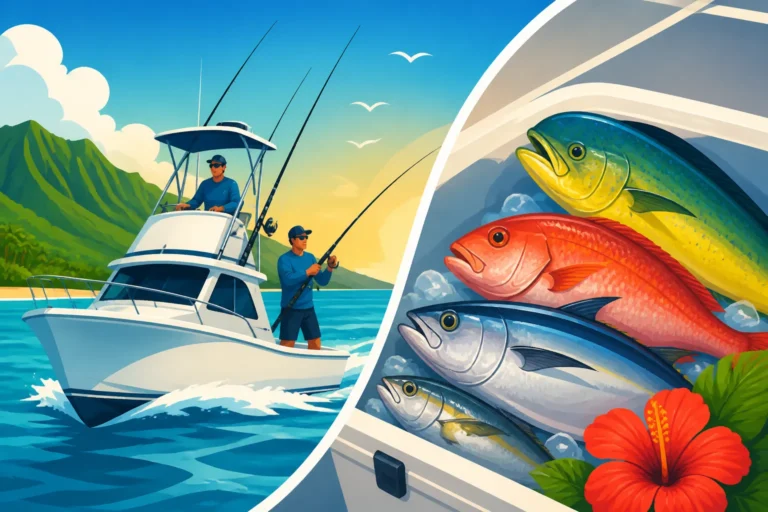
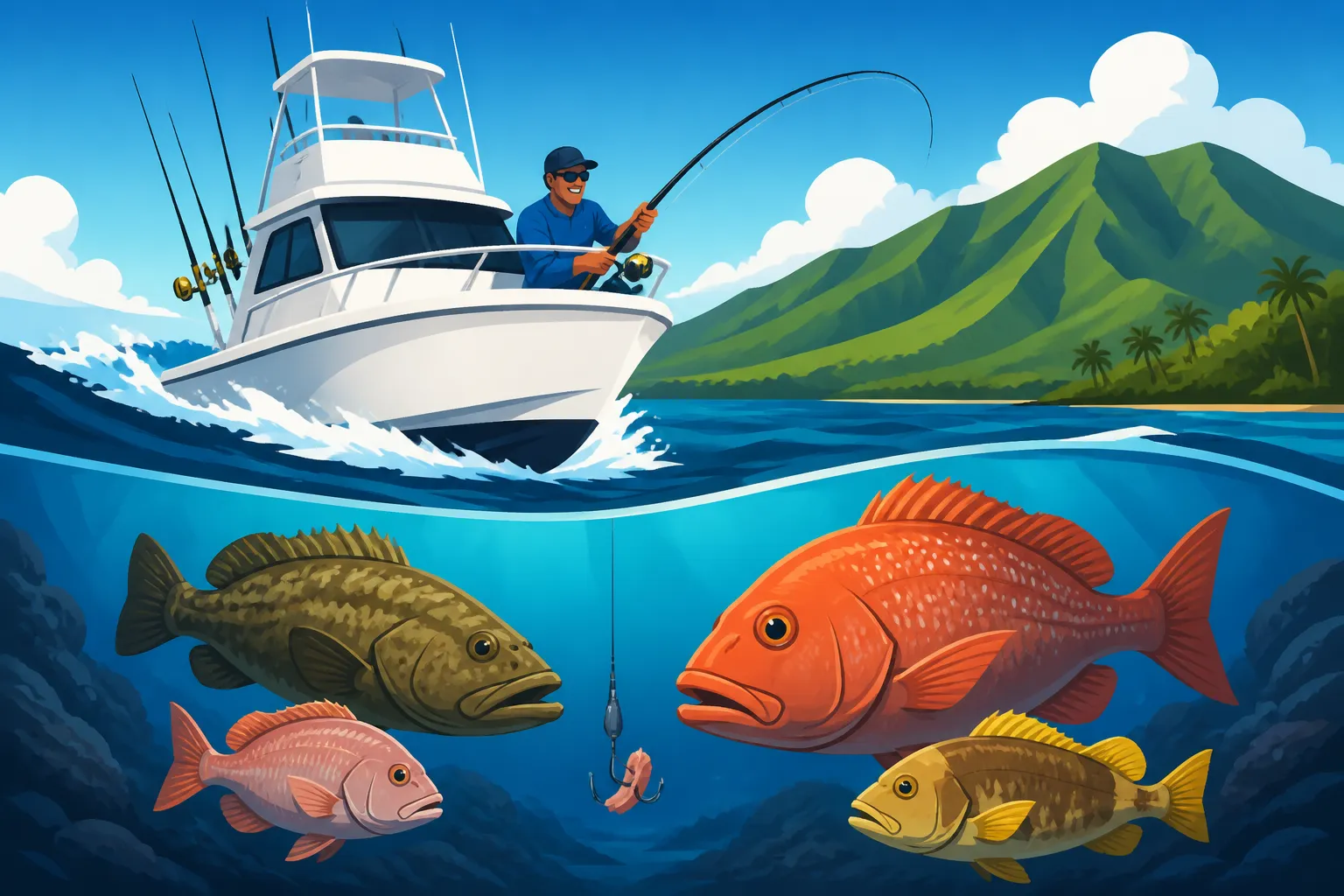
You might hook into an 'opakapaka (pink snapper), known for its delicate flavor and beautiful pink flesh, or a vibrant 'onaga (ruby snapper), a prized catch with a rich, buttery texture. There are also 'ehu (short-tail snapper), hapu'upu'u (sea bass), and uku (grey snapper), among others. Each species has its own fight and culinary characteristics, making every drop an exciting mystery. The challenge of bringing these strong fighters up from hundreds of feet below is a truly rewarding experience, especially when you know a delicious meal awaits. Bottomfish Species of Hawaii is a great resource if you want to learn more about these fascinating creatures.
Decoding Kona's Bottomfishing Techniques
Bottomfishing isn't just about dropping a line and hoping for the best. It requires specific techniques, specialized gear, and a deep understanding of the marine environment. Kona charters excel at these methods, often employing a blend of traditional Hawaiian fishing wisdom and modern technology to maximize your chances of a successful catch.
Deep Dropping for Elusive Snappers
The most common and effective technique for targeting the prized deep-water snappers and groupers in Kona is "deep dropping." This involves using heavy tackle and electric reels to send bait down to incredible depths, often 300 to over 1,000 feet. The sheer strength required to manually reel up a decent fish from such depths makes electric reels almost a necessity for many anglers, especially on longer trips.
The setup usually involves a heavy lead sinker at the bottom, with multiple baited hooks spaced above it on a leader. Baits can vary, but fresh squid, 'opelu (mackerel scad), or cut fish are popular choices. The captain uses advanced sonar to locate underwater structures, ledges, and schools of fish, then positions the boat precisely to drop lines directly onto these hotspots. It's a game of precision, patience, and reading the subtle bites that translate through hundreds of feet of line. Once a fish bites, the electric reel does the heavy lifting, but the fight is still very real as you guide the fish through the water column.
Jigging for Reef Dwellers
While deep dropping is king for the truly deep species, jigging is another fantastic technique, especially for slightly shallower bottomfish and reef species. This involves using artificial lures, or jigs, which are weighted and designed to mimic baitfish. Anglers drop these jigs to the bottom and then work them with a rhythmic lifting and dropping motion, creating an enticing erratic movement that predatory fish can't resist.
Jigging can be incredibly active and provides a more hands-on fighting experience compared to electric reel deep dropping. Many charters will offer both options depending on the conditions, target species, and angler preference. It's particularly effective for species like 'uku (grey snapper) and even smaller jacks or groupers that might be holding closer to the reef. The thrill of feeling a fish smash your jig hundreds of feet down is truly unique. You can learn more about this technique in Jigging for Bottomfish in Hawaii.
Specialized Gear for Deep Waters
Don't worry about bringing your own gear if you're booking a charter; good Kona bottomfishing charters will provide all the specialized equipment you need. This typically includes robust conventional rods and reels spooled with heavy braided line, capable of handling the immense pressure and abrasion of deep-water fishing. As mentioned, electric reels are common for deep dropping, making the arduous task of retrieving a fish from extreme depths much more manageable.
The terminal tackle is also heavy-duty, featuring strong swivels, heavy monofilament or fluorocarbon leaders, and sharp, strong hooks. It's not uncommon to see leaders of 100-pound test or more to prevent break-offs on the rough bottom or from the powerful jaws of a large snapper. Your charter crew will be experts at rigging and baiting, ensuring your setup is optimal for the conditions and target species. They're there to help you every step of the way, so don't feel intimidated by the heavy gear; it's designed to make your fishing experience successful and enjoyable.
Choosing Your Ideal Kona Bottomfishing Charter
With a multitude of fishing charters operating out of Kona, particularly from Honokohau Harbor, deciding which one is right for your bottomfishing adventure can feel overwhelming. It’s not just about finding any boat; it’s about finding the right captain, the right crew, and the right vessel that aligns with your expectations and fishing style.
Captain's Expertise and Crew Experience
This is arguably the most crucial factor when selecting a bottomfishing charter. Bottomfishing in Kona demands intimate knowledge of the local waters, including hidden seamounts, ledges, and channels. An experienced captain will know where the fish are likely holding based on current, tide, and recent catch reports. They'll also be adept at reading their sonar and positioning the boat precisely over promising structure. Look for charters with captains who have years, even decades, of experience specifically bottomfishing in Kona. A great crew further enhances the experience, providing assistance with baiting, rigging, untangling lines, and helping to land fish. They also contribute significantly to the overall atmosphere on board.
Don't hesitate to ask about the captain's bottomfishing track record or read reviews that specifically mention their success with deep-water species. A good captain and crew are passionate about putting you on fish and ensuring a safe, memorable trip. Many anglers find their go-to captain and stick with them for years, a testament to the importance of this relationship. How to Choose a Hawaii Fishing Charter offers more general advice that applies here as well.
Boat Amenities and Equipment Quality
While the captain is the brains, the boat is the vessel (pun intended!) that gets you to the fishing grounds comfortably and safely. For bottomfishing, a stable boat is key, as you'll often be drifting or anchored over deep structure. Larger, wider boats tend to offer more stability, which can be a blessing if you're prone to seasickness. Beyond stability, consider the amenities:
- Deck Space: Is there enough room for all anglers to fish comfortably without constantly bumping into each other?
- Shade: The Hawaiian sun is intense. A good-sized covered area is vital for comfort throughout the day.
- Restroom Facilities: This might seem minor, but it's essential for longer trips.
- Electronics: Modern fish finders, GPS, and radar are critical for locating fish and navigating safely, especially in deep waters.
- Tackle Quality: As discussed, specialized heavy tackle is needed. Ensure the charter provides well-maintained, high-quality rods, reels (especially electric reels if deep dropping), and lines.
When browsing options, like on platforms such as FishingBooker, pay attention to the boat's description and photos. Does it look well-maintained? Are the chairs comfortable? Do they explicitly mention electric reels or deep-dropping gear? These details speak volumes about the quality of the operation.
Private vs. Shared Charter Experiences
Kona bottomfishing charters generally offer two main types of experiences: private charters and shared (or "walk-on") charters. Each has its pros and cons, and the best choice depends on your group size, budget, and desired level of personalization.
- Private Charters: You book the entire boat for your group. This gives you complete control over the itinerary, fishing techniques, and target species (within reason, of course, and always respecting regulations). You'll have more space, personalized attention from the crew, and the flexibility to spend more time on specific spots or switch techniques if the bite is slow. This is ideal for families, groups of friends, or serious anglers who want a dedicated experience. Naturally, private charters come at a higher cost, but for some, the exclusivity and customization are well worth it.
- Shared Charters: You pay for a single spot on a boat with other anglers you don't know. This is a more budget-friendly option and a great way to meet fellow fishing enthusiasts. However, you'll have less control over the trip details, and you'll need to share fishing space and crew attention. The focus might be more on getting everyone a chance to catch, rather than targeting a specific species. If you're traveling solo or with one other person and want to keep costs down, a shared charter can be an excellent choice for experiencing Kona bottomfishing. Be sure to check how many anglers will be on board for shared trips to gauge comfort levels.
Preparing for a Successful Bottomfishing Excursion
Even the most experienced anglers can benefit from a refresher on how to prepare for a deep-sea bottomfishing trip in Hawaii. A little foresight can go a long way in ensuring your comfort and maximizing your enjoyment on the water.
Essential Items to Bring Aboard
While your charter will provide all the fishing gear, there are a few personal items you'll definitely want to pack to make your day more comfortable and safe. The tropical sun and ocean environment require specific considerations.
- Sun Protection: This is non-negotiable. Bring a wide-brimmed hat, polarized sunglasses (essential for spotting fish or reading the water if you're doing any surface fishing), and high-SPF, reef-safe sunscreen. Even on overcast days, UV exposure on the water is intense.
- Clothing: Light-colored, breathable clothing that covers your skin is ideal. Long-sleeved shirts and pants, even lightweight ones, will protect you from the sun. A light jacket or rain shell can be useful for cooler mornings or unexpected squalls.
- Food and Drinks: Most charters will provide water, but you'll want to bring your own snacks and any additional beverages you prefer. Fishing is hungry work! A small cooler with ice for your personal items is usually fine, but check with your charter first.
- Camera: You'll want to capture those amazing catches and the breathtaking Kona coastline. Make sure it's waterproof or in a protective case.
- Personal Medications: If you have any prescriptions, don't forget them.
- Small backpack or dry bag: To keep your personal items organized and protected from spray.
Remember, space can be limited on a boat, so pack efficiently. Your charter company can also give you specific recommendations on what to bring.
Managing Seasickness and Comfort
Bottomfishing involves drifting or slow-trolling, which can sometimes exacerbate seasickness for those prone to it. Don't let this deter you, as there are many effective ways to manage it:
- Preventative Medication: Over-the-counter options like Dramamine or Bonine work best when taken before you board the boat. Consult with your doctor about prescription patches if you're particularly susceptible.
- Ginger: Natural remedies like ginger chews or ginger ale can also help settle your stomach.
- Stay Hydrated: Dehydration can worsen seasickness. Drink plenty of water throughout the day.
- Focus on the Horizon: Keep your eyes on the fixed horizon rather than looking down at your phone or fishing rod too much.
- Fresh Air: Stay on deck where you can feel the fresh air and see the horizon. Avoid going below deck if you're feeling queasy.
It's always better to be prepared. Talk to your captain or crew if you start feeling unwell; they're experienced and often have helpful tips or remedies on hand. Seasickness tips for a Hawaii fishing charter offers more in-depth advice.
Understanding the Catch & Keep Policy
One of the great joys of bottomfishing is bringing home some delicious table fare. However, it's crucial to understand the charter's specific catch and keep policy, as well as Hawaii's fishing regulations.
- Charter Policy: Many bottomfishing charters operate on a "you catch it, you keep it" basis for smaller, legal-sized fish. For larger, highly prized species, the charter might have a policy of keeping one for the boat's share (to cover costs or for the crew) and allowing you to keep the rest, or they may divide the catch amongst anglers on a shared trip. Always clarify this before booking to avoid any surprises.
- Regulations: Hawaii has strict Hawaii Bag and Size Limits by Species for various fish, including bottomfish, to ensure sustainable fishing. Your captain and crew are responsible for adhering to these rules, and they'll ensure any fish you keep are legal. They'll typically clean and fillet your catch for you at the end of the trip, preparing it for transport. If you plan to fly with your fish, discuss packaging options with the crew.
Knowing these details upfront will help manage expectations and ensure a smooth, enjoyable experience from start to finish.
Navigating Costs and Booking Your Bottomfishing Adventure
The cost of a bottomfishing charter in Kona can vary widely, depending on several factors like the duration of the trip, whether it's private or shared, and the size and amenities of the boat. It's an investment, but for many, the experience and potential bounty are well worth it.
Factors Influencing Charter Pricing
When you're looking at charter prices, you'll notice a range. Here's what typically affects the cost:
- Duration: Half-day (4-5 hours) trips are generally less expensive than full-day (8+ hours) trips. For deep-dropping bottomfishing, a full-day trip often provides more value, allowing ample time to get to distant spots and dedicate significant time to actual fishing.
- Private vs. Shared: As discussed, a private charter where you book the entire boat will be significantly more expensive than a shared spot on a walk-on trip. The per-person cost on a shared charter is much lower.
- Boat Size and Amenities: Larger, more luxurious sportfishing yachts with air-conditioned cabins, multiple restrooms, and state-of-the-art electronics will command a higher price than smaller, more basic vessels.
- Included Services: Some charters include all bait, tackle, and even drinks and snacks in their base price. Others might charge extra for specific amenities or services like fish cleaning beyond a basic fillet. Always check what's included.
- Peak Season: Prices might be slightly higher during peak tourist seasons or major fishing tournaments.
It's important to remember that the quoted price usually covers the boat, captain, crew, and basic gear. It typically does not include gratuities for the crew, which are customary and appreciated. For a general idea of what to budget, you can refer to a Hawaii Fishing Charter Cost Guide.
The Booking Process: Online Platforms and Direct Contact
Booking your Kona bottomfishing charter can be done in a few ways, each with its own advantages.
- Online Booking Platforms: Websites like FishingBooker are incredibly popular for a reason. They aggregate listings from numerous charters, allowing you to easily compare boats, check availability, read reviews from past customers, and often book directly online. This transparency makes it easier to find a reputable charter that fits your criteria for bottomfishing. You can filter by location (Kona), type of fishing (bottomfishing), and even specific target species or techniques offered. It's a convenient one-stop shop for many anglers.
- Direct Contact: You can also contact charter operations directly. Many have their own websites where you can view their boats, learn about their captains, and inquire about specific bottomfishing trips. Calling or emailing directly allows you to ask detailed questions and often build a personal connection before you even step on board. This can be particularly useful if you have very specific requirements or are looking for a highly specialized trip.
- Harbor Visits: If you're already in Kona, you can visit Honokohau Harbor and speak directly with captains or booking agents at their slips. This allows you to see the boats in person and get a feel for the operation, though availability for immediate bookings might be limited, especially during busy times.
Regardless of how you book, aim to reserve your charter in advance, particularly during peak seasons, to secure your preferred dates and ensure you get a reputable operator.
Tipping and Gratuities: What's Customary
Tipping the crew is a long-standing tradition in the charter fishing industry, and it's an important part of showing appreciation for their hard work, expertise, and service. A good crew works tirelessly to ensure your safety, comfort, and success, from preparing the boat and rigging lines to handling fish and cleaning up.
The customary tip for a fishing charter crew in Hawaii generally ranges from 15% to 20% of the total charter cost. If you had an exceptional experience, felt the crew went above and beyond, or if they worked particularly hard to put you on fish, a higher tip is always a wonderful gesture. Tips are usually given to the captain at the end of the trip, who then distributes it among the crew. It's a small but significant way to acknowledge the effort that goes into making your fishing adventure memorable. For more detailed insights, check out Tipping Etiquette for Hawaii Fishing Charters.
| Aspect | Private Charter | Shared Charter |
|---|---|---|
| Cost | Higher overall, but fixed for your group | Lower per person, variable based on number of anglers |
| Flexibility | Full control over itinerary, techniques, and species | Limited flexibility, trip itinerary is set |
| Space | Ample room for your group, comfortable fishing | Shared space, potentially crowded |
| Attention | Dedicated crew attention for your group | Crew attention shared among all anglers |
| Group Size | Ideal for families, friends, or corporate groups | Great for solo anglers or small pairs |
| Privacy | Exclusive experience with your chosen companions | Shared experience with other anglers |
| Booking | Often requires more advance booking | More availability for last-minute bookings |
Disclaimer
This article is for general informational purposes only and does not constitute professional advice. Laws, prices and regulations vary by location and change over time. Consult a qualified professional for guidance on your specific situation.