Do Trout Reproduce Naturally in Hawaii Streams?
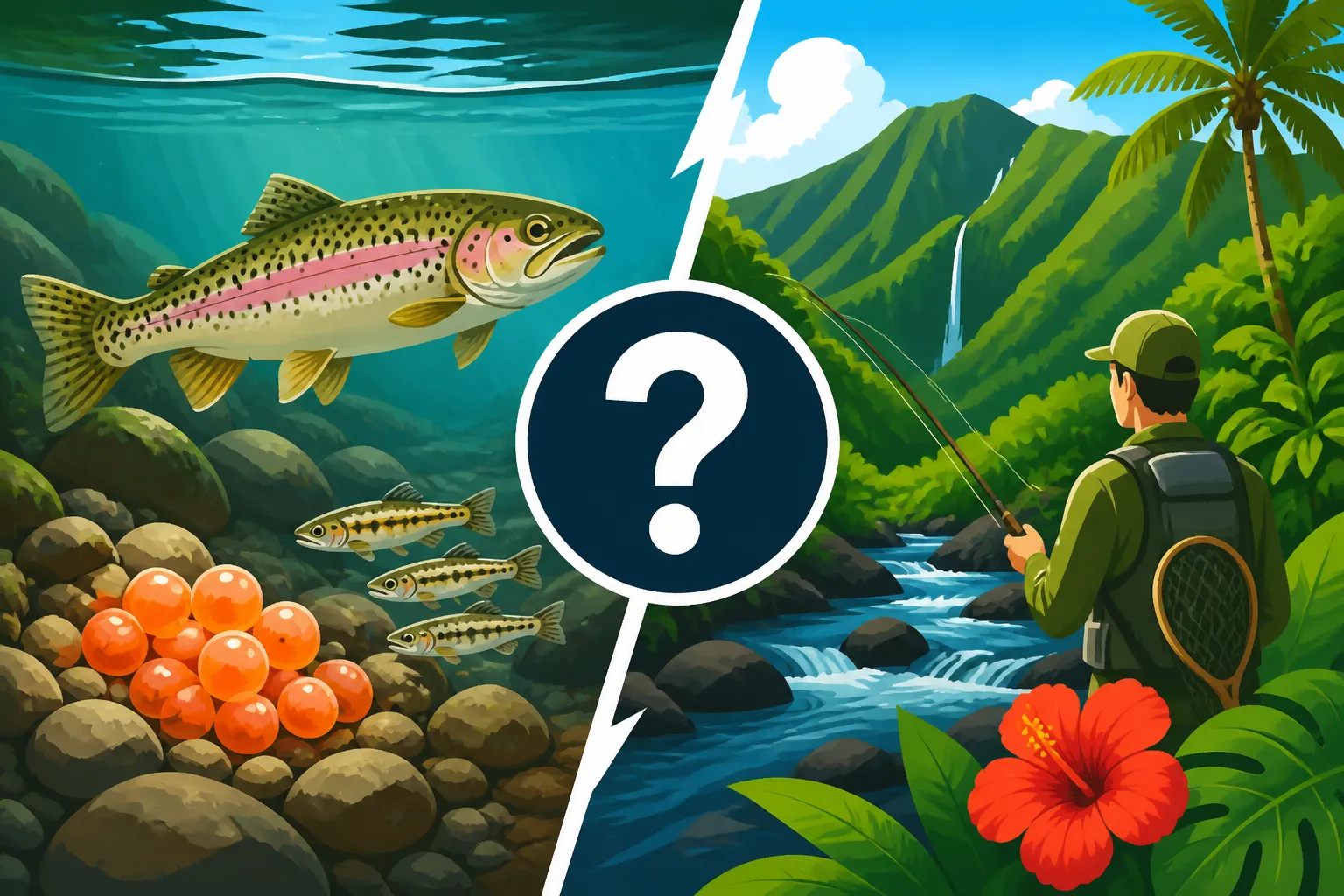
It's a common dream for anglers visiting Hawaii: picturing yourself casting a line into a pristine, babbling stream, hoping to hook into a wild trout that has called these islands home for generations. But here's the honest truth, and it can be a bit of a reality check: the idea of naturally reproducing trout populations thriving in Hawaii's unique freshwater streams is largely a myth. This guide will dive deep into why Hawaii's environment presents significant challenges for wild trout and how the state sustains its one-of-a-kind trout fishery.
The Allure and Reality of Freshwater Fishing in Hawaii
Hawaii, with its vibrant marine life, rightfully holds a reputation as an angler's paradise. However, when you shift your focus from the sparkling blue ocean to the freshwater streams winding down volcanic slopes, a different picture emerges. Many people arrive expecting the kind of clear, cold trout streams they might find in the mainland U.S. or other temperate regions, and it’s completely understandable why that image pops into mind. But Hawaii’s freshwater ecosystems are profoundly different.
A Unique Aquatic Landscape
Our islands are relatively young, formed by volcanic activity, which means our streams tend to be short, steep, and characterized by frequent flash floods. These natural waterways are designed for swift drainage, not necessarily for the deep, slow pools and long stretches of gravel beds that trout typically need. The native freshwater fish species, like gobies (ʻoʻopu) and shrimp (ʻōpae), have evolved incredible adaptations to thrive in these conditions, often using suction cups to cling to rocks during torrents and migrating between freshwater and saltwater. They're built for survival in an environment that changes rapidly and dramatically. The absence of large, meandering rivers that define many trout habitats elsewhere is a critical distinction here.
The Introduction of Non-Native Species
So, if Hawaii's streams aren't naturally suited for trout, how did they get here? The answer lies in human intervention, driven by the desire to create recreational fishing opportunities. Trout, specifically Rainbow Trout, were introduced to certain areas in Hawaii not because they could naturally sustain themselves across the islands, but because a dedicated effort was made to establish a sport fishery. This is a common practice in many places where popular game fish aren't native, and Hawaii is no exception. Beyond trout, you'll also find other introduced species like largemouth bass, peacock bass, and tilapia in Hawaii's freshwater reservoirs, all brought in to diversify fishing options, proving that most of our freshwater sport fishing opportunities are indeed the result of intentional introductions. If you're looking to explore more about these opportunities, check out our guide on Best Freshwater Fishing Spots in Hawaii.
The Challenges of Natural Trout Reproduction in Hawaii Streams
When we talk about natural reproduction, we're not just talking about fish laying eggs; we're talking about those eggs successfully hatching, the fry surviving to adulthood, and then those adults reproducing, creating a self-sustaining cycle without human intervention. For trout in Hawaii, this cycle faces immense uphill battles. It's not just a matter of "can they lay eggs?" but "can those eggs and subsequent generations actually make it?"
Environmental Factors: Temperature and Oxygen
One of the biggest hurdles for natural trout reproduction in Hawaii is the tropical climate itself. Trout, particularly Rainbow Trout, are cold-water fish. Their eggs require specific, consistently low water temperatures for successful incubation and hatching. Hawaiian streams, even at higher elevations, are often simply too warm for sustained trout egg development. Think about it: our islands are defined by sunshine and warmth. While mountain streams can be cooler than sea level, they rarely maintain the prolonged, frigid temperatures necessary for an entire trout spawning cycle.
Beyond temperature, oxygen levels play a crucial role. Colder water holds more dissolved oxygen, which is vital for trout eggs and young fry. Warmer water holds less, and when combined with the rapid flow and often turbulent nature of Hawaiian streams, conditions can quickly become suboptimal, making it incredibly difficult for fragile trout eggs and recently hatched alevin to get the oxygen they need to survive.
Spawning Habitat Limitations
Trout aren't just picky about temperature; they're also very particular about where they lay their eggs. They need clean, well-oxygenated gravel beds, often called redds, where females can dig nests, deposit eggs, and males can fertilize them. These gravel beds need specific flow rates to keep the eggs oxygenated and free from silt, yet gentle enough not to wash them away.
Hawaii's geological makeup, dominated by volcanic rock, doesn't lend itself to extensive, ideal gravel beds. Many streams have rocky bottoms, often interspersed with fine sediment or large boulders, rather than the clean, stable gravel trout prefer. Furthermore, the frequent flash floods characteristic of tropical islands can scour streambeds, destroying any nascent redds and washing away eggs or small fry before they have a chance to develop. It's a tough environment for a fish that needs consistency for its delicate early life stages.
Predation and Competition
Even if a few trout eggs manage to hatch under rare, favorable conditions, the young fry face a gauntlet of challenges. Hawaii's freshwater ecosystems, while not teeming with massive predators, do host various native and introduced species that would quickly capitalize on an easy meal. Native gobies, for instance, are very adept at foraging. More significantly, other introduced species like various types of predatory bass or even aggressive tilapia found in some areas could easily predate on vulnerable trout fry. The ecological balance of these streams is already established, and introduced trout would find themselves at the bottom of a new food chain, with little to no evolutionary advantage to help them survive. It's a harsh reality when you're trying to establish a new population in an already occupied niche.
The Role of Stocking Programs in Sustaining Hawaii's Trout Fishery
Given the significant challenges to natural reproduction, you might be wondering, "So, are there any trout to catch in Hawaii?" The answer is a resounding "Yes!" – thanks entirely to dedicated stocking programs. These programs are the lifeblood of Hawaii's unique freshwater trout fishery, turning what would otherwise be a biological impossibility into a tangible angling experience. It's a prime example of careful management creating opportunities that nature, in this specific instance, couldn't provide.
The Kokee Public Fishing Area
The jewel in the crown of Hawaii's freshwater trout fishing is undoubtedly the Kokee Public Fishing Area Guide on Kauai. This is the place to go if you want to experience trout fishing in the islands. The Kokee area, nestled in the cooler, higher elevations of Kauai, offers conditions that, while not perfect for natural reproduction, are suitable for stocked Rainbow Trout to survive and grow for a season.
The fishery operates on a "put-and-take" model. This means that fish are raised in a hatchery and then regularly released into designated streams within the Kokee area. Anglers come, catch the fish, and take them home, knowing that the population is replenished through ongoing stocking efforts rather than depending on the fish to spawn themselves. It's a highly managed system designed specifically for recreational enjoyment. If you're planning a trip, be sure to check out Hawaii Kokee Trout Fishing Season Dates to ensure you're visiting during the open season.
How Stocking Works
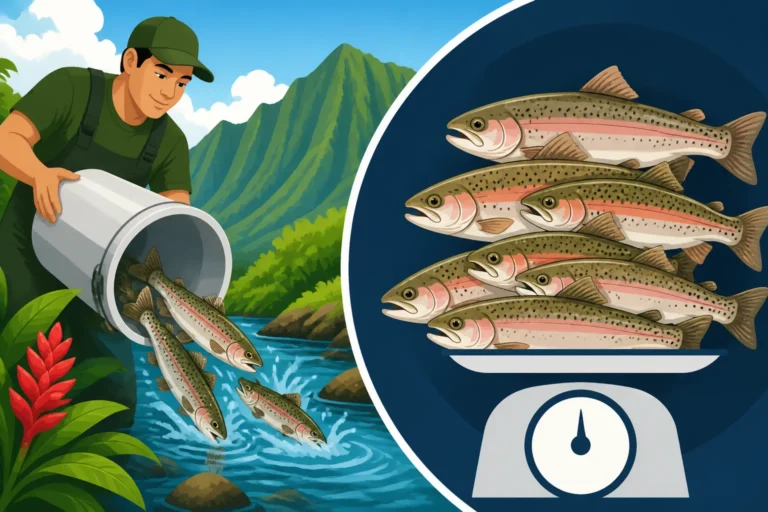
The process of maintaining a stocked trout fishery is quite involved. It begins in hatcheries, where Rainbow Trout eggs are carefully incubated and the young fish are raised to a suitable size for release. This controlled environment ensures a high survival rate for the early life stages that would struggle so much in the wild Hawaiian streams. Once the trout reach a certain size, usually fingerlings or larger, they are transported and released into the designated fishing areas.
These stocking efforts require specialized equipment and careful planning to ensure the fish are healthy upon release. It’s a huge undertaking that involves a lot of science and logistics. For anglers, it means a reliable opportunity to catch trout, even if those fish aren't native. To make the most of your trip, having the right gear is essential. You can find a wide array of trout fishing essentials, from appropriate rods and reels to lures and tackle boxes, on platforms like Amazon, ensuring you're well-equipped for the unique Kokee experience. Our guide on Best Techniques for Freshwater Trout at Kokee might also give you some pointers on what tackle works best here. You'll definitely want to ensure you have a Hawaii Freshwater Fishing License and Rules before you head out.
The Importance of Regulations for Stocked Fisheries
Because these are managed fisheries, adhering to local regulations is paramount. The Hawaii Division of Aquatic Resources (DAR) sets specific rules to ensure the sustainability and fairness of the fishing experience at Kokee. These regulations cover everything from fishing season dates and bag limits to tackle restrictions and size limits. For instance, there are typically limits on the number of trout you can keep per day, and sometimes specific lure or bait restrictions apply.
These rules are in place not just to conserve the resource, but to manage the angling pressure on a finite, artificially maintained population. It's a different kind of conservation than protecting naturally reproducing wild fish, but no less important. Understanding and following these guidelines is a key part of responsible angling in Hawaii. You can learn more about the specific age requirements for licenses in What age requires a freshwater fishing license in Hawaii or explore if you qualify for Hawaii Senior and Disabled Freshwater License Exemption. Always confirm the current rules by reading Hawaii Fishing Regulations Explained.
Distinguishing Wild Trout from Stocked Trout in Hawaii
It’s natural to wonder, given the stocking programs, if there's any chance of stumbling upon a truly wild trout that has successfully reproduced in Hawaii. While "wild-spawned" trout in Hawaii are incredibly rare, bordering on non-existent as a self-sustaining population, it's helpful to understand the theoretical differences and why any trout you catch will almost certainly be hatchery-raised or a "holdover" from a previous stocking.
Physical Characteristics of Stocked Fish
When you catch a trout in the Kokee Public Fishing Area, it's highly likely to be a stocked fish. These hatchery-raised trout often exhibit certain characteristics that distinguish them from truly wild, naturally spawned fish found in self-sustaining populations elsewhere. One common sign is fin wear. Fish raised in crowded hatchery raceways can sometimes have slightly worn or damaged fins from rubbing against concrete walls or other fish. A wild trout, living in a natural stream environment, typically has pristine, perfectly formed fins.
The coloration can also sometimes be a subtle indicator. While Rainbow Trout are beautiful fish with iridescent stripes, hatchery fish, having grown up in a more controlled, uniform environment, might have slightly less vibrant or less nuanced patterning compared to a wild fish that has adapted its camouflage to a diverse, natural stream bed. These differences, while not always definitive, can give experienced anglers a clue. If you're curious about what a Difference between wild and stocked trout at Kokee might look like, these are some of the details to observe. You might also notice the Average size of stocked trout at Kokee tends to be quite uniform within a particular stocking batch.
Behavior and Habitat of Holdovers
While natural reproduction is practically negligible, a phenomenon known as "holdover" fish does occur. These are simply stocked trout that have survived past the season they were initially released. These fish, having spent more time in the wild streams, often become more wary, develop stronger foraging instincts, and might appear more "wild" in their behavior compared to a freshly stocked counterpart. They've had more time to adapt to the currents, find natural food sources, and learn to avoid predators. Learning What a holdover trout is can add another layer of excitement to your fishing trip, as these fish can be more challenging and rewarding to catch.
However, even these holdovers are not "wild-spawned." They are still products of the stocking program. The specific habitats where you'll find them are still within the managed Kokee Public Fishing Area, in the same streams that are regularly replenished. The challenging environmental factors – warm water, lack of ideal spawning gravel, and flash floods – remain formidable barriers to any truly sustained natural reproduction across generations. The fishery at Kokee, ultimately, is a testament to dedicated human effort, ensuring that while wild trout streams don't naturally exist, the joy of trout fishing does. You can often track the success of these programs by looking at the Total pounds of trout stocked at Kokee annually.
Disclaimer
This article is for general informational purposes only and does not constitute professional advice. Laws, prices and regulations vary by location and change over time. Consult a qualified professional for guidance on your specific situation.