How to tell a blue marlin from a striped marlin
It's incredibly exciting to have a marlin on the line in the deep blue waters off Hawaii, but in that adrenaline rush, it's easy to second-guess yourself: was that a magnificent blue marlin or a sleek striped marlin? These two majestic billfish share the same Hawaiian waters, yet they have distinct characteristics that, once you know them, make identification much clearer. This comprehensive guide will help you understand the subtle yet significant differences between blue marlin and striped marlin, ensuring you can confidently identify your next incredible catch.
The Giants of the Deep: Blue Marlin Characteristics
When you think of the quintessential "trophy marlin" of Hawaii, you're likely picturing a blue marlin. These are the heavyweights of the Pacific, known for their incredible power and sheer size. They command respect in the ocean and are a prime target for many anglers seeking a true challenge. Everything about a blue marlin speaks to power and a life spent hunting large prey in the open ocean.
Size and Overall Build
Blue marlin are generally much larger and more robust than their striped cousins. While both species vary in size, a blue marlin can easily tip the scales into the hundreds of pounds, with truly monumental "grander" fish exceeding 1,000 pounds. Their bodies are deep and compressed laterally, giving them a very powerful, barrel-chested appearance. Imagine a true ocean linebacker—thick through the shoulders, tapering gracefully but still maintaining a substantial girth. When one of these beasts leaps out of the water, you can truly appreciate the mass and muscle behind its movements. Their sheer power is something that truly has to be seen to be believed, often leaving anglers breathless.
Distinctive Fin Features
The dorsal fin of a blue marlin is relatively short and rounded, especially when compared to a striped marlin. It's not particularly tall and typically doesn't extend much higher than the greatest depth of the body. One of the most telling features is their pectoral fins. Unlike striped marlin, the pectoral fins on a blue marlin are rigid and generally cannot be folded flat against the body. If you were to gently try to press it down on a landed fish, you'd find very little give. This rigid fin structure is a hallmark of the species and a reliable identifier. The anal fin and second dorsal fin are also relatively short and uniform in shape.
Coloration and Patterns
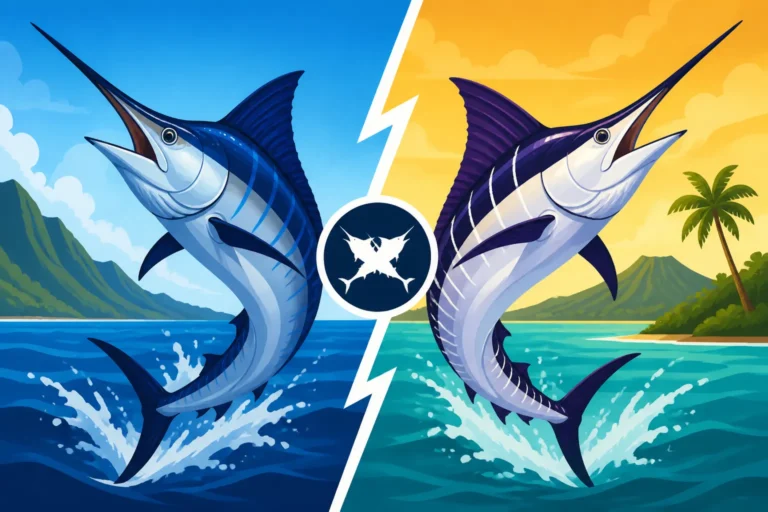
Blue marlin get their name from their striking color. Their upper body and back are a deep, iridescent cobalt blue, sometimes almost black, fading to a silvery-white or off-white belly. While they can display faint, vertical bar-like stripes, especially when excited or fresh out of the water, these stripes are never as pronounced, numerous, or long-lasting as those on a striped marlin. Think of them as more like shadowy bars that quickly disappear once the fish settles down or is out of the water for a short time. The blue can be incredibly vibrant when the fish is alive and healthy, shimmering with purples and greens in the sunlight, but the defining characteristic is that consistent, deep blue dorsal coloration.
The Elegant Speedsters: Striped Marlin Characteristics
Striped marlin, while smaller than blues, are no less magnificent. They are often considered one of the most beautiful and acrobatic billfish, known for their incredible speed, agility, and dramatic aerial displays. If blue marlin are the heavyweights, striped marlin are the graceful gymnasts of the ocean, putting on a spectacular show when hooked.
Size and Graceful Build
Striped marlin are considerably smaller and more slender than blue marlin. A typical striped marlin in Hawaiian waters might range from 50 to 250 pounds, with anything approaching 300 pounds considered a truly exceptional trophy. Their body is more compressed and elongated, giving them a much more streamlined, torpedo-like appearance. They are built for speed and agility, allowing them to make lightning-fast turns and spectacular jumps. Imagine a sleek, aerodynamic spear cutting through the water. This elegant build is one of the first things you'll notice about them, especially when they're zipping through a bait ball or putting on a show at the stern of the boat.
Flexible Fins and High Dorsal
One of the most immediate and distinguishing features of a striped marlin is its tall, sail-like dorsal fin. This fin is much higher and more prominent than that of a blue marlin, often extending well above the greatest depth of the body. When the fish is swimming or fighting, this dorsal fin stands erect like a flag. Another key identifier is their pectoral fins. Unlike the rigid pectorals of a blue marlin, a striped marlin's pectoral fins are flexible and can be folded flat against the body. This is a crucial detail for identification when the fish is boat-side. The anal and second dorsal fins are also typically higher and more pointed than those of a blue marlin.
Striking Vertical Stripes
This is where the striped marlin truly earns its name. They possess a series of vibrant, iridescent blue or purple vertical stripes along their flanks, running from their back down to their belly. These stripes are usually very distinct and remain visible for a longer period, especially when the fish is excited, fighting, or in the water. While blue marlin can show faint bars, the stripes on a striped marlin are sharp, numerous, and truly stand out, making them quite unmistakable. These stripes can intensify and fade with the fish's mood and activity, but their presence is a consistent and reliable indicator of the species. Sometimes, they almost look like a watercolor painting on the fish's side, constantly shifting in intensity.
Key Differences at a Glance: Side-by-Side Comparison
When you're out on the water, especially during the excitement of a bite, quick identification is key. Here's a table to help you quickly compare the most important characteristics of blue and striped marlin. It's a quick cheat sheet for when you're trying to figure out what's splashing behind the boat.
| Feature | Blue Marlin | Striped Marlin |
|---|---|---|
| Size & Build | Larger, heavier, more robust, barrel-chested body | Smaller, more slender, elongated, graceful build |
| Dorsal Fin | Shorter, rounded, typically lower than body depth | Taller, more prominent, sail-like, often higher than body depth |
| Pectoral Fins | Rigid, cannot be folded flat against the body | Flexible, can be folded flat against the body |
| Coloration | Deep iridescent blue to black back, silvery belly | Bluish-black back, silvery belly, distinct vertical iridescent blue/purple stripes |
| Stripes | Faint, temporary vertical bars, if any | Prominent, numerous, long-lasting vertical stripes |
| Weight Range | Often 200-1000+ lbs | Often 50-250 lbs |
| Bill Shape | Thicker, more rounded at base | Thinner, more pointed |
Practical Identification Tips on the Water
Identifying a marlin in the heat of the moment can be challenging, especially if it's putting on a show of jumps and dives. However, focusing on a few key areas can really help. First, try to get a good look at the dorsal fin when the fish is on the surface. Is it tall and pronounced, like a sail, or shorter and more rounded? Next, if the fish is near the boat, observe its pectoral fins. Do they appear stiff and outstretched, or can you see them tucked down against the body? Finally, look for those vertical stripes. Are they boldly visible and numerous, or are they faint, shadowy bars that quickly disappear? Even a quick glance at these three features can often tell you what you're dealing with. Many anglers also use waterproof cameras, easily found on Amazon, to capture clear photos of their catch for later review and identification. These cameras can be incredibly helpful for confirming your suspicions once the fish is released or safely in the fish box.
It's also worth noting that blue marlin tend to frequent deeper, warmer waters further offshore, often patrolling submarine canyons and seamounts. You might find them hunting around the deep Hawaii Fish Replenishment Area boundaries in West Hawaii or off the famous Kona Coast Fishing Guide. Striped marlin, on the other hand, often prefer slightly cooler, more temperate waters and can sometimes be found closer to shore, though they are also pelagic. Understanding these general geographic tendencies can sometimes give you a hint before you even see the fish clearly.
Geographic Tendencies and Behavior
Beyond physical appearance, there are some general tendencies in where you might encounter these magnificent creatures in Hawaiian waters. Blue marlin are truly creatures of the open ocean, often found patrolling deep offshore waters, particularly around FADs (Fish Aggregating Devices), drop-offs, and temperature breaks. They are often solitary hunters or found in small groups. When you're trolling the deep waters off the Kona Coast for Marlin Fishing off the Kona Coast, chances are you're primarily targeting blue marlin.
Striped marlin, while also pelagic, tend to be found in slightly cooler, more temperate offshore waters and often come closer to shore than blue marlin, especially during certain seasons. They are known for their schooling behavior and can often be seen herding baitfish. This can mean they are more accessible for those who might not venture as far offshore. However, both species can definitely overlap in their hunting grounds, so don't let location be your only guide! They are both incredible game fish that challenge anglers in different ways.
Why Accurate Identification Matters
Beyond satisfying your curiosity, knowing whether you've caught a blue or a striped marlin carries significant importance for various reasons. It's not just about bragging rights (though those are certainly a part of the fun!) but also about conservation, understanding fish behavior, and adhering to regulations.
Conservation and Reporting
Accurate species identification is crucial for effective conservation efforts. Different species of marlin may have different population statuses, and fisheries management agencies rely on accurate catch data to monitor these populations. For instance, there might be specific Hawaii Bag and Size Limits by Species for certain marlin types, or different rules for releasing them. If you’re participating in a tag-and-release program, correctly identifying the species ensures the data collected contributes meaningfully to scientific research. Misidentifying a fish could skew data and potentially lead to inappropriate management decisions, impacting the health of the fishery for future generations. Having a good identification guide, perhaps one you picked up from a local tackle shop or even on Amazon, can be invaluable for proper reporting.
Enhancing Your Angling Strategy
Knowing the difference between a blue and a striped marlin can significantly impact your fishing strategy. While both are targeted with similar methods, subtle adjustments can increase your success. For example, if you're specifically targeting the larger, more powerful blue marlin, you might focus on deeper offshore waters and use larger baits or lures. Techniques like those discussed in How to Catch Marlin off the Kona Coast are often tailored for blues.
Conversely, if you're hoping for the acrobatic fight of a striped marlin, you might adjust your trolling speeds, lure sizes, or even target areas where baitfish schools are prevalent, as striped marlin are often found actively feeding in such areas. Understanding their preferred habitats and feeding behaviors, as covered in Blue Marlin vs Striped Marlin Identification, allows you to fine-tune your approach, from selecting the Best Lures for Marlin Trolling off Kona to deciding on the best time of day or even specific Hawaii Fishing Seasons by Month. It's about becoming a more informed and successful angler, maximizing your chances of hooking into your desired species and enjoying the fight of a lifetime.
Disclaimer
This article is for general informational purposes only and does not constitute professional advice. Laws, prices and regulations vary by location and change over time. Consult a qualified professional for guidance on your specific situation.