The biggest ulua ever caught in Hawaii
The quest for a truly massive ulua in Hawaii is more than just fishing; it's a deep-seated aspiration, a blend of skill, patience, and often, a little bit of magic. Anglers here pour countless hours into the relentless pursuit of that once-in-a-lifetime giant trevally, and the stories of the biggest catches become the stuff of local legend. This guide will take you through the fascinating world of Hawaii's biggest ulua, from official records to the whispers of legendary catches, and what it truly means to land one of these magnificent predators.
The Legend and Allure of Hawaii's Giant Ulua
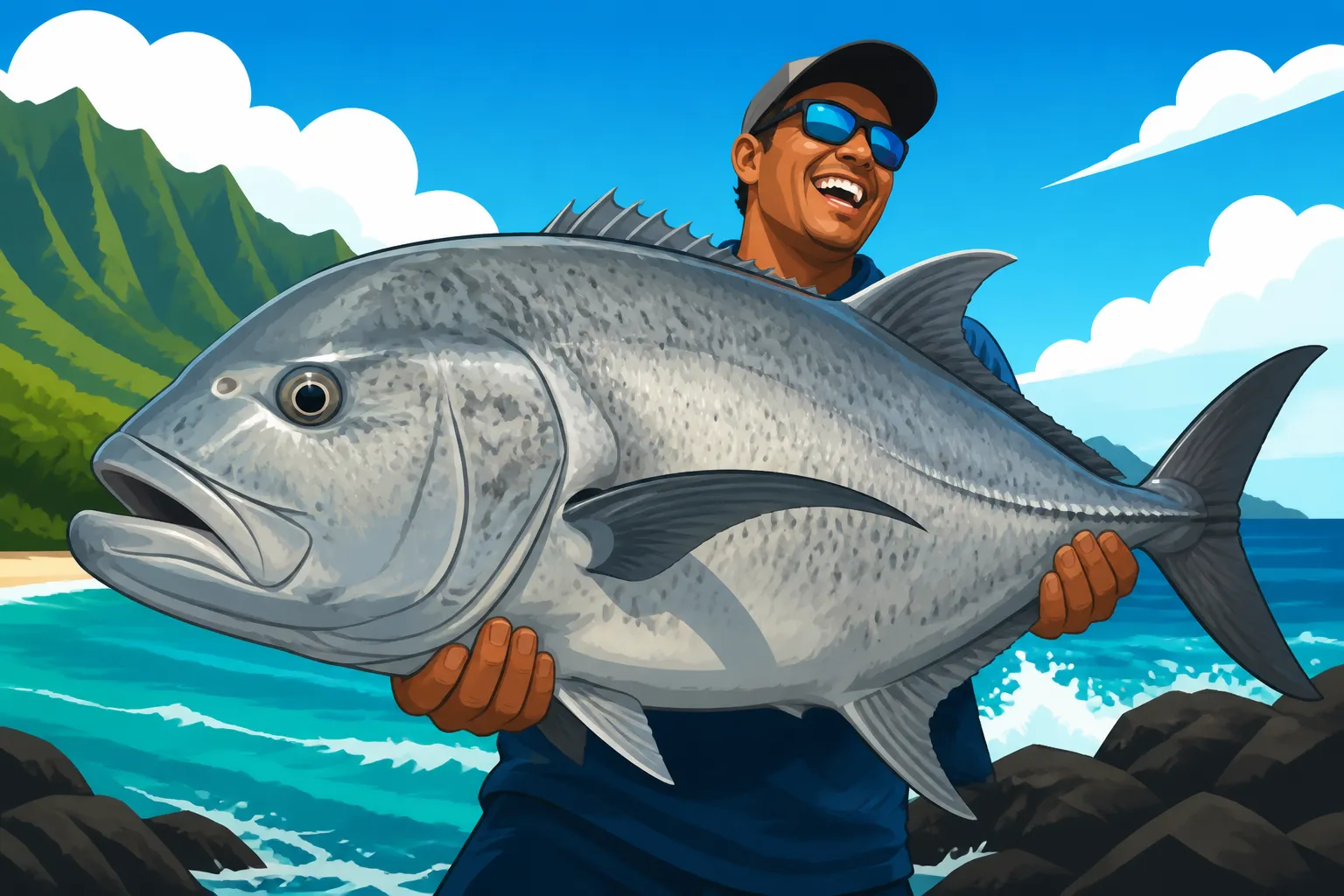
There's something incredibly primal and captivating about an ulua, or giant trevally, as it's known across the Pacific. These aren't just any fish; they are powerful, intelligent, and famously tough fighters, making them a true challenge for even the most seasoned angler. In Hawaii, the ulua holds a special place in fishing culture, not just for its sporting value but also for its cultural significance. Catching a truly massive ulua is a badge of honor, a story told and retold, often with a mix of awe and reverence.
For many years, the pursuit of ulua was often done in silence, with favorite spots and secret techniques guarded closely within families and small fishing crews. The allure of a trophy ulua isn't just about the size on the scale, but the sheer power it represents—the way it can spool a heavy reel in seconds, the brutal headshakes, and the undeniable force that can snap even the stoutest line. It's a dance between man and beast, played out against the backdrop of Hawaii's rugged coastlines and deep blue waters. When someone lands a truly monumental ulua, it resonates through the entire fishing community.
The dream of "the big one" is what keeps many of us going, spending countless nights on rocky points or hours casting heavy lures from shore, hoping for that explosive strike that signals an ulua of epic proportions. It's a humbling experience, often resulting in more lost battles than victories, but that only fuels the desire. The sheer visual impact of a colossal ulua, with its broad shoulders and immense tail, is enough to ignite the passion in any angler's heart.
Unraveling the "Biggest": State Records vs. Local Lore
When we talk about the "biggest ulua ever caught in Hawaii," it's important to understand that there are often two different narratives at play: the official state records recognized by governing bodies, and the rich tapestry of local lore and legendary catches that may or may not have been officially weighed or documented. Both contribute to the mystique of these magnificent fish.
Official State Records for Ulua
The official state record for ulua (giant trevally) is a highly respected benchmark, representing a documented catch that met strict criteria for weighing, measurement, and species identification. These records are often maintained by organizations dedicated to preserving fishing history and promoting ethical angling. For Hawaii, such records provide a verifiable standard against which all other catches are measured.
While specific weights and dates change over time, the current official Hawaii state record for ulua (Caranx ignobilis) generally sits in the triple-digit range, a testament to the immense size these fish can achieve in Hawaiian waters. These fish are typically caught using heavy tackle, often from boats offshore, but incredible catches have also been made from shore, demonstrating the dedication and skill of land-based anglers. The process to certify a state record is meticulous, requiring proper scales, witnesses, and often photographs, which makes these records truly stand out. You can imagine the excitement and careful handling involved when an angler realizes they might have a record-breaker on their hands. It’s not just a catch; it’s a moment of history. Hawaii State Fish Records by Species details many of these impressive feats.
The Whispers of Legendary Catches
Beyond the official numbers, there exists a vibrant oral tradition of legendary ulua catches that haven't always found their way into record books. These are the tales passed down through generations of local fishermen, stories of monstrous ulua hooked and lost, or landed under circumstances that defied modern recording practices. Imagine a time before readily available digital cameras and certified scales, when a catch was measured by the length of the fish against a man, or by the sheer effort it took to drag it home.
Many of these legendary ulua are said to have far surpassed the official record in terms of sheer size and weight. These stories often originate from remote coastline areas or from old-timers who fished with traditional Hawaiian methods. For example, some tales speak of ulua so large they could barely be brought into small canoes, or fish that broke lines and gear thought to be indestructible. While unverified, these stories contribute immensely to the culture and spirit of ulua fishing in Hawaii. They remind us that the ocean holds secrets, and that sometimes, the biggest fish are the ones that only exist in the memory and collective imagination of the fishing community.
One common thread in these stories is the sheer perseverance of the angler. Whether it was fighting a fish for hours into the night, or battling a giant from a precarious rocky ledge, these tales emphasize the mental and physical endurance required. It’s a validation of the challenge that many anglers face, knowing that even with the best gear from a place like Amazon, an ulua can still teach you a lesson in humility.
What It Takes to Catch a Trophy Ulua in Hawaii
Landing a trophy ulua in Hawaii is no accident. It requires a combination of specialized gear, intricate techniques, a deep understanding of their behavior, and a healthy dose of sheer grit. These fish don't give up easily, and neither can the angler hoping to bring one to shore or boat.
Essential Gear for Battling Giants
First and foremost, you need heavy-duty tackle. We're talking about rods designed to handle immense pressure, often rated for 80-130 pound test line, or even higher for some of the extreme shore-based sliding bait setups. Reels must be robust, with powerful drag systems that can withstand the blistering runs of a large ulua. Lever-drag conventional reels are popular choices for boat fishing, while large spinning reels with immense line capacity are favored by many shore casters.
Line selection is crucial. Monofilament lines with high abrasion resistance are common, especially when fishing near rocky structures. Braided lines offer incredible strength-to-diameter ratios and sensitivity, often preferred for deep-water jigging or when a massive amount of line capacity is needed. Regardless of your main line, a heavy leader, usually 150-300 lb test fluorocarbon or monofilament, is essential to combat their abrasive mouths and powerful tail sweeps. Hooks need to be ridiculously strong, capable of holding immense pressure without straightening or breaking. Many anglers source specific heavy-duty hooks, sometimes even hand-forging or modifying them to meet the demands of giant ulua. If you’re preparing for a trip, finding robust equipment on Amazon is a great starting point, just make sure to cross-reference with local knowledge for specific recommendations.
Techniques Tailored for Ulua
There are several primary methods used to target trophy ulua:
- Slide Baiting (Shore Fishing): This is perhaps the most iconic and challenging method for shore-based ulua fishing. Anglers cast out a heavy sinker, then "slide" a live bait (like an opelu, akule, or moi) down the main line using a specialized clip and a heavier leader. The bait swims freely, attracting patrolling ulua. This requires immense patience and the ability to cast heavy sinkers over long distances. Learning Sliding Bait Techniques for Ulua is a true art form.
- Whipping and Casting (Shore Fishing): For those targeting active ulua in shallower waters or near reef edges, whipping involves casting heavy lures like poppers, stickbaits, or metal jigs. The retrieve is often fast and erratic to mimic fleeing baitfish. This is a very active form of fishing that demands strong casting skills and quick reflexes. How to Catch Ulua from Shore covers some of these dynamic approaches.
- Bottomfishing (Boat Fishing): From a boat, ulua can be targeted by dropping heavy baits (like whole fish or large chunks) to the bottom, often near deep reefs, ledges, or underwater structures. This is where heavy conventional gear shines, as you need to winch these fish up from significant depths. Bottomfishing in Hawaii can lead to encounters with other species too.
- Trolling and Live Baiting (Boat Fishing): While more commonly associated with pelagic species, larger ulua can sometimes be caught while trolling large lures or live baits near drop-offs or along specific current lines, particularly when they are actively hunting larger prey.
Understanding Ulua Behavior
To consistently catch trophy ulua, you need to think like an ulua. They are apex predators, opportunists that patrol coastal areas, reef edges, and offshore structures. They are often most active during dawn, dusk, and at night, using the low light to ambush prey. Tides and moon phases also play a significant role; many experienced ulua fishermen swear by certain moon phases for increasing their chances of a giant strike. Learning the patterns of their preferred prey, like Akule (Bigeye Scad) Schooling Behavior or Opelu (Mackerel Scad) in Hawaii, can give you a significant advantage.
Ulua are incredibly powerful and will use their broad, flat bodies to leverage current and structure during a fight. They will often make powerful initial runs, attempting to break the line on coral, rocks, or other underwater obstacles. Knowing the terrain you are fishing in is paramount to anticipate and counter these tactics. The fight is never easy, and it demands constant pressure, smart angling, and often, a bit of luck to keep the fish from breaking free.
The Future of Giant Ulua Fishing in Hawaiian Waters
The pursuit of giant ulua in Hawaii continues to evolve, shaped by conservation efforts, changing environmental conditions, and the ongoing passion of anglers. Maintaining a healthy population of these incredible fish for future generations is a shared responsibility.
Conservation and Sustainable Practices
The importance of sustainable fishing practices for ulua cannot be overstated. While ulua are not currently listed as endangered, their populations are susceptible to overfishing, especially given their relatively slow growth rate to trophy sizes. Many anglers in Hawaii practice catch and release for larger ulua, particularly the breeding-size females, to help ensure the species thrives. Hawaii Bag and Size Limits by Species and Hawaii Fishing Regulations Explained are essential reading for any angler, as they provide critical guidelines on legal catch sizes and limits that help protect fish populations.
When practicing catch and release for large ulua, quick and careful handling is paramount. Using appropriate dehooking tools, minimizing time out of water, and supporting the fish properly during release vastly improves its chances of survival. Education among anglers about the importance of these practices is crucial for the long-term health of the ulua fishery. The goal is to celebrate these magnificent catches while also safeguarding the future of the species.
The Ever-Present Challenge
Despite advancements in gear and our understanding of ulua behavior, the challenge of landing a true giant remains as formidable as ever. The fish are intelligent, powerful, and reside in a complex marine environment. The sheer effort and dedication required mean that a trophy ulua will always be a hard-won prize. Every new generation of anglers dreams of surpassing the legends, of etching their own names into the annals of Hawaiian fishing history with a truly colossal catch.
The thrill of the chase, the solitude of a night on the rocks, the camaraderie with fellow anglers, and the raw power of a hooked ulua all combine to create an experience that transcends mere sport. Whether you're chasing an official record or simply seeking your own personal best, the giant ulua of Hawaii will continue to inspire awe and fuel the dreams of countless fishermen for generations to come. Having the right gear, perhaps even a durable headlamp or a good quality cooler for bait purchased from Amazon, can make all the difference during those long nights waiting for the strike.
| Characteristic | Official State Record Ulua (Historical) | Legendary Ulua (Anecdotal) |
|---|---|---|
| Weight Range | Generally 100-190 lbs | Reported 200+ lbs, sometimes much more |
| Verification | Certified scales, witnesses, photos | Oral tradition, personal accounts |
| Catch Method | Heavy tackle, boat or shore | Often traditional, heavy shore tackle |
| Documentation | Official record books, publications | Family history, local community |
| Angler Fame | Recognised in record circles | Respected within local fishing groups |
| Likelihood of Encounter | Extremely rare | Even rarer, bordering on mythical |
Disclaimer
This article is for general informational purposes only and does not constitute professional advice. Laws, prices and regulations vary by location and change over time. Consult a qualified professional for guidance on your specific situation.