What Gear a Hawaii Charter Provides
One of the most common anxieties anglers face when booking a fishing charter in Hawaii, especially if you're traveling from afar, is figuring out what gear you actually need to bring. It's frustrating to arrive and realize you're either lugging unnecessary equipment or, worse, missing something crucial for a successful day on the water. This guide aims to clear up all those questions, outlining exactly what fishing gear a typical Hawaii charter provides, what you might need to bring yourself, and how to ensure you're perfectly prepared for your Hawaiian fishing adventure.
The Core Gear Package: What Every Charter Typically Provides
When you step aboard a Hawaii fishing charter, whether it’s a shared trip or a private excursion, you're investing in an experience where the essential tools for fishing are already on board. Captains and crews understand that most visitors aren't bringing their entire tackle box on vacation, so they strive to make it as seamless as possible. This means a standard setup is pretty much guaranteed.
Rods and Reels: The Foundation of Your Trip
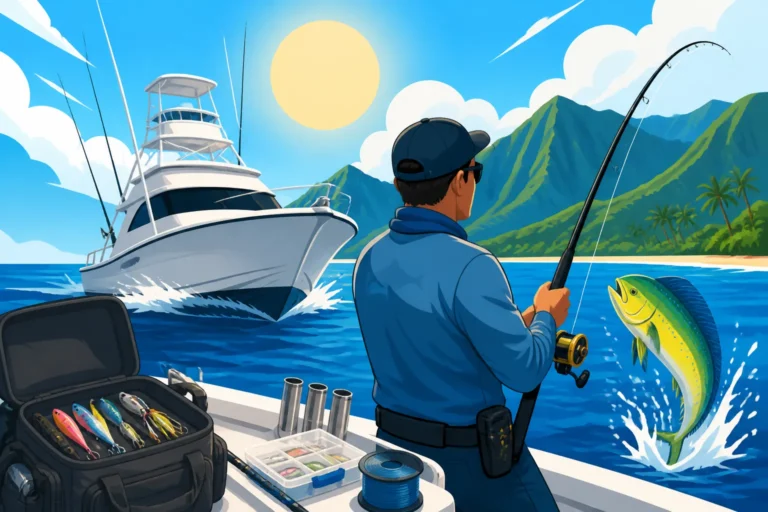
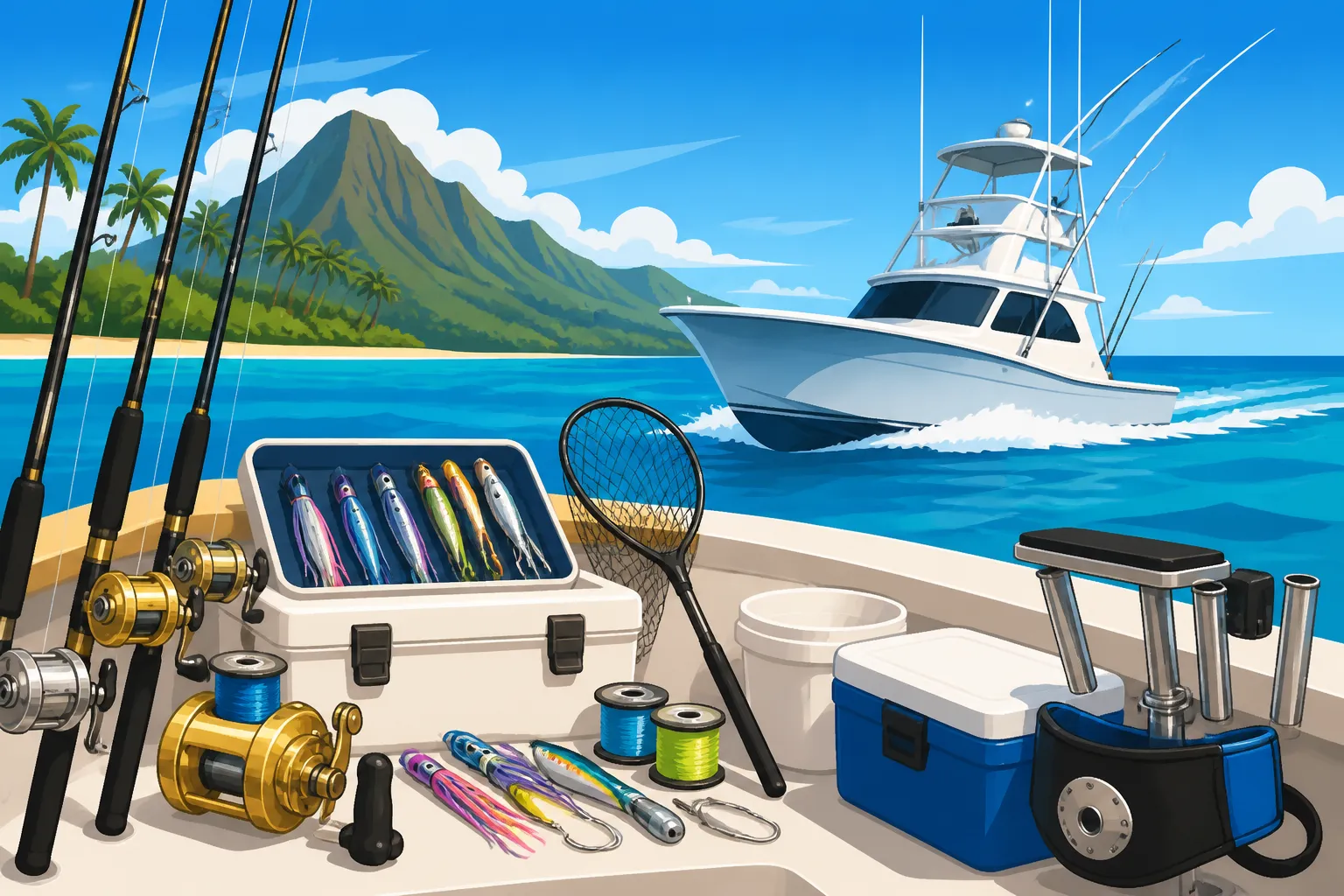
Every single fishing charter in Hawaii will provide the necessary rods and reels for the type of fishing they offer. For offshore big game charters out of places like Honokohau Harbor or Lahaina Harbor, you’ll find heavy-duty conventional rods paired with large, powerful reels designed to handle the brute strength of species like marlin, ahi, and ono. These aren't your grandpa's bass rods; we're talking about serious setups capable of withstanding prolonged fights with fish weighing hundreds of pounds. The quality of these setups is generally top-notch, as the charter's reputation often hinges on reliable gear.
For bottom fishing charters targeting species like opakapaka, onaga, or ulua closer to the reef, you'll see lighter but still robust conventional or spinning outfits. These are typically set up for jigging or bait fishing in depths ranging from a few hundred feet to over a thousand. The rods will have a sensitive tip to detect subtle bites but plenty of backbone to pull fish up from the deep. Anglers often worry if the gear will be well-maintained. Reputable charters take immense pride in their equipment, knowing that a busted reel or a tangled line can ruin a client's day and their business. They invest heavily in high-quality brands and regular maintenance to keep everything running smoothly.
Terminal Tackle: Hooks, Lines, and Leaders
Beyond the rods and reels, charters supply all the terminal tackle you'll need. This includes a wide array of hooks, from small J-hooks for baitfish to massive circle hooks for grander marlin. The lines spooled on the reels will be appropriate for the target species and fishing technique, often heavy monofilament or braided lines with shock leaders designed to absorb the impact of powerful strikes and protect against abrasion on reef structures or fish teeth. Leaders, usually fluorocarbon or heavy monofilament, are pre-rigged and ready to go. The crew will handle all the knot tying, rigging, and re-rigging throughout the day.
This means you don't have to worry about matching hook sizes to bait, understanding different leader strengths, or tying complex offshore knots. It’s all part of the service. You can focus entirely on the fishing experience itself. Whether you’re targeting a giant trevally (ulua) near the shoreline or a massive tuna offshore, the crew ensures your line is properly set up. You can rest assured that the leaders used are strong enough for the targeted species; after all, it's in the captain's best interest for you to land that fish!
Bait and Lures: Tempting the Hawaiian Fish
Perhaps one of the biggest conveniences of a charter is not having to source your own bait or lures. Hawaii charters provide all the necessary attractants, whether live, fresh dead, or artificial. For offshore trolling for marlin and ahi, you’ll see an impressive spread of colorful, high-quality trolling lures from brands known worldwide for their effectiveness in big game fishing. Many captains have their own custom-made lures that have proven successful in their specific fishing grounds.
For bait fishing, particularly bottom fishing or live-baiting for ahi, charters will often catch their own fresh bait, such as mackerel scad (opelu), bigeye scad (akule), or squid, before or during the trip. There’s nothing quite like dropping a fresh, lively bait down to a waiting opakapaka or onaga. The crew handles all the bait preparation, from cutting squid to rigging live baits. This saves you valuable time and effort, letting you concentrate on the thrill of the catch. You won't have to navigate local bait shops or spend precious vacation time figuring out what fish prefer. They've got it covered.
Specialized Equipment: When You Might Need More
While the standard gear package covers most fishing scenarios, there are certain specialized activities or personal preferences that might fall outside the typical offerings. It's always wise to clarify these details upfront with your chosen charter to avoid any surprises.
Fly Fishing Gear: A Niche Request
Fly fishing for saltwater species like bonefish (oio) in Hawaii is a growing niche, particularly on the flats of Oahu or Kauai. However, it's important to understand that standard offshore or bottom fishing charters are rarely equipped for fly fishing. The techniques, rods, reels, and lines are entirely different. If you're keen on fly fishing for bonefish, you'll need to seek out a specialized fly fishing guide.
These guides will provide high-quality saltwater fly rods (typically 8-10 weight), appropriate reels with strong drags, weight-forward lines, and a selection of local fly patterns designed to imitate the small crabs and shrimp that bonefish feed on. They will also often provide wading boots or reef shoes if the fishing involves stepping onto the flats. If you have your own prized fly fishing gear you prefer to use, most fly guides are happy to accommodate, but be sure to communicate this in advance. Otherwise, they'll have everything you need to chase the "grey ghost of the flats."
Spearfishing or Freediving Equipment: Beyond Rod and Reel
Hawaii has a rich tradition of spearfishing and freediving, and some specialized charters cater to this thrilling activity. However, a regular rod-and-reel fishing charter will not provide spearfishing equipment. Spear guns, fins, masks, snorkels, dive weights, and wetsuits are all highly personal items. If you're interested in a spearfishing charter, you'll need to book one specifically designed for it, and these often require you to bring your own gear due to fit and personal preference.
A specialized spearfishing guide will still offer invaluable expertise, leading you to prime spots for reef fish like uhu (parrotfish) or even pelagics if you're freediving deeper. They might offer some communal items like a catch buoy or a cooler, but the core personal equipment will be on you. Make sure you're aware of Hawaii Spearfishing Regulations before heading out, as there are specific rules about gear and methods. Always confirm what's provided versus what you need to supply when booking any spearfishing excursion.
Heavy Tackle for Giants: Specific Requests
While most offshore charters have excellent heavy tackle, some anglers pursuing truly world-class, grander-sized marlin might have specific preferences for custom rods, reels, or line setups. If you're a seasoned big game angler with a particular "lucky" rod or a very specific setup you're accustomed to, it's worth asking the charter if you can bring your own.
Most captains are open to it, especially for experienced clients, but they’ll want to inspect your gear to ensure it's up to the task and compatible with their boat's setup. They also have a duty to ensure safety and prevent potential issues with unfamiliar equipment. It’s a rare request, but if you're chasing records or a fish of a lifetime, that personal connection to your gear can make all the difference. For 99% of anglers, however, the gear provided by the charter will be more than adequate for tackling anything the Hawaiian waters throw at them.
Diving Deeper: Gear for Specific Fishing Styles
The type of fishing charter you choose in Hawaii will directly influence the kind of gear provided. A deep-sea trolling boat looks very different from a shallow-water bottom fishing skiff or a shore fishing guide's kit. Understanding these distinctions helps manage expectations and ensures you pick the right charter for your desired experience.
Offshore Trolling: The Big Game Setup
Offshore trolling charters, especially those famous along the Kona Coast, are all about speed, power, and targeting large pelagic species. The gear provided is specialized for this purpose. You’ll see multiple heavy trolling rods, often 80-pound or 130-pound class, spread across the transom and outriggers. These are paired with massive lever-drag reels spooled with heavy monofilament or braided line. The focus is on robust construction to withstand violent strikes and the sustained pressure of a long fight.
The boat itself is often a well-equipped sportfisher, featuring a fighting chair for angler comfort and leverage against big fish, outriggers to spread lures, and a comprehensive electronics suite including sonar and GPS to locate prime fishing grounds and bait schools. The lures are typically large, brightly colored skirted baits, often rigged with ballyhoo or other natural baits. The crew will meticulously set the spread, manage the lines, and coach you through the retrieve and fight. Your job is simply to reel! This setup is perfectly calibrated for How to Catch Marlin off the Kona Coast and How to Catch Ahi in Hawaii.
Bottom Fishing: Reef and Deep Drop Rigs
Bottom fishing charters offer a different experience, focusing on the abundant reef and deep-water species. The gear here is geared towards precision and endurance. You’ll likely be using conventional reels spooled with heavy braided line, often with a monofilament top shot, paired with stout rods designed for jigging or dropping heavy weights. Electric reels might be available for very deep drops, particularly for species like onaga or opakapaka that live in depths of 800 feet or more.
The terminal tackle for bottom fishing includes specialized rigs with multiple hooks, often snelled with fluorocarbon leaders, designed to present bait naturally near the seafloor. Sinkers can be quite heavy, sometimes several pounds, to combat strong currents and get the bait down quickly. Charters will provide fresh dead bait, such as squid or chunks of fish, which are highly effective for tempting these bottom dwellers. You’ll often be fishing with several lines down simultaneously, making for exciting multi-fish hookups. Understanding Bottomfishing in Hawaii can give you a better idea of what to expect.
Shore Fishing Guides: Unique Needs
While not a "charter" in the traditional boat sense, guided shore fishing trips are also popular in Hawaii, especially for targeting ulua and papio from the beaches and rocky points. A good shore fishing guide will provide everything you need, but the gear will be very different from offshore or boat-based bottom fishing. You'll likely use heavy spinning rods and reels capable of casting long distances with heavy lures or bait rigs.
The tackle will include a variety of artificial lures like poppers, stickbaits, and metal jigs for whipping, or sliding bait rigs with large circle hooks for soaking baits like squid or chunks of akule for ulua. Guides will also bring essential tools like gaffs or nets, headlamps for night fishing, and a cooler for your catch. They'll also provide invaluable local knowledge on reading the surf, identifying productive areas, and understanding tidal movements. If you’re interested in How to Catch Ulua from Shore or How to Catch Papio on Hawaii's Shoreline, a guided shore trip might be perfect, and they will ensure you have the appropriate gear for the unique challenges of Hawaiian shoreline angling.
Quality and Maintenance: What to Expect from Charter Gear
When you're paying for a fishing charter, you naturally expect reliable equipment. This is a legitimate concern, as nothing sours a fishing trip faster than gear failure. Fortunately, reputable Hawaii charters understand this implicitly.
General Condition and Upkeep
The general condition of fishing gear on a professional Hawaii charter is typically excellent. These boats are businesses, and their success depends heavily on client satisfaction, which in turn relies on reliable equipment. Captains and crews perform routine maintenance daily or after every trip. This includes rinsing rods and reels with fresh water, lubricating moving parts, checking line for nicks and abrasion, replacing worn leaders, and ensuring hooks are sharp. Think of it like a rental car – you expect it to be clean and fully functional when you pick it up, and a charter boat is no different for fishing gear.
It's common for charters to replace lines regularly, especially braided lines that can fray over time, and to swap out hooks as they dull. They're proactive about preventing equipment failure because a lost fish due to faulty gear is bad for business and for morale. Don't be surprised to see a well-organized tackle station with spare parts and tools, indicating a crew that's ready for anything.
Professional-Grade Equipment
Most Hawaii fishing charters invest in professional-grade equipment from well-known and respected manufacturers in the fishing industry. You won't typically find cheap, entry-level gear on a serious charter boat. These are tools of the trade, chosen for their durability, performance, and ability to handle the extreme stress of fighting large pelagic species. Brands synonymous with quality will be present, from the rods and reels to the lines, lures, and terminal tackle.
This means you’re often getting to fish with equipment that you might not otherwise have access to, or that would be cost-prohibitive to purchase for a single trip. It’s a fantastic opportunity to experience the difference high-quality gear makes in battling powerful fish. The captains and crew are often brand loyalists, having discovered through years of experience what holds up best under the rigorous demands of charter fishing in Hawaii's challenging waters.
The Advantage of Well-Maintained Gear
The biggest advantage of fishing with a charter is not just the quantity or quality of gear, but its consistent maintenance. You don't have to worry about a reel seizing up mid-fight, a knot failing, or a dull hook pulling out. The crew takes care of all that. When a fish strikes, you can focus on the thrill of the fight, the captain's instructions, and the beautiful Hawaiian scenery, rather than second-guessing your equipment.
This professional upkeep significantly increases your chances of landing that trophy fish. It means less frustration and more enjoyment. It also highlights the value of booking with a reputable charter, as they understand that reliable equipment is fundamental to a positive client experience. When booking through platforms like FishingBooker, you can often read reviews that touch upon the quality of the boat and its gear, giving you extra confidence.
What to Bring Yourself (Even with Provided Gear)
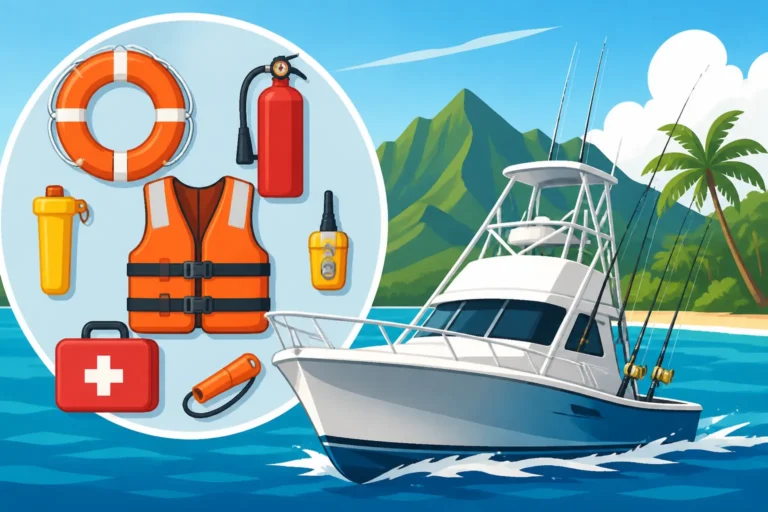
Even though Hawaii fishing charters provide almost all the fishing-specific gear, there are several personal items that you absolutely should bring for your comfort, safety, and enjoyment. These are things that charters simply can't or won't provide due to their personal nature or varying needs.
Personal Comfort and Safety Items
The Hawaiian sun can be intense, even on a cloudy day, and the ocean can be unpredictable. Protecting yourself from the elements is paramount.
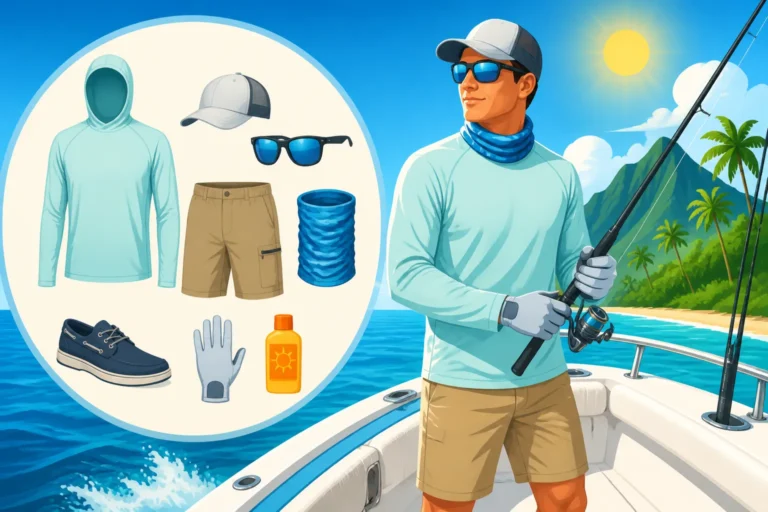
- Sun Protection: This is non-negotiable. Bring a wide-brimmed hat, polarized sunglasses (essential for spotting fish and reducing glare), and high SPF sunscreen. Reapply frequently. Long-sleeved shirts and pants, preferably lightweight and quick-drying, also offer excellent sun protection.
- Motion Sickness Medication: If you are prone to seasickness, take medication before you board the boat, ideally the night before and again in the morning. Once you're out on the water and feeling unwell, it's often too late for medication to be fully effective. Seasickness tips for a Hawaii fishing charter is a good resource to review.
- Appropriate Footwear: Wear comfortable, non-marking deck shoes or sandals with good grip. The deck can get wet and slippery, and you'll want stable footing, especially when fighting a fish.
- Light Rain Gear: While Hawaii is famous for sunshine, pop-up showers are common. A lightweight, packable rain jacket can be a lifesaver.
- Camera: You’ll want to capture the memories! Just make sure it’s protected from salt spray. A waterproof phone case or a dedicated waterproof camera is a smart choice.
- Medications: Any personal prescription medications should be brought in their original containers.
Food, Drinks, and Sun Protection
While some charters might offer bottled water or a light snack, it's best to come prepared with your own provisions. Fishing can be hungry and thirsty work!
- Water and Drinks: Bring plenty of water to stay hydrated. Soft drinks, juice, or sports drinks are also good to have on hand. Avoid excessive alcohol consumption, especially on offshore trips, as dehydration and seasickness can be exacerbated.
- Snacks and Lunch: Pack sandwiches, wraps, fruit, nuts, or energy bars. Anything that's easy to eat with your hands and doesn't require refrigeration is ideal. Most boats will have a cooler with ice where you can store your items.
- Cooler (for your catch): While the charter will have a large fishbox for the boat's catch, if you plan to keep a portion of what you catch for yourself and take it home, you might want a small personal cooler to transport your filleted fish from the boat to your accommodation. Always confirm the charter's fish retention policy first.
Documentation and Licenses
This is a critical area often overlooked by visitors. While some charters may provide a blanket recreational fishing license that covers all passengers, this is not always the case, particularly for freshwater fishing or in specific marine areas.
- Fishing License: It's absolutely crucial to clarify with your charter whether or not you need your own Hawaii fishing license. For most marine recreational fishing, non-residents generally do need a license. Residents, on the other hand, have certain exemptions for ocean fishing but usually require a license for freshwater. Never assume! The penalties for Fishing Without a Required License in Hawaii: Penalties can be steep. You can typically purchase these online through the Hawaii DLNR website.
- Photo ID: Always have a valid photo ID with you, as it may be required for your license or in case of any unexpected situations.
How to Confirm Gear with Your Charter
The best way to eliminate any uncertainty about what gear a Hawaii charter provides is to communicate directly and clearly with them before you book or before your trip. Don't be afraid to ask questions; a good charter operator will appreciate your diligence.
Asking the Right Questions Before Booking
Before you commit to a charter, engage in a conversation with the captain or booking agent. Here are some key questions to ask:
- "What kind of rods and reels do you use for [specific target species, e.g., marlin, opakapaka]?" This gives you an idea of the quality and appropriateness of their gear.
- "Do you provide all bait and tackle, or is there anything I need to bring?" This confirms the basics.
- "Is a fishing license included, or do I need to purchase my own?" This is vital for legal compliance.
- "If I'm interested in [e.g., fly fishing, spearfishing], do you have specific gear for that, or should I bring my own?" This clarifies specialized needs.
- "Do you provide food and drinks, or should I bring my own?" Good to know for packing.
A reputable charter will be transparent and happy to answer all these questions. If they seem evasive or annoyed, that might be a red flag.
Reading Charter Descriptions Carefully
Many charters provide detailed descriptions of their services online, including what's provided. Take the time to read these descriptions thoroughly before booking. Look for sections on "What's Included" or "Gear and Tackle." These often explicitly state that rods, reels, bait, and tackle are provided.
However, be aware that these descriptions might not cover every single detail, especially for highly personal items like specific lure colors or fly patterns. This is where a follow-up call or email becomes essential. For instance, some platforms like FishingBooker allow you to message the captain directly, which is a great way to get specific answers quickly and have them in writing.
Utilizing Booking Platforms for Clarity
Online booking platforms, such as FishingBooker, can be incredibly helpful resources for confirming what gear a Hawaii charter provides. These platforms often list detailed information about each charter, including:
- Inclusions: A clear list of what's provided (e.g., "Rods, reels, and tackle included," "Live bait provided," "Fishing license included").
- Exclusions: What you need to bring yourself (e.g., "Food and drinks," "Sunscreen").
- Reviews: Past client reviews can offer insights into the quality and condition of the gear, and whether the provisions matched expectations.
- Direct Messaging: As mentioned, many platforms allow you to send direct messages to the captain or charter company, facilitating quick and easy communication about specific gear questions or any other concerns you might have.
By leveraging these resources and asking targeted questions, you can arrive at your Hawaii fishing charter confident and fully prepared, ready to enjoy the incredible fishing opportunities the islands have to offer.
Disclaimer
This article is for general informational purposes only and does not constitute professional advice. Laws, prices and regulations vary by location and change over time. Consult a qualified professional for guidance on your specific situation.