Marlin Fishing off the Kona Coast
The dream of hooking into a powerful marlin off the stunning Kona Coast of the Big Island is a powerful draw for anglers worldwide, but the reality often involves daunting preparation, understanding complex ocean conditions, and navigating specific techniques. This comprehensive guide will unravel the mysteries of Kona marlin fishing, arming you with the knowledge needed to pursue these incredible pelagic predators with confidence and increase your chances of a successful, unforgettable battle.
Why Kona is the Marlin Capital of the World
The Kona Coast, stretching along the western side of the Big Island, isn't just a pretty face; it's a geological marvel that creates truly unique conditions perfect for big game fishing. Many anglers arrive here with dreams of a grander, and while those truly massive fish are rare, the sheer consistency and variety of billfish species make Kona legendary.
The Unique Deepwater Drop-Offs
What sets Kona apart is its incredibly abrupt underwater topography. Unlike many other fishing destinations where you might have to travel dozens or even hundreds of miles offshore to reach deep water, off Kona, the seafloor drops thousands of feet just a short distance from shore. This means that charter boats can access prime deep-sea fishing grounds within minutes of leaving harbors like Honokohau, saving precious travel time and maximizing your fishing hours. This close proximity to deep, nutrient-rich currents is a major reason why marlin frequent these waters.
Imagine steaming out of the harbor, and before you've even finished your first cup of coffee, the captain is already setting the spread over water that plunges to over 1,000 feet. This isn't just convenient; it's biologically significant. These dramatic underwater cliffs create upwellings and current breaks that concentrate baitfish, which in turn attract apex predators like marlin. It's a natural buffet for the ocean's giants, making the Kona Coast a hotspot for their hunting grounds.
Consistent Calm Waters and Favorable Weather
Another incredible advantage of the Kona Coast is its typically calm, leeward waters. The towering volcanoes of Mauna Kea and Mauna Loa block the prevailing trade winds, creating a natural wind shadow. This means that while other parts of Hawaii might be experiencing choppy seas, Kona often enjoys smooth, fishable conditions, especially in the mornings. This consistently calm surface allows for easier trolling, better bait presentation, and a much more comfortable experience for anglers, particularly those prone to seasickness.
While no ocean is truly calm all the time, the statistical likelihood of having a smooth day on the water off Kona is remarkably high compared to many other deep-sea fishing locations. This predictability allows captains to plan trips with greater certainty and anglers to focus on the fishing rather than battling rough seas. It's a significant factor in why Kona is such a reliable destination for serious big game enthusiasts, offering more consistent opportunities to get lines in the water and target marlin effectively.
The Marlin Species You'll Encounter
When you're chasing billfish off the Kona Coast, you're not just looking for "a marlin." There are distinct species with different behaviors and typical sizes, and knowing what you're targeting can help refine your strategy. The primary target, and the one that draws the most attention, is the mighty Pacific Blue Marlin, but you'll also have excellent opportunities for Striped Marlin and Shortbill Spearfish.
Pacific Blue Marlin: The King of Kona
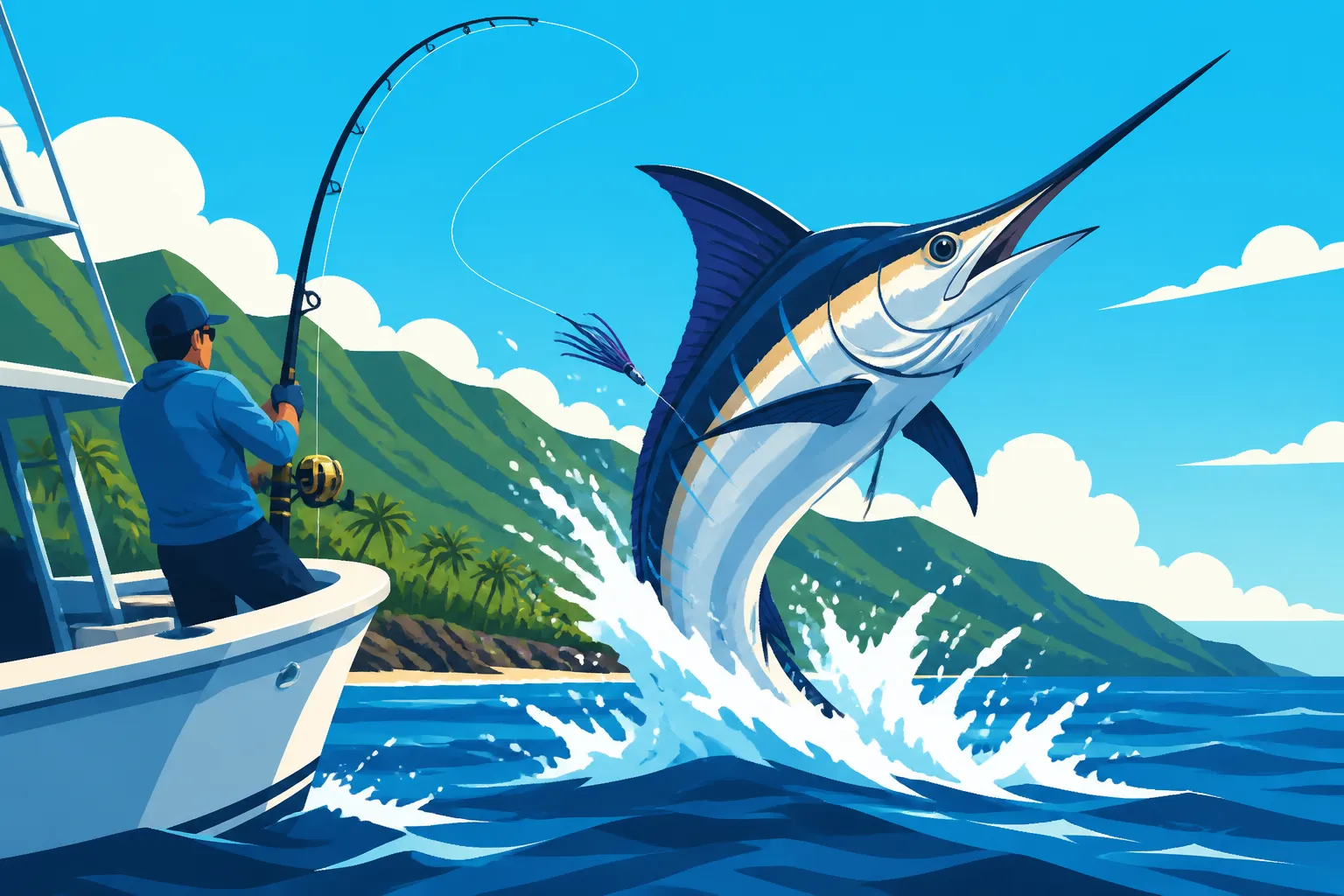
The Pacific Blue Marlin (Makaira nigricans) is the undisputed heavyweight champion of Kona's waters and the fish responsible for the region's "grander" reputation. These magnificent fish can grow to enormous sizes, with females often reaching over 1,000 pounds. They are powerful, acrobatic fighters known for their incredible runs, jumps, and stubborn battles. Catching a blue marlin is often considered the pinnacle of sportfishing.
Blue marlin are predominantly pelagic, meaning they live in the open ocean, often patrolling the deeper waters and ledges offshore. They feed on a wide variety of prey, including skipjack tuna (aku), mackerel scad (opelu), mahimahi, ono, and squid. Their presence is often indicated by bait schools or bird activity. Marlin Growth Rate to Grander Size details just how massive these fish can become. When you hook into a blue, be prepared for a fight that can test both your endurance and your tackle to their absolute limits.
Striped Marlin: Agile and Aggressive
Striped Marlin (Kajikia audax) are another highly prized billfish found off Kona. While generally smaller than blue marlin, typically ranging from 80 to 250 pounds, they are incredibly fast and put on an exhilarating aerial display when hooked. Their distinctive vertical stripes (which often fade after death) make them easily identifiable.
Striped marlin tend to prefer slightly cooler waters than blue marlin and are often found closer to shore or around temperature breaks and current lines. They are aggressive feeders, readily hitting trolled lures and live baits. Many anglers find striped marlin to be one of the most exciting fish to catch due to their spirited runs and incredible jumps. They are also highly migratory, and their presence can fluctuate more seasonally than blue marlin.
Shortbill Spearfish: A Smaller, Unique Challenge
Often overlooked in the pursuit of their larger cousins, the Shortbill Spearfish (Tetrapturus angustirostris) is a delightful catch off Kona. These are the smallest of the billfish found here, usually weighing between 20 and 50 pounds, but they are sleek, fast, and offer a surprisingly strong fight on light tackle. Their slender bodies and short, rounded bill are distinctive.
Spearfish are also pelagic, often found in warmer oceanic waters, and can be caught trolling the same areas as blue and striped marlin. They are a welcome addition to any angler's catch list, providing fast action and a chance to experience the thrill of a billfish battle without the sheer brute force of a blue marlin. Landing a spearfish is a testament to the diversity of Kona's waters and offers a unique challenge, especially for those looking to hone their billfish angling skills. Are Shortbill Spearfish Common Off Kona? delves into their prevalence in these rich waters.
Best Seasons and Times for Marlin Fishing
Marlin fishing off Kona is often touted as a year-round sport, and it's true that you can encounter billfish any month of the year. However, certain seasons and even specific times of day offer statistically better chances for particular species or larger fish. Understanding these patterns is key to planning your trip and maximizing your success.
Peak Season for Blue Marlin
While blue marlin can be caught year-round, the peak season for these giants off Kona typically runs from late spring through late fall, roughly May to November. During these warmer months, the water temperatures are ideal, and various baitfish, especially schools of skipjack tuna, are abundant. This creates a rich feeding ground that attracts large numbers of blue marlin, including the potential for "grand slam" catches that involve multiple billfish species in a single day.
Many of Kona's most prestigious marlin tournaments are held during this peak window, drawing anglers from around the globe eager to test their skills against the ocean's most formidable adversaries. The presence of ample food sources, combined with favorable sea conditions, makes this period the prime time to target a trophy blue marlin. Keep an eye on local fishing reports for specific movements, but generally, if you're chasing the biggest blues, this is when you'll want to be on the water. Best Months to Catch Marlin Off Kona provides a detailed breakdown of seasonal opportunities.
Best Time of Year for Striped Marlin
Striped marlin tend to favor slightly cooler water, so their peak season off Kona often falls outside the blue marlin's prime, running from roughly December through April. During these winter and early spring months, the striped marlin population swells, offering consistent action for anglers. They are known for their spectacular jumps and aggressive strikes, making them a thrilling target on lighter tackle.
While blue marlin are still present, you'll likely encounter more striped marlin during this period. Many charter captains will adjust their spread and tactics slightly to cater to these agile fighters, often using smaller lures or natural baits. It's a fantastic time for anglers who enjoy fast-paced action and the acrobatic displays that striped marlin are famous for. Don't discount these "smaller" billfish; they offer an incredible angling experience that rivals any other.
Daily Fishing Window and Tides
Beyond the seasonal shifts, the time of day can also play a significant role in your marlin fishing success. Generally, the early morning bite is often considered the best, right as the sun is coming up and fish are actively feeding. Many Kona charters depart before dawn to have lines in the water as the first light hits the ocean, capitalizing on this prime feeding window. The low light conditions can make lures appear more natural, and the cooler water temperatures encourage predatory activity.
While the morning often provides the most consistent action, marlin can certainly be caught throughout the day. Some captains swear by the afternoon bite, especially as currents shift or bait schools become more concentrated. Tides, while perhaps not as critical as current and temperature breaks in the vast open ocean, can influence bait movements, particularly closer to shore or around certain submerged structures. Ultimately, a full day on the water increases your chances, but focusing on those dawn hours is a strategy many experienced captains employ.
Essential Gear and Tackle for Kona Marlin
Successfully landing a marlin off Kona requires not just skill, but also the right equipment. These are incredibly powerful fish, and your tackle needs to be robust, reliable, and perfectly matched to the challenge. Going into battle with subpar gear is a recipe for heartbreak.
Rods and Reels for Heavy Duty Action
For blue marlin, especially the grander-sized fish Kona is famous for, heavy-duty conventional tackle is the standard. You'll typically see 80-pound class or even 130-pound class rods and reels on charter boats. These setups are designed to handle immense pressure, deliver powerful drag, and store hundreds of yards of heavy monofilament or braided line. The rods are usually short and stout, designed for leverage during the fight.
Reels like Penn Internationals, Shimano Tiagras, or Daiwa Saltigas are common choices, known for their incredible drag systems and construction. For striped marlin or spearfish, slightly lighter tackle, such as 50-pound class outfits, can be used, offering a more sporting fight while still providing enough backbone to subdue the fish. Having a variety of tackle on board allows captains to adapt to different species and conditions, ensuring you're always properly geared.
Lines, Leaders, and Connections
Your main line will typically be heavy monofilament, often 80-pound test or 130-pound test, spooled onto those large conventional reels. Mono has the advantage of stretch, which acts as a shock absorber during violent headshakes and runs, helping to prevent pulled hooks or broken lines. Directly connected to the main line will be a wind-on leader, often 200 to 400-pound test monofilament or fluorocarbon, allowing the crew to safely handle the fish boatside.
The bite leader, connected to the lure or bait, is typically even heavier, often 400 to 600-pound test fluorocarbon or nylon-coated wire. This heavy material is essential to resist the abrasive bill and sharp edges of a marlin's mouth during the fight. Connections are absolutely critical; double-wrapped knots, crimped connections, and heavy-duty swivels are standard to ensure no weak points exist in the system. Many anglers find quality leaders and connections easily on Amazon when preparing their personal tackle boxes.
Lures and Baits of Choice
Kona marlin are typically targeted using large, skirted trolling lures. These lures come in a dazzling array of shapes, sizes, and colors, designed to imitate baitfish and create an enticing action in the water. Popular lure colors often include blue and silver, green and yellow, black and purple, or pink. Captains will often run a spread of 4-7 lures, varying in size and position, to cover different depths and presentations. Best Lure Color for Marlin Trolling Off Kona can guide your choices.
While lures are a staple, live baiting can also be incredibly effective, especially for picky fish or when a specific bait species like skipjack tuna is abundant. Live baits are often slow-trolled or bridled and fished from outriggers or kites. Some charters also employ "chunking" or "bait and switch" tactics, where cut bait is used to attract fish to the boat before presenting a pitch bait on lighter tackle. The choice of lure or bait often depends on the captain's preference, current conditions, and what the marlin are actively feeding on at that moment.
Common Marlin Fishing Techniques
Catching a marlin isn't just about getting lucky; it's a sophisticated dance between captain, crew, and angler, employing time-tested techniques that maximize your chances of a hook-up. Off Kona, trolling is the most common method, but other strategies can also prove highly effective.
High-Speed Trolling
High-speed trolling is the quintessential Kona marlin fishing technique. Boats will typically troll a spread of large, skirted lures at speeds ranging from 7 to 10 knots, sometimes even faster depending on conditions and the captain's strategy. The goal is to cover a lot of ground, especially along current lines, temperature breaks, and FADs (Fish Aggregating Devices), to find actively feeding marlin. The lures are carefully positioned in the boat's wake, creating an enticing pattern that mimics a school of baitfish or fleeing prey.
Each lure in the spread is designed to run at a specific depth and position, creating a synchronized "school" effect. The captain will constantly monitor the sonar for bait schools and subsurface structure, as well as the surface for bird activity or jumping fish. When a marlin strikes, it's often a violent explosion behind the boat, and the crew's quick reaction to clear other lines and get the angler into position is crucial. Maintaining the correct trolling speed and lure presentation is an art form, perfected by years of experience on the Kona waters. Best Trolling Speed for Ahi in Hawaii offers insights into effective trolling for tuna, which can apply to marlin in similar ways.
Live Baiting
While trolling lures is highly effective, live baiting is another powerful technique, particularly when marlin are being finicky or when a large blue marlin is the specific target. Charter boats often catch their own live bait, such as skipjack tuna (aku) or mackerel scad (opelu), using sabiki rigs or small lures. Once secured, these baits are bridled (a hook is attached through the snout or back without impeding swimming) and slow-trolled, often at speeds of 2-4 knots, or even drifted.
The natural swimming action of a live bait can be irresistible to a marlin that might ignore an artificial lure. This technique often requires more patience, but the payoff can be huge, as it frequently attracts larger, more cautious fish. When live baiting, the strike is usually more subtle initially, often a "tap" or a line slowly pulling out, before the marlin fully commits and runs. The crew has to be vigilant, ready to let the fish "eat" the bait before setting the hook.
Bait and Switch / Chunking
The "bait and switch" technique is an exciting and highly visual way to catch marlin, often employing lighter tackle for a more sporting fight. This method involves using teasers – unhooked lures or natural baits – to draw a marlin close to the boat. Once the marlin is enticed and actively chasing the teaser, the crew quickly pulls the teaser away, and an angler pitches a rigged live bait or dead bait (often a chunk of fish) on a hook directly to the hungry marlin. The goal is to get the marlin to switch its attention from the teaser to the presented bait.
Chunking, on the other hand, involves creating a chum slick of cut bait (chunks of fish) to draw pelagic species, including marlin, closer to the boat. While more commonly associated with tuna fishing, a persistent chum line can sometimes bring marlin into a feeding frenzy. Once fish are in the slick, hooked baits are presented, often drifted naturally with the current alongside the chum. Both these techniques require keen observation, precise timing, and excellent teamwork from the captain and crew.
Finding the Fish: Reading the Kona Waters
The vastness of the Pacific Ocean can feel overwhelming, but experienced Kona captains don't just randomly drive around. They are masters at reading the subtle signs and understanding the patterns that lead to where the marlin are likely to be. It's a blend of science, intuition, and local knowledge.
Understanding Ocean Currents and Temperature Breaks
Marlin, like most pelagic fish, are highly influenced by ocean currents and temperature. Kona's unique deepwater structure creates eddies, current lines, and upwellings where nutrient-rich water from the deep is brought closer to the surface. These areas are magnets for baitfish, and where the bait is, the marlin will follow. Captains meticulously watch their instruments for subtle changes in water temperature and currents, knowing that even a one-degree drop or a slight current shear can indicate a productive fishing zone.
These "lines" in the water often appear as subtle differences in water color or texture, or sometimes a visible weed line or debris line where floating objects accumulate. Fish use these currents as highways and feeding lanes. A good captain understands how different currents interact with the underwater topography to predict where baitfish might congregate, and consequently, where marlin might be actively hunting. What Water Temperature Marlin Prefer delves into the specific preferences of these fish.
Fish Aggregating Devices FADs
FADs, or Fish Aggregating Devices, are essential tools in Hawaiian fishing. These are typically anchored buoys or floating structures placed in deep offshore waters, designed to attract and hold baitfish. Over time, these FADs become miniature ecosystems, drawing smaller fish that then attract larger predators like mahimahi, ono, tuna, and, of course, marlin. Many of Kona's FADs are strategically placed and well-known fishing spots, offering reliable targets for charter boats.
Captains will often troll around FADs, or even deploy live bait nearby, knowing that the concentration of life around these devices makes them prime marlin territory. While FADs can concentrate fish, they can also become heavily fished. Smart captains will know how to work different FADs, understanding that some might be more productive than others on any given day, and also knowing when to leave a crowded FAD to search for less pressured fish.
Bird Activity and Sonar Interpretation
Birds are nature's best fish finders on the open ocean. Diving frigate birds, terns, and boobies often indicate that baitfish are being driven to the surface by predators below. Observing bird activity is a critical skill for any offshore angler. A flock of birds actively diving and feeding is a huge sign that there's a feeding frenzy happening beneath the surface, and that often means tuna, which are a primary food source for marlin.
Modern electronics, particularly high-definition sonar and fish finders, are invaluable tools for locating bait schools and even individual large fish beneath the surface. Experienced captains can interpret the sonar readings to distinguish between baitfish, larger predatory fish, and even the thermocline (a layer of rapid temperature change in the water column). Combining bird observations with sonar data allows captains to paint a comprehensive picture of what's happening beneath the waves and steer the boat directly to potential marlin hot zones.
Hooking, Fighting, and Releasing Marlin
The moment a marlin strikes is a heart-stopping thrill, but the real work begins when that line starts screaming off the reel. Fighting a marlin requires strength, endurance, and proper technique. Equally important, especially with the growing emphasis on conservation, is knowing how to properly release these magnificent creatures.
The Art of the Strike and Hook-Set
When a marlin crashes a lure or takes a bait, the first instinct is often to crank the reel as fast as possible. However, with marlin, patience is often key. If trolling lures, the circle hook (which is often favored for marlin for its high hook-up rate and reduced gut-hooking) needs time to find the corner of the fish's mouth. Many captains will instruct anglers to simply let the drag do its job, or even leave the reel in free spool briefly, allowing the fish to fully turn away with the bait or lure before gently pushing the lever drag forward to the "strike" position.
The "strike" position on a heavy tackle reel is usually set to about 25-30% of the line's breaking strength. This provides enough pressure to drive the hook home without overloading the tackle too early in the fight. A premature, aggressive hook-set with a J-hook can sometimes pull the lure right out of the fish's mouth before it's properly engaged. Listening intently to your captain and crew's instructions during this critical initial phase is paramount.
The Battle: Technique and Endurance
Once the hook is set, the battle is on. Marlin are known for their incredible power, blistering runs, and spectacular aerial displays. The angler's job is to maintain constant pressure on the fish while simultaneously regaining line whenever possible. This often involves a rhythm of "pumping and winding." By lifting the rod tip up (pumping) to gain a few feet of line, then quickly dropping the rod tip while reeling furiously (winding), the angler slowly gains back line, inch by painful inch.
It's crucial to stay hydrated, communicate with the crew, and avoid "horsing" the fish, which can lead to pulled hooks or broken gear. The captain will skillfully maneuver the boat to keep the fish in an advantageous position, often driving towards the fish to shorten the fight or away from it to apply maximum drag. The fight can last anywhere from minutes to many hours, depending on the size of the fish and the angler's skill. Endurance is key, and taking turns with other anglers, if on a shared charter, can sometimes be an option if allowed by the captain.
Responsible Catch and Release
With increasing awareness of conservation, responsible catch and release practices are more important than ever. Most Kona charters practice catch and release for marlin, especially for the larger blue marlin, unless a state record is being pursued or the fish is severely injured. The goal is to maximize the fish's survival chances after the battle.
When a marlin is brought boatside, the crew will work quickly and efficiently. They will typically grab the leader, often using a gloved hand, to control the fish. If the hook is easily accessible in the corner of the mouth, it will be removed with a de-hooking tool. If the hook is deep or difficult to remove, the leader will be cut as close to the hook as possible. Minimizing the time the fish is out of the water or boatside, avoiding touching its gills or eyes, and ensuring it's revived properly before release are all critical steps. Many charters will also take a quick photo with the fish still in the water to minimize stress. For more on proper handling, see Marlin Catch and Release Survival Tips.
Hiring a Kona Charter: What to Expect
For most visitors to the Big Island, the best way to experience marlin fishing off Kona is by booking a reputable fishing charter. Choosing the right charter can make all the difference between a memorable trip and a disappointing one.
Choosing the Right Charter
Kona has a world-class fleet of charter boats, ranging from smaller center consoles to luxurious sportfishing yachts. When choosing a charter, consider several factors: your budget, the number of people in your party, your fishing experience level, and your specific goals (e.g., targeting a grander blue marlin, getting some action with any billfish, or a family-friendly experience). Read reviews, ask for recommendations, and don't hesitate to call the captains directly to discuss your expectations.
Look for charters with experienced captains and crews who are knowledgeable about Kona's waters, have well-maintained vessels, and prioritize safety. Some charters offer private trips (where you book the entire boat), while others offer shared trips (where you pay per person and share the boat with other anglers). A private charter offers more flexibility in terms of target species, fishing methods, and timing. For families or beginners, a half-day trip on a shared charter might be a good starting point. How to Choose a Hawaii Fishing Charter provides an in-depth guide.
What Charters Typically Provide
A good Kona fishing charter will provide almost everything you need for a successful day on the water. This typically includes:
- Boat and Crew: A fully equipped vessel with an experienced captain and deckhand(s).
- All Tackle: High-quality rods, reels, lines, leaders, lures, and terminal tackle appropriate for marlin fishing.
- Bait: Live or dead bait, depending on the fishing technique.
- Fuel: The cost of fuel for the trip.
- Fishing License: In Hawaii, if you are on a licensed charter boat, you generally do not need to purchase an individual marine fishing license, as the vessel's commercial license covers all passengers. However, it's always wise to confirm this with your specific charter.
While most charters provide the core fishing gear, you'll want to bring personal items like sunscreen (reef-safe is preferred), sunglasses, a hat, appropriate clothing (layers are good), a camera, and any food or drinks you desire. Some charters might provide a cooler with ice and bottled water, but confirm beforehand. You might also want to bring a sturdy pair of boat shoes that offer good grip. For extra gear or personal tackle, many anglers turn to Amazon for convenience and selection.
| Item Type | Provided by Charter | Recommended to Bring Yourself |
|---|---|---|
| Boat & Crew | Yes | N/A |
| Fishing Tackle | Yes | Optional (for personal preference) |
| Lures & Bait | Yes | Optional (specialty lures) |
| Fishing License | Covered by boat's license | N/A (confirm with charter) |
| Sunscreen | Sometimes (basic) | Yes (reef-safe) |
| Hat & Sunglasses | No | Yes |
| Food & Drinks | Sometimes (water) | Yes (personal preference) |
| Cooler & Ice | Yes | Optional (for personal items) |
| Camera | No | Yes |
| Seasickness Meds | No | Yes (if prone) |
Tipping Etiquette and Expectations
Tipping is customary and highly appreciated in the charter fishing industry, much like in the restaurant service sector. A standard tip for the captain and deckhand is typically 15-20% of the total charter cost, assuming you received good service and the crew worked hard, regardless of whether fish were caught. Remember, the crew works tirelessly to put you on fish, maintain expensive equipment, and ensure your safety and enjoyment.
If you had an exceptional experience, or if the crew went above and beyond (e.g., expertly handled a difficult fight, provided extra assistance, or were particularly attentive), a larger tip is always a welcome gesture. Many anglers choose to tip the deckhand separately, as they often do the lion's share of the physical work, baiting hooks, rigging lures, and assisting with the fight. Handing the tip directly to the deckhand at the end of the trip ensures it goes directly to them. This small gesture shows your appreciation for their hard work and dedication.
Disclaimer
This article is for general informational purposes only and does not constitute professional advice. Laws, prices and regulations vary by location and change over time. Consult a qualified professional for guidance on your specific situation.