Hawaii state record onaga weight
Navigating the world of Hawaii fishing records can feel a bit like searching for buried treasure, especially when you're dreaming of a truly monumental catch like a state record onaga. Many anglers arrive in Hawaii hoping to simply catch a fish, let alone one that makes the record books, and the sheer volume of regulations and information can be overwhelming. This guide is here to demystify the process, helping you understand what it means to catch a state record onaga in Hawaii, how those records are tracked, and what steps you'd need to take if you ever found yourself with a potential record-breaker on the line.
Understanding Hawaii's Fishing Records
For any angler dreaming big, the allure of setting a state record is undeniable. It's a testament to skill, patience, and sometimes, just a little bit of pure luck. Hawaii, with its diverse and abundant marine life, holds many such records, each representing an exceptional catch. However, it's not as simple as just catching a big fish. There are official channels and strict protocols to follow to ensure a catch qualifies.
The Role of the Division of Aquatic Resources (DAR)
When it comes to official state fishing records in Hawaii, the primary authority is the Hawaii Department of Land and Natural Resources (DLNR) Division of Aquatic Resources (DAR). They are the stewards of Hawaii's aquatic environments and the official record keepers for recreational fishing achievements. If you're serious about knowing the current records or how to submit a potential one, their office is the definitive source of information. You won't find specific weight numbers broadcast widely across the internet in real-time, because these records are carefully maintained and updated only after rigorous verification. Always check the official DAR publications or website for the most current figures and guidelines, as these can change periodically. This ensures you're working with the most accurate and up-to-date information, which is crucial for any aspiring record holder. It also helps to prevent misinformation that might circulate elsewhere. For any serious angler, knowing Reading the Hawaii DLNR Fishing Regulations is fundamental.
General Requirements for State Record Catches
To even be considered for a state record, your catch must adhere to a strict set of rules. These aren't just arbitrary hoops to jump through; they're designed to ensure fairness, accuracy, and the integrity of the record-keeping system. Typically, the fish must be caught legally, meaning all applicable Hawaii Fishing Regulations Explained, including licensing requirements, must be followed. The method of catch usually needs to be by rod and reel, conforming to specific sporting ethics. No netting, spearfishing, or other methods that might be outside the spirit of recreational angling records are generally accepted for conventional line class records.
Beyond the catch itself, proper documentation is paramount. This includes a clear photograph of the angler with the fish, as well as a verifiable measurement of the fish’s length and girth. Most critically, the fish must be weighed on a certified scale. This isn't your average bathroom scale; it needs to be one that has been calibrated and approved for official use, often found at marinas, tackle shops, or designated weigh stations. Witnesses are also usually required to attest to the catch and the weighing process. Skipping any of these steps could unfortunately disqualify an otherwise incredible fish from record consideration.
Onaga: The Coveted Ruby Snapper
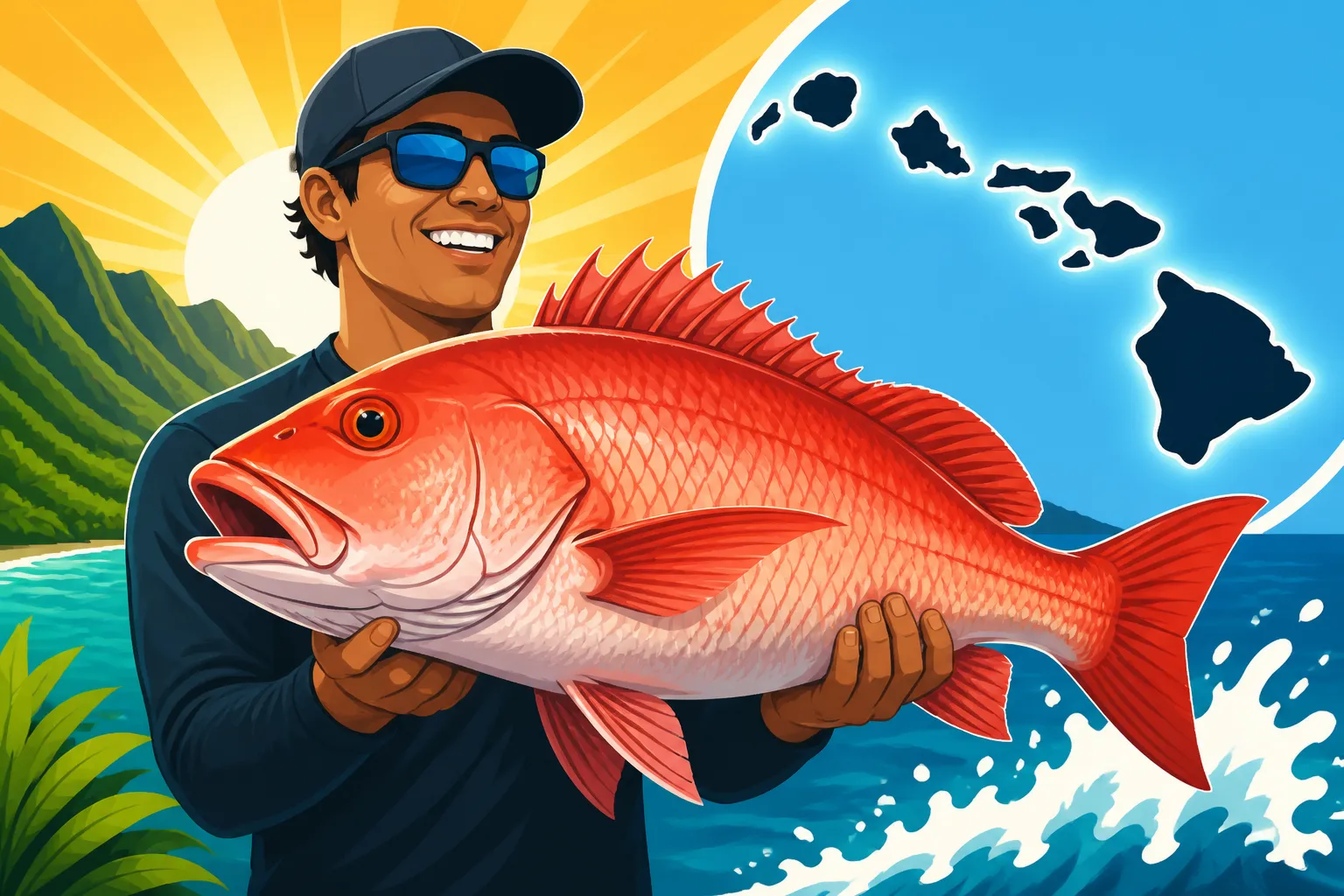
Among the many prized fish species found in Hawaii's waters, the onaga holds a special place. Known for its stunning ruby-red color and delicate, flavorful flesh, it's a deep-dwelling snapper that is highly sought after by both commercial fishermen and recreational anglers alike. Catching one is often considered a significant achievement, and landing a truly large specimen is something most anglers will remember for a lifetime.
Identifying Onaga and Their Deepwater Domain
Onaga, scientifically known as Etelis coruscans, are members of the snapper family and are easily recognizable by their vibrant, deep ruby-red coloration, large eyes, and elongated, slender body. They also have a distinctly forked tail with long, flowing tips. These fish are typically found in deep offshore waters, often congregating around seamounts, underwater ridges, and ledges at depths ranging from 600 to 1,200 feet, sometimes even deeper. Their habitat preferences make them a challenging target, requiring specialized gear and techniques to reach them. They tend to be solitary or found in small groups, making them less predictable than schooling fish. Knowing their preferred depth and structure is key to finding them. This knowledge also applies to other Bottomfish Species of Hawaii that share similar habitats.
The deep, dark environments they inhabit mean they rely heavily on their large eyes to detect prey, which often consist of smaller fish, squid, and crustaceans. Their flesh is famously white, flaky, and exceptionally tasty, making them a culinary delicacy in Hawaii and beyond. It’s this combination of challenge and reward that makes the pursuit of a trophy onaga so appealing to dedicated deep-sea anglers. Understanding Onaga Ruby Snapper Habits is crucial for anyone hoping to land one.
Common Techniques for Targeting Onaga
Fishing for onaga is not your typical shallow-water experience. It requires specialized equipment and a precise approach to reach these deepwater denizens. The primary method is deep-dropping, which involves sending heavy weights and baited hooks down to extreme depths. Anglers typically use electric reels, which are indispensable for retrieving hundreds of feet of line with heavy weights and, hopefully, a large fish attached. These reels are spooled with braided line, which has a much smaller diameter and virtually no stretch compared to monofilament, allowing for better bite detection at such extreme depths.
Baits often include squid, cut fish, or even live bait, presented on multiple-hook rigs known as "sabiki" or "ika-sabi" rigs, sometimes with lights attached to attract attention in the dark depths. The boat positioning is also critical, as currents can be strong, and the target areas are relatively small. Captains use sophisticated sonar and GPS systems to locate productive bottom structure and precisely drift over it. The fight itself, once an onaga is hooked, is a test of the gear and the angler's ability to maintain constant pressure against the immense water resistance and the fish's strong pulls from the abyss. For those looking to upgrade their deep-dropping setup, reputable online retailers like Amazon offer a wide selection of electric reels, braided line, and specialized deep-drop rigs suitable for such demanding fishing.
Pursuing a Record-Sized Onaga
Catching an onaga of any size is an accomplishment, but landing one that could potentially break a state record is a whole different ballgame. It means not only mastering the techniques but also being prepared to follow the stringent rules for official recognition. This preparation includes having the right gear, understanding the documentation process, and knowing what to do immediately after the catch.
Essential Gear for Deep-Drop Fishing
To effectively target onaga and other deepwater species, your gear needs to be robust and reliable. As mentioned, electric reels are almost a necessity, paired with heavy-duty rods capable of handling the immense strain of deep weights and large fish. These rods typically have a slow, powerful action to absorb the deep-water fight. Braided line is non-negotiable, with capacities often ranging from 80-pound test to 200-pound test, depending on the target species and depth. Ensure your leader material is also heavy-duty fluorocarbon or monofilament to withstand abrasion from rocky bottom structures.
Terminal tackle includes large, strong hooks and sinkers weighing anywhere from 2 to 10 pounds, sometimes even more, to quickly reach and stay on the bottom. Many deep-drop rigs also incorporate specialized deep-water lights to attract fish in the absence of sunlight. Having a well-maintained and powerful setup is not just about catching fish; it's about being prepared to land a truly exceptional one, one that could earn a place in the record books. You can find robust braided lines, powerful electric reels, and even specialized deep-drop lights that enhance your chances on platforms like Amazon. Investing in quality equipment is key, as any weak link in your setup could mean losing that once-in-a-lifetime fish.
Official Weigh-In and Documentation Protocol
So, you've battled a magnificent onaga from the depths, and it looks like a monster. What now? The first and most critical step for a potential state record is to keep the fish in the best possible condition. This usually means preserving it on ice immediately. Next, you need to head straight to a certified weigh station. These are typically located at major marinas or reputable tackle shops and are equipped with scales that are regularly inspected and certified for accuracy.
Upon arrival, the weighing process must be witnessed by at least one, and ideally two, disinterested parties who can attest to the catch and the weighing. Clear, high-resolution photographs of the fish, the angler, and the scale showing the official weight are absolutely essential. You'll also need to document the specific location of the catch (GPS coordinates if possible), the date, time, and the gear used (rod, reel, line class, bait). The Hawaii DLNR Division of Aquatic Resources will have specific forms that need to be filled out, often requiring signatures from the angler, witnesses, and the weighmaster. This meticulous documentation is the backbone of any record submission and is what truly validates your incredible achievement. Without proper adherence to these protocols, even the largest fish might not qualify.
The Significance of a State Record Onaga
Achieving a state record is more than just catching a big fish; it’s about making a mark in the fishing community, contributing to the understanding of the species, and inspiring other anglers. It’s a moment of pride that reflects not just a single catch, but often years of dedication to the sport.
What to Expect from a Record-Breaking Catch
If you manage to land an onaga that surpasses the existing state record, you're not just getting bragging rights; you're becoming a part of Hawaii's angling history. Expect a thorough review process from the Hawaii DLNR Division of Aquatic Resources. They will scrutinize your documentation, potentially require further information, and ensure all regulations were followed. Once confirmed, you would receive official recognition, possibly a certificate or plaque, and your name would be etched into the state's record books. This kind of achievement can also bring attention from fishing publications and a broader audience, inspiring others to take up the challenge. It’s a legacy that can last for generations, a story to tell around the campfire that few can match. Furthermore, it might contribute to scientific data, providing valuable insights into the maximum growth potential of Fish Species Unique to Hawaii's Deep Reef Slopes.
Realistic Expectations for Record Weights
While I cannot provide the current official weight for the Hawaii state record onaga (as it can fluctuate and needs to be verified directly with the Hawaii DLNR Division of Aquatic Resources), I can tell you what kind of fish we're talking about. A state record onaga is going to be an absolutely exceptional specimen. We're not talking about your average dinner-plate size fish. It will be a truly substantial ruby snapper, likely weighing well into the double-digit pounds, perhaps even approaching the triple-digit mark in rare instances. It would be a fish that stands out significantly from the typical catch, demonstrating remarkable growth and resilience in its deep-water environment. These are not caught every day, every year, or even every decade by just anyone. They are the result of incredible luck meeting profound skill and persistence. So, if you think you've caught a record, trust that it's an impressive fish worthy of immediate, official verification.
Here's a quick comparison of some common deepwater snappers you might encounter:
| Feature | Onaga (Ruby Snapper) | Opakapaka (Pink Snapper) | Gindai (Flower Snapper) |
|---|---|---|---|
| Color | Deep ruby-red with long, flowing tail tips | Light pink to reddish, often with a metallic sheen | Pinkish-red, often with yellow fins and stripes |
| Habitat Depth | Deep slopes, seamounts (600-1200+ feet) | Deep ledges, rocky bottoms (200-600 feet) | Deep reefs, outer slopes (300-800 feet) |
| Body Shape | Elongated, slender | More robust, compressed body | Slightly more slender than opakapaka |
| Tail Fin | Deeply forked with extremely long, trailing tips | Moderately forked | Moderately forked |
| Commercial Value | Very high, considered a delicacy | High, popular table fish | Moderate to high |
| Common Weight Range | 5-20 lbs (record much higher) | 3-15 lbs (record higher) | 2-10 lbs (record higher) |
| Fishing Method | Deep-dropping with electric reels | Deep-dropping, handlines | Deep-dropping |
Catching any of these Bottomfish Species of Hawaii is an achievement, but the onaga remains a highly sought-after prize.
Disclaimer
This article is for general informational purposes only and does not constitute professional advice. Laws, prices and regulations vary by location and change over time. Consult a qualified professional for guidance on your specific situation.