Difference between wild and stocked trout at Kokee
For many anglers dreaming of casting a line in Hawaii, the thought often turns to the vast, shimmering ocean. But tucked away in the cool, lush mountains of Kauai's Kokee State Park lies a unique freshwater trout fishery that catches many by surprise. A common point of confusion, though, is the distinction between the wild trout that call these streams home and the trout that are regularly stocked. Understanding this difference is not just an academic exercise; it deeply impacts your fishing experience, your techniques, and your appreciation for this special ecosystem. This guide aims to clear up that confusion, offering a realistic look at both types of trout you might encounter in Kokee.
What Makes Kokee Unique for Trout Fishing?
Hawaii isn't exactly famous for its trout streams, which is precisely what makes Kokee State Park so special. Imagine a place where tropical rainforests meet cool, high-elevation rivers, creating an unexpected haven for rainbow trout. It’s a truly anomalous gem in the Pacific, and it presents a unique angling challenge unlike anywhere else in the state.
A Mountain Paradise in the Tropics
Kokee State Park, perched high on the plateau of Waimea Canyon, offers a dramatic contrast to Hawaii's typical beach and surf scenes. The air is crisp, often misty, and the dense native forests are a world away from palm trees. Here, streams like the Waimea and its tributaries, fed by abundant rainfall, maintain the cold, oxygen-rich conditions that trout need to survive. It’s a remarkable microclimate that allows for a thriving, albeit managed, trout population. Getting there involves winding mountain roads, and the rewards are not just the fishing, but the breathtaking views and the solitude that's often hard to find in more populated parts of the islands. This remote, rugged beauty is part of the allure, but it also means understanding the specific challenges and rules that come with fishing in such an isolated, protected environment.
Kokee's Trout Program: A Brief History
The presence of rainbow trout in Hawaii dates back to efforts to establish a recreational fishery, with stocking programs beginning many decades ago. The intent was to provide an accessible freshwater angling opportunity in a state primarily known for its saltwater giants. Over the years, the Division of Aquatic Resources (DAR) has carefully managed this fishery, maintaining a balance between stocking efforts and supporting any natural reproduction that might occur. The success of this program has led to the annual Hawaii Kokee Trout Fishing Season Dates, which draw anglers from all over the islands and beyond. It's a testament to the dedication of those who've worked to create and sustain this unique fishery. Understanding this history helps explain why both wild and stocked trout coexist and why management strategies are so critical here.
The Life of a Stocked Trout: Hatchery to Stream
When we talk about "stocked" trout, we're referring to fish that began their lives in a controlled environment, usually a hatchery, before being released into natural waters. In Kokee, this practice is central to maintaining the fishery, especially given the environmental challenges of a tropical climate for cold-water species.
From Egg to Fingerling: The Hatchery Journey
The journey for a stocked trout begins in a hatchery. These facilities are designed to optimize survival rates, which are significantly higher than in the wild. Eggs are carefully incubated, and once they hatch into "fry," they are fed a nutrient-rich diet in protected raceways or tanks. As they grow, they move through different stages – from fry to "fingerlings" (small fish roughly the size of a finger) and eventually to catchable-sized trout. The hatchery environment is stable: consistent water temperature, controlled flow, and protection from predators. This lack of natural challenge means stocked trout develop differently from their wild counterparts, both in appearance and behavior. They are accustomed to a predictable food source and human presence, which impacts their wariness once released.
Release and Adaptation: Stocked Trout in Kokee's Waters
Once the hatchery trout reach a suitable size, they are transported and carefully released into Kokee's streams and reservoirs. This transition from a sheltered environment to the wild is a significant shock. Suddenly, they must contend with natural currents, fluctuating water temperatures, new food sources, and, most importantly, predators. While some adapt quickly, many stocked trout can initially be disoriented. They might stick together in schools near the release points, or struggle to find natural forage. For anglers, this often means that freshly stocked fish can be easier to catch. They haven't yet learned the survival instincts of their wild cousins and may be less wary of artificial lures or bait. It's important to remember that these fish are a vital part of the recreational experience, providing consistent opportunities for success, especially for beginners or those seeking a more relaxed outing. You can often find information about Average size of stocked trout at Kokee which can help you set your expectations.
Behavioral Differences: Stocked vs. Wild
The most noticeable difference, beyond appearance, is behavior. Stocked trout, especially those recently released, tend to be less elusive. They might be found in more open, easily accessible areas of the stream, and are often more willing to strike at a wider variety of baits and lures. They've been fed pellets their whole lives, so a shiny spinner or a juicy worm often looks like a great meal. Wild trout, on the other hand, are the ninjas of the stream. They've learned to survive, which means they are incredibly wary, will hold in tighter cover, and are highly selective about what they eat. They react quickly to shadows, sudden movements, or unnatural presentations of bait. This contrast in behavior is why experienced anglers often celebrate catching a wild trout more—it represents a greater challenge and a testament to their skill in outsmarting a truly native survivor.
The Resilience of Wild Trout: Nature's Own
While stocking is crucial for the Kokee fishery, the presence of wild trout adds an entirely different layer of excitement and challenge. These fish are true survivors, born and bred in the challenging, yet pristine, conditions of Kokee's mountain streams.
Born in the Wild: Natural Reproduction and Survival
Wild trout in Kokee are the descendants of previously stocked fish that have successfully adapted to the natural environment and managed to reproduce. Their lives begin as eggs laid in gravel nests (redds) on the streambed. Survival rates in the wild are dramatically lower than in a hatchery. They face constant threats from predators like birds and larger fish, as well as environmental factors such as floods, droughts, and changes in water quality. Only the fittest, smartest, and luckiest survive to adulthood. This rigorous natural selection process means that wild trout are inherently more resilient, more cautious, and perfectly tuned to their specific habitats. The question of Do Trout Reproduce Naturally in Hawaii Streams? is central to the long-term health and wild character of this unique fishery.
Appearance and Instincts: Traits of Wild Trout
Visually, wild trout often tell a different story. They typically have more vibrant, intense coloring, adapting to blend seamlessly with their natural surroundings. Their fins might be perfectly formed and less worn than a hatchery fish, and their bodies are often sleeker, more muscular, reflecting a life of constant swimming against currents and actively hunting for food. Their instincts are finely honed for survival. They know where to hide in deep pools, under cut banks, or beneath submerged logs. They understand the nuances of current and cover, using it to their advantage to ambush prey and evade danger. When you hook a wild trout, you'll often feel a much more spirited fight, a testament to their strength and natural vitality.
The Challenge of Finding Wild Trout
Successfully targeting wild trout in Kokee is a rewarding challenge that requires a different approach than fishing for stocked fish. Wild trout tend to inhabit the more remote, harder-to-reach sections of the streams, often further upstream from common stocking points, or in areas with abundant natural cover. These are the fish that thrive in the pockets, riffles, and deeper pools of undisturbed waters. They are incredibly wary, meaning stealth is paramount. Anglers need to approach quietly, minimize their silhouette, and make precise casts to avoid spooking them. Presentation matters immensely – your bait or lure needs to look as natural as possible, drifting convincingly in the current. Catching a wild trout often feels like cracking a code, a deep satisfaction that goes beyond just landing a fish.
Spotting the Difference: Tips for Anglers
For the keen angler, distinguishing between a wild and a stocked trout can become almost a game within the game. It’s not always black and white, especially with "holdover" stocked fish that have spent time in the wild, but there are some strong indicators.
Visual Cues: How to Identify
When you reel in a trout from Kokee, take a moment to observe its physical characteristics. This can tell you a lot about its origins:
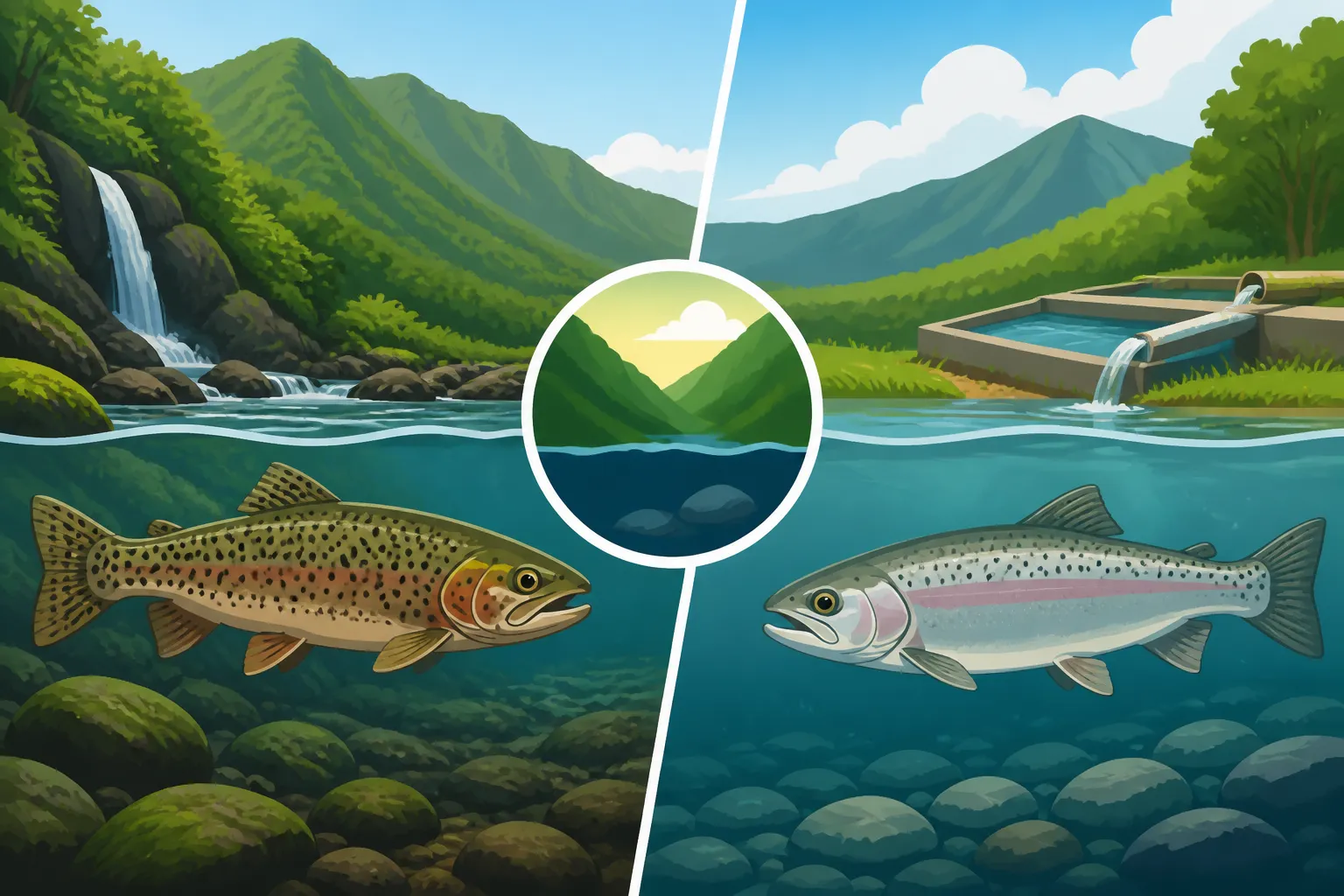
- Fins: Stocked trout, having spent time in crowded hatchery tanks, often have worn, stubby, or even damaged fins, particularly the pectoral and caudal (tail) fins. Wild trout, constantly swimming and navigating natural environments, typically have perfectly formed, sharp-edged, and often larger, more symmetrical fins.
- Coloration: Wild trout generally exhibit richer, more vibrant, and often darker coloration, with distinct spots and a protective camouflage that helps them blend into their surroundings. Stocked trout can appear paler, with more muted colors, and sometimes their spots might seem less defined or even faded.
- Body Shape: Wild trout tend to be slender, streamlined, and muscular, built for speed and agility in strong currents. Stocked trout, fed a consistent diet without needing to expend much energy, might appear chunkier or have a slightly "bloated" look.
- Snout/Jaw: Sometimes, particularly with older stocked fish, you might notice a slightly deformed or shorter snout due to contact with tank walls during their growth. Wild trout typically have a more natural, symmetrical head shape.
Location, Location, Location: Where to Find Each
Knowing where to look is half the battle when trying to distinguish between wild and stocked trout.
- Stocked Trout Hotspots: You'll generally find stocked trout in more accessible areas, often near bridge crossings, easily reached pools, or downstream from common stocking points. These are the areas that are routinely accessed by the DAR for releases. They might initially congregate in these areas before dispersing. Pay attention to areas that are easy to get to, and you're likely to find more recently stocked fish. For detailed information on access, check out resources like Best trout fishing spots at Kokee.
- Wild Trout Sanctuaries: Wild trout prefer solitude and natural cover. Look for them in more remote sections of the streams, often further upstream, away from the immediate effects of stocking. Deep, shadowed pools with undercut banks, complex logjams, or sections with heavy brush cover are prime wild trout habitat. They will use the natural current to hide and conserve energy, darting out to snatch food. These spots require more effort to reach but offer a higher chance of encountering truly wild fish.
Gear and Approach for Each Type
Your tackle and technique will also play a role in what you catch.
- For Stocked Trout: These fish are generally less picky. A simple spinning rod with light line (4-6 lb test), a small hook, and common baits like salmon eggs, corn, or small worms work wonders. Small spinners or spoons are also highly effective. Presentation doesn't need to be overly subtle; a cast-and-retrieve approach is often all that's needed. For beginners or those just looking to catch some fish, this is often the easiest and most enjoyable route. You can find a good selection of these basics on online marketplaces like Amazon, ensuring you have what you need before heading up the mountain.
- For Wild Trout: This requires a more refined approach. A lightweight fly rod (2-4 wt) with delicate leaders and tippets, or an ultralight spinning setup with very light line (2-4 lb test), is ideal. Natural baits like small aquatic insects (if legal and ethically sourced) or expertly presented artificial flies (dry flies, nymphs, small streamers) are your best bet. Presentation is key: you need to make long, accurate casts and allow your offering to drift naturally with the current, mimicking real insect or small baitfish movement. Stealth is crucial; avoid heavy footsteps or casting shadows over the water. For specifics on effective methods, check out Best Techniques for Freshwater Trout at Kokee. Having a small, portable tackle box with a variety of carefully selected lures and baits, which you might source from retailers like Amazon, can make all the difference in these more challenging conditions.
| Feature | Wild Trout | Stocked Trout |
|---|---|---|
| Appearance | Vibrant, rich colors; distinct spots; sleek body | Paler, muted colors; less defined spots; chunkier body |
| Fins | Fully formed, sharp, symmetrical fins | Often worn, stubby, or damaged fins |
| Behavior | Highly wary, elusive; holds in tight cover | Less wary, can be found in open areas; schools |
| Habitat | Remote, upstream sections; complex cover | Accessible areas, near stocking points |
| Fight | Energetic, powerful, evasive | Can be strong, but often less sustained |
| Diet | Natural insects, small fish, crustaceans | Hatchery pellets (initially); some natural forage |
| Survival | High natural selection, resilient | Lower natural survival rate in the wild |
Why Does it Matter? The Angler's Perspective
Understanding the difference between wild and stocked trout isn't just about identifying what's on your hook. It speaks to the broader picture of conservation, management, and the depth of the angling experience itself.
Conservation and Management Implications
The distinction is incredibly important for the sustainable management of Kokee's unique fishery. Stocking ensures a reliable recreational opportunity, especially since Hawaii Freshwater License Age Requirements and Hawaii Senior and Disabled Freshwater License Exemption make it accessible to many. It takes pressure off any naturally reproducing populations, allowing them a chance to thrive without being overfished. Meanwhile, protecting areas that hold wild trout, and understanding their reproductive success (or lack thereof), guides conservation efforts. It helps managers assess stream health, identify environmental threats, and implement strategies to preserve the genetic integrity and ecological balance of these precious native-born fish. As anglers, our awareness helps us respect regulations, practice catch-and-release more thoughtfully, and support efforts that ensure Kokee remains a special place for generations to come. Having access to information like the Hawaii Fishing License Guide for 2026 helps us stay compliant and support these programs.
The Thrill of the Catch: Different Experiences
Let's be honest, there's a certain satisfaction in catching any fish, especially in a beautiful place like Kokee. But the type of trout can really change the nature of that thrill. Landing a stocked trout often means a good fight and a consistent opportunity to bring fish to hand, which is fantastic for building confidence, especially for younger anglers or those new to the sport. It’s a great way to fill your creel (within limits, of course) for a fresh fish dinner.
Catching a wild trout, however, is often described as a more profound experience. It represents a victory of skill and stealth over a truly wild creature. The challenge of finding them, making the perfect cast, and successfully battling a fish that has survived against all odds in its natural environment, offers a deeper connection to the wilderness. It's often less about the number of fish and more about the quality of the encounter. Many experienced anglers find themselves drawn to the pursuit of these elusive wild fish, often choosing to release them immediately to ensure they continue to reproduce and challenge future generations.
Supporting Kokee's Unique Fishery
Whether you're after stocked or wild trout, your participation in Kokee's fishery ultimately supports its continued existence. By purchasing a Hawaii freshwater license cost for residents or Hawaii freshwater license cost for nonresidents, you're contributing to the funding that goes towards stocking programs, stream monitoring, habitat restoration, and enforcement of regulations. Respecting catch limits, adhering to Hawaii Bag and Size Limits by Species, and practicing ethical angling, such as proper catch and release when appropriate, are all ways to give back. The Kokee trout fishery is a unique and fragile resource within Hawaii. It requires our understanding, our respect, and our active participation to ensure that it remains a vibrant fishing destination, offering both the accessible fun of stocked fish and the challenging reward of wild ones. When planning your trip, consider what type of experience you're hoping for and tailor your expectations and preparations accordingly. You can even find specific gear for varying conditions, like a good quality rain jacket or waterproof boots, from retailers like Amazon, which are invaluable for navigating Kokee's often-damp terrain.
Disclaimer
This article is for general informational purposes only and does not constitute professional advice. Laws, prices and regulations vary by location and change over time. Consult a qualified professional for guidance on your specific situation.