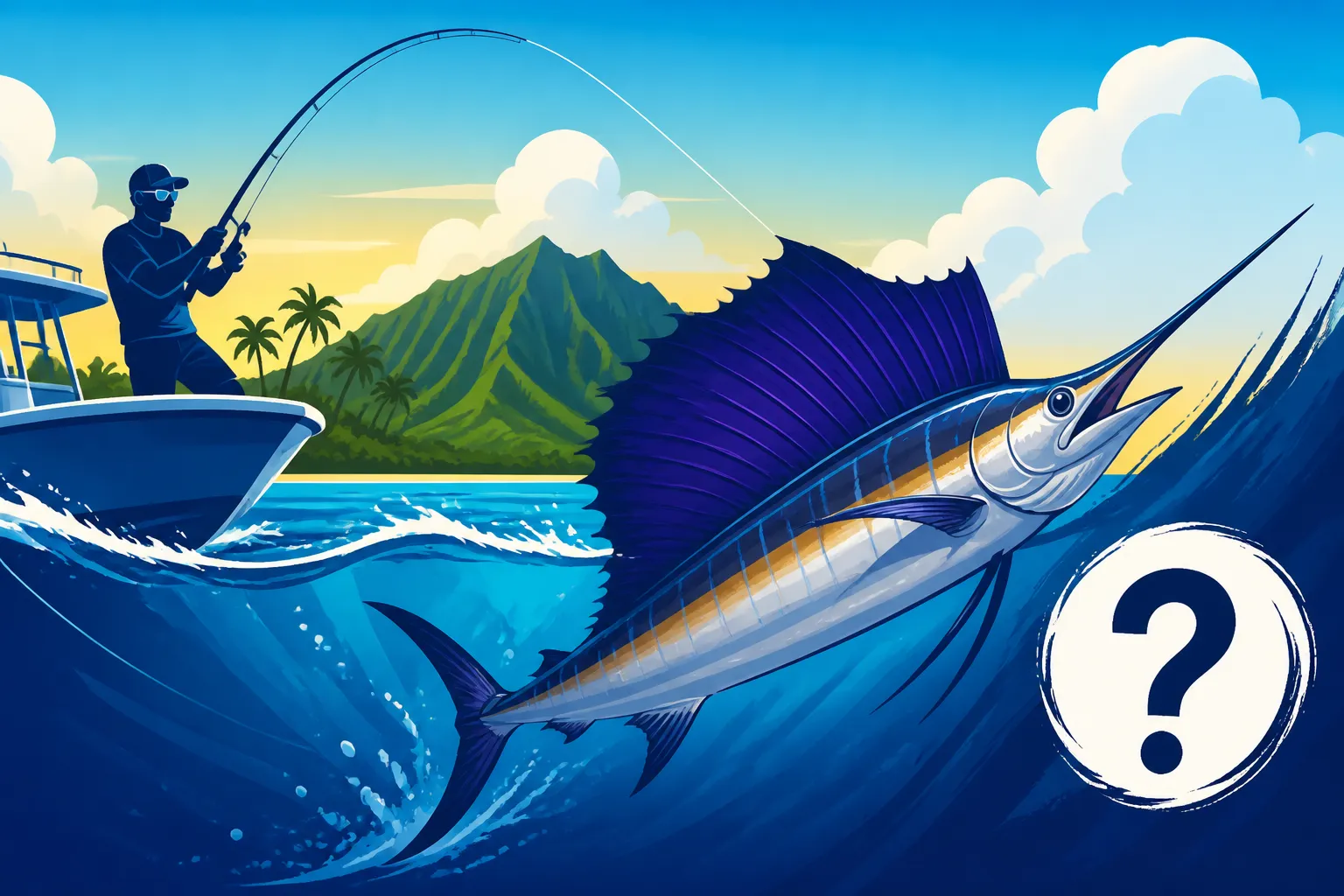
Are There Sailfish in Hawaiian Waters?
One common question I hear from anglers dreaming of casting lines in Hawaii’s magnificent waters is about the presence of sailfish. Many picture these incredible, acrobatic billfish leaping from tropical seas, and while Hawaii certainly offers world-class big game fishing, the reality of encountering a sailfish here might surprise you. This guide will dive into whether sailfish truly swim in Hawaiian waters, why they aren't as commonly discussed as their marlin cousins, and what you should know if you hope to spot or even catch one.
Are Sailfish Truly Found in Hawaiian Waters?
Yes, sailfish are indeed found in Hawaiian waters, but with a significant caveat: they are far less common than other billfish species like blue marlin, striped marlin, and spearfish. This often leads to confusion, as Hawaii is famous for its billfish, but it's usually the mighty marlin that anglers are referring to. You won't find Hawaii listed among the world's premier sailfish destinations in the same breath as places like Florida, Mexico, or Costa Rica, where sailfish populations are robust and targeted frequently.
Think of it like this: if you're visiting a restaurant known for its incredible steak, you might still find chicken on the menu, but it's not what they're famous for. Hawaii's deep, pelagic waters are prime blue marlin territory, and while sailfish pass through, they don't seem to congregate or breed here in the same numbers. This doesn't mean they're absent, just that they're more of a rare, exciting bonus rather than a primary target for most fishing charters.
Understanding Their Presence: A Matter of Habitat
Sailfish, generally speaking, prefer warmer, shallower coastal waters and continental shelf areas, often congregating around baitfish schools close to landmasses. While Hawaii certainly has warm waters, its volcanic islands plunge very quickly into incredibly deep ocean trenches, lacking the extensive continental shelf habitat that sailfish thrive in elsewhere. Our waters are more suited for true oceanic pelagic species like marlin and tuna, which prefer the vast, open ocean environment.
This difference in preferred habitat is a key reason why you won't hear Hawaiian anglers boasting about sailfish numbers. A charter boat heading out from Honokohau Harbor on the Big Island or Kewalo Basin in Honolulu is almost always going to be targeting marlin, ahi (yellowfin tuna), ono (wahoo), or mahimahi, not sailfish. If a sailfish hits the spread, it's typically an unexpected and welcome surprise!
Why Sailfish are Less Common Than Other Billfish Here
It's a valid question – why, in an ocean teeming with diverse marine life, are sailfish so much scarcer around Hawaii compared to other billfish? The answer lies in a combination of oceanography, food sources, and migratory patterns. Understanding these factors helps shed light on their elusive nature in our waters.
Oceanographic Differences Favoring Marlin
Hawaii's geology is dramatic. The islands rise steeply from the ocean floor, creating immediate access to incredibly deep water very close to shore. This deep-water environment, characterized by strong currents, deep thermoclines, and vast open ocean expanses, is the ideal hunting ground for blue marlin and other large pelagics. Marlin are built for these conditions, ranging widely and hunting large prey in the deep blue.
Sailfish, on the other hand, often prefer areas where the seabed gradually slopes, creating upwellings and shallower banks that concentrate baitfish. While Hawaii has some seamounts and FADs (Fish Aggregating Devices) that attract bait, the sheer scale of the deep ocean surrounding the islands doesn't provide the widespread, shallower, nutrient-rich coastal zones that support large, resident sailfish populations found in other parts of the world. The available food sources and preferred temperature ranges simply align better with marlin and other tuna species.
Migratory Routes and Population Centers
Sailfish are known for extensive migrations, following warm currents and baitfish concentrations. While some individuals certainly pass through the Hawaiian archipelago, our islands aren't considered a major hub or spawning ground for them. Their main migratory highways and breeding grounds are typically found elsewhere, like the eastern Pacific or the Atlantic, where the oceanography and prey availability are more conducive to large-scale aggregations.
When a sailfish is caught in Hawaii, it's often an individual that has ventured outside its typical migratory path or is simply passing through. It's not uncommon for fish to be found far from their perceived 'home' range, making these rare Hawaiian sailfish catches all the more special. They are truly an opportunistic capture, not a targeted fishery.
Identifying Sailfish in Hawaiian Waters
Spotting a sailfish, especially if you're not accustomed to distinguishing between various billfish, can be a thrilling moment. While they are rarer here, knowing what to look for can help you identify one if you're lucky enough to encounter it. They have several distinct features that set them apart from marlin or spearfish.
Key Physical Characteristics
The most iconic feature of a sailfish, and the one that gives it its name, is its enormous, sail-like dorsal fin. This fin is disproportionately large compared to its body size, often extending nearly the entire length of its back. When excited or feeding, the sailfish will raise this fin, making it incredibly visible, especially when it's tail-walking or breaching the surface. This is a dead giveaway.
Other distinguishing features include:
- Coloration: Sailfish typically have a stunning iridescent blue-to-gray back, often with vertical stripes or spots on their sides, and a silvery-white belly. The large dorsal fin itself can display vibrant blues, purples, and even black spots.
- Bill: While they have a long, pointed bill, it tends to be thinner and rounder in cross-section than the flatter, more sword-like bill of a marlin.
- Body Shape: They have a more slender and elongated body compared to the more robust and powerful build of a blue marlin. They are incredibly fast and agile, built for quick bursts of speed to herd baitfish.
- Size: Sailfish in Hawaii are generally smaller than the giant marlin species found here. While they can reach impressive sizes globally (up to 10 feet and over 200 pounds), the ones encountered in Hawaii are typically on the smaller side of that spectrum. You're unlikely to mistake a 150-pound sailfish for a 500-pound blue marlin.
Comparing with Other Billfish
To really drive home the distinction, let's look at how sailfish compare to the more common billfish you'll find in Hawaiian waters. This table should help clarify the visual differences you might observe during a fishing encounter.
| Feature | Sailfish | Blue Marlin | Striped Marlin | Shortbill Spearfish |
|---|---|---|---|---|
| Dorsal Fin | Very large, sail-like, extends almost full back | Tall but shorter, sickle-shaped, folds into groove | Tall, sharply pointed, folds into groove | Smallest, rounded, folds into groove |
| Bill | Long, thin, rounded in cross-section | Thick, heavy, round in cross-section | Relatively slender, flattened | Shortest, rounded in cross-section |
| Body Shape | Slender, elongated, hydrodynamic | Robust, powerful, thickest body | Slender, compressed laterally | Streamlined, somewhat compressed |
| Coloration | Iridescent blue/gray back, silvery belly, vertical bars/spots | Dark blue/black back, silvery belly, no bars | Dark blue back, silvery belly, vertical stripes | Dark blue/purple back, silvery belly |
| Typical Hawaiian Size | 50-150 lbs (rarely larger) | 200-800+ lbs (can exceed 1000 lbs) | 100-300 lbs (occasional larger) | 20-50 lbs (small but feisty) |
| Prevalence in Hawaii | Rare, incidental catch | Very Common, primary target | Common, targeted during certain seasons | Common, often incidental catch |
As you can see, the sail-like dorsal fin is the ultimate differentiator. If you see a fish jumping with that magnificent banner on its back, there's no mistaking it! You can learn more about Pelagic Species Identification Guide for Hawaii to help you understand all the different species you might encounter offshore.
Targeting Sailfish: Techniques and Gear Considerations
While sailfish are not a primary target in Hawaii due to their rarity, the techniques and gear used for other billfish and pelagic species are often suitable for an opportunistic encounter. Most sailfish caught here are incidental catches while trolling for marlin, ono, or mahimahi. However, understanding what works for them can prepare you if you're lucky enough to cross paths.
Trolling: The Most Likely Encounter Method
If you're out on a charter off the Kona Coast or any of the other islands, chances are you'll be trolling a spread of lures or bait. This is by far the most effective way to cover water and entice a strike from pelagic predators, including the occasional sailfish. Charters often run a combination of artificial lures and natural baits like skipjack tuna or mackerel.
For sailfish, smaller lures and baits might be more appealing, as they tend to feed on smaller schooling fish. However, a general marlin spread will often get the job done. Speed can also play a role; sometimes, a slower troll can be more effective for a variety of species, including sailfish. If you're going out on a boat, it's worth discussing with your captain if they've ever had specific luck with sailfish and if there's any particular spread they'd recommend for a mixed bag. Understanding Trolling Techniques for Hawaii Pelagics can give you a better idea of how these trips typically run.
Appropriate Gear for a Sailfish Fight
Because sailfish are less common and often smaller than the big blue marlin, the tackle used for other game fish is usually adequate. You won't typically need the heaviest big game gear, but you also don't want to be undergunned.
- Rods and Reels: A medium to heavy conventional rod (often 30-50 lb class) paired with a reliable conventional reel spooled with strong monofilament or braided line is ideal. These setups are versatile and can handle most pelagic species you'll encounter. You can find a wide range of suitable rods and reels on Amazon, perfect for a strong fight.
- Line and Leader: Opt for at least 30-50 lb test mainline, with a fluorocarbon leader of 80-150 lb test. Sailfish have abrasive bills and can chafe through lighter leaders during their acrobatic leaps. A good quality leader is crucial.
- Lures and Baits: As mentioned, smaller skirted lures, rigged ballyhoo, or even live baits like opelu or akule are excellent choices. Many of the Best Lures for Marlin Trolling off Kona will also attract other billfish.
- Hooks: Circle hooks are often preferred, especially if you plan to release the fish. They tend to hook in the corner of the mouth, causing less harm than J-hooks, which can be swallowed.
Remember, sailfish are incredible fighters known for their spectacular jumps and blistering runs. Even a smaller sailfish can put on an unforgettable aerial display, so having balanced tackle will give you the best chance to land and safely release one. If you're planning a trip, consider What to Expect on a Hawaii Fishing Charter regarding gear and techniques.
Conservation and Angler Responsibilities
Any time you're targeting or incidentally catching billfish, understanding and adhering to conservation practices is paramount. These magnificent creatures are a vital part of the ocean ecosystem, and responsible angling helps ensure their populations thrive for future generations. Hawaii has specific regulations concerning billfish and other marine species, and it's essential to be aware of them.
Catch and Release Best Practices
For many anglers, the thrill of catching a sailfish is in the fight and the spectacle, not necessarily in keeping the fish. If you do catch a sailfish in Hawaii, practicing responsible catch and release is highly encouraged. This means:
- Minimize Fight Time: Use appropriate tackle to bring the fish to the boat as quickly as possible without over-stressing it.
- Keep it in the Water: Try to avoid removing the fish from the water entirely. If you need a photo, do so quickly with the fish partially submerged.
- Use a Dehooker: A long-handled dehooking tool can help remove the hook without handling the fish excessively, reducing stress and injury.
- Cut the Leader: If the hook is deeply set or difficult to remove, cut the leader as close to the hook as possible. The hook will eventually rust out.
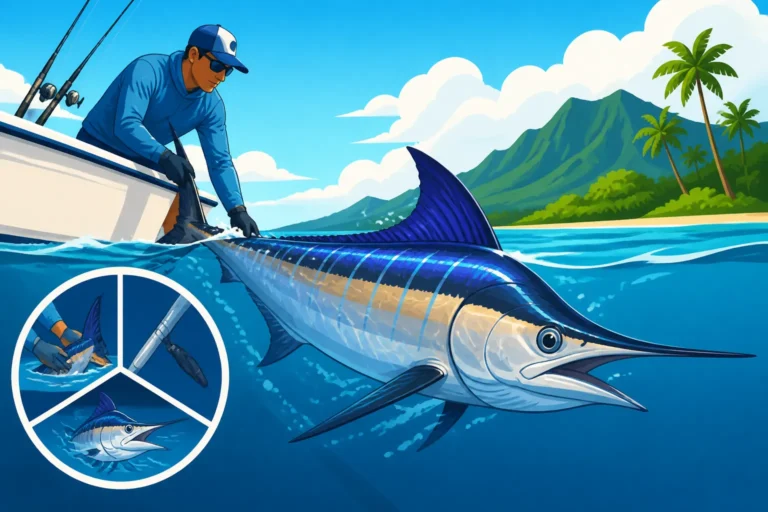
- Revive if Necessary: If the fish seems sluggish, hold it by the bill with the boat moving slowly forward to force water over its gills until it regains strength and swims away on its own power.
Responsible handling greatly increases the survival rate of released billfish. Learning about Marlin catch and release survival tips can also apply to sailfish, as many principles are similar for billfish.
Hawaii Fishing Regulations and Billfish
While Hawaii doesn't have specific regulations only for sailfish, they fall under general billfish rules and statewide fishing regulations. It's crucial to consult the Hawaii Division of Aquatic Resources (DAR) for the most current information, as regulations can change.
Key points to remember often include:
- Size Limits: Some billfish species have minimum size limits. While sailfish are often released, it's good to be aware.
- Bag Limits: There might be daily or aggregate bag limits for certain species or types of fish.
- Reporting Requirements: In some cases, specific catches, especially record-setting ones, might require reporting.
- Licensing: Remember that while many charter operations cover the boat's license, individual anglers may still need a personal Hawaii Fishing License Guide for 2026, especially for shore fishing or if you're not on a licensed charter. Do You Need a Fishing License in Hawaii is a great resource to clarify these requirements.
Always check the current Hawaii Fishing Regulations Explained before heading out. Ignorance of the law is never an excuse, and staying informed helps protect our precious marine resources. You can usually find the latest regulations on the Hawaii DLNR (Department of Land and Natural Resources) website, or by asking your charter captain or a local tackle shop. Many anglers also buy fishing-related books and guides on Amazon to stay informed about local species and regulations.
Conclusion
So, are there sailfish in Hawaiian waters? Absolutely, yes, they are part of the incredible diversity of marine life found around our islands. However, they are a rare and elusive catch, often overshadowed by the abundant and larger marlin species that Hawaii is famous for. While you're more likely to catch a blue marlin, striped marlin, or spearfish, encountering a sailfish is a special event that many anglers dream of.
If you're heading out on a fishing trip in Hawaii, keep your eyes peeled and enjoy the possibility of an unexpected surprise. Whether you're trolling offshore or simply appreciating the beauty of the ocean, the chance to witness one of these magnificent fish in its natural habitat is a memory you won't soon forget. Just remember to fish responsibly and practice good conservation to help protect these amazing creatures for years to come.
Disclaimer
This article is for general informational purposes only and does not constitute professional advice. Laws, prices and regulations vary by location and change over time. Consult a qualified professional for guidance on your specific situation.