The largest ulua ever caught off Oahu
The dream of landing a monster ulua off the shores of Oahu is something that keeps countless anglers awake at night, stirring a potent mix of excitement, challenge, and pure hope. Many of us have heard the whispered tales, seen blurry photos on old flip phones, or read forum posts about truly enormous fish. It's a journey filled with dedication, often frustration, but the ultimate reward of an epic battle with one of Hawaii's most revered game fish is what drives us. This guide dives deep into the quest for Oahu's largest ulua, separating the official records from the compelling local legends, and offering insights into how you might just land your own piece of history.
The Elusive Giant Ulua on Oahu: A Quest for Bragging Rights
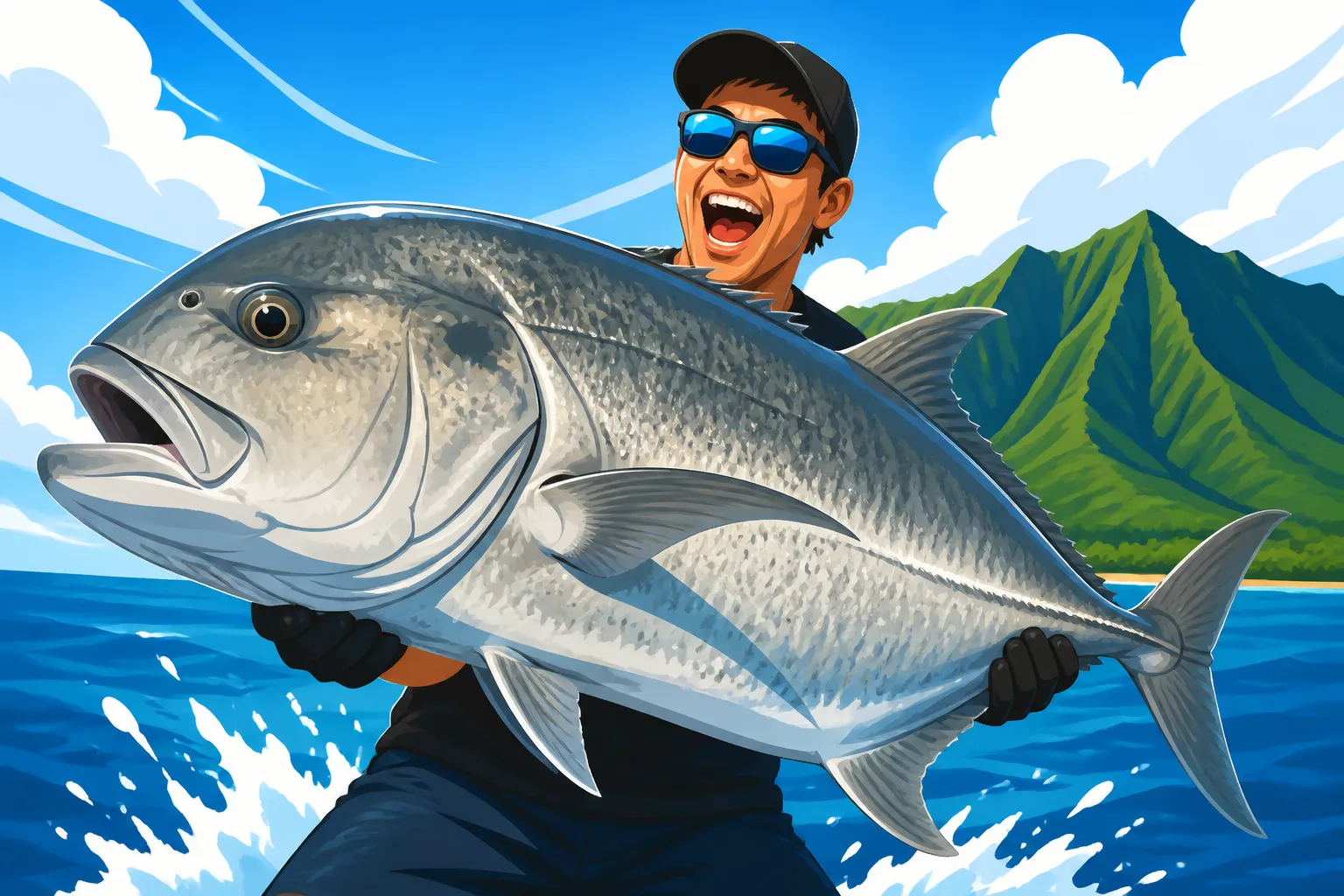
When you talk about "the largest ulua ever caught off Oahu," you're stepping into a realm where fact often intertwines with legend. The sheer power and size of a mature ulua (Giant Trevally, or GT) make it a prized catch, and the stories surrounding truly enormous ones are etched into the local fishing culture. It's not just about the weight on the scale; it's about the struggle, the tackle-testing runs, and the sheer awe of bringing such a magnificent creature to the shore. For many, catching an ulua, especially a big one, is a spiritual experience that connects them to the `aina and kai (land and sea).
What Makes an Ulua "Trophy Sized"?
For most anglers, a "trophy-sized" ulua is subjective, but generally, anything over 50 pounds starts to turn heads. Once you get into the 80 to 100-pound range, you're talking about a fish that most anglers will only encounter a handful of times in their lives, if ever. These are the fish that demand respect, push your gear to its absolute limits, and test your mental fortitude. They are apex predators of the reef and open ocean, with incredible strength and stamina.
The true giants, the ones that become the stuff of legend, often push well past the 100-pound mark. These are the fish that require perfect conditions, flawless technique, and a healthy dose of luck. They are not just bigger versions of smaller ulua; they are ancient, wise, and have survived countless encounters with predators and anglers alike. Their scales are like armor, their tails powerful engines, and their resolve unmatched. Landing one is a testament to an angler's skill and perseverance.
The Thrill of the Chase: Why Oahu Anglers Dream Big
There's a unique obsession among Oahu anglers when it comes to ulua. It’s not just a fish; it’s an icon. The commitment required to consistently target large ulua from shore is immense. It often involves long nights, waking up before dawn, hauling heavy gear over challenging terrain, and casting into the pounding surf for hours on end. Anglers dedicate themselves to understanding the tides, currents, and moon phases, meticulously preparing their bait and rigs, all in the hope of that one exhilarating bite.
The thrill isn't just in the catch itself, but in the entire process. It’s the camaraderie with fellow ulua fishermen, sharing knowledge, techniques, and stories under the starry Hawaiian sky. It's the moment of anticipation when your line goes slack or your rod doubles over, signaling a potential hook-up. The sound of the drag screaming as a giant ulua makes its first powerful run is an adrenaline rush unlike any other. This deep connection to the pursuit is why anglers on Oahu continue to chase these majestic fish, always pushing the boundaries of what's possible from shore. Many seasoned ulua hunters will tell you that even the near misses or the ones that got away become cherished memories, adding to the lore. For more on these incredible fish, check out Ulua (Giant Trevally) Fishing in Hawaii.
Tracking Down the Biggest: Official Records vs. Local Lore
When seeking out "the largest ulua ever caught off Oahu," it's crucial to understand the difference between official state records and the powerful, often true, local stories that circulate within the fishing community. While official records provide verifiable benchmarks, many truly massive fish caught from Hawaii's challenging shorelines never make it to a certified scale.
Hawaii's Official State Records: What the Books Say
Hawaii maintains official state records for various fish species, and the ulua is certainly among them. These records are typically overseen by the Hawaii Division of Aquatic Resources (DAR), a branch of the Department of Land and Natural Resources (DLNR). To qualify for a state record, a fish usually needs to be weighed on a certified scale, sometimes witnessed by multiple individuals, and the catch must adhere to all fishing regulations. These records serve as a benchmark for what's formally recognized as the biggest.
However, a critical point to remember is that these state records are usually for the entire state, not necessarily broken down by individual island. So, while there might be a state record for Giant Trevally, that specific fish might have been caught off the Big Island or Kauai, not necessarily Oahu. To find the largest officially recognized ulua from Oahu, one would need to cross-reference the state record with the specific catch location details. Often, the state record books reflect the biggest fish caught in Hawaiian waters, and while Oahu certainly produces massive ulua, the largest official record might originate from elsewhere. You can dive deeper into these benchmarks by looking at Hawaii State Fish Records by Species.
The Unofficial Giants: Whispers and Photos from the Shoreline
This is where the magic, and sometimes the mystery, truly lies for Oahu. The local fishing community is a tight-knit group, and stories of gargantuan ulua are passed down through generations of anglers. These are the "talk story" fish—the ones caught by someone's uncle, a friend of a friend, or even a chance encounter on a late-night fishing session. These fish are often measured with a tape measure, estimated by girth, or simply immortalized in a photo next to a proud (and exhausted) angler.
Many factors contribute to these giants remaining "unofficial." Sometimes, the angler isn't concerned with formal recognition; they're just happy with the catch. Other times, the fish is quickly released, adhering to catch-and-release ethics, making a certified weigh-in impossible. The sheer difficulty of getting a massive, thrashing ulua from a remote rocky point or a pounding surf break to a certified scale can also be a monumental task, especially in the middle of the night. These unofficial giants, while not in a record book, hold an equally important place in the lore of Oahu fishing, inspiring future generations to cast their lines and dream big.
The Impact of "Catch and Release" on Record Keeping
In recent decades, there has been a growing emphasis on catch-and-release fishing, particularly for large, mature fish like ulua. This conservation-minded approach helps ensure the sustainability of the fishery by allowing these valuable breeders to return to the ocean. While incredibly beneficial for the fish population, it inherently means that many potential record-breaking fish are never officially weighed. An angler might land a magnificent 100-pound ulua, snap a quick photo, take a few measurements, and then carefully revive and release it.
This practice shifts the focus from simply killing the largest fish for a record to appreciating the fight and ensuring the species thrives. For many, the true "record" is the memory, the photo, and the knowledge that such a powerful creature was successfully fought and then given a second chance. This doesn't diminish the achievement; if anything, it elevates it, highlighting a respect for the ocean and its inhabitants. However, it does mean that the official record books might not always reflect the absolute biggest fish that have been landed on Oahu. For tips on managing your catch, consider Hawaii Bag and Size Limits by Species.
Techniques and Spots for Targeting Oahu's Monster Ulua
Targeting giant ulua off Oahu is a specialized pursuit that requires specific techniques, robust gear, and an intimate understanding of the local waters. These aren't fish you catch by accident with light tackle. It's an intentional, often grueling, but immensely rewarding endeavor.
Mastering Shore-Based Tactics for Giants
Shore casting for ulua is a deeply rooted tradition in Hawaii, and for the giants, specialized techniques are paramount. The most popular and effective method for targeting large ulua from shore is often sliding bait (also known as slide-baiting). This involves casting a heavy sinker and a short leader with a hook out into the desired fishing zone, then attaching a live or dead bait (like an opelu, akule, or moi) to a sliding clip that slides down the main line to the terminal tackle. This allows anglers to present large baits in areas that are difficult to cast directly.
Another prevalent technique is whipping or chucking large artificial lures or heavy bait rigs. This involves powerful casting with specialized rods to propel heavy weights and baits long distances into deep channels or outer reef lines where ulua ambush prey. Anglers often look for specific "ulua holes" – deeper pockets or channels in the reef structure where these fish patrol. Patience is a virtue, as hours can pass without a bite, but the reward of a giant ulua tearing line off your reel makes every moment worth it. To hone your skills, check out How to Catch Ulua from Shore and Sliding Bait Techniques for Ulua.
Prime Oahu Locations Known for Large Ulua
Oahu, with its diverse coastline, offers several prime locations known for producing large ulua, although specific "secret spots" are often closely guarded by local fishermen. Generally, areas with deep water access close to shore, significant reef structure, and strong currents are hotbeds for these predators.
- Kaena Point: Both the Waianae (leeward) and Mokuleia (windward) sides of Kaena Point are legendary for ulua fishing. The deep water, strong currents, and rugged, remote coastline provide ideal habitat for large trevally. Getting to these spots often involves a challenging hike, but the potential rewards are immense.
- Rocky Points and Ledges: Throughout the island, particularly on the North Shore, Windward side, and Leeward coast, specific rocky points, ledges, and lava flows that drop off into deeper water are prime ulua territory. These areas provide cover and ambush points for ulua as they hunt for baitfish. Locations near major harbors or deep channels where baitfish congregate are also productive. Best Shore Fishing Spots in Hawaii offers more general insights.
- Deep Channels and Passes: Natural channels that cut through the reef and connect shallow flats to deeper ocean waters act as highways for ulua. These areas often have strong currents, bringing food past stationary ulua waiting for an easy meal. Night fishing is also particularly effective in these areas, as ulua are nocturnal hunters. Consider reading Night Fishing for Ulua in Hawaii for more.
The Gear You Need to Tackle a Giant
Successfully landing a large ulua demands heavy-duty gear capable of withstanding immense pressure. Skimping on tackle will almost certainly lead to heartbreak.
Here's a breakdown of essential gear:
- Rods: Look for heavy-action, stout surf rods, typically 10 to 15 feet long, designed for casting heavy weights (8-16 oz or more). These rods need backbone to turn a powerful fish and absorb violent runs.
- Reels: Large, robust spinning reels (size 10,000 to 20,000 class) or conventional reels with powerful drag systems and high line capacity are crucial. They need to handle hundreds of yards of heavy line and endure prolonged battles. Brands known for durable saltwater reels are often found on platforms like Amazon.
- Line: Braided line (80-150 lb test) is preferred for its strength and minimal stretch, allowing for better hook sets and sensitivity. This is backed by a heavy monofilament or fluorocarbon leader (150-300 lb test) to resist abrasion from rocky structures and the ulua's rough mouth.
- Hooks: Strong, sharp, circle hooks (16/0 to 20/0) or J-hooks are essential. Stainless steel or high-carbon steel hooks are typically used to prevent bending or breaking under the immense strain.
- Sinkers: Heavy pyramid, Sputnik, or grapple sinkers (8-16 oz, sometimes more in strong currents) are needed to hold your bait in place on the bottom.
- Bait: Live baits like opelu, akule, moi, or even smaller papio are excellent. Fresh cut bait, such as a large piece of mackerel or squid, can also be effective.
Here's a comparison of common gear choices for tackling large ulua from shore:
| Gear Type | Recommended Specifications | Key Considerations |
|---|---|---|
| Rod | Heavy Action Surf Rod, 10-15 ft | Essential for long casts and battling powerful fish; look for a strong backbone. |
| Reel | Large Spinning (10,000-20,000) or Conventional (4/0-6/0) | Must have a robust drag system and high line capacity (300+ yards of heavy braid). |
| Main Line | 80-150 lb Braided Line | High strength-to-diameter ratio, minimal stretch for solid hooksets; consider a good brand available on Amazon. |
| Leader | 150-300 lb Monofilament or Fluorocarbon | Crucial for abrasion resistance against rocks and the fish's mouth; often pre-rigged for convenience. |
| Hooks | 16/0 – 20/0 Circle or J-Hooks | Super strong and sharp to handle the power of a large ulua and ensure a solid hookup. |
| Sinkers | 8-16 oz (Pyramid, Sputnik, Grapple) | Must be heavy enough to anchor bait in strong currents and prevent drift. |
| Bait | Live Opelu, Akule, Moi; large fresh cut bait | Freshness is key; live bait often preferred for larger fish; can be caught locally or sometimes sourced. |
Always ensure your entire setup is balanced and capable of handling the forces involved. A chain is only as strong as its weakest link, and with a giant ulua on the line, there are no weak links allowed. Many specialty fishing shops, and online retailers like Amazon, offer a wide range of suitable heavy-duty tackle.
Preserving the Legacy: Responsible Angling for Ulua
The pursuit of giant ulua is a passion, but it also comes with a significant responsibility to protect these magnificent fish and their habitats. Sustainable fishing practices are essential to ensure that future generations of anglers can also experience the thrill of battling a monster ulua off Oahu.
The Importance of Resource Management
Hawaii's aquatic resources are precious and finite. Regulations, such as bag limits and size restrictions, are put in place by the DLNR to manage fish populations and prevent overfishing. For ulua, there are specific rules regarding minimum size. Adhering to these regulations is not just about avoiding penalties; it's about contributing to the long-term health of the fishery. These rules ensure that enough fish reach maturity to reproduce and sustain the population. Understanding Hawaii Bag and Size Limits by Species is crucial for any responsible angler.
Additionally, anglers can play a role by being mindful of their impact on the environment. This includes packing out all trash, avoiding damage to coral reefs, and being respectful of wildlife and other ocean users. Education is key, and seasoned anglers often take on the responsibility of mentoring newcomers, teaching them not only how to fish but also how to do so responsibly.
Catch and Release Best Practices for Large Ulua
Given the increasing popularity of catch and release, especially for trophy-sized ulua, knowing how to properly handle these powerful fish is vital for their survival. A poorly handled release can lead to delayed mortality, negating the conservation effort.
Here are some best practices:
- Minimize Fight Time: Use appropriate heavy tackle to subdue the fish as quickly as possible without over-stressing it. A prolonged fight can exhaust the ulua, making it less likely to survive release.
- Gentle Handling: Avoid dragging the fish over sharp rocks or abrasive surfaces. If possible, keep the fish in the water while unhooking it.
- Proper Unhooking: Use pliers or a de-hooking tool to remove hooks cleanly. If the hook is deeply ingested, cut the line as close to the hook as possible rather than tearing the hook out, which can cause severe internal damage.
- Support the Fish: When taking photos, support the fish horizontally, especially around its belly, to avoid damaging internal organs. Avoid holding it vertically by the head or tail, as this puts undue stress on its spine and jaw.
- Revive the Fish: If the fish seems lethargic, hold it upright in the water, facing into a gentle current, and move it back and forth to force water over its gills until it regains strength and can swim away on its own.
Supporting Sustainable Fishing
Beyond personal practices, supporting broader sustainable fishing initiatives benefits the entire marine ecosystem. This might involve participating in local conservation efforts, reporting illegal fishing activities, or simply purchasing gear from companies that prioritize environmentally friendly manufacturing.
By embracing responsible angling, Oahu's fishing community can continue to chase the legends of giant ulua while ensuring that these magnificent creatures thrive in Hawaiian waters for generations to come. The goal is not just to catch the largest fish, but to be the most responsible stewards of our precious ocean resources.
Disclaimer
This article is for general informational purposes only and does not constitute professional advice. Laws, prices and regulations vary by location and change over time. Consult a qualified professional for guidance on your specific situation.