How deep bottomfish species live
It's incredibly frustrating to head out on the vast Hawaiian ocean, expecting to connect with some amazing deepwater bottomfish, only to find yourself fishing "dead water" without a single bite. Many anglers struggle to understand where these elusive fish truly live in the deep, vast underwater landscapes surrounding our islands. This guide is here to shed light on the secret lives of Hawaii's bottomfish, revealing the precise depths and habitats they call home, and how you can apply this knowledge to improve your chances of a successful catch.
Understanding Hawaii's Bottomfish Habitat: The Depths Below
Hawaii’s unique volcanic geology has created an incredible underwater topography, complete with dramatic drop-offs, deep canyons, seamounts, and expansive ledges. These features aren't just pretty scenery; they are the complex ecosystems where Hawaii's prized bottomfish species thrive. Understanding these deepwater habitats is the first step to unlocking the secrets of where these fish truly live. It’s not just about "deep water"; it's about the right kind of deep water.
The Different Depths: From Reef to Abyss
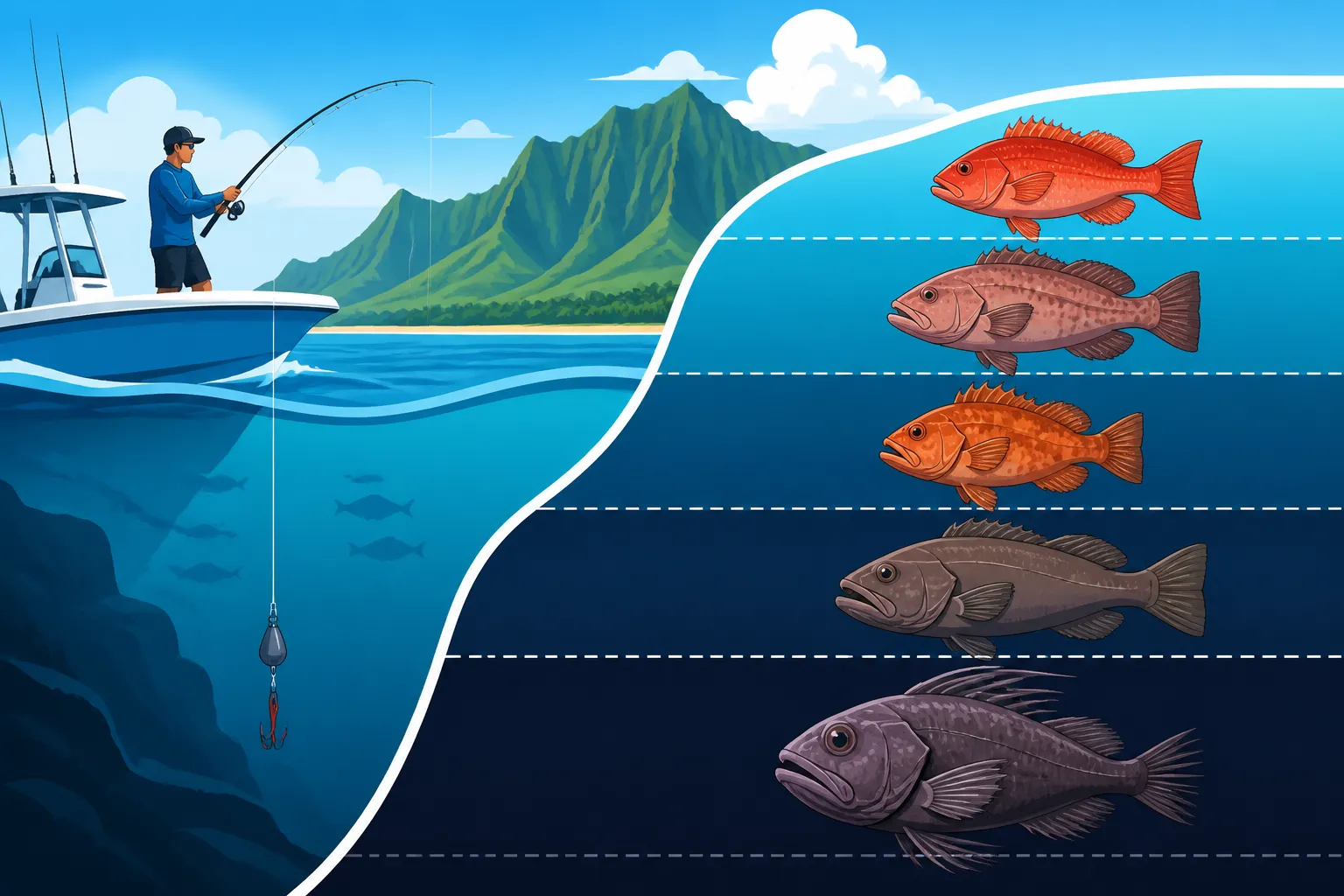
When we talk about Hawaii's bottomfish, we're not just talking about one single depth zone. These species occupy a wide range of underwater environments, each with its own characteristics that appeal to different fish. You might find some bottomfish lurking on the edges of shallow reefs, while others prefer the crushing pressures of depths hundreds of fathoms down. It's a vast vertical world, and each species has its preferred neighborhood.
Closer to shore, you might find certain "bottom" species like some goatfish (kumu or weke) patrolling the shallower reef flats, perhaps 30 to 60 feet down, feeding on crustaceans and small invertebrates. These are often the easiest to access for many anglers. But as you move offshore, the real deepwater action begins, extending from the outer edges of the fringing reefs, typically around 100-200 feet, down to incredible depths of 600 feet or more, encompassing ledges, pinnacles, and the steep slopes of our volcanic islands. The most sought-after bottomfish often reside in this latter, deeper range.
Factors Influencing Bottomfish Distribution by Depth
It's easy to think fish just swim wherever, but deepwater environments are incredibly specialized. Several critical environmental factors dictate where specific bottomfish species will live and thrive at particular depths. These aren't random occurrences; they are responses to the fundamental needs of survival, from finding food to avoiding predators. Ignoring these factors is like trying to find a polar bear in the Sahara – you're just not in the right environment.
Temperature is a huge driver. While surface waters in Hawaii are consistently warm, temperature drops dramatically as you descend. Many deepwater bottomfish, like the beautiful opakapaka or onaga, prefer cooler, more stable temperatures found at specific depths below the thermocline (the layer where temperature changes rapidly). This consistent, chilly water is crucial for their metabolism and overall well-being. Coupled with this is light penetration; below a certain depth, it's perpetual twilight or complete darkness, which influences everything from camouflage to hunting strategies. Many deepwater fish have evolved large eyes to cope with minimal light.
Pressure is another undeniable force in the deep. Every 33 feet of saltwater adds another atmosphere of pressure. Fish living at 600 feet are accustomed to pressures over 18 times greater than at the surface. Their bodies are built for this, and rapid changes in pressure, often experienced when they are reeled up quickly, can cause barotrauma, where their swim bladders expand. Food availability also dictates depth. Deepwater currents often bring nutrients and smaller baitfish or invertebrates to specific ledges and seamounts, creating a buffet for predatory bottomfish. Lastly, the actual structure of the bottom – whether it's jagged lava rock, sandy pockets, or coral rubble – provides shelter, hunting grounds, and spawning sites, all of which vary significantly with depth.
Key Bottomfish Species and Their Preferred Depths
Hawaii is famous for its vibrant pelagic fishing, but the deep bottom holds an equally thrilling and diverse array of species. Understanding which fish prefer which depth is absolutely crucial for any angler hoping to target these prized catches. It's like knowing which neighborhoods the best restaurants are in – you wouldn't go looking for sushi in a steakhouse district. This insight will drastically improve your success rate and help you appreciate the incredible biodiversity hidden beneath the waves. You can learn more about the broader array of Bottomfish Species of Hawaii to truly get a handle on what's available.
Snappers (Opakapaka, Onaga, Ehu)
The Hawaiian snappers are perhaps the most iconic deepwater bottomfish, revered for their delicious taste and challenging fight. Each species has its own specific depth preference, making precision crucial when dropping your lines. Knowing their sweet spot is key to filling your cooler.
The Opakapaka (Pink Snapper), often called the "queen of the deep," typically inhabits depths ranging from 180 to 600 feet, though they are most commonly targeted between 250 and 450 feet. They are particularly fond of irregular bottom terrain, such as ledges, rocky outcrops, and hard bottoms, especially where there's a good current to bring in food. They tend to congregate in schools, so once you find one, you often find many. Understanding the specific Opakapaka (Pink Snapper) Habits can give you an edge in targeting these beautiful fish.
The Onaga (Ruby Snapper) is another highly prized deepwater snapper, famous for its vibrant red color and delicate flesh. Onaga prefer even deeper waters than opakapaka, typically found from 600 to 1,200 feet, with their prime habitat often being around 800 to 1,000 feet. They are usually found close to the bottom along steep slopes and drop-offs, often solitary or in smaller groups. They are particularly sensitive to pressure changes and require careful handling if released. To master targeting these deep dwellers, it's worth understanding specific Onaga (Ruby Snapper) Habits.
The Ehu (Squirrelfish Snapper), while still a deepwater species, tends to live in slightly shallower depths compared to opakapaka and onaga, usually between 150 and 600 feet. They often frequent rocky bottoms and ledges, sometimes even mingling with opakapaka schools. Ehu are a fantastic eating fish and provide a solid fight on the line, making them a popular target for many bottomfish excursions.
Groupers and Jacks (Hapu'upu'u, Buta)
Beyond the snappers, Hawaii's deep waters host other formidable bottom-dwelling predators, including several species of groupers and jacks. These fish are powerful, territorial, and offer an exhilarating challenge when hooked in the deep. They each have distinct preferences in their underwater homes.
The Hapu'upu'u (Sea Bass or Hawaiian Grouper) is a deepwater grouper that can grow quite large. They are typically found in depths ranging from 200 to 800 feet, favoring rocky bottoms, caves, and overhangs where they can ambush prey. Hapu'upu'u are solitary and territorial, so while you might not catch a whole school, hooking into one can be a battle. Their firm, white flesh is highly regarded, making them a sought-after catch for deep-drop anglers.
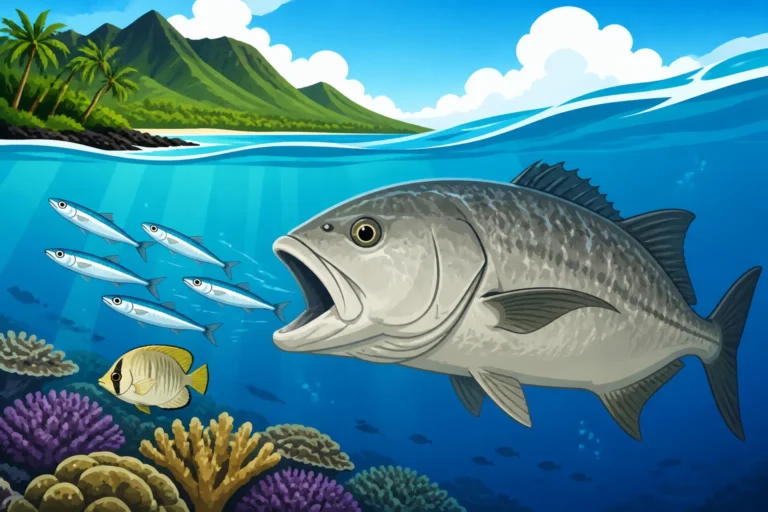
While not traditionally considered a "bottomfish" in the same vein as snappers, some large jacks, particularly the Buta (Amberjack), often patrol the deeper parts of offshore ledges and seamounts, especially where there's significant structure. They can be found from 100 feet down to several hundred feet, often hanging around the upper edges of deep drop-offs, hunting schooling baitfish. They are incredibly strong fighters, known for their powerful runs, and are a welcome surprise catch when targeting other bottom species.
Other Notable Deep Dwellers (Gindai, Kalekale)
The diversity of Hawaii's deep-sea environment means there's a whole host of other fascinating bottomfish that call these depths home. While less commonly targeted than the big snappers, they add to the richness of a deep-drop catch and are often equally delicious. From shimmering silvers to striking reds, these fish contribute to the vibrant ecosystem of the Hawaiian deep.
Gindai (Squirrelfish Snapper) are another beautiful red snapper, often found alongside Ehu and Opakapaka, usually in depths from 200 to 600 feet. They have striking large eyes, adapted for the low light conditions of their preferred habitat. Like other snappers, they prefer rocky or irregular bottom structure. Gindai are excellent eating, with flaky white meat, and are a common addition to a successful bottomfish haul.
Kalekale (Von Siebold's Snapper) are similar to Opakapaka but generally prefer deeper waters, often overlapping with the Onaga's range from 400 to 1000 feet. They are known for their beautiful pinkish-silver hue and provide a good fight, making them a welcome sight on the end of a deep-drop line. They, too, favor areas with complex bottom structure and good current flow, often indicating rich feeding grounds.
The Challenges of Deepwater Bottomfishing and How to Overcome Them
Fishing in Hawaii's deep waters is a truly unique experience, but it comes with its own set of challenges that can deter even seasoned anglers. The sheer depth, immense pressure, and sometimes unforgiving currents demand specialized knowledge, equipment, and a healthy dose of patience. However, with the right approach, these challenges can be overcome, leading to some of the most rewarding fishing experiences Hawaii has to offer. It's not a walk in the park, but the rewards are well worth the effort.
Equipment Considerations for the Deep
You can't just head out with your typical reef fishing gear and expect to conquer the abyss. Deepwater bottomfishing requires heavy-duty, specialized equipment designed to handle extreme depths, powerful currents, and potentially large, strong fish. Investing in the right tools is paramount to success and safety. Many anglers find reliable gear on sites like Amazon, which offers a wide selection of specialized rods, reels, and lines for deep-sea adventures.
- Rods: Look for heavy-action, stout rods, often made from fiberglass or composite materials, designed to handle heavy weights (often several pounds) and powerful fish. They need to have a strong backbone but often a sensitive tip to detect subtle bites at extreme depths.
- Reels: Large conventional reels with high line capacity are essential. Electric reels are increasingly popular, especially for depths exceeding 500-600 feet, as they take the grueling work out of retrieving hundreds of feet of line and heavy lead. For manually cranking, look for reels with powerful drag systems and a good retrieve ratio.
- Line: Braided line (superline) is the go-to choice for deep dropping. Its thin diameter minimizes water resistance, allowing your weight to drop faster and more vertically, and its zero-stretch quality provides excellent bite detection. You'll need hundreds of yards, often 60 to 100-pound test or more, depending on target species and depth. A heavy monofilament or fluorocarbon leader, typically 100-200 pound test, is then attached to the braid to resist abrasion from structure and sharp-toothed fish.
Techniques for Targeting Specific Depths
Once you have the right gear, mastering the techniques for deepwater bottomfishing becomes the next hurdle. It's not just about dropping a line; it's about precision, understanding the currents, and presenting your bait effectively to fish that may be hundreds of feet below. There are specific methods that will give you the best shot at success. For detailed insights, check out articles on Best Techniques for Deep Drop Bottomfishing or Jigging for Bottomfish in Hawaii.
One of the most common techniques is drift fishing. This involves allowing your boat to drift over known bottom structure while your weighted line is deployed. The drift helps cover more ground and can present your bait more naturally. You'll need to constantly monitor your sonar to stay over the fish and structure. Alternatively, anchoring can be effective if you find a highly concentrated spot, allowing for repeated drops to the same area. This is often preferred when fishing in strong currents or when trying to really work a small, productive pinnacle.
Bait presentation is also crucial. For most Hawaiian bottomfish, fresh dead bait like squid, opelu, or chunks of akule are highly effective. Some anglers use cut pieces of mahi-mahi or even strips of fish belly. The key is to keep your bait fresh and lively-looking on the hook. When targeting onaga, for instance, fresh squid is a classic choice. Knowing the Best Bait for Deep Drop Onaga Fishing can make a huge difference. For jigging, especially for opakapaka, you'll want to use heavy jigs and employ a slow, sweeping motion to entice bites. The Best Jig Weight for Bottomfishing in Deep Water will vary based on current and depth, so carrying a range is smart. Understanding factors like What water temperature bottomfish prefer can also help you hone in on the most productive depths.
Safety and Environmental Awareness
The deep ocean is a powerful place, and safety should always be your top priority. Offshore fishing requires careful planning and a healthy respect for the elements. Beyond personal safety, responsible angling practices are vital for sustaining Hawaii's precious marine resources. Always ensure you are familiar with Hawaii Fishing Regulations Explained before heading out.
Boat safety is non-negotiable. Always check weather forecasts, have all required safety equipment on board (life jackets, flares, VHF radio, EPIRB), and file a float plan with someone on shore. Being prepared for emergencies far offshore is critical. If you're considering a guided trip, booking through reputable outfits, like those highlighted in Best Bottomfishing Charters in Hawaii, ensures you're with experienced professionals who prioritize safety. It’s also wise to check the Best Season to Book a Bottomfishing Charter to ensure more favorable weather conditions.
Barotrauma is a significant concern for deepwater bottomfish that are brought up rapidly from extreme depths. Their swim bladders expand due to the drastic pressure change, making it difficult for them to swim back down if released. If you intend to release a fish, consider using a venting tool to deflate the swim bladder or a descending device to safely return the fish to its original depth. This practice greatly increases the survival rate of released fish. Always know the bag and size limits for all species you target, as violating these rules can lead to significant penalties.
Exploring Deepwater Fishing: Gear and Technology
The evolution of fishing technology has revolutionized deepwater bottomfishing, making it more accessible and productive than ever before. From sophisticated sonar systems that paint a vivid picture of the seafloor to specialized reels that do the heavy lifting, these advancements empower anglers to precisely locate and effectively target fish in the abyss. Leveraging these tools correctly can transform a hit-or-miss outing into a consistently successful one.
Advanced Sonar and Navigation for Depth Mapping
Gone are the days of blindly dropping lines and hoping for the best. Modern sonar and navigation systems are absolutely indispensable for deepwater bottomfishing in Hawaii. They are your eyes beneath the surface, revealing the intricate details of the seafloor that hold the key to finding fish. You can find excellent options for these powerful tools on platforms like Amazon, offering a range of models for every budget.
CHIRP sonar technology, for instance, provides incredibly detailed and accurate images of fish and structure, even at great depths. Unlike traditional sonar, CHIRP sends a range of frequencies, offering better target separation and clarity. Side-scan sonar allows you to see out to the sides of your boat, revealing structure that you might otherwise drift past. This is invaluable for finding hidden ledges, small pinnacles, or schools of baitfish that are just off your path. When you find a promising spot, GPS becomes your best friend. Marking precise waypoints allows you to return to productive spots time and time again, building a valuable database of fishing intelligence. Some advanced systems even offer 3D mapping, which creates a lifelike representation of the bottom topography, making it easier to visualize the terrain and identify key holding areas for bottomfish.
Rods, Reels, and Line for the Abyss
The demands of deepwater fishing mean your rod, reel, and line setup must be up to the task of not only handling heavy weights but also battling powerful fish that reside far below. It’s a specialized arsenal, far removed from your typical inshore setup, and understanding the nuances is crucial for success and preventing gear failure.
For extreme depths, electric reels have become a game-changer. These motorized reels take the physical strain out of retrieving hundreds of feet of line with heavy weights, allowing anglers to fish longer and more comfortably. While a significant investment, they dramatically increase efficiency, especially when checking bait or moving spots. For those who prefer the feel of manual retrieve, robust conventional reels with high-quality bearings, strong gearing, and excellent drag systems are essential. They should be spooled with high-capacity, strong braided line, typically 60 to 100-pound test or even more, due to its minimal stretch and thin diameter. The lack of stretch in braid means you can feel even the subtle takes of a fish far below, and its strength is vital for lifting heavy lead and large fish. A heavy monofilament or fluorocarbon leader, often 100 to 200-pound test and several feet long, is then tied to the braid to provide abrasion resistance against sharp rocks and rough-mouthed fish.
Essential Accessories for a Successful Deep Drop
Beyond the core rod, reel, and line, a suite of specialized accessories can make your deepwater bottomfishing experience more effective, efficient, and enjoyable. These are the supporting players that ensure your main gear performs optimally and that you can successfully land your hard-earned catch. Many of these essential items can be conveniently sourced from online retailers like Amazon.
One often-overlooked accessory is specialized lights. Some deepwater bottomfish, especially snappers, are attracted to light in the dark depths. Attaching small, submersible LED lights (often green or blue) above your bait rig can significantly increase your strike rate. Another critical accessory is a good supply of heavy lead or tungsten sinkers. You'll need weights ranging from 1 to 5 pounds, or even more, depending on the current, depth, and desired drop speed. Having a variety on hand is crucial as conditions can change. Finally, gaffs and specialized landing tools are vital for safely bringing large, potentially thrashing fish into the boat, especially when dealing with heavy gear and strong currents. A good pair of heavy-duty pliers for cutting wire leaders and a dehooker for safe fish release are also excellent additions to your deepwater tackle box.
| Species | Typical Depth Range (Feet) | Preferred Habitat Features | Common Bait/Lures |
|---|---|---|---|
| Opakapaka | 250 – 450 | Rocky ledges, irregular bottom, hard bottom, current | Squid, opelu, cut bait, jigs |
| Onaga | 800 – 1000 | Steep slopes, deep drop-offs, pinnacles | Squid, opelu, fish belly |
| Ehu | 150 – 600 | Rocky bottoms, ledges, coral rubble | Squid, cut bait, jigs |
| Hapu'upu'u | 200 – 800 | Caves, overhangs, rocky bottoms, solitary | Live bait, large cut bait |
| Gindai | 200 – 600 | Rocky bottom, ledges, current | Squid, cut bait, jigs |
| Kalekale | 400 – 1000 | Deep rocky structure, slopes, pinnacles | Squid, cut bait |
Disclaimer
This article is for general informational purposes only and does not constitute professional advice. Laws, prices and regulations vary by location and change over time. Consult a qualified professional for guidance on your specific situation.