Special Regulation Waters in Hawaii
One of the biggest headaches for any angler in Hawaii, whether you're a long-time resident or just visiting, is trying to figure out where you can actually fish and what rules apply. It's not always as simple as casting a line wherever there's water; many of our most beautiful and productive spots fall under "special regulations," and knowing these can save you a lot of grief (and potentially a hefty fine). This guide is here to untangle that web of rules, helping you understand the different types of specially regulated waters across the islands so you can fish with confidence and respect for our precious marine and freshwater ecosystems.
What Exactly Are Special Regulation Waters?
Alright, let's get down to it. You’ve probably heard whispers about "special regulation zones" or "restricted areas" while chatting with local anglers, and it's enough to make anyone's head spin. Essentially, special regulation waters are specific areas, both in our ocean and freshwater systems, where the standard statewide fishing rules are either modified or entirely replaced by a unique set of guidelines. These aren't just arbitrary lines on a map; they're thoughtfully designated zones created to protect vulnerable species, enhance fish populations, or manage specific recreational opportunities. Ignoring these can lead to awkward encounters with enforcement or, worse, unintended harm to the very resources we cherish.
The confusion often stems from the sheer variety of these zones. You might be accustomed to a general bag limit for a certain fish, only to find that same fish has a different size or take limit within a particular bay. Or perhaps a specific type of gear is perfectly legal almost everywhere else but strictly prohibited in one small, pristine area. It's this patchwork nature that makes pre-trip research absolutely crucial. Think of it less as a bureaucratic hurdle and more as a localized effort to preserve the magic of Hawaii's fishing for generations to come.
Beyond the Basics: Why These Rules Exist
It's easy to feel like these regulations are just there to make your life harder, but trust me, there's a good reason behind every single one. Hawaii's ecosystems are incredibly unique and, unfortunately, quite fragile. Overfishing, habitat degradation, and climate change all put immense pressure on our aquatic life. Special regulation waters are a proactive way for the Hawaii Department of Land and Natural Resources (DLNR) Division of Aquatic Resources (DAR) to address these threats head-on. They act as sanctuaries, breeding grounds, and scientific study sites, giving fish and other marine life a fighting chance to thrive.
For instance, some areas might be designated to protect critical spawning grounds for specific reef fish, ensuring future generations. Others might focus on rebuilding populations of culturally significant species that have seen declines. Then there are the freshwater zones, often managing unique fisheries like the rainbow trout in Kokee, where careful stocking and season limits ensure a sustainable recreational opportunity. These localized rules allow for a more nuanced approach than a one-size-fits-all statewide regulation, recognizing that different areas have different needs and vulnerabilities.
Identifying Special Zones: How to Know Where You Stand
So, how do you actually figure out if you're in one of these special zones? This is where the detective work comes in, and thankfully, there are reliable resources. Your absolute best friend here is the official DLNR Division of Aquatic Resources website. They publish comprehensive documents, often in PDF format, detailing all the current regulations. You can search for the document often titled "Reading the Hawaii DLNR Fishing Regulations" which will be an invaluable resource.
Beyond the digital realm, keep an eye out for physical signage. Many Marine Life Conservation Districts (MLCDs) and Fish Replenishment Areas (FRAs) will have prominent signs posted at access points, boat ramps, or along the shoreline, clearly outlining what's allowed and what's not. Don't assume that just because you don't see a sign right next to your casting spot, you're in the clear. Always check a map or consult with local tackle shops, who are usually well-versed in the immediate area's specifics. A simple GPS app on your phone, combined with knowledge of the area boundaries, can also be a lifesaver.
Diving Deep into Marine Life Conservation Districts (MLCDs)
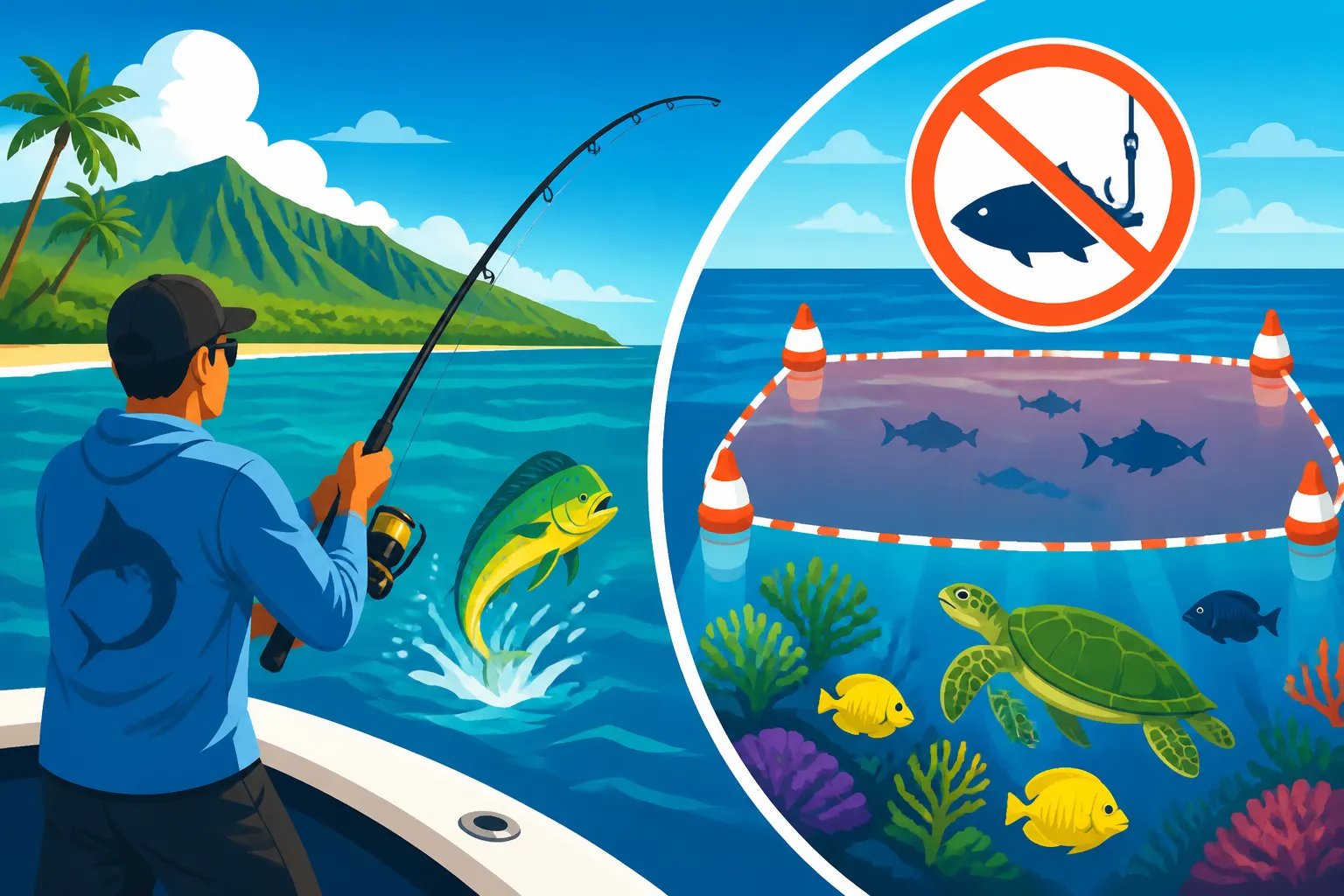
Marine Life Conservation Districts (MLCDs) are perhaps the most well-known and strictly regulated special areas in Hawaii. These are essentially underwater parks, designed to protect entire ecosystems rather than just specific fish species. The primary goal of an MLCD is to conserve marine resources and to provide a place for scientific study and public enjoyment of marine life without disturbance. This means, generally speaking, fishing within MLCDs is either severely restricted or outright prohibited.
When you're looking at an MLCD, think of it as a no-take zone for most, if not all, marine life. This includes not just fishing with a rod and reel, but also spearfishing, net fishing, and even gathering opihi or limu (seaweed) in many instances. These areas are vital for allowing fish populations to rebound, providing safe havens for breeding, and creating healthier reef systems that can seed surrounding areas. They are places where you can truly witness Hawaii's marine biodiversity in its full glory, often offering incredible snorkeling and diving experiences.
Hanauma Bay and Other Well-Known MLCDs
Perhaps the most famous MLCD, and certainly one of the most recognizable spots in Hawaii, is Hanauma Bay on Oahu. If you've ever visited, you'll know that swimming and snorkeling are encouraged, but absolutely no fishing or removal of marine life is permitted. It's a prime example of an MLCD achieving its conservation goals, with an abundance of vibrant reef fish that are unafraid of human presence. But Hanauma is just one of many.
Other significant MLCDs across the islands include:
- Pupukea on Oahu's North Shore: This area, often associated with Shark's Cove, is another popular snorkeling spot with strict no-take rules.
- Molokini Shoal off Maui: A sunken volcanic crater renowned for its clear waters and diverse marine life, fishing here is prohibited, making it a world-class dive site.
- Kealakekua Bay on the Big Island: While there are very specific historical and cultural fishing rights in certain parts of the bay, generally, fishing is highly restricted. It's best known for its vibrant coral reefs and spinner dolphins. If you're planning to fish anywhere near here, you absolutely need to consult the specific rules for the area, as it's complex and often misunderstood. Our guide on Kealakekua Bay Fishing Rules and Access can provide more detailed insights.
- Lapaka on the Big Island: Another important MLCD offering protection to reef systems.
Each MLCD has its own distinct boundaries and specific regulations, so always double-check the exact rules for the specific area you plan to visit. What might be allowed in one MLCD could be completely forbidden in another.
Allowed Activities and Strict Prohibitions within MLCDs
Generally, in an MLCD, the overarching rule is no taking of marine life. This means:
- No fishing: This covers rod and reel, spearfishing, throw nets, gill nets, or any other method of catching fish.
- No gathering: You cannot collect opihi, limu, shells, or any other marine organisms.
- No disturbing: This extends to touching, feeding, or harassing any marine animals.
However, MLCDs do allow for a range of passive activities that promote appreciation of the marine environment. These typically include:
- Swimming and Snorkeling: Enjoying the underwater beauty from a distance.
- Diving: SCUBA diving is often permitted, allowing for close-up observation.
- Photography: Capturing the stunning marine life, as long as it doesn't involve disturbing the animals or habitat.
It's crucial to remember that even within these allowed activities, the spirit of conservation prevails. You are a guest in these protected environments, and your actions should reflect that respect. Always be mindful of your fins, hands, and gear to avoid touching or damaging corals or other delicate structures. When considering a visit to one of these pristine spots, always check the Hawaii Marine Life Conservation Districts, Explained article for a deeper dive into the specifics of each location.
The Rationale Behind MLCD Protections
The establishment of MLCDs is not simply about preventing fishing; it's about ecosystem-wide health and long-term sustainability. These protected areas serve as critical nurseries, allowing juvenile fish to grow without predation from anglers, and giving adult fish a chance to reproduce and replenish populations. Scientific studies have repeatedly shown that MLCDs lead to an increase in both the size and abundance of fish within their boundaries, and often a "spillover" effect into adjacent, unprotected waters.
Think of an MLCD as a savings account for our ocean's biodiversity. By setting aside these areas, we're investing in the future of Hawaii's marine life. They provide invaluable opportunities for research, allowing scientists to monitor fish populations and coral health in relatively undisturbed conditions, offering insights that are vital for broader fisheries management. Furthermore, MLCDs offer incredible educational experiences, fostering a deeper connection between people and the ocean, and inspiring the next generation of conservationists. It's a win-win for both nature and those who love to experience it.
Understanding Fish Replenishment Areas (FRAs)
Beyond the strict no-take zones of MLCDs, Hawaii also has Fish Replenishment Areas (FRAs), which represent a slightly different approach to conservation. FRAs are specifically designed to help rebuild and sustain populations of certain commercially and recreationally important fish species, particularly reef fish, by placing targeted restrictions rather than a blanket ban on all fishing. While you might still be able to fish in an FRA, it will be under a very particular set of rules.
Unlike MLCDs, where the goal is broad ecosystem protection and often a complete cessation of take, FRAs focus on specific methods or species to ensure their long-term viability. This means you might find restrictions on the type of gear you can use, specific bag or size limits that differ from statewide rules, or even seasonal closures for certain species. The aim is to allow fish to grow to maturity, reproduce successfully, and contribute to the overall health of the reef, benefiting anglers in the long run by providing more robust fishing opportunities outside the FRA boundaries.
The Focus on West Hawaii's FRAs
Perhaps the most prominent example of FRAs in action can be found along the West Hawaii coastline, particularly on the Big Island. This region is renowned for its diverse reef fish, but historical fishing pressure led to concerns about the sustainability of certain species. In response, a comprehensive network of FRAs was established to manage these valuable resources. These areas often run from the shoreline out to a certain depth or distance, encompassing significant reef habitat. Our article, Hawaii Fish Replenishment Areas in West Hawaii, delves into the specific boundaries and implications for this crucial region.
Within these West Hawaii FRAs, the focus is often on species like uhu (parrotfish), kumu (goatfish), and other reef-dwelling fish that are susceptible to overfishing. The regulations within these FRAs are carefully crafted to allow some forms of fishing while limiting others, creating a balance between conservation and recreational access. It's a testament to adaptive management, recognizing the need for specific interventions to support particular fish populations in vulnerable areas.
Species-Specific Regulations and Gear Restrictions in FRAs
The rules within FRAs are where it gets really specific, and this is where you must pay close attention. You won't find a universal "FRA rule"; instead, each area or even specific species within an FRA might have its own unique set of guidelines.
Common types of regulations you might encounter in an FRA include:
- Gear Restrictions: Certain types of gear, such as lay nets, gill nets, or even specific types of traps, might be prohibited to reduce indiscriminate harvesting or damage to the reef. Spearfishing might be restricted to certain hours or depths. You may also find specific limitations on the number of hooks or lines you can deploy.
- Size Limits: The minimum or maximum size limits for certain fish species might be different (usually larger) than the statewide regulations, ensuring fish have a chance to spawn at least once before being harvested. For example, the Hawaii Uhu (Parrotfish) Size and Bag Limits article highlights how these important reef grazers are managed, often with specific rules in FRAs.
- Bag Limits: Daily bag limits for certain species could be lower than elsewhere, or specific species might be entirely off-limits for harvest within the FRA.
- Seasonal Closures: To protect spawning aggregations, certain species might have closed seasons within an FRA, even if they are open elsewhere. An example is the Hawaii Moi Closed Season, Explained which often has localized considerations.
It's vital to research the specific FRA you intend to fish in before you head out. A quick check on the DLNR website or a fishing app that integrates regulation maps is your best bet. Many local tackle shops also have current information and can offer invaluable advice. For instance, if you're looking for specific gear, you might browse options on Amazon to ensure you have compliant equipment.
How FRAs Contribute to Sustainable Fishing
Fish Replenishment Areas are a cornerstone of sustainable fisheries management in Hawaii. By providing targeted protection, they allow fish populations to recover and thrive within their boundaries. This, in turn, has a positive "spillover" effect on adjacent fishing grounds, meaning that fish that mature and reproduce within an FRA can then move into unprotected areas, becoming available to anglers. It's a strategy that aims to have its cake and eat it too – protecting critical resources while still allowing for recreational and commercial fishing in other areas.
The long-term success of FRAs hinges on angler compliance and understanding. When everyone respects the specific rules of these areas, the benefits multiply. Healthy fish populations contribute to a more resilient ecosystem, provide better fishing opportunities for everyone, and support the cultural and economic value of fishing in Hawaii. It's an investment in the future, ensuring that the next generation of anglers can still experience the joy of catching healthy fish in Hawaii's waters.
Navigating Hawaii's Freshwater Special Regulation Zones
When most people think of fishing in Hawaii, their minds immediately conjure images of deep blue ocean waters, marlin, tuna, and vibrant reef fish. But let me tell you, Hawaii also offers some truly unique freshwater fishing experiences, complete with its own set of special regulations that you absolutely need to know. Unlike the vast, open ocean, freshwater fishing opportunities are often concentrated in specific reservoirs and stream sections, making localized rules even more important to manage these more confined resources.
These freshwater special regulation zones are primarily designed to manage introduced game fish populations, such as rainbow trout, largemouth bass, and peacock bass, as well as to protect native stream species where they still exist. The rules here are often very specific about seasons, tackle, and catch limits, reflecting the delicate balance of these freshwater ecosystems and the efforts to maintain quality recreational fisheries.
Kokee Public Fishing Area and Trout Season Rules
If you're looking to catch trout in Hawaii, you're heading straight for the Kokee Public Fishing Area in the mountains of Kauai. This is truly a one-of-a-kind fishery in Hawaii, as rainbow trout are not native to the islands but are stocked annually by the DLNR. Because of this unique situation, Kokee operates under very strict and highly anticipated seasonal regulations. The Hawaii Kokee Trout Fishing Season Dates are a highlight for many anglers, typically opening in August or September and running for a few months.
During the open season, there are specific rules about:
- Fishing Hours: Often limited to daylight hours.
- Gear Restrictions: Typically flies or lures only, with specific hook size limits. Live bait is generally prohibited to prevent the introduction of invasive species.
- Bag and Size Limits: Very specific daily limits are in place to manage the stocked population and ensure fair access.
- Access Points: Designated areas for fishing within the Kokee Public Fishing Area.
It's absolutely essential to check the latest regulations for the Kokee Public Fishing Area each year, as the dates and rules can be adjusted. This is one of those places where asking local tackle shops on Kauai or checking the DLNR website is not just a good idea, it's mandatory.
Wahiawa Reservoir and Nuuanu Reservoir Specifics
Beyond trout, Hawaii's reservoirs offer excellent opportunities for species like largemouth bass, smallmouth bass, peacock bass, channel catfish, and tilapia. Two of the most prominent freshwater fishing spots with special regulations are Wahiawa Reservoir (also known as Lake Wilson) on Oahu and Nuuanu Reservoir (specifically Nuuanu Reservoir No. 4, No. 2, and No. 1) also on Oahu.
Wahiawa Reservoir is famous for its peacock bass, a beautiful and hard-fighting game fish. The reservoir has specific rules regarding:
- Permits: While you will need a freshwater fishing license for all freshwater fishing in Hawaii (you can find details in Hawaii Freshwater Fishing License and Rules), Wahiawa may have additional requirements or preferred methods of obtaining access information.
- Boat Restrictions: Often limited to kayaks, canoes, or small electric motorboats to protect water quality and manage access. There are designated launch points.
- Species-Specific Rules: Bag and size limits for bass, catfish, and tilapia.
- Catch-and-Release for certain species: While harvesting invasive species like tilapia and certain types of carp is often encouraged, specific game fish might have catch-and-release recommendations or stricter limits. The Hawaii Wahiawa Reservoir Fishing Rules guide provides more details.
Nuuanu Reservoir offers another unique set of challenges and rewards. While popular for bass and tilapia, access can be more restrictive. Nuuanu Reservoir No. 4, for example, is often subject to specific access permits and regulations due to its role in Honolulu's water supply. You’ll definitely want to look up Hawaii Nuuanu Reservoir fishing rules before planning a trip here. These reservoirs are often managed not only for fishing but also for water supply, flood control, and ecological preservation, which leads to varied and often very localized rules.
The Unique Challenges of Freshwater Regulations
Managing freshwater fisheries in Hawaii presents its own unique set of challenges compared to ocean fishing. Our freshwater ecosystems are relatively small and isolated, making them particularly vulnerable to invasive species and habitat alteration. The regulations are designed to:
- Prevent Further Introductions: Strict rules on bait and tackle are often in place to avoid accidentally introducing new, harmful species into these delicate environments.
- Manage Introduced Populations: Since most game fish in Hawaii's freshwater are introduced, regulations help manage their numbers to prevent them from overwhelming native species or impacting water quality.
- Protect Water Quality: As many reservoirs are also used for drinking water, rules about boating, shoreline access, and waste disposal are paramount.
- Provide Sustainable Recreation: By carefully managing catch limits and seasons, the DLNR aims to ensure these limited freshwater resources can continue to provide quality fishing opportunities for the community.
Understanding these underlying goals helps to make sense of the often very specific and localized freshwater regulations. It's all about preserving these rare and precious inland fishing opportunities for everyone.
Other Key Restricted Areas and General Considerations
While MLCDs, FRAs, and specific freshwater zones cover a broad range of special regulations, Hawaii has other types of restricted areas that anglers need to be aware of. These can be less about fisheries management and more about public safety, land access, or the protection of other sensitive resources. Ignoring these rules can lead to more than just a fine; it can result in trespassing charges or even dangerous situations.
Part of being a responsible angler in Hawaii is not just knowing fishing laws, but also understanding broader land and water access rules. Whether it's a military base, private property, or a wildlife sanctuary, the onus is always on the angler to know where they are and what activities are permitted. Always prioritize safety and respect for local landowners and communities.
Military Installations and Private Property Access
Hawaii is home to numerous military installations across all islands, including large bases on Oahu (such as Joint Base Pearl Harbor-Hickam and Marine Corps Base Hawaii) and Kauai (Pacific Missile Range Facility). These areas often have extensive coastlines and shorelines that look like prime fishing spots. However, access to military lands is strictly controlled. Fishing on or from military property without explicit permission and proper clearance is considered trespassing and can lead to severe penalties. This isn't just about fishing regulations; it's about national security and safety.
Similarly, much of Hawaii's coastline is adjacent to private property. While Hawaii has strong public access laws for shorelines below the high tide mark, accessing these areas often requires crossing private land. Always seek permission from landowners before crossing private property to reach a fishing spot. Disregarding "No Trespassing" signs or ignoring requests from property owners can lead to legal issues and strains relationships between anglers and communities. If you're unsure about access, it's always best to err on the side of caution and find an alternative, clearly public access point, such as those detailed in articles like Hawaii shoreline fishing rights and public access rules.
Wildlife Sanctuaries and Protected Species Zones
Beyond fish, Hawaii is home to a spectacular array of wildlife, much of it protected. Certain areas are designated as wildlife sanctuaries, and these often come with fishing restrictions to protect birds, marine mammals, or other sensitive species. For example, areas near monk seal haul-out sites or seabird nesting colonies might have temporary or permanent fishing restrictions.
It’s also crucial to remember that some marine species are federally and state protected, regardless of whether you're in a special regulation zone. This includes:
- Hawaii's Monk Seals: These critically endangered marine mammals are protected by both state and federal law. It is illegal to approach or harass a monk seal. If you hook one accidentally, you must know how to properly release it without causing harm.
- Sea Turtles (Honu): All species of sea turtles found in Hawaii are protected. It is illegal to touch, harass, or attempt to feed them. If you accidentally hook a turtle, again, knowing proper release protocols is vital.
- Whales and Dolphins: While less likely to be directly impacted by fishing from shore, boaters must maintain safe distances from these magnificent creatures.
It's your responsibility as an angler to be aware of these protected species and how to act if you encounter them. Ignorance is not an excuse when it comes to harming endangered wildlife. For more information on this, check out Hawaii turtle and monk seal proximity rules for anglers.
The Importance of Respecting Local Customs and Signage
Hawaii's culture is deeply connected to the land and sea, and that includes fishing. Beyond the official regulations, there are often unwritten local customs and community norms that are just as important to respect. This can include:
- "Talk Story": Engaging with local anglers, showing respect, and asking questions can provide invaluable insights into both the fishing and the local etiquette.
- Fishing with Aloha: This means being considerate of others, not leaving trash, and taking only what you need.
- Heeding Local Advice: If a local tells you a spot is kapu (forbidden) or advises against a certain practice, it’s wise to listen, even if you don't immediately see a sign.
- Signage: Always read and obey all posted signs, whether they are from DLNR, a park service, or private landowners. They are there for a reason, usually for safety, resource protection, or to delineate private property.
By embracing these broader considerations and approaching your fishing adventures with respect and aloha, you not only ensure compliance with all rules but also foster positive relationships within the community and contribute to the overall health of Hawaii's environment.
Staying Compliant: Your Guide to Navigating the Rules
Let's be honest, trying to keep track of all these special regulations can feel like a full-time job. It's enough to make you want to just stay home! But it doesn't have to be overwhelming. With a little proactive effort and knowing where to look, you can confidently navigate Hawaii's fishing rules and enjoy our incredible waters without unnecessary stress. Staying compliant isn't just about avoiding penalties; it's about being a responsible steward of the environment and contributing to the sustainability of the sport we all love.
The key is to integrate regulation checks into your fishing routine, much like you'd check the weather or your tackle box. It becomes second nature, and soon you'll be able to quickly determine if a spot requires special attention. Remember, the rules are there to protect the resources, which ultimately benefits all of us.
Essential Resources: DLNR and Local Knowledge
When it comes to official regulations, the Hawaii Department of Land and Natural Resources (DLNR) Division of Aquatic Resources (DAR) is your ultimate authority. Their website is a treasure trove of information.
- Official Website: The DLNR DAR website (dlnr.hawaii.gov/dar) is the first place you should go. Look for sections on "Fishing Regulations" or "Rules and Regulations." They often publish comprehensive guides, including detailed maps of special regulation areas. The guide Hawaii DLNR Fishing Regulations Explained can walk you through how to interpret these documents.
- PDF Documents: Many regulations are available as downloadable PDF files. These are fantastic for printing out or saving to your phone for offline access when you're out in the field.
- Local Tackle Shops: Don't underestimate the power of local knowledge! Staff at tackle shops across the islands are often incredibly knowledgeable about the immediate area's regulations, recent changes, and local customs. They can provide practical advice that complements the official documents. Many also stock printed copies of the rules or can point you to helpful resources. You might even find specific regulation guides for sale on Amazon that summarize the DLNR rules.
- DLNR Offices: If you have a complex question or can't find the information online, don't hesitate to call or visit a local DLNR office. Their staff are there to help clarify the rules.
Table: Overview of Hawaii's Special Regulation Areas
| Regulation Type | Primary Goal | Key Characteristics | General Fishing Allowed? | Common Examples |
|---|---|---|---|---|
| Marine Life Conservation District (MLCD) | Ecosystem protection, scientific study | Strict no-take zones for marine life, coral protection | No | Hanauma Bay, Pupukea, Molokini Shoal, Kealakekua Bay |
| Fish Replenishment Area (FRA) | Species replenishment, sustainable harvest | Targeted restrictions (gear, size, bag limits) for specific species | Yes (with restrictions) | West Hawaii FRAs (e.g., for uhu, kumu) |
| Freshwater Special Zone | Game fish management, water quality | Specific seasons, gear, bag limits for introduced species | Yes (with license/permit) | Kokee Public Fishing Area, Wahiawa Reservoir |
| Wildlife Sanctuary/Protected Zone | Protection of specific flora/fauna | Variable restrictions based on protected species | Sometimes (highly restricted) | Near monk seal haul-outs, bird nesting areas |
| Military/Private Property | Security, land ownership rights | Access prohibited without explicit permission | No | Joint Base Pearl Harbor-Hickam shoreline, private beach access points |
Planning Your Trip: Research Before You Cast
Thinking about a fishing trip to a new spot? Excellent! Now, before you even pack your gear, dedicate some time to research.
- Identify Your Location: Pinpoint the exact spot you want to fish on a map.
- Check DLNR Resources: Go to the DLNR DAR website and search for regulations specific to that area. Are there any MLCDs, FRAs, or freshwater zones nearby?
- Cross-Reference: If you're using a fishing app, make sure its regulation information is up-to-date. Always cross-reference with the official DLNR site.
- Look for Signage: As you approach your fishing spot, keep an eye out for any posted signs that might clarify or modify general rules.
- Talk to Locals: If possible, chat with experienced local anglers or visit a tackle shop in the area. They can offer practical tips and confirm your understanding of the rules.
- Consider Your Target Species: Double-check bag and size limits for the specific fish you're hoping to catch. Remember that Hawaii Bag and Size Limits by Species can vary greatly depending on location.
This "research before you cast" mindset will prevent headaches, ensure you're fishing legally and ethically, and ultimately lead to a more enjoyable and successful outing. And if you're a visitor, remember that you'll also need to understand the nuances of a Hawaii Nonresident Marine Fishing License, Explained.
Penalties for Non-Compliance: What's at Stake
Let's not sugarcoat it: violating Hawaii's fishing regulations, especially in special regulation waters, can have serious consequences. These aren't just minor slaps on the wrist; they are designed to deter illegal activity and protect our precious resources.
- Fines: Penalties can range from hundreds to thousands of dollars, depending on the severity of the violation, the species involved, and whether it's a first offense. Repeat offenses carry even stiffer penalties.
- Confiscation of Gear: Your fishing gear, including rods, reels, nets, and even boats, can be confiscated.
- Loss of Fishing Privileges: In some cases, you could lose your fishing license or be prohibited from fishing in Hawaii for a period.
- Legal Action: Severe violations, especially those involving protected species or large-scale illegal take, can lead to criminal charges and even jail time.
The DLNR Division of Conservation and Resources Enforcement (DOCARE) actively patrols these special regulation areas. They are there to enforce the rules and protect Hawaii's natural resources. It's far better to spend a few minutes understanding the regulations than to face the very real and costly consequences of non-compliance. Respect the rules, respect the land, and respect the ocean, and you'll be contributing positively to the future of fishing in Hawaii.
Disclaimer
Please note that while this guide provides comprehensive information, fishing regulations in Hawaii are subject to change. It is your responsibility to consult the most current official regulations from the Hawaii Department of Land and Natural Resources (DLNR) Division of Aquatic Resources (DAR) before engaging in any fishing activities. This guide is for informational purposes only and should not be considered legal advice.