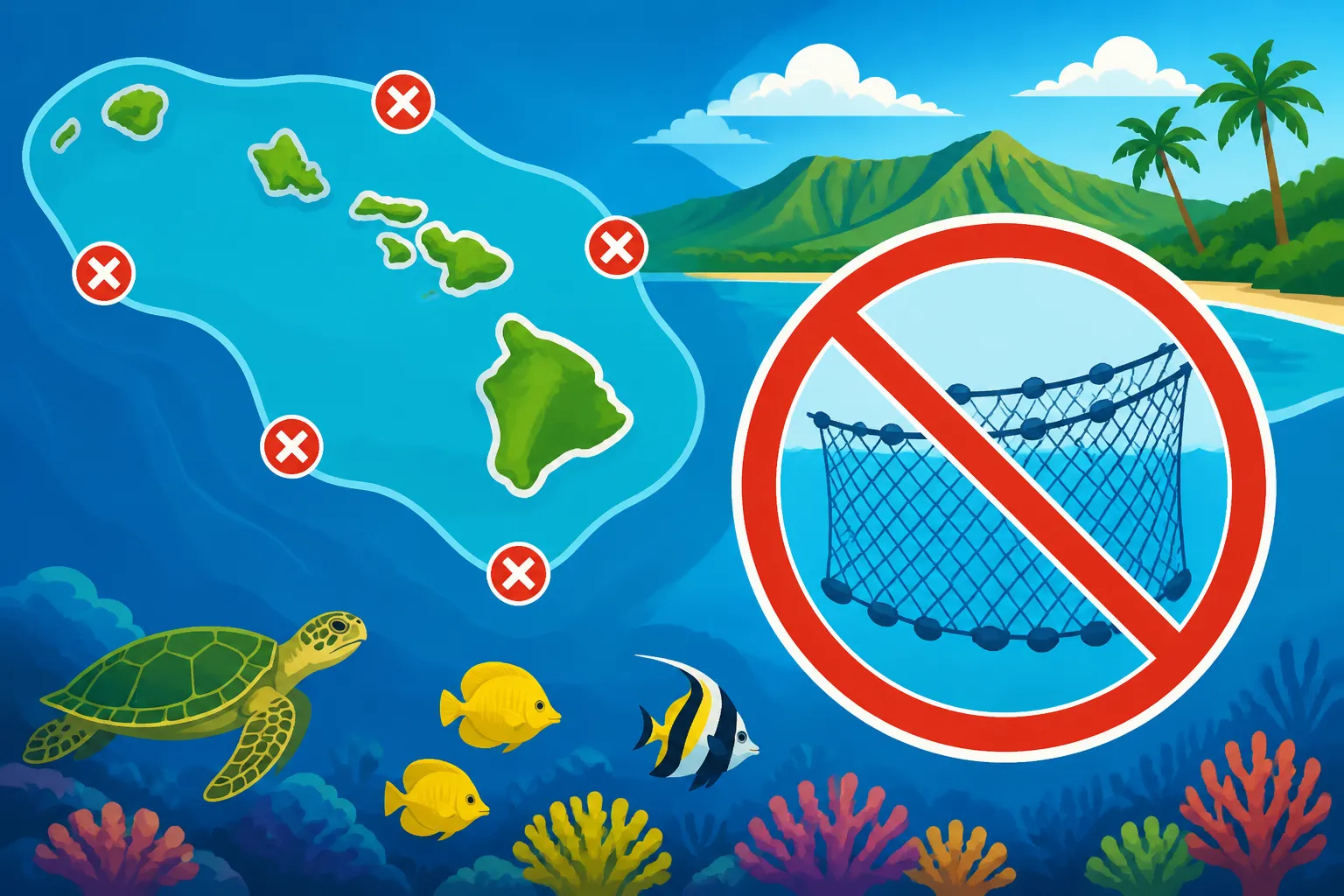
Where net fishing is banned in Hawaii
Hawaii’s ocean is a treasure, a vibrant tapestry of life that generations have relied on for sustenance and connection. But for many, the idea of traditional net fishing in these beautiful waters comes with a significant headache: the sheer complexity of rules and regulations. It's frustrating to want to participate in a time-honored practice only to feel lost in a sea of ever-changing laws about what's allowed and, more importantly, where it's absolutely banned. This guide is here to untangle that confusion, providing clear, actionable information on where net fishing is restricted or prohibited in Hawaii, helping you fish responsibly and avoid hefty penalties.
Understanding Hawaii's Net Fishing Landscape: General Prohibitions and Protected Areas
When we talk about net fishing in Hawaii, it’s not a simple blanket yes or no. The regulations are highly localized and species-specific, designed to protect sensitive ecosystems and allow fish populations to thrive. The key to responsible net fishing lies in knowing these specific zones where restrictions are tightest, or outright bans are in place.
Marine Life Conservation Districts (MLCDs)
Imagine a pristine underwater garden, teeming with colorful fish and delicate corals. That's essentially what a Marine Life Conservation District (MLCD) is: a designated area created to conserve and replenish Hawaii's marine resources. These areas are typically the most heavily regulated, and for very good reason. They act as nurseries and safe havens where marine life can flourish undisturbed, ensuring that there's always a source to repopulate surrounding fishing grounds.
In MLCDs, the rules are usually very strict, often prohibiting the take of any marine life, which naturally includes net fishing. Spear fishing, for example, is usually off-limits in these areas too, showing the broad scope of protection. Some of the most well-known MLCDs where net fishing is definitively banned include the iconic Hanauma Bay on Oahu, Lapakahi MLCD on the Big Island, and much of the famed Kealakekua Bay, where Captain Cook first landed. If you're planning any fishing activity, including net use, always check if you're within an MLCD boundary. A great resource to dive deeper into these areas is the comprehensive guide on Hawaii Marine Life Conservation Districts, Explained.
Fish Replenishment Areas (FRAs)
Beyond MLCDs, Hawaii has also established Fish Replenishment Areas (FRAs), particularly prominent along the Kona coast of the Big Island. While the regulations in FRAs might differ slightly from MLCDs, they share a similar conservation goal: to help fish populations recover and sustain themselves. In many FRAs, especially those established to protect reef fish, the taking of certain species is prohibited, and this often extends to the use of nets.
For instance, the West Hawaii Fish Replenishment Area is a critical zone, primarily designed to help replenish reef fish populations. While some traditional fishing methods might be allowed for subsistence purposes in some FRAs, commercial collection of aquarium fish using nets is heavily restricted or outright banned. The rationale here is to prevent over-harvesting of juveniles and breeding stock, ensuring a healthy future for the reef ecosystem. Understanding these specific areas is crucial, and you can learn more by checking out Hawaii Fish Replenishment Areas in West Hawaii.
Other Restricted Waters and Seasonal Closures
It's not just MLCDs and FRAs; specific bays, harbors, and even stretches of coastline can have their own local ordinances restricting or banning net fishing. These can be driven by a variety of factors, from navigation safety to protecting specific spawning grounds or traditional gathering areas. For example, certain harbor entrances or heavily trafficked channels might restrict net usage to prevent entanglement with vessels.
Moreover, certain species have specific seasonal closures, during which any form of harvest, including net fishing, is prohibited. A classic example is the Moi (Pacific Threadfin), which has a strict closed season from June 1st to August 31st each year to protect them during their spawning period. If you were planning to target Moi with a net, this seasonal ban would apply universally, regardless of the area. For more details on these vital seasonal restrictions, you'll want to read up on Hawaii Moi Closed Season, Explained and even Hawaii Opihi Harvest Limits and Size Rules for other regulated marine life harvesting. Always consult the Hawaii Department of Land and Natural Resources (DLNR) for the most current information, as these local restrictions can change.
Specific Net Types and Their Prohibited Uses
The type of net you intend to use plays a massive role in whether it's legal or banned in certain areas. Hawaii's regulations are very particular about net construction, mesh size, and how nets are deployed, aiming to minimize bycatch and ensure sustainable harvesting.
Gill Nets and Lay Nets: High Regulation, Frequent Bans
Gill nets and lay nets are perhaps the most heavily scrutinized net types due to their indiscriminate nature. These nets are designed to catch fish by their gills as they try to swim through the mesh. While historically used, their modern deployment can be problematic because they can catch non-target species, including protected ones like sea turtles or monk seals, and can also lead to significant waste of bycatch.
Because of these concerns, gill nets and lay nets are subject to stringent regulations. In many areas, they are outright banned. Where they are allowed, there are often strict requirements on mesh size, depth of water, time of deployment (e.g., must be set and retrieved within a certain timeframe), and mandatory attendance by the fisher. For example, some regulations might dictate that a gill net cannot exceed a certain length or must be marked conspicuously. The enforcement around these nets is particularly strict, and violations can carry severe penalties. This contrasts with more active fishing methods like spearfishing, which also has its own set of detailed Hawaii Spearfishing Regulations, but allows for more selective targeting.
Throw Nets (Cast Nets) and Regulated Use
Throw nets, also known as cast nets, are a common tool for catching baitfish or smaller schooling fish like Akule. Unlike gill nets, these are actively thrown and retrieved, allowing for more selective harvesting. However, even throw nets have specific regulations that dictate their legality.
The most critical factor for throw nets is the mesh size. There are strict minimum and sometimes maximum mesh size requirements to ensure that only fish of a certain size are caught, allowing juveniles to escape and grow. For instance, you might find regulations stating a throw net must have a mesh size of no less than a certain inch, and these rules can vary by region or target species. Using a throw net with an illegal mesh size, even in an otherwise permitted area, can lead to fines and confiscation. It’s vital to confirm these measurements. Or maybe you're trying to figure out if your current throw net meets the legal mesh size requirements – a specific mesh gauge tool, easily found on Amazon, can be a valuable asset for quick checks. Additionally, areas closed to all fishing will naturally prohibit throw net use, and specific regulations exist around Hawaii Akule Net Fishing Rules when targeting these schooling fish.
Limiting Factors: Mesh Size, Gear Specifications, and Species
Beyond the general type of net, several specific factors determine where and how net fishing is allowed:
- Mesh Size: As mentioned, this is paramount. Different fish species require different mesh sizes to be legally harvested, preventing the capture of undersized fish. Always double-check the current DLNR guidelines for the specific species you intend to net.
- Gear Specifications: There might be limits on the length or depth of nets, the materials used, or even the type of floats and weights. These are often in place to prevent nets from becoming "ghost fishing" hazards if lost, or to limit the overall fishing effort in an area.
- Target Species: Netting for certain species might be completely prohibited, especially if they are protected, rare, or have severe bag and size limits. For example, while Uhu (parrotfish) are allowed to be caught by certain methods, there are very specific Hawaii Uhu (Parrotfish) Size and Bag Limits that could preclude some net types. Likewise, general Hawaii Bag and Size Limits by Species apply regardless of capture method.
- Time of Day/Year: Some regulations might restrict net use to certain hours of the day (e.g., not at night) or specific seasons, often tied to spawning cycles or migratory patterns.
It's a lot to keep track of, but the spirit of these rules is to ensure that Hawaii's marine resources remain abundant for future generations.
Here's a quick reference table outlining general net fishing prohibitions in various protected areas:
| Protected Area Type | General Net Fishing Rule | Common Net Types Restricted/Banned | Rationale |
|---|---|---|---|
| Marine Life Conservation | Generally prohibited (all marine life take restricted) | All net types | Species protection, ecosystem health, observation focus |
| Fish Replenishment Areas | Heavily restricted, often specific bans apply | Gill nets, aquarium trade nets | Population replenishment, breeding stock protection |
| Harbors & Channels | Often restricted or banned | All net types | Navigation safety, vessel traffic |
| Designated Shorelines | Local ordinances may ban or restrict specific nets | Lay nets, large throw nets | Local conservation, public safety |
| Seasonal Closures | Prohibited for target species during closure period | Any net targeting closed species | Spawning protection, stock recovery |
Navigating the Regulations and Avoiding Penalties
The best way to enjoy Hawaii's fishing opportunities, including net fishing where permitted, is to be thoroughly informed. Ignorance of the law is never an excuse, and Hawaii's enforcement agencies take marine resource protection very seriously.
The Importance of DLNR Resources
The Hawaii Department of Land and Natural Resources (DLNR), specifically its Division of Aquatic Resources (DAR), is your ultimate authority for all fishing regulations. They publish comprehensive guidelines that detail every nuance of net fishing, including specific banned areas, legal mesh sizes, and species-specific rules.
You should always make it a point to consult their official publications. These are often available as downloadable PDFs on the DLNR website, and sometimes in print at local tackle shops or DAR offices. Perhaps you're looking for a durable, waterproof copy of the current regulations, which you might find on retailers like Amazon, to keep handy in your tackle box. Checking the Reading the Hawaii DLNR Fishing Regulations guide is an excellent starting point for understanding how to interpret these critical documents. Remember, regulations can change, so it's wise to review them annually or before any significant fishing trip.
Penalties for Illegally Net Fishing
The consequences of violating Hawaii's net fishing regulations are not minor. They are designed to be a significant deterrent, reflecting the state's commitment to protecting its precious marine environment. If you're caught illegally net fishing in a banned area or using a prohibited net type, you could face:
- Substantial Fines: These can range from hundreds to thousands of dollars per violation, depending on the severity and impact.
- Confiscation of Gear: Your nets, boat, and even vehicle (if used in the commission of the offense) can be confiscated. This loss can be far more costly than the monetary fine itself.
- Criminal Charges: In serious cases, particularly those involving damage to protected resources or repeated offenses, you could face misdemeanor or even felony charges, potentially leading to jail time.
- Loss of Future Fishing Privileges: Depending on the infraction, you might have your fishing privileges revoked for a period, making it illegal for you to fish at all.
Imagine you've just spent a few hundred dollars on a new throw net, only to have it confiscated and receive a $500 fine because you didn't realize the local bay you were fishing in had a mesh size restriction different from the statewide rule. It's a tough lesson to learn, and one that's easily avoidable with proper research. You can get a better sense of the general consequences for fishing violations by looking into Fishing Without a Required License in Hawaii: Penalties, as the principles often overlap with other regulation breaches.
Responsible Angling and Community Engagement
Ultimately, net fishing in Hawaii is about more than just catching fish; it's about being a responsible steward of the ocean. The regulations exist not to frustrate you, but to preserve the resources that make Hawaii such an incredible place to live and visit. By taking the time to understand where net fishing is banned, what types of nets are restricted, and why these rules are in place, you become part of the solution.
Engage with local fishing communities, ask questions at tackle shops, and always err on the side of caution. If you're unsure about a specific area or net type, don't use it until you've confirmed its legality. Even something as simple as a good pair of polarized sunglasses, available from Amazon, can help you spot protected areas or observe marine life you should avoid disturbing. Investing in a good quality, responsible fishing guide book, often available through Amazon, can also be a fantastic way to deepen your understanding of local species and their habitats, guiding you toward more sustainable practices. Let's all do our part to ensure that Hawaii’s waters remain bountiful for generations to come.
Disclaimer
Please remember that fishing regulations, especially in dynamic environments like Hawaii's marine waters, can change. The information provided in this article is intended for general guidance and informational purposes only and does not constitute legal advice. Always consult the most current regulations issued by the Hawaii Department of Land and Natural Resources (DLNR) or contact their Division of Aquatic Resources (DAR) directly before engaging in any fishing activity. It is your responsibility to know and follow all applicable laws.