Hawaii ice chest and catch transport rules for interisland travel
It's incredibly frustrating when you've had a fantastic day out on the Hawaiian waters, reeled in some beautiful fish, and then realize that getting your prized catch from one island to another isn't as simple as tossing it in a cooler. The rules around transporting fish interisland can be a real head-scratcher, creating unnecessary stress for anglers just trying to share their bounty or bring it home. This guide is here to untangle those regulations, making sure your delicious fish makes it safely and legally across the channels.
Understanding Hawaii's Interisland Transport Regulations for Fish
When you're dealing with a place as ecologically unique and fragile as Hawaii, every regulation has a purpose, especially those concerning the movement of plants and animals – or, in our case, fish – between islands. It might seem like an inconvenience, but these rules are literally safeguarding the very ecosystems that make fishing here so special.
Why These Rules Exist: Protecting Our Unique Ecosystems
Imagine inadvertently introducing a pest or disease from one island to another. The impact could be devastating, threatening native species, altering delicate reef systems, or even affecting commercial fisheries. This isn't just a hypothetical concern; Hawaii has battled numerous invasive species over the years that arrived through various means. The Department of Land and Natural Resources (DLNR), specifically its Division of Aquatic Resources (DAR), is the agency tasked with preventing such occurrences. They implement these rules to prevent the spread of aquatic invasive species, parasites, and diseases that could harm our unique marine and freshwater environments.
For instance, a fisher might have a cooler that picked up some invasive algae from a fishing spot on Oahu. If they were allowed to transport a whole, uncleaned fish with that same cooler to Kauai, they could unwittingly introduce that algae to a new ecosystem. These biosecurity measures are in place precisely to stop those kinds of unintended consequences, keeping our waters healthy for future generations of anglers. If you're ever curious about the broader framework, our guide on Hawaii Fishing Regulations Explained delves into the overarching principles.
The Basic Principle: Processed and Properly Stored
The golden rule for interisland fish transport is simple in concept, but sometimes confusing in application: your fish must be processed and properly stored. What does "processed" actually mean? Generally, it means the fish should not be whole, uncleaned, or in a "freshly caught" state. For most recreational anglers, this means gutting, gilling, and ideally filleting your catch. The goal is to remove internal organs and blood that could harbor pathogens or attract unwanted attention from insects during transit.
Consider it this way: if you're flying, the airline and agricultural inspectors want to ensure that what you're bringing won't spoil rapidly, leak, or introduce biological material that could pose a risk. A perfectly cleaned, iced, and preferably filleted fish significantly reduces these concerns. A whole fish, even if gutted, still carries more risk and is often subject to stricter scrutiny or outright rejection. This is particularly true for fish like tuna, where a big, intact Ahi might raise more flags than neatly packaged loins. Be mindful of individual species rules too, like those detailed in Hawaii ahi bag limit rules or Hawaii mahimahi size limit rules.
Preparing Your Catch for Interisland Travel
Getting your fish ready for interisland travel is a crucial step that can make or break your ability to bring it home. It’s not just about keeping it fresh; it’s about meeting regulatory standards to ensure a smooth journey.
Cleaning and Processing Your Fish
This is where the rubber meets the road. Before you even think about packing, your fish needs to be meticulously cleaned. For most interisland travel, especially by air, the cleaner and more processed your fish, the better.
Step-by-Step Processing:
- Gutting and Gilling: At a minimum, every fish must be thoroughly gutted and gilled. This means removing all internal organs and the gills. These are the primary areas where bacteria can grow rapidly and where parasites or diseases might reside. Rinse the cavity thoroughly with saltwater or fresh water until it's clean of any blood or residual matter.
- Scaling (Optional but Recommended): While not always strictly required for transport, scaling can further reduce the amount of organic material and make the fish cleaner overall.
- Filleting (Highly Recommended): For maximum peace of mind and easiest transport, filleting your fish is often the best approach. Removing the head, tail, and bones, and separating the flesh into clean fillets, dramatically reduces volume and potential biosecurity risks. This is especially practical for larger fish like Ono (wahoo) or Mahi-mahi. Make sure any fillets are skin-on or skin-off, depending on your preference, but always clean.
- Wiping Down: After processing, wipe down the fish or fillets with a clean cloth to remove any lingering moisture. Moisture can promote bacterial growth.
Think of it like this: if you were taking a perishable item on a long trip, you'd want it in its most stable, compact, and clean form. The same applies to your catch. If you try to transport a whole, uncleaned Ulua, you're almost certainly going to run into issues. By processing it down to clean fillets, you’re not only preserving the quality of your catch but also showing you respect the regulations designed to protect our islands. You might even refer to guides like How to Catch Ahi in Hawaii or How to Catch Mahimahi in Hawaii for tips that include proper handling for consumption.
Proper Packaging and Storage in Your Ice Chest
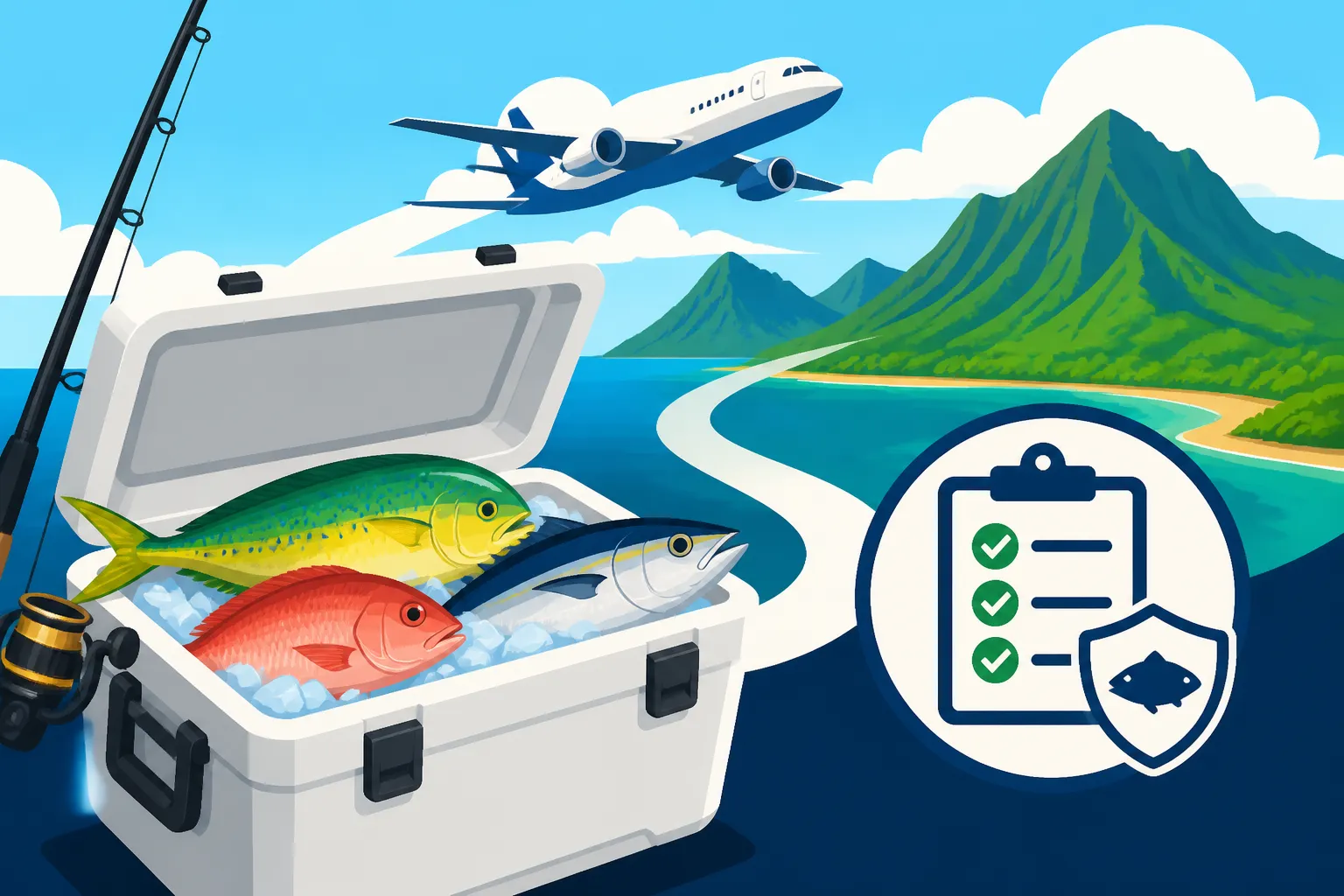
Once your fish is gleaming clean, the next step is impeccable packaging and storage. This is where your ice chest, often picked up from places like Amazon, becomes your best friend. The goal here is to keep your fish at a consistently cold temperature and prevent any leakage or odor.
Choosing the Right Ice Chest:
Invest in a high-quality, well-insulated ice chest or cooler. Brands like Yeti, RTIC, or even some of the robust Coleman models often found on Amazon are excellent choices because they maintain temperature for extended periods and have tight seals. For air travel, ensure your cooler has a drain plug that can be securely sealed or taped shut to prevent leaks. Many airlines have specific requirements for coolers – no soft-sided coolers, for example – so it's always smart to check with your carrier first.
Chilling Agents:
- Ice: Regular ice is common, but it melts. Pack your fish, layer of ice, then more fish. Crucially, don't let your fish sit in melted ice water. Some anglers will place fish in plastic bags before putting them on ice to prevent them from soaking, then drain the cooler frequently.
- Gel Packs: Reusable gel packs are great for shorter trips or as a supplement to ice. They don't melt into water, reducing leakage risk. However, they don't provide the same deep chill as ice or dry ice.
- Dry Ice: This is often the preferred method for serious interisland transport, especially for air travel, as it keeps items frozen solid. However, dry ice comes with strict regulations:
- Ventilation: It sublimates (turns directly into gas) and releases carbon dioxide. Your cooler must be vented to prevent pressure buildup. Many cooler lids have small gaps or you can slightly loosen the drain plug. Never seal a dry ice cooler airtight.
- Quantity Limits: Airlines have limits on how much dry ice you can carry (typically 5-6 pounds per passenger, depending on the airline).
- Packaging: Wrap dry ice in newspaper or a towel before placing it in the cooler to prevent direct contact with fish (which can freezer burn them) and to slow sublimation. Place it on top of your fish, as cold air sinks.
Layering and Sealing:
For air travel, once your fish and chosen chilling agent are in the cooler, ensure it’s packed as tightly as possible to minimize air space. This helps maintain temperature. Use plastic sheeting or heavy-duty garbage bags as an extra liner inside the cooler for added leak protection. Tape down the lid securely with heavy-duty packing tape. Some people also wrap the entire cooler in cling film for an extra layer of security against leaks and odors. Label your cooler clearly with your name, contact information, and "PERISHABLE – FROZEN FISH."
Navigating Interisland Travel with Your Catch
Once your catch is properly processed and packed, the next hurdle is the actual transportation. The mode of travel dictates many of the specific rules you'll encounter.
Air Travel: Checked Baggage Considerations
Traveling by air with your fish is arguably the most common and often the most regulated method for recreational anglers. Each airline has its own set of policies, so a quick check of Hawaiian Airlines or Southwest Airlines cargo policies before you head to the airport is paramount.
Airline Specific Rules:
Generally, airlines classify coolers with fish as "perishable items" or "sporting equipment." They usually must be checked as baggage. Key things to look for:
- Weight Limits: Standard checked bag weight limits (e.g., 50 lbs) apply, and overweight fees can be substantial. A large cooler full of fish and ice can quickly exceed these limits.
- Dimensions: Coolers must fit within specified linear dimensions.
- Leak-Proof Requirement: This is non-negotiable. Your cooler must not leak. Airlines will often refuse leaky coolers, potentially leaving you scrambling to repack or abandon your catch. This is why thorough taping and double-bagging inside are so important.
- Dry Ice Limits: As mentioned, dry ice has specific quantity limits (often 5.5 lbs or 2.5 kg) and requires proper ventilation. You must declare dry ice at check-in.
The Airport Process:
When you arrive at the airport (e.g., Daniel K. Inouye International Airport in Honolulu or Kahului Airport on Maui), you'll check your cooler at the baggage counter. Be prepared for:
- Declaration: You'll likely need to declare the contents and if you're using dry ice.
- Security: Your cooler may undergo additional screening. Agricultural inspections are common for interisland travel, even for processed goods, to ensure biosecurity. They're looking for anything that might pose a risk.
- Time: Allow extra time for check-in. The process for special items like coolers can take longer than standard luggage.
Imagine arriving at the airport with a beautifully prepared cooler of opakapaka fillets, only to be told it's 60 lbs and you'll pay a hefty overweight fee, or worse, that it's showing signs of a leak. A little planning goes a long way here. Ensuring your cooler is robust, well-sealed, and within weight limits will save you a lot of hassle and potential heartache. Don't forget to consider what you'll need to bring on a Hawaii fishing charter, as their recommendations might also apply to your interisland travel prep.
Barge or Ferry Transport: Cargo and Freight Options
While not as common for a single recreational angler with a small cooler, moving larger quantities of fish or commercially through barge services is an option, especially if you're shipping to a different island. Companies like Young Brothers provide interisland cargo services.
Cargo Requirements:
For barge transport, you'll generally need to:
- Commercial License (if applicable): If you're transporting for sale, you’ll need to adhere to commercial marine license requirements. Even for personal use, larger quantities might fall under commercial scrutiny. Our guide on Hawaii Commercial vs Recreational Fishing License Rules can help clarify this distinction.
- Robust Packaging: Cargo handlers are not as gentle as baggage handlers. Your ice chest needs to be exceptionally durable and securely sealed. Large, industrial-grade coolers are often used.
- Palletization/Crating: For very large shipments, your cooler might need to be palletized or crated.
- Documentation: Commercial shipments will require specific manifests and declarations. Even personal shipments might need a declaration of contents.
- Pick-up: You'll need to arrange pick-up at the destination port.
This method is less about the speed of air travel and more about bulk or cost-efficiency for larger hauls. It’s usually not the go-to for someone bringing a few pounds of Papio home from a weekend trip.
Necessary Documentation and Inspections
Regardless of how you travel, understand that agricultural inspections are a routine part of interisland movement in Hawaii. The DLNR is serious about biosecurity.
Where and When Inspections Occur:
Inspections can happen at various points:
- Airport Check-in: As mentioned, airline staff and security might inspect your cooler.
- Post-Security: Agricultural inspectors sometimes conduct secondary screenings.
- Arrival Ports: Upon arrival on a new island, agricultural inspection services might be present, especially if you're coming from a high-risk area (though interisland is generally considered lower risk than mainland arrivals, it’s not zero).
Being Prepared:
The best defense is a good offense:
- Honesty: Be upfront about what you're transporting. Trying to hide something will only lead to trouble.
- Compliance: Ensure your fish is processed according to the guidelines (gutted, gilled, preferably filleted).
- Knowledge: Understand the Hawaii Bag and Size Limits by Species and Hawaii Pelagic Species Bag Limits for what you're carrying. Even if processed, these limits still apply to the original catch.
- No Live Fish: Do NOT attempt to transport live fish unless you have specific permits for aquaculture or research, which is extremely rare for recreational anglers. This is a major biosecurity no-no.
The state wants to encourage responsible fishing, and that includes responsible transport. By following the rules, you avoid potential penalties, including fines for Hawaii fishing without a license penalty or improper transport, and contribute to the health of our precious waters.
Common Pitfalls and How to Avoid Them
Even with the best intentions, it's easy to stumble over the nuances of interisland fish transport. Being aware of these common mistakes can save you a lot of grief.
Misunderstanding "Processed" vs. "Whole"
This is perhaps the biggest gray area and the source of most headaches for anglers. Many assume "processed" just means gutted. However, in the context of interisland biosecurity, it often implies more.
- The Trap of "Gutted but Whole": You might think a freshly gutted and gilled fish is good to go. While better than completely intact, a whole fish (head, tail, and skin still on, even if scaled) still presents a larger surface area and cavity for potential contamination or faster spoilage compared to fillets. Inspectors prefer to see clean, boneless, skin-on or skin-off fillets. This minimizes the risk profile.
- The Safer Bet: Fillets: When in doubt, fillet it out. Filleting dramatically reduces the overall volume, eliminates the bloodline and many bones, and makes for a much more compact and sanitary package. If you're planning a trip from Oahu to the Big Island and catch a nice Ono, breaking it down into loins is generally going to pass muster far easier than trying to transport the whole fish.
- Check Local Customs: Some islands or specific ports might be more lenient, but it's never wise to rely on anecdotal experience. Always aim for the highest standard of processing to ensure a smooth journey.
The Dangers of Inadequate Cooling
Getting the fish clean is only half the battle; keeping it cold is the other, equally critical half. In Hawaii's warm climate, fish can spoil rapidly if not properly chilled.
- Spoilage Risks: Fish that isn't kept at a consistently cold temperature (ideally below 40°F / 4°C for fresh, or frozen solid for longer trips) will begin to degrade. This isn't just about taste; it can lead to health hazards like histamine poisoning (scombroid poisoning) in certain species like Ahi if not handled correctly.
- Odor and Leakage: A poorly insulated cooler or insufficient ice will inevitably lead to melted water and potential leaks. Airlines will reject leaky coolers, and the smell of spoiling fish is not something you want to deal with, nor inflict on fellow travelers. Even if it doesn't leak externally, a cooler full of fish swimming in lukewarm water is a recipe for disaster.
- Wasted Catch: The ultimate consequence of inadequate cooling is a wasted catch. All that effort on the water, all that care in cleaning, only for your fish to be inedible. This is why investing in a good cooler, like those available on Amazon, and understanding how to use dry ice effectively, is so important.
Overlooking Airline or Shipping Company Specific Policies
This is a common oversight. The DLNR sets general biosecurity rules, but each carrier (airline, barge company) has its own operational policies that can be more restrictive.
- Carrier Websites are Your Friends: Before your trip, make it a point to visit the website of your specific airline (e.g., Hawaiian Airlines, Southwest Airlines) or shipping company. Look for sections on "perishable items," "special baggage," or "shipping guidelines."
- Specific Restrictions: You might find specific rules on:
- Maximum dry ice allowed (e.g., 5.5 lbs per package).
- Cooler material requirements (e.g., hard-sided only).
- Requirement for fish to be frozen solid upon check-in.
- How many containers of dry ice are allowed per passenger.
- Whether the cooler counts as a standard checked bag or a special item.
- Call Ahead: If anything is unclear, call their customer service line. Get clear answers and even note down who you spoke to and when. This proactive step can prevent nasty surprises at the check-in counter.
- Packaging Materials: While some airlines might have specific recommendations for internal packaging, a lot of the supplies like heavy-duty trash bags, vacuum sealers, and packing tape can be easily found on Amazon beforehand.
Being caught off guard by an airline's policy often means a scramble to repack, discard your catch, or pay exorbitant fees. Don't let a fantastic fishing trip end on a sour note because of an overlooked detail.
Summary of Interisland Fish Transport Methods
Here's a quick comparison of the two main ways people transport fish between Hawaiian islands:
| Feature | Air Travel (Checked Baggage) | Barge/Cargo Ship (Freight) |
|---|---|---|
| Typical Use | Recreational anglers, smaller quantities for personal consumption or sharing. | Larger quantities, commercial shipments, when speed is not critical, or for very large catches. |
| Processing | Highly recommended to fillet, at minimum gutted and gilled. Must be leak-proof. | Generally requires more rigorous processing (filleted, frozen solid). Must be leak-proof and durable. |
| Container | High-quality, hard-sided, insulated cooler. Drain plug must be sealed. | Heavy-duty, industrial-grade cooler or insulated shipping container. Often crated or palletized for large shipments. |
| Chilling Agent | Dry ice (declared, vented, quantity limited) or regular ice (very securely contained). | Dry ice (larger quantities may be permitted with commercial freight), industrial refrigeration, or commercial gel packs. |
| Cost | Standard checked bag fee + potential overweight fees. Dry ice may have a small surcharge. | Freight charges based on weight, volume, and distance. Often more economical for bulk but has minimum charges. |
| Speed | Fastest (same-day arrival). | Slower (days to a week, depending on route and schedule). |
| Documentation | Airline declaration at check-in (especially for dry ice). May face agricultural inspection. | Shipping manifest, commercial permits if applicable, detailed content declaration. Agricultural inspection possible at both ends. |
| Flexibility | Less flexible due to strict airline policies and baggage limits. | More flexible for size and quantity, but tied to shipping schedules and port operations. |
| Key Risk | Airline rejection due to leaks, weight, or improper dry ice handling. | Damage during transit, delays, misrouted shipments, potential for spoilage if not sufficiently insulated for longer travel times. |
Disclaimer
Please remember that fishing regulations and airline policies can change. While this guide provides comprehensive information based on current understanding, it is always your responsibility to verify the most up-to-date rules directly with the Hawaii Department of Land and Natural Resources (DLNR) and your chosen airline or shipping carrier before traveling.