Hawaii fishing rules on military installations
Heading out to fish on one of Hawaii's military installations can feel like navigating a maze of regulations, leaving many anglers scratching their heads about what's allowed and what isn't. It's a common frustration to think you've got your state license in order, only to discover there's a whole other layer of rules once you're on federal land. This guide is here to untangle that complexity, giving you the clearest possible picture of Hawaii fishing rules on military installations so you can enjoy your time on the water without any unwanted surprises.
Understanding Jurisdiction: State vs. Federal Waters on Military Lands
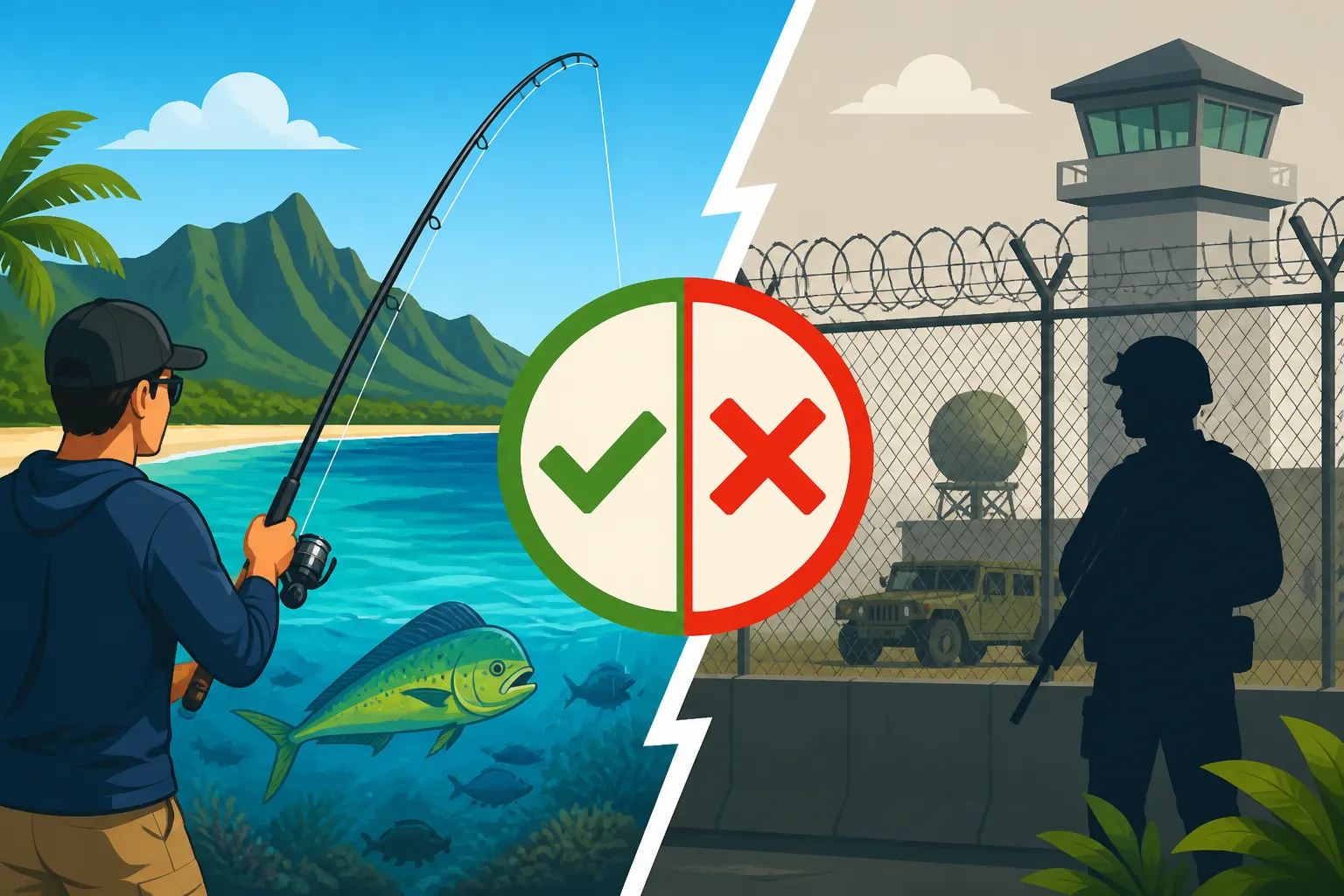
Fishing on a military base in Hawaii isn't always as straightforward as just following the state's general rules. These installations, whether they're sprawling airfields or strategically important naval stations, operate under federal jurisdiction, which adds a distinct layer of complexity. It's not just about the fences and gates; it's about how different legal frameworks interact, creating a unique set of challenges and opportunities for anglers. Many people assume federal land means entirely federal rules, but the reality, especially concerning natural resources like fish, is much more nuanced.
The Overlapping Reality of Military Bases
Picture this: you're looking at a map of a military installation like Joint Base Pearl Harbor-Hickam or Marine Corps Base Hawaii in Kāneʻohe Bay. You'll notice these bases aren't just patches of land locked away from everything else. They often encompass significant stretches of coastline, harbor areas, or even freshwater ponds and streams. This means that the waters immediately adjacent to, or even within, these federal lands still interact with broader Hawaiian ecosystems. It’s not as simple as "on base, follow base rules" because the fish don't stop at the property line! The reality is a blend, where federal authority overlays and often works in conjunction with state environmental and fishing mandates. This overlap is precisely what makes understanding these regulations so tricky for even seasoned anglers.
When Hawaii State Regulations Still Apply
Despite being federal property, military installations in Hawaii generally adhere to, or are mandated to enforce, many of the state's core fishing regulations. This is a critical point that often surprises people. For example, if you're fishing in the ocean waters off a base, even if it's within their security perimeter, you'll still be subject to Hawaii Bag and Size Limits by Species for popular catches like Ulua or Papio. The season closures, such as the Hawaii Moi Closed Season, Explained, are also typically observed and enforced on base. The military's natural resources departments often work closely with the Hawaii Division of Aquatic Resources (DAR) to ensure consistency and compliance with broader conservation goals. So, while you're on federal land, don't think for a second that the state's hard-won regulations suddenly vanish. In many cases, the military simply adopts these state rules as their own baseline, ensuring that fish populations are managed consistently across the islands, regardless of who owns the adjacent land.
The Added Layer of Federal and Base-Specific Rules
Now, here's where it gets even more interesting and requires diligent research. Beyond the Hawaii state regulations that are usually incorporated, each military installation will have its own set of base-specific rules. These are often driven by unique operational needs, security concerns, or very specific environmental stewardship initiatives on that particular base. For instance, some areas might be entirely off-limits due to unexploded ordnance (UXO) from past training exercises, while others might be restricted during certain times for military operations.
These base-specific rules can dictate things like:
- Permitted fishing methods: Some bases might ban certain types of nets or traps, even if technically allowed by state law in open waters.
- Hours of access: Fishing might only be permitted during daylight hours, or specific sections might have curfews.
- Areas of access: Certain shorelines, piers, or freshwater ponds might be designated fishing zones, while others are strictly prohibited.
- Additional license requirements: As we'll delve into, a base permit is often required in addition to your state license.
These rules exist for very good reasons, primarily safety and security. Military installations are active federal properties with ongoing missions, and access to their natural resources must be carefully controlled. So, while you're familiarizing yourself with Hawaii Fishing Regulations Explained, remember that this is just the first step. The base itself will have the final say on the finer details of what you can and cannot do on their property.
Navigating Access and Permitting for Military Installations
Gaining access to fish on a military installation in Hawaii is a multi-step process that goes far beyond simply having a state fishing license. It's about respecting federal property, understanding security protocols, and often obtaining special permission that civilian anglers outside the military community rarely encounter. This aspect can be the biggest hurdle for many, as it requires planning and adherence to strict guidelines designed to ensure the safety and security of everyone on base.
Who Can Fish on Military Property
Access to military installations for recreational activities like fishing is generally restricted. The primary individuals authorized to fish on base are:
- Active Duty Military Personnel: This includes service members from all branches (Army, Navy, Marine Corps, Air Force, Coast Guard) stationed in Hawaii or on temporary duty.
- Retired Military Personnel: Those with valid military retiree IDs often retain recreational access privileges.
- Dependents: Spouses and children of active duty or retired service members, with proper identification, are usually granted access.
- Department of Defense (DoD) Civilians: Employees of the DoD working on base may also have access for recreational purposes.
- Sponsored Guests: In some cases, authorized personnel might be able to sponsor guests to fish on base, but this process usually involves stringent background checks and is often limited in frequency or duration. It's never a guarantee.
For anyone else, gaining access solely for fishing is typically not possible. These are federal facilities with high-security requirements, and casual public access for recreation is rarely granted. Always ensure you have your proper military ID (CAC card, retiree ID, dependent ID) and any required vehicle registration and insurance paperwork ready when entering the gate. Trying to sneak in or misrepresent your affiliation will lead to severe penalties.
Base-Specific Fishing Permits and Licenses
This is often the most surprising and overlooked requirement. Even if you hold a valid Do You Need a Fishing License in Hawaii (which, for most freshwater fishing or commercial activities, you absolutely do), you will almost certainly need an additional permit from the specific military installation itself to fish on its waters.
Here's how it generally works:
- Obtain Your State License (if applicable): If you're fishing freshwater (e.g., Wahiawa Reservoir at Schofield Barracks) or engaging in commercial activities, you'll first need a Hawaii freshwater or commercial fishing license. For resident ocean fishing, you're usually exempt, but always check current state regulations. The process for a Hawaii Freshwater License Cost for Residents is usually straightforward through the DLNR.
- Contact the Base MWR/Outdoor Recreation: The Morale, Welfare, and Recreation (MWR) or Outdoor Recreation (ODR) office on the base is your go-to resource. They manage recreational activities and issue these specific permits. For instance, at Schofield Barracks, you'd contact their ODR for information about fishing Wahiawa Reservoir.
- Application Process: You'll likely need to fill out an application, present your military ID, and show proof of any required state fishing licenses. There might be a short briefing on base rules, and you'll typically pay a small fee.
- Permit Issuance: Once approved, you'll receive a base fishing permit, which you must carry with you at all times while fishing on the installation. This permit will outline specific rules, valid areas, and expiration dates.
These base permits are crucial. They serve as the installation's way of monitoring who is fishing, ensuring compliance with their specific rules, and often contributing to conservation efforts on base. Don't assume your state license is enough; always, always confirm the base's specific permit requirements before wetting a line.
Restricted Areas and Off-Limits Zones
Military installations are not open-access parks, and recognizing and respecting restricted areas is paramount for your safety and to avoid serious legal trouble. Just because you have a base permit doesn't mean you can fish anywhere on the installation.
Common restricted areas include:
- Near Military Operations/Facilities: Areas close to runways, ammunition depots, command centers, or active training zones are strictly off-limits. These boundaries are usually clearly marked with signs, fences, or buoys.
- Environmentally Sensitive Areas: Some parts of bases might be designated as critical habitats for endangered species, nesting grounds, or protected cultural sites. These areas are often closed to all public access, including fishing, to protect fragile ecosystems. What a Marine Life Conservation District means for anglers can provide some insight into similar protected zones in state waters, though base rules might be even stricter.
- Water Treatment Facilities/Intake Areas: For health and safety reasons, fishing near water treatment plants, pumping stations, or reservoir intake zones is typically prohibited.
- Security Perimeters: Certain waterfront areas may be part of a heightened security zone, making them off-limits.
Always consult the maps and rules provided by the MWR/ODR office when you obtain your base permit. If you're ever unsure about an area, err on the side of caution and find another spot. Violating these restrictions can lead to immediate revocation of base privileges, fines, and even federal charges, especially if it's perceived as a security breach. It's simply not worth the risk.
Key Differences and Additional Rules to Watch Out For
While Hawaii's military installations often adopt state fishing regulations as a baseline, it's the subtle (and sometimes not-so-subtle) differences that can trip up even experienced anglers. Thinking these are just "state rules with a gate" is a mistake; the military operates under a different set of priorities, often leading to stricter or more specific guidelines. Understanding these nuances is crucial for a smooth and lawful fishing experience.
Varying Bag Limits and Gear Restrictions
One of the most common areas where base rules diverge from state regulations is with bag limits and gear. While the state sets general guidelines for species like Ulua or Mahimahi, a military installation might impose stricter limits. For example, if the state allows five of a certain fish per day, the base might limit you to three to help manage localized populations within their waters. This is particularly common for popular species or in smaller, more contained freshwater systems like reservoirs.
Gear restrictions are also prevalent. You might find prohibitions on:
- Live bait: Some bases might ban the use of live bait to prevent the introduction of invasive species into their aquatic ecosystems.
- Specific hook types: Treble hooks or certain barb styles might be disallowed for conservation reasons, promoting catch-and-release success.
- Netting: Even if state law permits certain types of net fishing in specific areas, a base might completely prohibit it for safety or resource management.
- Lead tackle: Due to environmental concerns, some bases might restrict or ban the use of lead weights and jigs, encouraging anglers to use alternative, non-toxic materials. You can easily find environmentally friendly tackle options on Amazon.
Always, and I mean always, double-check the specific base's fishing pamphlet or website for these details. Assuming state rules apply directly could lead to confiscation of your catch or gear, and a stern warning or worse. While general Hawaii Spearfishing Regulations exist, a base might impose additional rules on the type of speargun allowed, or even ban spearfishing entirely in certain areas for safety reasons.
Environmental and Safety Considerations
Military installations are often home to sensitive environments and unique safety hazards that directly impact fishing rules. These aren't just arbitrary guidelines; they're in place to protect both the natural world and the people on base.
- Unexploded Ordnance (UXO): This is a very real concern on some former training grounds or coastal areas that have seen military activity. You might be required to undergo a safety briefing that specifically covers UXO awareness. Stepping off marked paths or fishing in restricted zones could put you in grave danger.
- Protected Species Habitats: Bases are often critical refuges for threatened or endangered species. Rules might dictate minimum distances from nesting birds, monk seals, or turtle basking areas. For instance, if you're fishing near a monk seal haul-out, specific rules will apply to prevent disturbance. Hawaii Marine Life Conservation Districts, Explained offers a good parallel to how sensitive areas are managed.
- Water Quality and Runoff: Due to operations, some bases might have specific rules regarding chemical runoff or discharge, impacting where and when you can fish, or even whether catch-and-release is mandated for certain species due to potential contaminants.
- Noise and Light Restrictions: Fishing at night might be restricted in certain areas due to operational noise levels or light discipline requirements.
These environmental and safety rules are taken very seriously. Ignoring them isn't just a minor infraction; it can pose significant risks and carry severe penalties. Always pay attention to signage, attend any required briefings, and if you see something out of the ordinary, report it immediately.
Enforcement and Penalties
Let's be realistic: getting caught breaking the rules on a military installation is no joke. It's not just a slap on the wrist or a friendly warning from a state fish and game officer. When you're on federal property, enforcement comes from base security forces, military police, or federal game wardens, and they operate with a different level of authority.
Penalties can be multi-faceted and severe:
- Loss of Base Privileges: This is often the first and most immediate consequence. Your base access, including your fishing permit, could be revoked permanently or for a significant period. For military personnel or dependents, this can severely impact quality of life and access to other base services.
- Federal Fines and Charges: Violations can lead to federal citations, hefty fines, and potentially even federal criminal charges, depending on the severity of the offense. For example, illegal entry into a restricted area is a serious security breach.
- State Penalties: If your violation also breaks state fishing laws (e.g., exceeding bag limits for a species covered by state regulations), you could face concurrent state penalties as well. This means fines from both federal and state authorities, and potentially even confiscation of your catch and gear. As detailed in Fishing Without a Required License in Hawaii: Penalties, fines can quickly add up.
- Impact on Military Career: For active duty personnel, violations of base rules can also have repercussions on their military record and career progression.
It's critical to understand that ignorance of the rules is rarely an acceptable defense on a military installation. The onus is on you, the angler, to know and abide by all federal, state, and base-specific regulations. Taking a few extra minutes to research and understand the rules beforehand is always worth the effort to avoid these serious consequences.
Practical Tips for Fishing on Hawaii's Military Bases
Fishing on Hawaii's military installations can be a rewarding experience, offering unique access to certain spots or less crowded waters. However, it absolutely requires a proactive approach and a deep respect for the regulations in place. Think of it as preparing for a deployment: thorough reconnaissance and proper gear are key to success.
Research Before You Go
This cannot be stressed enough: do your homework well in advance. Do not just show up at the gate with your fishing rod.
- Identify the Specific Base: Each military installation (e.g., Schofield Barracks, MCBH Kaneohe Bay, Joint Base Pearl Harbor-Hickam, Barking Sands) will have its own unique set of rules. What applies to one base absolutely does not automatically apply to another.
- Contact the MWR/Outdoor Recreation: Your absolute first point of contact should be the base's Morale, Welfare, and Recreation (MWR) or Outdoor Recreation (ODR) office. You can usually find their contact information through a quick online search for "[Base Name] MWR fishing" or "[Base Name] Outdoor Recreation." They are the authoritative source for current regulations, permit requirements, and open fishing areas.
- Check Online Resources: Many bases have websites with downloadable pamphlets or dedicated pages for their natural resources and recreation departments. Look for maps outlining legal fishing zones and any areas that are permanently or temporarily closed.
- Confirm Current Rules: Regulations can and do change. A rule that was in place last year might be different this season. Always confirm the most up-to-date information before planning your trip. A quick phone call can save you a lot of hassle.
Essential Gear and Documentation
Once you've done your research and secured your permits, ensure you have everything you need for the actual fishing trip. Beyond your standard fishing gear, there are crucial items specific to fishing on a military installation.
- Identification: Always carry your valid military ID (CAC, retiree, dependent ID) and driver's license.
- Fishing Licenses and Permits: You must have your state fishing license (if required for the species or water body) and your base-specific fishing permit. For convenience, consider having a digital copy available on your phone, in addition to a physical copy, as discussed in Printing or Carrying a Digital Fishing License in Hawaii.
- Copies of Rules/Maps: If the MWR/ODR provides a physical pamphlet or map of fishing zones, bring it with you. This can be invaluable if you encounter an enforcement officer or need to clarify an ambiguous area.
- Basic Essentials: Hawaii's sun is no joke, even on base. Pack plenty of water, high-SPF sunscreen, a wide-brimmed hat, and polarized sunglasses. A good first-aid kit is also essential, especially if you're exploring more remote areas on base property. All these crucial items are readily available on Amazon for convenient shopping before your trip.
- Trash Bag: Always plan to pack out everything you pack in. Leaving trash on a military installation is strictly prohibited and disrespectful to the environment and the personnel maintaining the base.
Respecting the Environment and Fellow Anglers
Fishing on a military base comes with an implicit understanding that you are a guest on federal property with a serious mission. Your actions reflect not only on yourself but on the entire recreational fishing community.
- "Leave No Trace" Principles: Adhere strictly to these principles. Pack out all your trash, including fishing line, hooks, and bait containers. Do not disturb wildlife, vegetation, or any historical/cultural sites.
- Catch and Release (Where Required): If the base specifies catch-and-release for certain areas or species, honor that rule. Handle fish carefully to ensure their survival.
- Respect Restricted Areas: Never, ever trespass into marked off-limits zones, even if you think no one is watching. These areas are restricted for critical safety, security, or environmental reasons.
- Courtesy to Others: Share the fishing spots, keep noise levels down, and be mindful of military personnel who are working or training. Remember, it's their workplace first and a recreational area second.
- Report Concerns: If you observe suspicious activity, environmental damage, or dangerous situations (like unexploded ordnance), report it immediately to base security or the MWR/ODR office.
By following these tips, you're not only ensuring a legal and safe fishing trip for yourself but also helping to preserve access to these unique fishing opportunities for the entire military community.
| Rule Category | General Hawaii State Rules (Ocean) | Typical Military Base Fishing Rules (Example) |
|---|---|---|
| Fishing License | No license required for resident recreational ocean fishing. For non-residents, a license is required. | Base permit required for all anglers, in addition to any state licenses (e.g., freshwater). |
| Access | Public access to shorelines and open waters. | Restricted to authorized personnel (active duty, retiree, DoD, dependents). Guests may require sponsorship. Access points are guarded. |
| Bag/Size Limits | Set by DLNR for various species (e.g., Ulua, Moi). | May be stricter than state limits for certain species to manage local populations. Always verify. |
| Gear Restrictions | General state regulations for hook, line, net types. | May prohibit certain gear (e.g., lead weights, live bait from off-base, specific net types, spearguns in some areas). |
| Fishing Areas | Open waters, designated piers, public shorelines. | Only designated areas open to fishing; many zones (e.g., near facilities, training areas, UXO zones, sensitive habitats) are strictly off-limits. |
| Operating Hours | Generally 24/7 for most public areas. | Often restricted to specific daylight hours; night fishing might be banned in some areas. |
| Enforcement | State Conservation and Resources Enforcement Officers (DOCARE). | Military Police, Federal Game Wardens, Base Security. |
| Penalties | State fines, confiscation of catch/gear, license revocation. | Loss of base privileges, federal fines, federal charges, state penalties, military career repercussions. |
Disclaimer
Please remember that regulations can change. While every effort has been made to provide accurate and up-to-date information, it is always your responsibility to verify all fishing rules and licensing requirements with the relevant authorities before you go fishing. This includes the Hawaii Department of Land and Natural Resources (DLNR) and the specific military installation's MWR or natural resources office. This guide is for informational purposes only and does not constitute legal advice.