Hawaii aquarium fish collecting permit rules
Thinking about collecting some of Hawaii’s vibrant marine life for your home aquarium? It’s a dream many visitors and even residents share, but the reality is that Hawaii has some of the most rigorous and complex regulations concerning aquarium fish collection in the world. Many people, understandably, get confused or even frustrated by the intricate permit system, often mistakenly thinking a regular fishing license covers it. This guide aims to clear up that confusion, detailing Hawaii's specific aquarium fish collecting permit rules so you can navigate this highly regulated aspect of aquatic life responsibly and legally.
The Nuances of Hawaii's Aquarium Fish Collecting Permits
Collecting marine life for ornamental display, whether for a small home tank or a commercial operation, is a unique and heavily scrutinized activity in Hawaii. It's not just about dipping a net; it's about understanding and respecting a fragile ecosystem and a complex legal framework.
What Exactly is an Aquarium Fish Collecting Permit?
At its core, an aquarium fish collecting permit in Hawaii is an official authorization issued by the Department of Land and Natural Resources (DLNR) through its Division of Aquatic Resources (DAR). Unlike a general fishing license that primarily covers the take of fish for consumption, this permit specifically targets the collection of marine organisms intended for living display in aquariums. This distinction is absolutely crucial. You might hold a valid Hawaii Fishing License Guide for 2026 for recreational angling, but that absolutely does not grant you permission to collect a yellow tang for your tank. The purpose of the permit system is to regulate the removal of certain species from Hawaii's reefs, ensuring sustainability and minimizing ecological impact. The focus is on ornamental species, which often include small, colorful reef fish and invertebrates, rather than the larger game fish typically targeted by anglers.
Why the Strict Regulations?
Hawaii’s strict regulations aren’t arbitrary; they stem from decades of scientific study, community advocacy, and legal battles aimed at protecting the islands' unique and incredibly fragile marine ecosystems. The health of Hawaii's coral reefs is paramount, not just for tourism, but for the ecological balance of the entire archipelago. Historically, certain areas, particularly along the Kona coast of the Big Island, saw intense commercial collection pressure on popular aquarium species like yellow tang and kole. Concerns about localized depletion, habitat degradation from collection practices, and the overall health of the reef led to significant public outcry and legal challenges. This resulted in landmark court decisions and administrative rules that have drastically reshaped the landscape of aquarium collecting. The system is designed to prevent overexploitation, protect critical spawning aggregations, and safeguard areas that are essential for reef recovery. Understanding this history helps contextualize why these permits are so different and often more challenging to obtain than, say, a recreational Hawaii Freshwater Fishing License and Rules.
Who Needs a Permit and What Can Be Collected?
The question of who needs a permit is often where the most confusion lies. It's not as straightforward as many people assume, especially if they're used to regulations in other states or countries.
Commercial vs. Recreational Collection Requirements
In Hawaii, the general rule is simple: if you are collecting any marine life for aquarium purposes, you need a permit. There isn't a blanket recreational exemption for aquarium collecting like there often is for general recreational fishing. This means that even if you're a hobbyist with a small home tank and you only want to collect a single blenny from a tide pool, you are technically required to have a permit. While the enforcement focus historically has been on commercial operations due to their larger scale, the law applies broadly.
Commercial aquarium collection permits are incredibly difficult to obtain, often requiring extensive environmental assessments, public hearings, and demonstration of sustainable practices. These permits are typically issued for specific areas and species, with strict quotas and reporting requirements. For a casual visitor or resident, obtaining such a permit for recreational purposes is practically unfeasible due to the administrative burden and the focus on commercial-scale operations in the existing framework. This reality is important for anyone considering aquarium collection: it's not a casual pursuit for most individuals. To get a clear picture of the state's intent, it helps to compare it with general fishing rules, for instance, by checking if Do Hawaii Residents Need an Ocean Fishing License? (spoiler: usually not for recreational hook-and-line fishing, but that's different from aquarium collecting).
Understanding Allowed Species and Prohibited Areas
This is where the rules get even more specific and where accidental violations can easily occur. The DLNR-DAR maintains lists of regulated species, and certain popular aquarium fish have been subject to severe restrictions or even outright bans in specific areas. For example, the collection of yellow tang and kole has been a particularly contentious issue, leading to specific rules, especially in the West Hawaii region. It's not just about what you can take, but where you can take it, and how much.
Many areas in Hawaii are designated as "no-take" zones for any marine life, including aquarium fish. These are primarily:
- Marine Life Conservation Districts (MLCDs): These are special areas established to conserve and replenish marine resources. Absolutely no fishing or collecting of any kind is allowed within MLCDs, with very few, highly specific exceptions (usually for scientific research with a separate permit). Familiarize yourself with these areas by reading Hawaii Marine Life Conservation Districts, Explained. Trying to collect a pretty little fish from an MLCD, no matter how small, is a serious violation.
- Fish Replenishment Areas (FRAs): While not always outright no-take, FRAs, especially the West Hawaii Fish Replenishment Area, have stringent rules. In many of these areas, the collection of aquarium fish may be prohibited or severely restricted. These areas are designed to allow fish populations to recover and reproduce, bolstering the surrounding fisheries. Understanding the specific rules for Hawaii Fish Replenishment Areas in West Hawaii is critical if you're even contemplating commercial aquarium collecting.
Beyond these specific zones, there can be other localized restrictions or species-specific prohibitions. For example, Hawaii Uhu (Parrotfish) Size and Bag Limits exist for food fish, and similar detailed regulations can apply to aquarium species, covering not only size and bag limits but also collection methods. You cannot use methods like poisons, anesthetics, or explosives. Gear is generally restricted to small hand nets, barrier nets of specific dimensions, and slurp guns, and even then, these methods must be used in a way that minimizes damage to the reef and other marine life.
Navigating the Application Process and Key Rules
If you're still considering pursuing an aquarium collecting permit, be prepared for a rigorous and often lengthy process. This isn't something you can do casually on a whim.
Step-by-Step Application for a Permit
Applying for an aquarium fish collecting permit, especially a commercial one, is far more involved than applying for a typical recreational fishing license. You can't just hop online and buy one through the usual channels, as you might with a regular fishing license, which you can often get via How to Buy a Hawaii Fishing License Online. Instead, it typically involves:
- Contacting DLNR-DAR: Your first step is to directly engage with the Division of Aquatic Resources. They will provide the most up-to-date application forms and specific requirements.
- Detailed Proposal: You'll need to submit a comprehensive plan outlining:
- The specific species you intend to collect.
- The precise locations where you plan to collect.
- The methods and gear you will employ (e.g., hand nets, barrier nets, slurp guns, ensuring they meet Hawaii Net Fishing Restricted Areas guidelines where applicable).
- Your rationale for collection and your understanding of sustainable practices.
- For commercial permits, an Environmental Assessment (EA) or even an Environmental Impact Statement (EIS) may be required, which are extensive and costly undertakings.
- Public Scrutiny: Especially for commercial permits, there may be public notification periods and opportunities for public comment or hearings. Given the sensitive nature of aquarium collecting in Hawaii, these applications often attract significant attention from environmental groups and concerned citizens.
- Review and Approval: The DAR staff will meticulously review your application. This process can take months, or even longer, depending on the complexity and any public feedback. Permits are often issued with very specific conditions attached, including quotas, seasonal restrictions, and designated collection areas.
The process highlights the state's cautious approach to managing its marine resources. It is nothing like the simpler application for a Hawaii Nonresident Marine Fishing License, Explained.
Ongoing Compliance and Reporting Requirements
Obtaining the permit is just the first hurdle. Maintaining compliance is an ongoing commitment, particularly for commercial operations. Permit holders are typically required to:
- Maintain Detailed Logs: This means meticulously recording daily catches, including species, quantities, sizes, and specific collection locations (often down to GPS coordinates).
- Submit Regular Reports: These logs must be submitted to DAR on a regular basis, usually monthly or quarterly. This data is vital for the state to monitor population trends and assess the impact of collection activities.
- Adhere to Permit Conditions: Any deviation from the approved species list, collection locations, gear types, or quotas can result in immediate revocation of the permit and severe penalties.
- Possess the Permit: Always have your physical permit on you while collecting. This is similar to the requirement for general fishing, though for general fishing, there's more flexibility for Printing or Carrying a Digital Fishing License in Hawaii. For aquarium collection, especially when dealing with such sensitive resources, having the physical document ready for inspection by enforcement officers is critical.
Legal Gear and Ethical Collection Practices
The "how" of collection is just as regulated as the "what" and "where." The emphasis is always on methods that minimize harm to the target species, non-target species, and the surrounding reef environment.
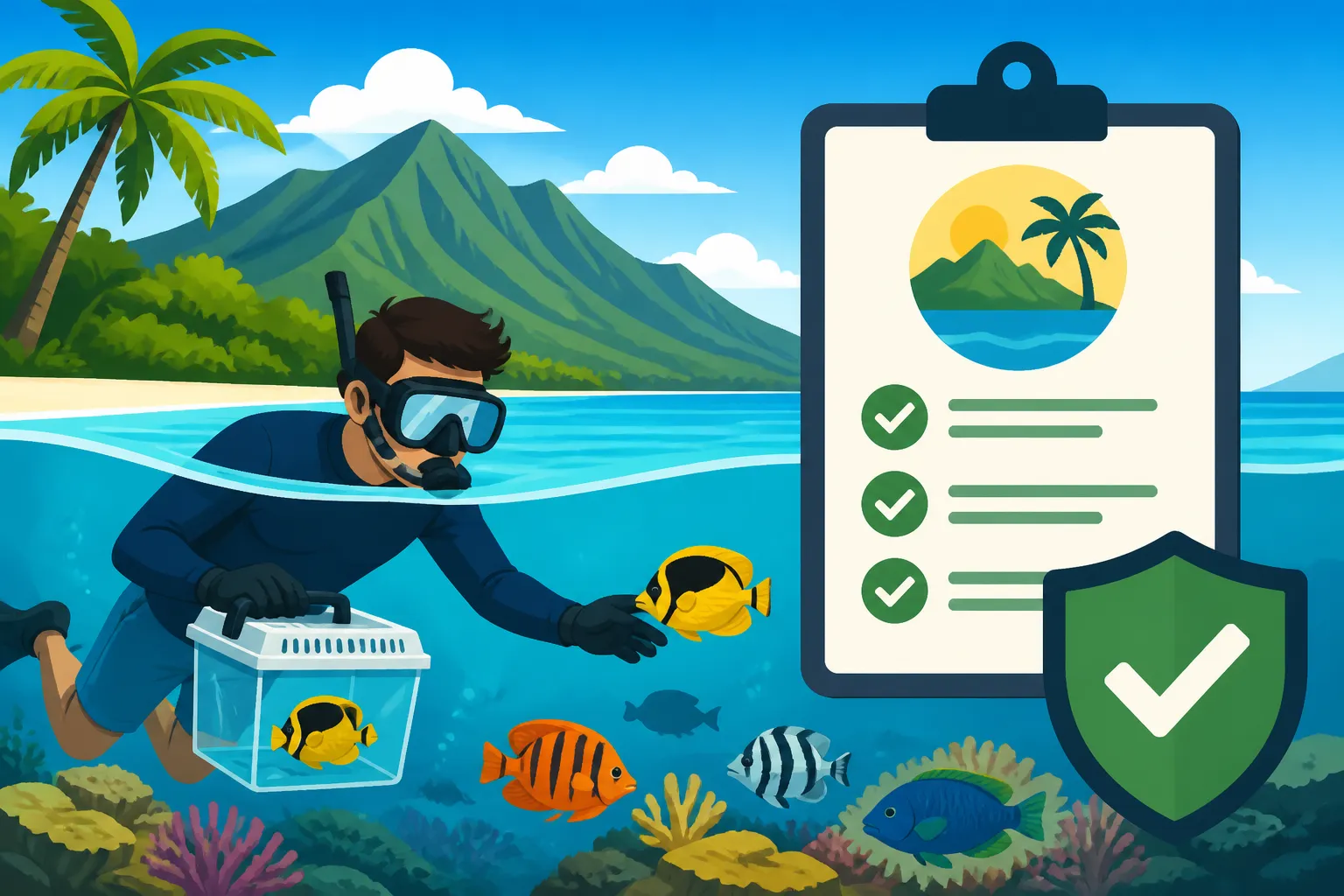
- Allowed Gear: Typically, only small, fine-mesh hand nets, specific types of barrier nets, and slurp guns are permitted. The size and mesh of nets are usually specified to prevent the capture of undersized fish or excessive bycatch. When looking for compliant gear, many experienced collectors source specialized fine-mesh nets and durable handling tools from online retailers like Amazon, ensuring they have equipment that meets regulations and minimizes stress on the fish and reef.
- Prohibited Methods: The use of any chemical agents (like cyanide), explosives, or damaging gear that can harm coral or other marine life is strictly forbidden and carries severe penalties. These methods cause indiscriminate damage and are highly destructive to the reef ecosystem.
- Ethical Handling: Beyond the gear, permit holders are expected to employ ethical handling practices. This includes minimizing stress on captured fish, quickly transferring them to appropriate holding containers, and releasing any non-target or protected species immediately and unharmed. Collectors must be knowledgeable about target species, able to identify them accurately, and understand their specific needs to ensure survival post-collection. This high level of expertise distinguishes legal aquarium collection from more casual marine exploration.
Consequences of Illegal Aquarium Fish Collection
The stakes are high when it comes to violating Hawaii's aquarium fish collecting rules. The state takes these offenses very seriously, reflecting its deep commitment to marine conservation.
Penalties and Fines for Violations
Collecting aquarium fish without a valid permit, or violating the specific conditions of an issued permit, can lead to substantial penalties. These are often far more severe than those for general Fishing Without a Required License in Hawaii: Penalties because of the specific conservation concerns tied to the aquarium trade. You could be facing:
- Hefty Fines: Fines can range from hundreds to thousands of dollars per violation, and sometimes even per illegally collected animal. Repeat offenses or commercial-scale violations can lead to escalating fines.
- Confiscation of Gear and Catch: Enforcement officers have the authority to confiscate all equipment used in the illegal activity, including nets, boats, dive gear, and the collected marine life.
- Permit Revocation: If you do hold a permit and violate its terms, it will almost certainly be revoked, preventing you from legally collecting in the future.
- Imprisonment: For serious or commercial-level offenses, especially involving protected species or destructive collection methods, jail time is a possibility.
Imagine a scenario where a visitor, unaware of the specific rules, decides to grab a few colorful reef fish from a tide pool at a beach known for its beauty, perhaps thinking they’re just "souvenirs." An enforcement officer could issue a substantial fine, confiscate their bucket and net, and potentially even their rental car if it was used in the transport of illegal catch. For a commercial operation, the consequences are even more dire, potentially leading to the seizure of boats and a complete end to their business. It’s a powerful reminder that Hawaii is fiercely protective of its natural resources.
Broader Impacts and Community Concerns
Beyond the legal ramifications for individuals, illegal aquarium fish collection carries significant broader impacts on Hawaii's environment and its communities. Every illegally removed fish, especially from a heavily targeted species, contributes to the cumulative stress on delicate reef ecosystems. These ecosystems are already facing challenges from climate change, pollution, and other human impacts. When fish populations decline, it can disrupt the natural balance of the reef, affecting everything from coral health (as many fish graze on algae that can otherwise smother coral) to the food web.
The debate around aquarium collecting has always been passionate in Hawaii, with many local communities and environmental groups actively campaigning for stronger protections and even outright bans. They view the commercial export of Hawaii's unique marine life as an unsustainable practice that depletes a shared resource for private profit. Therefore, any illegal activity fuels these concerns and can lead to further, even stricter regulations or community-led initiatives to halt collection activities altogether. Educating yourself about these species and the broader ecosystem is crucial. Many anglers and divers looking to learn more about Hawaii's diverse marine life and the specific regulations can often find excellent field guides and identification books on Amazon, which can be invaluable for understanding what's protected and what's not. For a deep dive into the overall regulatory landscape, always consult the official Reading the Hawaii DLNR Fishing Regulations.
Here’s a simplified overview of permit types, although actual commercial permits are far more complex:
| Permit Type | Purpose | General Availability | Key Requirement Examples |
|---|---|---|---|
| Commercial Aquarium | Collecting marine life for sale/trade | Very Limited | Extensive proposal, EA/EIS, public review, detailed reporting |
| Recreational Aquarium | Collecting for personal, non-commercial use | Extremely Limited | Technically required, but practically difficult to obtain for casual hobbyists. Often lumped into commercial or scientific. |
| Scientific/Educational | Research, public display by institutions | Case-by-case | Detailed research proposal, often requires collaboration with DAR |
It's clear that if your goal is to set up a home aquarium with Hawaiian species, the most responsible and legal path is almost always to acquire captive-bred or sustainably collected animals from reputable sources that already hold the necessary permits and adhere to the strict regulations. Attempting to collect them yourself, even on a small scale, is fraught with legal peril and environmental risk.
Disclaimer
Please note that fishing regulations and permit requirements in Hawaii can change frequently. This guide provides general information based on current understanding. It is always your responsibility to consult the latest official regulations from the Hawaii Department of Land and Natural Resources (DLNR) Division of Aquatic Resources (DAR) before engaging in any fishing or marine life collection activities.