How to wade a reef flat safely in Hawaii
Stepping onto Hawaii's beautiful, vibrant reef flats for a bit of shore fishing or exploring is an experience like no other, but these stunning natural wonders also present unique challenges and hidden dangers. From razor-sharp coral to unpredictable currents and camouflaged marine life, knowing how to move safely is paramount. This comprehensive guide will walk you through everything you need to know to wade Hawaii's reef flats confidently and, most importantly, safely.
Understanding Hawaii's Reef Flats and Their Unique Challenges
Hawaii's reef flats are shallow, often exposed areas of coral reef that can be found along many of our islands' coastlines. They're teeming with life and offer incredible opportunities for anglers looking for species like papio, uhu, and even moi in the calmer pockets. However, their very nature – being shallow and exposed – means they come with their own set of risks that you absolutely need to be aware of.
The Allure of Reef Flat Fishing and Its Hidden Dangers
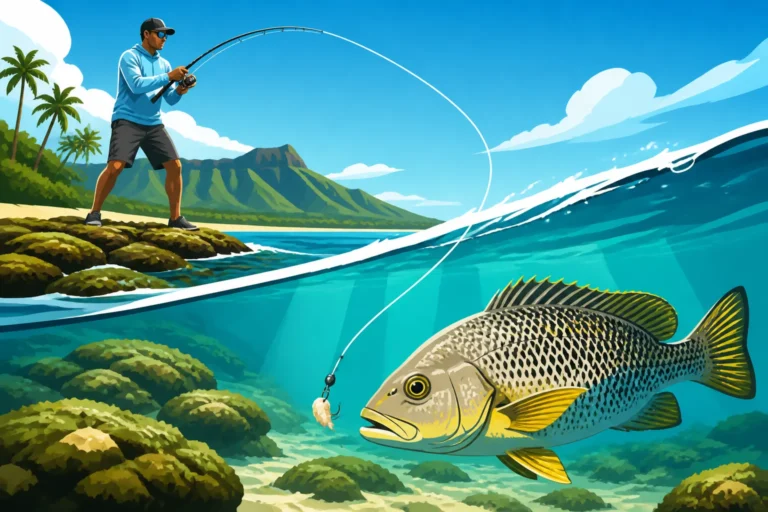
Imagine standing in crystal-clear water, the sun warming your back, casting into small channels where you know a hungry papio might be lurking. That's the magic of Hawaii's reef flats. They are accessible, often close to shore, and provide a unique window into the rich marine ecosystem. You'll see colorful reef fish darting about, perhaps an octopus camouflaged against the rocks, or even a sleepy green sea turtle gliding by. It's a truly immersive experience.
But don't let the postcard-perfect scenery lull you into a false sense of security. Beneath that clear water lie many potential hazards. The coral itself, whether living or dead, is incredibly sharp and can cause deep cuts if you slip or stumble. These cuts, in saltwater, can easily become infected if not properly cleaned and treated. There are also hidden depressions, potholes, and channels that can be deeper than they appear, leading to unexpected drops or sudden strong currents. The substrate can be uneven, slippery with algae, or loose with rubble, making every step a potential misstep. It's a dynamic environment that demands constant awareness. Many local anglers will tell you stories of a rogue wave or a misjudged step that led to a painful encounter with the reef.
Tides, Currents, and Swells: Nature's Unpredictable Elements
Understanding the ocean's rhythm is not just good practice; it's a non-negotiable safety measure when wading reef flats. The tide, currents, and swells are the ocean's heartbeat, and they dictate the conditions on the flat more than anything else.
Tides: Always check the tide charts before heading out. Low tide exposes more of the reef, making it easier to see potential hazards but also limiting access to deeper channels where fish might be. High tide can cover the entire flat, making depths deceptive and increasing the risk of getting swept by currents or rogue waves. The incoming and outgoing tides also create currents that can be surprisingly strong, especially around channels or gaps in the reef. Getting caught in a strong outgoing tide can quickly pull you away from shore, so knowing the direction and strength of these flows is vital. A good rule of thumb is to start wading an hour or two before dead low tide, giving you maximum visibility and stability, and planning your exit well before the tide gets too high or the current too strong.
Currents: Even on a seemingly calm day, local currents can funnel through reef channels with surprising force. These can shift quickly depending on the tide, swell direction, and even distant weather systems. Always observe the water carefully for ripples, eddies, or debris moving quickly, indicating a strong current. If you feel a current start to pull you, assess your footing, consider if it's safe to proceed, or if it's time to retreat to a shallower, calmer area. Never fight a strong current directly; instead, try to move diagonally with it towards a safe, shallower exit point.
Swells: Hawaii is famous for its powerful ocean swells, and even small ground swells can break forcefully over shallow reef flats. A rogue wave, larger than the others, can easily knock you off your feet, leading to injury from the reef or equipment loss. Always keep an eye on the horizon and the wave sets. Look for lulls between sets to move, and be prepared to brace yourself or even sit down if a larger wave approaches. It's crucial to know When Hawaii's ocean waters get too rough to shore fish. If the swells are consistently breaking heavily over the reef flat, it's a clear sign that it's simply not safe to wade that day. Sometimes, the most important part of fishing is knowing when to stay dry.
Marine Life Encounters: From Urchins to Sharks
While marine life is a big part of the appeal, some creatures on the reef flat pose a direct threat if you're not careful.
Sea Urchins (Wana): These spiky invertebrates are perhaps the most common hazard. Their long, brittle spines can easily penetrate skin and break off, causing painful, slow-healing wounds. They love to hide in crevices, under rocks, or in grassy patches on the reef. The best defense is protective footwear (more on that later) and careful observation. If you do get stuck, carefully try to remove the spines. Hot water can sometimes help dissolve them, or a trip to urgent care might be needed if they're deep or infected. Check out the Hawaii opihi daily limit per person rules, as you'll often find opihi in similar rocky, wave-swept zones where wana also thrive.
Moray Eels (Puhi): While not typically aggressive unless provoked or cornered, moray eels have powerful jaws and sharp teeth. They live in holes and crevices within the reef structure. Avoid reaching into dark holes or overturning rocks where they might be hiding. If you accidentally disturb one, give it space.
Stonefish (Nohu): These masters of camouflage are highly venomous and blend perfectly with the reef bottom. Stepping on one can deliver an incredibly painful and dangerous sting. Fortunately, they are relatively rare and usually found in very specific habitats. Again, careful shuffling and good footwear are your best defense.
Jellyfish: Certain times of the year or after specific weather events, box jellyfish or other stinging jellies can wash into shallow reef areas. While often translucent and hard to see, their stings can be painful. Pay attention to local advisories or ask experienced locals if there have been recent jellyfish sightings.
Sharks: While not common on shallow reef flats, especially during the day, it's always good to be aware. Most sharks found near shore are smaller reef sharks that are more interested in fish than humans. However, if you're bleeding from a cut, or if you're wading at dawn or dusk when predators are more active, it's wise to be extra cautious. Avoid splashing excessively or carrying stringers of live, bleeding fish close to your body in murkier water. Knowing the general Reef Fish Species Identification Guide for Hawaii can also help you understand the broader ecosystem you're entering.
Essential Gear for Safe Reef Flat Wading
Preparation is key for a safe and enjoyable experience on Hawaii's reef flats. Having the right gear isn't just about comfort; it's about protecting yourself from the elements and the environment.
Footwear: Your First Line of Defense
This cannot be stressed enough: proper footwear is non-negotiable. Forget flimsy sandals or old sneakers. You need something robust that offers both protection and grip.
Hard-Soled Reef Boots or Aqua Shoes: Look for specialized reef boots or heavy-duty aqua shoes designed for traction on slippery, uneven surfaces and puncture resistance. These typically have thick rubber soles, often with felt or sticky rubber for superior grip on wet rocks and algae. The material should extend high enough up the ankle to protect against coral scrapes and offer good support. Brands like Simms, Korkers, or even some sturdy dive boots offer excellent options. You can find a good selection of durable reef boots on Amazon. The key features to look for are:
- Thick, stiff sole: To prevent punctures from urchin spines and sharp coral.
- Aggressive tread: For traction on wet, slimy rocks. Some have felt soles for even better grip.
- Ankle support: To prevent twists and scrapes.
- Quick-draining materials: So your feet don't stay waterlogged and heavy.
Wearing thick socks (like neoprene dive socks) under your reef boots can add an extra layer of protection and comfort, reducing chafing and further insulating your feet.
Sun Protection and Hydration
The Hawaiian sun is no joke, and when you're out on the water, the reflection intensifies its effects. Sunburn and dehydration can quickly ruin a day, or worse, lead to heat exhaustion.
Rash Guards and Long-Sleeved Shirts: Opt for lightweight, quick-drying long-sleeved rash guards or fishing shirts with UPF (Ultraviolet Protection Factor) ratings of 30 or higher. This protects your arms, shoulders, and back from direct sun exposure, far more reliably than sunscreen alone. Darker colors or specially treated fabrics often offer higher UPF ratings.
Hats and Neck Gaiters: A wide-brimmed hat (not just a baseball cap) will shield your face, ears, and neck from the sun. Pairing it with a neck gaiter provides even more coverage for your neck and chin, areas often forgotten.
Polarized Sunglasses: These are essential for two reasons:
- Eye protection: They protect your eyes from harmful UV rays and glare.
- Visibility: Polarized lenses cut through the water's surface glare, allowing you to see deeper into the water. This is incredibly helpful for spotting fish, but more importantly, for identifying hazards like coral heads, drop-offs, and even camouflaged marine life before you step on them. Don't cheap out on these; they're a vital safety tool. Many anglers swear by brands like Maui Jim or Costa Del Mar for their optical clarity, and you can often find good deals on Amazon for quality polarized options.
Sunscreen: Even with protective clothing, exposed areas like your face, neck, and hands need sunscreen. Choose a reef-safe sunscreen (Hawaii has strict laws against sunscreens containing oxybenzone and octinoxate, which harm coral reefs) with an SPF of 30 or higher, and reapply frequently, especially after being in the water.
Water: Always carry more water than you think you'll need. Dehydration can creep up on you quickly in the tropical heat. A sturdy, insulated water bottle that can be clipped to a backpack or vest is ideal. Electrolyte drinks can also be beneficial on longer outings.
Wading Staff and Other Safety Tools
Sometimes, a little extra help can make all the difference in staying upright and safe.
Wading Staff: A collapsible wading staff is an excellent investment. It provides an extra point of contact with the ground, vastly improving your stability on uneven or slippery surfaces. You can use it to probe depths ahead of you, test the firmness of the bottom, or even gently nudge marine life away. When looking for one, consider a sturdy, lightweight, and easily collapsible model that can be secured to your pack or vest when not in use. Some models even float, which is a bonus if you accidentally drop it. There are many reliable options for wading staffs available on Amazon that are designed for anglers.
Small Dry Bag or Waterproof Backpack: A small dry bag or a waterproof fishing backpack is perfect for carrying your essentials like your phone, wallet, keys, first-aid kit, and snacks, keeping them safe and dry even if you take a tumble or wade through deeper water.
Basic First-Aid Kit: A small, waterproof first-aid kit is crucial. It should contain antiseptic wipes, bandages, pain relievers, anti-itch cream (for potential stings), and possibly even a small pair of tweezers for removing splinters or small urchin spines. If you get a cut from coral, clean it immediately and thoroughly to prevent infection.
Whistle: A simple whistle can be a lifesaver if you get into trouble and need to signal for help. It travels further than your voice, especially over the sound of breaking waves.
Mastering Wading Techniques for Hawaiian Reefs
Once you have the right gear, it's time to talk technique. Wading a reef flat isn't like walking on a beach; it requires a specific approach to minimize risk and maximize your enjoyment.
Reading the Water: Before You Step In
Before you even get your feet wet, take a good 10-15 minutes to observe the area you plan to wade. This reconnaissance is critical.
- Observe Wave Patterns: Watch several sets of waves. Are they consistent, or are there larger rogue waves? Where are they breaking? Is there a lull between sets you can use for safe movement? If the waves are consistently large or unpredictable, reconsider wading. For insights into calmer conditions, you might find the Best Techniques for Calm Water Reef Fishing helpful.
- Identify Channels and Drop-offs: Look for darker patches of water, ripples, or areas where waves break differently. These often indicate deeper channels, holes, or drop-offs. Plan your route to avoid or carefully navigate these.
- Assess Current Direction: If there's any current, notice which way it's moving debris or water. This will give you an idea of its strength and direction.
- Spot Potential Hazards: Look for exposed coral heads, large rocks, or areas of heavy seaweed that might hide marine life or create slippery footing.
- Plan Your Exit: Always have a clear escape route in mind. Know where the safest, most accessible points to return to shore are, especially if conditions change unexpectedly.
The Shuffle and Glide: Movement on the Reef
This is perhaps the most important wading technique for reef flats. You don't "walk" as much as you "shuffle" or "glide."
- Small, Deliberate Steps: Never take large, confident strides. Instead, keep your feet close to the bottom and slide them forward a short distance. This allows you to feel the bottom with your foot before committing your weight.
- Maintain Contact: Try to keep at least one foot (or your wading staff) in contact with the bottom at all times. This provides constant stability.
- Avoid High Stepping: Lifting your feet high increases your risk of slipping on hidden obstacles, losing balance, and stepping down onto something sharp or venomous. Shuffling minimizes this risk.
- Distribute Weight: Keep your core engaged and your weight distributed. If you use a wading staff, position it slightly in front of you to test the ground and provide a third point of balance.
- Go Slow: There's no rush. Moving slowly and deliberately is the safest way to navigate the uneven and often precarious terrain of a reef flat.
Navigating Channels and Potholes
Reef flats are rarely uniformly shallow. They often have intricate networks of channels, tide pools, and deeper potholes.
- Use Your Eyes and Sunglasses: With your polarized sunglasses, actively scan the water ahead. Look for color changes (darker blue usually means deeper), subtle disturbances on the surface, or changes in the texture of the bottom.
- Probe with Your Staff or Foot: Before entering any area that looks deeper or less clear, use your wading staff to probe the depth and feel for the bottom. If you don't have a staff, use your lead foot, keeping your weight on your back foot until you're confident in the depth and stability of the ground.
- Evaluate Current in Channels: Channels are natural funnels for currents. If a channel looks deep and has a strong current, consider if it's necessary or safe to cross. Sometimes, finding an alternative, shallower route around is the best option. If you must cross, face into the current slightly, and use your wading staff for support, taking very deliberate, short steps.
- Avoid Jumping: Never jump over channels or holes, no matter how small they seem. A misjudged jump can lead to a serious injury.
What to Do If You Encounter a Strong Current or Unexpected Drop-off
Even with the best preparation, unforeseen circumstances can arise. Knowing how to react calmly and effectively is paramount.
If Caught in a Strong Current:
- Don't Panic: Panicking will exhaust you quickly. Take a deep breath.
- Assess Your Footing: Try to regain stable footing. If you can't, don't try to fight the current head-on.
- Go with the Flow, Angle Towards Shore: Allow the current to move you, but simultaneously angle your body towards the nearest safe, shallower section of the reef or towards the shore. Think of it like a river: you want to swim across it, not directly upstream.
- Signal for Help: If you have a whistle, use it. If not, wave your arms to attract attention.
- Conserve Energy: If you're being swept, float on your back, keeping your head up and conserving energy until you can reach a calmer area or solid ground.
If You Encounter an Unexpected Drop-off:
- Stop Immediately: If your lead foot suddenly finds nothing, freeze.
- Shift Weight Back: Slowly shift your weight back to your stable foot.
- Probe or Retreat: Use your wading staff to probe the depth of the drop-off. If it's too deep or has a strong current, slowly back out and find an alternative route. Do not try to blindly step into an unknown depth.
- Use Caution with Steep Sides: If the drop-off has steep, slippery sides, be extremely careful about trying to climb down. It might be safer to find a gradual slope or different access point.
Remember, the ocean is powerful. Respect its force, and always err on the side of caution. It's better to miss a fishing opportunity than to put yourself in harm's way. If you're interested in more advanced shoreline fishing, you might also want to read up on Best Techniques for High Surf Shore Fishing for different conditions.
Environmental Awareness and Ethical Wading Practices
As stewards of these incredible natural resources, it's our kuleana (responsibility) to protect them. Safe wading isn't just about your personal safety; it's also about minimizing your impact on the fragile reef ecosystem.
Protecting the Reef: Leave No Trace
Our reefs are living, breathing organisms that are surprisingly delicate despite their seemingly robust structure.
- Avoid Stepping on Live Coral: Whenever possible, walk on sand patches, dead coral rubble, or already established pathways. Live coral is vibrant and colorful; dead coral is usually white or gray. Stepping on live coral can kill the polyps, damaging the reef and setting back years of growth.
- Minimize Disturbance: Try not to kick up excessive sediment, as this can smother coral and impact visibility for marine life. Move slowly and gently.
- Pack It In, Pack It Out: Leave absolutely no trash behind. This includes fishing line, bait containers, and any other litter. The ocean is not a trash can, and even small pieces of debris can harm marine life.
- Respect Marine Life: Observe fish, turtles, and other creatures from a respectful distance. Do not touch or harass them. Remember, many marine animals are protected under state and federal law. For a deeper understanding of protected areas, explore Hawaii Marine Life Conservation Districts, Explained.
Respecting Marine Life and Local Customs
Hawaii has a rich cultural history tied to the ocean, and many local fishing practices are steeped in tradition.
- Know Your Regulations: Before you even head out, familiarize yourself with the Hawaii Fishing Regulations Explained. This includes bag and size limits for specific species, closed seasons, and restricted areas. Ignorance of the law is no excuse, and violating regulations can result in hefty fines.
- Observe and Learn: Pay attention to how locals fish and interact with the environment. There's a wealth of knowledge to be gained from observing experienced anglers. Don't be afraid to politely ask questions, but always be respectful of their space and practices.
- Cultural Sensitivity: Some areas may have traditional uses or cultural significance. Always respect private property signs and be mindful of local customs. If you're unsure, ask.
- Report Violations: If you witness someone harming the reef, poaching, or violating fishing regulations, report it to the Hawaii Division of Aquatic Resources (DAR). Protecting these resources is everyone's responsibility. Also, if you're ever in doubt about what you can or cannot harvest, make sure to read up on things like Hawaii Opihi Harvest Limits and Size Rules to ensure you're compliant.
Knowing When to Call It a Day
The most important safety rule for wading reef flats is knowing when to quit. The ocean's conditions can change rapidly, and your own physical limits can be tested.
- Changing Weather: If the wind picks up, the sky darkens, or a squall approaches, it's time to head in. Rough weather makes wading exponentially more dangerous.
- Increasing Swell or Current: If the waves start breaking heavier, or you notice the current becoming significantly stronger, don't wait for things to get worse. Start your retreat immediately.
- Fatigue: Wading on uneven terrain can be tiring. If you feel yourself getting physically exhausted, it's better to pack it up rather than push your limits and risk an accident.
- Injuries: Even a small cut can become a big problem in saltwater. If you sustain any injury that impairs your mobility or causes significant bleeding, get out of the water, clean it thoroughly, and assess if you need medical attention.
- Gut Feeling: Sometimes, you just get a bad feeling. Trust your instincts. If something feels off, or you're simply uncomfortable, err on the side of caution and head for shore. There will always be another day to fish the reef.
Wading Hawaii's reef flats offers an unparalleled connection to nature and some truly exciting fishing opportunities for species like papio and even How to Fish a Reef Flat for Uhu. By understanding the environment, gearing up properly, employing smart techniques, and practicing ethical behavior, you can enjoy these spectacular areas safely and responsibly.
| Item | Purpose | Key Features | Why It's Important |
|---|---|---|---|
| Reef Boots | Foot protection and traction | Thick, stiff rubber soles; ankle support; quick-draining; aggressive tread | Prevents cuts from coral, urchin punctures, and slips on algae-covered rocks. |
| Rash Guard/UPF Shirt | Sun protection | Long-sleeved, UPF 30+ fabric, quick-drying | Prevents severe sunburn, reduces heat exhaustion risk. |
| Wide-Brimmed Hat | Face, ear, neck sun protection | Provides ample shade for all exposed head areas | Shields vulnerable areas from intense Hawaiian sun. |
| Polarized Sunglasses | Eye protection and improved visibility | UV protection, glare reduction, clear optics | Protects eyes from sun, allows spotting of hazards and fish beneath the surface. |
| Wading Staff | Stability, balance, probing depth | Collapsible, sturdy, lightweight, floats (optional) | Offers extra point of contact, helps navigate uneven bottom, tests depths safely. |
| Dry Bag | Keeps essentials safe and dry | Waterproof, roll-top closure, durable material | Protects phone, wallet, keys, and first-aid kit from water exposure. |
| First-Aid Kit | Immediate treatment for minor injuries | Antiseptic wipes, bandages, pain relievers, tweezers | Essential for coral cuts, scrapes, and minor marine life encounters. |
| Water Bottle | Hydration | Insulated, secure cap, easy to carry | Prevents dehydration and heat-related issues in the tropical climate. |
| Whistle | Emergency signaling | Loud, durable, easily accessible | Effective for attracting attention in an emergency, even over wave noise. |
Disclaimer
The information provided in this guide is for general informational purposes only and does not constitute professional advice. Wading on reef flats involves inherent risks, including but not limited to sharp coral, strong currents, marine life encounters, and unpredictable ocean conditions. Always exercise extreme caution, use appropriate safety gear, and assess your surroundings before entering the water. The author and publisher are not responsible for any injuries or damages that may result from the use of this information. Always consult local authorities like the Hawaii Department of Land and Natural Resources (DLNR) for the most current regulations and safety advisories before engaging in any fishing or ocean-related activities.