Best technique for bank fishing a freshwater reservoir
Venturing into Hawaii's freshwater reservoirs from the bank can sometimes feel like trying to find a needle in a haystack – especially when you're used to the vastness of the ocean or the easily accessible stream banks elsewhere. It's often not as straightforward as casting a line into the deep blue, and knowing where to start and what to use can be incredibly frustrating. This guide will help you cut through the confusion and equip you with the best techniques for successful bank fishing in Hawaii's unique freshwater reservoirs, making your next outing productive and enjoyable.
Understanding Hawaii's Freshwater Reservoir Landscape
Hawaii might be famous for its pristine ocean waters, but tucked away on some of the islands are incredible freshwater fishing opportunities in various reservoirs. These aren't your typical mainland lakes; they often have unique structures, introduced species, and specific rules that anglers need to understand. Knowing the lay of the land, or rather, the water, is your first step to a successful bank fishing adventure.
Key Reservoirs for Bank Anglers
When we talk about freshwater reservoirs in Hawaii, a few names typically come to mind, each with its own character and species. The most prominent on Oahu is the Wahiawa Reservoir, a sprawling body of water known for its diverse fish population. Then there's the Nuuanu Reservoir system, also on Oahu, which offers different challenges and species depending on which reservoir you access. Over on Kauai, the Kokee Public Fishing Area provides a completely different experience, with its focus on trout in cooler, higher elevation waters.
Each of these reservoirs presents its own set of challenges and rewards for bank anglers. Wahiawa, for instance, can have extensive vegetation and varying depths, requiring anglers to adapt their presentations. Nuuanu might offer more secluded spots but could have steeper banks. Knowing these general characteristics before you even pack your gear will significantly improve your chances. It's also critical to understand the specific rules for each location; for example, if you plan on visiting the Kokee area, you'll want to check the Hawaii Kokee Trout Fishing Season Dates to ensure you're fishing during legal periods.
Common Freshwater Species to Target
Hawaii's freshwater reservoirs are predominantly home to introduced species, offering a unique blend of angling experiences. You're likely to encounter largemouth bass, peacock bass (especially in Wahiawa Reservoir), channel catfish, and various species of tilapia. In the cooler, higher elevation waters of Kokee on Kauai, rainbow trout are the primary target.
Understanding the behavior and preferred habitat of these species is fundamental to successful bank fishing. Largemouth bass and peacock bass love structure – submerged trees, weed lines, and rocky points – where they can ambush prey. Tilapia often congregate in shallower, warmer waters, while channel catfish prefer deeper holes and muddy bottoms, especially when foraging. Targeting these species effectively requires tailoring your approach, from bait selection to casting techniques. For a deeper dive into one of Hawaii's premier bass fisheries, check out our guide on Best Techniques for Largemouth Bass in Hawaii Reservoirs.
Essential Gear for the Bank Angler
You don't need a boat to have an amazing day fishing Hawaii's reservoirs, but you do need the right gear. Bank fishing requires a slightly different approach to tackle compared to boat fishing, focusing on portability, versatility, and the ability to cast effectively from a fixed position. Let's break down the essentials.
Rods, Reels, and Line Selection
For general reservoir bank fishing, a medium-action spinning rod, typically 6 to 7 feet long, is an excellent all-around choice. This length provides good casting distance without being unwieldy in tighter spaces often found along reservoir banks. A medium-action rod offers enough backbone to handle larger bass or catfish but is sensitive enough to detect bites from smaller species like tilapia. Pair this with a reliable spinning reel in the 2500-3000 size range, spooled with 8-12 pound monofilament or fluorocarbon line. Monofilament is more forgiving with stretch, while fluorocarbon offers excellent sensitivity and abrasion resistance, crucial around submerged structures. For a bit more power and longer casts, some anglers might opt for a medium-heavy rod, especially if they are primarily targeting big largemouth or peacock bass.
Braided line, in the 20-30 pound test range, is also a fantastic option for bank fishing, especially when you're dealing with heavy cover or need to set the hook hard on a distant fish. Its lack of stretch and incredible strength can be a game-changer. Just remember to tie a fluorocarbon leader (8-15lb test) to your braided main line, as braid is highly visible and can spook wary fish in clearer reservoir waters. You can find a huge variety of quality rods, reels, and lines on platforms like Amazon, making it easy to put together your ideal setup.
Tackle Box Essentials and Bait
Your bank fishing tackle box needs to be well-organized and concise. You're carrying everything on your back, so every item should earn its spot.
- Hooks: A selection of offset worm hooks (sizes 1/0 to 3/0) for soft plastics, circle hooks (sizes 2 to 4/0) for live bait, and J-hooks (sizes 4 to 2/0) for various applications.
- Weights: Bullet weights (1/8 oz to 1/2 oz) for Texas rigging, split shot for float fishing, and egg sinkers (1/4 oz to 1 oz) for bottom rigs.
- Lures: A few topwater poppers or walking baits for early mornings, spinnerbaits or chatterbaits for covering water, and an assortment of soft plastic worms, creature baits, or swimbaits. Don't forget a few small crankbaits or jerkbaits that imitate common baitfish in the reservoir.
- Bait: Live bait is often king in freshwater reservoirs. Local favorites include worms (earthworms, nightcrawlers), live tilapia (where legal and regulated for use as bait), and sometimes even bread balls for tilapia or carp. Artificial lures found on sites like Amazon are also highly effective, particularly for bass.
- Tools: Pliers (with a line cutter), a small multi-tool, hook remover, and a pair of scissors.
- Miscellaneous: Extra line, bobbers (slip bobbers are great for varying depths), swivels, and perhaps a small stringer or cooler for keeping your catch fresh. Remember to pack plenty of snacks and water for yourself too!
Having a compact tackle bag or backpack that can hold all this, plus a few personal items, is key to comfortable bank fishing.
Effective Bank Fishing Techniques
Bank fishing isn't just about casting and waiting; it's about observation, strategic placement, and knowing how to present your bait or lure effectively from a stationary position. Mastering a few key techniques will significantly boost your success rate.
Reading the Water from Shore
From the bank, your perspective is limited, making it even more crucial to actively "read" the water. Look for visible signs of fish activity:
- Surface activity: Splashes, rings, or baitfish jumping can indicate predators nearby.
- Structure: Identify any visible structure such as fallen trees, rock piles, submerged brush, or even changes in the bank's contour. These are prime ambush points for bass and catfish.
- Weed lines: The edges of aquatic vegetation are often highways for baitfish and excellent hiding spots for predatory species.
- Inflows/Outflows: Areas where streams or culverts enter or exit the reservoir can concentrate bait and attract fish, especially after rain.
- Depth changes: While harder to see, gradual slopes or sudden drop-offs from the bank can create thermal layers or current breaks that fish prefer. Cast parallel to the bank along these contours.
By carefully observing these elements, you can make educated guesses about where fish might be holding and plan your casts accordingly.
Casting and Presentation Strategies
Casting accuracy and presentation are paramount in bank fishing. Since you can't move your boat around, you need to bring the lure to the fish.
- Fan Casting: Start by casting directly in front of you, then make subsequent casts fanning out to the left and right, covering as much water as possible. This helps you locate active fish.
- Targeting Structure: Once you identify a promising piece of structure, make multiple casts to it from different angles. Try to land your lure just beyond the structure and retrieve it through the strike zone.
- Vertical Presentation: If you're fishing a steep bank or a drop-off, a vertical presentation (jigging directly down) can be very effective, especially for bottom-dwelling species like catfish or even deep-holding bass.
- Varying Retrieve: Don't just reel in at a steady pace. Experiment with stop-and-go retrieves, twitching, jigging, or slow-rolling to see what entices a bite. Different species and conditions call for different approaches. For example, when trying to catch trout at Kokee, a slow retrieve with a small spinner or powerbait can be deadly. Learn more in our article on Best Techniques for Freshwater Trout at Kokee.
Remember, repetition builds muscle memory. The more you cast, the more accurate and natural your presentations will become.
Common Bank Fishing Rigs
Having a few go-to rigs in your arsenal will prepare you for various situations and target species.
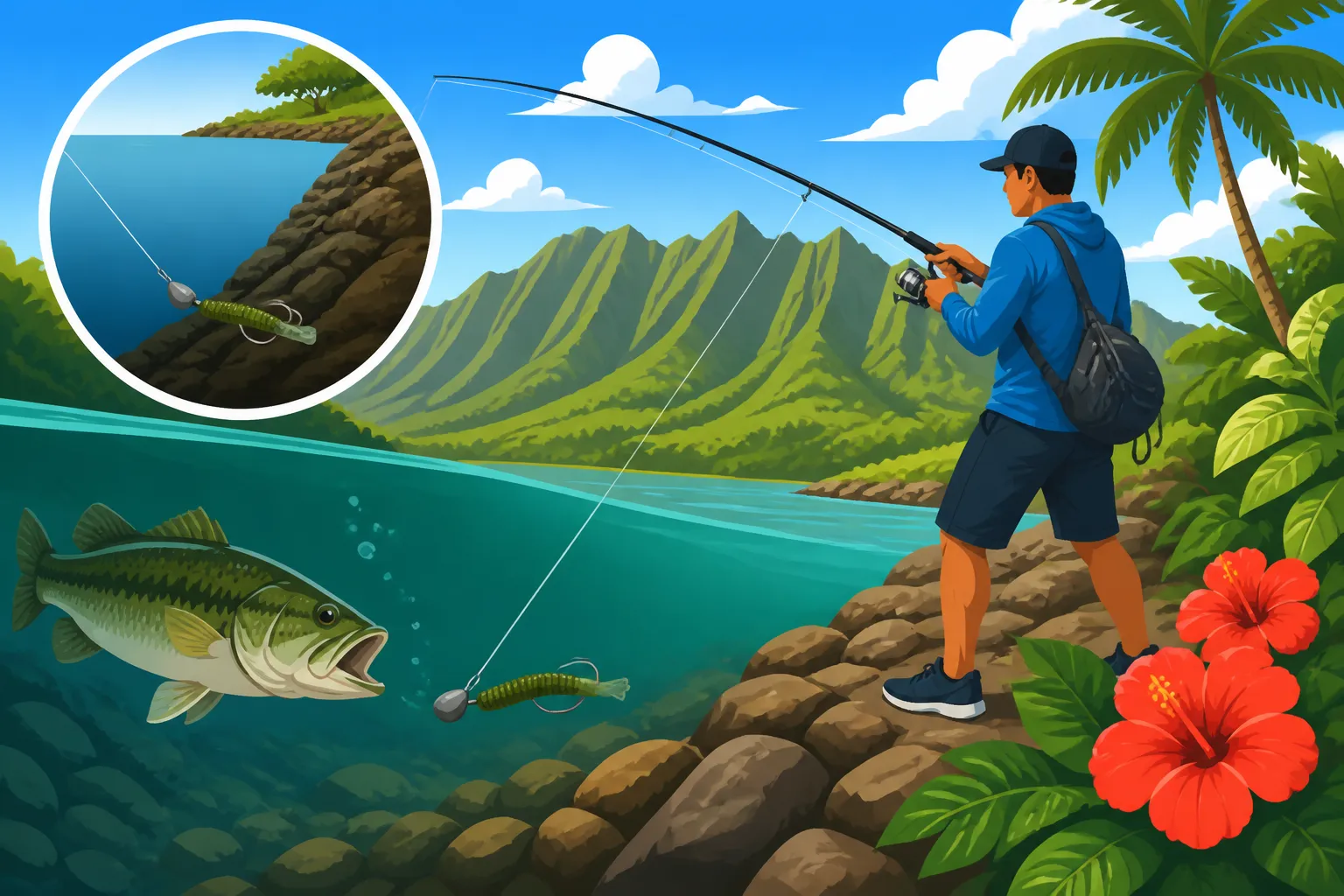
- Texas Rig: This is a classic for bass fishing, especially in weed-choked waters. Thread a bullet weight onto your line, then tie on an offset worm hook. Bury the hook point into a soft plastic worm or creature bait to make it weedless. This rig is fantastic for fishing through heavy cover without snagging.
- Carolina Rig: Another bass favorite, this rig uses a heavier egg sinker above a swivel, followed by a lighter fluorocarbon leader (18-36 inches) and an offset hook with a soft plastic. It's excellent for presenting bait on the bottom while maintaining a natural, free-moving presentation.
- Drop Shot Rig: Ideal for subtle presentations and targeting fish suspended off the bottom. Tie a hook directly to your main line (Palomar knot works well), leaving a tag end of line below it. Tie a sinker to the tag end. This keeps your bait suspended at a specific depth above the weight, perfect for finicky fish.
- Slip Bobber Rig: Excellent for presenting live bait or small artificials at precise depths, especially for species like tilapia or crappie. The bobber slides freely on your line until it hits a bobber stop, allowing you to easily adjust your fishing depth from shallow to deep.
- Bottom Rig (for Catfish): A simple rig for channel catfish involves an egg sinker above a swivel, a short leader, and a sturdy circle or J-hook baited with a chunk of hot dog, chicken liver, or a cut bait. Cast it out and let it sit on the bottom.
Having these versatile rigs ready to go means you can quickly adapt to changing conditions or target different species throughout your fishing day.
Seasonal Considerations and Best Practices
Just like ocean fishing, freshwater fishing in Hawaii's reservoirs can be influenced by the time of year, weather, and even time of day. Understanding these factors will help you plan your trips for maximum success.
Best Times of Year and Day
Hawaii's tropical climate means freshwater fishing is generally good year-round, but there are nuances.
- Spring and Fall: These are often considered prime times for bass and peacock bass. The water temperatures are moderate, and fish are often more active as they transition between spawning and feeding patterns.
- Summer: While hotter, early mornings and late evenings can still be highly productive, especially with topwater lures, as fish seek cooler water and low-light feeding opportunities. During midday heat, fish tend to go deeper or seek shade in dense cover.
- Winter: Bass can become a bit more sluggish, moving to deeper, more stable water. However, species like channel catfish can remain active. Trout fishing in Kokee, being a stocked fishery, operates on a specific season.
Regardless of the season, early mornings and late afternoons/evenings are almost always the most productive times for bank fishing. Fish are generally more active during lower light conditions and cooler temperatures. This is when they're most likely to move into shallower areas to feed.
Respecting the Environment and Regulations
Fishing in Hawaii, whether freshwater or saltwater, comes with a responsibility to respect the environment and adhere to local regulations.
- Licenses: For freshwater fishing in Hawaii, you will generally need a freshwater game fishing license. These are different from marine licenses. Make sure you understand Hawaii Freshwater Game Fishing License Cost and age requirements before you go. You can often purchase these online, or at authorized vendors.
- Bag and Size Limits: Always check the current regulations for bag and size limits for specific species in the reservoir you plan to fish. These regulations are in place to ensure sustainable fishing for everyone.
- Catch and Release: Consider practicing catch and release, especially for trophy-sized bass or peacock bass, to help maintain healthy fish populations. If you do keep fish, only take what you plan to eat.
- Leave No Trace: Pack out everything you pack in. This includes fishing line, bait containers, and any other trash. Our reservoirs are precious resources, and keeping them clean preserves them for future generations of anglers. It's also important to be aware of Hawaii Wahiawa Reservoir Fishing Rules and specific regulations for other locations like Hawaii Nuuanu Reservoir Fishing Guide.
Being a responsible angler not only contributes to the health of the fishery but also ensures continued access for all. For non-residents looking to enjoy Hawaii's freshwater fishing, understanding options like a Hawaii 30-day tourist freshwater license cost is a great first step.
Table: Common Freshwater Species and Techniques for Hawaii Reservoirs
Here's a quick reference for some of the common species you'll find in Hawaii's freshwater reservoirs and the bank fishing techniques that often work best for them:
| Species | Primary Habitat (Bank-Accessible) | Effective Bank Techniques | Recommended Baits/Lures | Notes |
|---|---|---|---|---|
| Largemouth Bass | Submerged structure, weed lines, drop-offs | Texas Rig, Carolina Rig, Spinnerbaits, Topwater, Crankbaits | Soft plastics (worms, creature baits), Spinnerbaits, Poppers, Shad imitations | Aggressive feeders, especially at dawn/dusk. Look for ambush points. |
| Peacock Bass | Sunny shallows, rocky points, clear water | Topwater, Jerkbaits, Spinnerbaits, Live bait (tilapia) | Small poppers, walking baits, bright jerkbaits, Chatterbaits, Live tilapia (where legal) | Often very visual hunters. Prefer warmer water and can be found cruising. |
| Tilapia | Shallow muddy areas, weed edges, warm water | Float Fishing, Bottom Rigging (light tackle), Fly Fishing | Bread balls, corn, small worms, PowerBait, small jigs, flies | Abundant, good for beginners or kids. Can be caught on light tackle. |
| Channel Catfish | Deeper holes, muddy bottoms, structure | Bottom Rigging, Slip Bobber | Cut bait (hot dog, chicken liver), stink baits, shrimp, live worms | Primarily nocturnal feeders but can be active during the day, especially in murky water. |
| Rainbow Trout | Cooler, oxygenated streams and deeper pools (Kokee) | Spinners, Fly Fishing, PowerBait, Worms, Small Jigs | Small inline spinners (e.g., Rooster Tails), PowerBait, salmon eggs, earthworms, dry flies | Primarily found in the Kokee Public Fishing Area. Seasonally stocked. Check specific dates. |
Remember to always check local regulations for specific bag and size limits and ensure any live bait you use is legal and not an invasive species to that particular water body. If you're wondering about fishing licenses for younger anglers, it's worth checking out What age requires a freshwater fishing license in Hawaii.
Bank fishing in Hawaii's freshwater reservoirs offers a unique and rewarding experience. By understanding the environment, selecting the right gear, and employing effective techniques, you'll be well on your way to a successful day on the water.
Disclaimer
This article is for general informational purposes only and does not constitute professional advice. Laws, prices and regulations vary by location and change over time. Consult a qualified professional for guidance on your specific situation.