Best technique for finding fall baitfish schools
There’s nothing quite as frustrating as heading out for a day of fishing in Hawaii, full of anticipation, only to find the water seems lifeless. You know the big game fish are out there, but if you can't locate their food source – the baitfish schools – it feels like you're casting into a void. Trying to find these elusive schools, especially when the seasons shift in the fall, can feel like searching for a needle in a vast, blue haystack. This guide is all about equipping you with the best techniques to pinpoint those vital baitfish schools, turning your "search" into a strategic hunt for the most productive fishing grounds in Hawaii's beautiful waters.
Why Fall Baitfish Schools Are So Crucial in Hawaii
Fall in Hawaii brings a subtle yet significant shift in ocean conditions and fish behavior. While we don't experience the dramatic seasonal changes of temperate zones, even slight variations in water temperature, currents, and nutrient upwellings can influence where baitfish congregate. Understanding these patterns is the first step to unlocking a successful fishing trip during this time of year.
The Chain Reaction: From Bait to Big Game
Imagine a vibrant underwater buffet. That’s what a dense school of baitfish represents to nearly every predatory fish in the Hawaiian ecosystem. From the swift, schooling akule and opelu that roam nearshore to the offshore masses of mackerel scad that attract marlin, tuna, and mahimahi, bait is the linchpin. If you can find the bait, you're almost guaranteed to find the predators that are feasting on them.
This "food chain" dynamic is particularly pronounced in the fall. As certain baitfish species reach maturity or begin their seasonal movements, they become prime targets. Predators, keenly aware of these shifts, will actively hunt these congregations. For us anglers, it means that locating these schools isn't just about finding small fish; it's about identifying the very foundation of the larger fishery, whether you're targeting Ahi (Yellowfin Tuna) Fishing in Hawaii or trying your hand at Ulua (Giant Trevally) Fishing in Hawaii from shore.
Seasonal Shifts and Baitfish Movements
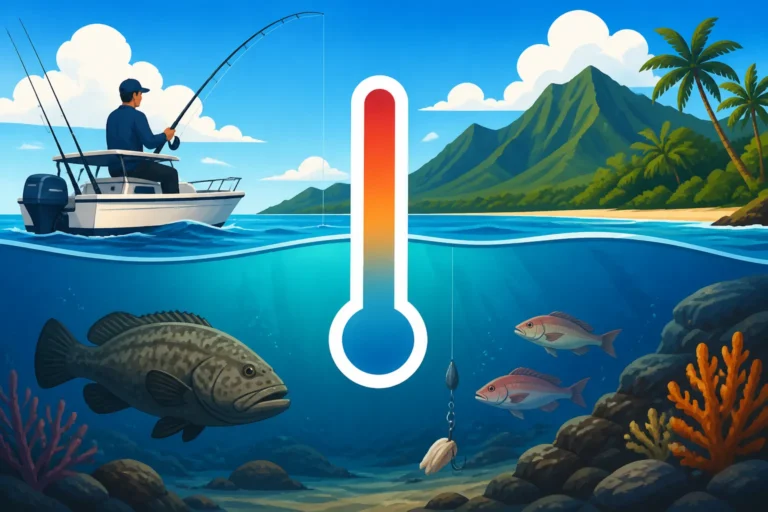
Hawaii's fall, generally from September through November, often sees a transition in pelagic species. While summer might be peak season for some, fall can still offer incredible action as cooler water eddies and currents push in nutrient-rich waters. These conditions can concentrate baitfish in specific areas, making them more predictable if you know what to look for.
For instance, certain inshore baitfish might move into shallower bays or deeper channels to escape predation or find more stable temperatures. Offshore, the movement of strong current lines can create clear "walls" where plankton and smaller baitfish accumulate, drawing in the larger pelagic species. These movements aren't random; they're driven by environmental factors. Keeping an eye on ocean conditions, even subtle changes, can provide invaluable clues.
Visual Cues: Reading the Ocean's Signs
Before you even think about dropping a line or firing up your sonar, the most accessible and often most effective tool you have is your own pair of eyes. Learning to read the subtle (and sometimes not-so-subtle) signs the ocean provides can drastically increase your chances of finding those elusive baitfish schools.
Birds: Nature's Best Spotters
Birds are often the angler's best friends, acting as aerial scouts that are infinitely better at spotting bait from above than we are from a boat or shore. When you see birds actively working the water, it's a huge sign. But not all bird activity is equal; you need to learn to interpret their behavior.
A single bird lazily cruising might not mean much. However, a flock of birds aggressively diving, plummeting headfirst into the water, is a dead giveaway that there's bait being driven to the surface from below. Look for terns, boobies, or shearwaters – these are common indicators. If the birds are just circling high or picking at something on the surface without diving, it might be smaller, scattered bait or even just debris. But a tight cluster of diving birds signifies a feeding frenzy, and usually, larger predators are pushing those baitfish up. Observing these patterns, especially at dawn or dusk, can lead you directly to the action, potentially saving you hours of searching.
Surface Activity: Boils, Busts, and Ripples
Sometimes, the baitfish themselves, or the predators chasing them, will give away their location directly on the water's surface. These are some of the most exciting visual cues to spot, signaling immediate action.
- Boils: These are areas where a dense school of baitfish is being pushed to the surface by predators, causing the water to "boil" and churn. It looks like the ocean is literally bubbling. This is a clear indicator of active feeding and means you should get your lure or bait into that zone as quickly as possible.
- Busts: Similar to boils, a "bust" is an explosive eruption on the surface as larger fish, like tuna or Ono (Wahoo) Fishing in Hawaii, tear through a bait school. You might see splashes, tails, and fins breaking the surface. These are often fleeting but intense, so you need to react fast.
- Ripples and Shiners: Even without dramatic boils, you might notice subtle ripples or dimples on calm water that aren't caused by wind. These can be schools of small baitfish just under the surface, or "shiners" – tiny baitfish flashing as they move. While less intense than a boil, these still indicate bait presence and can be worth investigating, especially if you're Shore Fishing Techniques for Hawaii and targeting species like papio. These subtle signs often become more apparent in low light conditions, such as early morning or late afternoon.
Water Color and Current Lines
Beyond the direct activity, the more subtle characteristics of the water itself can point you toward baitfish concentrations. Two key elements to observe are water color and current lines.
Water color can tell you a lot about productivity. Look for areas where the water shifts from deep blue to a slightly greener or murkier hue. These greener areas often indicate a higher concentration of plankton, which is the food source for smaller baitfish, thus attracting larger schools. Conversely, extremely clear, sterile-looking water might be less productive. Similarly, distinct current lines, often visible as a seam where two different colored water masses meet, are prime areas for baitfish. These lines act like conveyor belts, concentrating nutrients, plankton, and subsequently, schools of baitfish, which then attract pelagic predators. Trolling Techniques for Hawaii Pelagics often involve running lures along these very lines.
Technology and Tools: Enhancing Your Search
While keen observation is paramount, modern technology can significantly boost your ability to locate fall baitfish schools. From advanced sonar systems to simple yet effective optics, having the right gear can provide a crucial advantage, especially when the bait is holding deeper or scattered.
Sonar and Fish Finders: Interpreting the Readings
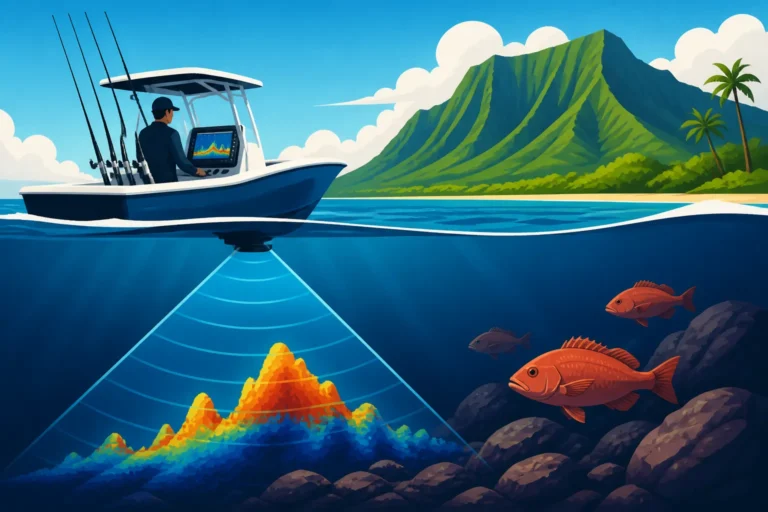
A good fish finder or sonar unit is indispensable for boat anglers. It allows you to see what's happening beneath the surface, transforming guesswork into informed decisions. To effectively find baitfish schools, you need to understand how to interpret your sonar's display.
Baitfish schools will typically appear as dense clouds or balls on your screen. These can range from small, tight clusters to massive, sprawling formations. Look for arch-like returns within or just below these bait balls; these are often larger predatory fish feeding on the bait. Pay attention to the size and density of the marks. A solid, dark mass indicates a very tight school, while more scattered marks might mean less concentrated bait. Some advanced units, like those from popular brands you can find on Amazon, offer CHIRP sonar, which provides incredibly detailed target separation, allowing you to distinguish individual baitfish even in a dense school. Knowing your machine and experimenting with sensitivity settings is key to unlocking its full potential.
Binoculars and Drones: Extending Your Visual Range
Even with sharp eyesight, the vastness of the ocean can limit your reach. This is where simple tools like binoculars, or more advanced ones like drones, come into play.
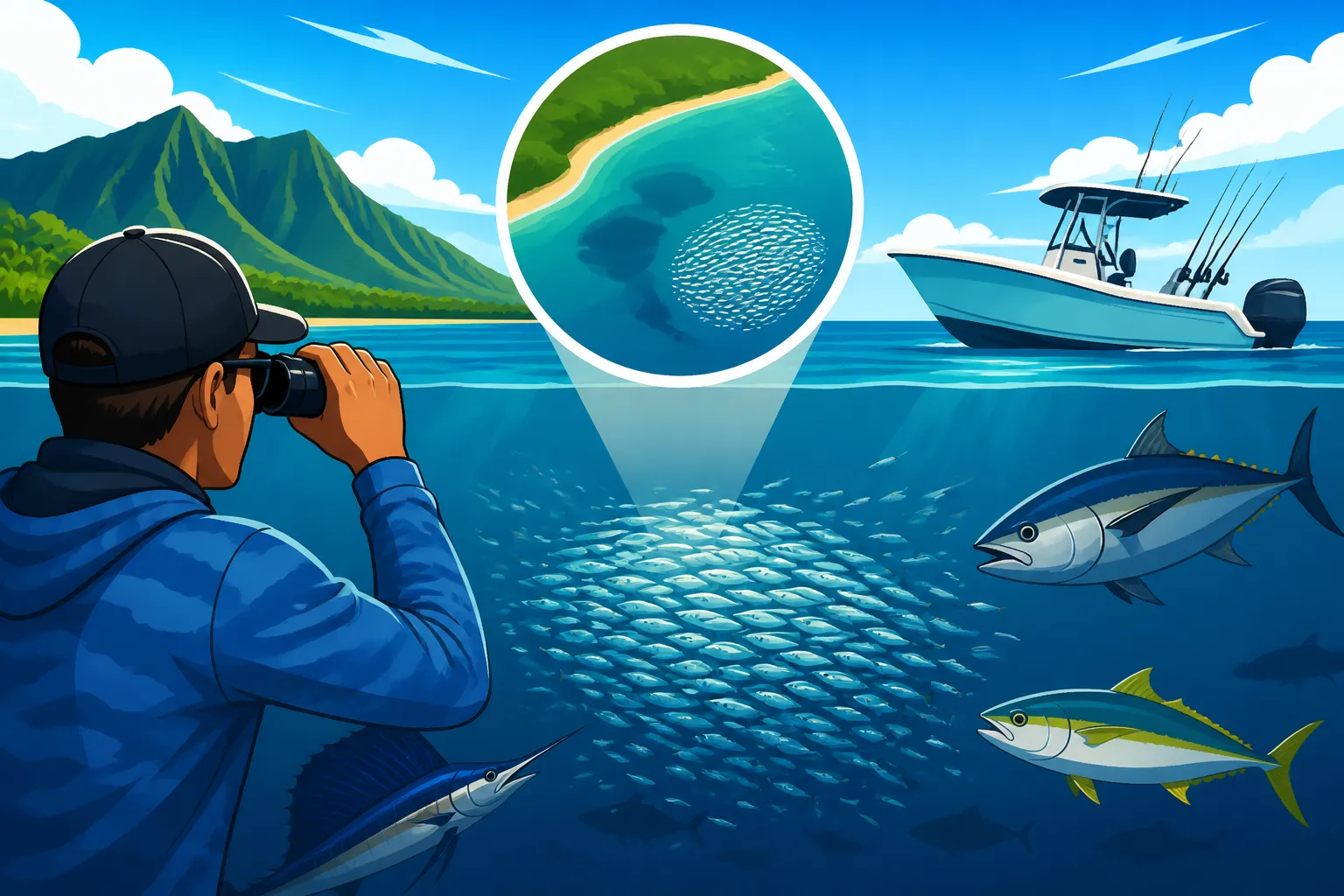
A good pair of marine binoculars, ideally waterproof and fog-proof, can extend your visual scouting range dramatically. From the deck of your boat or even a high vantage point on shore, you can scan for distant bird activity, subtle surface disturbances, or color changes in the water that would be invisible to the naked eye. Investing in a quality pair can make a world of difference. For those looking to really elevate their game, recreational drones have become powerful scouting tools. Flying a drone above the water allows you to cover large areas quickly and get an unparalleled overhead view. You can spot bait schools, current lines, and even larger game fish from a perspective that's impossible from sea level. Many good drones suitable for this purpose can be found on Amazon, offering high-resolution cameras that capture clear images of the water below. Just be sure to check local drone regulations.
Local Knowledge and Online Resources
Sometimes the best technology is simply tapping into the wisdom of others. Local knowledge, passed down through generations of Hawaii anglers, is an incredibly valuable resource. Chatting with seasoned local fishermen at harbors, tackle shops, or fishing clubs can provide insights into seasonal patterns, historical baitfish aggregation spots, and recent movements. They often have an intuitive understanding of the waters that comes from years of experience.
In addition to face-to-face conversations, online fishing forums and local social media groups dedicated to Hawaii fishing can offer real-time reports and observations. While not every tip will be golden, these platforms can help you identify trends, get a general idea of where bait is currently being seen, and understand what techniques are working. Combining this community intelligence with your own observations and technology creates a powerful search strategy. You might also find invaluable information on Reading the Hawaii DLNR Fishing Regulations, which often includes details about fish movements and specific seasonal closures that could indicate baitfish concentrations.
Strategic Approaches: Where to Look and When
Finding baitfish isn't just about spotting them; it's about knowing where they're likely to be and when they're most vulnerable. Different environments and times of day offer varying opportunities to encounter these crucial schools.
Nearshore and Reef Areas: Identifying Likely Hideouts
For those fishing closer to shore or targeting reef species, understanding where baitfish seek refuge or feed is vital. Reef flats, rocky points, and sheltered bays are common areas.
- Reef Flats: Shallow reef flats provide both food and cover for smaller baitfish. They graze on algae and small invertebrates, and the intricate structure of the reef offers protection from larger predators. Look for schools of akule or opelu hugging the edges of these reefs, especially where there's a slight drop-off into deeper water. They might move onto the flats during higher tides to feed and retreat to the edges as the tide recedes. Best Reef Fishing Spots in Hawaii often correlate with these baitfish congregations.
- Rocky Points and Ledges: These geological features act like natural current breaks and aggregation points. Currents can sweep nutrients and small food items around these points, attracting baitfish. The rocky structure also provides ambush points for predators, making them excellent places to find both bait and the fish that prey on them. Anglers often find success focusing on the shadowed or turbulent sides of these points.
- Sheltered Bays and Harbors: While not always teeming, calm bays and the inner areas of harbors can serve as nurseries or temporary holding areas for baitfish, especially juvenile fish. These areas offer protection from strong currents and open-ocean predators. While the bait here might be smaller, their presence can still draw in predators like papio or small ulua, especially during periods of low light.
Offshore FADs and Current Lines: Pelagic Baitfish Aggregation Points
When your sights are set on the open ocean and its pelagic giants, your search for baitfish shifts dramatically to man-made and natural offshore structures.
- FADs (Fish Aggregating Devices): These buoys, strategically placed in Hawaii's offshore waters, are magnetic attractors for baitfish. Over time, marine growth establishes itself on the FAD, creating a micro-ecosystem that draws in smaller fish, which in turn attracts larger predators like ahi, mahimahi, and ono. Fishing around FADs is a prime method for targeting pelagics, and often the presence of baitfish at the FAD is your first sign of activity. You can often find a chart of FAD locations online, and they are excellent places for Hawaii Pelagic Species Bag Limits discussions.
- Current Lines and Eddies: As mentioned earlier, current lines where two distinct water masses meet are natural highways for plankton and baitfish. These lines can be visible as distinct color changes, foam lines, or temperature breaks. Eddies, which are circular currents, can also concentrate bait. These areas essentially act as feeding grounds where baitfish gather, making them prime targets for trolling or drift fishing. Paying attention to sea surface temperature charts and current maps before you even leave the dock can give you a significant head start in locating these offshore hotspots.
Timing Your Search: Tides, Dawn, and Dusk
Beyond where to look, when you look can be just as critical. Baitfish activity often follows predictable patterns tied to tides and light cycles.
- Tides: For nearshore fishing, tidal movement is a significant factor. Incoming tides often bring in cleaner, cooler water and nutrients, pushing baitfish closer to shore or into feeding zones around reefs and points. Outgoing tides can pull baitfish out of bays and channels, concentrating them at their mouths. Slack tide (the period of minimal water movement) can sometimes be slower, but it's not always the case, as baitfish might feel less current and relax their guard. Observing how baitfish react to different tide stages in your specific fishing area is crucial.
- Dawn and Dusk: These "low light" periods are universally recognized as prime times for predator activity, and consequently, for baitfish movements. The reduced light provides cover for predators to hunt more aggressively, driving baitfish to the surface or into more exposed areas. This is when you're most likely to see those dramatic surface boils and busts that signify a feeding frenzy. Anglers targeting large ulua from shore often plan their trips around these times, hoping to intercept baitfish moving in or out. Best Night Fishing Spots in Hawaii can also be excellent, as baitfish are often attracted to lights, and predators follow.
Summary of Baitfish Locating Cues
Here's a quick reference table to help you identify common baitfish signs:
| Visual/Technological Cue | What it Looks Like | What it Indicates | Recommended Action |
|---|---|---|---|
| Diving Birds | Flocks of terns/boobies aggressively plunging | Baitfish being driven to surface by predators below | Head to area, look for surface busts, prepare to cast. |
| Surface Boils/Busts | Churning water, splashes, fish jumping | Active feeding frenzy of predators on dense bait schools | Cast lures or bait into the boil immediately. |
| Subtle Ripples/Flashes | Small dimples on calm water, metallic glints | Baitfish just under the surface, less intense predation | Approach cautiously, use light tackle or quiet presentation. |
| Current Lines | Distinct change in water color, foam lines, debris | Concentration of nutrients and baitfish due to converging currents | Troll or drift along the current line. |
| Sonar "Bait Balls" | Dense clouds or balls on fish finder screen | Large schools of baitfish, often with larger arches (predators) nearby/within | Drop jigs, liveline bait, or troll through the area. |
| Rocky Points/Ledges | Shoreline features creating current breaks | Ambush points for predators, areas where baitfish gather due to currents/shelter | Cast around the structure, especially at tide changes. |
| FADs (Offshore) | Buoys anchored offshore | Man-made attractors for pelagic baitfish and their predators | Troll around, jig under, or slow-troll live bait near FAD. |
Finding baitfish schools in Hawaii during the fall requires a blend of keen observation, strategic thinking, and sometimes, a little technological help. By understanding why baitfish move, how to interpret the visual signals the ocean provides, and when and where to focus your efforts, you'll significantly increase your chances of not just finding bait, but landing that trophy fish that's hot on its tail.
Disclaimer
This article is for general informational purposes only and does not constitute professional advice. Laws, prices and regulations vary by location and change over time. Consult a qualified professional for guidance on your specific situation.