Best technique for tailwater trout at Kokee
If you've ever cast a line into the crisp, cool waters of Kokee's streams, you know it's a unique and sometimes challenging experience. These aren't your typical placid ponds; the tailwaters flowing through the Kokee Public Fishing Area present their own set of puzzles, from wary, cold-water trout to ever-changing flow conditions. This guide is here to walk you through the very best techniques to tackle these beautiful, yet demanding, Hawaiian freshwater fisheries, helping you unlock the secrets to a successful and rewarding day chasing rainbow trout.
Understanding Kokee's Tailwater Environment
Fishing in the tailwaters of Kokee isn't just about finding a spot and casting; it's about understanding the unique environment these streams offer. Unlike the warm, calm ocean waters Hawaii is famous for, Kokee provides a stark contrast, and the trout here behave very differently from their saltwater cousins. It’s a mountain fishery, high up in the cool, moist air of Kauai, where the streams are fed by rainfall and runoff, leading to dynamic conditions.
The Characteristics of Kokee's Streams
These streams are generally characterized by clear, cold water, even on the warmest Hawaiian days. They flow through a mix of dense forest and open areas, often with rocky bottoms, submerged logs, and undercut banks that create perfect hiding spots for trout. The currents can vary dramatically, from gentle glides in deeper pools to fast, rushing riffles over shallow gravel beds. This variability means you can’t just use a one-size-fits-all approach; you need to adapt. Sometimes, after heavy rains, the water can become slightly murky and higher, completely changing the fish's preferred lies and feeding behavior. Conversely, during dry spells, the water can drop to surprisingly low levels, making the fish even warier and concentrated in specific deep pockets.
The term "tailwater" here generally refers to the streams that form the headwaters and tributaries of larger systems, flowing out of the mountainous terrain. They are often narrow, winding, and require a bit of hiking to access the best spots. This isn't dock fishing; it's an immersive experience that demands attention to detail and a willingness to explore. Knowing the ins and outs of Kokee Public Fishing Area Guide can give you a significant advantage before you even wet a line.
How Rainbow Trout Behave in Kokee
The rainbow trout in Kokee are primarily stocked fish, brought in to create this fantastic freshwater fishery. However, over time, many of these fish become "holdovers," adapting to the wild environment and developing more cautious, natural behaviors. These holdovers are often larger and much trickier to catch than the freshly stocked fish. They learn to avoid brightly colored lures and heavy lines, becoming incredibly sensitive to vibrations, shadows, and unnatural presentations.
Trout are cold-blooded creatures, and their metabolism is directly tied to water temperature. In Kokee's consistently cool waters, they tend to be active feeders, but they are also opportunists. They’ll position themselves in spots where food is naturally funneled to them, expending minimal energy while waiting for an easy meal. This means focusing on current breaks, eddies behind rocks, and the seams where fast water meets slow water. They also have excellent eyesight, especially in clear water, making stealth absolutely paramount. Any sudden movements on the bank, a heavy splash, or even the shadow of your rod can send them darting for cover. Understanding Rainbow Trout: Hawaii's Only Freshwater Trout Fishery will help you appreciate the unique opportunity this fishery presents.
Mastering Tailwater Trout Techniques
Successfully fishing Kokee's tailwaters requires a combination of finesse, observation, and the right technique for the conditions. While there are a few tried-and-true methods, the key is knowing when and how to apply each one.
Fly Fishing: The Art of Delicacy
Fly fishing is arguably the most effective and rewarding method for Kokee's wary trout, especially for the more educated holdovers. It allows for incredibly delicate presentations that mimic natural insect drifts, which is precisely what these trout are looking for.
Nymphing and Dry Fly Presentations
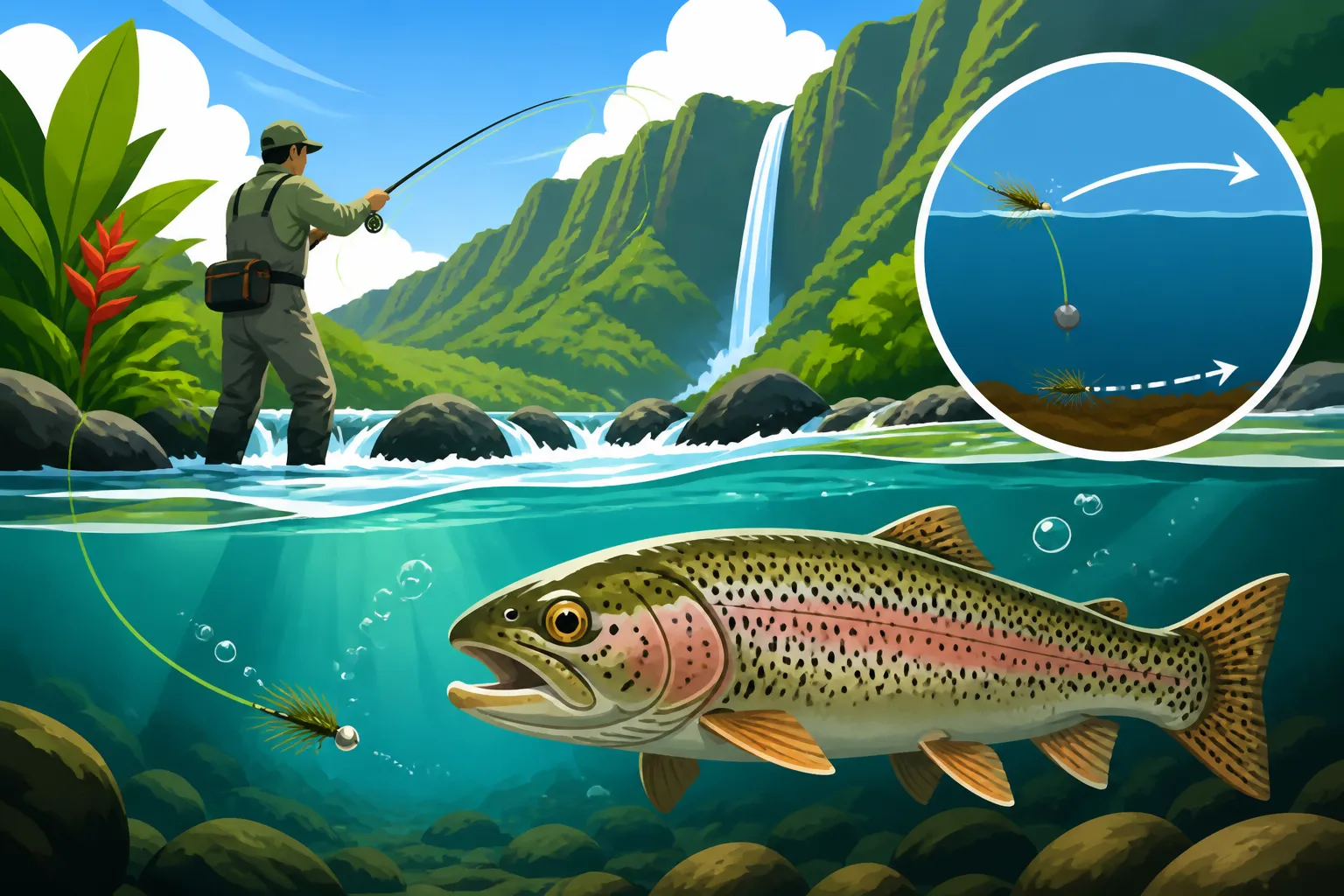
Nymphing is often the bread and butter technique, as trout spend the vast majority of their time feeding subsurface on insect larvae and nymphs. A dead drift is crucial: you want your fly to float downstream at the same speed as the current, without any drag. This usually involves casting upstream or slightly across, mending your line to achieve a natural drift, and using a strike indicator to detect subtle takes. Indicators come in various forms, from small foam pieces to yarn, and selecting the right one for the current speed and water depth is important. For deeper holes, a heavier nymph or split shot might be necessary to get your fly down quickly. Common nymph patterns like bead-head pheasant tails, hare's ears, and caddis larvae imitations can be incredibly effective. You can find a wide variety of these patterns and other fly-fishing essentials on Amazon, making it easy to stock your fly box.
Dry fly fishing, while less consistently productive than nymphing, can be absolutely thrilling when trout are actively feeding on the surface. This usually occurs during specific insect hatches, often in the late morning or evening when conditions are calmer. Observing rising fish and matching the hatch (identifying the size, shape, and color of the insects they are eating) is key. Delicate casts that land the fly softly, without spooking the fish, are essential. Popular dry fly patterns might include small caddis, mayflies, or even ant imitations if terrestrial insects are falling into the water. Having a selection of these ready, perhaps acquired through an online retailer like Amazon, prepares you for varying conditions.
Streamer and Wet Fly Strategies
While less common in Kokee's smaller streams, streamer fishing can be surprisingly effective for larger, more aggressive holdover trout, particularly after a rain when water levels are up and clarity is slightly reduced. Streamers imitate baitfish or larger aquatic insects that bigger trout will chase. Presenting streamers involves casting across or slightly downstream and stripping the line back in short, erratic tugs to make the fly "swim." This aggressive presentation can trigger a predatory strike from a territorial fish.
Wet flies, fished just below the surface with a slight swing at the end of the drift, can also be productive. They often mimic emerging insects or drowned terrestrial insects. The key with both streamers and wet flies is experimenting with retrieve speed and depth until you find what the fish are reacting to.
Spin Fishing: Precision and Versatility
For anglers who prefer spin fishing, or for those new to trout fishing, this method can also be highly effective in Kokee's tailwaters. The emphasis here is on light tackle, accurate casting, and carefully chosen lures or bait that don't overpower the delicate presentation needed.
Light Lures and Artificial Baits
Small spinners and spoons are perennial favorites for trout. Their flashing and vibrating actions can attract fish from a distance, even in slightly discolored water. Sizes should be kept small, generally 1/16 oz to 1/8 oz, to match the size of natural forage and avoid spooking fish. Popular choices include Mepps, Panther Martin, and Roostertail spinners, often in natural colors like silver, gold, or black, sometimes with a touch of red or yellow. Casting accuracy is vital to get these lures into precise pockets, eddies, or along undercut banks where trout are holding. A slow, steady retrieve is often best, allowing the lure to wobble naturally with the current.
Artificial baits like PowerBait, soft plastic worms, or small Gulp! Alive offerings can also be very effective. These are often fished on a very light leader with a small hook, either drifted naturally with the current using a small split shot or floated just off the bottom using a small bobber in slower pools. The scent and texture of these baits can be irresistible to trout, especially those that are recently stocked.
Live Bait Options
While artificial lures and flies are popular, sometimes nothing beats natural bait. Small worms (red wigglers or nightcrawlers cut into pieces) are a classic choice. They can be drifted naturally with the current, either on their own or with a small split shot to help them sink. Another effective option, when legally permitted, can be salmon eggs, which trout find highly attractive. Always check current Hawaii Fishing Regulations Explained before using any live bait to ensure compliance with local rules.
When fishing with bait, it’s important to use a small hook that is easily swallowed by the trout to minimize harm if you plan on releasing your catch. A light line and leader are also crucial, as heavy gear can deter strikes.
Essential Gear and Tackle for Kokee
Having the right equipment can make all the difference in your Kokee tailwater adventure. It’s not about having the most expensive gear, but rather the most appropriate and functional.
Rods, Reels, and Lines
For fly fishing, a lightweight rod in the 2 to 4-weight range, typically 7 to 8.5 feet long, is ideal. This allows for delicate presentations and protects light tippets, yet still has enough backbone to handle a feisty rainbow. Pair this with a matching fly reel and a floating line that's appropriate for the rod weight. A tapered leader (7.5 to 9 feet long) ending in 4x to 6x tippet is a good starting point, providing stealth and sensitivity.
Spin anglers will do well with an ultralight or light action spinning rod, 5 to 6.5 feet in length. This allows for precise casting in tight quarters and better feel for light lures and subtle bites. Match this with a small spinning reel spooled with 4 to 6 lb test monofilament or fluorocarbon line. Fluorocarbon is often preferred for its low visibility and abrasion resistance. Remember, lighter line often leads to more bites in clear water. Many excellent options for these setups can be found on Amazon, often with detailed reviews to help you choose.
Waders and Footwear
Given the cold water and often slippery, uneven streambeds, a good pair of waders is almost a necessity. Chest waders will keep you dry and comfortable, allowing you to access various sections of the stream that are inaccessible from the bank. Neoprene waders offer excellent insulation in the cold Kokee waters. Pair your waders with wading boots that have good traction, ideally felt soles or rubber soles with studs, to prevent slips on algae-covered rocks. Safety is paramount, especially when navigating swift currents. You don't want to take an unexpected plunge!
Accessories and Essentials
Beyond the core tackle, several accessories will make your trip more enjoyable and productive. A small landing net with a rubberized mesh is excellent for safely landing and releasing trout, minimizing harm to the fish. Forceps or hemostats are indispensable for removing hooks, especially if you're using barbless hooks for catch and release. A small tackle box or fly box filled with a variety of patterns or lures suited for Kokee is a must. Don't forget polarized sunglasses to help cut glare and spot fish or underwater structure, a hat for sun protection, and a small backpack to carry water, snacks, and any extra layers of clothing. A good knife, sunscreen, and insect repellent are also smart additions. These smaller items are perfect for picking up quickly on Amazon before your trip.
Reading the Water and Environmental Factors
Being able to "read the water" is a skill that separates successful anglers from those who struggle. It involves understanding where fish are likely to hold and feed based on current, structure, and depth, as well as accounting for external environmental conditions.
Current and Structure: Where Trout Hide
Trout are constantly looking for two things: food and shelter. They will position themselves in areas that offer both.
- Riffles and Runs: These are shallow, turbulent sections where the water flows quickly over rocks. They are prime feeding grounds as the current dislodges insects and oxygenates the water. Trout will often sit just out of the main current, in a softer seam or behind a larger rock, darting into the fast water to snatch food.
- Pools: Deeper, slower-moving sections of the stream are excellent holding areas, especially for larger fish. Trout will often congregate in the deepest part of the pool or along the edges where they can find cover. Look for subtle currents within the pool that might bring food.
- Eddies and Current Seams: These are critical spots. Eddies are areas of calm water behind obstructions (rocks, logs) where trout can rest without fighting the current. Current seams are the boundaries where fast water meets slow water, creating a natural food conveyor belt.
- Undercut Banks and Submerged Cover: Overhanging vegetation, fallen logs, and undercut banks provide excellent overhead cover and protection from predators. These are classic spots where wary trout will hide, especially on bright, sunny days or during low water conditions. A delicate cast right up against these features can often entice a strike.
Impact of Water Flow and Clarity
The amount of water flowing through Kokee's streams can change significantly based on recent rainfall.
- High Water: After heavy rains, the water levels will rise, and the clarity might decrease slightly. Fish often move into slower, more protected areas closer to the banks, as the main current can be too strong. This is a good time to use slightly larger, more visible lures or flies, or natural bait, as the fish's visibility is reduced. The increased flow can also wash terrestrial insects and worms into the stream, providing an easy meal.
- Low Water: During dry periods, the water levels drop, and clarity becomes crystal clear. This makes the fish incredibly wary. They will retreat to the deepest pools and most protected cover. Stealth becomes even more important, and lighter lines, smaller lures/flies, and extremely delicate presentations are crucial. You'll need to approach these spots with extreme caution, staying low and moving slowly to avoid casting a shadow or sending vibrations through the bank.
Time of Day and Weather Considerations
While trout can be caught throughout the day, certain times and weather conditions tend to be more productive in Kokee.
- Early Morning and Late Evening: These "golden hours" often see increased insect activity and cooler temperatures, making trout more active feeders. The lower light conditions also provide a bit more cover for both fish and angler.
- Cloudy Days: Overcast conditions can be excellent for trout fishing, as the reduced light makes fish feel more secure and less wary of shadows. This can extend the productive feeding window throughout the day.
- Post-Rain: As mentioned, a light rain or the period immediately following a rain shower can often trigger a feeding frenzy, as new food sources are washed into the stream. Just be mindful of slippery banks and rapidly rising water. For more information on timing your trip, check out Hawaii Kokee rainbow trout season opening date.
Stealth and Approach: The Kokee Advantage
Let's be real: trout, especially in clear mountain streams like those in Kokee, are incredibly spooky. Their survival depends on their ability to detect threats, and you, the angler, are definitely a perceived threat. Many a day has been ruined by a clumsy approach, and it’s a frustration we all share!
The Art of the Quiet Approach
Imagine you're hunting, not just fishing. Approach the water slowly, keeping a low profile. Stay well back from the bank if possible, and use natural cover like trees and bushes to break up your silhouette. Avoid stomping along the bank or making sudden movements. Even the vibration of heavy footsteps can travel through the ground and into the water, sending fish scurrying. It sounds like a lot, but once you get into the rhythm, it becomes second nature, and the payoff is more hookups.
Casting Accuracy and Presentation
Once you're in position, your cast needs to be accurate and delicate. For fly anglers, learning to "reach cast" or "curve cast" can help your fly land upstream of your line, allowing for a longer, drag-free drift. For spin anglers, precise underhand or roll casts can get your lure into tight spots without spooking nearby fish. Avoid heavy splashes when your lure or fly hits the water; aim for a soft, gentle entry that mimics a natural object falling into the stream.
Table: Tailwater Trout Techniques Comparison
| Technique | Primary Target | Ideal Conditions | Pros | Cons | Recommended Gear |
|---|---|---|---|---|---|
| Nymphing | Subsurface feeders | Clear to slightly turbid water, varied flows | Highly effective, covers most feeding times | Requires good drift control, subtle takes | 2-4 wt Fly Rod, Strike Indicator, Split Shot |
| Dry Fly Fishing | Surface feeders | Calm water, active hatches, low light | Visually exciting, specific hatches | Very dependent on conditions, easily spooked | 2-4 wt Fly Rod, Light Tippet, Floatant |
| Streamer Fishing | Larger, aggressive trout | Higher/slightly stained water, post-rain | Targets bigger fish, active presentation | Less subtle, can spook smaller fish | 3-5 wt Fly Rod, Sinking Tip Line (optional) |
| Spinners/Spoons | Active, opportunistic trout | Varied conditions, can cover water quickly | Easy to learn, covers various depths | Less subtle than fly, can be snag-prone | Ultralight Spin Rod, 4-6lb line, small lures |
| Bait Fishing | All trout, especially stocked | Any conditions, good for beginners | High success rate, scent attraction | Less "sporting" for some, care for release | Ultralight Spin Rod, Small Hook, Light Leader |
Remember to always prioritize responsible angling practices. If you're planning to keep fish, be aware of bag and size limits, and carry your Hawaii freshwater license cost for residents or Hawaii freshwater license cost for nonresidents. If you're practicing catch and release, handle the fish as little as possible with wet hands, remove the hook quickly, and release it gently back into the current. The goal is to enjoy the unique experience Kokee offers and ensure these beautiful trout continue to thrive for future generations of anglers.
Disclaimer
This article is for general informational purposes only and does not constitute professional advice. Laws, prices and regulations vary by location and change over time. Consult a qualified professional for guidance on your specific situation.