What sharks are common in Hawaiian waters
One of the most common anxieties people have when planning a trip to Hawaii, especially if they envision themselves swimming or snorkeling in our beautiful ocean, is the thought of sharks. It’s completely natural to wonder what magnificent, powerful creatures share these waters with us, and this guide is here to shed light on the sharks most commonly found in Hawaii, offering a realistic perspective on these vital inhabitants of our marine ecosystem.
The Oceanic Neighbors We Share the Water With
It's easy to get caught up in sensationalized stories about sharks, especially with all the media out there. But the reality in Hawaii is that sharks are an integral part of a healthy ocean environment. Most interactions are fleeting, and many species are quite shy. Understanding their presence isn't about fear; it's about respect and knowledge, which are key to safely enjoying Hawaii's incredible marine playground. We live side-by-side with these creatures, and learning about them helps us appreciate their place in the world.
Understanding Shark Behavior and Habitat
Sharks, much like any other wild animal, follow predictable patterns based on their needs: food, shelter, and reproduction. Hawaii's diverse marine habitats, from shallow reef flats to the abyssal depths offshore, support a wide array of shark species. Some prefer the murky, nutrient-rich waters near river mouths, while others thrive in the crystal-clear coral gardens. Many are nocturnal hunters, meaning they're most active when we're typically out of the water, resting. During the day, you might spot them cruising along reef edges or resting on the sandy bottom, conserving energy. They aren't lurking with malicious intent; they are simply existing in their natural habitat, often oblivious to human presence.
Their diets vary wildly too. Some are highly specialized, feeding on specific fish or crustaceans, while others are opportunistic generalists. This diversity in diet and habitat preference means that different sharks frequent different areas. For instance, the sharks you might encounter while Wading Techniques for Hawaii Shore Fishing will be very different from those found by a charter boat Best Deep Sea Fishing Spots in Hawaii.
The Importance of Sharks in the Ecosystem
Sharks are often referred to as the "doctors of the ocean" because they play a critical role in maintaining the health and balance of marine ecosystems. As apex predators, they help regulate fish populations, keeping them healthy by preying on the weak, sick, or slower individuals. This natural selection process prevents overpopulation of certain species, which could otherwise degrade coral reefs or deplete other resources. Their presence indicates a vibrant and thriving environment. Without sharks, the entire food web can suffer cascading effects, leading to imbalances that can harm everything from coral to the smallest plankton. It's a complex system, and every piece, especially the top predators, is essential. When you see a shark, it's often a sign that the waters are healthy and full of life, which is a good thing for anglers hoping to find Hawaii State Fish Records by Species.
Common Shark Species You Might Encounter
When you spend time in Hawaii's waters, whether you're fishing, diving, or just swimming, you're likely to see several species of sharks. Most of these encounters are benign and even awe-inspiring. It's important to remember that most sharks are more afraid of you than you are of them, and they rarely show interest in humans unless provoked or mistaken for their natural prey.
Reef Sharks: Blacktip, Whitetip, and Grey
These are perhaps the most frequently observed sharks by divers, snorkelers, and shore anglers in Hawaii. They are generally smaller, highly agile, and typically inhabit the shallow to mid-depth reef environments.
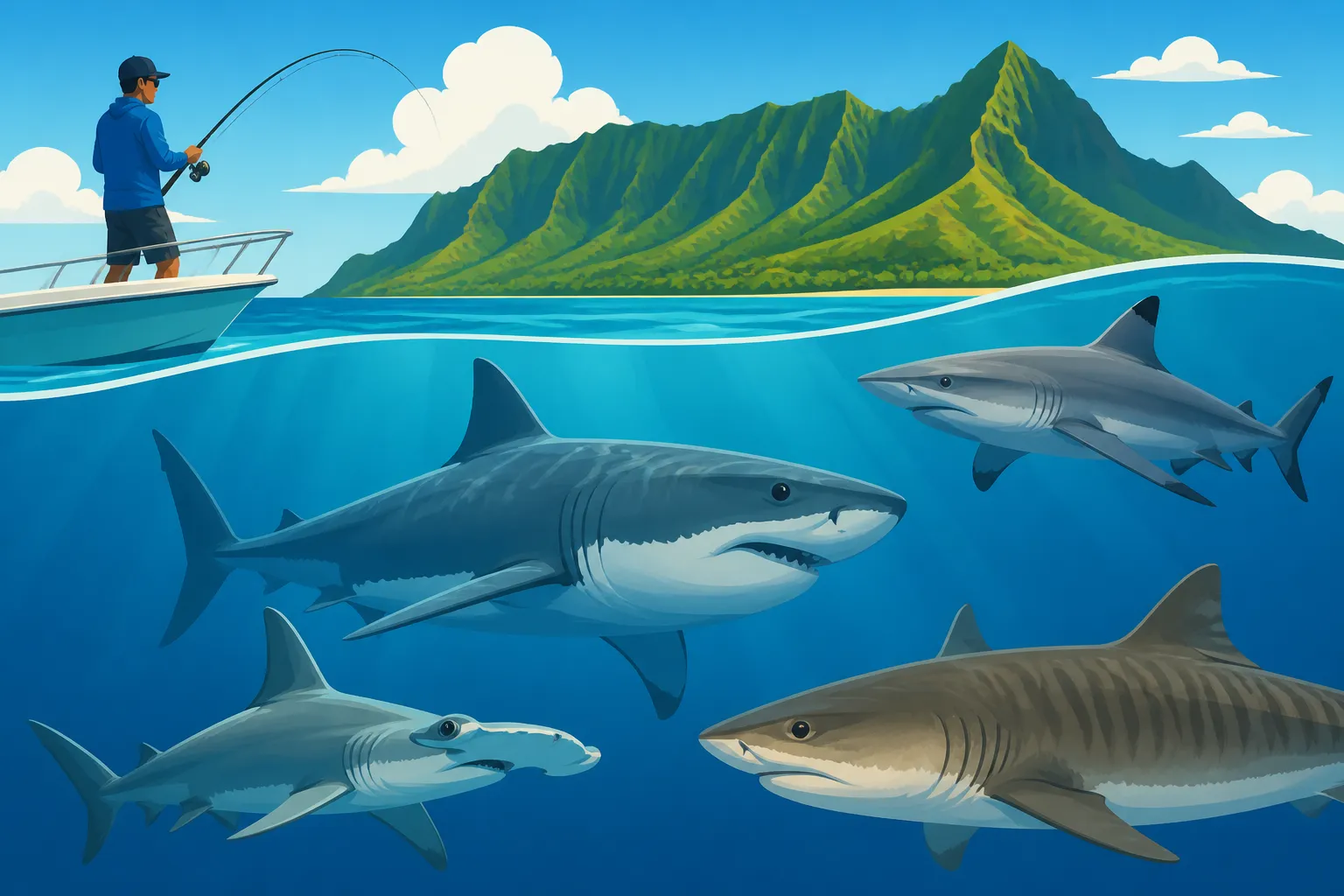
- Whitetip Reef Sharks (Triaenodon obesus): These graceful sharks are easily identified by the distinct white tips on their first dorsal fin and upper caudal (tail) fin. They are typically slender, growing up to about 5-6 feet, though most you'll see are smaller. Whitetips are often found resting in caves or under ledges during the day, becoming more active at night to hunt small fish, octopus (Hawaii octopus (tako) harvest regulations), and crustaceans. They are generally not aggressive towards humans, often allowing close observation if you approach calmly and respectfully. They are prevalent in popular snorkeling and diving spots, cruising along the reef lines.
- Blacktip Reef Sharks (Carcharhinus melanopterus): Similar in size to the whitetip, blacktips are characterized by prominent black tips on all their fins. They tend to prefer very shallow, often murky waters over coral reefs and sandy flats, even venturing into very close to shore. You might see them patrolling the surf line. They're fast and active hunters, often feeding on schooling fish. While they can be curious, they are generally skittish and pose very little threat. Their presence often indicates a healthy nearshore fishery.
- Grey Reef Sharks (Carcharhinus amblyrhynchos): Larger and more robust than their whitetip and blacktip cousins, grey reef sharks can reach up to 8 feet in length. They have a distinct dark tip on their caudal fin and no other prominent markings. These sharks prefer deeper reef slopes, channels, and outer reef edges. They are curious and can be territorial, especially if agitated or approached too closely. Divers might observe them in areas with strong currents or healthy coral formations. They are powerful predators, feeding on a wide variety of reef fish.
Sandbar Sharks: The Most Frequently Seen Coastal Shark
The Sandbar Shark (Carcharhinus plumbeus) is incredibly common in Hawaii's coastal waters, especially over sandy bottoms and near harbor entrances or river mouths. They are easily recognizable by their tall, triangular dorsal fin, which is set quite far forward on their back, and their overall stocky build. They typically grow to about 6-8 feet in length. Sandbar sharks are opportunistic feeders, preying on small fish, crustaceans, and cephalopods. You might spot them cruising along shorelines, often in slightly murkier water, or resting on the bottom.
Despite their size, Sandbar sharks are generally shy and pose a minimal threat to humans. They are very sensitive to disturbance and will usually flee if approached. They play a crucial role in the coastal ecosystem, helping to control populations of various bottom-dwelling species. Anglers frequently encounter them, especially when Bottomfishing in Hawaii over sandy flats or near drop-offs. It's not uncommon for them to follow fishing boats, attracted by the activity or any discarded bait. Always handle any unexpected shark catch with extreme care for both your safety and the shark's.
Hammerhead Sharks: Distinctive Shapes, Often Skittish
Hawaii is home to several species of hammerhead sharks, with the Scalloped Hammerhead (Sphyrna lewini) being the most commonly encountered. These distinctive sharks are immediately recognizable by their flattened, T-shaped heads, with eyes positioned on the ends, giving them excellent binocular vision. They can grow quite large, up to 10-14 feet, but most seen in Hawaiian waters are smaller.
Scalloped hammerheads are often found in large schools, particularly juveniles, in deeper coastal waters and offshore around seamounts and deep-water drop-offs. They are powerful swimmers and active predators, feeding on fish, stingrays, and other sharks. While their appearance can be intimidating, hammerheads are generally considered shy and non-aggressive towards humans. Encounters are usually fleeting, as they tend to keep their distance. Observing a school of hammerheads from a boat or while diving is truly a memorable experience. You might spot them off the Kona Coast or near marine protected areas, especially in deeper, clear waters. Sometimes, keen-eyed anglers might spot them further offshore while How to Catch Ahi in Hawaii or How to Catch Mahimahi in Hawaii.
Larger, More Infrequent Visitors
While reef sharks and sandbars are part of the daily Hawaiian marine landscape, there are other, larger species that either venture closer to shore periodically or primarily inhabit deeper, offshore waters. Encounters with these larger species are less common but certainly possible.
Tiger Sharks: Apex Predators of Coastal Waters
The Tiger Shark (Galeocerdo cuvier) is one of Hawaii's most well-known and respected apex predators. They are large, robust sharks, easily identified by the dark, tiger-like stripes on their flanks (though these fade with age) and their broad, blunt snouts. They can grow to impressive sizes, often exceeding 10-15 feet, with some individuals reaching over 20 feet. Tiger sharks are highly migratory and opportunistic hunters, with a incredibly diverse diet that includes fish, seals, birds, sea turtles, and even other sharks.
They frequent both shallow coastal waters and offshore environments, often found near river mouths, harbors, and areas with strong currents. While encounters are less common than with reef sharks, Tiger sharks are considered potentially dangerous due to their size and powerful predatory nature. This is why it's so important to be mindful of Hawaii Boating Laws for Anglers and Life Jacket Requirements for Hawaii Boaters if you're out on the water. Anglers should exercise extreme caution, especially when handling catch in the water or disposing of fish waste, as these actions can attract them. Respecting their space and understanding their behavior is key to safe coexistence. It's why locals avoid swimming in murky water or at dawn/dusk, when tiger sharks are most active.
Galapagos Sharks: Offshore and Nearshore Patrols
The Galapagos Shark (Carcharhinus galapagensis) is another powerful, large shark species found in Hawaiian waters. They are sleek and gray, resembling a larger, more robust grey reef shark, growing up to 10-12 feet. Galapagos sharks are often found around oceanic islands, offshore banks, and rocky islets, favoring clear, tropical waters. They are strong swimmers and can be highly curious, sometimes approaching boats and divers. Their diet consists primarily of bottom-dwelling fish, but they will also consume squid, octopus, and occasionally sea lions or other marine mammals.
While typically an offshore species, they can sometimes be seen closer to shore, especially around deeper channels or volcanic formations. Anglers targeting large pelagic species might encounter them, and their inquisitive nature means they might investigate baits or hooked fish. They are powerful, and while not typically aggressive towards humans without provocation, their size commands respect.
Oceanic Whitetip Sharks: Open Ocean Wanderers
The Oceanic Whitetip Shark (Carcharhinus longimanus) is a truly pelagic species, meaning it prefers the open ocean far from land. These sharks are characterized by their distinctively long, paddle-like pectoral fins with white tips, and a rounded first dorsal fin, also usually with a white tip. They are stout-bodied sharks, typically growing to 6-8 feet, though larger specimens exist.
Oceanic whitetips are solitary wanderers, constantly cruising the vast blue waters, often found near the surface. Their diet consists mainly of bony fish and cephalopods, but they are known for their opportunistic nature, often seen around tuna schools or following ships. Encounters with oceanic whitetips are rare for shore-based anglers or recreational swimmers, but offshore fishermen and divers in deeper waters, particularly those on longer trips for Marlin Fishing off the Kona Coast or Ahi Yellowfin Tuna Fishing in Hawaii, might have the privilege of seeing one of these magnificent creatures. They are highly curious and should always be treated with extreme caution and respect.
Staying Safe and Respectful in Shark Territory
Living in Hawaii means sharing our beautiful ocean with a diverse array of marine life, including sharks. The key to a safe and enjoyable experience is understanding, respect, and preparedness. While shark encounters are statistically rare, being mindful and taking sensible precautions can help ensure peace of mind for everyone.
Angler Best Practices and Safety Tips
For those of us who love to fish in Hawaii, whether from shore or boat, it’s important to adopt practices that minimize potential shark interactions. Sharks are incredibly attuned to their environment, especially scents and vibrations in the water.
- Avoid Bleeding Fish in the Water: This is a big one. The scent of blood can travel surprisingly far and acts like a beacon for opportunistic predators, including sharks. If you've caught a fish and it’s bleeding, try to dispatch it quickly and keep any blood contained within your cooler or bucket. Don't clean fish directly in the water where you or others are swimming.
- Dispose of Fish Scraps Responsibly: After a successful day of fishing, it's tempting to just toss guts and unwanted parts overboard. However, this can condition sharks to associate boats or specific areas with an easy meal. Instead, bag your fish scraps and dispose of them properly on land, or at designated disposal points if available at a harbor like Honokohau. This keeps the environment clean and avoids creating dangerous attractants.
- Fish During Daylight Hours: Many shark species, particularly the larger ones like tiger sharks, are more active during dawn, dusk, and nighttime. If you're fishing in known shark areas, fishing during the middle of the day can reduce your chances of encountering them when they're actively hunting. Best Time of Day to Catch Ulua or Night Fishing for Ulua in Hawaii might be productive for those elusive trevally, but also comes with an increased awareness for your surroundings.
- Be Aware of Your Surroundings: Always keep an eye on the water, especially if you're wading or stand-up paddleboarding. Look for unusual activity, schools of baitfish scattering, or anything that seems out of place. A good pair of polarized sunglasses (available on Amazon) can cut the glare and help you spot movement under the surface.
- Avoid Fishing Near Known Shark Hotspots: Some areas, like certain river mouths or marine mammal haul-out areas, are naturally more attractive to sharks. While these spots might be productive for target fish, weigh the risks versus the rewards.
General Ocean Safety for Swimmers and Surfers
Even if you're not fishing, being aware of basic ocean safety practices can significantly reduce the risk of any unwanted interactions with sharks. Most of these are common-sense tips that benefit overall ocean safety anyway.
- Swim with a Buddy: There's safety in numbers, and a buddy can assist you or alert others if an emergency arises.
- Avoid Murky Waters: After heavy rains, runoff can make coastal waters cloudy. This reduces visibility for both you and any marine life, increasing the chance of an accidental encounter.
- Don't Swim at Dawn, Dusk, or Night: As mentioned for anglers, these are prime hunting times for many shark species. Stick to midday swimming.
- Avoid Areas with Schooling Fish or Marine Mammals: Large congregations of fish often attract predators. Similarly, if you see seals, dolphins, or turtles behaving erratically or showing signs of distress, it might indicate a larger predator is in the vicinity.
- Don't Wear Shiny Jewelry: The glint of jewelry can sometimes resemble the flash of fish scales, potentially attracting curious sharks.
- Heed Local Warnings: Always pay attention to lifeguard warnings, signs, and local advisories regarding ocean conditions or shark sightings. Local knowledge is invaluable. Many communities have specific rules, especially for areas like Hawaii Marine Life Conservation Districts Explained.
- Consider a Dive Light: If you're diving, a good underwater flashlight (you can find many options on Amazon) not only helps you see into cracks and crevices but can also make you more visible in deeper or darker conditions.
What to Do if You See a Shark
If you're in the water and spot a shark, the most important thing is to remain calm and react rationally. Panic can often make a situation worse.
- Stay Calm and Observe: Don't thrash or splash frantically. This can resemble a struggling animal and attract unwanted attention. Instead, keep the shark in sight.
- Slowly and Smoothly Exit the Water: Do not turn your back on the shark. Keep facing it while slowly and deliberately making your way back to shore or your boat. Avoid sudden movements.
- Alert Others: Once you're safely out of the water, alert lifeguards or other people in the area. This helps ensure everyone's safety.
- Do Not Provoke or Follow: Never try to touch, feed, or harass a shark. Respect their wild nature and give them plenty of space. Trying to get a closer look or take a picture is incredibly risky.
| Shark Species | Typical Habitat | Average Size (Feet) | Threat Level (to humans) |
|---|---|---|---|
| Whitetip Reef Shark | Shallow/Mid-depth Reefs, Caves | 5-6 | Very Low |
| Blacktip Reef Shark | Very Shallow Reefs, Sandy Flats | 5-6 | Very Low |
| Grey Reef Shark | Deeper Reef Edges, Channels | 6-8 | Low (can be territorial) |
| Sandbar Shark | Sandy Bottoms, Coastal Areas, Harbors | 6-8 | Very Low |
| Scalloped Hammerhead Shark | Coastal & Offshore Schools | 10-14 | Low (shy, rarely aggressive) |
| Tiger Shark | Coastal & Offshore (opportunistic) | 10-15+ | Moderate (apex predator) |
| Galapagos Shark | Oceanic Islands, Offshore Banks | 10-12 | Low (curious, powerful) |
| Oceanic Whitetip Shark | Open Ocean, Pelagic | 6-8 | Low (curious, opportunistic) |
Hawaii's waters are a treasure trove of marine life, and sharks are a magnificent part of that. By understanding their habits, respecting their home, and following simple safety guidelines, we can all continue to enjoy the unparalleled beauty and excitement of the Hawaiian ocean, whether you're catching Hawaii Papio and Ulua Size Rules or simply enjoying the view. Remember, knowledge and respect are your best tools for a safe and memorable experience. And for all your fishing gear needs, from tackle boxes to underwater cameras, checking out options on Amazon before your trip can help you prepare thoroughly.
Disclaimer
This article is for general informational purposes only and does not constitute professional advice. Laws, prices and regulations vary by location and change over time. Consult a qualified professional for guidance on your specific situation.