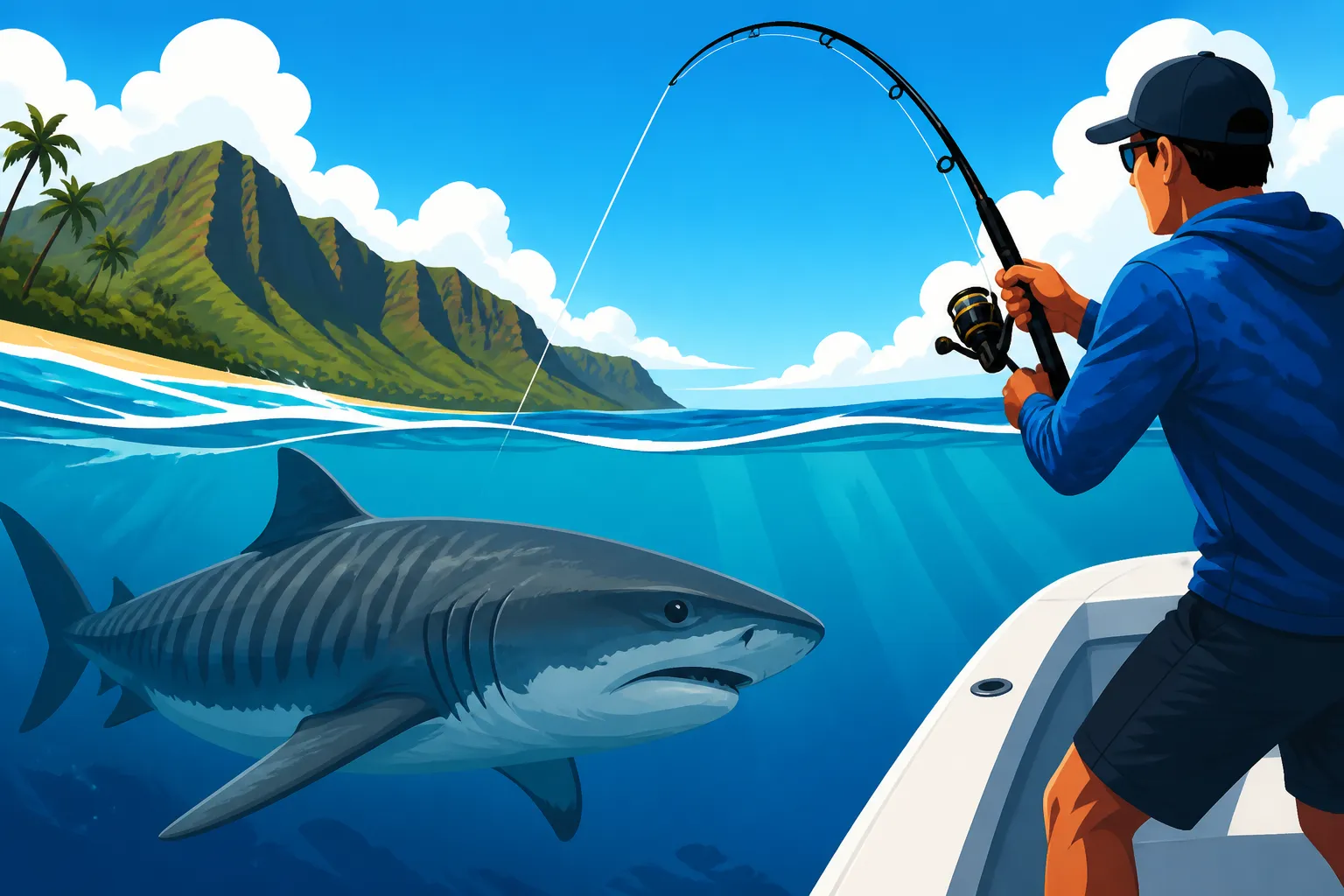
Are Tiger Sharks a Danger to Anglers in Hawaii?
It's completely natural to feel a little ripple of anxiety when you think about fishing in Hawaii and the possibility of encountering a shark, especially one as formidable as a tiger shark. We've all seen the dramatic videos and heard the intense stories, and it can make you wonder if your peaceful fishing trip could suddenly turn into something straight out of a movie. This guide is here to cut through the sensationalism and give you a realistic, empathetic look at the actual dangers tiger sharks pose to anglers in Hawaii, along with practical steps you can take to minimize any risks and enjoy your time on the water.
Understanding Tiger Sharks in Hawaiian Waters
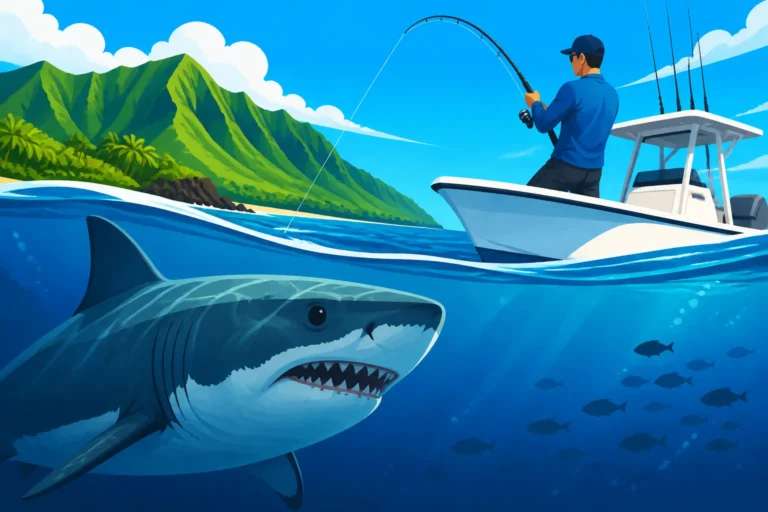
Tiger sharks (Galeocerdo cuvier) are majestic and powerful predators that call the Hawaiian Islands home. They are one of the most common large shark species found in these waters, and while their reputation precedes them, understanding their natural behavior and habitat can significantly demystify their presence and help anglers feel more at ease. They're part of the delicate marine ecosystem, playing a crucial role, and they aren't out there actively hunting down human beings.
Their Natural Behavior and Habitat
Tiger sharks are opportunistic feeders, known for their broad diet that includes everything from fish and sea turtles to birds and even other sharks. They are largely solitary animals and are often found in tropical and temperate waters worldwide, including the warm currents surrounding Hawaii. These sharks are highly migratory and can be found from shallow, inshore waters near reefs and estuaries to deep offshore environments. What makes them particularly relevant to anglers is their tendency to frequent areas where prey is abundant, which often overlaps with popular fishing spots. They are known to be more active during dusk and dawn, though they can be encountered at any time.
Their hunting strategy isn't typically one of aggressive pursuit of large, unfamiliar prey like humans. Instead, they often patrol for easy meals. This means that anything resembling a struggling fish or easy food source in the water can pique their interest. Knowing this helps us understand why interactions sometimes occur near fishing activities – it's often about scent, sound, and visual cues related to caught or struggling fish, not a direct targeting of the angler themselves.
Why They Might Be Attracted to Fishing Activities
Fishing inherently creates a scenario that can attract sharks. When you're reeling in a struggling fish, that fish is emitting distress signals and often blood, both powerful attractants for any predator in the vicinity, including tiger sharks. The vibrations of a thrashing fish, the scent of blood in the water, and even the visual disturbance caused by a hooked catch can draw them in. This is true whether you're Bottomfishing in Hawaii on a charter or Shore Fishing Techniques for Hawaii from the rocks.
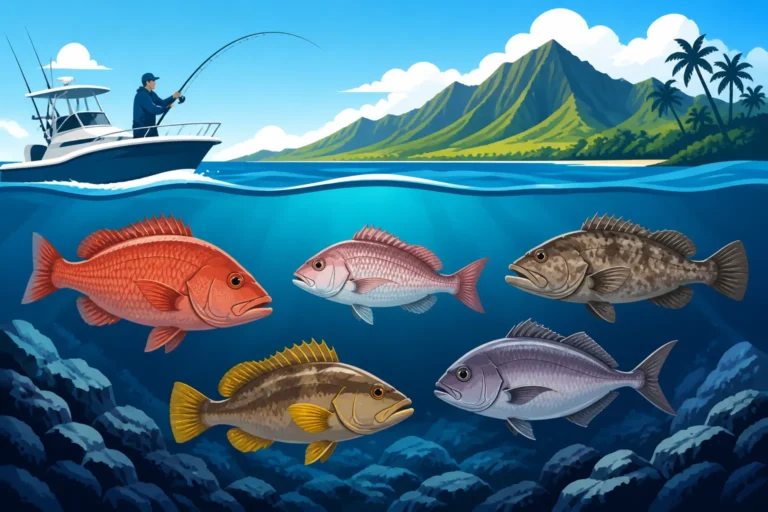
Think about it: from a shark's perspective, your fishing line is essentially a buffet delivery service. Discarded bait, chum, and filleted fish carcasses contribute to this allure, signaling an easy meal source. This is why understanding marine life behavior, especially concerning species like Reef Fish Species Identification Guide for Hawaii and Pelagic Species Identification Guide for Hawaii which are common targets, becomes so important. Any time there's an abundance of potential food and strong sensory signals, a tiger shark might investigate. It's not personal; it's instinct.
Minimizing Risk: Best Practices for Anglers
While the presence of tiger sharks is a natural part of Hawaii's marine environment, there are plenty of proactive steps anglers can take to significantly reduce the likelihood of an unwanted encounter. It's all about being smart, respectful of their territory, and minimizing the attractants that draw them in.
Handling Bait and Catch Responsibly
One of the biggest draws for sharks is the smell and sight of food. Always handle your bait, especially bloody bait, with care. Keep it in a cooler or a bucket rather than letting it splash around in the water. When you're done with a fishing spot, make sure you don't discard any fish parts, carcasses, or unused bait directly into the water where you were fishing. Move a good distance away before disposing of any chum or remnants, or even better, take them back to shore for proper disposal.
When you catch a fish, try to bring it in quickly and efficiently. The longer a struggling fish is in the water, the more distress signals it sends out, and the higher the chance of attracting unwanted attention. If you're planning to release a fish, consider doing so as quickly and gently as possible to minimize its time in distress. If you're keeping your catch, place it immediately into a cooler or fish bag on board, out of the water, rather than letting it bleed out over the side of the boat. Using a high-quality, insulated cooler, like those you can find on Amazon, helps keep your catch fresh and contains any scents.
Choosing Fishing Locations and Times Wisely
Tiger sharks are known to frequent certain areas more than others, especially those with an abundance of their natural prey, like near large reef systems or at the mouths of estuaries. They are also more active during certain times. Fishing early in the morning or late in the afternoon, or even at night, aligns with their peak activity periods. While these times can be excellent for targeting specific fish, they also naturally increase the chances of a shark encounter. If you're nervous, try fishing during mid-day when visibility is best and shark activity might be slightly lower.
Areas like Hawaii Marine Life Conservation Districts, Explained often have regulations that prohibit fishing, but it's worth noting that high concentrations of marine life in such areas can naturally attract predators. Always check Hawaii Fishing Regulations Explained for specific rules in any given area, as adherence to these regulations also contributes to overall marine safety. When boating, understanding Hawaii Boating Laws for Anglers is also key, as proper vessel operation can help you avoid unexpected situations.
Gear and Equipment Considerations
Your fishing gear can also play a role in safety. Using heavier lines and rods when targeting larger fish can help you land your catch faster, reducing the time it's vulnerable to predation. A quality fishing gaff or net, readily available on platforms like Amazon, can also assist in quickly securing your catch. For those serious about offshore angling, investing in a good sonar system can help you identify large predators lurking below, allowing you to react accordingly.
| Safety Measure | Description | Benefit |
|---|---|---|
| Rapid Retrieval | Bring in hooked fish quickly to minimize distress signals. | Reduces time fish is vulnerable to shark predation. |
| Proper Catch Storage | Store landed fish in a cooler immediately, out of the water. | Contains blood and scent, preventing further attraction. |
| Avoid Discarding Waste | Do not discard bait or fish waste directly into fishing areas. | Prevents conditioning sharks to associate fishing spots with food. |
| Vigilance | Keep an eye on the water around you, especially at dawn/dusk. | Allows early detection of shark presence. |
| Buddy System | Fish with a friend, particularly in remote areas or at night. | Extra eyes and a second person for assistance in an emergency. |
| Clean Hands/Gear | Wash hands and rinse gear free of fish scents regularly. | Minimizes lingering attractants on yourself and equipment. |
| Quality Footwear | Wear sturdy shoes for shore fishing to avoid slips and falls near water. | Protects feet and helps maintain balance, crucial for safe exits. |
| Sound Deterrents (Optional) | Some anglers use devices that emit sounds to deter sharks (research effectiveness). | May provide an additional layer of perceived protection in some situations. |
What to Do if You Encounter a Shark While Fishing
Even with all the best precautions, wildlife encounters are always a possibility when you're out in their natural environment. The key isn't to panic, but to react calmly and deliberately. Knowing what to do can make all the difference, ensuring a safe experience for both you and the marine life.
Staying Calm and Assessing the Situation
First and foremost, stay calm. A tiger shark investigating your catch is not necessarily an attack in progress. Observe its behavior. Is it circling leisurely, or is it showing more aggressive behavior, like sudden bursts of speed or bumping the boat? Often, a shark will make a pass, observe, and then move on if it doesn't find an easy meal or feels threatened.
If you're fishing from a boat, slowly retrieve your line, even if it means losing the fish you've hooked. It's better to lose a fish than to draw a large predator directly to your vessel. If the shark is showing intense interest in a hooked fish, cutting your line might be the safest option. Carrying a sharp knife, easily accessible and securely stored, like many options available on Amazon, can be a lifesaver in such a situation.
Immediate Actions for Shore Anglers
For shore anglers, the situation requires a slightly different approach. If you see a shark in the area where you're fishing, especially if it's showing interest in your line or your immediate vicinity, your best bet is to slowly and calmly exit the water. Don't make sudden splashes or movements that could be perceived as a struggling animal. Keep your eyes on the shark as you back away towards the shore.
If you've just landed a fish and a shark appears, immediately get the fish away from the water's edge and yourself. Drop your catch if necessary and move inland. The fish is what's attracting the shark, and removing that attractant is your priority. Releasing any live bait you have quickly might also be a good idea, as it removes another potential lure. Never try to "shoo" a shark away or engage it directly; these are powerful predators that deserve respect and distance.
What Not to Do
Never, ever try to feed a shark, even if it seems like a small one. This conditions them to associate humans and boats with food, which is dangerous for everyone involved in the long run. Don't splash or thrash around in the water, as this can mimic the distress signals of an injured fish and attract unwanted attention. Avoid dangling your hands or feet in the water if you know sharks are in the vicinity or if you're cleaning fish.
It's also crucial not to assume that just because you haven't seen a shark, they aren't there. Always maintain a healthy respect for the ocean's inhabitants. When participating in activities like What to Expect on a Hawaii Fishing Charter or with Best Fishing Charters in Hawaii, pay attention to your captain and crew's instructions. They are experienced and know how to handle these situations.
Dispelling Myths and Understanding the Reality
It's easy for sensational stories to cloud our judgment when it comes to sharks. The reality is far less dramatic, though still warrants caution and respect. Understanding the true context of tiger shark encounters can help you approach your Hawaii fishing adventures with a clear head.
The Actual Rarity of Shark Attacks on Anglers
Despite their fearsome reputation, unprovoked shark attacks on humans, especially anglers, are exceedingly rare. The vast majority of shark incidents occur when a shark mistakes a human for its natural prey, or when it feels threatened. When an incident does occur involving an angler, it's almost always a case of a shark targeting a hooked fish that happens to be near the angler, not the angler themselves. The ocean is their home, and we are visitors. Just like you wouldn't walk into a bear's den and be surprised to see a bear, encountering a shark in the ocean is a possibility.
The statistics consistently show that you're far more likely to be injured by mundane activities like driving a car, or even by a falling coconut, than by a shark in Hawaii. The media tends to highlight these rare events because they are dramatic, but they don't reflect the daily reality of thousands of safe fishing trips and ocean activities that occur without incident. Always remember to check Hawaii shark feeding and finning laws to understand the legal and ethical boundaries of interacting with these creatures. Also, knowing about Hawaii turtle and monk seal proximity rules for anglers instills a broader sense of responsibility toward all marine life.
Respecting Their Role in the Ecosystem
Tiger sharks are apex predators, vital to the health of Hawaii's marine ecosystems. They help maintain the balance of fish populations by preying on the weak and sick, ensuring the overall health and vigor of the reef and pelagic environments. Their presence is a sign of a healthy ocean, not necessarily an imminent danger to every human who enters the water.
As anglers, our goal should be to enjoy the resource responsibly while minimizing our impact and ensuring the safety of ourselves and the marine life around us. This means adhering to Hawaii Fishing License Guide for 2026 rules, practicing catch and release when appropriate, and being mindful of our waste and impact. By understanding and respecting their role, we can coexist with these magnificent creatures and continue to enjoy the incredible fishing opportunities Hawaii offers. We can find many resources to learn more about responsible angling, often through educational materials or even books available through Amazon.
Disclaimer
This article is for general informational purposes only and does not constitute professional advice. Laws, prices and regulations vary by location and change over time. Consult a qualified professional for guidance on your specific situation.