What baitfish Hawaii’s marlin key on
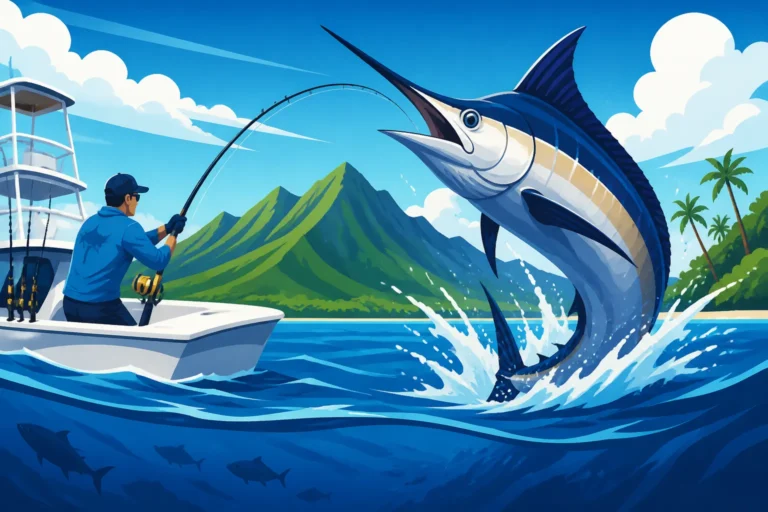
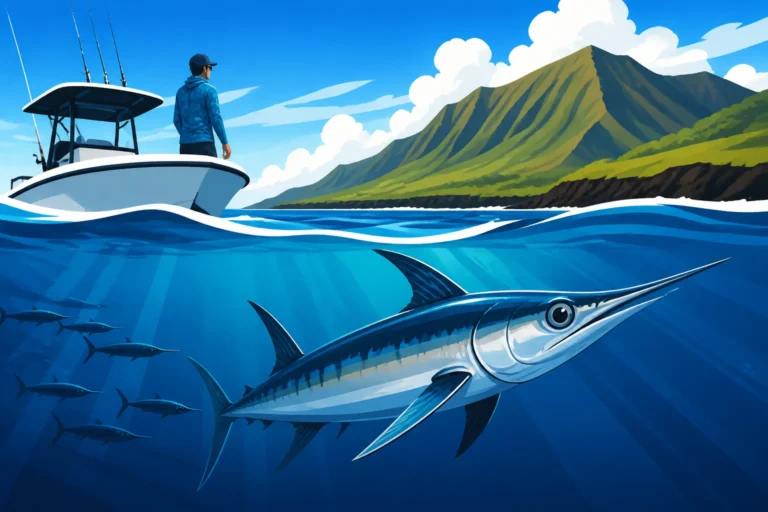
One of the most thrilling experiences in Hawaii is chasing after the mighty marlin, those incredible apex predators of our deep blue waters. But if you've spent any time on the ocean here, you know it's not always as simple as dropping a line. A common frustration for many anglers, especially newcomers, is understanding what these magnificent fish are actually hunting. This comprehensive guide will pull back the curtain on the primary baitfish species that Hawaii's marlin key on, helping you better understand their world and, hopefully, increase your chances of a successful hook-up.
Understanding Marlin Foraging Habits
Marlin are highly intelligent and opportunistic predators. They don't just eat anything that swims by; they have preferred prey, and their feeding habits are deeply intertwined with the marine ecosystem around them. Knowing what they're looking for is the first step in positioning yourself for success. It's like knowing what your picky kid will actually eat for dinner – you save a lot of wasted effort and frustration!
The Apex Predator's Diet Philosophy
Imagine being a massive, fast-swimming fish in a vast ocean. You're constantly burning energy, so you need to be efficient with your hunting. Marlin, particularly the formidable Pacific Blue Marlin, aren't typically sifting through tiny plankton. They're after substantial, calorie-rich meals that are worth the chase. This means they often target schooling baitfish that can be corralled and attacked efficiently, or larger solitary fish that represent a significant energy reward. Their diet is primarily driven by availability, but certain characteristics make some baitfish irresistible. They are truly masters of the ocean hunt, and their choice of prey reflects this sophisticated predatory nature.
The Role of Bait Schools in the Open Ocean
Baitfish don't just swim aimlessly; they form massive, protective schools for survival. These schools are like giant, living buffets for predators. When you see a large, agitated bait ball near the surface, often with diving birds, you can bet there's a predator, or several, lurking beneath. Marlin use their incredible speed and powerful bills to slash through these schools, disorienting and injuring fish before circling back to feed. Understanding these dynamics – how baitfish congregate and how marlin exploit this behavior – is crucial for any angler trying to get a read on the bite. Watching for these signs is often your first clue to finding where the marlin are feeding. How baitfish schools affect Kona marlin fishing delves deeper into these fascinating interactions.
Primary Baitfish Species for Hawaiian Marlin
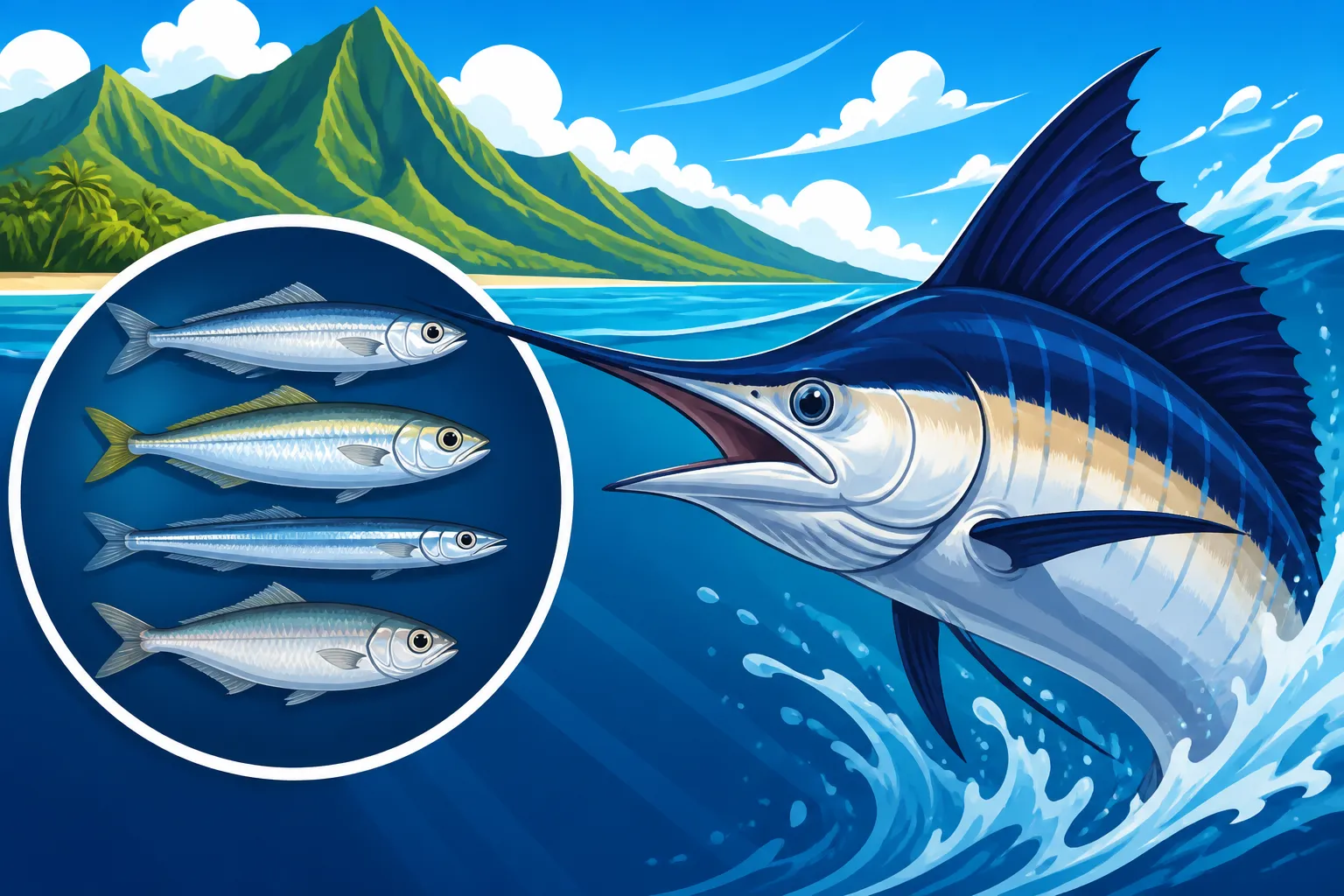
When you talk about what Hawaii's marlin key on, a few key species consistently rise to the top of their menu. These aren't just random fish; they are the staples, the bread and butter, the prime targets that drive marlin behavior and migrations.
Aku (Skipjack Tuna): The High-Energy Fuel
Aku, or skipjack tuna, are perhaps one of the most significant food sources for marlin in Hawaii. These torpedo-shaped, fast-swimming tuna are abundant in Hawaiian waters and form large schools, often seen breaking the surface as they chase their own prey. Marlin absolutely love aku. They're a high-protein, high-fat meal that provides immense energy for these powerful billfish.
You'll often find marlin lurking around the edges of aku schools, waiting for an opportune moment to strike. Anglers frequently use live aku as bait for marlin, knowing it's a natural and irresistible offering. The sheer presence of aku schools can dictate where marlin will be found, especially during peak seasons. Their erratic, fast movements make them a challenging but rewarding target for marlin, and consequently, for anglers seeking to imitate them with lures. Aku (Skipjack Tuna) in Hawaii provides more detailed information on this vital species.
Opelu (Mackerel Scad): The Classic Marlin Snack
Opelu, or mackerel scad, are another incredibly important baitfish. These smaller, silvery fish also form dense schools, particularly closer to shore and around FADs (Fish Aggregating Devices) or other submerged structures. While smaller than aku, their schooling behavior makes them an easy target for marlin looking for a quick and plentiful meal.
Many local fishermen swear by opelu as live bait for various pelagic species, including marlin. They have a distinctive flash in the water that mimics fleeing baitfish, triggering a predatory response. Marlin often push opelu schools to the surface, creating visible boils or "foamers" that are a dead giveaway for hungry billfish below. Replicating the action of an injured or fleeing opelu is a common strategy for lure selection. Want to learn more about this species? Check out Opelu (Mackerel Scad) in Hawaii.
Akule (Bigeye Scad): The Versatile Morsel
Akule, or bigeye scad, are similar to opelu but can grow a bit larger and often inhabit slightly deeper waters or larger, more widespread schools. They are another critical component of the marlin diet, especially when their schools are particularly dense. Marlin will ambush akule schools with ferocious strikes, often scattering the fish in a chaotic explosion of silver scales.
Anglers often target akule for bait using sabiki rigs or throw nets, knowing that fresh akule can be a game-changer when marlin are finicky. The presence of large akule schools near drop-offs or oceanic currents is a strong indicator that marlin might be in the area, patrolling for their next meal. Their silvery flanks and robust bodies make them a desirable target for hungry billfish. You can find more specific insights into their behavior in Akule (Bigeye Scad) Schooling Behavior.
Mahimahi: The Unexpected Prey
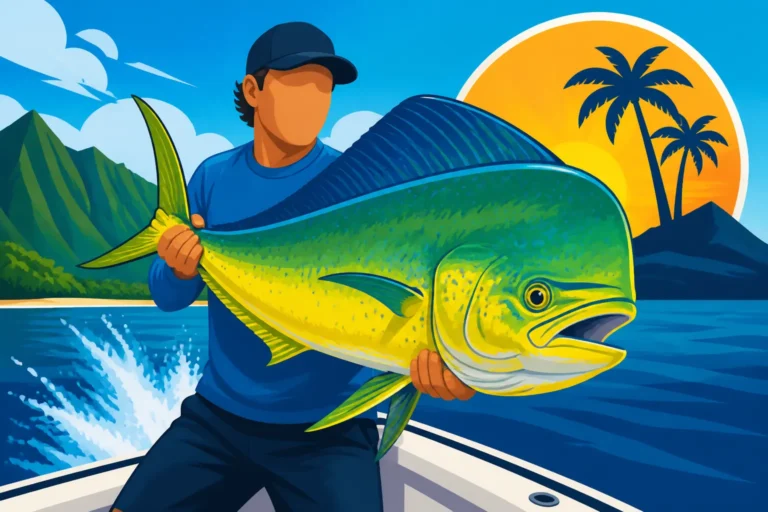
While mahimahi (also known as dorado or dolphin fish) are themselves prized game fish, they often serve as prey for larger marlin, especially bigger blue marlin. Mahimahi are incredibly fast-growing and are found congregating around floating debris, FADs, or current lines where smaller baitfish gather. A marlin encountering a school of mahimahi sees a substantial, high-energy meal.
It's not uncommon to cut open a marlin and find smaller mahimahi in its stomach. This shows just how opportunistic marlin can be, and how they will exploit any available food source that offers a good caloric return. For anglers, this means that areas holding mahimahi are also prime territories for marlin. Think about it: if you find a patch of floating debris loaded with mahimahi, chances are, a bigger predator isn't far behind. Want to know more about this exciting species? Read Mahimahi Fishing in Hawaii.
Small Tunas (Shibi, Small Ahi): The Powerhouse Meal
Beyond skipjack, other smaller tuna species, including "shibi" (small yellowfin tuna) or juvenile Ahi (Yellowfin Tuna) Fishing in Hawaii, are also highly sought after by marlin. These fish are incredibly fast, muscular, and packed with nutrition, making them an ideal meal for a marlin looking to maintain its impressive size and speed.
Marlin will actively hunt down these smaller tunas, especially when they encounter schools. The raw power and fight of a small tuna make it a challenging but rewarding meal for a marlin. Anglers often fish with larger lures or baits designed to imitate these substantial tuna, knowing that this is what the bigger marlin are truly after. These small tunas represent a significant food source in the oceanic food web, forming a crucial link between smaller baitfish and top predators like marlin.
Seasonal and Environmental Influences on Marlin Diet
The ocean is a dynamic place, and what marlin eat isn't a static menu. Their diet, like ours, changes with the seasons and is heavily influenced by environmental factors such as water temperature, currents, and oceanographic features. Ignoring these factors is like trying to find apples in winter – you're just not going to have much luck.
Currents and Upwellings: Baitfish Highways
Oceanic currents and upwellings are critical in concentrating baitfish. These natural forces act like highways, funneling nutrient-rich waters to the surface, which in turn creates ideal conditions for plankton, and then the smaller fish that feed on plankton. Baitfish schools thrive in these areas, and where the baitfish are, the marlin will follow.
For instance, convergence zones where different currents meet often create visible "current lines" on the surface. These lines frequently hold concentrations of debris, which in turn attract small baitfish and mahimahi, creating a perfect feeding ground for marlin. Understanding how to read these oceanographic features is a powerful tool for predicting where marlin will be hunting. Smart anglers are constantly watching for these signs.
Water Temperature: The Comfort Zone
Marlin, like most pelagic species, have preferred water temperature ranges. These temperature preferences also influence where their primary baitfish species will be found. If the water is too cold or too warm, baitfish will move to more comfortable zones, and the marlin will move with them.
In Hawaii, the deep, warm waters are generally stable, but even subtle temperature shifts can concentrate bait. For example, a slightly cooler upwelling might bring baitfish closer to the surface, creating an opportunity for marlin to feed. Similarly, distinct temperature breaks can act as invisible walls, holding bait on one side and predators on the other. Keeping an eye on sea surface temperature charts can offer valuable clues about where the bait and, consequently, the marlin are likely to be.
Lunar Phases and Tides: Subtle but Significant
While less impactful than major currents or temperature, lunar phases and tidal movements can also play a subtle role in baitfish behavior and, by extension, marlin feeding patterns. Stronger currents associated with new and full moons can sometimes concentrate baitfish, making them more vulnerable.
The increased tidal flow around certain moon phases can also stir up nutrients, creating small-scale feeding opportunities. While not a primary driver, savvy anglers often consider the moon phase when planning their trips, looking for any edge they can get. It's about combining all the pieces of the puzzle to paint the most complete picture of marlin behavior.
Mimicking Natural Baits for Success
Understanding what marlin eat is only half the battle; the other half is presenting something that they think is what they eat! This is where lures, live bait, and fishing techniques come into play, all aimed at imitating those key baitfish species.
Lure Selection: Imitation is the Sincerest Form of Fishing
Marlin lures are designed to mimic the appearance and action of their natural prey. When selecting lures for marlin fishing, think about the primary baitfish: aku, opelu, and small tunas.
- Color: Lures often come in colors that resemble these baitfish – blues, greens, silvers, and purples with reflective properties that imitate scales. Many successful lures feature iridescent skirts that flash like a fleeing fish.
- Size and Shape: The size of your lure should roughly correspond to the size of the baitfish marlin are currently keying on. If marlin are feeding on larger aku, a larger, more robust lure is appropriate. If they're on smaller opelu, a more compact lure might be better. The shape often mimics the torpedo-like body of a tuna or the slender profile of a scad.
- Action: A lure's action is paramount. It needs to swim and dive in a way that suggests an injured or fleeing baitfish. Some lures dart and weave erratically, while others have a steady, pulsing action. Experimentation is key, and having a diverse spread of lures that cover different baitfish profiles is always a good strategy. You can find a huge variety of these specialized lures and tackle online through retailers like Amazon, ensuring you have the right tools for the job. For specific recommendations, check out Best Lures for Marlin Trolling off Kona.
Live Bait Tactics: The Undeniable Edge
When available and legal, live bait often provides the most natural and irresistible presentation for marlin. Using live aku or opelu is a time-tested strategy that has accounted for countless marlin catches in Hawaii. The appeal is simple: it's a real fish, swimming naturally, just like what the marlin are already hunting.
- Rigging: Live bait is typically rigged to allow it to swim naturally while minimizing damage, often using a bridle rig that attaches the hook to the fish's nose or dorsal area. This keeps the bait alive and active for as long as possible.
- Deployment: Live baits are often deployed from the outriggers or flat lines, allowing them to swim away from the boat and cover more territory. Sometimes, they are slow-trolled or simply drifted with the current. The goal is to make the live bait look as vulnerable and appealing as possible without it getting spooked by the boat. Having a good livewell and bait tubes on your vessel, which you can also find a wide range of options for on Amazon, is essential for keeping your live bait frisky.
Trolling Spreads and Strategies
A well-planned trolling spread is designed to present a variety of lures or baits that mimic a school of baitfish, or individual fleeing fish. Captains will carefully arrange lures at different distances and positions behind the boat to create a realistic impression.
- Mixed Bag: Often, a spread will include lures designed to imitate different baitfish species, providing options for whatever the marlin are focused on that day. One lure might be a larger, aku-imitating plug, while another is a smaller, opelu-colored jet.
- Depth and Speed: Adjusting trolling speed and using lures that run at different depths can also help cover more of the water column, increasing the chances of encountering a marlin. Marlin are incredibly fast, so a relatively high trolling speed is often necessary to make lures appear like healthy, fleeing prey. For detailed techniques on how to tempt these giants, How to Catch Marlin off the Kona Coast is an excellent resource.
The Importance of Observation
No matter how good your lures or live bait, keen observation remains one of the most powerful tools in your arsenal. Marlin fishing in Hawaii is a constant game of reading the signs.
- Bird Activity: Look for diving seabirds, especially frigatebirds, boobies, and shearwaters. These birds are often feeding on the same baitfish that marlin are chasing, indicating bait balls pushed to the surface. Binoculars, readily available on Amazon, are indispensable for scanning the horizon for these tell-tale signs.
- Surface Activity: Keep an eye out for splashing, jumping baitfish, or "foamers" created by predators attacking bait balls. Any commotion on the surface is a sign to investigate.
- Current Lines and Debris: As mentioned earlier, pay close attention to current lines, temperature breaks, and any floating debris. These are natural attractors for baitfish and, consequently, for marlin. The more you observe and connect the dots between baitfish behavior and environmental cues, the better your chances of finding that dream marlin. This ongoing learning and adaptation are what make Hawaii fishing so incredibly engaging and rewarding.
| Baitfish Species | Typical Size | Schooling Behavior | Marlin Attraction | Best Imitation Strategy |
|---|---|---|---|---|
| Aku (Skipjack Tuna) | 1-3 feet | Large, fast-moving schools, often breaking surface | High energy, abundant, preferred prey | Large, dark-backed lures; live aku |
| Opelu (Mackerel Scad) | 6-12 inches | Dense schools, often near FADs or shore | Easy target, bright flash | Smaller, silvery lures; live opelu |
| Akule (Bigeye Scad) | 8-15 inches | Large, widespread schools, deeper water | Readily available, robust meal | Medium, silvery-blue lures; live akule |
| Mahimahi | 1-4 feet (as prey) | Schools around debris/current lines | Substantial meal, opportunistic target | Mahi-patterned lures; larger lures in feeding areas |
| Small Tuna | 1-2 feet | Schools, similar to aku | Powerful, high-value prey | Large, tuna-patterned lures; larger live baits |
Disclaimer
This article is for general informational purposes only and does not constitute professional advice. Laws, prices and regulations vary by location and change over time. Consult a qualified professional for guidance on your specific situation.