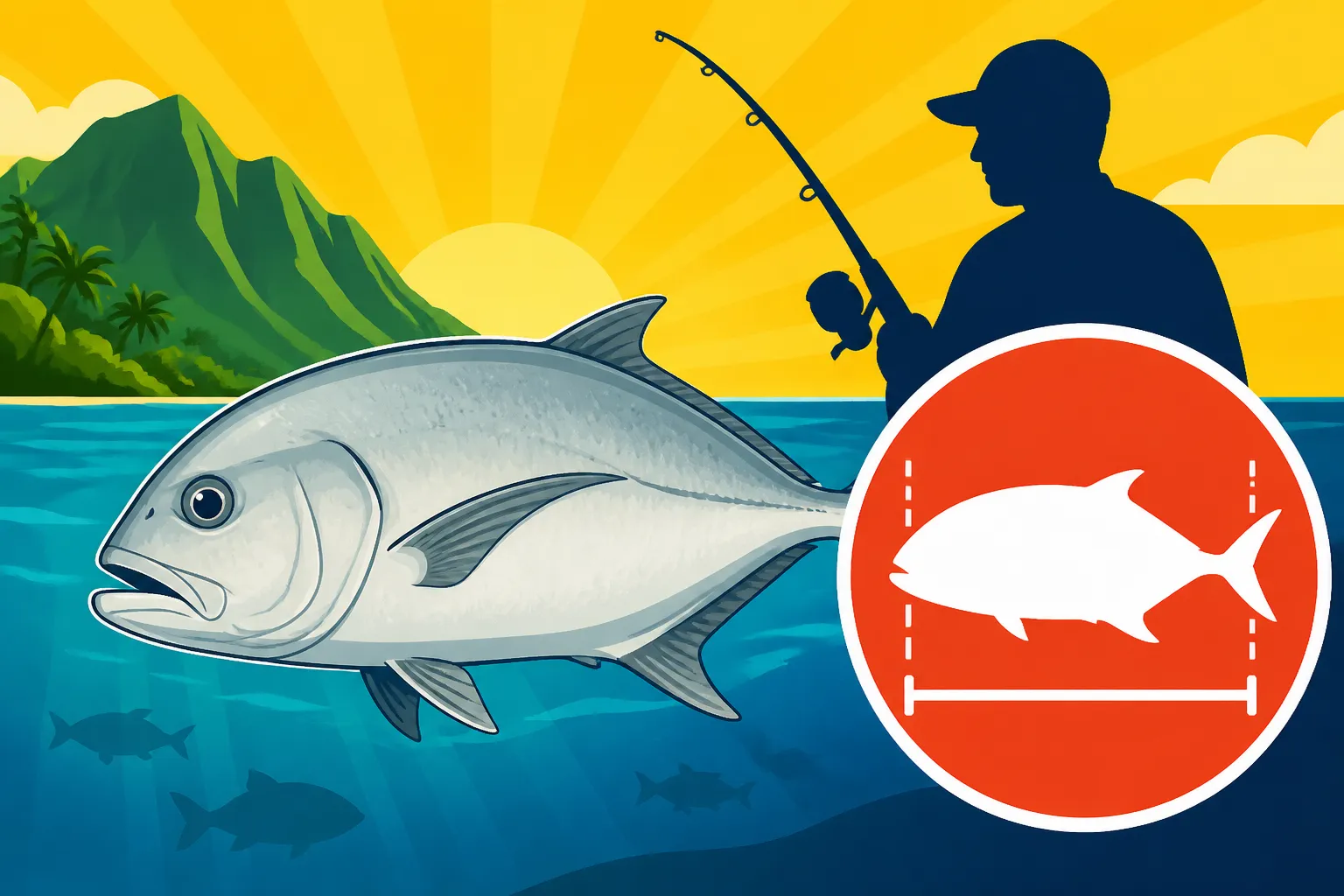
Hawaii ulua minimum size limit
Ohana, embarking on a fishing adventure in Hawaii is an experience unlike any other, but let's be real – the rules and regulations around what you can keep can feel like a maze, especially when it comes to prized catches like ulua. You've heard whispers about size limits, bag limits, and different kinds of ulua, and it's enough to make your head spin. This guide is here to untangle all that confusion, focusing specifically on the Hawaii ulua minimum size limit, so you can fish with confidence and respect for our precious marine life.
The Basics of Hawaii's Ulua Minimum Size Limits
Navigating the regulations for ulua in Hawaii can be a bit tricky because the term "ulua" actually refers to several species of trevally, and some of them have different rules. It's not just a simple blanket statement for all "ulua" you might encounter. Understanding these distinctions is key to staying within the law and contributing to sustainable fishing practices.
The 10-Inch Rule for White and Bluefin Ulua (Papio)
For the two most commonly targeted trevally species that grow into what we call ulua – the Giant Trevally (Caranx ignobilis), often known as "White Ulua," and the Bluefin Trevally (Caranx melampygus), or "Omilu" – there's a very specific size requirement you need to adhere to. The Hawaii Division of Aquatic Resources (DAR) mandates a minimum size limit of 10 inches fork length for these fish.
Now, what exactly does "fork length" mean? It's simple: you measure from the tip of the fish's snout to the deepest part of the fork in its tail. Don't measure to the tip of the longest tail fin, as that will give you an inaccurate, and often illegal, measurement. This 10-inch minimum is primarily to protect these fish when they are younger, often referred to as "papio." These smaller trevally are still growing and haven't necessarily had a chance to reproduce yet, making their protection vital for future stocks.
Beyond the minimum size, there's also a recreational bag limit to keep in mind for these species: you're allowed to keep two papio/ulua per person per day. However, and this is a crucial detail, only one of those two fish can be 24 inches or greater in fork length. So, if you catch two big ulua over 24 inches, you can only keep one, even if both are well over the 10-inch minimum. This particular rule aims to protect the larger, often more prolific, breeding individuals, ensuring they continue to contribute to the population. You can dive deeper into all the specific rules by checking out the comprehensive guide on Hawaii Bag and Size Limits by Species.
No Minimum Size for Black Ulua (Caranx lugubris)
Here's where it gets interesting and why species identification is so important. While their cousins, the White and Bluefin Ulua, have strict size and bag limits, the Black Ulua (Caranx lugubris) operates under a different set of rules. For recreational anglers targeting Black Ulua, there is no minimum size limit and no bag limit.
This exception is important to know because a Black Ulua, especially a smaller one, might superficially resemble a young White or Bluefin Ulua to an untrained eye. However, the Black Ulua is distinct. They tend to be a deeper, darker gray or black, often with scaly, rougher skin, and a more pronounced forehead profile. Their fins can also appear darker. Why the difference in regulations? Black Ulua are generally less commonly caught in nearshore recreational fisheries compared to the other two species, and their population dynamics may allow for less restrictive harvesting without significant ecological impact. Still, knowing the visual cues to correctly identify a Black Ulua before you keep it is absolutely essential. Misting this detail could lead to you inadvertently violating the rules for White or Bluefin Ulua.
Why These Regulations Are Crucial for Ulua Fisheries
These regulations aren't just arbitrary rules designed to make fishing harder. They are carefully considered measures put in place by the Hawaii Department of Land and Natural Resources (DLNR) to ensure the long-term health and sustainability of our marine ecosystems. Without these limits, the vibrant ulua populations that Hawaii is famous for could face serious decline.
Ensuring Reproductive Success and Sustainable Populations
The 10-inch minimum size limit for White and Bluefin Ulua, coupled with the bag limit that restricts the take of larger fish, is fundamentally about protecting the species' ability to reproduce. Most fish species, including ulua, need to reach a certain size and age before they become sexually mature and can spawn for the first time. By setting a 10-inch minimum, the DLNR aims to ensure that a significant portion of these fish have at least one, if not several, opportunities to reproduce before they are harvested.
Think of it this way: if anglers were to indiscriminately keep all sizes of papio, especially the smaller ones, we would be removing fish from the population before they even had a chance to contribute to the next generation. This is a classic recipe for overfishing and can quickly deplete fish stocks. The regulations are designed to allow enough fish to grow, mature, and spawn, thereby sustaining healthy populations for future generations of anglers. It's a delicate balance that helps to ensure that when you head out, you'll still have a good chance of finding a Ulua (Giant Trevally) Fishing in Hawaii experience.
Maintaining the Health of Hawaii's Reef Ecosystems
Ulua, especially the Giant Trevally, are apex predators in Hawaii's nearshore and reef environments. They play a critical role in maintaining the balance of the marine food web. As powerful hunters, they feed on a variety of smaller fish, crustaceans, and cephalopods, preventing any single prey species from becoming overpopulated. This predation helps to keep the entire ecosystem healthy and dynamic.
If ulua populations were to decline due to unchecked fishing, it could have a cascading effect throughout the reef ecosystem. For example, an increase in their prey species could lead to overgrazing of algae or corals, or an imbalance that disrupts other species. By protecting ulua through size and bag limits, we are not just preserving a popular game fish; we are safeguarding the intricate ecological relationships that define Hawaii's stunning underwater world. The health of these populations is a cornerstone of our efforts, something you can learn more about in the broader Hawaii Fishing Regulations Explained.
Identifying and Measuring Your Catch Legally
One of the biggest challenges, especially for new anglers or those visiting, is correctly identifying fish species and accurately measuring them on a rocking boat or a slippery shoreline. It's not always as straightforward as it seems, and making a mistake can have consequences.
Key Characteristics for Ulua Species Identification
Before you even think about putting a fish in your cooler, you need to be confident about what species you've caught. This is particularly true when it comes to distinguishing between the various trevally that are collectively referred to as "ulua" or "papio."
- White Ulua (Giant Trevally, Caranx ignobilis): These are the most iconic "ulua." As adults, they are typically silver-gray to blackish-gray on top, fading to lighter silver on the belly. They have a steep, blunt head profile, and their body is deep and compressed. The scutes (bony plates) along the lateral line near the tail are prominent. Younger individuals, or "papio," will share these characteristics but on a smaller scale.
- Bluefin Ulua (Omilu, Caranx melampygus): These trevally are absolutely stunning. They are usually iridescent blue or greenish-blue on their backs, fading to a silvery belly. Their most distinguishing feature is often the bright blue fins, especially the dorsal and anal fins, and sometimes even the tail. They also have a more streamlined, torpedo-like body compared to the White Ulua.
- Black Ulua (Black Trevally, Caranx lugubris): As their name suggests, these fish are typically very dark, ranging from dark gray to almost black, with a paler underside. They have a very high, rounded forehead and often a larger eye. Their body is generally less compressed than the White Ulua, and their fins are usually dark. This species is often found in deeper waters or around offshore structures, making them less common for casual shore anglers, but they are absolutely around.
It takes practice to differentiate these species, especially when they are smaller. If you're ever in doubt, the safest bet is always to release the fish. Sometimes, even experienced anglers can be stumped, but understanding the general body shape, coloration, and fin characteristics can go a long way. This distinction is vital, especially given the different size limits.
Accurate Measurement and Responsible Handling
Once you've identified your catch, the next step is accurate measurement. Remember, for White and Bluefin Ulua, it's 10 inches fork length.
- Preparation is Key: Always have a reliable measuring device with you. A flexible tape measure or a rigid measuring board works best. Many anglers use a durable, waterproof tape measure you can easily find on Amazon.
- Handle with Care: When you land an ulua, particularly one you plan to measure and potentially release, handle it gently. Use wet hands or gloves to avoid removing the fish's protective slime layer, which helps prevent infections. Support its body horizontally, especially if it's a larger fish, to avoid damaging its internal organs.
- Measure Quickly and Accurately: Lay the fish flat on its side on your measuring device, ensuring its mouth is closed against a hard stop (like the end of a measuring board) or held against the zero mark of your tape. Carefully read the measurement to the fork of the tail.
- Ready for Release: If the fish is undersized, or if you've already met your bag limit, it's time for a responsible release. Minimize the fish's time out of water. Use de-hooking tools, which are also readily available on Amazon, to quickly and cleanly remove the hook. If the hook is deeply swallowed or difficult to remove, it's often better to cut the line as close to the hook as possible. This minimizes trauma to the fish, allowing it a better chance of survival.
- Revive if Necessary: For fish that appear stressed or sluggish, gently hold them upright in the water, facing into the current (if any), and move them back and forth slightly to push water over their gills until they regain strength and can swim away on their own.
Practicing these responsible catch and release methods is just as important as knowing the regulations. It ensures that the fish you release can continue to thrive and contribute to our valuable fishing resources.
Consequences of Non-Compliance and Enforcement
Ignoring fishing regulations in Hawaii isn't just frowned upon by the local fishing community; it carries serious legal ramifications. The DLNR takes these rules very seriously, and for good reason—they are the cornerstone of marine conservation. It's not worth the risk to disregard them.
Penalties for Violating Size and Bag Limits
If you're caught violating Hawaii's fishing regulations, particularly regarding minimum size limits or bag limits for species like ulua, you could face a range of penalties. These aren't minor slaps on the wrist; they can be quite substantial:
- Fines: The most common penalty is a monetary fine. These fines can vary widely depending on the severity of the violation, the species involved, and whether it's a repeat offense. For protected species or significant over-limits, fines can run into hundreds or even thousands of dollars. Imagine catching an undersized White Ulua and having to pay a hefty fine – it certainly puts a damper on your fishing trip! You can find more specific details on potential fines in Fishing Without a Required License in Hawaii: Penalties, though that focuses on licenses, the principle of enforcement and fines applies across all regulations.
- Confiscation of Catch and Gear: Enforcement officers, who are typically highly trained and dedicated conservation resource enforcement officers from the DLNR, have the authority to confiscate illegally caught fish. In some cases, depending on the nature of the violation, your fishing gear, including rods, reels, and even your boat, could also be confiscated.
- Criminal Charges: While less common for a first-time minor infraction, severe or repeated violations could lead to more serious criminal charges, especially if commercial poaching or significant environmental damage is involved.
- Loss of Fishing Privileges: In addition to fines and confiscation, you could also face a suspension or revocation of your fishing license (if one were required, though for recreational ocean fishing, Hawaii residents typically don't need one unless specifically targeting certain species or using certain methods, but non-residents do need one for marine fishing, which you can read about in Hawaii Nonresident Marine Fishing License, Explained).
It's clear that the consequences are designed to be a strong deterrent, reinforcing the importance of compliance for the health of our aquatic resources. These officers are out there, patrolling our shorelines and waters, ensuring everyone plays by the rules.
The Importance of Knowing the Law
Ultimately, the responsibility for knowing and adhering to Hawaii's fishing regulations rests squarely on you, the angler. Ignorance of the law is never an acceptable excuse. Regulations can and do change, so it's crucial to stay informed.
Before every fishing trip, especially if you're targeting new species or fishing in unfamiliar areas, make it a habit to check the latest rules. The Hawaii Division of Aquatic Resources (DAR) website is the definitive source for current regulations. You can often find a downloadable Hawaii DLNR fishing regulations PDF which you can keep on your phone or print out.
By actively seeking out and understanding these regulations, you're not just avoiding penalties; you're becoming a responsible steward of Hawaii's unique marine environment. We all share the kuleana (responsibility) to protect these precious resources, ensuring that the magic of Hawaii fishing continues for generations to come.
Table of Ulua/Papio Size and Bag Limits (Recreational)
To help summarize, here's a quick reference for the ulua and papio regulations:
| Species Group | Scientific Name | Minimum Size Limit (Fork Length) | Bag Limit (Per Person, Per Day) | Special Notes |
|---|---|---|---|---|
| White Ulua / Papio (Giant Trevally) | Caranx ignobilis | 10 inches | 2 fish | Only one of the two fish can be 24 inches or greater fork length. |
| Bluefin Ulua / Omilu (Bluefin Trevally) | Caranx melampygus | 10 inches | 2 fish | Only one of the two fish can be 24 inches or greater fork length. |
| Black Ulua (Black Trevally) | Caranx lugubris | None | None | Identification is crucial to differentiate from White or Bluefin Ulua. |
This table provides a concise overview, but always refer to the official DLNR documentation for the most current and complete information.
Disclaimer
Please remember that fishing regulations, including size and bag limits, can change. While every effort has been made to provide accurate and up-to-date information in this guide, it is your responsibility as an angler to consult the most current regulations published by the Hawaii Department of Land and Natural Resources (DLNR) Division of Aquatic Resources (DAR) before you go fishing. This content is for informational purposes only and should not be considered legal advice.