Kauai Fishing Guide
Stepping onto Kauai, the Garden Isle, you’re immediately enveloped by lush landscapes and the hypnotic rhythm of the Pacific. It's a breathtaking place, but for many anglers, the sheer variety of fishing opportunities can feel a bit overwhelming, leaving them wondering where to even begin their fishing adventure. This comprehensive guide is designed to cut through the confusion, offering a realistic, in-depth look at everything you need to know to successfully fish Kauai, from its pristine shores to its deep blue waters and even its hidden mountain streams.
Why Kauai is a Fisherman's Paradise
Kauai, known for its dramatic cliffs and verdant valleys, isn't just a feast for the eyes; it's a veritable smorgasbord for anglers seeking diverse fishing experiences. Unlike some other islands that might specialize in one type of fishing, Kauai offers a fantastic blend of options, making it a truly unique destination for anyone who loves to cast a line. From the calm, shallow flats perfect for light tackle to the deep pelagic hunting grounds, the island's unique geography creates a multitude of habitats for a wide array of fish species.
Diverse Environments: Reefs, Deep Blue, Freshwater
What makes Kauai so special for fishing is its incredible range of environments, all within a relatively compact area. Along its coastlines, you'll find expansive coral reefs teeming with colorful reef fish, which then quickly drop off into deep ocean trenches. These dramatic underwater changes are what create such diverse fishing opportunities. For instance, you can be casting into the surf from a sandy beach one morning, then deep dropping for bottomfish in thousands of feet of water just a few hours later, and even hike into the mountains for trout fishing the very next day. This accessibility to so many different types of fisheries truly sets Kauai apart and allows anglers to experience a wide spectrum of angling thrills during a single visit.
The island’s unique geological formation means that deep water is often surprisingly close to shore, particularly along the Napali Coast and parts of the South Shore. This proximity allows charter boats to quickly reach prime offshore fishing grounds without long, tedious commutes, maximizing your actual fishing time. For those who prefer to stay closer to land, the myriad bays, rocky points, and expansive sandy beaches provide endless opportunities for shorecasters and waders, each offering its own challenges and rewards. It’s this fantastic blend of environments that makes planning your Kauai fishing trip an exciting adventure in itself, allowing you to tailor your experience to exactly what you’re looking for.
Unique Species: Pelagic and Bottom Dwellers
Kauai's rich marine ecosystem supports an astonishing variety of fish, from the mighty blue marlin patrolling the deep offshore waters to the elusive moi lurking in the nearshore surf. Anglers have the chance to encounter world-class game fish that populate Hawaii’s famed "fishing triangle," as well as a vibrant collection of reef and bottom-dwelling species that provide excellent sport and table fare. When you consider species like ahi (yellowfin tuna), ono (wahoo), and mahimahi that frequent the offshore waters, you realize the potential for trophy catches is always present.
Closer to shore, the reefs and sandy flats hold species such as ulua (giant trevally) and papio (juvenile trevally), bonefish (oio), and various types of snapper and goatfish like kumu and weke. And don't forget the incredibly unique freshwater fishery. The fact that you can chase rainbow trout in the cool mountain streams of Kokee is something truly exceptional for a tropical Hawaiian island. This diversity means that no matter your preferred fishing style or target species, Kauai likely has something to pique your interest, offering a dynamic and engaging experience for every level of angler.
Prime Ocean Fishing Spots on Kauai
When it comes to ocean fishing on Kauai, you're spoiled for choice. Each coastline offers its own distinct charm and fishing prospects, influenced by local currents, reef structures, and depth contours. Understanding these differences can help you plan your day, whether you're seeking a thrilling offshore battle or a peaceful morning casting from the beach. Kauai’s waters are crystal clear and teeming with life, but knowing where to focus your efforts can make all the difference in your success.
North Shore Hotspots: Hanalei Bay and Beyond
The North Shore of Kauai, particularly around the iconic Hanalei Bay, is renowned for its breathtaking scenery and, for those in the know, some fantastic fishing opportunities. While the bay itself can be quite busy with recreational activities, the areas outside the immediate swimming zones offer excellent chances for shorecasters. Think about targeting papio, small ulua, and various reef species here, especially around the river mouths and rocky outcroppings that dot the coastline. Early mornings or late afternoons are often the best times to avoid crowds and coincide with active feeding periods.
Further along the North Shore, towards areas like Princeville and past it, the coastline becomes more rugged, with dramatic cliffs and smaller, more secluded beaches. These spots, often requiring a bit of a hike to access, can be goldmines for experienced shorecasters targeting larger ulua or even moi, especially during their season. Boat access to the offshore waters from the North Shore can be challenging due to limited launch facilities, so many offshore anglers will depart from the West or South Shores, but for a unique shore fishing experience, the North Shore certainly delivers. You can find excellent access points around the fringes of Hanalei Bay.
South Shore Gems: Poipu and Port Allen
The South Shore of Kauai, with its sunnier disposition and more developed infrastructure, offers a different kind of fishing experience. Poipu, famous for its resorts and beautiful beaches, also has accessible shorelines that yield a good variety of reef fish and papio. The sandy bottoms interspersed with small reef patches make it ideal for light tackle casting with small lures or bait. It's a great spot for families or beginners looking to enjoy a casual fishing session with a decent chance of catching something.
For serious offshore fishing, Port Allen is the undisputed hub of the South Shore. Many of Kauai's top fishing charters operate out of Port Allen Harbor, offering access to some of the island's most productive deep-sea fishing grounds. From here, boats can quickly reach drop-offs where marlin, ahi, ono, and mahimahi congregate. The waters off Port Allen are known for their consistent pelagic action, making it a popular choice for anglers looking to land a trophy. The access from Port Allen is unparalleled for reaching both nearshore and offshore productive grounds efficiently. You can also explore options for shore fishing at Poipu, often finding success with light tackle near the rocky points.
East Side Access: Nawiliwili and Lihue
The East Side, often called the Coconut Coast, provides a convenient balance of accessibility and varied fishing opportunities, especially around the Lihue area. Nawiliwili Harbor, Kauai's main commercial port, also serves as a key departure point for numerous fishing charters. From here, boats can explore the eastern coastline’s offshore grounds, which are productive for the same pelagic species found elsewhere, though perhaps with slightly different seasonal variations. The ease of access makes it a popular choice for many charter operations.
Shore fishing along the East Side's numerous sandy beaches and rocky points can be very rewarding. Areas near Lihue and Kapaa offer good prospects for papio, ulua, and various reef fish. The Kapaa Bike Path runs alongside many fishable areas, allowing for easy exploration and access to different spots. Keep an eye out for areas where streams meet the ocean, as these can concentrate baitfish and attract larger predators. The blend of protected bays and exposed stretches of coastline provides a good mix for different shore fishing techniques.
Deep Sea vs. Nearshore Fishing: What to Expect
Fishing in Hawaii, and specifically on Kauai, often comes down to a fundamental choice: do you want to chase the big game in the vast open ocean, or prefer the challenge and variety of staying closer to shore? Both options offer unique thrills and require different approaches, gear, and expectations. Understanding the distinction will help you decide which adventure best suits your angling desires and skill level.
Trolling the Kona-esque Waters Off Kauai
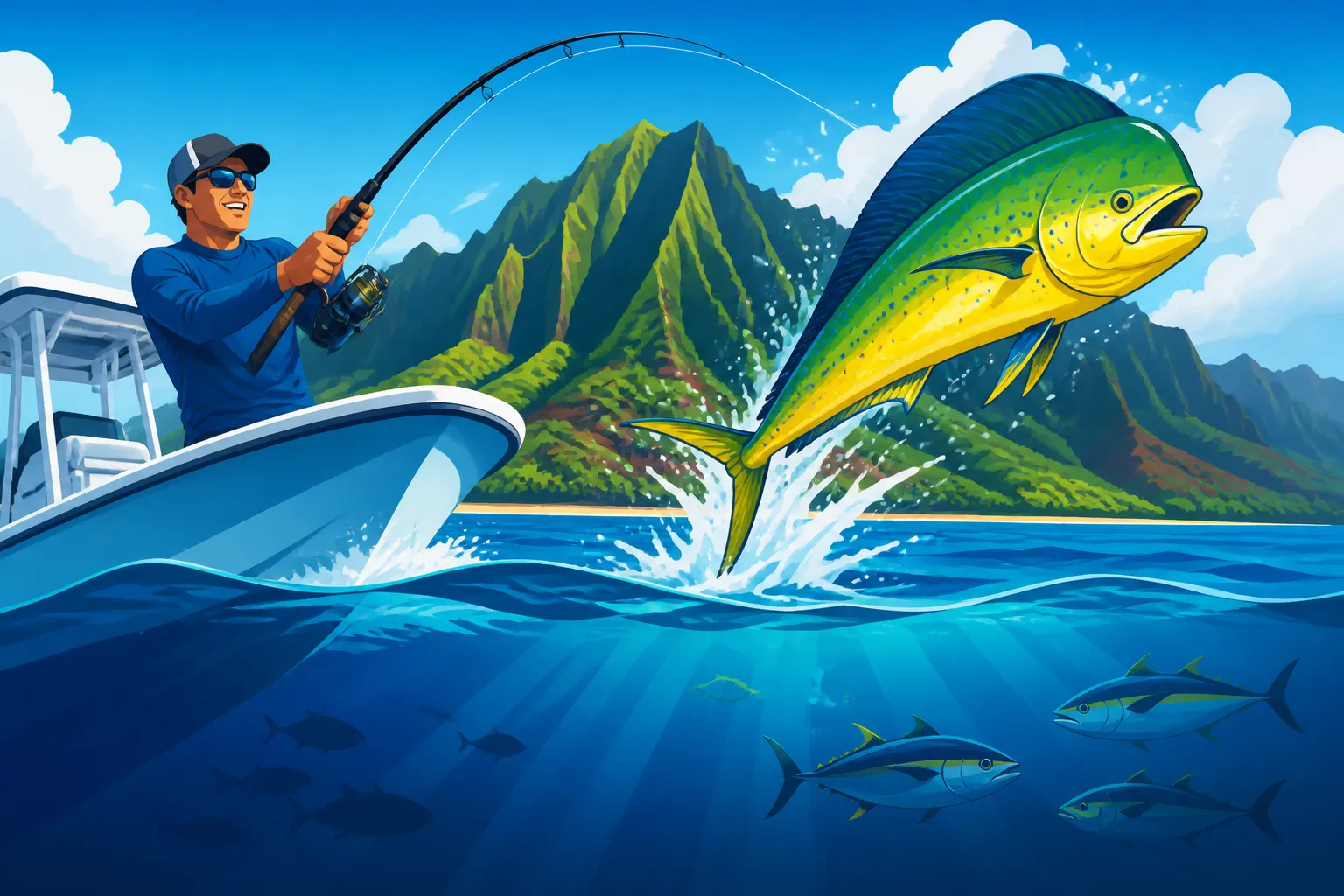
When people dream of Hawaiian deep-sea fishing, they often picture the legendary Kona Coast of the Big Island. But what many don't realize is that Kauai also boasts incredible "Kona-esque" waters, particularly off its western and southern coasts, where the deep blue drops off dramatically close to shore. Trolling here is the primary method for targeting large pelagic species. Charters typically run a spread of lures at varying depths and distances behind the boat, mimicking baitfish and attracting apex predators.
You can expect to encounter powerful fighters like blue marlin, striped marlin, spearfish, and the highly prized ahi (yellowfin tuna). Ono (wahoo) and mahimahi (dorado) are also common and provide exhilarating fights. A typical day of trolling involves cruising across various depths, focusing on areas with baitfish activity, current lines, or temperature breaks visible on the sonar. It’s an exciting waiting game, often punctuated by the scream of a reel as a powerful fish strikes, initiating a sometimes hours-long battle. If you're looking for that big game thrill, deep-sea trolling off Kauai is an unforgettable experience. Knowing the Best Time of Year to Fish in Hawaii can significantly improve your chances for these pelagics.
Reef Fishing: From Kayaks to Shorelines
Reef fishing on Kauai offers a more intimate connection with the island's diverse marine life, often in shallower, clearer waters. This style of fishing can be done in a multitude of ways, from casting flies on a shallow flat, to jigging from a kayak over a reef, or simply soaking bait from the shoreline. The target species are typically smaller than offshore pelagics but offer fantastic light tackle action. You'll encounter a vibrant array of reef fish, including various snappers, goatfish, triggerfish, and parrotfish, though many of these species are subject to specific Hawaii Bag and Size Limits by Species.
Kayakers and stand-up paddleboarders can access remote reef lines and coves, allowing for stealthy approaches to feeding fish. They might jig with small metal lures, cast soft plastics, or even troll small baits just beyond the surf break. Shoreline anglers, meanwhile, can utilize techniques like "whipping" with small artificial lures or bait, targeting papio and smaller ulua. The beauty of reef fishing is its accessibility and the sheer visual appeal of Kauai's stunning underwater world. It's perfect for those who enjoy constant action and prefer to stay closer to the island's breathtaking coastline.
Bottomfishing the Ledges and Drops
Beyond the immediate reefs, but often not as far offshore as the pelagic grounds, lie the productive deep bottomfishing spots of Kauai. These areas consist of underwater ledges, seamounts, and rocky pinnacles that create habitat for a different class of fish, often referred to as "deep-7" bottomfish. This technique typically involves drifting over specific structures and dropping weighted lines with multiple hooks, often baited with squid or cut fish, down to depths ranging from a few hundred to over a thousand feet.
The rewards can be magnificent: highly prized species like opakapaka (pink snapper), onaga (ruby snapper), ehu (squirrelfish snapper), and gindai (longtail snapper). These fish are not only beautiful but are also considered some of the finest eating fish in Hawaii. Bottomfishing requires specialized gear, including electric reels for the deepest drops, and a good understanding of ocean currents and structure. While not as high-energy as a marlin fight, the anticipation of reeling up a stringer of these deep-water delicacies is a thrill all its own. Many charters out of Port Allen and Nawiliwili offer dedicated bottomfishing trips.
Freshwater Fishing on the Garden Isle
It might seem counterintuitive to talk about freshwater fishing on a tropical Hawaiian island, but Kauai truly lives up to its "Garden Isle" moniker by offering a unique and often overlooked inland fishery. Tucked away in its mountainous interior, you’ll find cool streams and reservoirs that provide a stark contrast to the vast ocean, giving anglers a chance to experience something truly different. This unexpected opportunity adds another layer to Kauai’s already diverse fishing appeal.
Kokee Public Fishing Area: Trout in the Mountains
The Kokee Public Fishing Area, located high in the Waimea Canyon State Park, is home to Hawaii's only significant wild trout fishery. Yes, you read that right – rainbow trout in Hawaii! These fish are stocked annually by the Department of Land and Natural Resources (DLNR) into the cool, clear streams that flow through Kokee’s lush rainforests. The season is limited, typically opening in early August and running for just a few months, so planning is essential if you want to experience this unique opportunity.
Fishing in Kokee is a completely different experience from ocean angling. You'll be hiking through dense forest, navigating stream banks, and casting into pristine mountain waters. Fly fishing with small nymphs and dry flies, or spin fishing with light tackle and small spinners or baits, are the most common and effective methods. It’s a tranquil and immensely rewarding experience, often involving beautiful scenery and a quiet solitude that contrasts sharply with the bustling coastline. Remember, a specific Hawaii Freshwater Fishing License and Rules applies here, separate from any marine license.
Other Stream and Reservoir Opportunities
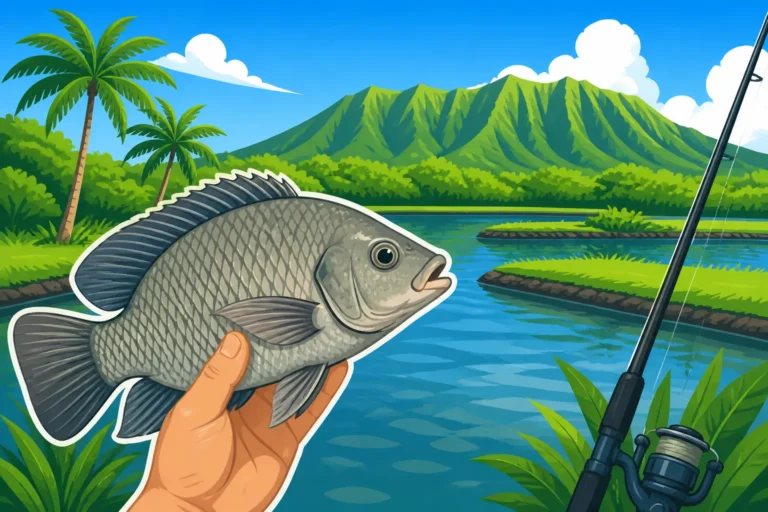
While Kokee takes the spotlight for freshwater fishing, Kauai does have other smaller streams and reservoirs that, while not managed for game fish in the same way, can offer some casual angling. These waters often hold introduced species like tilapia, carp, and various types of cichlids. These aren't typically targeted by dedicated sport anglers but can provide fun for kids or those looking for a very relaxed fishing outing with simple bait and tackle.
Access to these areas can vary, with some being on private land or within watershed areas where fishing is restricted or prohibited. It’s always crucial to check with local authorities, like the DLNR Division of Aquatic Resources, before venturing into any freshwater body. The focus for serious freshwater anglers on Kauai will undoubtedly be Kokee, but it’s worth being aware of these other possibilities for a bit of laid-back, exploratory fishing, as long as you adhere to all local regulations.
Essential Kauai Fishing Regulations and Licenses
Navigating the rules and regulations for fishing in Hawaii can feel a bit like deciphering an ancient text, and Kauai is no exception. However, understanding and adhering to these guidelines is not just about avoiding fines; it's about protecting the fragile marine and freshwater ecosystems that make fishing here so special. The Hawaii Division of Aquatic Resources (DAR) is the primary agency responsible for managing these resources, and their rules are designed to ensure sustainable fishing for generations to come. This section will cover the basics, but always consult the most current official publications.
Marine vs. Freshwater License Requirements
Here’s where it can get a little tricky for visitors. For marine (ocean) fishing, Hawaii has traditionally been unique in that residents historically did not require a license for recreational shoreline or ocean fishing, provided they were not selling their catch. However, as of January 2024, Hawaii does require a recreational marine fishing license for all non-residents, and it's highly recommended for residents as well, particularly if participating in certain activities. For those visiting Kauai, you absolutely need to obtain a Hawaii Nonresident Marine Fishing License, Explained if you plan on fishing in the ocean, whether from shore, a kayak, or a private boat. This license is critical for avoiding penalties and supporting conservation efforts.
For freshwater fishing, the rules are much clearer and have been in place for longer. Anyone aged 18 or older, resident or non-resident, is required to possess a valid freshwater fishing license to fish in designated freshwater areas like the Kokee Public Fishing Area. Children under 18 typically do not need a license but should always be accompanied by a licensed adult. These licenses are crucial for supporting the stocking programs and management of these unique inland fisheries. Be sure to understand if you need a Do You Need a Fishing License in Hawaii for your specific trip.
Bag and Size Limits for Common Species
Beyond licenses, understanding bag and size limits is paramount for responsible angling on Kauai. These regulations are designed to prevent overfishing and allow fish populations to reproduce and grow. For popular species like ulua and papio, there are strict minimum size limits to ensure juveniles aren't harvested prematurely. For example, ulua (Giant Trevally) often have a minimum size limit of 10 inches for papio (juvenile GT) and a slot limit for larger ulua.
Other common reef and pelagic species also have their own specific rules. Moi (Pacific Threadfin), a highly prized nearshore fish, has a very strict seasonal closure and minimum size limit. Uhu (parrotfish), another common reef inhabitant, also has specific size and bag limits. It’s not just about what you can catch, but how many and how big. Always consult the current Hawaii Bag and Size Limits by Species booklet from the DLNR DAR, which can often be found online or at local tackle shops. Failure to comply can result in significant fines and impact your ability to fish in Hawaii in the future.
Protected Areas and Gear Restrictions
Kauai also has specific protected areas, such as Marine Life Conservation Districts (MLCDs), where fishing and even the taking of marine life are severely restricted or prohibited. One well-known example on the North Shore is the waters around the Napali Coast State Wilderness Park, where certain areas have special rules to preserve the pristine environment. Similarly, some shorelines might be designated as cultural preservation areas where traditional fishing practices are allowed, but modern recreational fishing may be restricted.
Beyond spatial restrictions, there are also rules about certain fishing gear. For instance, specific types of nets or traps might be prohibited, and there are limitations on the number of hooks or lines an individual can use. Spearfishers, in particular, need to be aware of regulations regarding SCUBA spearfishing (generally prohibited) and specific target species. It's not enough to simply have a license; you also need to know where and how you can fish. Always check the comprehensive Hawaii Fishing Regulations Explained before heading out to ensure you’re fishing ethically and legally.
Choosing the Right Kauai Fishing Charter or Guide
For many visitors, especially those less familiar with Hawaiian waters, booking a fishing charter or hiring a guide is the best way to experience Kauai’s diverse fisheries. It takes the guesswork out of locating fish, understanding local conditions, and adhering to regulations, allowing you to simply focus on the thrill of the catch. However, with many options available, choosing the right one can make all the difference in your experience.
What a Charter Provides
A reputable Kauai fishing charter or guide typically provides everything you need for a successful and enjoyable day on the water. This usually includes all the necessary fishing gear, from high-quality rods and reels to a full array of lures and bait specifically chosen for the target species and conditions. Beyond the equipment, the most valuable asset a charter provides is the experience and local knowledge of the captain and crew. These seasoned professionals know the best spots, understand the currents, can read the weather, and possess an intimate understanding of fish behavior in Kauai’s waters.
Furthermore, a charter boat will have all the required safety equipment, emergency communication systems, and proper licensing, ensuring a safe outing. Many charters also offer amenities like coolers with ice for drinks and snacks, and some even provide lunch on full-day trips. They'll handle the dirty work of cleaning and filleting your catch (if allowed to be kept) at the end of the day, leaving you with delicious fillets ready for the grill. When considering a charter, you’re investing in expertise, convenience, and safety, which is especially important in unfamiliar waters. Don't forget to check our guide on How to Choose a Hawaii Fishing Charter for more tips.
Booking Private vs. Shared Trips
When looking into fishing charters on Kauai, you'll generally find two main options: private charters and shared (or "walk-on") trips. Each has its own set of pros and cons, and the best choice depends on your group size, budget, and desired experience. Private charters offer exclusivity, meaning your group has the entire boat to yourselves. This allows for complete flexibility in terms of target species, fishing methods, and even departure/return times (within reason). You can communicate directly with the captain about your preferences, whether it’s chasing marlin all day, focusing on bottomfish, or even doing a mix. It's ideal for families, groups of friends, or serious anglers who want a tailored experience. Of course, this exclusivity comes at a higher price point, as you're covering the entire cost of the boat and crew.
Shared trips, on the other hand, involve booking a single spot on a boat with other individual anglers or smaller parties. This is a much more budget-friendly option, as the cost is split among all passengers. However, it means less flexibility in terms of where you fish and what you target, as the captain will likely cater to the majority interest or the most productive fishing at that time. You might also have to share fighting chairs or take turns on the rods. Shared trips are great for solo anglers or couples who want to experience deep-sea fishing without the private charter price tag. Websites like FishingBooker are excellent resources for comparing both private and shared charter options, allowing you to read reviews, check availability, and book confidently for your Kauai adventure. They simplify the process of finding the perfect match for your needs.
What to Look for in a Charter
Before you commit to a charter, do your homework. Look for captains and crews who have a proven track record of safety, professionalism, and, of course, a good reputation for finding fish. Check online reviews on platforms like FishingBooker or TripAdvisor to get a sense of other anglers' experiences. A good charter should be transparent about their pricing, what's included (and what's not), and their catch policy (e.g., whether all fish are kept, shared, or catch-and-release).
Don't be afraid to ask questions about the boat's condition, the type of gear they use, and their philosophy on fishing. Some charters are highly focused on trophy fish, while others are more family-friendly and prioritize getting everyone a catch. Also, confirm their licensing and insurance; a reputable operation will be happy to provide this information. A little due diligence upfront can save you a lot of disappointment and ensure you have an amazing time on the water.
Best Times and Techniques for Kauai Fishing
Like any fishing destination, Kauai’s productivity can fluctuate with the seasons, tides, and even moon phases. Understanding these patterns, combined with knowledge of effective local techniques, will significantly enhance your chances of success. Whether you're a seasoned angler or just starting out, having a game plan for when and how to fish can make all the difference between a good day and a truly memorable one.
Seasonal Peaks for Pelagics
The good news about fishing for pelagic species like marlin, ahi, ono, and mahimahi around Kauai is that there's usually something biting year-round due to Hawaii's consistent warm waters. However, there are definitely peak seasons when certain species are more abundant. Blue marlin activity tends to heat up in the summer months, from May through September, although trophy fish can be caught at any time. This is when the baitfish schools are thick, drawing in the bigger predators.
Ahi (yellowfin tuna) are often excellent in the spring (March to June) and fall (September to November), but schooling fish can show up at any time. Ono (wahoo) are typically more prevalent during the warmer months, especially from late spring through fall, as they follow bait schools. Mahimahi can be quite prolific in the spring and fall, often found near floating debris or FADs (Fish Aggregating Devices). While there are general trends, local conditions and bait movements can always change the game, so staying flexible and consulting with local captains is always a good idea. For a more detailed breakdown, consult the Hawaii Fishing Seasons by Month guide.
Shore Fishing Tactics: Whipping, Slide Baiting, and More
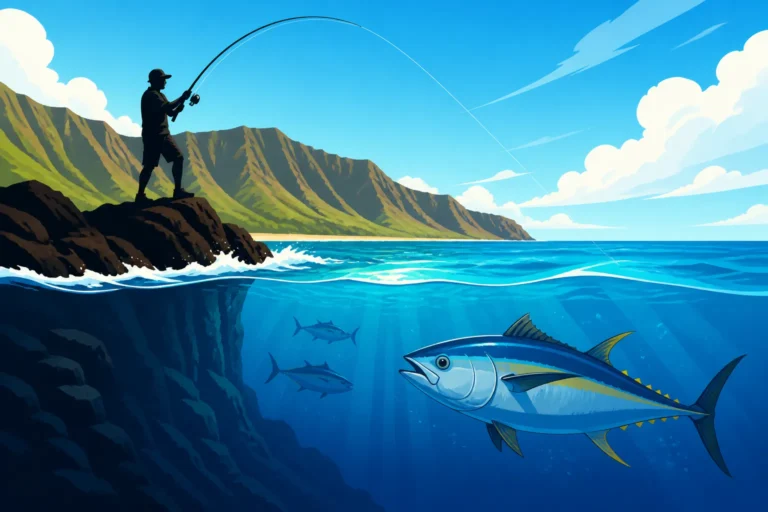
Shore fishing on Kauai is an incredibly popular activity among locals and visitors alike, offering accessibility and diverse targets. One of the most common and effective techniques for papio and smaller ulua is whipping. This involves casting small, flashy lures or soft plastics and retrieving them with varying speeds and jerky motions to mimic fleeing baitfish. It's an active, engaging style that can yield consistent bites.
For larger ulua and other bottom dwellers from rocky ledges or piers, slide baiting is a preferred method. This technique involves casting out a heavy weight with a main line, then attaching a live or dead bait to a separate leader with a specialized clip, allowing it to slide down the main line into the strike zone. It’s a patient game, often done at night, but can result in truly enormous catches. Beyond these, simply soaking cut bait (like squid or chunks of fish) on the bottom or under a float can attract a wide variety of reef fish. No matter your chosen technique, understanding the tides and currents for your specific location is crucial for success when employing Shore Fishing Techniques for Hawaii.
| Fishing Style | Target Species | Recommended Technique | Best Time | Primary Gear |
|---|---|---|---|---|
| Offshore Trolling | Blue Marlin, Ahi, Ono, Mahimahi, Spearfish | High-speed trolling with artificial lures or rigged natural baits | Year-round, but specific peaks for each species | Heavy conventional rods, large reels, outriggers, sonar |
| Deep Bottomfishing | Opakapaka, Onaga, Ehu, Gindai | Deep drop fishing with multi-hook rigs and cut bait | Year-round, often better in calm weather | Electric reels, heavy conventional rods, specialized braided line |
| Shore/Reef Casting (Whipping) | Papio, small Ulua, various reef fish | Casting small jigs, spoons, or soft plastics with fast retrieve | Dawn, dusk, tidal changes | Light to medium spinning gear, braided line, fluorocarbon leader |
| Shore Fishing (Slide Baiting) | Large Ulua, Papio, Moi | Casting heavy weight, sliding live or dead bait down line | Night, strong currents, especially new/full moon | Heavy surf rods, large conventional reels, heavy leader |
| Kayak/SUP Fishing | Papio, smaller Ulua, reef fish, some pelagics | Jigging, light trolling, casting soft plastics | Calm mornings, throughout the day over reefs | Light to medium spinning or baitcasting gear, kayak specific rod holders |
| Freshwater (Kokee) | Rainbow Trout | Fly fishing (nymphs, dry flies), spin fishing (small spinners, bait) | Early August to end of September (limited season) | Light fly rods or ultralight spinning gear, waders |
What to Pack for Your Kauai Fishing Adventure
Preparing for a fishing trip on Kauai means thinking about the unique conditions of the islands. From the intense tropical sun to sudden rain showers and rugged terrain, being well-prepared will ensure your comfort and safety, allowing you to focus on the joy of fishing. This isn’t just about gear for the fish; it’s about gear for you.
Gear for Shore, Boat, and Freshwater
Your packing list will largely depend on the type of fishing you plan to do. For boat fishing (whether deep sea or bottomfishing), charters typically supply all the rods, reels, and tackle. However, you might want to bring your favorite pair of polarized sunglasses for spotting fish or reading the water, a hat with a brim, and non-slip deck shoes. If you get seasick easily, definitely pack motion sickness medication; it's better to have it and not need it.
For shore fishing, if you're bringing your own gear, consider a medium-heavy spinning rod (8-10 feet) paired with a robust saltwater reel spooled with 20-30lb braided line. A variety of lures (metal jigs, poppers, soft plastics) and terminal tackle (hooks, weights, swivels) are essential. Don't forget a sturdy backpack for carrying gear and water, and comfortable, water-resistant shoes for navigating rocky shorelines.
If you're venturing into freshwater for trout in Kokee, you'll need lightweight gear: a 3-5 weight fly rod or an ultralight spinning rod with small spinners or bait. Waders or quick-dry hiking pants and waterproof boots are highly recommended, as you’ll be in and out of streams. Always carry a small backpack with water, snacks, and a first-aid kit, as these areas can be remote.
Sun Protection and Safety
Regardless of where or how you fish on Kauai, sun protection is non-negotiable. The Hawaiian sun is intense, even on cloudy days. Pack a wide-brimmed hat, sunglasses with good UV protection, and high SPF sunscreen (reef-safe is preferred if you'll be near the ocean). Long-sleeved, lightweight fishing shirts (often with UPF ratings) and long pants will protect you from both sun and potential insect bites, especially in freshwater areas.
Safety should always be a top priority. A basic first-aid kit is essential for any outing, containing items for cuts, scrapes, and insect stings. Carry plenty of water to stay hydrated, as dehydration can sneak up quickly in the tropical climate. Inform someone of your fishing plans, especially if you're heading to remote shorelines or freshwater streams. If boating, always wear or have access to a life jacket, even if you’re an experienced swimmer, especially if you're fishing from a kayak or SUP. Being prepared ensures your fishing adventure remains enjoyable and safe.
Disclaimer
The information provided in this guide is for general informational purposes only and is not intended as legal advice. Fishing regulations in Hawaii, particularly those pertaining to licenses, bag limits, and protected areas, are subject to change by the Hawaii Department of Land and Natural Resources (DLNR). It is the angler's sole responsibility to consult the most current official regulations and obtain all necessary licenses before engaging in any fishing activity on Kauai or elsewhere in Hawaii. Failure to do so may result in fines or penalties. Always prioritize safety and environmental responsibility.