Best tilapia ponds on Oahu
Finding consistent, accessible freshwater fishing spots on Oahu, especially for species that offer a fun fight and a potential meal like tilapia, can sometimes feel like chasing a ghost. Many anglers come to Hawaii dreaming of big marlin or ulua, but the joys of tranquil pond fishing often get overlooked or seem shrouded in local knowledge that's hard to come by. This guide aims to clear up that mystery, providing you with the inside scoop on the best tilapia ponds on Oahu, how to fish them, and what to expect when you get there.
Why Tilapia Fishing on Oahu is a Quiet Pleasure
Let's be real, tilapia might not have the same exotic appeal as a giant trevally or a soaring mahimahi, but for many local anglers and visitors seeking a relaxed day on the water, they're an absolute blast. They're abundant, relatively easy to catch, and provide a fantastic opportunity to practice your technique without the pressure of chasing a trophy. Plus, they can be quite tasty if prepared properly! It's a fantastic way to immerse yourself in a different side of Hawaii's fishing culture, one that often happens away from the crashing waves.
Understanding Tilapia Behavior in Hawaiian Waters
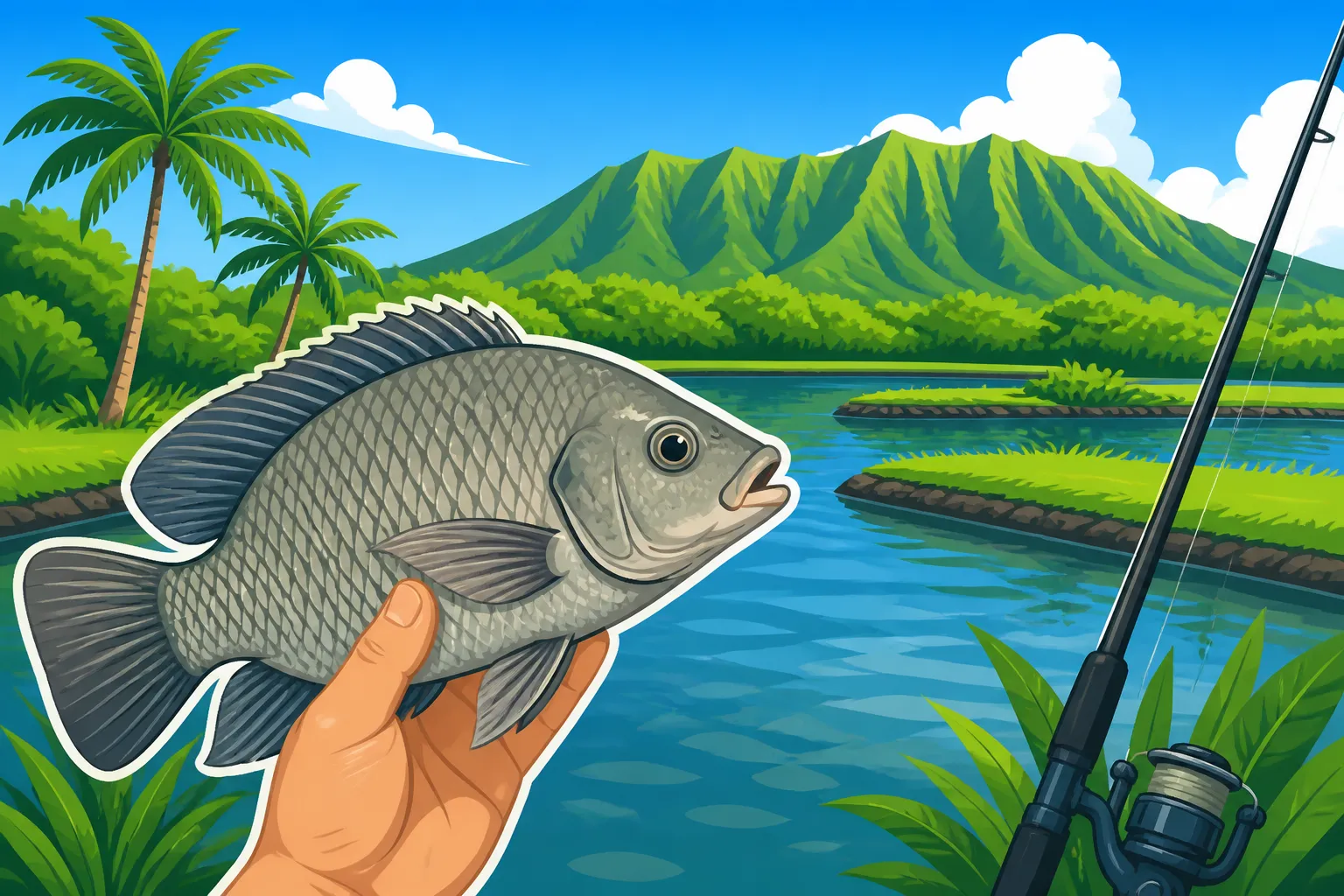
Tilapia, specifically species like the Mozambique tilapia (Oreochromis mossambicus) and blackchin tilapia (Sarotherodon melanotheron), aren't native to Hawaii. They were introduced for various reasons, including aquaculture and weed control, and have since established thriving populations in many of Oahu's freshwater systems. These fish are incredibly hardy and adaptable, able to tolerate a wide range of water conditions, from clear ponds to brackish estuaries. You’ll often find them congregating around submerged structures, weed beds, and muddy bottoms where they can forage for algae, detritus, and small invertebrates. They're prolific breeders, which contributes to their abundance, especially in warmer months. Knowing that they're opportunistic feeders means a variety of baits and presentations can be effective, making them a great target for anglers of all skill levels.
The Benefits of Targeting Tilapia
Beyond the pure fun of catching fish, targeting tilapia on Oahu offers several unique advantages. For starters, it's often a more accessible form of fishing. You don't necessarily need a boat or specialized gear; a simple spinning rod and reel with light tackle can do the trick. This makes it perfect for families with kids or beginners just getting their feet wet in the angling world. Secondly, because tilapia are an introduced species, there are typically no bag limits or size restrictions, and in fact, harvesting them is often encouraged by the Hawaii Division of Aquatic Resources (DAR) to help manage their populations and reduce their impact on native ecosystems. This means you can keep what you catch, providing a fresh meal for the family. It's a sustainable way to enjoy fishing, contributing to the health of the local aquatic environment while having a rewarding experience.
Top Tilapia Ponds and Freshwater Spots on Oahu
Oahu might be famous for its epic surf and deep blue ocean, but it also harbors some fantastic freshwater fishing opportunities, particularly for tilapia. These spots are often serene, less crowded, and offer a completely different vibe than the bustling coastal areas. However, some areas do require a Hawaii Freshwater Fishing License and Rules so make sure you're properly licensed before heading out.
Wahiawa Public Fishing Area
Without a doubt, Wahiawa Reservoir, officially known as the Wahiawa Public Fishing Area, is the undisputed champion when it comes to freshwater fishing on Oahu. While most anglers here might be targeting largemouth bass or peacock bass, tilapia are incredibly abundant and often caught as bycatch, or specifically targeted by those who know their worth. The reservoir is massive, covering over 300 acres, and its shores are easily accessible in many areas. You'll find tilapia thriving in the shallower, warmer coves, especially those with dense aquatic vegetation. These areas provide both food and cover.
Access to Wahiawa is managed by the DLNR, and specific Hawaii Wahiawa Reservoir Fishing Rules apply, including designated fishing hours and access points. There's a main entrance off of Avocado Street that leads to a boat launch and various shoreline spots. Parking is usually plentiful, and you'll often see families picnicking and enjoying the peaceful atmosphere. It’s a great place to spend a full day, exploring different coves and points. Just be mindful of the mud, especially after heavy rains – good waterproof footwear is a must!
Nuuanu Reservoir
The Nuuanu Reservoirs, particularly Nuuanu Reservoir No. 4, have historically been known for freshwater fishing opportunities, including tilapia. However, access to Nuuanu has been significantly more restricted than Wahiawa, sometimes being completely closed to public fishing due to safety concerns or infrastructure projects. It’s crucial to check the latest Hawaii Nuuanu Reservoir fishing rules with the DLNR Division of Aquatic Resources (DAR) before planning a trip.
When open, Nuuanu offers a different kind of experience. It’s often characterized by steeper banks and denser forest surroundings, giving it a more secluded feel. Tilapia, along with other introduced species like channel catfish and largemouth bass, can be found here. If you manage to catch it during an open period, it provides a unique, tranquil setting, albeit with potentially fewer easily accessible shoreline spots compared to Wahiawa. Always respect any posted signage and official guidelines to ensure future access for everyone.
Other Less-Known Ponds and Streams
While Wahiawa and Nuuanu are the primary designated freshwater fishing areas, Oahu has a myriad of smaller ponds, irrigation ditches, and slow-moving stream sections where tilapia can be found. These spots are often localized and require a bit of local knowledge or exploration. These aren't always "public fishing areas" in the official sense, so access might be limited to roadside pull-offs or areas where public rights-of-way exist near agricultural lands. Remember, always respect private property and "no trespassing" signs.
Some of these smaller, less-formal spots can include drainage ditches around agricultural fields (often hidden away in areas like Kunia or central Oahu) or even larger puddles and ponds that form after heavy rains. These areas might not hold trophy-sized fish, but they can be teeming with smaller tilapia, offering non-stop action, especially for kids. It's truly a scavenger hunt to find these hidden gems, and often, the best way to discover them is by chatting with local anglers at bait shops or fishing forums. When exploring these unmarked spots, ensure you're aware of the general Hawaii Fishing Regulations Explained and any specific local nuances.
To help you visualize the different characteristics of these major spots, here's a quick comparison:
| Feature | Wahiawa Public Fishing Area | Nuuanu Reservoir (when open) | Smaller, Unofficial Ponds & Streams |
|---|---|---|---|
| Size | Large (approx. 300 acres) | Medium (multiple reservoirs) | Small to Medium |
| Primary Access | Designated boat ramp, shoreline | Limited, often steep banks | Roadside, informal |
| Typical Fish | Tilapia, Peacock Bass, Largemouth Bass, Channel Catfish | Tilapia, Largemouth Bass, Channel Catfish | Tilapia, Guppies, other small invasives |
| Regulations | Specific DLNR rules & hours | Highly restricted, check DAR updates | General freshwater rules, private land caution |
| Crowd Level | Moderate, especially weekends | Low (due to access restrictions) | Very Low, often solitary |
| Suitability | Families, all skill levels | Experienced, patient anglers | Explorers, quick sessions |
Essential Tips and Techniques for Oahu Tilapia
Once you've found your spot, knowing how to approach tilapia fishing will significantly increase your chances of success. They might be eager eaters, but they're still fish, and a little strategy goes a long way.
Best Baits and Lures
Tilapia are not picky eaters, which is fantastic news for anglers. Their diet primarily consists of detritus, algae, and small invertebrates, so replicating these food sources with your bait is key.
- Natural Baits:
- Bread Balls: This is perhaps the most classic and effective bait for tilapia. Simply wet a piece of white bread, squeeze it into a small, doughy ball, and mold it onto a small hook. It's cheap, easy, and tilapia absolutely love it.
- Worms: Earthworms, red wigglers, or even pieces of larger nightcrawlers are highly effective. Their natural scent and movement are irresistible.
- Corn: Canned kernel corn works wonders, especially in waters where fish might be accustomed to being fed by people.
- Small Pieces of Shrimp or Hot Dog: Cut into tiny, pea-sized pieces, these can also attract tilapia, though they are a bit more expensive than bread or worms.
- Artificial Lures:
- While less common for tilapia, ultra-light artificial lures can sometimes trigger a bite, especially if they mimic small insects or crustaceans. Think tiny jigs (1/32 to 1/16 oz) tipped with a small piece of plastic grub or even a single kernel of corn. Micro spoons or spinners can also work in clearer water, but generally, natural baits outperform lures for tilapia.
Remember, the presentation is often more important than the exact bait. Tilapia have small mouths, so use small hooks (size 8-12) and keep your bait offerings bite-sized.
Rigging and Gear Recommendations
You don't need heavy-duty gear to catch tilapia; in fact, lighter tackle makes the fight much more enjoyable.
- Rod and Reel: A light to ultra-light spinning rod (5-7 feet) paired with a small spinning reel (500-1000 size) is perfect. This setup allows for sensitive bites and provides a thrilling fight even from smaller fish.
- Line: Opt for 4-6 lb monofilament or fluorocarbon line. Monofilament is often preferred for its stretch and knot-tying ease.
- Terminal Tackle:
- Hooks: Small, sharp hooks are essential. Size 8 or 10 Aberdeen hooks are a good choice as they are light and have a fine wire that penetrates easily. Circle hooks of similar size can also be effective for self-hooking.
- Bobbers/Floats: A small, sensitive bobber is incredibly useful. Tilapia often take bait very subtly, and a bobber will help you detect those soft bites. Slip bobbers are great for controlling your depth.
- Sinkers: A tiny split shot or two, just enough to get your bait down, is all you need. You want the bait to drift naturally.
- Basic Setup: A simple bobber rig is often the most effective. Tie a small hook directly to your main line or to a short leader (6-12 inches), add a small split shot weight a few inches above the hook, and then attach your bobber at a depth that places your bait near the bottom or suspended just above weed beds. You might also consider exploring some Bank Fishing Techniques for Freshwater Reservoirs for more nuanced approaches.
Navigating Regulations and Access
Even for species like tilapia, understanding the rules is non-negotiable. As mentioned, a Do You Need a Fishing License in Hawaii is required for freshwater fishing for anyone 16 years or older. This applies to both residents and nonresidents. The cost for a Hawaii freshwater license cost for residents is usually quite reasonable, and for non-residents, you can get a Hawaii freshwater license cost for nonresidents for various durations. Always check the official DLNR DAR website for the most current regulations, as rules can change. This is especially true for specific areas like Wahiawa and Nuuanu, which might have additional site-specific regulations, such as prohibited fishing methods or special access hours.
When exploring those less-known ponds and streams, vigilance is key. Assume that if an area isn't explicitly marked as a public fishing access point, it could be private property. Look for "no trespassing" signs, fences, or other indications that public access is not permitted. If you're unsure, it's always best to err on the side of caution and find another spot. Showing respect for the land and local communities is paramount to ensuring positive relationships between anglers and landowners. If you're new to fishing on Oahu and want a broader freshwater experience, or perhaps a saltwater trip too, platforms like FishingBooker can be incredibly helpful for finding local guides who know these waters inside and out. They often list various types of trips, which can give you a lay of the land, even if it's not specifically a tilapia guide.
Responsible Tilapia Fishing and Conservation
Fishing for tilapia, an invasive species, presents a unique opportunity to contribute to conservation efforts while enjoying your hobby. Unlike native species where catch and release is often encouraged, with tilapia, harvesting is often beneficial.
Managing Invasive Species
Tilapia are incredibly prolific and can outcompete native species for food and habitat, altering aquatic ecosystems. By actively fishing for and removing tilapia, anglers help manage their populations, which can lessen their ecological footprint. When you catch tilapia, consider keeping them for dinner – they are delicious when pan-fried, baked, or even used in fish tacos. There are no limits on the number of Tilapia in Hawaii's Freshwater Reservoirs you can keep, so feel free to fill a cooler! This proactive approach helps support the health of Hawaii's unique freshwater environments. If you’re ever curious about their diet, learning What tilapia eat in Hawaii's reservoirs can also inform your bait choices.
Practicing 'Mālama Aina' (Care for the Land)
In Hawaii, the concept of mālama 'āina – to care for the land – is deeply ingrained. This extends to our freshwater systems. When you're out fishing, leave no trace. Pack out everything you pack in, including fishing line, bait containers, and any other trash. Avoid disturbing vegetation unnecessarily and be mindful of other wildlife. Disposing of fish entrails properly (away from the immediate shoreline and designated public areas) is also part of respectful practice. Don't release any baitfish you bring from other locations into Hawaiian waters, as this can introduce new invasive species.
Even if you’re focusing on tilapia, a great way to explore different fishing opportunities across Oahu, or even other islands, is to browse reputable charter services. Sites like FishingBooker list a wide range of options, from bottomfishing to deep-sea adventures, providing a comprehensive look at what’s available beyond just our freshwater ponds. This can offer a different perspective on how various fish species are managed and enjoyed in Hawaii. Remember, fishing responsibly is key, and if you ever need guidance on regulations or simply want to discover more fishing experiences, local resources or even online platforms like FishingBooker are valuable tools. For any questions regarding specific regulations, contacting the Hawaii Division of Aquatic Resources customer service phone number directly is always a smart move.
Disclaimer
The information provided in this guide is for general informational purposes only and is subject to change. Fishing regulations, access points, and conditions can vary and be updated by the Hawaii Division of Aquatic Resources (DAR) or other governing bodies. Always consult the official DLNR DAR website and local signage for the most current and accurate regulations before engaging in any fishing activities. Personal safety, responsible angling practices, and respect for private property and the environment are the sole responsibility of the angler.