Best ahi fishing spots off Honokohau Harbor
Finding those elusive ahi, or yellowfin tuna, can feel like chasing a ghost in the vast expanse of the Pacific, especially when you're looking to launch from a bustling hub like Honokohau Harbor. It's a common frustration for both seasoned local anglers and eager visitors: where exactly do these powerful pelagics lurk? This guide will dive deep into the prime ahi fishing grounds accessible from Honokohau, equipping you with the knowledge to pinpoint those hot zones and increase your chances of a successful and memorable tuna hunt.
Understanding Ahi and Their Preferred Habitat Near Honokohau
Ahi, or yellowfin tuna, are magnificent creatures, renowned for their speed, strength, and delicious meat. Successfully targeting them isn't just about luck; it's about understanding their behavior and where they prefer to congregate. Near Honokohau, the unique underwater landscape creates a perfect storm for these powerful fish.
The Life and Times of Ahi in Hawaiian Waters
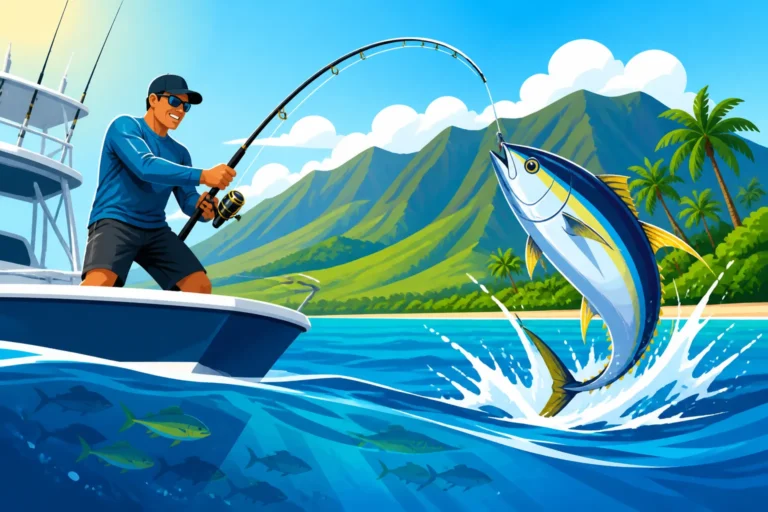
Yellowfin tuna are apex predators in the open ocean. They're built for speed, with sleek, torpedo-shaped bodies and impressive stamina, capable of long migrations across vast distances. In Hawaii, we're fortunate to have a consistent population, though their movements can still be influenced by seasons and bait availability. They typically feed on smaller schooling fish like mackerel, squid, and crustaceans, often pushing these baitfish to the surface in spectacular feeding frenzies. Knowing what they eat in Hawaii helps you select the right lures and baits. Ahi are also known for their rapid growth; they mature quickly and can reach impressive sizes in just a few years. Understanding their biology helps us appreciate why certain spots are more productive than others. For a deeper dive into these incredible fish, check out our guide on Ahi (Yellowfin Tuna) Fishing in Hawaii.
Why Honokohau is an Ahi Magnet
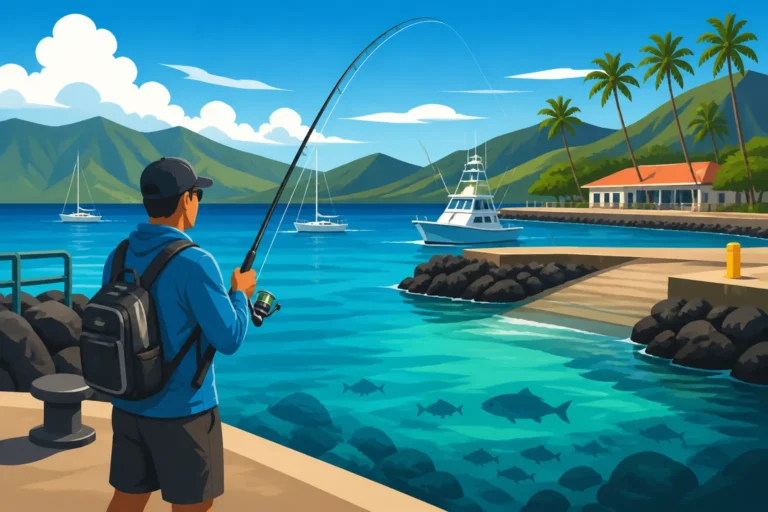
Honokohau Harbor on the Big Island's Kona Coast isn't just a picturesque marina; it's a gateway to some of the world's best deep-sea fishing. The reason it’s such an ahi magnet lies in its immediate proximity to incredibly deep water. Unlike many other coastlines, the Big Island's volcanic origins mean that the continental shelf drops off dramatically just a short distance from shore. This creates a natural highway for pelagic species like ahi. These deep waters bring nutrient-rich upwellings and converge with powerful currents, concentrating baitfish and, consequently, the tuna that feed on them. Anglers launching from Honokohau can often be in prime fishing grounds within minutes, rather than hours, which is a significant advantage when chasing fast-moving schools of tuna. This unique geography, combined with consistent baitfish presence, makes the waters off Honokohau a world-class destination for ahi.
Prime Ahi Fishing Zones Around Honokohau Harbor
When you leave Honokohau Harbor, you're entering an aquatic arena specifically designed for big game. While ahi can be found almost anywhere in the open ocean, certain areas consistently produce better results due to unique environmental factors.
The FAD Buoys: Offshore Magnets for Tuna
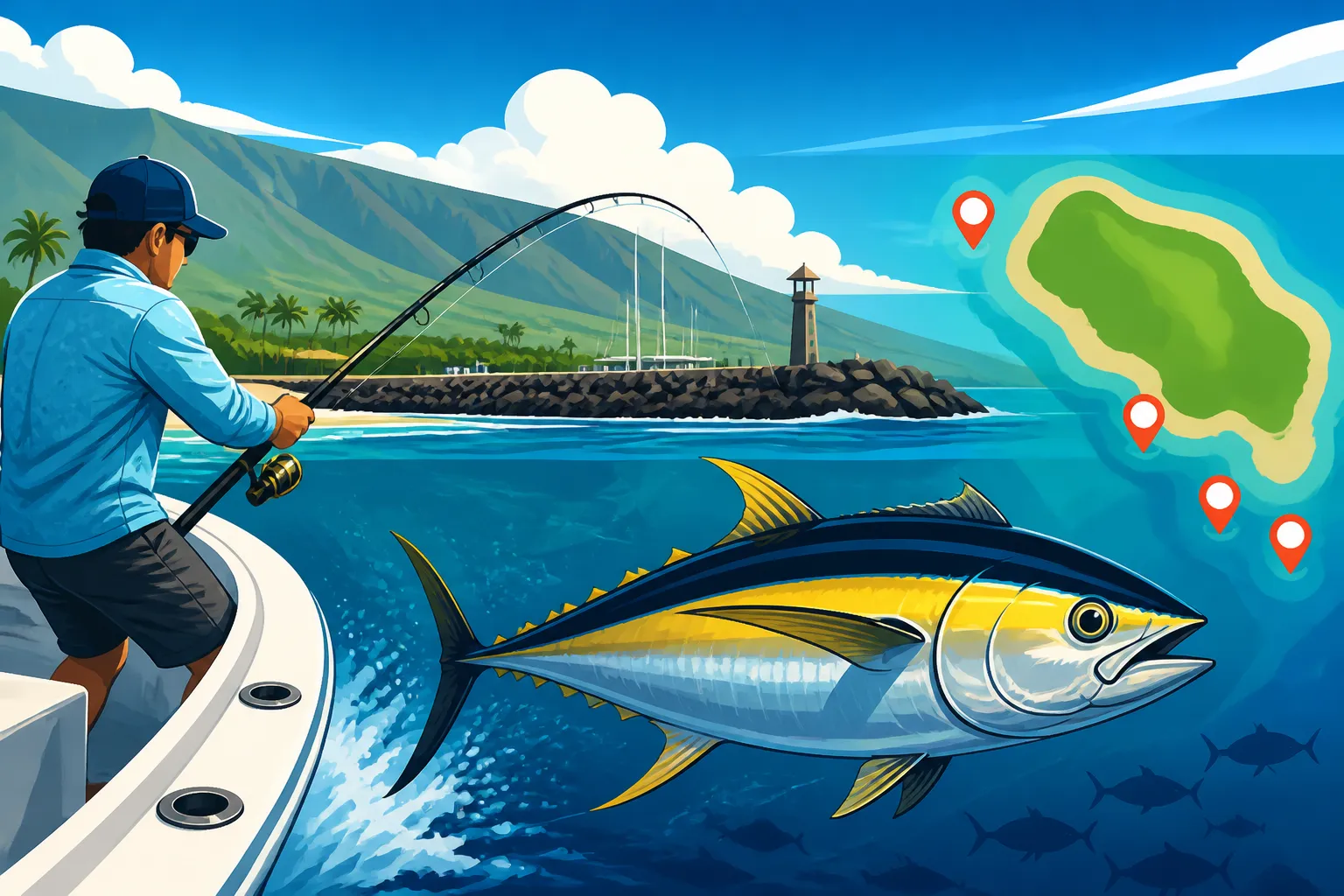
One of the most reliable places to find ahi, along with other pelagic species, are the FADs – Fish Aggregating Devices. These are permanent or semi-permanent buoys deployed by the Hawaii Division of Aquatic Resources (DAR) and other entities, typically in very deep water far offshore. For anglers departing from Honokohau, several FADs are within a reasonable run, acting like magnets for marine life. Small baitfish gather around the FADs for shelter, which in turn attracts larger predators like ahi, mahimahi, ono, and marlin.
These buoys aren't just single points; they create an entire ecosystem around them. You'll often find schools of skipjack tuna (aku) and small yellowfin congregating, which then become targets for bigger ahi. When you approach a FAD, pay close attention to your sonar for baitfish schools and watch for birds diving, which often indicates a feeding frenzy below. The FADs provide a predictable structure in an otherwise featureless ocean, making them crucial waypoints for any serious ahi angler. Knowing the general locations of these FADs and monitoring their status (sometimes they go adrift or are removed for maintenance) is key. The Hawaii Fishing Seasons by Month can give you an idea of when ahi are typically most active around these structures, though they can hold fish year-round.
Kona Coast's Underwater Topography and Drop-offs
The Kona Coast is famous for its dramatic underwater topography. Just a few miles offshore from Honokohau, the ocean floor plunges thousands of feet into the abyss. These sudden, steep drop-offs and seamounts create natural current breaks and upwellings that push deep-sea nutrients and baitfish closer to the surface. Ahi, being opportunistic predators, will patrol these edges, ambushing anything that strays too far from cover or gets caught in a current.
The areas where the 100-fathom line (about 600 feet) meets even deeper water are often excellent starting points. These deep channels and ridges provide complex habitats for diverse marine life, creating a vibrant food chain that culminates in large pelagics like ahi. Experienced captains often use their sonar to identify these underwater structures and locate bait balls clinging to the contours. Understanding these Best deep water dropoffs to fish off Kona is fundamental to successful ahi fishing. It’s a far cry from flat bottom fishing; here, you're looking for subtle changes in depth that signal a high-probability feeding zone.
Current Lines and Temperature Breaks
Ahi are highly sensitive to changes in water temperature and currents. These powerful fish often travel along current lines, which are essentially underwater rivers that bring nutrients and baitfish with them. When two currents meet, they create a visible "rip" on the surface, often marked by a line of debris, sargassum weed, or foam. These current lines are natural feeding lanes for ahi and other pelagics.
Similarly, temperature breaks – where warmer and cooler water masses converge – can be incredibly productive. These thermal boundaries concentrate baitfish, as they seek their preferred temperature, making them easy targets for ahi. Savvy anglers constantly monitor their boat's temperature gauge and look for changes of even a few degrees. Satellite imagery, if available, can also help identify significant temperature breaks and chlorophyll concentrations (indicating baitfish) before you even leave the harbor. Timing your trips to coincide with favorable current and temperature conditions, especially during the Best Time of Day to Book a Charter for Ahi, can significantly improve your chances of encountering feeding tuna schools.
Essential Techniques for Targeting Ahi off Honokohau
Once you've identified potential ahi hotspots, the next step is employing the right techniques to entice these powerful fish. Ahi are fierce fighters, and it takes a combination of skill, the right gear, and patience to bring one to the boat.
Trolling for Trophy Ahi
Trolling is arguably the most popular and effective method for covering ground and finding ahi off Honokohau. It involves dragging a spread of lures or rigged baits behind a moving boat, mimicking a school of fleeing baitfish. The beauty of trolling is that it allows you to prospect large areas, especially around FADs, current lines, and drop-offs, until you find where the fish are holding.
A typical trolling spread might involve 6-8 lines, each with different lures (often brightly colored skirts, chuggers, or jet heads) or rigged natural baits, positioned at varying distances behind the boat. This creates a "school" effect and covers different depths and angles. The speed of your troll is crucial; generally, between 6 to 10 knots is common, but it can vary based on sea conditions, bait presence, and what the fish are responding to on a given day. Experimentation is key. Many experienced captains use a combination of these lures, often favoring colors like blue, pink, green, and black, which imitate common baitfish. For more in-depth knowledge, check out our guide on Trolling Techniques for Hawaii Pelagics.
Live Baiting and Chumming Strategies
While trolling is excellent for searching, once you locate a school of ahi, live baiting and chumming can be incredibly effective for enticing them to bite. Live bait, such as opelu (mackerel scad), akule (bigeye scad), or even small skipjack tuna, are irresistible to ahi.
- Live Baiting: This involves slow-trolling or drifting live bait, often bridled through the nose or dorsal fin, on a heavy-duty circle hook. The natural erratic movement of live bait is often all it takes to trigger a strike from even the most finicky ahi. You might drop one down deep on a weighted rig or let another swim freely in the upper water column.
- Chumming: Chumming involves throwing small pieces of bait into the water, creating a scent trail and visually attracting fish to the boat. This is particularly effective if you've marked a school on your sonar but they aren't responding to lures. The goal is to bring the tuna close enough to the boat to present a live bait or even a subsurface lure. It's a fantastic way to turn a slow bite into a hot one. A guide like Best Bait for Ahi Fishing and Best Techniques for Chumming for Ahi can further refine your approach.
When live baiting or chumming, always be ready for a strike. Ahi hits are often violent, so ensure your drag is set correctly and your crew is prepared for the chaos that ensues when a big tuna crashes the spread.
Jigging for Deep-Holding Ahi
While not as common as trolling or live baiting for topwater ahi, vertical jigging can be incredibly effective when ahi are holding deeper in the water column, perhaps over a seamount or along a drop-off, and aren't responding to surface presentations. This technique involves dropping heavy metal jigs, often weighing several ounces to over a pound, to specific depths where fish are marked on the sonar.
Once the jig reaches the desired depth, the angler rapidly retrieves it with a series of jerks, pauses, and drops, mimicking an injured or fleeing baitfish. The action of the jig, combined with its flash and vibration, can trigger aggressive reaction strikes from ahi that might otherwise ignore trolled lures. This is a very active form of fishing and can be physically demanding, but the reward of hooking a strong ahi on a jig is immense. It's particularly useful when you're looking for bigger, more solitary ahi that might be feeding on deeper bait.
Preparing for Your Ahi Adventure from Honokohau
A successful ahi fishing trip from Honokohau isn't just about knowing where the fish are or how to catch them; it's also about thorough preparation. From choosing your vessel to gathering the right gear, every detail counts.
Chartering a Boat
For many visitors and even local anglers without their own offshore-capable vessel, chartering a boat is the way to go. Honokohau Harbor is home to a world-class fleet of sportfishing charters, each with experienced captains and crews who spend countless hours on these waters. Choosing the right charter is paramount. Consider factors like the boat's size, its reputation, the captain's experience specifically with ahi, and whether they prioritize catch-and-release or fish for dinner.
Platforms like FishingBooker make it incredibly easy to compare different charters operating out of Honokohau, read reviews, and book with confidence. You can often specify your target species, like ahi, when making a reservation. A good charter captain will provide all the necessary gear, bait, and local knowledge, maximizing your chances of success. They also know the current regulations for Hawaii Pelagic Species Bag Limits and can advise on what to expect. Remember to ask what's included and what you should bring, especially if you're sensitive to motion sickness. For more advice on selecting the perfect trip, our guide on How to Choose a Hawaii Fishing Charter is a great resource.
Gear and Tackle Considerations
Whether you're on a charter or your own boat, having the right gear is non-negotiable for ahi. These fish are incredibly strong, and inadequate tackle will quickly lead to heartbreak.
- Rods and Reels: For trolling, you'll need heavy-duty conventional reels spooled with 80 to 130-pound test line, paired with robust stand-up or bent-butt trolling rods. For live baiting, slightly lighter but still powerful setups (50 to 80-pound class) are common.
- Terminal Tackle: Heavy monofilament or fluorocarbon leaders (100 to 300 pounds), strong swivel, and razor-sharp hooks (often 9/0 to 12/0 circle hooks for live bait, or J-hooks for lures) are essential. Ahi have incredibly tough mouths, and dull hooks simply won't penetrate.
- Safety Equipment: Always ensure you have appropriate safety gear, including life jackets, a first-aid kit, communication devices, and plenty of water and sun protection. The Hawaiian sun is no joke, and offshore conditions can change rapidly.
- Fishing License: While most charters will cover the boat's licensing, it's always good to confirm. For private boats, ensure you understand if Do You Need Your Own Fishing License for a Hawaii Charter? applies to you or if you need a personal license for specific types of fishing.
Having a range of lures and baits is also wise. Ahi can be picky, and what worked yesterday might not work today. Be prepared to adapt and experiment with different presentations.
| Prime Ahi Fishing Zones | Primary Technique | Best Conditions | Key Characteristics |
|---|---|---|---|
| FAD Buoys (Offshore) | Trolling, Live Baiting | Calm to moderate seas | Fish aggregating devices, concentrate baitfish and predators. |
| Kona Coast Drop-offs | Trolling, Jigging | Minimal current | Steep underwater cliffs, bring deep-dwelling bait closer to surface. |
| Current Lines/Temperature Breaks | Trolling, Live Baiting | Visible surface rips | Convergence zones of currents or water masses, concentrate nutrients and bait. |
| Seamounts & Pinnacles | Jigging, Deep Dropping | Light currents | Underwater mountains, attract resident fish and transient ahi. |
| Bait Balls (Anywhere) | Trolling, Live Baiting, Chumming | Active feeding birds visible | Schools of smaller fish, prime targets for ahi; often indicated by bird activity or sonar. |
Concluding Your Ahi Fishing Journey from Honokohau
Successfully targeting ahi off Honokohau Harbor is a truly exhilarating experience, blending the thrill of the chase with the pristine beauty of Hawaii's deep blue waters. By understanding the unique appeal of Honokohau's immediate deep-water access, knowing where to find the FADs, drop-offs, and current lines, and employing effective techniques like trolling, live baiting, and strategic chumming, you're well on your way to a memorable catch. Remember, patience and adaptability are your best friends when chasing these powerful pelagics.
Disclaimer
The information provided in this guide is for general informational purposes only. Fishing regulations and conditions in Hawaii can change frequently. Always consult the latest rules and advisories from the Hawaii Department of Land and Natural Resources (DLNR) Division of Aquatic Resources (DAR) before heading out. Safety should always be your top priority when on the water.