Best night fishing spots for ulua in Hawaii
The magic of Hawaiian night fishing for ulua isn't just about the thrill of the catch; it's about the unique challenge and the incredible rewards that come with targeting these powerful predators under the cover of darkness. Many anglers find themselves frustrated, spending countless hours in the dark without a bite, simply because they haven't unlocked the secrets of where and how to best pursue these giants after the sun dips below the horizon. This guide is dedicated to shedding light on the best night fishing spots for ulua across Hawaii, providing you with the essential knowledge, locations, and techniques to make your nocturnal pursuits successful and memorable.
Why Night Fishing for Ulua? The Nocturnal Advantage
Ulua, the Hawaiian name for Giant Trevally (GT), are legendary for their strength and their ferocious strikes. While they can be caught during the day, nighttime offers a distinct advantage for targeting the truly massive ones. This isn't just folklore; it's rooted in their biology and behavior.
The Ulua's Nocturnal Nature
Ulua are opportunistic predators, and their feeding patterns often shift significantly once the sun goes down. During the day, they might be cruising deeper reefs or hunting in more open water. But as darkness falls, many of the larger ulua move into shallower, more accessible waters, often closer to shore, to hunt baitfish and other crustaceans that become more active or vulnerable under the cloak of night. This shift is crucial for shore-based anglers, as it brings these powerful fish within casting range. The reduced visibility also makes them less wary of human presence and more focused on ambushing prey. Think of it like a nocturnal buffet opening up; the big boys come out to feed. Understanding Ulua (Giant Trevally) Fishing in Hawaii is key, and knowing their nocturnal habits specifically gives you an edge. Their average size in Hawaii can be impressive, and many record-breaking fish are landed after dark.
Prime Conditions for Night Ulua
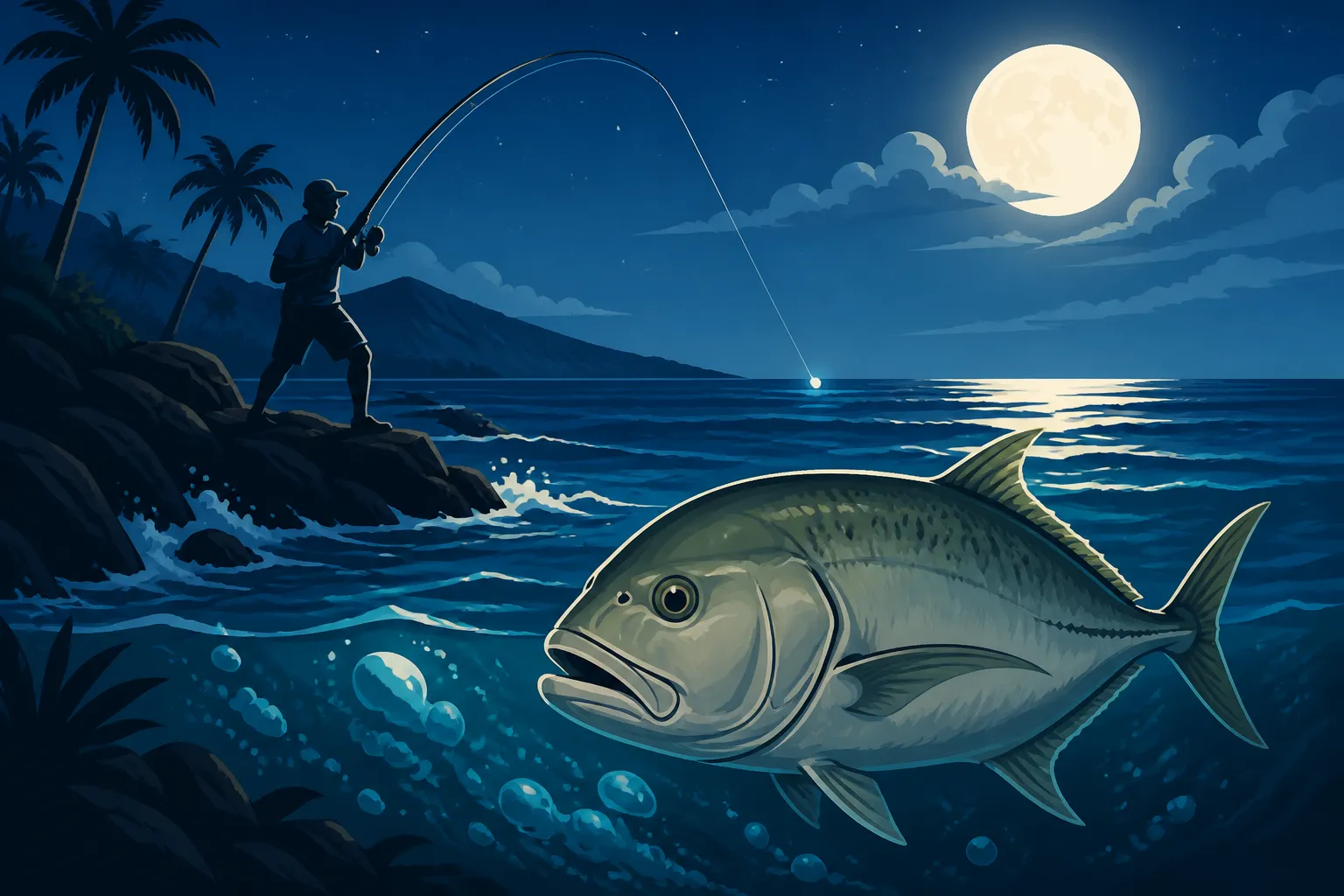
While any night can potentially yield an ulua, certain conditions drastically improve your odds. A new moon phase, or at least a minimal moon, is often preferred by seasoned ulua anglers. The darker the night, the more confident ulua tend to be in shallower water, relying on their keen lateral line and sense of smell to locate prey. Overcast nights can also provide similar advantages. Calm to moderate surf, especially a rising tide, can push baitfish closer to shore, creating a feeding frenzy that ulua will readily exploit. However, don't rule out fishing after a big surf swell has calmed down; the stirred-up water can dislodge crabs and other food sources, attracting ulua. Remember, timing is everything, and understanding the Best Time of Day to Catch Ulua really emphasizes the nocturnal hours for trophy specimens.
Key Characteristics of Prime Ulua Night Spots
Not all stretches of Hawaiian coastline are created equal when it comes to night fishing for ulua. Identifying a prime spot involves looking for specific geological and oceanographic features that attract these formidable fish after dark.
Deep Water Access and Structure
Ulua love structure. They use it for ambush points, shelter, and as navigation channels. At night, they’ll often patrol the edges of lava ledges, rocky points, and deep drop-offs that transition from shallow reef to deeper ocean. Spots where you can cast into relatively deep water directly from shore are gold. This deep access allows larger ulua to approach the shoreline without feeling too exposed. Look for areas with prominent rock formations, submerged boulders, or even old lava tubes. These features create currents and eddies that concentrate bait, making them ideal hunting grounds for ulua. Remember that Best Rocky Point Fishing Spots in Hawaii often double as prime ulua night spots.
Baitfish Presence and Current
No predator stays long in an area devoid of food. The presence of baitfish—whether schools of akule, opelu, or smaller reef fish—is a huge indicator of a good ulua spot. Ulua are constantly on the move, following these bait schools. At night, these smaller fish might seek refuge closer to shore or get disoriented by the darkness, making them easy targets. Strong currents, especially around points or channels, also play a vital role. They bring in fresh water, oxygen, and food, creating a dynamic environment that attracts both bait and predators. Ulua will often position themselves in current breaks, waiting for an easy meal to drift by. Knowing What ulua eat around Hawaii's reefs helps you understand why these bait-rich areas are so crucial.
Safety and Accessibility Considerations
While the thrill of chasing ulua at night is undeniable, safety must always be your top priority. Prime ulua spots are often rugged and remote, meaning they might have challenging terrain, sharp lava rock, and powerful waves. Before heading out, always scout the area during the day to understand the access points, potential hazards like rogue waves or slippery rock faces, and escape routes. Accessibility also means considering if you can safely carry all your gear to the spot. Some of the best spots might require a decent hike. Always fish with a buddy, especially at night, and inform someone of your plans. Bring a powerful headlamp or flashlight, not just for seeing, but also for signaling if needed.
Top Night Fishing Spots for Ulua Across Hawaii
Hawaii offers an abundance of potential ulua grounds, but some locations consistently produce better results at night due to their unique characteristics and reputation among local anglers.
Oahu's Productive Shorelines
Oahu, being the most populated island, offers numerous accessible yet productive night fishing locations for ulua. The west side, particularly around Kaena Point, is legendary. This rugged, wild coastline features deep drop-offs and strong currents, making it a hotspot for trophy ulua. The drive out there is a commitment, but the rewards can be monumental. Anglers often hike in to find their preferred ledges. Another fantastic option is the Makapu'u Point area on the east side. While busy during the day with sightseers, its rocky ledges and deep water access become prime for ulua after dark. Be mindful of the strong currents here.
Further south, Barbers Point on the southwest side provides excellent opportunities, especially around the harbor entrance and rocky outcrops. The industrial nature means less light pollution in some areas and deeper water access. Even closer to Honolulu, spots like Diamond Head Shore Fishing offer decent potential, especially for those looking for more convenient access, though these areas tend to be more pressured. Remember to do your research on Kaena Point Shore Fishing and Makapuu Point Fishing Access before you venture out, as these spots have specific characteristics that can make or break your trip. You might even find that The largest ulua ever caught off Oahu came from one of these very spots!
Big Island's Lava Coasts
The Big Island, with its vast stretches of raw, dramatic lava coastline, is arguably one of the best places in the world to target ulua from shore, especially at night. The sheer amount of undeveloped coastline means less pressure and more pristine habitats for large predators. South Point (Ka Lae), the southernmost tip of the U.S., is an iconic spot. Its sheer cliffs drop into incredibly deep water, providing direct access to migratory pelagics and, crucially, massive ulua that cruise the current-rich waters. However, fishing here is not for the faint of heart; strong winds and currents are common, and the terrain is unforgiving. Always be aware of your surroundings. Exploring South Point Ka Lae Fishing Spots will give you a better idea of the challenges and rewards.
Other promising areas include the rugged Kona Coast, especially away from the heavily developed areas. Look for remote lava flows with deep water close to shore. The Hamakua Coast on the northeast side also has potential, particularly around river mouths and rocky points, though access can be challenging due to steep cliffs and dense vegetation. These spots on the Big Island offer incredible solitude and the chance at a truly monstrous ulua.
Maui and Kauai's Hidden Gems
While Oahu and the Big Island often get the spotlight for shore-based ulua fishing, Maui and Kauai have their own hidden gems, especially for those willing to explore. On Maui, the coastline around La Perouse Bay on the south shore offers rugged, lava-strewn shores with good depth, making it a promising night spot for ulua. The remote nature means less human traffic, which can be a huge advantage. On Kauai, areas like Polihale State Park on the west side, with its vast stretches of beach and rocky outcroppings, can hold significant ulua, especially at night when they venture closer to the shore breaks. However, always check local regulations and access permissions, as some areas may have restrictions.
Even within more accessible areas, asking local tackle shop owners for advice on less-known, productive night spots can yield invaluable insights. Often, the best spots aren't widely advertised but are known only to a few dedicated anglers.
Essential Gear and Techniques for Night Ulua Fishing
Targeting ulua, especially the big ones, requires specialized gear and techniques adapted for the darkness and the power of these fish. You can't just show up with your light spinning rod and expect to land a monster GT.
Heavy Tackle and Robust Rigs
When pursuing ulua, going heavy is not just a suggestion, it's a necessity. A sturdy 10-12 foot heavy-action surf rod is standard, paired with a large, robust spinning reel (like a Shimano Saragosa or Penn Spinfisher VI) capable of holding at least 400-500 yards of 80-100 lb braided line. This setup provides the casting power needed to reach distant strike zones and the brute strength to stop a hard-fighting ulua from rocketing into structure. Your leader material should be 150-250 lb monofilament or fluorocarbon, long enough to handle the abrasive lava rock and the fish's powerful jaws. For a more detailed look, check out Best rod setup for surfcasting ulua and Best line for surfcasting from a rocky shore.
Rigs need to be equally robust. The sliding bait rig, often used with live bait or large chunks, is a favorite. This involves a heavy pyramid or bank sinker (4-8 ounces or more, depending on current) on a slider, above a heavy swivel, followed by a long, heavy leader (3-6 feet) terminating in a strong, sharp circle hook (10/0 to 20/0). This setup allows the bait to move naturally with the current, while the sliding sinker provides resistance for a solid hookset once the ulua takes the bait.
Bait and Lure Strategies After Dark
For night fishing, natural baits often outperform artificials for larger ulua. Live bait like akule, opelu, or even smaller reef fish are prime choices. If live bait isn't available, large chunks of fresh fish (such as bonito, skipjack, or even legal-sized invasive taape) or squid work exceptionally well. These baits give off a strong scent trail that ulua can easily detect in the dark. For the adventurous, a fresh octopus (tako) is also a phenomenal bait for trophy ulua.
While bait is king, some artificial lures can be effective, particularly large poppers or stickbaits retrieved aggressively across the surface or just below. These mimic injured baitfish and can draw explosive strikes. For casting heavy baits, a technique called "slide baiting" is popular. It involves casting a heavy sinker out, letting it settle, then attaching your baited leader to the main line with a specialized clip and sliding it down to the water. This allows you to present large baits far out without having to cast the bait itself, which can be unwieldy. Learn more about Best sliding bait rig for giant trevally for a deeper dive into this technique. For those who prefer the active retrieve, knowing How to fish a popper for giant trevally can be a game changer.
Safety First: Lighting and Companionship
Fishing at night in Hawaii's rugged terrain comes with inherent risks. Always, always bring multiple sources of light. A reliable headlamp with extra batteries is crucial, allowing you to keep your hands free. A powerful handheld flashlight is also essential for spotting distant waves or navigating tricky terrain. Tell someone exactly where you are going and when you expect to return. Better yet, never fish alone at night. The buddy system isn't just for kids; it's a life-saver, especially if you encounter an unexpected rogue wave, trip on uneven lava rock, or need help landing a massive ulua. A portable first-aid kit, plenty of water, and some snacks are also non-negotiable.
Local Knowledge and Best Practices for Ulua
Beyond the gear and spots, there's a wealth of local knowledge that can significantly enhance your night ulua fishing success. It's about understanding the nuances of the ocean and respecting the environment.
Understanding Tides and Moon Phases
Tides play an enormous role in ulua feeding behavior. A rising tide, particularly around a new moon or a dark phase, is often considered prime time. As the tide rises, it pushes water, baitfish, and dislodged crustaceans closer to shore, making them accessible to ulua. The change in water movement often triggers a feeding response. Conversely, a rapidly falling tide can sometimes turn off the bite. Pay attention to the tide charts for your specific fishing location. Combining a rising tide with minimal moon illumination significantly increases your chances of encountering a trophy fish. Many local anglers religiously follow the Best moon phase for ulua fishing for their night excursions.
Respecting the Aina (Land) and Other Anglers
Hawaii fishing is deeply rooted in respect—for the ocean, the land (aina), and fellow anglers. When you find a promising spot, be mindful of others who might also be there, or who might have fished it for generations. Share the space, keep your area clean, and leave no trace behind. Avoid shining bright lights directly at other anglers, as it can ruin their night vision and disrupt their fishing. If someone is already set up, maintain a respectful distance. Engaging in polite conversation with experienced locals can often lead to invaluable tips and insights, as long as you show genuine respect and a willingness to learn. Understanding the traditions and practices around fishing in Hawaii is just as important as knowing the best spots.
If you're new to the islands or specifically looking to learn from the best, considering a guided trip can be a fantastic option. Services like FishingBooker can help you connect with experienced local guides who specialize in night fishing for ulua, giving you a serious leg up. They often know the nuances of specific spots and conditions that only come with years on the water, greatly increasing your chances of success. They'll also ensure you're compliant with all Hawaii Fishing Regulations Explained before you even cast a line.
Conclusion
Night fishing for ulua in Hawaii is an experience unlike any other. It’s a pursuit that demands patience, powerful tackle, local knowledge, and an unwavering respect for the ocean. By focusing on areas with deep water access, abundant bait, and strategic structure, and by employing the right techniques under the veil of darkness, you dramatically increase your odds of connecting with one of Hawaii's most iconic and hard-fighting fish. Remember to prioritize safety, embrace the challenge, and soak in the unique beauty of the Hawaiian night sky, whether you're at Kaena Point on Oahu or the rugged coasts of the Big Island. With this knowledge, you're well-equipped to embark on your next thrilling quest for the mighty ulua after dark.
Disclaimer
Please be aware that fishing regulations in Hawaii, including bag limits, size restrictions, and closed seasons, are subject to change by the Hawaii Department of Land and Natural Resources (DLNR). Always consult the most current Hawaii Fishing Regulations Explained or contact the Division of Aquatic Resources (DAR) before heading out to ensure compliance. This guide is for informational purposes only and does not constitute legal advice. Adherence to all local, state, and federal laws is the responsibility of the angler.