Best Rocky Point Fishing Spots in Hawaii
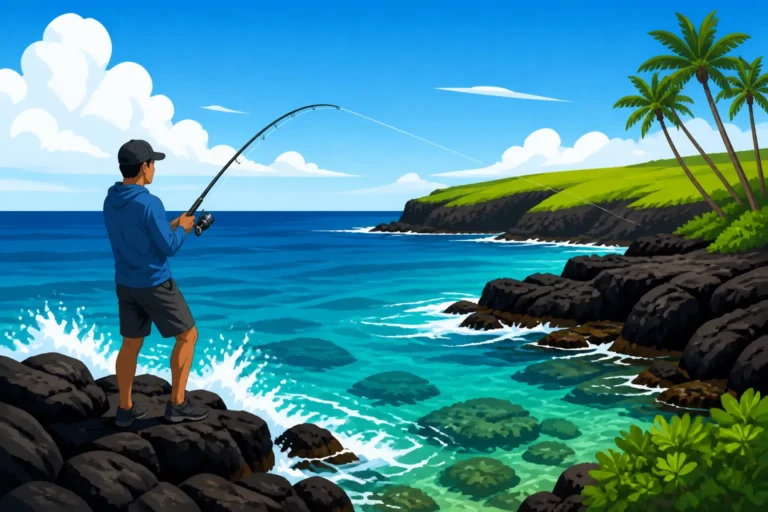
Standing on a rocky point in Hawaii, feeling the ocean spray on your face and the raw power of the Pacific swell, it’s easy to understand why these spots hold such a magnetic appeal for anglers. But finding the best rocky points that offer both incredible fishing and safe access can be a real head-scratcher, especially for those new to the islands or unfamiliar with the unique challenges these rugged coastlines present. This guide is here to demystify Hawaii's rocky point fishing, sharing the local knowledge you need to discover productive spots, understand the specific techniques required, and ensure you have a safe and respectful experience.
Why Rocky Points are Hawaii's Prime Fishing Real Estate
Rocky points aren't just scenic; they're ecological goldmines that concentrate fish and bait, making them irresistible to anglers. The convergence of currents, the shelter they offer, and the abundant food sources create a perfect storm for thriving marine life. It's not just about casting into deeper water; it's about understanding the intricate dance between structure, current, and species behavior.
The Ecosystem Advantage
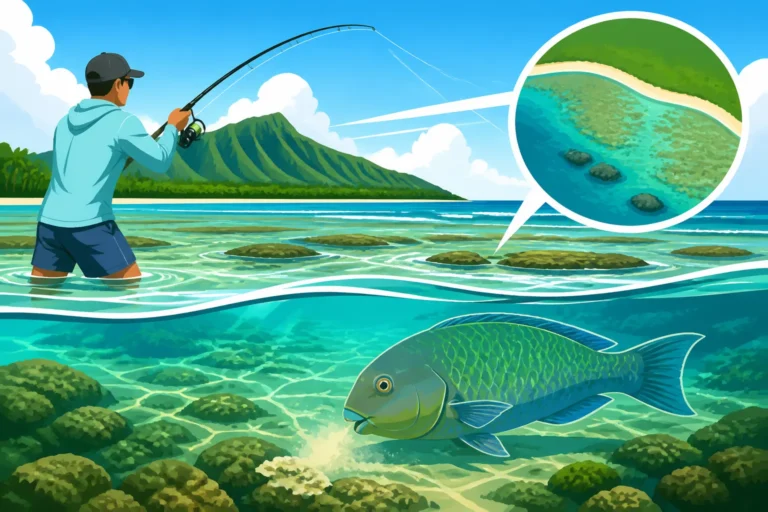
Hawaii's rocky coastlines are incredible habitats for a vast array of marine life, far more diverse than sandy beaches alone. The rugged lava rock and coral formations provide countless hiding spots for smaller reef fish like triggerfish, parrotfish, and goatfish. These areas also serve as nurseries for juvenile fish, attracting larger predatory species who know where to find an easy meal. This complex ecosystem creates a vibrant food chain, making rocky points a hub of activity.
Beyond the visible rocky structures, these points often extend underwater into intricate reef systems, ledges, and drop-offs. These submerged features further enhance the habitat, providing depth changes that concentrate fish. Imagine a mini-city of marine life, with different species occupying different "neighborhoods" – the shallow surge zone, the deeper ledges, and the sandy patches in between. This layered environment means you could be targeting reef species, pelagic species, or even bottomfish, all from one strategic location.
The constant wave action against these rocky shores also churns up nutrients and dislodges small invertebrates, creating a natural feeding frenzy. This upwelling brings food to the surface, attracting baitfish, which in turn draws in larger predators like ulua (giant trevally) and papio (trevally). It's this continuous supply of food and shelter that makes rocky points so consistently productive for a wide range of species.
Strategic Hunting Grounds for Pelagics and Reef Dwellers
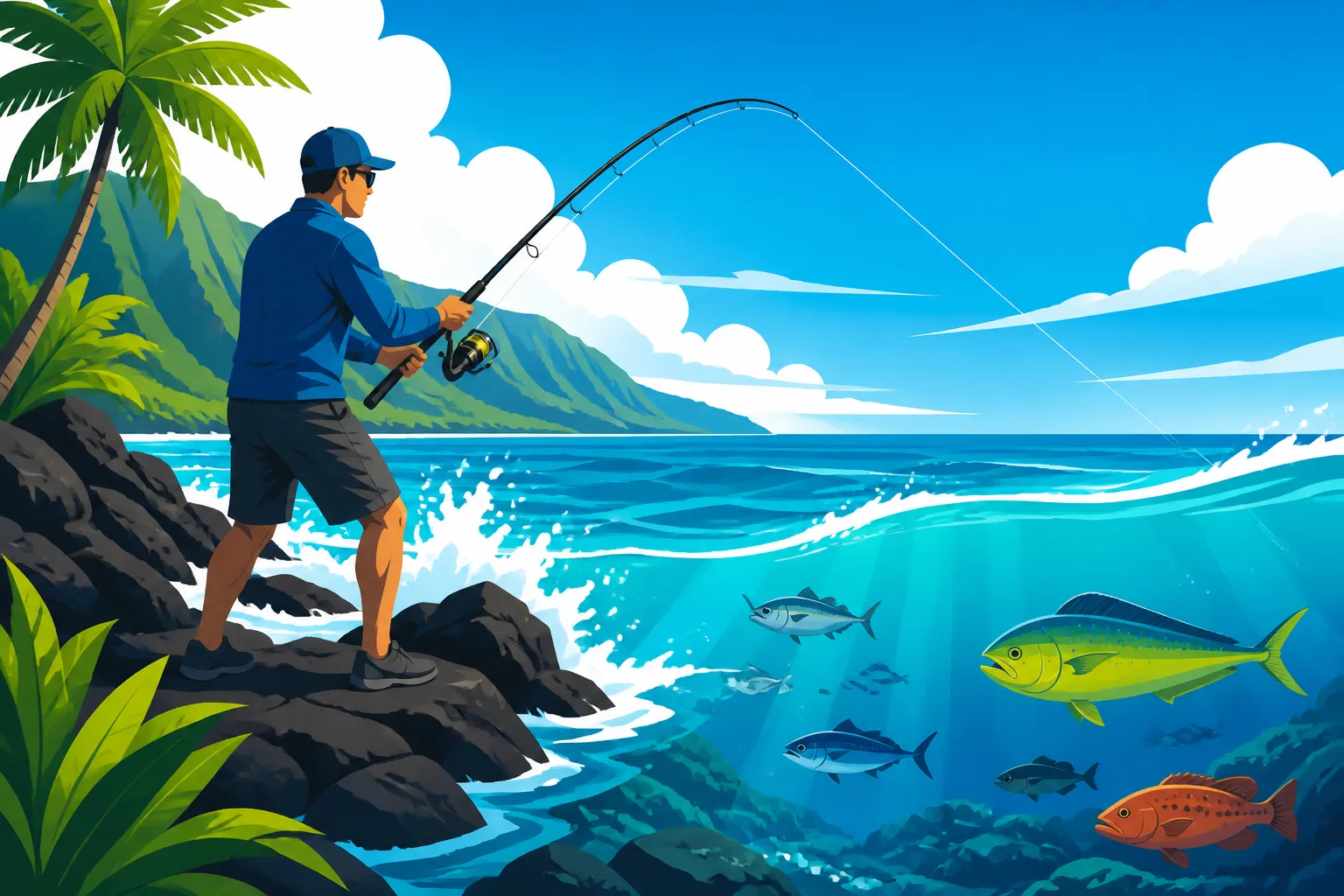
Rocky points act like natural fishing aggregators, creating ideal ambush points for predatory fish. The deep water often found just offshore, combined with the current lines that sweep past these protrusions, guides baitfish directly into striking zones. For anglers, this means a chance to target powerful pelagic species like omilu (bluefin trevally), kamanu (rainbow runner), and even smaller tuna species, right from the shore. These fish use the points as hunting lanes, patrolling for unsuspecting prey.
But it's not just about the big game. These areas are also fantastic for various reef dwellers. You might hook into a moi (Pacific threadfin), a prized eating fish that cruises the surf zone, or a kumu (goatfish) rooting around the sandy pockets between rocks. The diverse structure means you can switch tactics and target different species based on the time of day, tide, or even just your preference. For example, whipping light lures for papio can be incredibly effective here, especially during dawn and dusk. For specific regulations, always check the current Hawaii Bag and Size Limits by Species.
The dynamic nature of rocky points means that conditions can change rapidly, and with them, the species present. One day, you might be focused on bait-and-wait techniques for ulua, and the next, you could be casting artificials for schooling omilu. This versatility is what keeps anglers coming back, as there's always something new to learn and another challenge to conquer at these vibrant fishing grounds.
Accessibility and Unique Challenges
While rocky points offer fantastic fishing, they also come with a unique set of challenges compared to tranquil sandy beaches or calm harbor walls. The uneven, often slippery terrain demands careful footing, especially with heavy gear. Sharp lava rock can be brutal on fishing lines and leaders, leading to frustrating break-offs if you're not prepared. The powerful surge and unpredictable waves also require constant vigilance and respect for the ocean's raw power. Safety should always be your top priority when fishing these areas.
Access can range from relatively easy, paved paths to rugged, unmarked trails that require a significant hike. Some of the most productive spots are the least accessible, demanding a commitment to get there. It's crucial to scout a location during daylight hours, note escape routes, and understand the tides and swell patterns before venturing out, especially for night fishing. Remember, the ocean here is not a swimming pool. These areas often require specialized gear, from sturdy wading boots to longer, heavier rods designed to cast into strong winds and pull fish away from structure.
Despite these hurdles, the rewards can be immense. Landing a trophy fish from a rocky point, knowing the effort and skill it took to navigate the terrain and master the conditions, is an experience that resonates deeply with many Hawaiian anglers. It’s a testament to the fact that the best things in life often require a little more effort and respect.
Top Rocky Point Fishing Spots on Oahu
Oahu, with its bustling urban centers and wild coastlines, offers a fantastic array of rocky point fishing opportunities. From the rugged cliffs of the North Shore to the dramatic southern shores, there's a spot for every level of angler, each with its own character and species potential. Just remember that many of these locations are exposed to significant swells, so check the forecast before you go.
Kaena Point State Park
Nestled at the westernmost tip of Oahu, Kaena Point State Park is a truly wild and sacred place, offering some of the most remote and rewarding rocky point fishing on the island. The area is characterized by dramatic lava rock formations, strong currents, and deep water close to shore, making it a prime location for targeting larger pelagic species and powerful bottom dwellers. The sheer isolation means fewer crowds, but it also demands a higher level of preparation and self-sufficiency.
Anglers often make the long hike or bike ride along the unpaved road to reach the more distant points within the park. Once there, you can expect to encounter species like ulua, omilu, kamanu, and even sharks. The deep trenches and ledges provide excellent habitat, and the strong currents bring in a steady supply of baitfish. Sliding bait techniques are particularly popular here for ulua, especially during night fishing sessions. Be prepared for a long day or night, and always bring plenty of water, snacks, and a headlamp. For rules specific to this area, consult the Hawaii Fishing Regulations Explained.
The challenges at Kaena Point are significant: unpredictable surf, sharp rocks, and strong currents. It's not a place for beginners to venture alone. However, for experienced anglers seeking a true wilderness fishing experience and the chance at a trophy fish, Kaena Point is legendary. The views alone, particularly at sunrise or sunset, are worth the journey, and the feeling of hooking into a powerful fish with no urban lights in sight is unparalleled.
Makapuu Point
Makapuu Point, located on the southeastern tip of Oahu, is another iconic rocky fishing location, famous for its dramatic cliffs, strong currents, and breathtaking views of the Kaiwi Channel. While the main lighthouse trail is popular with hikers, the surrounding rocky shoreline and tide pools offer excellent opportunities for shore fishing. The point’s exposure to open ocean swells and deep water close to shore makes it a hotspot for pelagic species passing through.
Anglers here often target papio, omilu, and even smaller mahimahi or ono during certain seasons when they venture closer to shore. The turbulent waters around Makapuu churn up bait, making it an active feeding ground. Whipping with artificial lures or casting live bait into the deeper channels can be productive. Be mindful of slippery rocks and rogue waves, as this area can be very exposed. The wind can also be a significant factor, so bring appropriate gear and clothing.
Makapuu also offers incredible opportunities for sight fishing during calm conditions, where you might spot schools of baitfish being harassed by predators. It's a fantastic spot for those who enjoy the challenge of a dynamic shoreline and the possibility of a surprise encounter with a larger game fish. The proximity to Honolulu makes it more accessible than Kaena Point, but it requires no less respect for the powerful ocean conditions.
Diamond Head Shore Fishing
Iconic Diamond Head, rising majestically over Waikiki, isn't just a hiking destination; its rocky base and surrounding points offer surprisingly productive shore fishing opportunities for those willing to explore. While some areas are quite popular and can get crowded, other more secluded spots can yield excellent results. The key here is understanding the currents and the structure, as the underwater landscape is a mix of lava rock, coral, and sandy patches.
Anglers frequently target papio, omilu, and various reef fish species around Diamond Head. The unique topography creates current breaks and eddies that concentrate bait, attracting predators. Depending on the specific spot, you might be casting into deeper water or working the edges of reef flats. Popular techniques include whipping with small jigs or plastics, bait-and-wait with cut bait, or even using throw nets for baitfish like opelu and akule. For specific techniques, check out Shore Fishing Techniques for Hawaii.
The challenges at Diamond Head include navigating crowded areas, finding parking, and dealing with potentially strong currents and surge in certain spots. However, the convenience of its location, combined with the consistent presence of fish, makes it a perennial favorite for many local anglers. It’s an accessible spot where patience and observation often pay off, sometimes with a prized catch right in the shadow of one of Hawaii's most famous landmarks.
Premier Rocky Point Locations on the Big Island
The Big Island, Hawaii's largest and youngest island, boasts some of the most dramatic and diverse coastlines in the archipelago, perfect for rocky point fishing. From the windswept southern tip to the rugged Kona Coast, these spots offer unique challenges and incredible rewards, often with the added bonus of fewer crowds compared to more populated islands.
South Point Ka Lae
South Point (Ka Lae) on the Big Island isn't just the southernmost tip of the United States; it's a legendary fishing destination, revered for its incredibly deep water close to shore and powerful currents. This dramatic, windswept landscape features sheer cliffs from which anglers employ specialized techniques to target massive pelagic fish typically reserved for offshore boats. The raw, untamed nature of this spot makes it both exhilarating and demanding.
Here, anglers use "drop fishing" or "slide bait" techniques, lowering baits directly from the cliffs into the deep ocean currents below. This method can target enormous ulua, ahi (yellowfin tuna), ono (wahoo), and even marlin that patrol these nutrient-rich waters. The sheer size and power of the fish encountered here require heavy-duty gear, strong lines, and a healthy dose of patience and skill. The current at South Point is famously strong, a major factor in attracting and concentrating baitfish and predators.
Safety at South Point is paramount. The cliffs are steep, often slippery, and the powerful surge can be deceptive. Always stay well away from the edge, especially during high surf. Parking can be an issue at times, but the rugged beauty and the chance at a truly monstrous catch make the journey worthwhile for serious anglers. This is a place where legends are born, and the experience of fishing at the literal edge of America is unforgettable. For more details on this specific area, look up South Point Ka Lae Fishing Spots.
Honokohau Harbor Mouth
While Honokohau Harbor is primarily a hub for offshore charters out of Kailua-Kona, its rocky jetties and the surrounding points at the harbor mouth offer surprisingly excellent shore fishing opportunities. The confluence of open ocean water, deeper channels, and protective structures makes it a prime location for various species that cruise in and out of the harbor. It’s a more accessible rocky point option, often bustling with activity.
Anglers here can expect to catch papio, omilu, various types of trevally, and even smaller barracuda or snapper that congregate around the structures. The harbor mouth acts as a funnel for baitfish, attracting opportunistic predators. Techniques include whipping with small lures, bait-and-wait using cut bait or live bait, and even occasional jigging if you can reach deeper water. Early mornings and late evenings often prove most productive, as fish become more active during lower light conditions.
One of the main advantages of fishing here is the relatively easy access and proximity to amenities. However, it can also get crowded, especially on weekends. Be mindful of boat traffic when casting and always clean up after yourself. For those looking for a charter, many excellent boats depart from here, and you can compare options on FishingBooker if you're interested in heading offshore. It's a great spot to observe local fishing culture and potentially land a respectable catch without venturing too far off the beaten path.
Kohala Coastline Hotspots
The rugged and expansive Kohala Coast on the Big Island's northwestern side offers a multitude of rocky points and lava flows that are fantastic, though often challenging, for shore fishing. This coastline is generally less developed than Kona, providing more remote and untouched opportunities for adventurous anglers. The stark black lava rock landscape gives way to deep blue ocean, creating dramatic backdrops for fishing.
Throughout the Kohala Coast, from areas near Hapuna Beach to more secluded coves towards Hawi, you can find excellent spots for papio, omilu, dōru (snapper), and various reef fish. These areas are characterized by lava fingers extending into the ocean, creating channels and eddies that hold fish. Some spots might require a short hike over uneven terrain, rewarding those who put in the effort with solitude and potentially better fishing. Utilizing the low tide to scout for hidden channels and deeper pockets can significantly improve your chances here.
When fishing the Kohala Coast, be prepared for strong winds and sun exposure. A good pair of polarized sunglasses is essential for spotting fish or submerged structures. Fishing with sturdy tackle and fluorocarbon leaders is recommended due to the abrasive nature of the lava rock. Remember to pack out everything you pack in, preserving the pristine beauty of these remarkable fishing grounds.
Maui's Best Rocky Point Fishing Access
Maui, often called the "Valley Isle," might be famous for its beautiful beaches and luxurious resorts, but its less-traveled coastlines offer some incredible rocky point fishing. These spots, often formed by ancient lava flows, create diverse habitats that attract a wide variety of fish, providing exciting opportunities for shore anglers seeking a challenge and a rewarding catch.
La Perouse Bay
La Perouse Bay, located at the very end of the paved road on Maui’s south shore, marks the beginning of a truly wild and rugged coastline, defined by ancient lava flows. This area is a prime example of rocky point fishing at its finest, offering deep water access and a rich marine environment. The stark beauty of the black lava meeting the turquoise ocean is matched only by the diversity of fish found here.
Anglers venturing to La Perouse can expect to encounter papio, omilu, kamanu, and various reef species. The jagged lava formations create intricate underwater structure, providing excellent ambush points for predators. Techniques such as whipping with artificial lures, particularly poppers and stickbaits, can be highly effective, especially during low light hours. Bait fishing with cut bait or small live baits into deeper channels also yields good results. Always be aware of the strong currents that can sweep through the bay, especially near the points.
Access to the best fishing spots often involves hiking over uneven lava rock, so sturdy footwear is a must. The area is largely undeveloped, meaning no services are readily available, so come prepared with plenty of water, sunscreen, and whatever else you might need. The seclusion and the raw beauty of La Perouse, combined with its excellent fishing potential, make it a truly special place for serious shore anglers on Maui. For more information, read Where to shore fish at La Perouse Bay.
Honolua Bay Area
Honolua Bay, on Maui's northwest shore, is a Marine Life Conservation District (MLCD) and thus closed to fishing within its designated boundaries. However, the rocky points outside the MLCD on either side offer excellent and often overlooked fishing opportunities. These surrounding areas, defined by rocky cliffs and lava outcroppings, provide similar structures to those found within the protected bay, attracting a healthy population of fish. Understanding the boundaries of the MLCD is critical; review Hawaii Marine Life Conservation Districts Explained before heading out.
When fishing the points adjacent to Honolua Bay, anglers can target papio, omilu, various jacks, and bottomfish that cruise the deeper water or inhabit the rocky structures. The area's relative remoteness means less fishing pressure compared to more accessible spots. Whipping with jigs or plastics, or bait fishing with shrimp or cut squid, can be productive. The clear water here also lends itself well to sight fishing during calm conditions, allowing you to spot schools of fish or cruising predators.
Navigating the terrain around Honolua Bay requires caution, as the cliffs can be steep and the rocks slippery. Parking can also be limited, especially during peak tourist seasons. However, the pristine environment and the potential for a quality catch make these points a fantastic destination for respectful and prepared anglers. It's a reminder that sometimes, the best fishing spots are found just outside the most protected areas.
Nakalele Blowhole Coast
The rugged, wind-battered coastline around Nakalele Blowhole, on Maui’s northernmost tip, offers some truly wild and dramatic rocky point fishing. While the blowhole itself is a tourist attraction, the surrounding miles of sharp, ancient lava rock shoreline create an angler's paradise, albeit one that demands extreme caution and respect. This area is known for its powerful ocean surges and strong winds.
Anglers here target powerful ulua and omilu, as well as various reef fish that thrive in the turbulent, oxygen-rich waters. The deeply fissured lava rock creates countless holes and channels that concentrate bait and offer ambush points for predators. Techniques involve heavy-duty surfcasting rods for sliding live bait or chunk bait, or strong whipping setups for casting large poppers and stickbaits. The sheer power of the ocean here means your gear needs to be up to the task.
Safety cannot be overstated at Nakalele. Rogue waves are common and can sweep people off the rocks. Always maintain a safe distance from the water's edge, especially near the blowhole itself. The rocks are extremely sharp and slippery, so durable, spiked wading boots are highly recommended. While challenging, the rewards can be monumental, with the chance of landing a truly trophy-sized fish from a truly wild and majestic Hawaiian landscape.
Essential Gear and Techniques for Rocky Point Angling
Fishing Hawaii's rocky points isn't just about showing up with a rod and reel; it requires specialized gear and techniques adapted to the unique, often brutal, conditions. Forget your light freshwater setup – this is a battleground where strong currents, abrasive rocks, and powerful fish test every piece of your equipment.
Rods, Reels, and Line for the Rugged Coast
For most rocky point fishing in Hawaii, you'll want a heavy-duty setup that can handle both the environment and the fish. Forget finesse; think power. A surfcasting rod between 10 to 13 feet in length with a heavy or extra-heavy action is ideal. This length allows for long casts over the turbulent white water and provides the leverage needed to steer a strong fish away from sharp rocks. When it comes to the reel, a robust spinning reel in the 8000 to 14000 size range, or even larger, is usually preferred for its casting ability and drag power. For specific recommendations, check out Best rod setup for surfcasting ulua.
Your line choice is critical. Braided line is almost a necessity for its incredible strength-to-diameter ratio and lack of stretch, which helps detect subtle bites in heavy current. Think 50 to 100 lb test braid as your main line. However, braid is highly visible and susceptible to abrasion, so a substantial leader is crucial. A 6 to 10-foot section of 80 to 150 lb test fluorocarbon leader is not uncommon when targeting ulua or other powerful fish around sharp lava. This heavier leader provides shock absorption and significantly better abrasion resistance. Remember, your line is constantly rubbing against jagged rocks, so a sturdy setup is non-negotiable.
Don't forget the small but mighty details. Heavy-duty swivels, strong hooks (often 7/0 to 12/0 circle hooks for bait fishing), and robust snap swivels for attaching lures are essential. Skimping on terminal tackle is a surefire way to lose a fish of a lifetime. Always double-check your knots and replace any frayed line or weakened components before each outing. For deep water applications at places like South Point, you'll need specialized tackle and potentially even an electric reel setup.
Bait, Lures, and Rigs That Work
The choice of bait and lures at rocky points depends heavily on your target species and the prevailing conditions. For bottom dwellers and larger predators like ulua, fresh cut bait is king. Options like akule (mackerel scad), opelu (mackerel scad), moi, or even discarded fish heads from other catches can be incredibly effective. Live bait, such as small akule or opelu, fished on a sliding rig, can be irresistible to large ulua, especially during night fishing. Make sure to check the Hawaii Fishing Season Dates and Closures as well as Hawaii Freshwater Fishing License and Rules for specific regulations related to baitfish.
When it comes to lures, heavy-duty poppers, stickbaits, and metal jigs are excellent choices for covering water and targeting active predators like papio, omilu, and kamanu. Poppers create a disturbance on the surface that mimics a struggling baitfish, often provoking aggressive strikes. Stickbaits, retrieved with a walk-the-dog action, can entice wary fish. Heavy metal jigs are versatile; they can be cast and retrieved quickly through the water column or jigged vertically in deeper areas to imitate fleeing baitfish. Lure colors vary by preference and conditions, but natural baitfish patterns, white, chrome, and bright chartreuse are often productive.
Rigs also need to be adapted to the environment. For sliding bait, a heavy egg sinker (4-8 oz or more) slides on the main line, stopping at a barrel swivel tied to a heavy fluorocarbon leader and hook. This allows the bait to flutter naturally. For lure fishing, a simple knot to a robust snap swivel or directly to the leader is often sufficient. When fishing directly on the bottom, a "spider weight" or pyramid sinker might be needed to hold your bait in strong currents without rolling into snags. Always carry extra weights and hooks, as snags are an inevitable part of rocky point fishing.
Safety First: Navigating Treacherous Terrain
Fishing rocky points in Hawaii, while incredibly rewarding, carries inherent risks that demand a strong emphasis on safety. The terrain is often uneven, slippery, and sharp, with unexpected drops and unpredictable wave action. It's not a place to take shortcuts or ignore basic safety protocols. Prioritizing safety ensures you can enjoy your time on the water and return home to tell your stories.
First and foremost, never fish alone at an unfamiliar rocky point. Always go with a buddy or at least let someone know exactly where you are going and when you expect to return. Wear appropriate footwear, such as sturdy wading boots with felt soles or spikes, to provide traction on wet, mossy, or slippery rocks. Closed-toe shoes are essential to protect your feet from sharp lava rock and potential hook punctures. A personal floatation device (PFD) might seem excessive for shore fishing, but in areas with strong surges and deep water, it could be a life-saver if you're unexpectedly swept in.
Always keep a close eye on the ocean. "Sneaker waves" or rogue waves can appear without warning, even on calm days, and sweep anglers off the rocks. Watch the sets of waves for at least 15-20 minutes before approaching the water's edge to understand the rhythm and identify the largest waves. Never turn your back on the ocean. Also, be mindful of where you step, checking for unstable rocks or hidden crevices. A sturdy backpack that allows you to keep your hands free for climbing and balancing is invaluable. Carrying a fully charged cell phone (in a waterproof case), a first-aid kit, and plenty of water are also crucial. Remember, the ocean here is powerful and beautiful, but it demands your utmost respect.
Navigating Regulations and Ethical Practices at Rocky Points
Fishing in Hawaii, especially from sensitive rocky point ecosystems, comes with a responsibility to understand and adhere to local regulations and ethical practices. The goal is to ensure the health of the marine environment and maintain sustainable fishing opportunities for future generations. Ignoring these rules not only risks penalties but also harms the very resource we cherish.
Understanding Local Fishing Rules
Hawaii has a comprehensive set of fishing regulations designed to protect its unique marine life. Before you cast a line at any rocky point, it's essential to familiarize yourself with these rules. This includes understanding catch limits, minimum and maximum size limits for various species, and any seasonal closures. For example, specific species like moi and uhu have closed seasons to protect their spawning cycles. You can find detailed information by looking up topics like Hawaii Uhu (Parrotfish) Size and Bag Limits or Hawaii Moi Closed Season, Explained.
Beyond species-specific rules, be aware of any Marine Life Conservation Districts (MLCDs) or Fish Replenishment Areas (FRAs) that might encompass or border your chosen rocky point. Fishing within MLCDs is often strictly prohibited, while FRAs might have specific restrictions on gear or take. Ignorance of these boundaries is not a valid excuse, and penalties can be severe. It's highly recommended to consult the Hawaii DLNR Fishing Regulations PDF, often available online, for the most up-to-date information. If you're wondering about a general license, remember, Do You Need a Fishing License in Hawaii for freshwater, but generally not for marine recreational fishing unless specifically stated for certain activities.
Furthermore, some areas might have specific rules regarding bait collection, net fishing, or even the type of hooks allowed. Always check for posted signs at public access points, and if in doubt, err on the side of caution or seek clarification from the Hawaii Division of Aquatic Resources. Understanding these rules is a critical part of being a responsible angler and helps preserve Hawaii's precious marine resources.
Respecting the Aina and Other Anglers
Fishing in Hawaii is deeply intertwined with the concept of aina (land/that which feeds us) and malama ka 'aina (care for the land). This means not only adhering to regulations but also showing profound respect for the natural environment and fellow anglers. Rocky points, often beautiful and remote, are particularly vulnerable to misuse and neglect.
Practicing leave no trace is paramount. Pack out everything you pack in, and if you see litter left by others, consider taking it with you. Discarded fishing line, hooks, and plastic can be deadly to marine life and seabirds. Be mindful of the delicate ecosystems; avoid trampling sensitive vegetation, and step carefully on corals or tide pools if you must cross them. The land and ocean are gifts, and we are merely their temporary stewards.
Beyond the environment, showing courtesy to other anglers is vital. Rocky points can sometimes be limited in space, so be mindful of personal casting room, avoid cutting lines, and keep noise levels respectful. Local knowledge is often shared freely among polite and humble anglers, so approach locals with respect and a willingness to learn. If you're fishing near cultural sites or private property, be sure you understand Hawaii shoreline fishing rights and public access rules and always ask permission if you're unsure about access.
Best Practices for Catch and Release or Responsible Harvest
Whether you're practicing catch and release or harvesting fish for the table, doing so responsibly is a cornerstone of ethical angling, especially in sensitive rocky point environments. The choices we make as individuals have a collective impact on the health and sustainability of Hawaii's fish populations.
If you choose to harvest, only keep what you need, and always abide by the legal size and bag limits. Avoid high-grading (discarding smaller legal fish for larger ones) once you've reached your bag limit. Dispatch fish quickly and humanely. If you are targeting a meal, ensure you handle your catch properly to maintain its quality, ideally bleeding and icing it promptly. For certain species, like ulua and papio, local cultural practices sometimes dictate keeping larger fish as a sign of respect for the catch and the ocean's bounty, but always within legal limits. Find specifics on Hawaii papio minimum size limit and Hawaii ulua minimum size limit.
For catch and release, minimizing stress and injury to the fish is crucial. Use appropriate tackle to land fish quickly, avoid over-fighting them. Handle fish gently with wet hands, supporting their body weight. If possible, avoid removing the fish from the water entirely, especially for larger species. Use de-hooking tools for deeply hooked fish. If a fish is exhausted, hold it gently in the water, facing into the current, until it regains its strength and can swim away on its own. Releasing a fish effectively ensures it can thrive and reproduce, contributing to a healthy fishery for all.
Rocky Point Fishing Gear Essentials Table
To help you get ready for your next rocky point adventure, here's a quick reference guide for essential gear:
| Category | Item | Recommended Specs / Notes |
|---|---|---|
| Rods | Surf Rod | 10-13 ft, Heavy/Extra Heavy action. Fiberglass or high-modulus graphite for power and casting distance. |
| Reels | Spinning Reel | 8000-14000+ size. Durable, corrosion-resistant, with a smooth, powerful drag system. |
| Line | Main Line (Braid) | 50-100 lb test. Low stretch for sensitivity, high strength for power. High-visibility color can help track line. |
| Leader (Fluorocarbon) | 80-150 lb test, 6-10 ft length. High abrasion resistance, low visibility. | |
| Terminal Tackle | Hooks | 7/0-12/0 strong circle hooks for bait. Various sizes of J-hooks for lures. |
| Sinkers | 4-8 oz (or more) egg sinkers, pyramid sinkers, or spider weights. | |
| Swivels | Heavy-duty barrel swivels (200 lb+). Snap swivels for quick lure changes. | |
| Baits & Lures | Live/Cut Bait | Fresh akule, opelu, moi, squid, or fish chunks. |
| Lures | Heavy poppers, stickbaits (4-8 oz), metal jigs (3-6 oz). Natural baitfish colors, white, chrome. | |
| Safety & Comfort | Footwear | Sturdy wading boots with felt or spiked soles (e.g., Korkers, Simms). Closed-toe shoes. |
| Headlamp | Essential for night fishing or early morning/late evening excursions. | |
| Backpack | Durable, comfortable, to carry gear, water, and snacks, keeping hands free. | |
| First-Aid Kit | Basic supplies for cuts, scrapes, and punctures. | |
| Water/Hydration Pack | Critical for staying hydrated in Hawaii's heat, especially on long treks to remote spots. | |
| Sun Protection | Hat, polarized sunglasses (crucial for spotting structure), long-sleeved UPF shirt, sunscreen. | |
| Pliers/De-hooker | Essential for hook removal, cutting line. | |
| Knife | For cutting bait or line. | |
| Communication | Fully charged cell phone (in waterproof case), whistle for emergencies. |
Disclaimer
The information provided in this guide is for general informational purposes only. Fishing regulations and conditions in Hawaii can change frequently. Always consult the official Hawaii Department of Land and Natural Resources (DLNR) Division of Aquatic Resources (DAR) website or local authorities for the most current rules and safety advisories before embarking on any fishing trip. Safety should always be your top priority.