Best Techniques for Winter Bottomfishing
Winter in Hawaii might sound like an endless paradise, but for bottomfishermen, it brings a unique set of challenges. The idyllic calm of summer gives way to larger swells, stronger currents, and sometimes, a bit more reluctance from our deep-dwelling finned friends. This guide will walk you through the precise techniques, essential gear, and crucial local knowledge you need to successfully target Hawaii's prized bottomfish species when the trade winds blow colder and the ocean flexes its muscles.
Understanding Hawaii's Winter Bottomfishing Landscape
When the calendar flips to winter in Hawaii, the ocean environment undergoes subtle yet significant shifts that directly impact bottomfishing. While you might not experience blizzards, the changes are enough to warrant a different approach compared to the warmer, calmer months. It's not just about bundling up; it's about understanding the underwater world's rhythm.
Why Winter is Different for Bottomfish
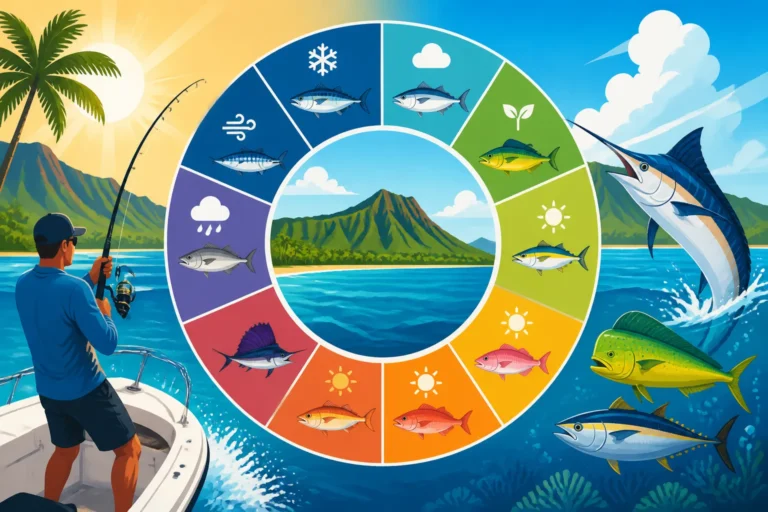
During Hawaii's winter months, roughly from November to March, we often see a noticeable drop in ocean temperatures, especially in the deeper waters where many of our target bottomfish reside. While this isn't a dramatic plummet like in temperate zones, even a few degrees can influence fish metabolism and movement patterns. Cooler water can sometimes make fish less active, more lethargic, and less inclined to chase baits aggressively. This means your bait presentation needs to be impeccable, and your patience, paramount.
Beyond temperature, winter often ushers in larger North Pacific swells. These swells, even if they don't directly affect deep water in terms of wave action, can stir up shallower waters, increasing turbidity and altering localized currents further offshore. Stronger currents, a common feature of winter, can make getting your bait down to the desired depth a real battle, requiring heavier sinkers and more precise boat handling. Access to certain fishing grounds might also be restricted by rougher conditions, forcing anglers to seek out more sheltered spots or wait for those precious calm days. The added challenge means that days when the weather does cooperate become even more valuable, and knowing how to capitalize on them is key.
Key Bottomfish Species to Target in Winter
Despite the challenges, winter remains a prime season for many of Hawaii's most sought-after bottomfish. These deep-water residents often remain in their typical habitats, but their feeding behavior might shift. Knowing which species are more likely to bite and where to find them is half the battle.
One of the most prized catches during winter is the Opakapaka (Pink Snapper). These beautiful fish tend to hold in depths ranging from 300 to 600 feet, often congregating around prominent underwater structures. They can be a bit finicky in colder water, so a subtle, enticing bait presentation is essential. Their smaller, softer mouths also mean a gentle touch on the retrieve. Another deep-water gem is the Onaga (Ruby Snapper), known for its vibrant red color and delicious flesh. Onaga typically inhabit even deeper waters, from 600 to 1200 feet, making them a true deep-drop specialty. They are often found on rocky bottoms, ledges, and steep drop-offs.
Other excellent winter targets include Ehu (Squirrelfish Snapper), which are usually found in the 300-900 foot range, and Gindai (Brindled Bass), often found in similar depths. These species can provide consistent action even when the more glamorous opakapaka or onaga are playing hard to get. Don't forget the magnificent Hapu'upu'u (Seabass or Grouper), which can be found in depths from 200 to over 1000 feet. These large, powerful fish offer an incredible fight and are highly prized for their meat. While all these species are generally present year-round, their concentrations and willingness to bite can fluctuate with the seasons. Targeting these species specifically with winter conditions in mind increases your chances of a successful outing. For a broader overview of these amazing creatures, check out our guide on Bottomfish Species of Hawaii.
Essential Gear and Rigging for Winter Success
Successfully tackling Hawaii's winter bottomfish requires more than just good luck; it demands specialized gear capable of handling deep water, strong currents, and powerful fish. Skimping on your tackle can lead to frustration, lost fish, and even dangerous situations. It's about confidence in your setup.
Rods, Reels, and Line for Deeper Water
When you're fishing in hundreds, or even over a thousand feet of water, your conventional inshore gear simply won't cut it. For bottomfishing in Hawaii, especially during winter when conditions can be tougher, you need robust, heavy-duty setups.
Rods: Look for rods that are typically 6 to 7.5 feet long with a strong backbone but a sensitive tip. This combination allows you to feel subtle bites from deep-water fish while still having the power to lift heavy sinkers and battle strong, deep-dwelling species. Many anglers prefer specialized deep-drop rods, often made of fiberglass or composite materials, designed to withstand the immense pressure of deep-water fishing. Brands like Shimano and Daiwa offer excellent options, but many local custom rod builders also create fantastic deep-drop sticks tailored for Hawaiian conditions.
Reels: This is where things get serious. For depths up to 600-800 feet, a high-quality conventional reel with a strong drag system and high line capacity is essential. Think something in the 50-80 class. For the really deep stuff, particularly for species like Onaga and Hapu'upu'u that can live beyond 1,000 feet, electric reels are not just a luxury but almost a necessity. Hauling up a 20-pound fish plus a 2-pound lead from 1,000 feet manually is an exhausting, time-consuming endeavor. Electric reels from reputable brands like Daiwa (e.g., Seaborg series) or Shimano (e.g., BeastMaster series) make the process manageable, allowing you to focus on fishing rather than just winding. You can often find a good selection of these heavy-duty reels and rods on online retailers like Amazon, making it easier to equip yourself for your next trip.
Line: Braided line is non-negotiable for deep-water bottomfishing. Its thin diameter, incredible strength, and zero stretch are critical for feeling bites and maintaining direct contact with your bait at extreme depths. For most deep-drop scenarios, 80-150 pound test braided line is common. The thinner diameter also helps cut through currents, reducing line belly and allowing your sinker to drop more vertically. While the main line is braid, you'll need a long leader of strong monofilament or fluorocarbon. A 50-100 foot section of 80-150 lb test fluorocarbon leader is typical. Fluorocarbon is nearly invisible underwater, more abrasion-resistant than mono, and has a bit of stretch, which acts as a shock absorber against powerful headshakes from deep-water fish.
Terminal Tackle and Rigging Strategies
The right terminal tackle and rigging can make all the difference, especially when you're targeting fish that might be less aggressive in colder winter waters. Every component needs to be robust and reliable.
Hooks: Circle hooks are the standard for bottomfishing in Hawaii, and for good reason. They are highly effective at hooking fish in the corner of the mouth, reducing gut-hooking and improving the chances of survival for released fish. This is critical for conservation and for staying within regulations. Look for strong, sharp, chemically sharpened circle hooks in sizes ranging from 8/0 to 14/0, depending on your target species and bait size. Ensure they are strong enough to handle large, powerful fish.
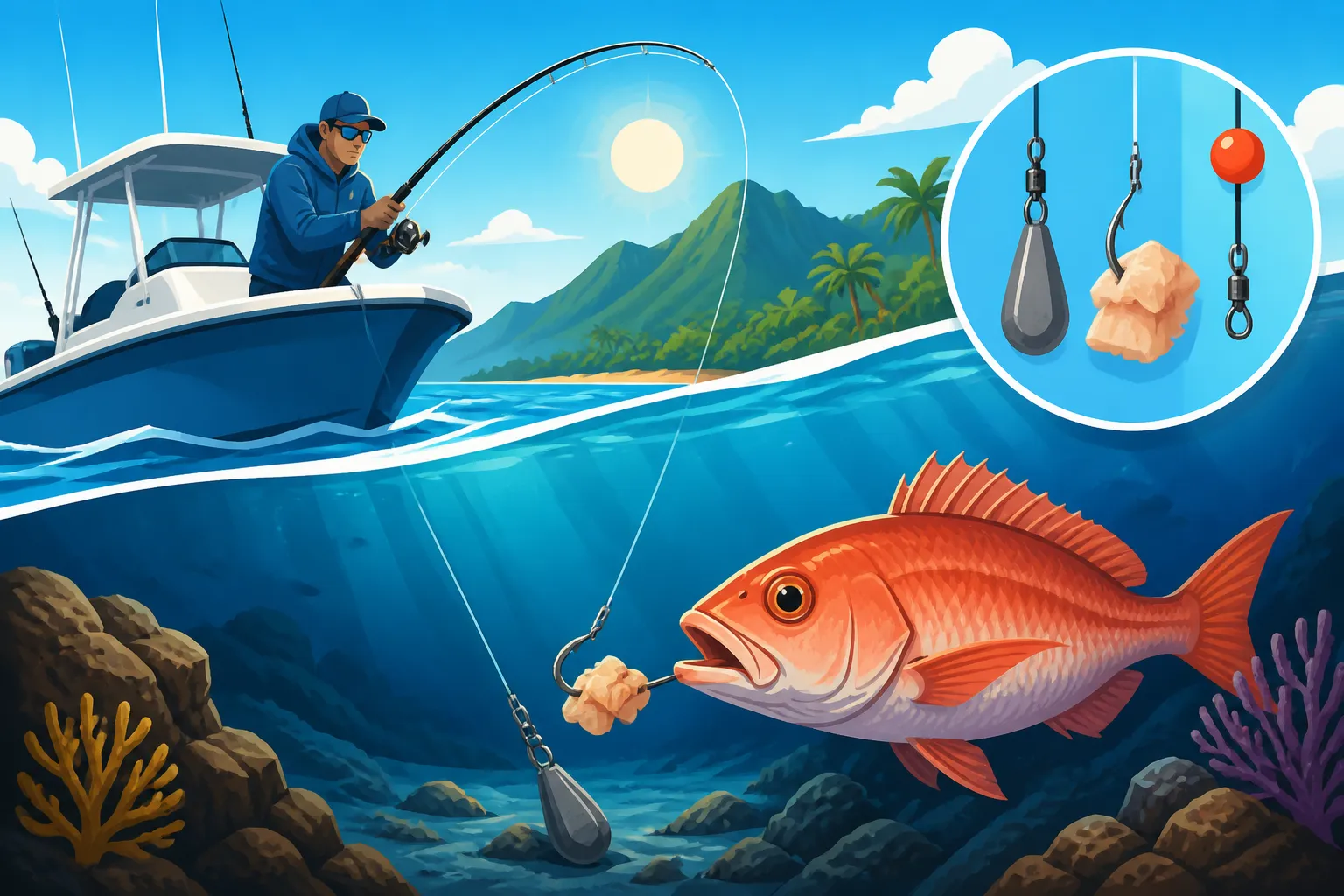
Sinkers: Getting your bait to the bottom, and keeping it there, against strong currents is paramount. This means heavy sinkers. Pyramid, torpedo, or egg sinkers weighing anywhere from 1 to 5 pounds, and sometimes even heavier (up to 10 pounds in extreme current), are common. The exact weight will depend heavily on the depth, current strength, and your line choice. Having a variety of weights on board is always a good idea. Using a sinker release clip or a lighter leader for the sinker can be a smart move; if your sinker gets snagged, you only lose the lead, not your entire rig and fish.
Rigging Strategies (The "Chicken Rig" and Beyond): The most common and effective rig for Hawaiian bottomfishing is often called a "chicken rig" or "dropper loop rig." This consists of a main leader (often 100-300 lb mono or fluorocarbon) with several dropper loops tied at intervals, each holding a snelled circle hook. A heavy sinker is attached to the very bottom.
- Standard Chicken Rig: You might have 2-4 hooks spaced 18-36 inches apart on a 10-20 foot leader. This allows you to present multiple baits at slightly different depths, increasing your chances of a bite.
- Deep Drop Rig (Snapper Style): For deeper applications, especially for Onaga or Opakapaka, you might use a more streamlined rig with fewer hooks (1-2) to minimize tangles and get to the bottom faster. The hooks are often snelled directly to heavy leader material with a swivel at the top and a snap swivel at the bottom for quick sinker changes.
- Light Tackle Bottom Rig: For shallower bottomfishing in winter, you might opt for a simpler, lighter setup. A 2-hook paternoster rig or even a single sliding sinker rig can work well for species like Menpachi or other reef-dwelling fish in 100-300 feet.
Always use high-quality swivels and snaps to prevent line twist and ensure secure connections. Swivels should be strong enough to handle the immense strain of deep-water fishing and the fight of a large fish.
Prime Winter Bottomfishing Techniques
Once you've got your gear dialed in, it's time to talk technique. Winter bottomfishing in Hawaii isn't just about dropping a line; it's about precision, patience, and understanding the subtle cues the ocean provides.
Mastering the Deep Drop Electric Reels vs Manual
The deep drop is the bread and butter of Hawaiian bottomfishing, and during winter, mastering it becomes even more critical. Getting your bait down to 600, 800, or even 1200 feet accurately and efficiently is a skill that takes practice.
For depths beyond 600 feet, electric reels truly shine. They allow you to conserve energy, especially if you're making multiple drops throughout the day or trying to keep up with fish moving on structure. With an electric reel, your technique focuses on precise bait presentation. Once your bait hits the bottom, you typically reel up a few feet, just enough to get off any snags, and then engage the reel's slow jigging function if it has one, or simply hold it steady. Watch for those subtle dips in the rod tip or changes in line tension. When a fish bites, the electric reel allows for a steady, consistent retrieve, which is crucial for fighting powerful fish from such depths. Some advanced electric reels even have automatic depth settings and fish-finding capabilities, making them incredibly efficient tools.
If you're opting for manual reels, usually for depths up to 600 feet or so, prepare for a workout. The technique involves a slow, controlled descent, ensuring your bait reaches the bottom without tangling. Once on the bottom, a gentle up-and-down jigging motion of a few feet can entice a bite. The real challenge comes with the retrieve. Manual winding requires significant arm strength and endurance, especially with a fish on. This is where a good fighting harness can become your best friend. Regardless of the reel type, always maintain a tight line. Slack line in deep water means missed bites and tangled rigs.
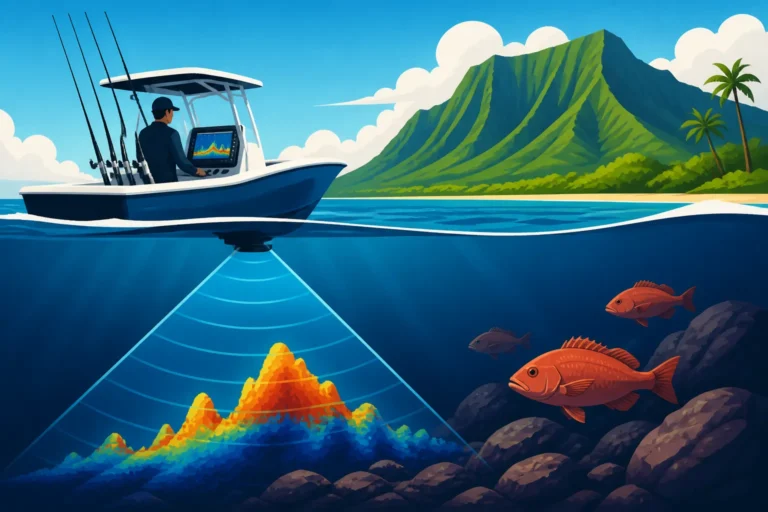
Using your boat's sonar is paramount here. Before you even drop a line, use your fish finder to locate ledges, pinnacles, or humps where bottomfish congregate. Look for "marks" on the screen that indicate fish. Once you've identified a promising spot, use your GPS to mark it, and then drop your line directly onto or slightly ahead of the structure, accounting for current drift. You'll often find that the best spots are relatively small, so precise boat positioning and drop accuracy are key. For more on this, check out our guide on Jigging for Bottomfish in Hawaii.
Drift Fishing and Anchoring Tactics
Deciding whether to drift or anchor is a crucial decision for winter bottomfishing, heavily influenced by current, wind, and the specific structure you're targeting.
Drift Fishing: This technique involves allowing your boat to be carried by the wind and current over a productive area. It's often preferred when you're exploring new ground, covering a wider area, or when fish are scattered. The challenge in winter is often stronger currents, which can make controlling your drift speed and direction difficult. To manage drift, you might use a sea anchor (drogue) to slow the boat down and stabilize its direction. A slow, controlled drift ensures your bait covers more ground, potentially encountering more fish. As you drift, constantly monitor your fish finder for structure and fish. If you get a bite or catch a fish, mark the spot on your GPS, and consider doing another drift over the same line. Drift fishing requires constant vigilance and adjustment, especially with strong winter winds pushing your boat faster than the current might be moving your bait.
Anchoring Tactics: Anchoring offers precision, allowing you to hold your boat directly over a known productive spot for an extended period. This is ideal when you've found a concentrated school of fish on a small piece of structure. However, anchoring in deep water with strong winter currents is no easy feat. You'll need a robust anchor setup, plenty of anchor line (typically 7:1 scope minimum for deep water, meaning 7 times the depth in line), and a good anchor buoy system for retrieval.
- Targeted Anchoring: Use your GPS and fish finder to pinpoint your desired spot. Calculate your drift and approach the spot from upcurrent, dropping anchor ahead of your target so the current pulls you back onto it. This takes practice and precise boat handling, especially with strong winter currents.
- Chumming from Anchor: Once anchored, a subtle chumming strategy can sometimes draw bottomfish closer. A weighted chum bag with small pieces of cut bait can be lowered to depth, slowly dispersing an scent trail. Be careful not to over-chum, which can fill up the fish.
When deciding between drifting and anchoring, consider the size of the structure. If it's a large, expansive reef, drifting might be more efficient. If it's a small pinnacle or ledge, anchoring gives you the best chance to saturate that specific zone with bait. Always be mindful of other boats and Hawaii's regulations regarding anchoring. For general rules, our guide on Hawaii Boating Laws for Anglers is a great resource.
Bait Selection and Presentation for Picky Winter Fish
Even the hungriest bottomfish can become a bit more selective in colder water. Your bait choice and how you present it are crucial for enticing a bite during winter.
Fresh is Best: This can't be stressed enough. Fresh, local bait is almost always superior to frozen, particularly for species like Opakapaka and Onaga. Local baitfish such as opelu or akule, or fresh squid, are prime choices. If fresh baitfish are hard to come by, good quality frozen squid is a reliable option, and it's readily available at most tackle shops and some grocery stores. You might even find good quality frozen squid from retailers like Amazon for convenience if you're stocking up for a trip.
Top Bait Choices for Winter Bottomfish:
- Squid: Universally effective. Cut squid into strips or chunks that are firm and stay on the hook well. The scent trail is strong, and it's a natural food source for many bottomfish.
- Cut Fish: Freshly caught small skipjack tuna (aku), mackerel scad (opelu), or even pieces of mahimahi or ono can be excellent. Cut them into strips or cubes, ensuring there's enough skin to keep them on the hook through the deep drop. The blood and oil content are great attractants.
- Live Bait: While challenging to acquire and maintain for deep drops, small live opelu or akule, if you can get them to the bottom alive, are irresistible. However, the pressure change at depth often kills them, so this is generally reserved for shallower bottomfishing (under 300 feet).
Bait Presentation:
- Smaller, Neater Baits: In winter, fish might be less inclined to chase large, messy baits. Opt for smaller, cleanly cut baits that fully conceal your hook. A clean presentation looks more natural and is easier for a lethargic fish to inhale.
- Securely Hooked: Ensure your bait is securely hooked, especially for deep drops. The long descent, strong currents, and pressure can easily strip a poorly hooked bait. Thread the hook through the bait multiple times, or use small bait ties.
- Scent is Key: Consider adding a bit of fish oil or a scent additive to your bait, especially if the bite is slow. The added aroma can help draw in fish that might not be actively foraging.
- Subtle Movement: Once your bait is on the bottom, subtle movements are often more effective than aggressive jigging. A slow, gentle lift and drop, or simply holding the rod steady, can be enough to trigger a bite.
For specific bait recommendations for the prized Onaga, be sure to check out Best Bait for Deep Drop Onaga Fishing.
Locating Fish in Challenging Winter Conditions
Winter in Hawaii throws a curveball at anglers. Stronger currents, bigger swells, and potentially less active fish mean that precise fish location is more critical than ever. It's not enough to just know where the fish generally are; you need to pinpoint their exact hideouts.
Reading Sonar and Interpreting Bottom Structure
Your fish finder is your eyes into the deep, and mastering its use is non-negotiable for successful winter bottomfishing. The ocean floor of Hawaii is a complex landscape of volcanic formations, and understanding how bottomfish relate to these features is key.
Identifying Key Structure: When you're scanning the bottom with your sonar, look for more than just a flat line. Bottomfish thrive around structure, which provides shelter, ambush points, and food sources.
- Ledges and Drop-offs: These are prime real estate. Look for sharp changes in depth. Fish will often hold along the edge of a ledge, just over the break, or even slightly under an overhang.
- Pinnacles and Humps: These isolated underwater mountains or mounds are magnets for fish. They disrupt currents, creating eddies where food concentrates. Fish will often stack up on the upcurrent side or directly on top.
- Rocky Outcroppings and Boulders: Irregular, hard bottom features offer excellent habitat. Your sonar might show a "hard return" or a more jagged bottom profile.
- Deep Water Ridges and Canyons: These larger-scale features can hold vast populations of bottomfish. Understanding the contours of these features allows you to target specific zones.
Interpreting Fish Marks: Your sonar will display "marks" that indicate fish. In deep water, these marks might appear as arches or simply blobs, depending on your transducer's cone angle and the fish's movement.
- Dense Clumps: A tight cluster of marks on or just above structure usually indicates a school of fish. This is where you want to drop your bait.
- Individual Marks: Even single, strong marks near structure can indicate a trophy-sized fish.
- Bait Schools: Sometimes you'll see clouds of smaller marks; these are often baitfish, and where there's bait, there are usually predators.
Pay attention to the depth of these marks relative to the bottom. Are they right on the structure? Or suspended a few feet above it? This tells you how to present your bait. Modern fish finders from brands like Garmin or Furuno offer incredible detail, allowing you to discern even subtle contours and fish signals. Investing time in learning your unit's capabilities will pay dividends. For more advanced tips, consider reading up on How to locate bottomfish structure with sonar.
Environmental Factors: Current, Tides, and Moon Phase
Nature's forces play an immense role in bottomfishing success, and in winter, their influence can be amplified. Ignoring these factors is akin to fishing blind.
Current: Winter often brings stronger, more unpredictable currents in Hawaiian waters. Strong current is your biggest enemy when trying to get bait to the bottom. It creates "line belly," making it hard to feel bites and increasing the risk of tangles.
- Current Direction and Speed: Constantly monitor the current. Use your GPS to see your boat's drift speed and direction, or deploy a weighted line with a float to observe subsurface current. This will help you decide on sinker weight and how to position your boat for your drop or drift.
- Current Breaks: Look for areas where structure creates a "current shadow" or an eddy. Fish will often hold in these calmer zones, conserving energy and waiting for food to be swept past.
Tides: While Hawaii's tides are relatively subtle compared to other regions, they still influence fish activity. Tidal changes can trigger feeding windows as currents shift, dislodging food or concentrating bait.
- Moving Water: Generally, moving water (incoming or outgoing tide) is better than slack tide for bottomfishing, as it stimulates feeding. The hour before and after a tide change can be particularly productive.
Moon Phase: Many experienced bottomfishermen swear by the moon phase, believing it affects deep-water fish activity.
- New Moon and Full Moon: These phases bring stronger tidal currents (spring tides), which can sometimes make fishing challenging due to heavy lead requirements, but also potentially more active feeding frenzies as fish take advantage of concentrated food.
- Quarter Moons: Intermediate currents (neap tides) can offer more manageable conditions.
There's no single "best" moon phase, but understanding how it influences currents and fish behavior allows you to adapt. For more on how water temperature specifically affects bottomfish, check out Best water temperature for bottomfishing.
Understanding Weather Patterns and Safety
Winter weather in Hawaii is generally pleasant, but it can be more volatile than summer. Stronger winds, larger swells, and occasional cold fronts demand respect and careful planning.
Wind and Swell: Northerly swells generated by distant storms in the North Pacific are common in winter. These can make offshore conditions rough, particularly on exposed coasts. Strong trade winds can also whip up local chop.
- Forecast Vigilance: Always check multiple marine weather forecasts (e.g., National Weather Service, NOAA) before heading out. Pay attention to wind speed, wave height, and swell direction and period.
- Choosing Your Day: Sometimes, the best technique is to wait for a calm window. Fishing in rough seas is not only uncomfortable and unproductive but also dangerous.
- Sheltered Waters: If offshore conditions are too rough, consider fishing more sheltered leeward coasts or bays, if applicable, though true deep-water bottomfishing is generally an offshore pursuit. For extreme conditions, it's safer to avoid the water altogether; our guide on When Hawaii's ocean waters get too rough to shore fish provides more perspective.
Cold Fronts (Hawaii Style): While not like mainland cold fronts, passing winter fronts in Hawaii can bring increased rain, cooler temperatures, and stronger winds. These changes can temporarily shut down a bite or make conditions too difficult. Give the fish a day or two to settle after a significant weather change. Always prioritize safety. Ensure your boat is well-maintained, and you have all required safety equipment, including life jackets and communication devices.
Conservation and Responsible Winter Bottomfishing
As stewards of Hawaii's precious marine resources, practicing responsible fishing is not just a good idea; it's essential for the long-term health of our fisheries. This is especially true when targeting deep-water species.
Barotrauma Mitigation and Release Strategies
Catching fish from deep water, often 300 feet or more, presents a unique challenge: barotrauma. This occurs when fish are brought to the surface quickly, and the rapid change in pressure causes their swim bladder to expand. Symptoms include bulging eyes, stomach protruding from the mouth, and an inability to swim back down. Releasing a fish suffering from severe barotrauma without intervention often means it won't survive.
Venting Tools: A venting tool is a hollow, sharp needle designed to deflate the swim bladder.
- Proper Technique: Insert the tool at an angle, just behind the pectoral fin and a few scales above the lateral line, into the distended swim bladder. You'll hear a release of gas. The goal is to release the gas, not puncture other organs. Only perform this if you are confident and trained; improper venting can cause more harm.
- Benefits: Venting allows the fish to swim back down to depth, where the pressure will re-equalize, significantly improving its chances of survival.
Descent Devices: These tools, sometimes called "recompression tools" or "fish descenders," are a less invasive and often more effective option for releasing fish with barotrauma.
- How They Work: A descent device attaches to the fish's jaw or lip (often with a clamp or hook) and has a weight that rapidly carries the fish back to its original capture depth. Once at depth, a release mechanism (either manually triggered or pressure-activated) detaches the fish.
- Why They're Preferred: Descent devices minimize handling stress, ensure the fish returns to the correct depth, and avoid internal injury that can sometimes occur with venting.
- Types: Popular models include the SeaQualizer or various DIY weighted clamp systems. Many are available for purchase online, even on Amazon.
Always have one of these tools on board when deep-water bottomfishing. If you're going to release a fish, give it the best possible chance of survival. Even if you plan to keep everything, sometimes an unexpected small fish or a non-target species comes up from the deep. Knowing how to properly release them is part of being a responsible angler.
Adhering to Hawaii's Regulations
Hawaii's fishing regulations are designed to protect our precious marine resources and ensure sustainable fishing for future generations. These rules can be complex and change, so it's your responsibility to stay informed.
Bag and Size Limits: Most bottomfish species have specific bag limits (how many you can keep per day) and size limits (minimum and sometimes maximum lengths). These vary by species. For example, Opakapaka might have a specific size limit and a daily bag limit per person. It's critical to know these numbers for every species you might encounter. Ignorance is no excuse, and penalties for violations can be steep. You can find detailed information in our guide on Hawaii Bag and Size Limits by Species.
Protected Species and Closed Seasons: Certain species may be protected, have closed seasons, or be completely off-limits to harvest. Always be aware of these. For instance, some species might have a reproductive season when they are protected. Additionally, certain areas might be designated as Marine Life Conservation Districts (MLCDs) or Fish Replenishment Areas (FRAs), where fishing is highly restricted or prohibited. Always double-check your fishing location against these protected zones.
Source of Information: The Hawaii Department of Land and Natural Resources (DLNR) Division of Aquatic Resources (DAR) is the primary authority for all fishing regulations. Their website is a treasure trove of information. It's wise to download the latest regulations booklet or fact sheets before each fishing trip, as rules can be updated. Our comprehensive guide Hawaii Fishing Regulations Explained can also help you navigate these rules. If you ever have questions or need clarification, don't hesitate to contact the DAR directly. Their customer service phone number can usually be found on their website, or you can check our guide for Hawaii Division of Aquatic Resources customer service phone number.
Table: Common Winter Bottomfish Species Overview
| Species (Local Name) | Scientific Name | Typical Winter Depth Range | Preferred Bait | Average Size (Winter) | Bag & Size Limits (Check Current Regs!) |
|---|---|---|---|---|---|
| Opakapaka (Pink Snapper) | Pristipomoides filamentosus | 300 – 600 ft | Squid, cut fish (opelu/aku) | 5-15 lbs | Varies (e.g., 2 lbs min weight, 7 fish bag) |
| Onaga (Ruby Snapper) | Etelis coruscans | 600 – 1200 ft | Squid, cut fish | 10-30 lbs | Varies (e.g., 10 lbs min weight) |
| Ehu (Squirrelfish Snapper) | Etelis carbunculus | 300 – 900 ft | Squid, cut fish | 3-10 lbs | Varies (e.g., 10 lbs min weight) |
| Hapu'upu'u (Seabass) | Hyporthodus quernus | 200 – 1000+ ft | Live/cut bait, whole squid | 10-50+ lbs | Varies (e.g., 2 fish bag limit) |
| Gindai (Brindled Bass) | Pristipomoides zonatus | 300 – 800 ft | Squid, cut fish | 2-8 lbs | Varies (e.g., 1 lb min weight) |
Note: Bag and size limits are subject to change by the DLNR. Always consult the most current Hawaii Fishing Regulations prior to your trip.
Seasonal Shifts and Maximizing Your Chances
Successfully targeting bottomfish in Hawaii during winter isn't just about applying techniques; it's about keenly observing and adapting to the subtle seasonal changes that influence fish behavior and location. The ocean is a dynamic environment, and the best anglers are those who can read its nuances.
Transitioning from Fall to Winter Patterns
As Hawaii transitions from the warmer, often calmer conditions of fall into the cooler, potentially rougher winter months, you'll likely notice subtle shifts in fish behavior. What worked perfectly in September might need a tweak by December.
In late fall, bottomfish might still be quite active, feeding aggressively in a wider range of depths. As winter progresses, and water temperatures in the deeper zones cool even slightly, their metabolism can slow down. This means they might become less willing to move far for food and could congregate in slightly different areas. For example, some species might seek out deeper, more stable thermal layers or move to structure that offers better protection from stronger currents. You might find that fish that were active on top of a seamount in fall are now holding tighter to the ledges or even slightly deeper in the surrounding troughs during winter.
The key to navigating this transition is flexibility and observation. Don't be afraid to experiment with different depths, even if it's just a 50-foot difference up or down from your usual marks. Pay close attention to your fish finder for subtle changes in where fish are marking on structure. Are they spread out, or are they tightly schooled? Tightly schooled fish often indicate a more lethargic bite or a more concentrated feeding opportunity. Using smaller, more enticing bait presentations, as discussed earlier, also becomes more crucial as fish become less aggressive. It's about thinking like the fish and anticipating their needs in a slightly different environment.
The Best Times for Winter Bottomfishing
While winter can present its challenges, there are absolutely optimal windows to maximize your chances of success. It’s all about timing your trips with the most favorable conditions.
Calm Weather Windows: This is, hands down, the most critical factor. Winter fronts and larger swells can make offshore bottomfishing impossible or at least highly unproductive. Keep a close eye on marine forecasts and plan your trips around those precious calm days or even just calm mornings. A day with light winds and minimal swell will allow you to hold your boat more effectively over structure, get your bait down vertically, and feel those often subtle deep-water bites. Sometimes, these calm windows are short-lived, so being ready to launch at first light and make the most of those early hours is key.
Tide Cycles and Current: As mentioned, moving water often triggers a better bite. For winter bottomfishing, the hours around an incoming or outgoing tide change can be particularly productive. The shifting currents can dislodge food, making it easier for bottomfish to forage. However, extremely strong currents can make it difficult to fish effectively. Look for the sweet spot: enough current to stimulate feeding, but not so much that you can't get your lead to the bottom or feel a bite. This might mean fishing the weaker parts of the tide cycle if the full push is too strong.
Dawn and Dusk: While deep-water bottomfish aren't typically influenced by surface light as much as pelagics, the low light periods of dawn and dusk can often coincide with increased feeding activity. The transition periods can trigger a bite for many species, even those in the depths. Early morning is also often the calmest time of day in Hawaii, offering a double advantage during winter. Plan your trips to be on your chosen fishing grounds as the sun begins to rise. While the ocean temperatures might be cooler, understanding and adapting to these seasonal shifts will put you miles ahead in your pursuit of Hawaii's magnificent winter bottomfish.
Disclaimer
The information provided in this guide is for general informational purposes only. Fishing regulations in Hawaii are subject to change. Always consult the latest rules and regulations from the Hawaii Department of Land and Natural Resources (DLNR) Division of Aquatic Resources (DAR) before engaging in any fishing activities. Ensure you have all necessary licenses and comply with all bag limits, size restrictions, and gear requirements. Safety should always be your top priority when on the water.