Float Fishing for Moi from Shore
Oh, the elusive moi! If you've ever spent hours by Hawaii's beautiful shoreline, patiently waiting for that tell-tale tug, only to come up empty-handed while knowing moi are swimming just beyond your reach, you're not alone. These prized fish, with their delicate flavor and spirited fight, often hug specific bottom structures or hang out in subtle pockets of water that conventional casting struggles to reach. This comprehensive guide is here to unravel those frustrations, diving deep into the art of float fishing for moi directly from the shore, equipping you with the strategies to consistently find and land these magnificent catches.
Understanding Moi Behavior for Successful Float Fishing
To truly master float fishing for moi, you first need to think like a moi. These aren't just any fish; they have distinct preferences for habitat and feeding patterns that, once understood, can drastically improve your chances of success. It's about being in the right place at the right time with the right presentation.
Where Moi Like to Hang Out Near Shore
Moi, also known as Pacific threadfin, are fascinating creatures. They thrive in specific nearshore environments where they can find both food and shelter. You’ll often discover them schooling over sandy bottoms that are adjacent to rocky outcrops, reefs, or even man-made structures like jetties and breakwaters. Why these spots? The sandy areas are prime foraging grounds for small invertebrates and crustaceans, while the nearby structure offers protection from predators and provides a place to rest during strong currents. Calm bays, especially those with some gentle current flow, and the mouths of estuaries where freshwater meets saltwater are also favored hangouts. They appreciate a bit of churn in the water, as it dislodges food, but they won't typically be found in heavy surf where they might get tossed around. Thinking about where the surf meets a deeper, calmer channel or a sandy pocket shielded by rocks – that's often where the magic happens. The beauty of float fishing is its ability to present bait naturally into these subtle zones without spooking the fish.
Seasonal and Tidal Influences on Moi Activity
Just like us, moi have their routines, and these routines are heavily influenced by the seasons and tides. Knowing when and where they're most active can turn a slow day into a banner one. For instance, understanding the nuances of the Moi Spawning Season in Hawaii is crucial. During their spawning period, which typically occurs from May through August, adult moi move into shallower waters to reproduce. This makes them more accessible to shore anglers, but also makes responsible fishing practices even more important to ensure their populations thrive for future generations.
Beyond the annual cycle, daily tidal shifts play an enormous role. Moi are often most active during the incoming or outgoing tides, especially when the water is moving, but not too violently. This movement stirs up the bottom, making food more available. Many seasoned moi anglers swear by the "pupping" tides, which are the smaller tidal swings that occur during neap tides, as these can create a more predictable and less turbulent environment where moi feel comfortable feeding. Slack tide, when the water is completely still, can sometimes be slow, but it can also be an excellent time to target them if they're holding tight to structure and feeling less pressured by current. Observing the moon phase can also provide clues: full and new moons typically bring the strongest tidal currents, which might push moi into more protected areas, while quarter moons offer more moderate movements.
Essential Gear for Shoreline Moi Float Fishing
When you're trying to outsmart a moi from the shore, having the right tools for the job isn't just helpful – it's absolutely critical. These fish have delicate mouths and a subtle bite, demanding gear that’s sensitive, strong enough to handle a surprise run, and capable of presenting your bait perfectly.
Rods, Reels, and Lines Perfect for Moi
The foundation of your moi float fishing setup starts with your rod and reel. For optimal success, you’ll want a light to medium-light action spinning rod, typically in the 7 to 9-foot range. This length provides the necessary casting distance to reach those offshore sand pockets and channels, while the lighter action offers the sensitivity required to detect even the slightest tap from a moi. A rod with a fast or moderate-fast tip will give you the backbone to set the hook effectively without overpowering the fish. When it comes to picking out the right rod and reel, you'll find a massive selection on places like Amazon, where you can read reviews and compare specs to find a combo that fits your budget and style.
Pair your rod with a reliable spinning reel in the 2500 to 3000 size. Look for a reel with a smooth, consistent drag system, as moi can put up a surprising fight, especially larger ones. You'll want to be able to tire them out without putting too much strain on your light tackle.
For line, the choice can make a real difference. Many anglers prefer a braided mainline, usually 10-15 lb test, because of its superior sensitivity and minimal stretch. This allows you to feel those subtle bites and transmit even the slightest movement of your float. However, braid can be more visible in clear Hawaiian waters, so a fluorocarbon leader is almost always a must. A 6-10 lb fluorocarbon leader, which is nearly invisible underwater, provides that crucial stealth. Alternatively, some purists prefer monofilament mainline for its stretch and knot-friendliness, typically in the 8-12 lb range, coupled with a fluorocarbon leader. Ultimately, the goal is stealth and sensitivity.
Selecting the Right Floats and Weights
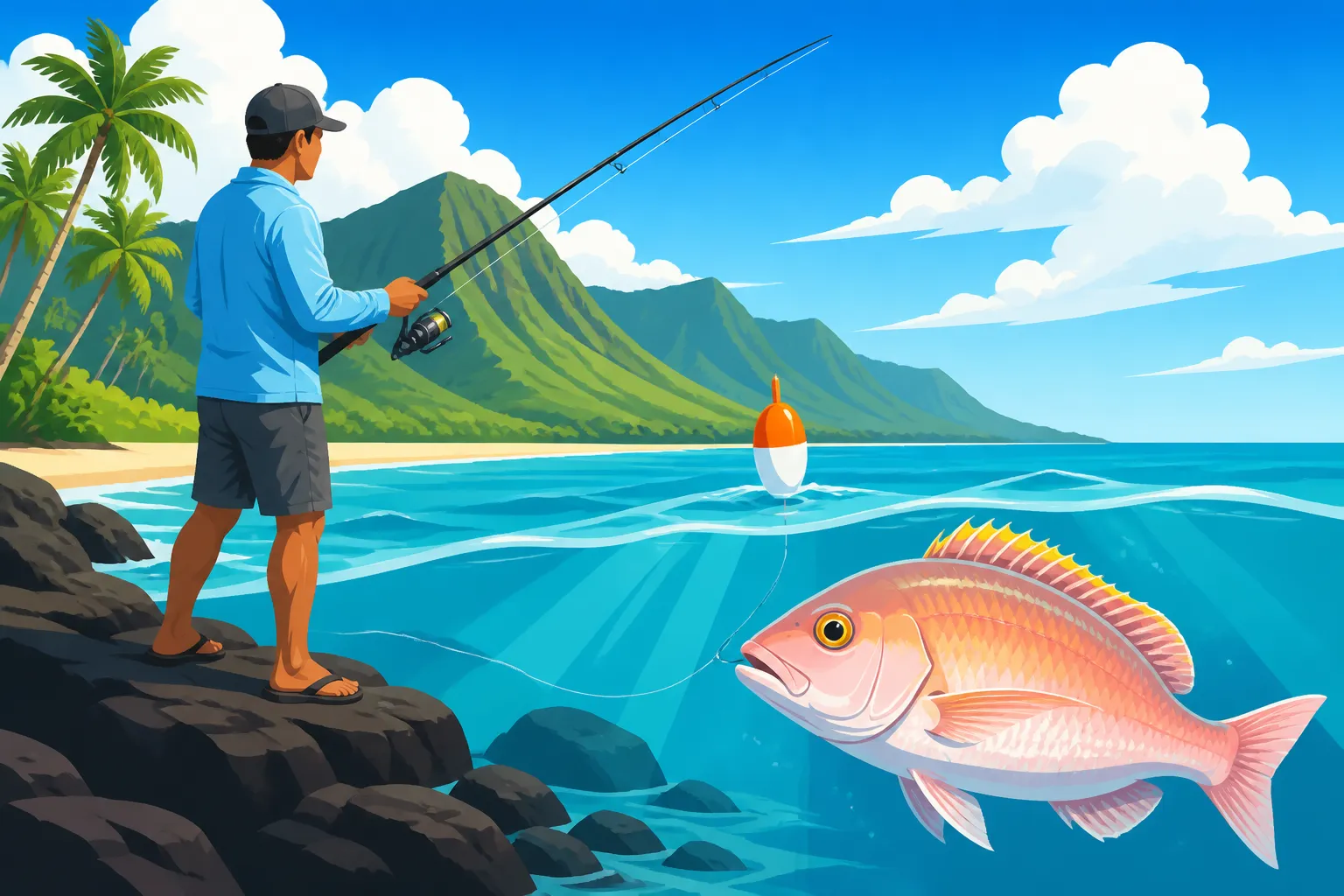
The float is your eye on the water, the messenger telling you a moi is interested. Choosing the right one is paramount. For general moi float fishing, you'll primarily be looking at two types: slip floats and fixed floats.
Slip floats are incredibly versatile, especially when you need to fish at varying depths or in deeper water. They "slip" up and down your mainline, stopped by a small knot or stopper you can adjust. This means you can easily change your bait's depth with just a slide of the stopper. They're excellent for targeting moi that might be holding a few feet off the bottom in deeper channels or near drop-offs.
Fixed floats, on the other hand, are clipped or attached firmly to your line at a set depth. These are ideal for shallower water, typically less than 6-8 feet, or when you know the exact depth where the moi are feeding. They tend to be a bit more stable in slight chop.
Regardless of type, look for floats that are sensitive enough to indicate a light bite but also visible enough for you to track in the water. Brightly colored floats, like red, orange, or chartreuse, are common choices.
Weight distribution is also key to a natural bait presentation. Moi are wary, and a bait that sinks unnaturally fast or is pulled by a heavy weight will often be ignored. Use just enough weight – usually small split shots or tiny egg sinkers – to cock your float properly and get your bait down to the desired depth. The goal is a slow, natural descent that mimics a piece of food drifting in the current. This subtle presentation, which a well-balanced float rig provides, is often the difference between success and a frustrating day. You can find a good variety of these components, from specialized floats to various split shot sizes, through online retailers.
Hook Choices and Bait Presentation
Moi have relatively small, delicate mouths, which means your hook choice needs to reflect that. You'll want to opt for small, sharp hooks, typically in sizes ranging from #6 down to #2. The exact size will depend on your bait, but the smaller end of that spectrum is often preferred for presentation and to avoid gut-hooking. Many anglers swear by light-wire circle hooks for moi, as they tend to hook the fish in the corner of the mouth, minimizing harm and making for an easier release, especially for undersized fish. Treble hooks are generally discouraged due to the potential for injury.
Now, for the bait itself. Moi are not overly picky, but they do have favorites. Limu (seaweed), particularly a fine, bushy variety, is a traditional and highly effective bait. Small pieces of fresh shrimp (shelled or unshelled), tiny chunks of squid, small crabs, or strips of a local baitfish like opelu or akule can also work wonders. The key, no matter what bait you choose, is presentation. You want the bait to look as natural as possible, drifting effortlessly in the current, almost weightless. Threading a small piece of shrimp onto a hook, ensuring the hook point is exposed, can make all the difference. For limu, creating a small, compact ball around the hook with the point barely exposed allows it to waft enticingly in the water. Remember, these are wary fish, so a subtle, lifelike presentation is your best friend. For a more detailed look at bait options, check out our guide on the Best Bait for Moi from Shore.
Mastering Float Fishing Techniques for Moi
Float fishing for moi isn't just about throwing a line in the water; it's a nuanced art that combines careful rigging, strategic casting, and keen observation. Getting these techniques right will significantly increase your chances of bringing in a prized catch.
Rigging Your Line for Optimal Moi Success
Proper rigging is fundamental to float fishing for moi. A well-constructed rig ensures your bait is presented naturally, your float performs as intended, and you can detect even the subtlest bites. Here's a common and highly effective setup:
- Mainline: Start with your mainline (braid or mono).
- Stopper Knot: Tie a small stopper knot onto your mainline. This could be a specialized bobber stopper or a simple piece of Dacron line tied with a sliding knot. This knot will determine your fishing depth.
- Bead: Slide a small bead onto the mainline, above the stopper. This protects your float from the knot.
- Float: Thread your slip float onto the mainline.
- Second Bead: Add another small bead below the float to protect your knot to the swivel.
- Swivel: Tie a small barrel or snap swivel to the end of your mainline. This prevents line twist.
- Leader: To the other end of the swivel, tie your fluorocarbon leader, typically 18-36 inches long, using a strong knot like a uni knot or an improved clinch knot. The length of your leader allows the bait to drift more naturally.
- Hook: Finally, tie your small, sharp moi hook to the end of the leader.
The beauty of this slip-float rig is its adjustability. If you're fishing in 10 feet of water, you can slide your stopper knot up your line to approximately 8-9 feet from your hook, allowing your bait to drift just off the bottom. If the moi are shallower, you simply slide the stopper down. This adaptability makes it superior to fixed floats in most situations from shore. This specific setup, and its variations, contribute to the overall Best Setup for Float Fishing for Moi.
Here's a quick comparison of common moi float rigs:
| Rig Type | Ideal Depth Range | Advantages | Disadvantages | Best For |
|---|---|---|---|---|
| Slip Float | Any depth | Adjustable, allows long casts, natural drift | Can tangle if not weighted properly | Deeper channels, varying depths, distant targets |
| Fixed Float | Shallow (0-8 ft) | Simple, stable, easy to set | Limited depth, harder to cast long distances | Shallow flats, protected bays, consistent depth |
| Bombarda Float | Variable (0-15+ ft) | Casts light baits far, subtle presentation | More complex, requires specific casting technique | Very wary fish, light tackle, strong winds |
Casting and Drifting Strategies
Once your rig is set, it's all about getting your bait to the fish in the most enticing way possible. Moi are often found in relatively calm water, but even subtle currents can dictate your drift. An underhand or sidearm cast is often preferred for accuracy, especially when you're trying to land your float precisely in a small eddy or a sandy patch next to a rock. For longer distances, an overhead cast might be necessary, but always prioritize a smooth delivery to avoid tangles.
The real art comes in managing your drift. You want your float to move as naturally as possible with the current, mimicking free-floating food. If your line is taut and pulling your float, that's called "drag," and it looks unnatural to a moi. To combat this, you'll need to "mend" your line. This involves flipping a small loop of line upstream of your float with your rod tip, allowing the current to catch the line and remove any tension, giving your bait a more natural drift.
Imagine you're fishing in a calm bay where a gentle current flows past a rocky point. Moi might be holding just behind that point, out of the main current, waiting for food to wash by. You'd cast your float just upstream of the point, letting the current carry it naturally into the feeding zone. If the current is moving a bit faster through a channel, you might cast further upstream and mend frequently, allowing your float to cover more water at the natural speed of the current. This mindful approach to casting and drifting makes a huge difference compared to just casting and waiting.
Detecting Bites and Setting the Hook
Moi bites can be famously subtle, which is why a sensitive rod, braided line, and a well-balanced float are so important. Sometimes, the float will simply disappear under the surface with a swift tug. More often, however, you'll see a gentle dip, a slight shimmy, or the float might just lay flat on the water instead of standing upright. It might even just move sideways in an unnatural way, indicating a moi is mouthing the bait. This is where patience and observation are key. Don't immediately snatch the rod; give the fish a moment to really take the bait.
Once you see a definitive sign that a fish has taken your bait, a gentle, yet firm, hook set is usually all that's needed. Moi have soft mouths, so a hard, aggressive jerk can pull the hook right out or tear their lip. A steady lift of the rod, combined with reeling in any slack, should be enough to embed the small, sharp hook. If you're using circle hooks, a steady retrieve without a forceful hook set is often all that's required – the fish will essentially hook itself as it swims away. If you miss a bite, don't immediately reel in. Often, the moi are still in the area, or another might take the bait quickly. Let your float continue to drift, or recast to the same spot after a moment. Remember, a little finesse goes a long way when dealing with these delicate fighters.
Prime Shoreline Locations and Timing for Moi
Finding moi from shore isn't just luck; it's about understanding their preferred habitats and knowing when they're most likely to be actively feeding. With a bit of observation and strategic timing, you can significantly boost your success rate.
Identifying Productive Moi Hotspots from Shore
Moi are creatures of habit and prefer specific types of environments along Hawaii's extensive coastline. When you're scouting for a good spot, look for areas that combine a few key features. Sandy bottoms are crucial, as this is where they forage for small crustaceans and worms. However, they rarely just sit on open sand. Instead, they’ll gravitate towards sandy patches adjacent to rocky outcrops, coral reefs, or even man-made structures like breakwaters, jetties, or pier pilings. These structures offer protection, ambush points, and a source of dislodged food.
Good moi spots often have a consistent, but not overly strong, water movement. Protected bays with a gentle current, the mouths of small harbors, or areas where channels run near shore are excellent candidates. For example, some of the most consistent spots might be found in quieter stretches of Kailua-Kona's coastline or around the protected bays of Maui. The key is to find that sweet spot where a current brings food, but there's enough shelter for moi to feel secure. When planning your trip, consider what gear you might need, and you can always check Amazon for portable chairs or cooler bags to keep your bait fresh. For broader ideas on where to cast your line, our guide to the Best Shore Fishing Spots in Hawaii offers many general tips that can be applied to finding moi as well. Keep an eye out for tell-tale signs like smaller baitfish schools in the area, as moi are opportunistic predators.
Best Times of Day and Tidal Conditions
Timing can be everything when float fishing for moi. While they can be caught throughout the day, certain periods consistently produce better results. Dawn and dusk are often prime times. During these transitional light periods, moi tend to be more active, moving into shallower feeding grounds with less inhibition. The lower light conditions also make your presentation more natural and less visible to wary fish. Early mornings, right as the sun is breaking the horizon, often bring a flurry of activity as moi begin their day's foraging.
Beyond the time of day, paying close attention to the tides is paramount. As discussed earlier, moi are often most active during the incoming or outgoing tides. A rising tide can bring moi closer to shore, pushing them into shallower feeding zones as water levels increase. Conversely, a falling tide can draw them out of very shallow areas into slightly deeper channels or holes where they might feel more comfortable. The ideal scenario often involves fishing the peak of either an incoming or outgoing tide around specific structures where current is concentrated. For instance, an incoming tide might push baitfish and food around a jetty, attracting moi.
Understanding how to read tide charts and combining this with your knowledge of preferred moi habitats will significantly enhance your success. While we have specific guidance on Best Time of Day to Catch Ulua, the principles of matching fish activity to tidal movements and light conditions are universal across many Hawaiian species. A little planning can save you hours of fruitless casting, ensuring your time on the water is productive and enjoyable.
Conservation and Responsible Moi Fishing Practices
As stewards of Hawaii's precious marine resources, it's our kuleana (responsibility) to practice responsible fishing. Moi are an important part of the ecosystem and a cherished food fish, so ensuring their populations remain healthy is vital for future generations of anglers.
Understanding Moi Regulations and Limits
One of the most critical aspects of responsible moi fishing is knowing and adhering to the current regulations set forth by the Hawaii Division of Aquatic Resources (DAR). These rules are in place for a reason: to manage fish stocks and prevent overfishing. Currently, moi have specific regulations regarding their harvest. For instance, there's a Hawaii Moi Closed Season, Explained that typically runs from June 1st to August 31st each year. During this period, it is absolutely prohibited to take, possess, or sell moi. This closure is designed to protect them during their primary spawning season, allowing them to reproduce undisturbed.
Beyond the seasonal closure, there are also strict Hawaii Moi Minimum Size Limit rules. Moi must be at least 11 inches in length (fork length) to be legally kept. Any moi caught under this size must be immediately released unharmed. Additionally, there are daily bag limits that specify how many moi an individual angler can keep in a 24-hour period. These limits help distribute the catch among anglers and prevent a single individual from overharvesting. It’s always a good idea to consult the most current Hawaii DAR regulations before heading out, as rules can change. You can find comprehensive details in the Hawaii Fishing Regulations Explained or in the official publications referenced in our Reading the Hawaii DLNR Fishing Regulations guide. These regulations are part of a broader framework outlined in the Hawaii Fishing License Guide for 2026, which covers licensing requirements for various types of fishing.
Catch and Release Best Practices
Even when fishing outside of the closed season and within bag and size limits, practicing good catch-and-release techniques for moi is a sign of a responsible angler. Moi, with their delicate mouths, require careful handling to ensure their survival if released.
Here are some best practices:
- Handle with Care: Always wet your hands before touching a fish. Dry hands can remove the fish's protective slime coat, making it vulnerable to disease. Avoid touching the gills or eyes.
- Minimize Air Exposure: Keep the fish in the water as much as possible, especially during hook removal and photographs. Prolonged air exposure can cause significant stress and damage to their internal organs.
- Proper Hook Removal: Use a specialized dehooker or a good pair of fishing pliers to quickly and gently remove the hook. If the fish is deeply hooked, it's often better to cut the line as close to the hook as possible rather than tearing internal organs. You can easily find these essential tools on Amazon.
- Support the Fish: When holding a moi, support its body horizontally. Never hold it vertically by the jaw, as this can damage its spine and internal organs.
- Revive If Necessary: If a fish seems sluggish before release, gently cradle it in the water, facing into a mild current, until it regains its strength and swims off on its own.
By following these simple steps, you significantly increase the chances of a released moi surviving to be caught another day, or to spawn and contribute to healthy populations.
Protecting Hawaii's Delicate Reefs and Ecosystems
Hawaii's marine environment is incredibly fragile and beautiful, and it's our shared responsibility to protect it. Our fishing activities, even from shore, have an impact. Practicing "Leave No Trace" principles is fundamental. This means packing out everything you pack in, including all fishing line, bait containers, food wrappers, and any other trash. Discarded fishing line, in particular, can be lethal to marine life, entangling birds, turtles, and fish.
Beyond trash, be mindful of the physical environment. Avoid walking on or disturbing live coral reefs, which can be easily damaged and take decades to recover. When choosing a fishing spot, opt for areas with stable footing to minimize erosion. If you're harvesting limu for bait, do so sustainably, taking only what you need and leaving plenty for the ecosystem to replenish. We also have species-specific regulations and information, like Hawaii Bag and Size Limits by Species, that reinforce the importance of protecting the overall aquatic environment. Always remember that we are guests in nature's home, and treating it with respect ensures that Hawaii's incredible fishing opportunities will endure for generations to come.
Disclaimer
Please note that fishing regulations in Hawaii are subject to change. While we strive to provide the most current and accurate information, it is always the angler's responsibility to verify all rules, seasons, and bag limits with the Hawaii Division of Aquatic Resources (DAR) or other appropriate authorities before heading out on any fishing trip. Be safe, fish responsibly, and always respect the ocean and its creatures.