How to read reef structure for uhu
It’s a common scenario in Hawaii: you’re standing by the water, looking out at a vibrant reef, and you know that beautiful uhu (parrotfish) are hiding in there, but finding them feels like trying to locate a needle in a haystack. Many anglers get frustrated because they cast blindly, hoping for a bite, without truly understanding how to decipher the subtle language of the reef. This guide is all about helping you read those intricate underwater landscapes, giving you the knowledge to pinpoint where uhu are most likely to be holding, feeding, and ready for your hook.
Understanding Uhu and Their Reef Habitat Preferences
Uhu, or parrotfish, are truly unique and fascinating creatures of the Hawaiian nearshore waters. They're not just beautiful; they're vital to the health of our coral reefs, acting as nature's excavators, grazing on algae and helping to keep coral clean. But what makes them tricky to catch is their intimate relationship with the reef itself. They don't just hang out anywhere; they have very specific preferences for where they spend their time. Understanding these preferences is the first step in learning how to read the reef structure effectively.
Uhu are herbivores, primarily feeding on algae that grows on rocks and corals. This means they are constantly "scraping" the reef, leaving characteristic marks. Their powerful beaks are perfectly adapted for this. Because of this feeding habit, you'll find them concentrated in areas where there's a good supply of algae and a hard substrate to graze on. They also need shelter. The reef isn't just a dining table; it's their home, offering protection from predators like ulua and sharks, and providing a place to rest, especially at night when some species excrete a mucus cocoon for protection. This means they'll gravitate towards areas with plenty of crevices, ledges, and caves.
Their behavior is also influenced by the time of day and tidal movements. Many uhu species are diurnal, meaning they are most active during the day. As the tide changes, new areas of the reef might become accessible or more favorable for feeding due, to current changes or water depth. Learning to recognize these patterns and how they dictate where the fish might be moving is crucial. If you want to learn more about these interesting fish, check out our guide on Uhu (Parrotfish) in Hawaii.
Key Elements of Reef Structure That Attract Uhu
When you're looking out at the water, or even if you're lucky enough to be able to see the bottom in clear conditions, you're looking for certain "fishy" indicators in the reef structure. It’s not just one thing, but a combination of features that screams "uhu here!" Knowing what to look for can turn a frustrating session into a successful one.
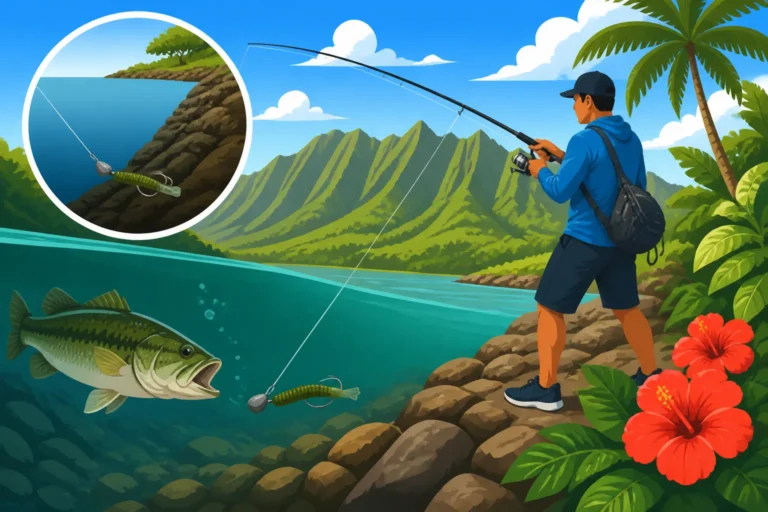
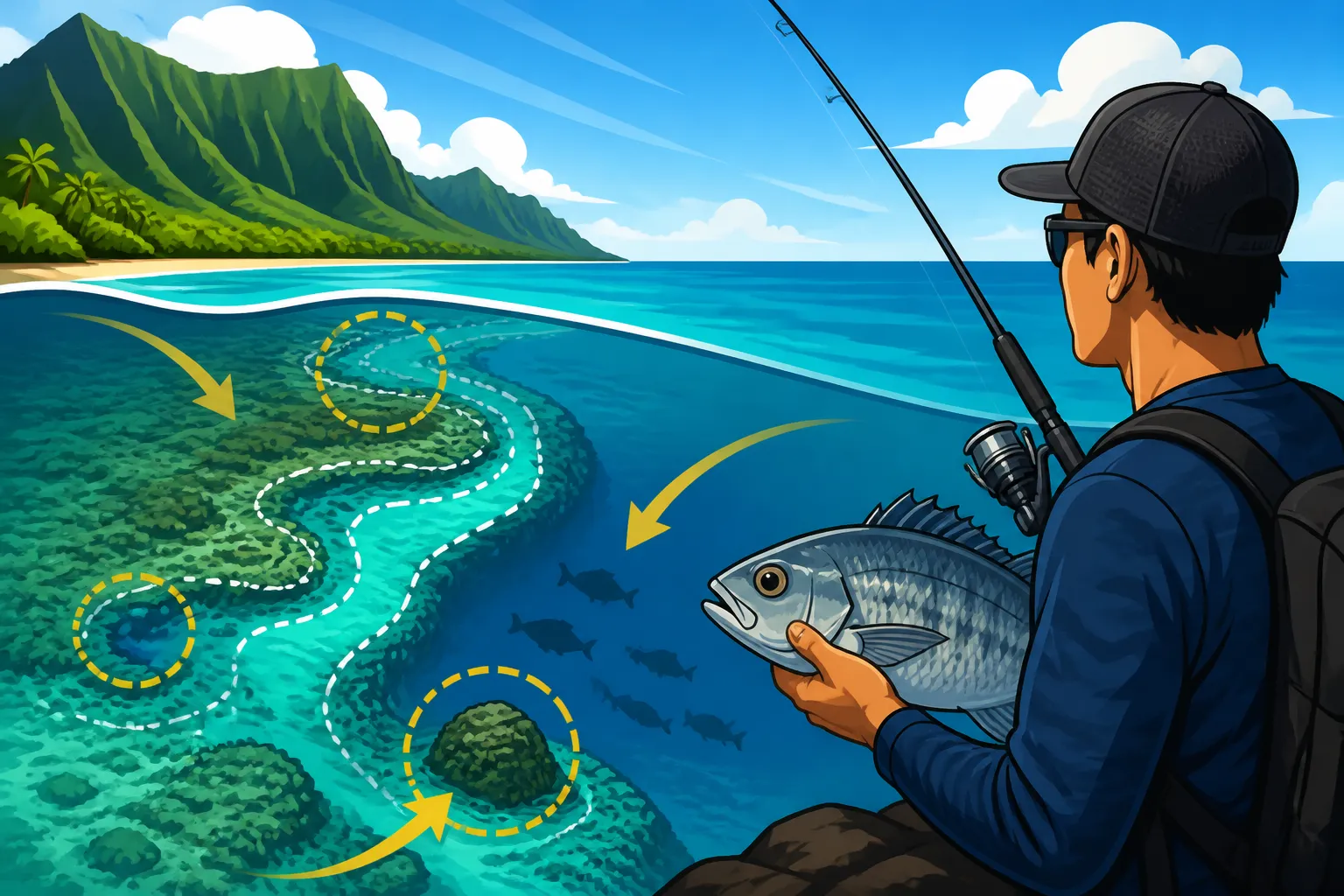
One of the most important things to identify is ledges and overhangs. These are like natural roofs for fish, offering shade and protection. Uhu love to cruise along these edges, ducking into the shadows or under the overhangs when they feel threatened, or simply using them as a patrol route while feeding. A rocky point that drops off into slightly deeper water often has these features, creating excellent ambush points for larger predators but safe havens for uhu.
Another prime spot is pockets of sand or rubble within the reef. While uhu feed on algae on hard structures, these sandy patches are often surrounded by prime feeding grounds. They also serve as areas where current might slow, allowing smaller food items to accumulate, or where uhu might rest. Don't overlook the transition zones where reef meets sand; these are often high-activity areas. Similarly, coral bommies or isolated rock piles standing proud from a flatter reef offer a microcosm of good habitat. These provide all-around structure, grazing surfaces, and hiding spots.
Finally, pay close attention to channels and cuts through the reef. These natural pathways are often created by currents and serve as highways for fish moving between different feeding or resting areas. Uhu will use these channels to navigate the reef, especially during tidal changes when water flows are more pronounced. They're also fantastic places to find baitfish, which in turn attract the larger predators that uhu try to avoid, so the parrotfish will stick to the edges or interior of the channels for safety while still being able to access the food-rich water flow.
Here’s a quick overview of how different reef structures can attract uhu:
| Reef Structure Type | How It Attracts Uhu | Best Conditions to Fish | Challenges |
|---|---|---|---|
| Ledges/Overhangs | Provides shade, protection, and patrol routes. | Mid-day sun, changing tides. | Can be difficult to get a lure/bait into accurately. |
| Sandy Pockets | Resting areas, transition zones with food accumulation. | Calm water, slightly deeper areas within reef. | Can be less productive if too sparse of surrounding reef. |
| Coral Bommies | All-around structure, feeding surfaces, isolated cover. | Any time, especially with moderate current. | High snag potential for gear. |
| Reef Channels | Travel corridors, concentrated food flow, current breaks. | Stronger tides, moving water. | Strong currents can make presentation difficult. |
| Rubble Zones | Mixed habitat for feeding and hiding. | Calm to moderate surf. | High snag risk. |
Practical Tips for Reading the Reef from Shore or Boat
Okay, so you know what to look for, but how do you actually spot these features when you're out there? It's not always obvious, especially with water movement and glare. Learning to effectively read the reef from your vantage point, whether on land or a boat, is an acquired skill that improves with practice and a few key tools.
From shore, your eyes are your most important asset. Start by observing the water color. Darker patches often indicate deeper water or dense coral/rock structure beneath. Lighter, sandy-colored patches mean exactly that – sand. The transitions between these colors are key. Look for areas where the waves break differently. A sudden ripple or a consistent white water patch in an otherwise calm area often signifies submerged rocks or a shallow reef that the waves are interacting with. Polarized sunglasses are absolutely non-negotiable here. A good pair, like the ones you can find on Amazon, cuts through the surface glare, allowing you to see into the water column and identify those darker structures, ledges, and even the sandy pockets I mentioned earlier. Take your time, walk along the shoreline, and observe how the light changes throughout the day. What you couldn't see at noon might become perfectly clear during an early morning or late afternoon sun angle. Pay attention to the tides too; a low tide can expose structures that are hidden during high tide, giving you a better mental map for when the water rises. This ties into excellent Shore Fishing Techniques for Hawaii where observation is paramount.
When you’re fishing from a boat or kayak, you have the added advantage of technology. A good fish finder or sonar unit is your best friend. These devices will paint a picture of the bottom contour, showing you those drop-offs, ledges, and isolated bommies that uhu love. Look for sharp changes in depth, hard returns on your screen that indicate rock or coral, and any arches or marks that might be fish hovering near the structure. Even without a fancy sonar, mapping apps like Navionics or even detailed satellite imagery on Google Earth can give you a fantastic overview of the reef layout before you even launch. These tools can show you existing channels, large coral heads, and areas of mixed reef and sand. Use these resources to plan your approach, identify potential holding spots, and mark waypoints for later. Remember that uhu are often found in relatively shallow, nearshore areas, so you don't need to be in deep water to find them. Knowing the Hawaii Boating Laws for Anglers is also important to ensure you're fishing legally and safely.
Regardless of your vantage point, observe the natural currents and surge. Uhu prefer areas where there's enough water movement to bring them food, but not so much that they have to fight against it constantly. Look for current breaks – areas behind a large rock or a point where the water calms down slightly. This creates a comfortable zone for them to hang out and feed. Also, if you’re looking for other reef dwellers, understanding these structures can also help you with Best Techniques for Kumu on Reef Flats, as goatfish often frequent similar areas.
Essential Gear and Tactics for Uhu on the Reef
Once you've honed your skills in reading the reef structure and identified a promising spot, it's time to think about how to actually get your bait or lure to the uhu. Because they are so closely associated with structure, your gear and presentation become incredibly important to avoid snags and successfully entice a bite.
For lure fishing, also known as "whipping" in Hawaii, you'll want to use lures that can be worked close to the bottom without getting hopelessly hung up. Soft plastics rigged weedless or with a jig head that has a good weed guard can be very effective. Small metal jigs or spoons can also work, but require a more vertical presentation or a quick retrieve to keep them above the coral. When casting from shore, aim for the edges of the structure, letting your lure sink just enough to be in the strike zone before starting your retrieve. Vary your retrieve speed and add small twitches to imitate a darting baitfish or an injured crustacean. If you're looking for some specific recommendations, our guide on Best Lures for Uhu on the Reef can provide more detailed information.
Live or dead bait fishing is also highly effective for uhu. Small chunks of crab, shrimp, or even opihi can be irresistible. The challenge, again, is presentation. A simple sliding sinker rig or a small egg sinker above a swivel and fluorocarbon leader (check out options on Amazon for good quality fluorocarbon) can keep your bait natural-looking while allowing it to settle among the reef without immediately snagging. When fishing a ledge or a hole, try to drop your bait precisely into the pocket. Letting it drift naturally with the current along a channel can also be very productive. Your leader choice is crucial here; uhu have strong beaks and are often in abrasive environments, so a heavier, abrasion-resistant fluorocarbon leader will prevent cut-offs. Find more specifics in our article on Best Leader for Uhu Around Structure.
Patience is a virtue when fishing for uhu. They can be cautious, especially in heavily fished areas. Don't be afraid to try different spots within a productive reef structure. If you've identified a bommie with good cover, try casting to all sides of it, or letting your bait drift past it from different angles. Pay attention to the slack and retrieve, feeling for the subtle bumps and scrapes that tell you you're near the reef, and ready for that tell-tale tap of an uhu taking the bait. Understanding How to catch uhu around reef structure will definitely enhance your success rate.
Finally, always be mindful of local regulations. Some areas, like certain Hawaii Marine Life Conservation Districts, Explained, have restrictions on fishing, and others have specific Hawaii Uhu (Parrotfish) Size and Bag Limits. A quick check with the Hawaii DLNR Division of Aquatic Resources (DAR) website will ensure you're fishing responsibly and sustainably, preserving these incredible fish for future generations.
Disclaimer
Fishing can be a dangerous activity. Always prioritize safety, be aware of ocean conditions, and understand all local regulations before heading out. The information provided in this guide is for informational purposes only and should not replace professional advice or personal judgment.