How to fish deep structure for summer ono
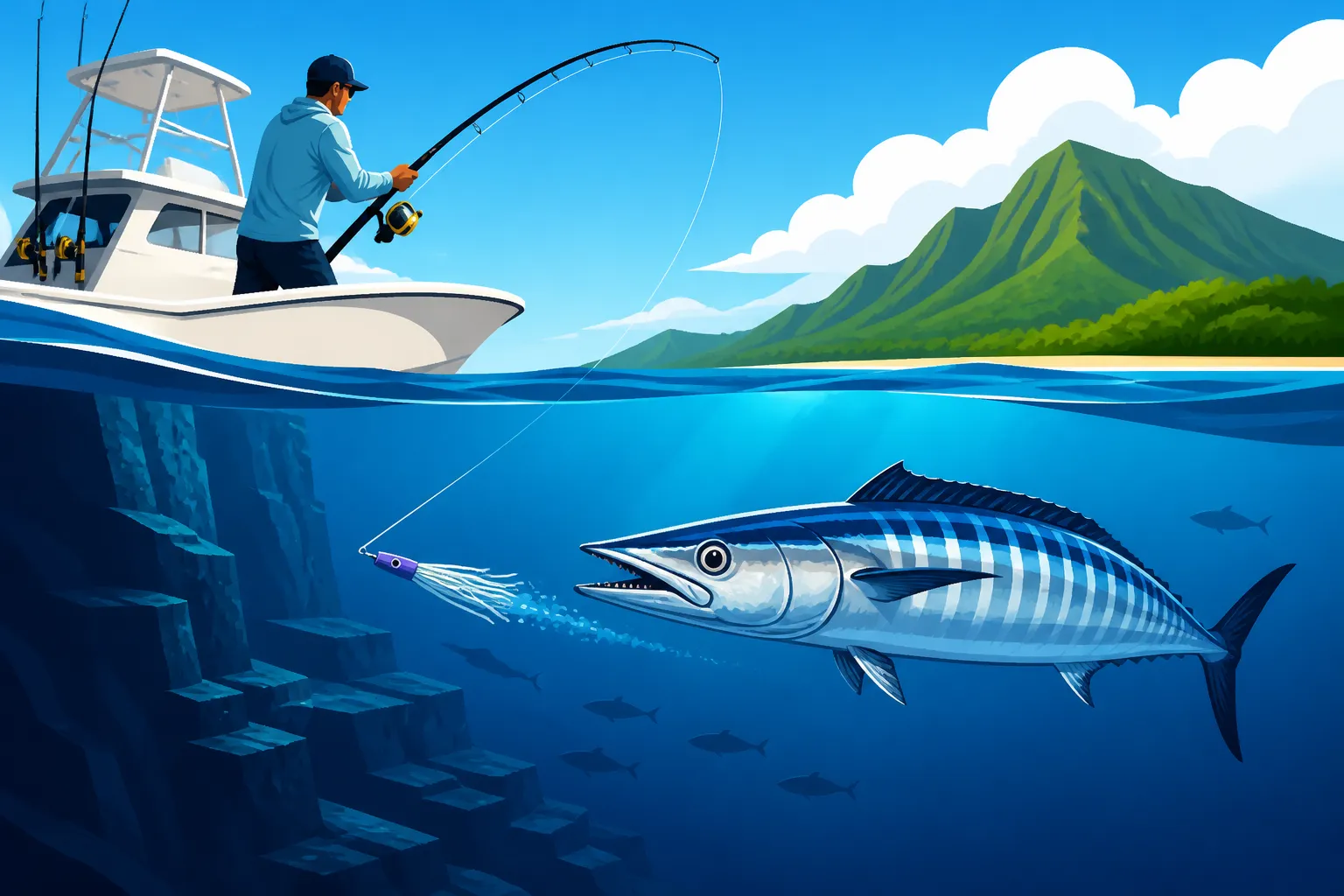
Oh, the summer ono! These speedsters can be incredibly frustrating to target when they decide to ditch the surface bite and head for the deep. It feels like they've just vanished, doesn't it? But don't despair! This comprehensive guide is going to pull back the curtain on fishing deep structure for summer ono, giving you the know-how to find and catch these elusive beauties even when they're playing hard to get.
Understanding Ono in Summer and Deep Structure
Summer in Hawaii brings its own unique challenges and opportunities for anglers, especially when you're after something as fast and aggressive as the ono (wahoo). They’re magnificent fish, known for their incredible speed and delicious fillets, but you often need to adjust your strategy when the sun heats up the surface waters.
Why Ono Go Deep in Summer
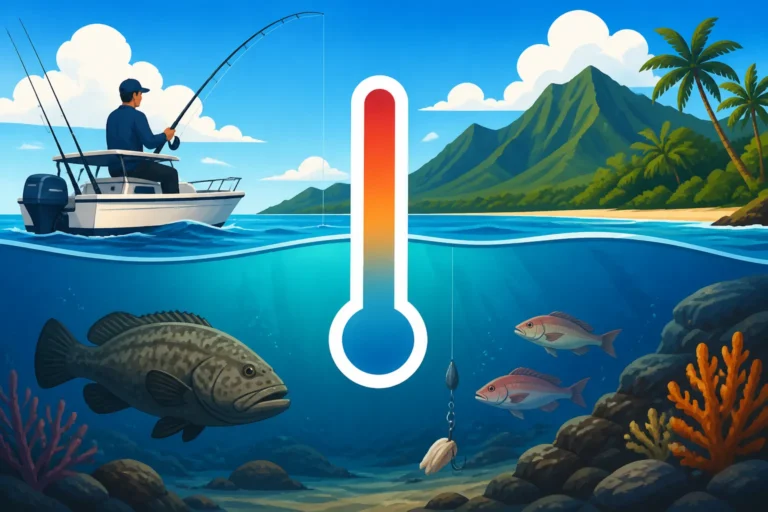
When those Hawaiian summer days really start to bake, the ocean surface warms up considerably. While some pelagic species tolerate this, ono often prefer cooler, more stable water temperatures. This means they tend to drop down, seeking the comfort of deeper, thermocline-rich zones where the water is more to their liking. Think of it like us heading indoors for the AC!
Another significant factor is baitfish movement. Larger bait schools, which ono absolutely key in on, will often descend to deeper water during the day, either to escape predators, find cooler water themselves, or access different food sources. Where the bait goes, the ono will follow. These fish are incredibly opportunistic predators, and they'll position themselves strategically along temperature breaks or around underwater features where they can ambush their prey with their lightning speed. It's not uncommon to find a strong bite on Ono (Wahoo) Fishing in Hawaii in cooler, deeper waters when the surface is quiet.
Identifying "Deep Structure" for Ono
So, what exactly do we mean by "deep structure" when we're talking about offshore fishing in Hawaii? It's not just any old lump on the bottom. For ono, "deep structure" refers to significant underwater features that create current breaks, upwellings, or attract baitfish, often far offshore or in considerable depths. We're talking about things like Fish Aggregating Devices (FADs) that are moored in thousands of feet of water, submerged seamounts, deep ledges, canyon edges, and even deep-water reef systems that rise up from the abyss.
These topographical features act like magnets for marine life. Nutrients can upwell, creating a food chain from microscopic organisms all the way up to large pelagic predators. Baitfish congregate around these areas, finding shelter or abundant food, and where there's bait, there are often ono. Finding the Best Deep Sea Fishing Spots in Hawaii often involves identifying these deep structures. Anglers who can effectively locate and fish these zones, even when they're hundreds or thousands of feet below the surface, are the ones who consistently find summer ono.
Essential Gear and Tackle for Deep Structure Ono
Targeting deep structure ono isn't like casting a line from the shore. You need robust gear that can handle the sheer power of an ono strike, the drag of deep-diving lures, and the potential for a long, hard fight in deep water. This isn't the time for your lightweight spinning combo; it's time to bring out the heavy artillery.
Rods, Reels, and Line Selection
For deep structure ono, heavy-duty conventional setups are absolutely paramount. You’ll want a stout conventional rod, typically rated for 50 to 80 pounds, with a fast action tip and plenty of backbone to muscle fish away from structure. The reel should be a reliable, high-capacity conventional reel with a strong drag system, capable of holding hundreds of yards of line. Think brands known for offshore reliability; there are plenty of excellent options available, and you can often find competitive prices on these specialized items if you search online, for example, on Amazon.
When it comes to line, a braided mainline is almost always the way to go for deep-water applications. Braided line offers superior strength-to-diameter ratio, minimal stretch (which is crucial for feeling subtle bites at depth), and excellent abrasion resistance. You’ll want to spool up with at least 65-80 lb braided line. This should then be connected to a long (20-30 feet) leader of heavy-duty fluorocarbon, typically 100-200 lb test. Fluorocarbon is less visible in the water and offers good abrasion resistance, but the most critical piece of terminal tackle for ono is a wire leader. Ono have razor-sharp teeth that can sever mono or fluoro leaders in an instant. A few feet of 80-150 lb single-strand or multi-strand wire leader attached to your fluorocarbon with a reliable crimp or knot is non-negotiable.
Lures and Baits for Deep Ono
The choice of lures and baits for deep ono depends heavily on your chosen technique, but the common theme is robust, effective, and often heavy.
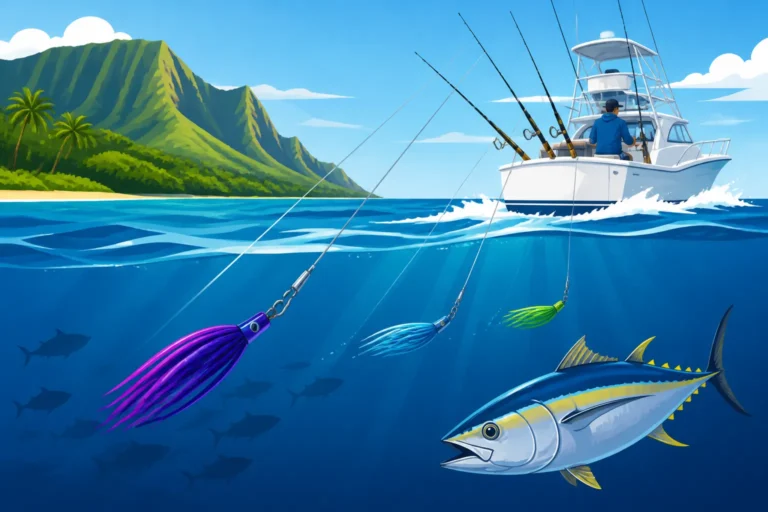
For high-speed trolling, you’ll be looking at large, heavy-duty diving plugs or lipped lures designed to run deep at fast speeds. These lures are typically 8-16 inches long, often with bright, reflective patterns or natural baitfish colors. The weight and design allow them to track true at speeds upwards of 10-20 knots, reaching depths where ono might be holding. Some advanced lures even have adjustable weights or bibs to fine-tune their diving depth. You might want to explore a good selection of these specialized lures available from online retailers, such as those found on Amazon, to build a versatile trolling spread.
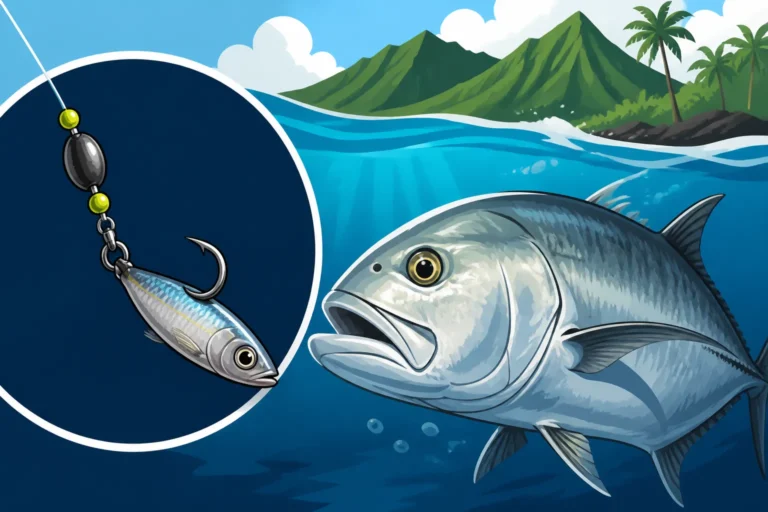
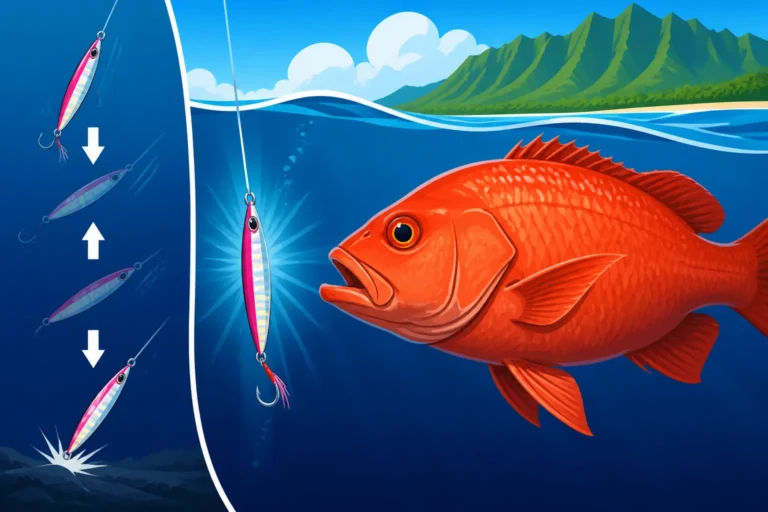
If vertical jigging is your game, heavy metal jigs are your go-to. These can range from 6 to 16 ounces, or even heavier depending on current and depth. Butterfly jigs, speed jigs, or knife jigs are popular choices, designed to flutter and flash on the retrieve, mimicking injured baitfish. Color can vary, but silver, blue/silver, pink, and glow-in-the-dark patterns are often effective in deeper, darker water. Remember to use sturdy assist hooks for jigging, as ono strikes can be violent and require a strong hook set.
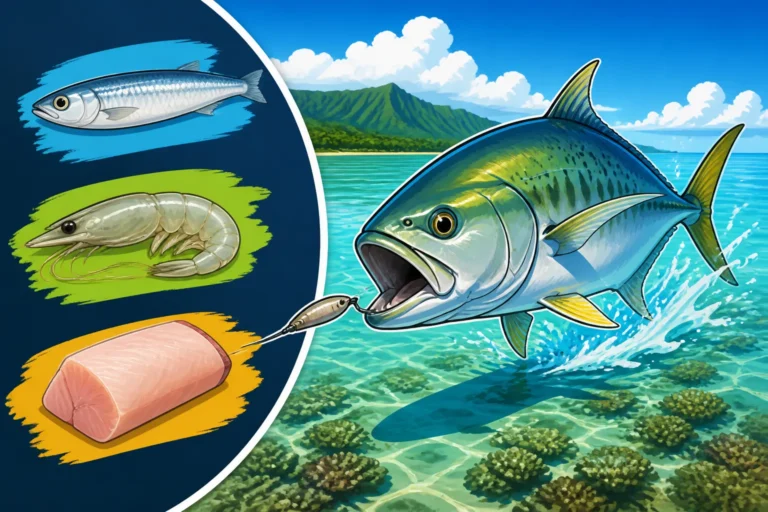
For those preferring natural baits, rigged dead bait or live bait are excellent options, especially when deployed on downriggers. Rigged ballyhoo, mackerel, or even larger baitfish like small aku (skipjack tuna) can be incredibly effective. The key is to rig them to swim naturally and present them at the precise depth where you've marked ono or bait. When considering your bait options, you might also find insights in articles like Best Bait for Ahi Fishing, as many of the principles of natural bait presentation apply to other pelagic species.
Techniques for Targeting Deep Summer Ono
Now that you've got your powerful gear ready, let's dive into the actual methods for convincing those deep-dwelling summer ono to bite. Each technique has its nuances, and understanding them is key to success.
High-Speed Trolling Over Structure
This is perhaps one of the most exciting and effective ways to target deep ono in Hawaii. High-speed trolling involves pulling heavy, deep-diving lures at impressive speeds, often between 10 to 20 knots, directly over known deep structures like FADs, seamounts, or contour lines. The idea is that the speed and action of the lure trigger a predatory reaction strike from the ono, who can't resist chasing down what they perceive as fleeing prey.
To do this effectively, you need to use lures specifically designed for high-speed trolling. These often have weighted heads and specific bib designs that allow them to run true without blowing out of the water at high speeds. Your boat's sonar and GPS are crucial here. You'll want to identify the specific structure, like a rise or a ledge, and then make passes over it. Experiment with your lure spread – often, two to four lines are trolled, with lures staggered at different distances behind the boat and designed to run at varying depths. Some anglers even incorporate planer boards or trolling leads to get lures even deeper or wider from the boat's wash. When you get a strike, be prepared for a ferocious fight; ono hit hard and fast! Many of these specialized high-speed trolling lures, designed for maximum durability and effectiveness, can be found through online retailers like Amazon. For more general insights into this method, you might want to read about Trolling Techniques for Hawaii Pelagics.
Vertical Jigging Deep Structure
Vertical jigging is a more hands-on, physically demanding, but incredibly rewarding technique for deep ono. This method involves positioning your boat directly over a marked piece of deep structure or a baitball and dropping heavy metal jigs straight down to the desired depth. Once at depth, you use a specific retrieve cadence to make the jig dart, flash, and flutter, mimicking an injured or fleeing baitfish.
There are various types of vertical jigs: slender "knife" jigs for fast, erratic retrieves, wider "butterfly" jigs for a more fluttering action, and even heavy flat-sided jigs. The retrieve can vary from a slow, sweeping lift-and-drop to a fast, aggressive crank-and-pump. The key is to experiment until you find what the fish are responding to on that particular day. Pay close attention to your sonar; you're looking for bait schools, individual fish marks near the structure, or even temperature breaks. When an ono hits a jig, it's often a solid, unmistakable thud that will almost rip the rod from your hands. This technique requires good boat control to stay over the structure, especially in currents. While typically associated with bottomfish, the principles of deep water jigging are similar, so you might find value in learning about Jigging for Bottomfish in Hawaii.
Live Baiting / Dead Baiting on Downriggers
When ono are particularly finicky or holding tight to structure, presenting a natural bait can often be the most effective strategy. Live baiting or dead baiting with the aid of downriggers allows you to present your bait at a precise, controlled depth directly in the strike zone.
Live bait, such as opelu (mackerel scad), akule (bigeye scad), or even small kawakawa (bonito), are excellent choices. Rig them through the nose or back, ensuring they swim naturally. For dead bait, properly rigged ballyhoo or mackerel are very effective. The downrigger allows you to lower the bait to a specific depth, usually just above the marked structure or bait. Once at the desired depth, the line is released from the downrigger clip, allowing your bait to swim or drift naturally. The advantage of downriggers is precision; you can put your bait right on the fish's nose. This method can be particularly deadly when ono are holding in a specific depth range around an underwater mountain or a deep-water FAD. Don't forget, having a good supply of these natural baits or the rigging gear to prepare them is crucial, and you can often stock up on essential rigging supplies through a reliable online platform like Amazon.
Reading the Ocean and Strategic Planning
Catching deep summer ono isn't just about having the right gear and techniques; it's about understanding the ocean and using technology to your advantage. The most successful anglers are those who can "read" the water, interpret their instruments, and adapt their strategy on the fly.
Sonar and GPS: Your Best Friends
In the realm of deep structure fishing, your sonar (fishfinder) and GPS (chartplotter) are not just helpful tools – they are absolutely indispensable. Your sonar allows you to visualize the underwater world, revealing the contours of seamounts, ledges, and canyons, as well as marking bait schools and individual fish. You'll be looking for bait balls, which appear as dense clouds or clusters on your screen, often near structure. Ono will often be marked as larger, distinct arches, sometimes just above or within these bait schools. Learning how to properly interpret these signals is a skill that develops with experience, but it’s critical for locating potential strike zones. You might find it helpful to research topics like How to locate bottomfish structure with sonar for general principles that also apply to identifying pelagic targets near the bottom.
Your GPS allows you to mark these productive spots, creating a digital map of your hot zones. If you find a school of bait or hook an ono in a particular area, mark it! You can then make repeated passes over that precise location, or return to it on future trips. Tracking your drift and boat speed with GPS is also vital for high-speed trolling, ensuring you maintain the optimal pace for your lures. These electronics are an investment, but they pay dividends in increased catch rates.
Weather, Currents, and Tide Considerations
While not always as immediately apparent as inshore fishing, weather, currents, and even tides can play a role in deep-water ono success. Strong currents can stack baitfish against a particular side of a seamount, creating a prime ambush point for ono. Understanding the prevailing currents for your fishing area will help you position your boat and deploy your lures or baits more effectively. For example, knowing the typical current direction around a FAD can help you anticipate where the bait will hold and, consequently, where the ono will be lurking.
Wind and swell conditions, while not directly influencing ono behavior at depth, certainly impact your ability to fish effectively. Choppy seas make it harder to maintain consistent trolling speeds, deploy downriggers accurately, or even stay on top of a jigging spot. Always check the marine forecast before heading out for a deep-water trip. As for tides, their influence is generally less pronounced in offshore, deep-water environments compared to shallow reefs or estuaries, but exceptionally strong tidal movements can still create current surges that affect bait movement and ono positioning. Keeping an eye on the Best Time of Year to Fish in Hawaii and general ocean conditions will always give you an edge.
Deep Ono Techniques Comparison
To help you decide which technique might be best for your next summer ono hunt, here's a quick comparison:
| Technique | Pros | Cons | Ideal Conditions | Recommended Gear |
|---|---|---|---|---|
| High-Speed Trolling | Covers vast areas, triggers aggressive strikes | Fuel intensive, can be hard on tackle, specific lures needed | Calm to moderate seas, distinct structure | Heavy conventional, 80-130lb braid, wire leader, large deep-diving plugs |
| Vertical Jigging | Engaging, targets specific marks, less fuel needed | Physically demanding, requires precision boat control, specific jigging gear | Calm seas, accurate sonar readings, strong currents can make it hard | Heavy conventional, 65-80lb braid, wire leader, heavy metal jigs (6-16 oz+) |
| Live/Dead Baiting (Downriggers) | Natural presentation, highly effective for wary fish | Requires bait sourcing/rigging, slower pace, downrigger equipment needed | Moderate currents, known fish depth, FADs/seamounts | Heavy conventional, 50-80lb braid/mono, wire leader, downrigger, live/dead bait |
Disclaimer
This article is for general informational purposes only and does not constitute professional advice. Laws, prices and regulations vary by location and change over time. Consult a qualified professional for guidance on your specific situation.